High-Torque Coiler Hydraulic Cylinder for Rolling Mill
Engineered with ultra-rigid 42CrMo welded structures and a fail-safe integrated hydraulic control lock to definitively eliminate steel strip slippage and conquer the immense high-torque environment of continuous tension reels.
Product Overview: The Criticality of Flawless Coiling
In the highly aggressive and meticulously synchronized landscape of flat-rolled metallurgy, the absolute difference between a prime-grade, highly profitable steel coil and a rejected heap of scrap metal is frequently determined in the final, critical seconds of the production sequence. As the continuous hot strip mill or cold reduction line pushes the metal forward at velocities often exceeding twenty meters per second, the tension reel—commonly known as the downcoiler—must instantly capture the strip, establish extreme backward tension, and wind the material flawlessly. Residing at the exact mechanical and operational core of this tension reel is the coiler hydraulic cylinder. This specialized, heavy-duty fluid power actuator is nested deeply within the rotating mandrel shaft. Its sole, critical engineering purpose is to forcefully drive the heavy internal wedges that force the outer mandrel segments to expand radially, thereby securely clamping the leading edge of the steel strip.
If this vital actuator fails to maintain absolute, unwavering holding pressure during the entire winding cycle, the consequences for the rolling mill are disastrous. A drop in fluid pressure causes the mandrel segments to slightly collapse inward under the massive tension of the building coil. This microscopic shrinkage instantly causes the inner wraps of the steel to slip and aggressively scratch against each other. In more severe instances, the entire multi-ton coil telescopes or unravels completely in the coiler pit, resulting in catastrophic equipment damage, massive steel cobbles, and hours of perilous, manual clearing by the maintenance crew. In modern, high-speed metallurgical operations, the steadfast reliability of the coiler cylinder directly dictates the uptime, safety, and ultimate profitability of the entire rolling facility. Every aspect of the tensioning process depends on the absolute integrity of this specific hydraulic cylinder.

Through two decades of deeply diagnosing fluid power failures across major steel plants in South Korea, Japan, and the broader East Asian sector, we have systematically observed that standard commercial-grade actuators simply cannot survive this hostile environment. The coiler pit exposes equipment to relentless high-torque rotational forces, severe high-frequency vibrations from the strip impact, and aggressive chemical attacks from synthetic cooling emulsions. Standard units inevitably suffer from rapid seal damage, leading to internal fluid bypass and catastrophic pressure loss. As a highly specialized hydraulic cylinder manufacturer, we have completely reimagined the foundational architecture of this component. By exclusively utilizing ultra-rigid 42CrMo alloy steel, integrating fail-safe hydraulic control locks directly into the cylinder barrel, and applying advanced electroless nickel plating, we provide a definitive solution that mathematically eliminates coil slippage.
Customizable Technical Parameters and Structural Data
Because continuous coiler pits and tension reels vary significantly across different plant designs—ranging from ultra-thin aluminum foil processing lines to massive heavy structural plate winders—we provide an extensive array of highly customizable engineering variables. Our engineering department meticulously tailors the internal fluid dynamics, exact stroke lengths, push-pull rod thread pitches, and rotary joint mounting configurations to interface flawlessly with your existing mill infrastructure. The comprehensive table below outlines the fundamental technical data and advanced material science driving our heavy-duty metallurgical coiler hydraulic cylinder actuators.
| System Attribute | Parameter Specification | Engineering Significance |
|---|---|---|
| Target Industry Segment | Metallurgy | Purpose-built to operate flawlessly within aggressive, high-heat steel processing environments. |
| Equipment Category | Rolling Mill | Integrates perfectly into hot strip coilers, cold mill tension reels, and specialized recoiling lines. |
| Subsystem / Action | Coiling System | The final, dynamic mechanical station strictly responsible for winding the flat-rolled product securely. |
| Component Designation | Coiler Cylinder | The central fluid power unit driving the critical expansion and collapse of the rotating mandrel. |
| Action Method | Double Acting | Operates as a highly responsive double acting hydraulic cylinder for immense force in both push and pull directions. |
| Structure Type | Piston Type | Utilizes a ruggedized, wide-stance hydraulic cylinder piston capable of maintaining immense holding force indefinitely. |
| Manufacturing Structure | Welded Construction | Features deep-penetration submerged arc welding to ensure maximum structural integrity and torsion resistance. |
| Material System | 42CrMo High-Strength Steel | Provides the necessary molecular fatigue resistance to survive millions of continuous rotational bending stresses. |
| Surface Treatment | Electroless Nickel Plated | Offers vastly superior corrosion resistance against specific acidic coiler pit cooling fluids compared to standard chrome. |
| Environment Grade | High Torque & Vibration | Engineered with heavy bronze wear bands to isolate the internal seals from severe radial winding shocks. |
| Working Condition Feature | Clamping Steel Strip | Demands absolute zero pressure drop during the active winding phase to prevent catastrophic coil slip and telescoping. |
| Typical Failure Mode | Seal Damage (Pressure Loss) | Highly common in conventional units; permanently mitigated through our advanced high-temperature seal matrix. |
| Recommended Configuration | Hydraulic Control Lock | A mechanically secured pilot-operated check valve guarantees the mandrel remains firmly expanded even if a main supply hose bursts. |
The Advanced Physics of Coiling: Detailed Working Principle
To fully appreciate the sophisticated engineering supremacy of our units, one must analyze the complex mechanical sequence of a metallurgical tension reel. The coiler cylinder is typically positioned axially, either mounted at the rear of the mandrel shaft via a rotary distributor or integrated directly within the hollow shaft itself. Its primary function is not to rotate the massive coil—that is the job of immense electric drive motors—but rather to precisely control the physical expanding diameter of the coiling drum (the mandrel).
When the lead edge of a newly rolled hot or cold steel strip approaches the coiler pit, the plant’s automation system energizes the cap end of the cylinder. The highly pressurized hydraulic fluid drives the massive hydraulic cylinder piston forward with tremendous force. This linear motion is transferred via a heavy steel push-pull rod to a complex series of internal wedges or a pyramid shaft located inside the mandrel. As these internal wedges are pushed forward, they force the heavy outer steel segments of the mandrel to expand radially outward. This calculated expansion securely bites into and grips the leading edge of the steel strip. Once the strip is securely clamped, the main drive motors engage, and the entire assembly, including the rotating coiler hydraulic cylinder, spins at incredibly high velocity. As the coil grows larger in diameter, the pulling tension on the strip increases exponentially. The fluid power system must maintain absolute, unwavering holding pressure to keep the wedges locked; otherwise, the immense tension of the wrapping steel strip will force the segments to collapse inward.
To mathematically eliminate this severe risk, our advanced engineering team directly integrates a hydraulic control lock—specifically a high-flow pilot-operated check valve (load-holding valve)—right into the cylinder’s end cap or heavily welded manifold. When the piston reaches maximum clamping pressure, this mechanical valve snaps shut instantly, effectively trapping the high-pressure fluid inside the expansion chamber. The actuator is now mechanically locked in the fully expanded position, becoming completely independent of the plant’s main hydraulic pump station. It will sustainably hold this immense pressure, securing the coil, and will only release its grip when the system actively sends a pilot pressure signal to the rod end, commanding the actuator to retract the wedges so the finished 30-ton coil can be safely extracted by the unloading coil car.

Flawless Brand Interchangeability and Rapid Plant Upgrades
For decades, major continuous casting and rolling facilities across East Asia have relied on tension reels supplied by massive European and Japanese engineering conglomerates. However, when the original actuation units inevitably begin to exhibit chronic internal fluid bypass and seal degradation due to age and fatigue, procurement teams often find themselves trapped. Returning to the original equipment manufacturer (OEM) for an exact replacement unit typically involves astronomical capital costs and debilitating lead times spanning many months, severely threatening plant productivity and delivery schedules.
Our specialized heavy engineering division provides a highly strategic alternative. We excel at reverse-engineering and delivering vastly upgraded, flawless drop-in replacements for coiler equipment originally supplied by heavy industry titans such as SMS Group, Primetals Technologies, Danieli, Mitsubishi Heavy Industries, Bosch Rexroth, and Parker Hannifin.
(Disclaimer Note: The explicit mention of these specific corporate brand names is solely for the technical purpose of communicating physical sizing, dimensional compatibility, and application context to industrial plant engineers. We operate as an entirely independent manufacturing entity and assert no endorsement, affiliation, or trademark rights associated with these respective global corporations.)
Whether your strategic intent involves preemptively modernizing your fluid power infrastructure or you are dealing with an urgent breakdown that requires rapidly fixing hydraulic cylinders directly on the shop floor, our custom units are guaranteed to bolt perfectly onto your existing rotary union interfaces, flange mounts, and push-rod threads. You secure a mechanically and metallurgically superior actuator without the exorbitant cost or downtime of altering your massive machine housing.
Five Definitive Core Technical Advantages Guaranteeing Uptime
Maintaining a flawless, tightly wrapped steel coil requires an actuator that is virtually immune to the harsh realities of the coiler pit. Standard tie-rod cylinders or light-duty commercial welded designs will inevitably disintegrate, suffering from seal extrusion or catastrophic rod bending. Here are the five critical engineering optimizations that position our models as the definitive choice for continuous metallurgical facilities:
1. Integrated Hydraulic Control Lock (Fail-Safe Clamping)
The most severe and costly failure mode for a coiler is a sudden loss of expansion pressure, causing the massive coil to slip and telescope. We resolve this definitively by integrating a high-flow pilot-operated check valve (hydraulic lock) directly into the cylinder body manifold. Once the mandrel is fully expanded, this internal lock traps the pressurized fluid mechanically. Even in the catastrophic event of a main plant hydraulic hose bursting or a central pump failure, the cylinder maintains 100% clamping force, saving the coil and preventing a massive, highly dangerous tangle of high-tension steel.
2. 42CrMo Welded Structure for Extreme Fatigue Resilience
Coiler shafts inherently operate with slight deflections under the immense, asymmetrical weight of a 30-ton steel coil. This rapid deflection transmits severe rotational bending stresses directly into the actuator’s structural body. Standard Q235 or 1045 steel is prone to fatigue micro-cracking and barrel breathing under these conditions. We construct the entire pressure vessel and the mounting flanges exclusively from 42CrMo alloy steel. This premium high-tensile material easily absorbs continuous alternating torque, ensuring a dramatically extended operational lifecycle without suffering structural yielding.
3. Advanced Electroless Nickel Plated Surface Engineering
The coiler pit is an exceptionally aggressive environment, constantly bombarded by water-based synthetic cooling emulsions, high humidity, and abrasive airborne iron scale. While traditional hard chrome plating is hard, it inherently possesses microscopic cracks as a byproduct of electroplating. These cracks allow acidic cooling chemicals to reach the base metal, causing sub-surface rust and chrome peeling. We utilize a highly advanced, thick electroless Nickel-plating process that provides a completely uniform, non-porous shield, keeping the internal hydraulic rams absolutely pristine and free from corrosion.
4. High-Temperature, Anti-Vibration Dynamic Sealing Matrix
Positioned directly adjacent to a glowing hot steel strip, the ambient temperature surrounding the actuator degrades standard polyurethane seals incredibly fast. Furthermore, the high-frequency vibration of the winding process causes standard seals to extrude and shred. We proactively engineer our internal piston glands using high-temperature fluoroelastomer (FKM/Viton) energizers combined with ultra-low friction, high-durometer PTFE composite step seals. This specific matrix dampens vibrations and operates effortlessly in extreme heat without hardening or extruding, effectively preventing seal damage.
5. Precision Deep-Hole Boring and Roller Burnishing
To guarantee that the high-performance PTFE piston seals survive millions of micro-movements as the tension fluctuates, the internal bore of the heavy cylinder barrel must be flawless. We utilize advanced CNC deep-hole boring followed by a highly specialized skiving and roller burnishing process. This creates a highly uniform, mirror-like internal surface finish of Ra 0.2µm. This meticulous machining process drastically reduces internal static friction, completely eradicates stick-slip behavior, and significantly lowers operational wear on all internal hydraulic cylinder components.
In-House Manufacturing Excellence and Unyielding Quality Assurance
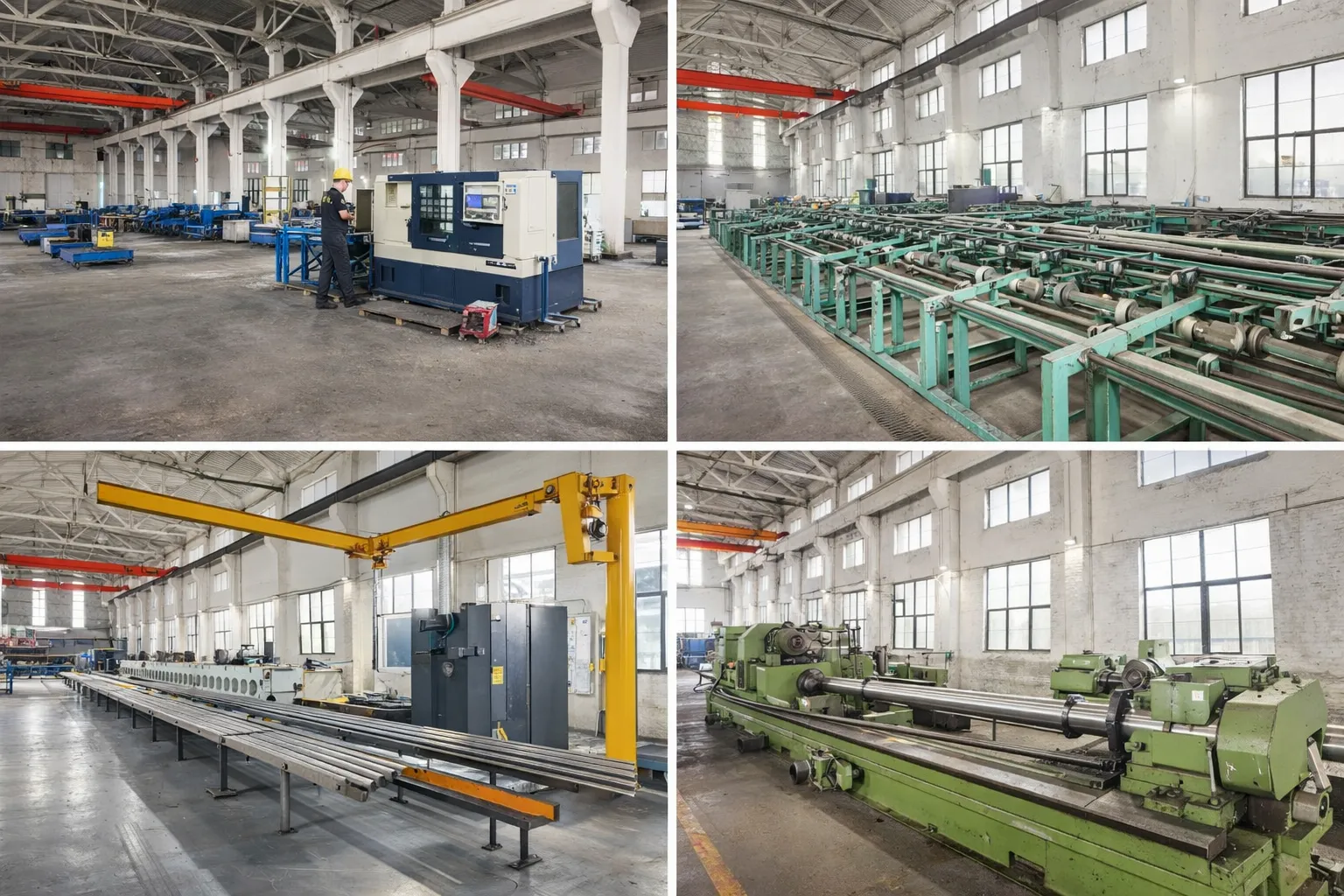
An advanced engineering schematic, no matter how brilliantly conceived, is useless if the physical manufacturing lacks absolute precision. To ensure every coiler cylinder we deliver meets the exacting safety and operational requirements of continuous rolling mills, we maintain strict, autonomous control over our entire production facility. When raw 42CrMo steel billets arrive at our docks, they immediately undergo optical emission spectrometry to certify their chemical integrity and purity. Our automated robotic submerged arc welding (SAW) stations are precisely programmed to create massive, deep-penetration weld joints that are entirely free of slag inclusions or porosity. Following the high-heat welding phase, all structural assemblies are subjected to mandatory thermal stress relief in computerized annealing furnaces, followed by rigorous Ultrasonic Testing (UT) to guarantee they can withstand the immense rotational torque of the tension reel without cracking.
Quality assurance in our manufacturing facility is not merely a final inspection step; it is deeply integrated into every single phase of production. Before any actuator is cleared for packaging and global export, it undergoes a brutal, 100% factory acceptance test on our computerized hydraulic test stands. We forcefully extend and retract the actuator dozens of times to ensure perfectly smooth operation. Critically, we then pressurize the cylinder to 150% of its rated maximum clamping pressure, holding it statically for extended durations. This absolutely confirms that the integrated hydraulic control lock functions flawlessly and that there is absolute zero internal fluid bypass across the dynamic piston seals. Every dispatched unit features a permanently laser-engraved serial number, granting our clients immediate lifetime access to historical engineering drawings, metallurgical certificates, and exact dimensions for future seal kits or hydraulic cylinder repair protocols.
Expansive Typical Heavy Industry Applications
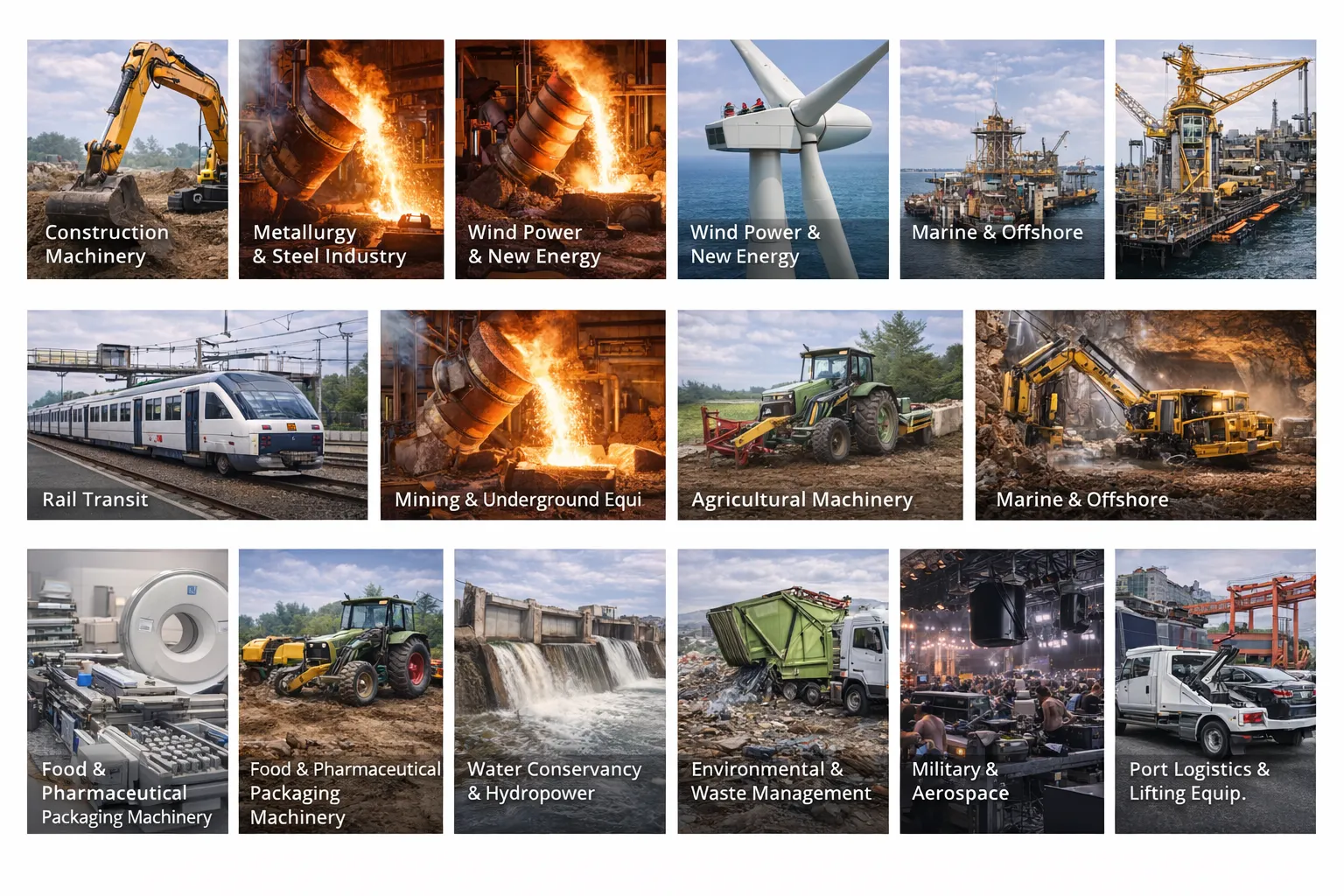
While the core design philosophy of this heavy-duty rotary tensioning unit is deeply rooted in the grueling environment of primary steel manufacturing, its fundamental fluid power capability—securely locking and maintaining massive mechanical tension against heavy vibration—makes it the preferred actuator in several other demanding industrial sectors globally.
- Metallurgical and Iron Industry: Hot strip mill downcoilers, cold rolling tension reels, continuous galvanizing lines, recoiling mandrels, and heavy-duty tension leveling stations. Explore our dedicated heavy equipment solutions for the Metallurgical and Iron Industry.
- Non-Ferrous Metals & Advanced Materials: High-precision aluminum foil winding, copper strip coiling, and lithium-ion battery foil tensioning, where consistent, ultra-smooth grip without surface chatter marks is absolutely essential for product quality.
- Mining and Heavy Extraction: Deep shaft mine hoists, massive winch braking systems, and heavy conveyor belt tensioners that require heavy-duty holding valves to secure tremendous loads without drifting. Discover our highly ruggedized systems for the Mining Industry.
- Construction Machinery Industry: Specialized heavy lifting equipment, massive outrigger locking cylinders, and heavy boom holding actuators that demand a highly reliable lift cylinder architecture capable of mechanically locking suspended loads securely in place. View our range for the Construction Machinery Industry.
- Paper and Heavy Packaging Manufacturing: Massive industrial paper mill winders and slitter rewinders requiring vast, highly stable hydraulic force to safely manage and transport gigantic rolls of heavy kraft paper or corrugated cardboard.
Comparative Analysis: Standard Hydraulics vs. Specialized Coiling Actuators
Attempting to install a generic, off-the-shelf industrial cylinder inside a high-speed tension reel guarantees an incredibly short operational lifespan and a statistically high probability of catastrophic coil failure. The engineering deviations between a standard unit and our purpose-built coiler models are distinct, measurable, and highly critical.
| Component / Engineering Feature | Standard Heavy-Duty Cylinder | Our Specialized Coiler Cylinder |
|---|---|---|
| Load Holding Capability & Safety | Relies entirely on distant external mill pump pressure; high risk of catastrophic strip slipping if a hose bursts. | Integrated Hydraulic Control Lock directly on the manifold; absolute zero pressure drop mechanically guaranteed. |
| Rod Surface Corrosion Protection | Standard Hard Chrome plating; micro-cracks allow rapid rusting in highly humid, acidic coiling pits. | Advanced Electroless Nickel Plating; provides a completely non-porous shield, offering extreme chemical resistance. |
| Material Rigidity and Fatigue | Constructed from basic Q235 or 1045 steel; highly prone to weld fatigue and barrel breathing under high torque. | Ultra-thick 42CrMo Alloy Steel with mandatory post-weld thermal stress relief to absorb massive rotational twisting. |
| Internal Dynamic Sealing | Standard polyurethane lip seals; easily shredded and extruded by the intense micro-vibrations of the mandrel. | High-resilience, high-temperature PTFE matrix combined with heavy-duty anti-extrusion guide bands. |
| Total Cost of Ownership (TCO) | Low initial purchase cost, but creates massive financial bleed through scrapped coils and unplanned line downtime. | A highly competitive, premium investment that delivers immediate ROI through years of flawless, uninterrupted uptime. |
Proven Global Success: 5 Real-World Case Studies in East Asia
Our unwavering dedication to resolving complex, systemic fluid power challenges has solidified our reputation as a premier technical partner across heavy industries in East Asia. Here are five documented, real-world cases where our highly engineered solutions directly protected our clients’ bottom line and enhanced plant safety.
1. Eradicating Coil Slippage at a Major Hot Strip Mill – Pohang, South Korea
Incident Date: October 2024
Client Profile: A top-tier, globally recognized steel manufacturer producing ultra-high-strength automotive steel coils.
The Operational Challenge: Their aging European OEM coiler cylinders were suffering from chronic internal fluid bypass due to seal extrusion. During the high-speed winding of thick, high-tensile hot strips, the mandrel would momentarily collapse slightly. This loss of clamping force caused the center of the massive 30-ton coil to telescope outward aggressively, resulting in severe surface scratches and forcing the plant to downgrade the material to scrap.
How They Discovered Us: The plant’s engineering director discovered our specialized high-torque holding solutions via an intensive technical search regarding the integration of direct-mounted hydraulic locks on heavy metallurgy components.
The Tangible Result: We rapidly engineered and delivered a dimensionally perfect drop-in replacement featuring our heavily reinforced integrated hydraulic control lock. Once the steel strip was clamped, the actuator physically locked the expanding wedges in place, utterly immune to main pump fluctuations. Since installation, coil slipping and telescoping incidents have dropped to absolute zero.
“The integrated holding valve design is nothing short of brilliant. Our winding tension is now rock solid regardless of line speed. We have easily saved hundreds of thousands of dollars in reclaimed prime steel yield in the first quarter alone.” — Mr. Kang, Head of Continuous Rolling Operations
2. Combating Extreme Chemical Corrosion in Cold Rolling – Kobe, Japan
Incident Date: February 2025
Client Profile: An advanced, high-precision cold reduction facility producing specialized electrical steels and ultra-thin automotive sheet metal.
The Operational Challenge: The humid environment and the highly acidic, specialized synthetic cooling lubricants used on the mill were rapidly eating away the standard hard chrome plating on their tension reel rods. The aggressively rusted rods acted like sandpaper, shredding the polyurethane wiper seals within weeks and causing continuous, hazardous hydraulic fluid leaks onto the factory floor.
How They Discovered Us: They met our senior technical representatives at a major industrial hydraulic systems and surface treatment trade show in Tokyo.
The Tangible Result: We replaced their failing standard actuators with our specialized electroless nickel-plated coiler hydraulic cylinder models. This highly ductile, non-porous coating acted as an impenetrable shield. After 24 months of continuous operation, the rods remain completely pristine, and all external fluid leakage has been definitively eliminated.
“Standard cylinders simply dissolved in our pit environment. The advanced nickel plating technology you applied completely solved a maintenance nightmare that was costing us a fortune in replacement parts and wasted oil.” — M. Tanaka, Maintenance Lead
3. Eradicating Stick-Slip Friction on a High-Speed Aluminum Line – Kaohsiung, Taiwan
Incident Date: May 2024
Client Profile: A major non-ferrous rolling mill producing ultra-thin, high-tension aluminum battery foils for the electric vehicle market.
The Operational Challenge: The existing tension reel cylinders suffered from severe “stick-slip” friction (stiction) due to aging internal rubber seals and high-frequency mandrel vibrations. When the plant’s hydraulic system made micro-adjustments to the mandrel clamping pressure, the cylinder would physically jerk, causing massive ripples, chatter marks, and physical tears in the highly sensitive, high-value aluminum foil.
How They Discovered Us: They were referred to us by a colleague managing a similar precision steel facility who had successfully utilized our low-friction heavy-duty hydraulic parts.
The Tangible Result: We heavily modified the internal fluid architecture, utilizing ultra-low friction PTFE step seals and highly polished, CNC-roller burnished barrel internals. The fluid motion became exceptionally smooth. This completely eliminated the jerking vibration, allowing for flawless, mirror-finish aluminum coil winding.
“Friction was ruining our most valuable product. Your engineered low-friction PTFE assemblies restored complete stability to our winding tension. The surface quality of our battery foil is now absolutely perfect.” — Lin C., Quality Assurance Head
4. Preventing Catastrophic Rod Fracture via 42CrMo Forging – Incheon, South Korea
Incident Date: August 2024
Client Profile: A specialized manufacturer of heavy stainless steel and brass alloys for industrial applications.
The Operational Challenge: Winding thick, heavy-gauge stainless steel requires immense, steady motor torque. The existing coiler cylinders, constructed with welded flanges made of standard mild steel, were continuously developing severe fatigue cracks due to the intense rotational twisting force of the coiler shaft. Ultimately, a rod snapped entirely, violently halting production.
How They Discovered Us: Reached out urgently through our B2B engineering portal, specifically searching for 42CrMo high-tensile heavy forging capabilities to replace their fractured unit.
The Tangible Result: We rapidly manufactured an incredibly rigid, one-piece welded 42CrMo body that effortlessly handled the torsional strain. The cracking issue completely ceased. This robust upgrade secured their heavy payloads safely and permanently eliminated the threat of a snapped rod.
“The build quality and massive structural rigidity of these forged cylinders give us absolute confidence on the factory floor. This is outstanding metallurgical knowledge accurately applied to heavy fluid power.” — Director Kim, Plant Operations
5. Increasing Tonnage for Advanced High-Strength Steels (AHSS) – Busan, South Korea
Incident Date: December 2025
Client Profile: A legacy medium-scale steel mill undergoing a massive product mix upgrade to handle newer, Advanced High-Strength Steels (AHSS) for the electric vehicle market.
The Operational Challenge: The new, thicker, high-strength alloys required significantly more tension to wrap tightly on the reel. The existing actuator simply lacked the pushing force to fully expand and lock the mandrel wedges against the immense crushing pressure of the new steel grades. However, physically enlarging the coiler shaft to fit a larger diameter cylinder was structurally and financially impossible.
How They Discovered Us: They consulted our online product catalog seeking heavy-duty engineering solutions for a systemic pressure and clamping force upgrade.
The Tangible Result: We engineered a specialized ultra-high-pressure actuator utilizing the exact same external physical footprint. By utilizing advanced high-pressure PTFE sealing technology and heavily reinforced 42CrMo walls, the new unit safely handled 350 Bar of fluid pressure, effortlessly supplying the required 35% increase in clamping tonnage without modifying the mill housing.
“Your team didn’t just sell us a metal tube; you provided a critical engineering workaround that allowed us to successfully process high-margin steel grades without replacing our entire tension reel infrastructure. Truly brilliant execution.” — S. Choi, Lead Project Engineer
Frequently Asked Questions (B2B Engineering Focus)
To rigorously streamline the procurement and technical due diligence processes for plant engineers and purchasing directors, we have compiled comprehensive, detailed answers to the most frequent inquiries regarding our heavy-duty tension reel solutions.
1. Exactly how does the integrated hydraulic control lock prevent the steel coil from slipping?
The hydraulic lock is a precision-machined pilot-operated check valve mounted directly into the cylinder’s heavy steel manifold. During normal operation, it allows high-pressure fluid to enter and expand the mandrel wedges. Once full expansion pressure is achieved, the internal poppet physically snaps closed, trapping the pressurized fluid solidly inside the expansion chamber. Because hydraulic fluid is incompressible, this creates a rigid mechanical strut. Even if the main plant pump fails, or a critical hydraulic line running to the coiler pit severs completely, the fluid physically cannot escape. The mandrel remains fully expanded, safely holding the steel coil under maximum tension.
2. Can your engineers seamlessly match the exact dimensions of our existing European OEM coiler setup?
Yes, absolutely. Delivering exact, drop-in structural replacements is a core competency of our heavy engineering division. By providing us with the fundamental OEM drawings or taking specific physical measurements of the trunnion mounts, rotating joint interfaces, and internal LVDT sensors, we will manufacture a highly upgraded coiler cylinder that utilizes your exact existing machine housing. This ensures your maintenance team can swap the unit rapidly, requiring absolutely zero cutting, welding, or modifications to your expensive plant infrastructure.
3. Why is 42CrMo specified instead of standard carbon steel for this specific application?
Inside a tension reel, as a massive 30-ton coil of steel rotates at high speed, gravity naturally pulls down on the heavy shaft, creating a severe rotational bending load that continuously flexes the cylinder body millions of times per shift. Standard carbon steel (such as 1045 or Q235) lacks the fatigue resilience for this constant, violent flex and eventually develops stress micro-cracks that lead to catastrophic failure. 42CrMo is a premium high-strength, low-alloy steel that possesses immense fatigue life and tensile strength, mathematically eliminating structural cracking in the body and vastly extending the actuator’s lifespan.
4. Why is a double acting hydraulic cylinder absolutely necessary for this operation?
While you obviously require immense fluid power to push the wedge segments outward to clamp the thick steel, you also require rapid, heavily powered force to pull those wedges back inward when the coil is finished. The internal mechanics of a mandrel become packed with scale, dirt, and extreme mechanical friction after winding a coil. A single acting hydraulic cylinder relying purely on a return spring would simply jam and fail to release the wedges, permanently sticking the finished 30-ton coil onto the mandrel. A double-acting setup guarantees forceful, rapid collapse.
5. Do you provide services for fixing hydraulic cylinders from other manufacturers that have failed?
Absolutely. Our heavy machinery division excels at comprehensive fixing hydraulic cylinders and complete mechanical overhauls. We frequently receive heavily damaged OEM coiler actuators. We perform deep tear-downs, precision re-machine the internal bore, apply advanced nickel plating to deeply scored rods, upgrade the entire seal matrix to our high-temperature FKM and PTFE specifications, and rigorously test the unit, returning an actuator that vastly outperforms its original factory condition.
6. Will replacement hydraulic cylinder components be readily available over the long term?
Definitely. We deeply recognize that heavy metallurgical equipment is expected to run reliably for decades. Every single hydraulic cylinder we build is permanently stamped with a unique serial number directly linked to our digital engineering archive. Whenever you require exact-match replacement high-temperature seal kits, specialized guide bands, or even a replacement pilot-operated check valve cartridge, we can instantly cross-reference your specific unit and dispatch precision hydraulic cylinder components globally, ensuring rapid maintenance turnarounds.
7. Why do you insist on using nickel plating instead of standard hard chrome for these specific cylinders?
In the coiling pit, actuators are heavily bombarded with hot, highly acidic cooling water, synthetic rolling emulsions, and high-temperature steam. Standard hard chrome naturally contains millions of microscopic cracks that allow these corrosive fluids to reach the base steel. This leads to rust blisters that violently shred the wiper seals as the rod retracts. Our specialized electroless nickel plating deposits a completely uniform, non-porous shield that is vastly superior at resisting aggressive chemical corrosion, keeping the rod completely smooth and vastly extending seal life.
Secure Your Mill’s Final Output Today
Do not allow substandard, off-the-shelf fluid power components to jeopardize the structural integrity, safety, and quality of your finished steel coils. By proactively upgrading your tension reels with our specialized 42CrMo, hydraulically locked coiler actuators, you are making a definitive, high-return investment in continuous uptime, maximum prime coil yield, and unparalleled plant safety. Partner with a premier engineering manufacturer that truly understands the extreme physics of continuous high-torque operations.
Share your current cylinder blueprints, dimensions, or operational pain points with us, and our specialists will architect a robust, custom-fitted, unyielding solution for your coiling line.
Editor: Cxm