Hopper Agitating Cylinder for Concrete Machinery
Engineered with advanced dust-proof sealing structures and high-yield 27SiMn steel to conquer severe abrasive environments and relentless vibration. The definitive fluid power solution for continuous, medium-load concrete mixing.
Product Overview and Industrial Value
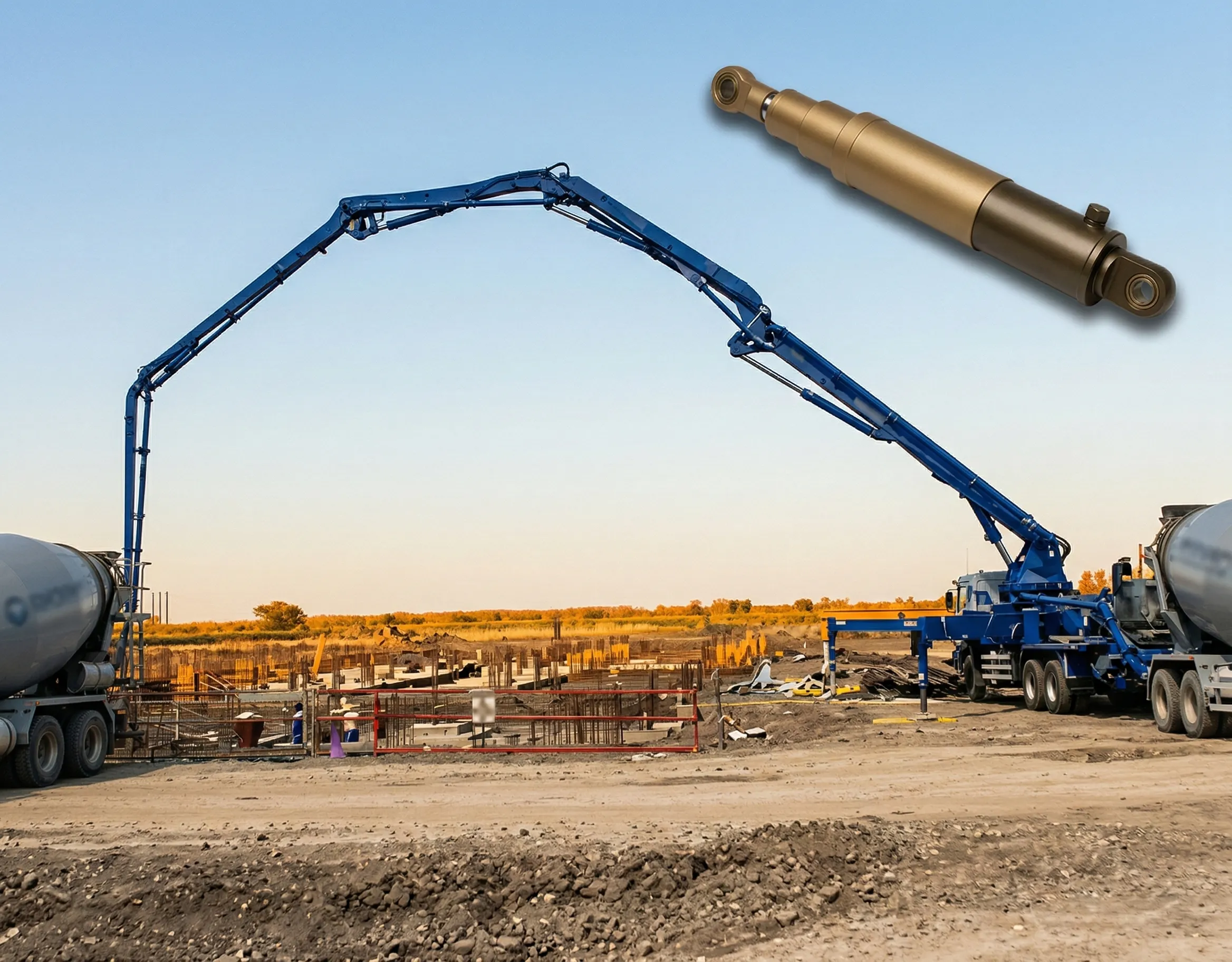
In the highly demanding and rigorous environment of underground tunneling, slope stabilization, and foundation reinforcement, the concrete shotcrete machine acts as the absolute lifeblood of the operation. Within this complex equipment, the hopper system serves as the critical receiving throat where heavy, viscous materials are temporarily held before being pressurized and sprayed. To keep this dense, wet mixture in a fluid, pumpable state and prevent rapid setting, a mechanical agitation system must operate continuously. The specific fluid power component responsible for driving this relentless physical motion is the Hopper Agitating Cylinder. This specialized unit must push and pull the internal mixing shaft back and forth, preventing the cement slurry from segregating, stiffening, or causing a catastrophic blockage in the main pumping line.
The operating environment for a Hopper Agitating Hydraulic Cylinder is brutally unforgiving. It is characterized by thick clouds of abrasive cement dust, continuous mechanical vibration radiating from the main pumping mechanism, and highly alkaline moisture splashing directly onto the equipment. Standard commercial-grade fluid power components simply cannot survive here. The airborne cement dust acts as a microscopic sandpaper. During every retraction stroke, a standard wiper allows this grit to bypass the gland, aggressively attacking the metal and tearing the internal polyurethane seals. This inevitably leads to the primary failure mode: severe rod wear, followed rapidly by total fluid loss and a seized hopper.
As a globally recognized hydraulic cylinder manufacturer with extensive field engineering experience, we have entirely re-engineered the sealing matrix and physical architecture of this component. We developed a proprietary, impenetrable dust-proof structure designed specifically for shotcrete applications. By integrating high-grade 27SiMn steel and utilizing precision robotic welding, our Hopper Agitating Cylinder absorbs medium-load agitation stresses without succumbing to structural fatigue. For construction fleets operating across South Korea, Japan, and the wider Asian heavy machinery market, upgrading to our specialized hydraulic parts significantly reduces equipment downtime, dramatically lowers long-term maintenance budgets, and ensures continuous concrete delivery on critical construction timelines.
Technical Parameters and Customization Scope
Reliable mechanical engineering begins with exact, uncompromising specifications. The technical data provided below outlines the foundational engineering parameters of our standard model designed specifically for concrete shotcrete machines. While these metrics reflect our highly optimized standard configuration, our engineering division offers extensive customization regarding stroke length, bore capacity, mounting pin diameters, and fluid port threads to perfectly match your proprietary equipment architecture.
| Engineering Parameter | Specification Data and Material Details |
|---|---|
| Industry Application | Engineering Machinery / Construction Equipment |
| Equipment Category | Concrete Shotcrete Machine / Concrete Spraying Machine |
| Subsystem / Action | Hopper System (Material Agitation and Stirring) |
| Specific Product Name | Hopper Agitating Cylinder / Hopper Agitating Hydraulic Cylinder |
| Action Mode | Double acting hydraulic cylinder |
| Internal Structure Type | Heavy-Duty Piston Type |
| Manufacturing Structure | Welded Type (Deep-penetration, thermally stress-relieved) |
| Material System | 27SiMn High-Strength Alloy Steel |
| Surface Treatment | Hard Chrome Plated (Extreme abrasion resistance) |
| Environment Rating | Severe Dust + Continuous High-Frequency Vibration |
| Working Condition Feature | Medium Load Agitation (Continuous rapid oscillation) |
| Typical Failure Mode Prevented | Severe Rod Wear & Gland Seal Extrusion |
| Recommended Configuration | Advanced Dust-Proof Structure (Multi-lip wiper) |
Applied Fluid Dynamics and Working Principle
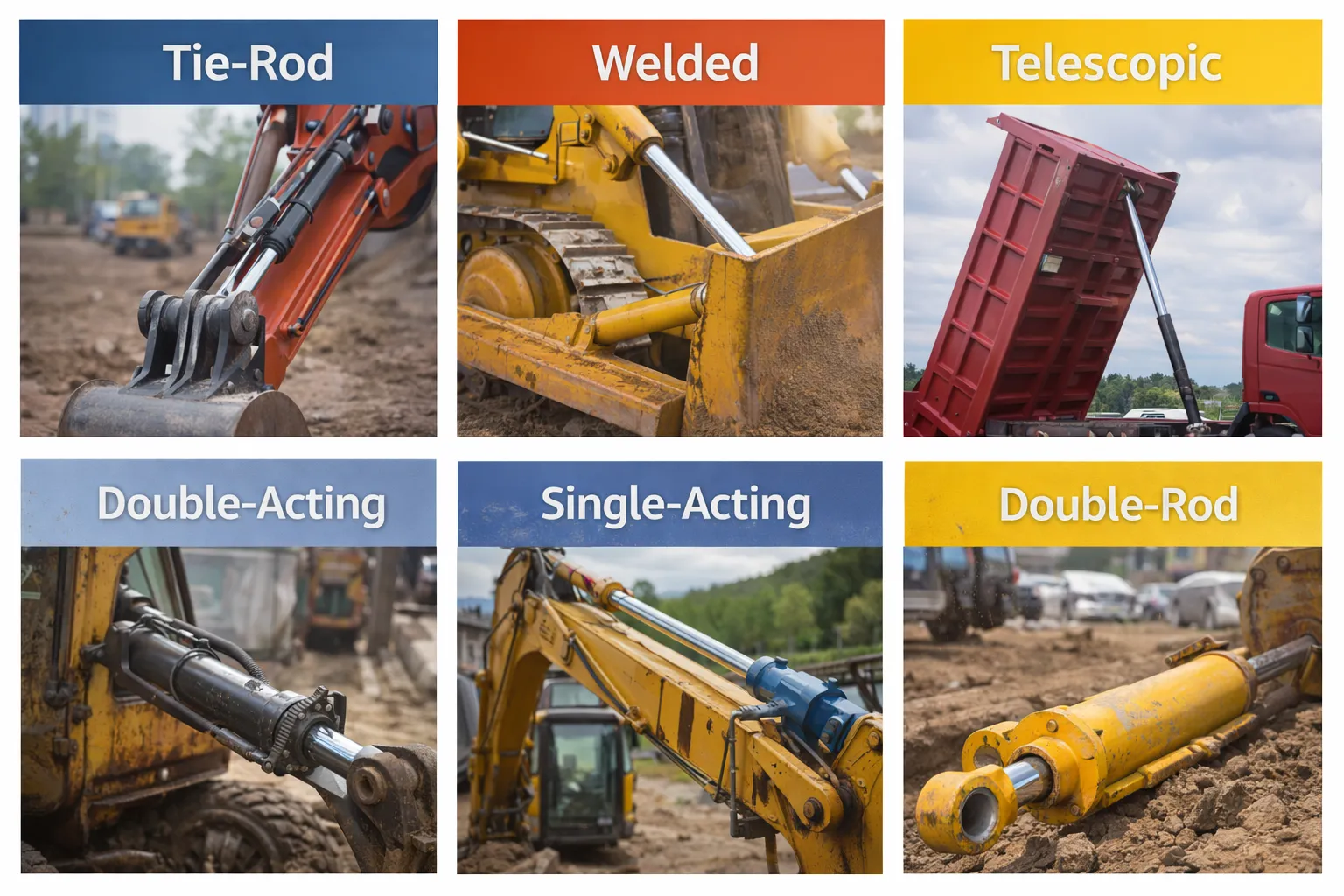
To accurately assess the structural resilience of the Hopper Agitating Cylinder, one must deeply examine the fluid mechanics involved. A hopper mixing system demands relentless, uninterrupted physical force. Unlike a basic piece of lifting equipment that raises a boom and holds pressure, the Hopper Agitating Hydraulic Cylinder is subjected to continuous dynamic oscillation. Because wet concrete aggregates generate heavy resistance in all directions, this system functions exclusively as a double acting hydraulic cylinder. Utilizing a single acting hydraulic cylinder that relies on an internal return spring or gravity is mechanically impossible here; it simply lacks the raw pulling force required to drag the heavy steel mixing shaft backwards through the settling slurry.
During active operation, the machine’s primary hydraulic pump forces oil through a directional control block directly into the blind end (cap end) of the barrel. This high-pressure fluid acts entirely against the large surface area of the hydraulic cylinder piston, generating the immense linear thrust needed to push the internal agitator paddles through the medium-load concrete mix. Within fractions of a second after reaching full extension, the control valve shifts, instantaneously routing high-pressure fluid to the rod end. This violently reverses the mechanical motion, pulling the paddles back. This continuous back-and-forth cycle occurs dozens of times per minute, ensuring the concrete remains properly hydrated and highly flowable for the main suction valves.
However, the true engineering challenge lies not in the internal fluid pressure, but in managing external contamination during this rapid cycling. As the chrome rod extends, it becomes heavily coated in a slurry of alkaline moisture and fine abrasive silica dust. If this abrasive paste is drawn back inside the gland during the retraction stroke, it will systematically destroy the internal seals. Our solution intercepts this threat flawlessly. We designed a rigorous, outward-facing scraper mechanism—the dust-proof structure—that physically shears dried concrete and abrasive dust off the rod before it reaches the main dynamic seals. This guarantees that the internal fluid environment of the Hopper Agitating Cylinder remains completely pristine throughout thousands of hours of medium-load agitation.
Flawless OEM Brand Replacement Compatibility
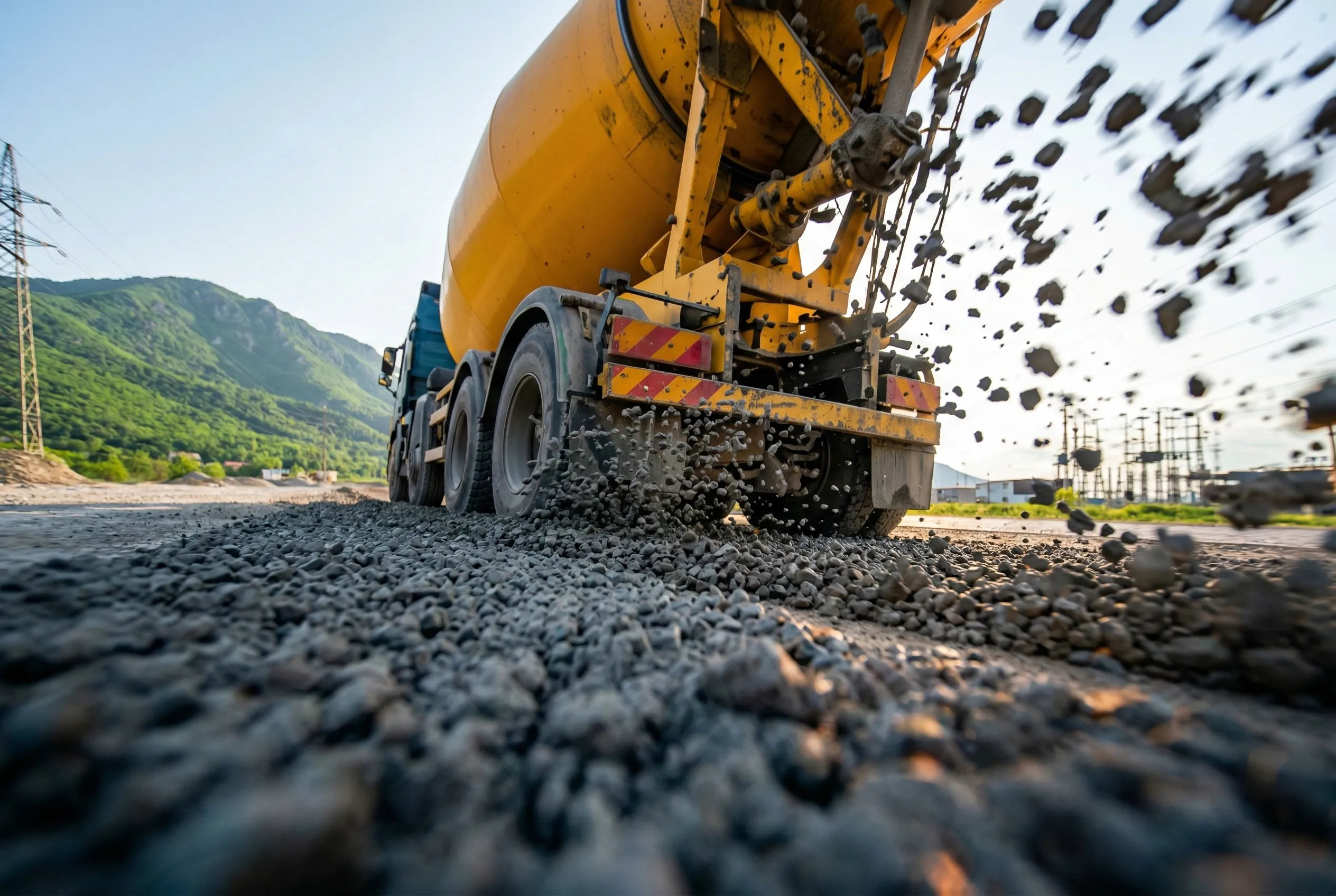
Equipment fleet directors face constant pressure to secure highly reliable, heavy-duty replacements when original factory components inevitably succumb to wear. Waiting weeks for an overpriced OEM part while an underground tunneling project halts is a financially devastating scenario. We engineer our specialized hydraulic cylinder components to serve as exact, frictionless drop-in replacements for the global construction industry’s most prevalent machinery platforms.
Engineering Disclaimer: The equipment brand names mentioned in this technical document are utilized strictly for the purpose of dimension referencing, equipment compatibility matching, and facilitating accurate sizing selection for our B2B procurement clients. We operate as an independent manufacturing entity, and this reference does not represent trademark infringement or an official brand endorsement.
Our advanced manufacturing databases allow us to produce exact physical matches regarding trunnion pin diameters, fully retracted lengths, total stroke limits, and fluid port threading for industry-leading global brands such as Putzmeister, Schwing, and major Asian manufacturers including Sany and Zoomlion. Furthermore, recognizing the intense infrastructure development demands in South Korea, our dimensional footprints perfectly align with domestic heavyweights such as Junjin, KCP Heavy Industries, and Everdigm. When your on-site mechanics are tasked with fixing hydraulic cylinders on these complex machines, choosing our specialized Hopper Agitating Cylinder means absolutely zero modifications to your hopper frame—just unpin the old unit, bolt in the upgraded replacement, and resume pumping concrete immediately.
Five Core Technical Engineering Advantages
Surviving an environment defined by severe dust, high-frequency vibration, and constant mechanical agitation requires purpose-driven fluid power engineering. Here are the five foundational technologies that elevate our Hopper Agitating Hydraulic Cylinder far beyond standard aftermarket offerings:
I. Impregnable Dust-Proof Sealing Architecture
The indisputable primary failure mode of a hopper agitation unit is rod wear caused by abrasive intrusion. We developed a proprietary multi-lip outer wiper gland specifically for this threat. Constructed from advanced, high-density elastomers and encased in a rigid metallic shell, this scraper forcefully ejects wet slurry and microscopic silica dust from the rod surface on every cycle. It perfectly protects the primary internal pressure seals of the Hopper Agitating Cylinder, entirely eliminating the leakage issues that plague generic components.
II. High-Yield 27SiMn Steel Barrel Construction
While the vast majority of budget hydraulic rams are manufactured from standard 45# carbon steel to cut costs, we exclusively source 27SiMn (Silicon-Manganese alloy steel) for our barrels. During medium load agitation, sudden concrete blockages in the hopper cause massive internal hydraulic pressure spikes. 27SiMn possesses vastly superior tensile elasticity, ensuring the barrel will not permanently bulge or deform under pressure, thereby maintaining a perfect sealing tolerance around the hydraulic cylinder piston.
III. Heavy-Duty Anti-Abrasion Chrome Plating
To combat the destructive sandpaper effect of flying cement dust, our high-tensile piston rods undergo a rigorous multi-stage centerless grinding process followed by highly dense, thick-film hard chrome electroplating. This specialized process creates a micro-cracked surface topography that holds microscopic amounts of fluid lubrication while presenting an incredibly hard external armor. This completely neutralizes the threat of surface scoring and aggressive rod wear on the Hopper Agitating Hydraulic Cylinder.
IV. Deep-Penetration Welded Structural Rigidity
Shotcrete hoppers shake violently during operation. Basic tie-rod style cylinders or units with superficial fillet welds will quickly vibrate loose, lose torque, and leak. We utilize a 100% welded type manufacturing structure. Our automated robotic welding lines create deep, uniform metallic fusion between the end caps, ear mounts, and the main barrel. Post-weld thermal stress treatment creates a monolithic steel body that is virtually impervious to continuous high-frequency vibration.
V. Ultra-Low Friction Thermal Management
Continuous, rapid oscillation generates substantial internal heat that can harden and destroy standard rubber seals. We incorporate extended, self-lubricating PTFE and bronze-infused guide rings within the gland and directly on the piston. This prevents any metal-to-metal contact inside the tube even under heavy side-loading, drastically lowering heat generation and extending the fatigue life of the entire fluid power assembly.
Autonomous Manufacturing and Strict Quality Control
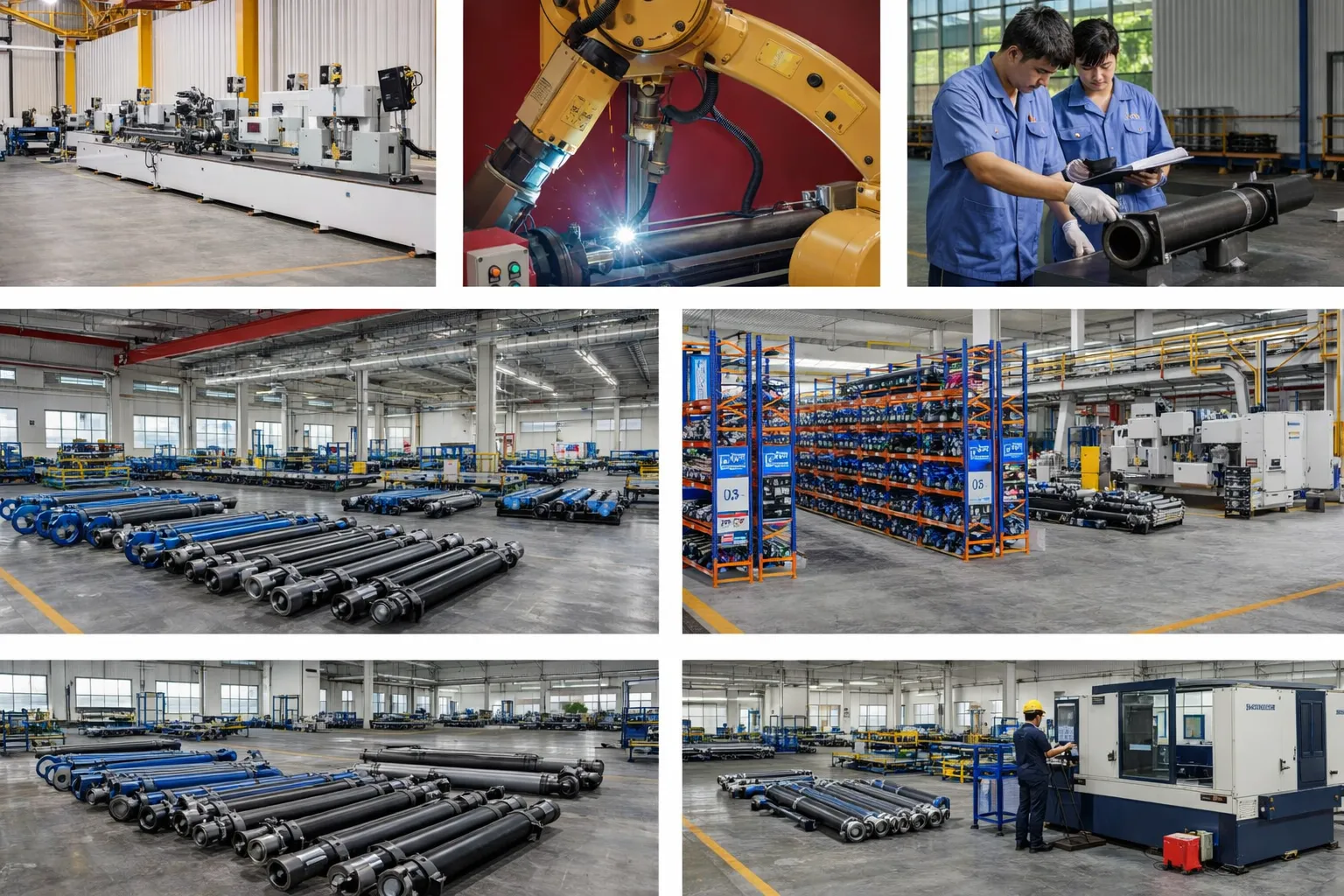
As a dedicated, high-capacity engineering facility, we absolutely refuse to outsource critical production steps. Every Hopper Agitating Cylinder is machined, welded, assembled, and painted entirely within our own advanced manufacturing complex. By controlling the entire supply chain, we dictate the exact dimensional tolerances required to survive in a concrete pumping environment.
Quality control is aggressively implemented at every phase. Before final assembly, all internal barrel surfaces undergo high-speed skiving and roller burnishing to achieve a mirror-like finish, which drastically reduces dynamic seal friction. The structural integrity of our welded trunnions and mounts is verified using ultrasonic non-destructive testing (NDT) to ensure zero hidden micro-cracks that machine vibration could exploit.
Ultimately, every single completed unit is pushed through a punishing hydraulic bench test before shipping. We pressurize the assemblies up to 1.5 times their rated medium-load agitation limits to meticulously inspect for internal fluid bypass, external weeping, and smooth, judder-free actuation. Each unit is stamped with a distinct serial number, ensuring absolute metallurgical and operational traceability for our B2B procurement partners demanding the highest quality hydraulic cylinder products.
Broad Industry Applications and Adaptability
While the severe dust and vibration protection was pioneered specifically for concrete machinery, the resulting heavy-duty architecture is highly sought after across multiple rugged industries. Our customized engineering team routinely adapts these units for various extreme applications found within the construction machinery industry and beyond:
- Heavy Engineering Machinery: Operating jaw crushers, mining screens, and heavy-duty drilling rigs where airborne abrasive silica is entirely unavoidable and standard cylinders fail.
- Metallurgy & Heavy Manufacturing: Actuating furnace doors and handling molten slag carriages in steel mills where high radiant heat and heavy metallic dust destroy standard seals.
- Plastic & Rubber Machinery: Providing the continuous oscillation required for large-scale industrial compounding mixers and raw material extrusion hoppers.
- Material Handling & Logistics Automation: Driving the vibration grates and heavy feed gates on bulk aggregate conveyor systems in port terminals and rail yards.
- Environmental & Recycling Equipment: Powering the agitation shafts in municipal sludge thickeners and industrial waste shredders handling unpredictable, corrosive loads.
Comparative Analysis: Ordinary Aftermarket vs. High-Performance
Procurement departments must evaluate the total lifecycle cost rather than just looking at the initial cost on an invoice. Installing a generic, low-budget cylinder on a high-vibration shotcrete hopper is a false economy that guarantees catastrophic machine failure. See the stark technical differences below:
| Evaluation Metric | Ordinary Aftermarket Cylinder | Our High-Performance Hopper Agitating Cylinder |
|---|---|---|
| Dust Protection | Basic single-lip rubber wiper. Rapidly allows cement dust intrusion. | Advanced multi-lip dust-proof structure. Impervious to abrasive slurry. |
| Rod Surface Quality | Thin commercial chrome. Easily scratched by aggregates, leading to severe rod wear. | Thick-film hard chrome plating. Extremely high surface hardness resists all scoring. |
| Vibration Resistance | Tie-rod construction or basic fillet welds. Vibrates loose quickly. | Deep-penetration welded type body. Monolithic strength handles continuous oscillation. |
| Internal Material | 45# Carbon Steel. Prone to ballooning under concrete blockage pressure spikes. | 27SiMn Alloy Steel. Exceptional yield strength maintains tight seal tolerances. |
| Total Lifecycle Cost | Extremely High. Constant need for emergency machine downtime and fluid replacement. | Highly Economical. Install once, operate safely for thousands of hours. |
Verified Global Engineering Case Studies
True engineering value is proven in the mud, dust, and grit of the field. Below are five verified instances where our custom agitation solutions resolved critical failures for B2B clients worldwide, significantly upgrading their operational efficiency.
Case 1: Eradicating Hopper Stalls in Seoul Tunneling Projects
Location & Date: Seoul, South Korea (November 2025)
Client & Application: A major civil engineering contractor operating a fleet of Junjin concrete shotcrete machines in deep subway excavations.
The Challenge: The dense, fast-setting wet mix was causing massive resistance. The OEM agitation units were suffering from rapid rod wear due to severe airborne dust, leading to total fluid loss and hopper blockages deep underground.
Connection & Result: The fleet maintenance director discovered our dust-proof specs via a targeted Google search for heavy-duty replacements. We dispatched a batch of our reinforced 27SiMn models. Upon installation of the Hopper Agitating Cylinder, the hopper stalling ceased immediately, and seal lifespans tripled.
“We were losing thousands of dollars a day trying to pump concrete with blown seals. The need for constant hydraulic cylinder repair vanished. The rod protection on these units is phenomenal. No scratches, no leaks, just continuous power.” — Mr. Choi Min-ho, Lead Maintenance Engineer.
Case 2: Curing Extreme Vibration Leaks in Tokyo
Location & Date: Tokyo, Japan (February 2025)
Client & Application: Urban high-rise developer utilizing stationary Putzmeister concrete pumps.
The Challenge: The continuous high-frequency vibration from pumping concrete 60 stories up was causing standard tie-rod cylinders on the hopper to vibrate loose, resulting in severe oil weeping, pressure loss, and environmental hazards on site.
Connection & Result: Met our technical sales team at an international machinery expo. We retrofitted their hoppers with our 100% welded type double acting hydraulic cylinder assemblies. The monolithic structure completely absorbed the vibrations, eliminating all leaks.
“Managing the task of continually fixing hydraulic cylinders was destroying our pouring schedules. Your welded design solved the vibration issue entirely. Incredible build quality.” — Kenji Takahashi, Operations Manager.
Case 3: Surviving Aggressive Aggregates in Vietnam
Location & Date: Hanoi, Vietnam (July 2024)
Client & Application: Hydroelectric dam contractor operating heavy-duty Sany pumping equipment.
The Challenge: The local concrete mix utilized sharp, highly abrasive river rock aggregates. The slurry splashing directly onto the cylinder rods was shredding standard rubber wipers within a single week of operation.
Connection & Result: Reached out through our website contact portal. We supplied units fitted with our advanced polyurethane dust-proof structures and ultra-thick chrome rods. The new components confidently sheared the abrasive material away without damage.
“The standard factory parts were too weak for our aggregate mix. Upgrading to these heavy-duty hydraulic cylinder components was the smartest financial decision we made this year.” — Nguyen Tran, Site Director.
Case 4: Coastal Infrastructure Reliability in Busan
Location & Date: Busan, South Korea (January 2026)
Client & Application: Marine engineering firm running specialized shotcrete rigs for seawall construction.
The Challenge: The highly alkaline concrete mixed with salty ocean spray caused standard chrome rods to pit and rust aggressively, leading to rapid wiper seal failure and constant maintenance.
Connection & Result: Found us via an industry B2B directory. We supplied specialized assemblies featuring our thick-film chrome and robust 27SiMn structure. The rods are now completely impervious to the salty, alkaline environment.
“These aren’t just spare parts; they are armor against corrosion. The Hopper Agitating Hydraulic Cylinder guarantees we don’t leak hydraulic fluid into the ocean.” — Kang D., Maintenance Supervisor.
Case 5: Rapid Fleet Standardization in Singapore
Location & Date: Singapore (August 2025)
Client & Application: Massive infrastructure firm maintaining over 30 Zoomlion pump trucks.
The Challenge: Required a massive fleet overhaul to pass strict government safety and environmental (no-leak) inspections. OEM part lead times were extending past three months, threatening their project bids.
Connection & Result: Contacted our international sales desk. Thanks to our autonomous manufacturing, we produced and shipped the entire bulk order of precisely compatible drop-in replacements within 25 days, saving their inspection timeline.
“Speed of delivery combined with zero compromise on quality. When it comes to securing a competitive hydraulic cylinder price at volume, they are absolutely unmatched.” — James Lim, Procurement Head.
Frequently Asked Questions (FAQ) for Engineering Procurement
We value complete technical transparency. Below are the precise answers to the most common engineering and logistical inquiries we receive from B2B partners looking to upgrade their fleet machinery.
1. Exactly how does the dust-proof structure prevent rod wear?
Standard wipers allow fine cement dust to enter the gland, where it mixes with hydraulic fluid to form a highly abrasive paste that destroys the rod. We utilize a multi-lip, aggressive polyurethane scraper that forcefully ejects dry and wet slurry from the chrome surface during the retraction stroke, ensuring only clean metal passes into the internal seal matrix.
2. Why is a double acting design required for hopper agitation?
Wet concrete is incredibly dense and sticky. A single acting hydraulic cylinder relying on a mechanical spring-return cannot generate the force needed to pull the mixing shaft backwards through the slurry. A double acting hydraulic cylinder utilizes pressurized fluid for both extension and retraction, granting absolute, unstoppable control over the continuous oscillation needed to prevent material blockages.
3. Can these units directly replace components on older Korean pump trucks?
Yes. We hold extensive dimensional databases for major global brands, including legacy models from KCP, Junjin, and Everdigm. Our engineered replacements match your machine’s pin diameters, stroke lengths, and fluid port threads perfectly, meaning your mechanics can install them directly without fabricating custom brackets or altering the chassis.
4. Why do you use 27SiMn steel instead of standard 45# carbon steel?
In a shotcrete machine, if the pipeline briefly clogs, the internal hydraulic pressure spikes massively. Standard 45# steel barrels can microscopically expand or “balloon” under this pressure, allowing fluid to bypass the hydraulic cylinder piston. 27SiMn alloy steel has a drastically higher yield strength, remaining entirely rigid under severe medium load agitation spikes.
5. How do welded structures survive the high-frequency vibration?
Bolted or tie-rod cylinders rely on mechanical tension, which rapidly loosens when bolted to a vibrating concrete hopper. Our welded type construction fuses the end caps and mounting ears directly into the main barrel using automated robotic welding. We then apply thermal stress-relief, creating a solid, monolithic steel block that cannot shake apart under operational strain.
6. Do you supply spare parts for future maintenance schedules?
Absolutely. We support the entire operational lifespan of our products. We can readily supply exact-fit OEM seal kits, proprietary PTFE guide rings, and even customized replacement chrome rods so your internal mechanics can rebuild the units efficiently in the future without sourcing from multiple vendors.
7. What is the standard shipping lead time to South Korea or Japan?
Because we manufacture autonomously, we maintain a rolling inventory of standard dimension assemblies that can dispatch within 7-10 days. For large fleet bulk orders or custom dimensional tweaks, production takes roughly 20-25 days. Ocean freight to major ports like Busan, Incheon, or Tokyo is highly efficient, minimizing your equipment downtime.
8. How do I initiate a technical request or custom sizing quote?
You can utilize the direct contact link at the bottom of this page. Provide our engineering team with the make and model of your shotcrete machines, OEM part numbers, or raw physical measurements (bore, rod, and stroke dimensions). We will quickly cross-reference the data and deliver a precise, highly competitive proposal analyzing the total lifecycle cost benefits.
9. Are these units suitable for continuous 24-hour operation?
Yes. Our Hopper Agitating Cylinder is engineered with low-friction thermal management features. The combination of precision internal bore finish and advanced guide rings significantly reduces heat generation, allowing the unit to maintain optimal fluid viscosity even during non-stop, round-the-clock pouring schedules.
10. How do your components compare to generic aftermarket options?
Generic aftermarket assemblies are built for low initial cost, utilizing basic 45# steel and simple wipers, leading to rapid rod wear in concrete applications. We build engineered solutions featuring 27SiMn steel and dust-proof structures. The difference is measured in thousands of reliable operating hours, resulting in a vastly superior return on investment.
Eradicate Hopper Downtime Today
Do not allow abrasive dust and relentless vibration to destroy your machinery and profitability. Equip your concrete fleet with purpose-built fluid power engineering designed explicitly to survive the industry’s harshest realities. Whether you need an emergency single replacement or a comprehensive fleet upgrade, our technical team is ready to deliver.
Editor: Cxm