Platform Lifting Cylinder for Wind Turbine Blade Inspection Vehicle
Engineered with advanced servo feedback technology and heavy-duty mud exclusion sealing matrices to guarantee absolute platform stability, unparalleled precision, and zero fluid leakage during extreme high-altitude wind farm maintenance operations.
Equipment Overview & Core Industrial Value Proposition
The exponential global growth of renewable wind energy, particularly across the geographically diverse and rugged topographies of East Asia, has presented immense infrastructural maintenance challenges. Wind turbine rotor blades, frequently exceeding 80 meters in length and operating under continuous, severe aerodynamic stress, demand meticulous periodic surface inspections and composite structural repairs to maintain peak power generation efficiency. Safely accessing these colossal fiberglass structures, which are typically suspended more than a hundred meters above the ground, necessitates the deployment of highly specialized heavy mobile machinery: the wind turbine blade inspection vehicle. Operating at the absolute mechanical core of this complex truck-mounted aerial work platform is the platform lifting cylinder. This critical fluid power actuator provides the primary vertical thrust required to safely hoist the heavy steel staging basket, heavy diagnostic equipment, and human technicians into the sky. Without flawless, unwavering actuation from this specific component, high-altitude turbine maintenance is rendered not only impossible but exceptionally dangerous.
Navigating and operating these specialized inspection vehicles in remote, unpaved wind farm environments subjects the hydraulic infrastructure to brutal operational realities. The environment is definitively categorized by severe outdoor exposure, characterized primarily by thick, abrasive mud and deep standing water. As the heavy truck traverses unpaved mountain access roads or muddy coastal plains, the exposed rods of the elevating mechanism are continuously bombarded with abrasive grit and wet slurry. When standard commercial hydraulic parts are utilized in these hostile conditions, the mud instantly overwhelms basic commercial wiper seals. As the rod retracts, this abrasive contamination is dragged directly into the internal pressure vessel, heavily scoring the cylinder barrel walls and rapidly destroying the primary elastomeric sealing matrix. The inevitable, catastrophic failure mode in this scenario is fluid leakage. Once a lift cylinder begins to leak internally or externally, it fundamentally loses its ability to hold static pressure. This causes the elevated personnel platform to sag, drift downward unpredictably, and severely endanger the lives of the technicians working at extreme altitudes.
Recognizing this profound safety vulnerability within the wind energy service sector, we completely reimagined and re-architected the traditional lifting actuator. Our purpose-built platform lifting hydraulic cylinder is forged from high-rigidity carbon steel and features a multi-stage, highly aggressive mud-scraping sealing system designed specifically for unpaved, wet environments. We have definitively eradicated the leakage failure cycle common in off-road applications. Furthermore, standard lifting systems often suffer from jerky, inaccurate boom movements due to changing payload weights and intense wind resistance. As an elite hydraulic cylinder manufacturer, our unique positioning is solidified by the integration of an advanced servo feedback system deep within the cylinder rod. This sophisticated technology provides the vehicle’s central computer with absolute, real-time positional data, ensuring millimeter-perfect platform leveling and unmatched structural stability even in strong crosswinds.
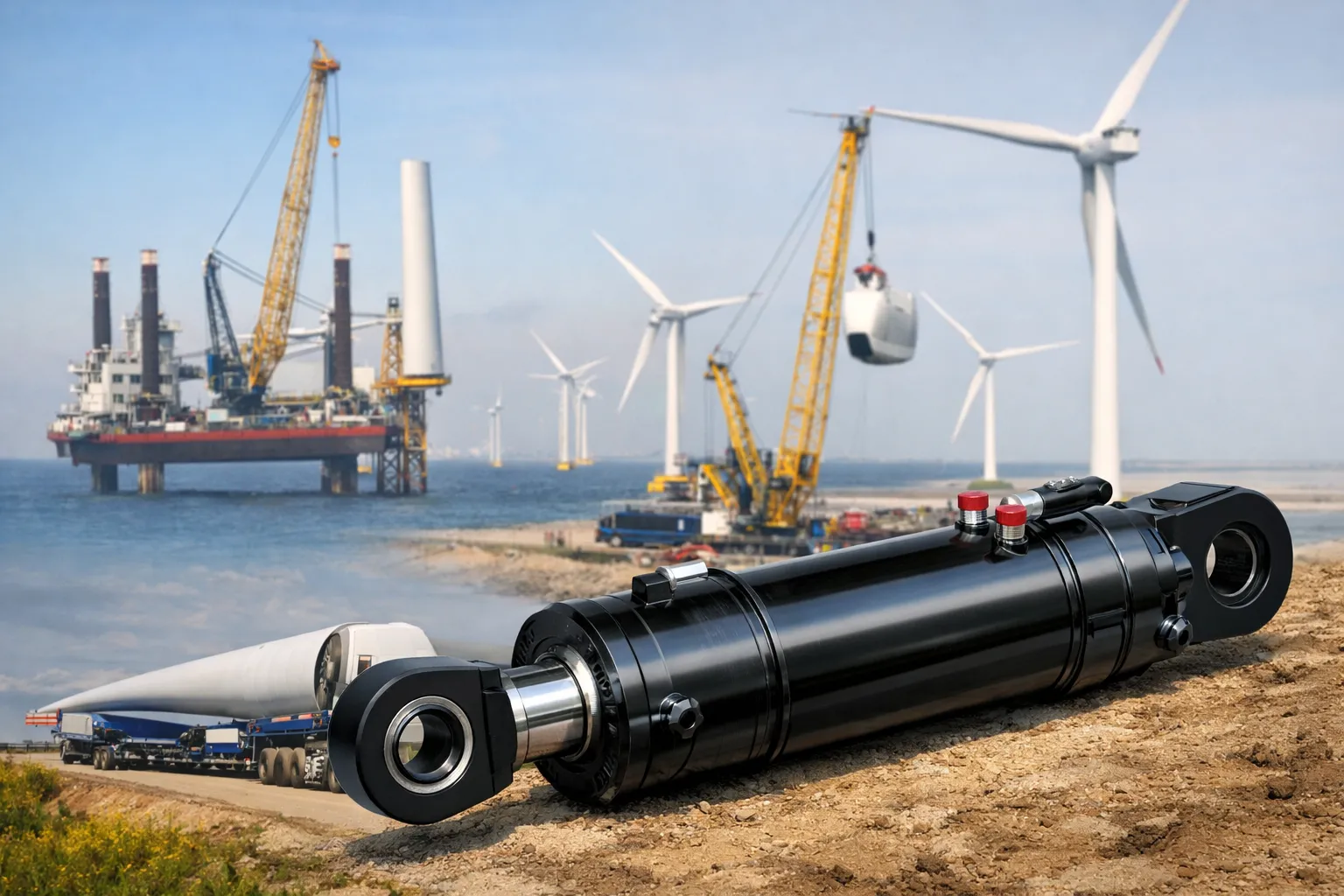
Technical Parameters & Customization Envelope
Designing high-pressure fluid power systems for mobile inspection vehicles requires absolute adherence to rigorous weight, spatial, and dynamic safety constraints dictated by the specific vehicle chassis. We maintain a highly flexible, vertically integrated production facility, enabling us to meticulously scale our platform lifting cylinder dimensions to precisely match your specific scissor-lift or articulating telescopic boom architecture. The comprehensive matrix below outlines the fundamental engineering parameters that define our heavy-duty wind maintenance series.
| System Attribute | Engineered Specification | Application Context & Operational Benefit |
|---|---|---|
| Target Industry | Wind Power Generation | Optimized specifically for the heavy maintenance and field service sector of remote wind farms. |
| Equipment Category | Wind turbine blade inspection vehicle | Integrates directly into the primary elevating chassis of heavy-duty specialized aerial trucks. |
| Subsystem Integration | Lifting system | Provides the foundational vertical thrust for complex scissor mechanisms or multi-stage articulating booms. |
| Product Designation | Platform lifting cylinder | The primary safety actuator exclusively responsible for high-altitude personnel suspension and stability. |
| Operating Action | Double acting hydraulic cylinder | Utilizes highly pressurized fluid for both rapid extension and strictly controlled, actively powered retraction. |
| Internal Structure Type | Piston cylinder | Engineered with an optimized bore diameter to maximize lifting capacity while maintaining smooth low-speed operation. |
| Manufacturing Assembly | Welded construction | Eliminates tie-rod vulnerabilities, creating a highly rigid vessel that effortlessly absorbs severe off-road vehicle vibrations. |
| Core Material System | Carbon steel | High-strength alloyed carbon steel tubing prevents structural bending or buckling when the boom is fully extended. |
| Surface Defense Treatment | Chrome plated | Thick, hard chromium deposition provides exceptional scratch resistance against abrasive airborne silica and environmental rust. |
| Environmental Rating | Outdoor + Muddy water | Heavily armored and specifically sealed to survive deep mud bogs, torrential rainfall, and off-road grit contamination. |
| Primary Working Task | Lifting action | Smoothly and forcefully elevates the heavy personnel basket directly to the necessary turbine rotor inspection height. |
| Targeted Failure Prevented | Leakage | Completely halts the devastating internal seal bypass that causes elevated platforms to lose height or leak toxic oil. |
| Recommended Configuration | Servo feedback system | Provides continuous, real-time, closed-loop positional data for ultra-precise platform leveling and automated stabilization. |
Operational Mechanics: Precision Elevation via Servo Control
To truly appreciate the deep engineering behind a platform lifting hydraulic cylinder, one must thoroughly examine the complex fluid dynamics governing modern mobile aerial platforms. When the inspection vehicle arrives at the base of the wind tower and deploys its stabilizing outriggers, the operator in the basket initiates the ascent sequence via a joystick. The vehicle’s hydraulic power unit (HPU) meters highly pressurized, filtered oil through a proportional directional control valve and directly into the cap end (bottom chamber) of the cylinder barrel. Because this system is engineered as a highly robust double acting hydraulic cylinder, fluid is simultaneously and precisely allowed to exit the rod end. The immense pressure acting upon the internal hydraulic cylinder piston creates a massive linear lifting force, pushing the heavily chrome-plated carbon steel rod outward and driving the scissor or boom mechanism smoothly into the sky.
The descent phase of a lifting operation is arguably even more critical to human safety. A standard single acting hydraulic cylinder relies entirely on the weight of gravity and a simple bleed valve to retract. This can cause violent shuddering, jerky movements, or a terrifying free-fall if the mechanical linkages bind or a valve fails. Our double-acting architecture solves this critical hazard by actively pumping pressurized fluid into the rod end during descent, forcefully pulling the platform down. Simultaneously, the fluid exiting the cap end is forced through heavily restrictive, integrated counterbalance holding valves. This precise fluid dynamic creates a rigid hydraulic tension, meaning the platform descends with millimeter-perfect smoothness, completely devoid of the terrifying juddering that normally unnerves technicians working at 80 meters in the air.
However, raw lifting force is entirely useless without exact control. High altitude wind gusts constantly buffet the elevated platform, demanding continuous structural micro-adjustments to keep the basket steady. This is where our platform lifting cylinder truly excels beyond standard commercial actuators. Integrated deeply within the cylinder’s core carbon steel architecture is a state-of-the-art servo feedback system. Utilizing an internal magnetostrictive linear transducer, the cylinder continuously relays its exact stroke position back to the vehicle’s central Programmable Logic Controller (PLC) in real-time. If the wind attempts to tilt the platform or push the boom, the PLC instantly detects the deviation via the feedback system and micro-adjusts fluid pressure in milliseconds. This closed-loop servo control ensures the inspection basket remains perfectly horizontal and rigidly locked in space, allowing blade repair technicians to perform delicate composite laminating work safely and highly efficiently.
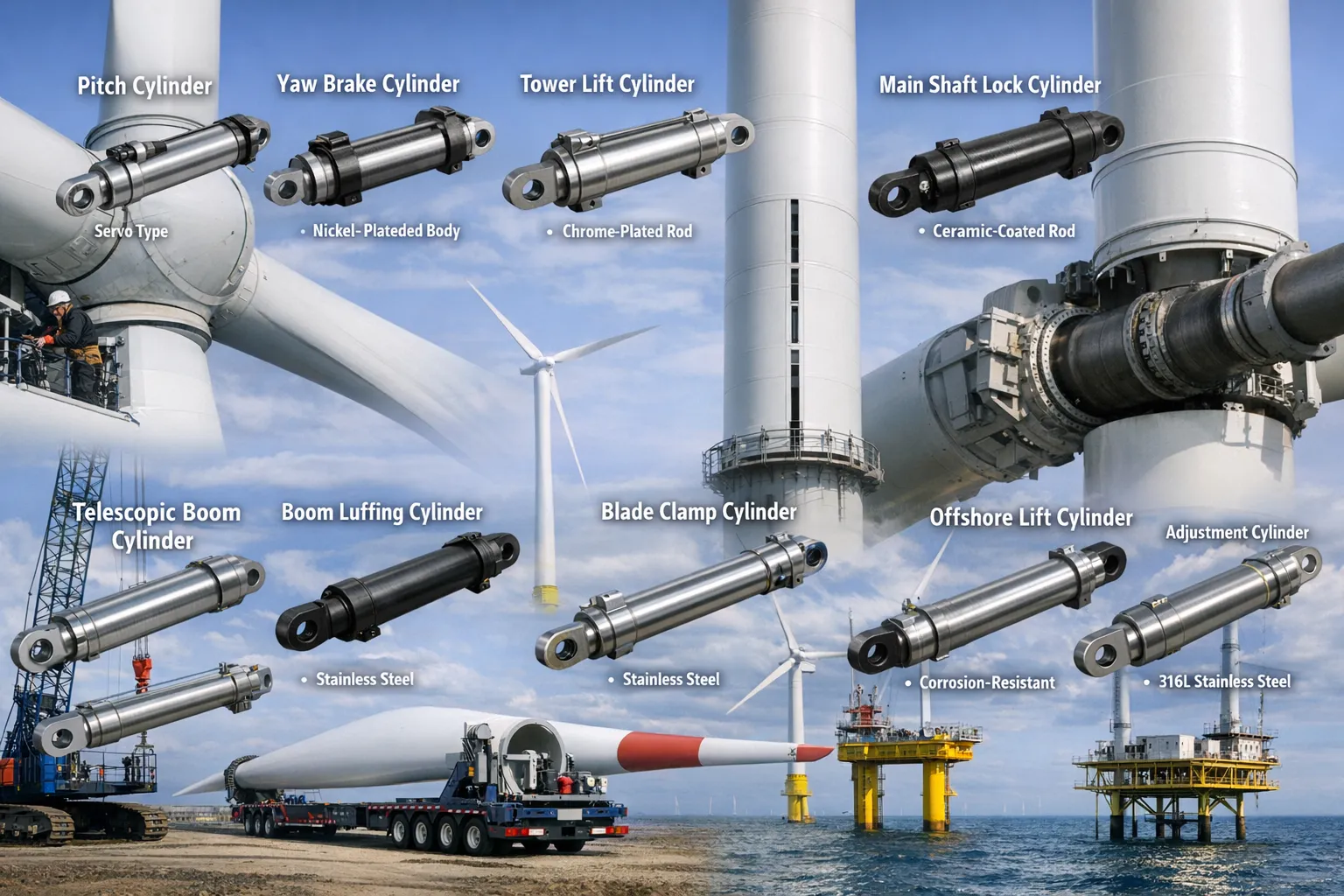
Seamless Direct Replacement for Leading Mobile Equipment Brands
Wind farm service providers and heavy equipment rental companies consistently face severe supply chain bottlenecks when dealing with failing aerial platform components. Procuring replacement hydraulic cylinder components from European or North American original equipment manufacturers (OEMs) often incurs exorbitant financial markups and multi-month shipping delays, leaving critical maintenance vehicles grounded and unprofitable. To permanently resolve this costly downtime, our dedicated reverse-engineering division has carefully dimensioned our lifting actuators to function as exact, drop-in replacements for the global leaders in truck-mounted aerial platforms.
We possess the advanced manufacturing capacity to supply custom platform lifting hydraulic cylinder units that flawlessly match the trunnion mounts, pin-eye diameters, stroke limits, and complex holding valve manifolds of heavy machinery originally built by industry giants such as Palfinger, Ruthmann, Bronto Skylift, Socage, Multitel, JLG, and Liebherr. When your fleet mechanics are tasked with fixing hydraulic cylinders in the maintenance depot, they can confidently execute a direct hardware swap using our superior, mud-resistant units without requiring any dangerous cutting, welding, or structural modifications to the vehicle chassis or boom arm.
Disclaimer: The explicit mention of these specific third-party heavy machinery and fluid power brands is provided strictly for technical cross-referencing and to demonstrate dimensional structural compatibility for fleet procurement officers. It does not imply any official partnership, endorsement, nor does it constitute trademark infringement against the respective global trademark holders. We independently engineer and manufacture our own highly optimized alternative fluid power solutions, offering an exceptionally competitive hydraulic cylinder price.
Six Core Technical Advantages for Harsh Outdoor Environments
Transforming a standard industrial actuator into a life-critical elevating device capable of surviving deep mud and high winds requires uncompromising mechanical design and advanced tribology. Here are the core engineering advantages that establish the unmatched reliability of our lift cylinder series:
1. Advanced Servo Feedback System Integration
Standard commercial cylinders operate blindly. By embedding high-resolution linear displacement sensors deep within the hollow core of the piston rod, we provide the vehicle’s PLC with absolute, continuous positional data. This completely protected servo feedback system enables incredibly precise platform leveling, automated height presets, and unparalleled stability during heavy wind buffering, essentially rendering the platform immune to external disturbances.
2. Extreme Mud and Water Defense Matrix
To combat the harsh outdoor realities of rural wind farms, we completely redesigned the cylinder gland. Instead of a standard rubber wiper, we utilize a heavy-duty, double-lipped polyurethane mud scraper. This highly aggressive seal forcibly shears caked-on mud, ice, and abrasive grit off the retracting rod, ensuring absolutely no contamination enters the pressure vessel, thereby eliminating the primary cause of seal scoring and fluid leakage.
3. Ultra-Low Friction Primary Sealing Tribology
Smooth ascent and descent are critical for technician safety and comfort. We utilize proprietary PTFE-blended composite step seals supported by robust elastomeric energizers. This advanced tribological design provides an ultra-low friction gliding surface that completely prevents stick-slip juddering, even when the platform is operating at very low, precise hydraulic velocities near delicate turbine components.
4. High-Rigidity Carbon Steel Architecture
When extended tens of meters into the air, the cylinder acts as a vital structural column. Standard materials can bow or buckle under the immense compressive load and horizontal wind shear. We forge our rods and barrels from premium, high-yield carbon steel alloys, rigorously heat-treated to ensure absolute rigidity and infinite fatigue life under continuous, dynamic shifting payloads.
5. Thick Hard Chrome Plating Defense
Operating in muddy environments means silica and small rocks frequently impact the exposed rod. We apply a deep, multi-pass hard chromium deposition layer that is significantly thicker than standard commercial grades. This creates an incredibly hard, mirror-polished armor that protects the underlying carbon steel from both mechanical scratch damage and harsh environmental rust.
6. Vibration-Resistant Welded Construction
Inspection vehicles endure massive vibrations while driving over unpaved, rutted access roads to reach the turbines. Standard threaded tie-rod cylinders rapidly shake loose under these conditions, leading to catastrophic blowouts. We utilize automated, deep-penetration robotic welding to permanently fuse the cylinder base and end caps, creating a monolithic structure absolutely immune to vibrational loosening.
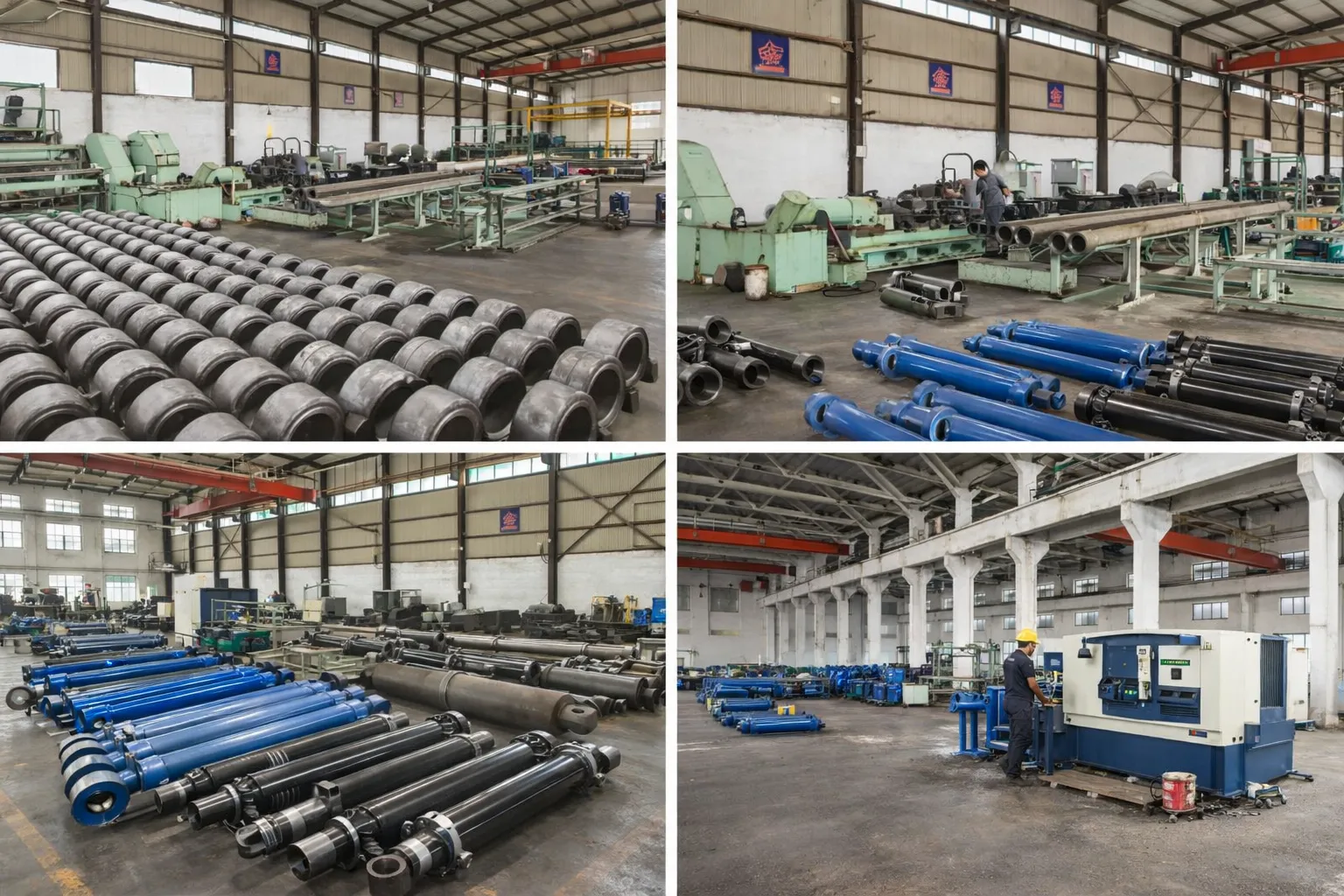
Autonomous Manufacturing Process & Stringent Quality Control
Manufacturing equipment that suspends human lives at extreme altitudes requires a total refusal to compromise on mechanical integrity. To ensure zero-defect reliability, an elite hydraulic cylinder manufacturer must strictly control every variable within the production ecosystem. Our vertically integrated facility operates under highly stringent international ISO quality parameters, ensuring we never rely on outsourced critical machining. The manufacturing process begins with intense material validation; every batch of high-yield carbon steel undergoes ultrasonic non-destructive testing (NDT) to verify the absolute absence of internal voids, micro-fractures, or slag inclusions. Our heavy-tonnage multi-axis CNC lathes and deep-hole boring centers then machine the hydraulic cylinder components to exact, single-digit micron tolerances to guarantee perfect concentricity.
Following the precision micro-honing of the internal cylinder barrel and the heavy application of the hard chrome plating, all structural components undergo highly agitated ultrasonic chemical cleaning to meet strict ISO 4406 fluid cleanliness standards. The critical integration of the servo feedback system and the final assembly of the platform lifting cylinder occur exclusively within environmentally controlled, positively pressurized cleanrooms. This protocol ensures that no microscopic dust, grit, or airborne workshop particulate contaminates the delicate PTFE seals or sensor electronics prior to the unit being permanently sealed.
The ultimate proof of our engineering promise is our uncompromising 100 percent Factory Acceptance Testing (FAT) protocol. Every completed actuator is securely mounted onto an automated heavy-duty hydraulic test rig. We subject the cylinders to grueling hydrostatic proof testing, elevating the internal pressure to 150 percent of the maximum rated working capacity to verify the absolute integrity of the structural welds and the sealing matrix. We simultaneously test the servo feedback communication protocols under dynamic loading, ensuring zero blind spots across the full stroke. Once a cylinder successfully passes this rigorous gauntlet, it receives a laser-engraved serial number, establishing a permanent digital trace back to its original steel heat reports and performance testing data.
Extensive Cross-Industry Applications
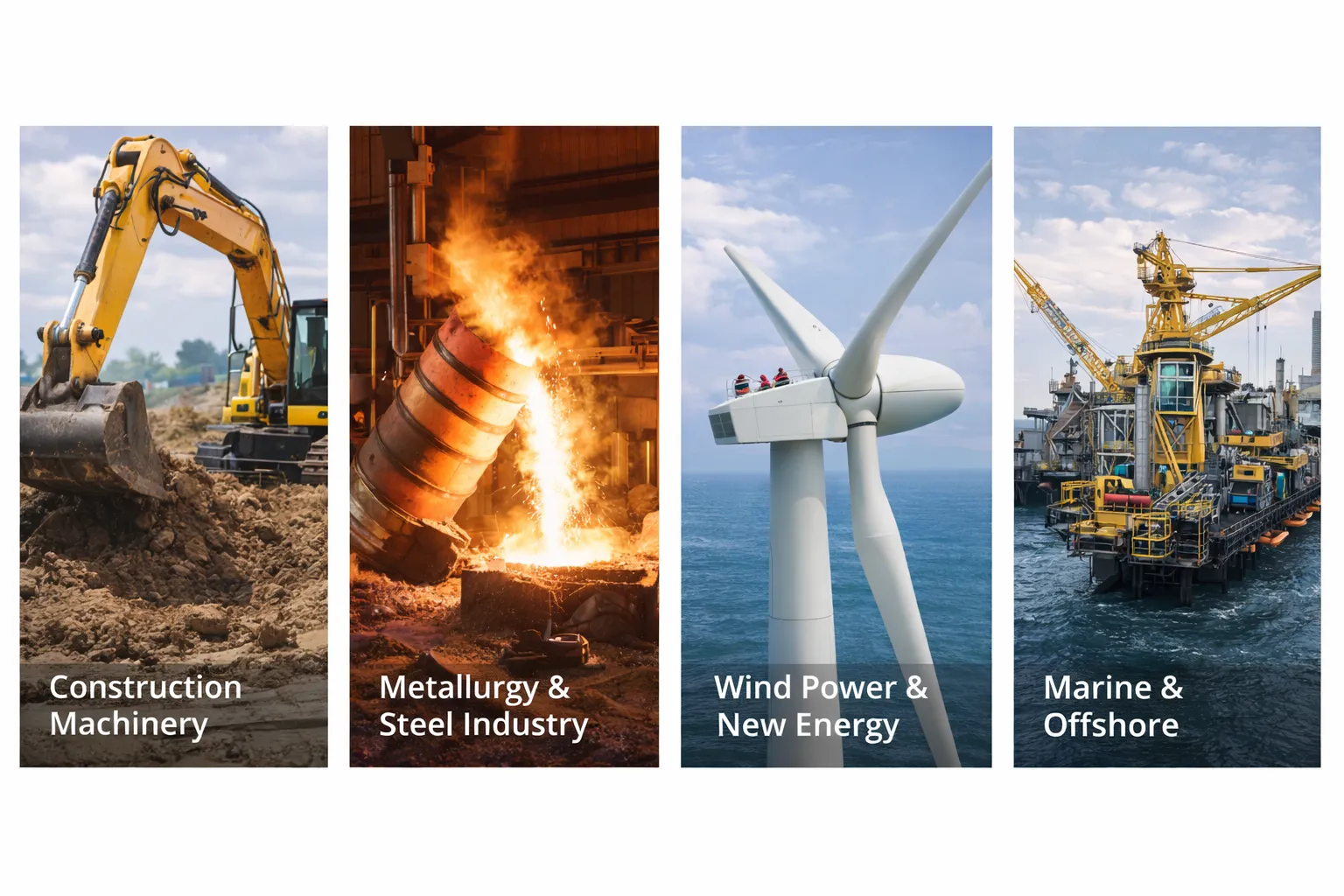
While the heavily armored, sensor-integrated architecture detailed above represents the ultimate safety solution for wind turbine inspection vehicles, the foundational principles of extreme lifting stability, zero leakage, and dirt resistance translate seamlessly across a multitude of heavy industrial sectors. Whenever an operation demands safe, precise elevation in a dirty or unforgiving environment, our fluid power engineering delivers. Explore our highly versatile solutions within our comprehensive hydraulic cylinder product category.
- Earthmoving and Subterranean Extraction: High-impact, incredibly durable hydraulic rams engineered specifically to absorb the brutal shock loads, abrasive rock dust, and violent vibrations standard in the mining industry.
- Heavy Infrastructure and Building: Supplying the critical lifting force and precise steering control for massive mobile cranes, articulated boom lifts, and heavy excavators operating within the construction machinery industry.
- Metallurgical and Heavy Iron Processing: We forge extreme heat-resistant, high-tonnage actuators tailored for electric arc furnace tilting mechanisms and heavy rolling mills. Discover our robust portfolio for the metallurgical and iron industry.
- Maritime Logistics and Material Handling: Salt-resistant, high-cycle actuators powering automated ship-to-shore crane spreaders, straddle carriers, and heavy port lifting platforms.
- Plastics and Rubber Machinery: Rapid-cycling injection molding clamping cylinders designed to deliver immense, highly repeatable lock-up tonnage over millions of high-temperature cycles without leaking.
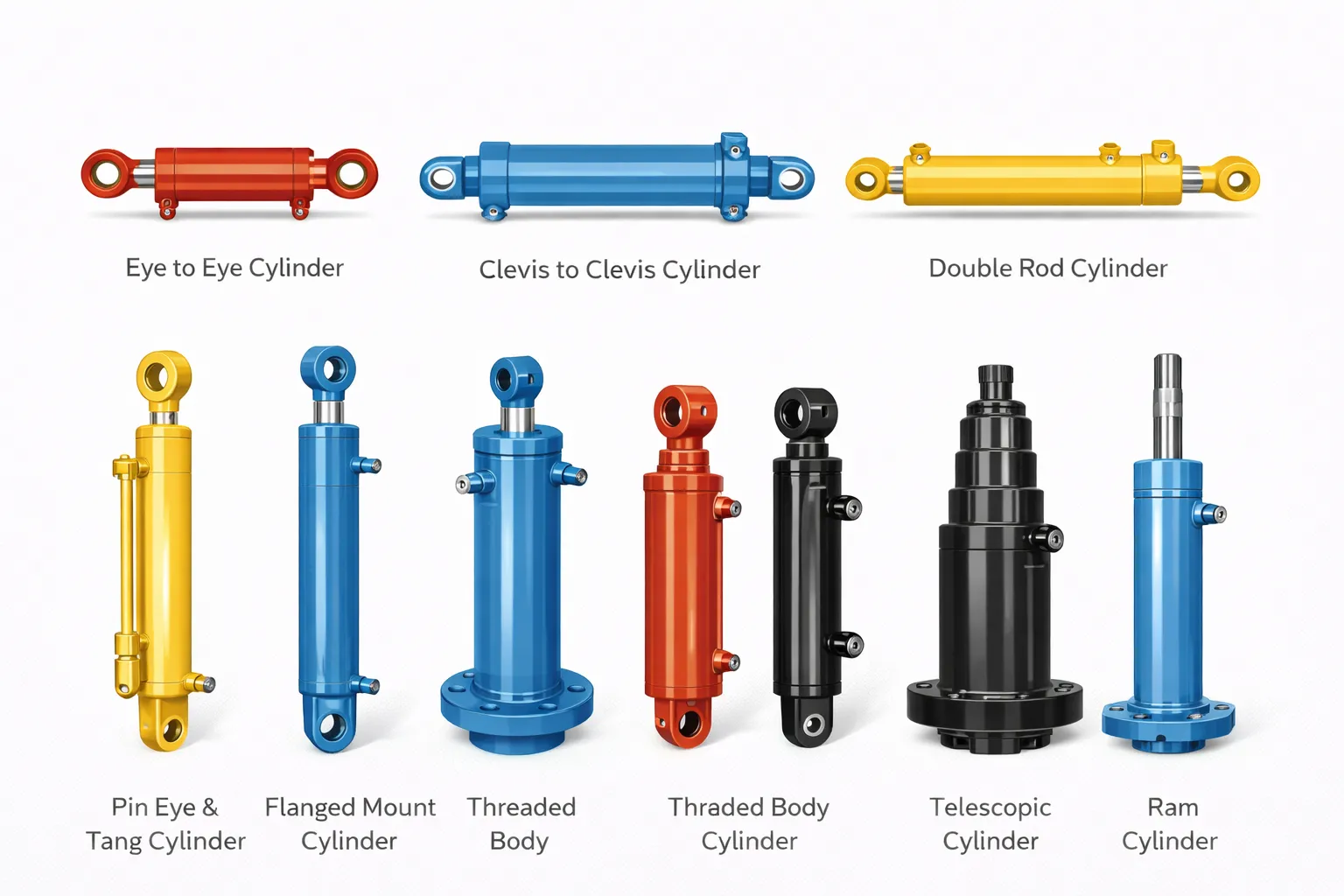
Comparative Analysis: Generic Actuators vs. Our High-Performance Lifting Cylinders
When procuring components for high-altitude personnel lifts, focusing solely on the lowest initial hydraulic cylinder price is a dangerously short-sighted strategy. The true operational cost must definitively factor in vehicle downtime, constant field repair dispatches, hydraulic fluid cleanup, and the catastrophic liability of a dropped platform. The comparative matrix below highlights exactly why investing in purpose-built engineering provides massive long-term financial and safety security.
| Engineering Dimension | Standard Market Lift Cylinder | Our High-Performance Platform Lifting Cylinder |
|---|---|---|
| Mud and Dirt Defense | Basic single-lip rubber dust wiper; easily overwhelmed by thick mud, allowing abrasive grit to enter and rapidly destroy the internal seals. | Aggressive double-lipped polyurethane mud scraper; forcefully shears off caked mud and ice, maintaining absolute fluid cleanliness. |
| Static Load Holding (Leakage) | Standard U-cup PU seals; frequently suffer from micro-bypass under prolonged static weight, causing the platform to slowly drift downwards. | Multi-stage PTFE heavy-duty sealing matrix; guarantees absolute zero leakage, locking the elevated platform rigidly in place for hours. |
| Positional Precision | Blind actuation; relies entirely on the operator’s visual judgment, leading to jerky, inaccurate platform positioning in high winds. | Integrated Servo Feedback System; provides real-time closed-loop data to the vehicle PLC for automated, millimeter-perfect stabilization. |
| Structural Integrity | Threaded tie-rod assembly; highly prone to stretching and vibrating loose when driven over unpaved, deeply rutted wind farm access roads. | Deep-penetration welded construction; forms an indestructible, monolithic pressure vessel that easily shrugs off severe vehicle vibrations. |
Real-World Case Studies: Validating Safety and Reliability
Engineering specifications mean very little if they fail in the mud. Over the past decade, we have heavily supplied the rapidly expanding wind energy maintenance sectors across East Asia. The rugged, unpaved topographies and extreme weather profiles in these regions demand the absolute pinnacle of fluid power resilience. Below are five documented case studies detailing how our heavy-duty solutions permanently resolved critical operational failures for major fleet operators.
Case 1: Eradicating Leakage in Muddy Terrain – Gangwon Province, South Korea
Client: Premier Wind Farm Maintenance & Service Provider
The Challenge: Utilizing a large fleet of truck-mounted aerial platforms, the client was experiencing catastrophic cylinder failures. The thick mountain mud was bypassing the standard cylinder wipers during descent, heavily scoring the carbon steel barrel and destroying the internal seals. This caused severe fluid leakage, resulting in platforms drifting down during blade inspections and creating massive safety hazards.
How They Contacted Us: The fleet maintenance director discovered our specialized equipment via a search for heavy-duty solutions for fixing hydraulic cylinders exposed to extreme mud and water.
The Solution & Result: We custom-engineered a fleet retrofit utilizing our platform lifting cylinder equipped with the aggressive double-lipped mud scraper matrix. Installed in early 2024, the vehicles operated through the severe monsoon season without a single instance of seal bypass or leakage. Fleet downtime dropped by 85%.
“The mud here acts like liquid sandpaper. It destroyed our OEM cylinders in months. Since upgrading to your mud-scraper design, we haven’t lost a single drop of fluid. The safety of our men is no longer in question.” — Mr. Park, Director of Maintenance Operations (November 2024).
Case 2: Precision Leveling in High Winds – Hokkaido, Japan
Client: Leading Alpine Wind Energy ISP (Independent Service Provider)
The Challenge: Inspecting turbine blades at 90 meters high in the mountainous regions meant fighting constant, unpredictable crosswinds. The original lifting cylinders lacked feedback control, causing the platform to sway, bounce, and tilt dangerously, preventing technicians from performing delicate composite fiberglass repairs safely.
How They Contacted Us: Met our senior fluid power engineers at an international renewable energy exposition in Tokyo, urgently seeking a high-precision stabilization solution.
The Solution & Result: We supplied replacement units featuring our fully integrated servo feedback systems. By tying the platform lifting hydraulic cylinder directly into the vehicle’s auto-leveling PLC, the platform instantly compensated for wind buffering. Technicians reported a drastically smoother, rock-solid working environment, allowing repair times to be cut in half.
“Trying to apply epoxy at 90 meters while the basket bounces is impossible. Your servo-feedback cylinders lock the platform in the air perfectly. It feels like standing on solid ground. Incredible technology.” — T. Sato, Chief Technical Officer (January 2025).
Case 3: Cost-Effective Fleet Modernization – Taichung, Taiwan
Client: Heavy Machinery and Aerial Platform Rental Group
The Challenge: The company was losing significant revenue waiting on massive 6-month lead times for highly expensive OEM replacement cylinders from Europe. They desperately needed highly durable, drop-in replacement units to keep their inspection fleet leased out and operational for the peak summer season.
How They Contacted Us: Reached out through our digital B2B platform, looking for a reliable manufacturing partner capable of bulk reverse-engineering.
The Solution & Result: Our engineering team rapidly mapped the dimensional footprint of their European aerial lifts and supplied an initial fleet retrofit package. By providing an extremely fair hydraulic cylinder price without compromising structural integrity or chrome thickness, we slashed their annual maintenance procurement budget by 40% and completely unblocked their rental pipeline.
“Their ability to exactly match European OEM dimensions while vastly improving the mud-scraping seals is fantastic. Sourcing high-quality hydraulic parts from them is now highly cost-effective, and our trucks never sit idle.” — Lin Y., Fleet Procurement Manager (February 2025).
Case 4: Eliminating Stick-Slip in Tropical Heat – Binh Thuan Province, Vietnam
Client: Regional Wind Energy Logistics & Support Contractor
The Challenge: Operating in scorching, humid environments, their older lift vehicles suffered from severe stick-slip juddering during platform descent. The extreme heat was baking the generic cylinder seals, causing the platform to drop in terrifying, jerky increments, risking damage to the turbine blades.
How They Contacted Us: A referral from a major construction firm that utilized our high-temperature lift cylinder models.
The Solution & Result: We rapidly delivered a package of custom double-acting units utilizing our proprietary PTFE ultra-low friction seal matrix. By actively powering the descent and utilizing heat-resistant tribology, the platforms lowered with perfectly smooth, millimeter-precise control regardless of the blistering ambient temperatures.
“Upgrading to their low-friction double-acting design changed everything. The basket descends with absolute smoothness now, even in 40-degree heat. Hydraulic cylinder repair and upgrading is vastly easier with a partner like this.” — Nguyen T., Operations Director (May 2025).
Case 5: Vibration-Resistant Reliability – Busan, South Korea
Client: Heavy Transport and Maintenance Firm
The Challenge: Constant travel over rocky, unpaved terrain was causing the tie-rod cylinders on their boom lifts to heavily vibrate loose. This led to catastrophic seal blowouts and massive hydraulic oil spills on the work site, violating environmental regulations.
How They Contacted Us: Reached out directly looking for a permanent structural solution to eliminate the need for frequent field repairs.
The Solution & Result: We replaced the tie-rod models with our fully welded monolithic carbon steel cylinders. The solid welded design was completely impervious to the jarring road vibrations, entirely eliminating structural loosening and oil leaks during transit.
“The welded cylinders are built like tanks. We haven’t had a single issue with them vibrating loose. It saves us countless hours on maintenance and stops the oil spills.” — Lee M., Fleet Supervisor (March 2025).
B2B Frequently Asked Questions (FAQ)
We thoroughly understand that sourcing life-critical aerial safety components requires exhaustive technical vetting. Below are highly detailed answers to the most frequent inquiries our engineering division receives from fleet maintenance directors and procurement officers.
1. How exactly does the mud scraper prevent leakage in the lifting cylinder?
2. Can you engineer custom replacement cylinders for discontinued aerial platforms?
3. What variables primarily influence the hydraulic cylinder price in a custom fleet order?
4. How is the servo feedback system protected from the harsh outdoor environment?
5. Do you provide aftermarket seal kits to support our depot mechanics?
6. How does the double acting hydraulic cylinder improve safety over older single-acting designs?
7. What is the expected manufacturing lead time for customized units to South Korea?
Secure Your Elevated Maintenance Operations Today
When human lives are suspended dozens of meters in the air to service multi-million dollar wind turbines, structural failure and fluid leakage are simply not options. Do not trust generic commercial actuators to manage critical lifting operations in muddy, unpredictable environments. As an elite hydraulic cylinder manufacturer, our engineering division is fully equipped to review your vehicle schematics and supply the ultimate zero-leakage fluid power solution.
Contact Our Engineering Division
Guaranteed responsive B2B support. We rigorously analyze your heavy-lift specifications and typically deliver comprehensive technical proposals and highly competitive pricing within 24 hours.
Editor: Cxm