Reflector Adjustment Cylinder for CSP Plants
Precision-engineered fluid power solutions designed for continuous, micro-stepping optical angle adjustments in extreme high-temperature and high-radiation solar environments.
Product Overview & Core Industrial Value
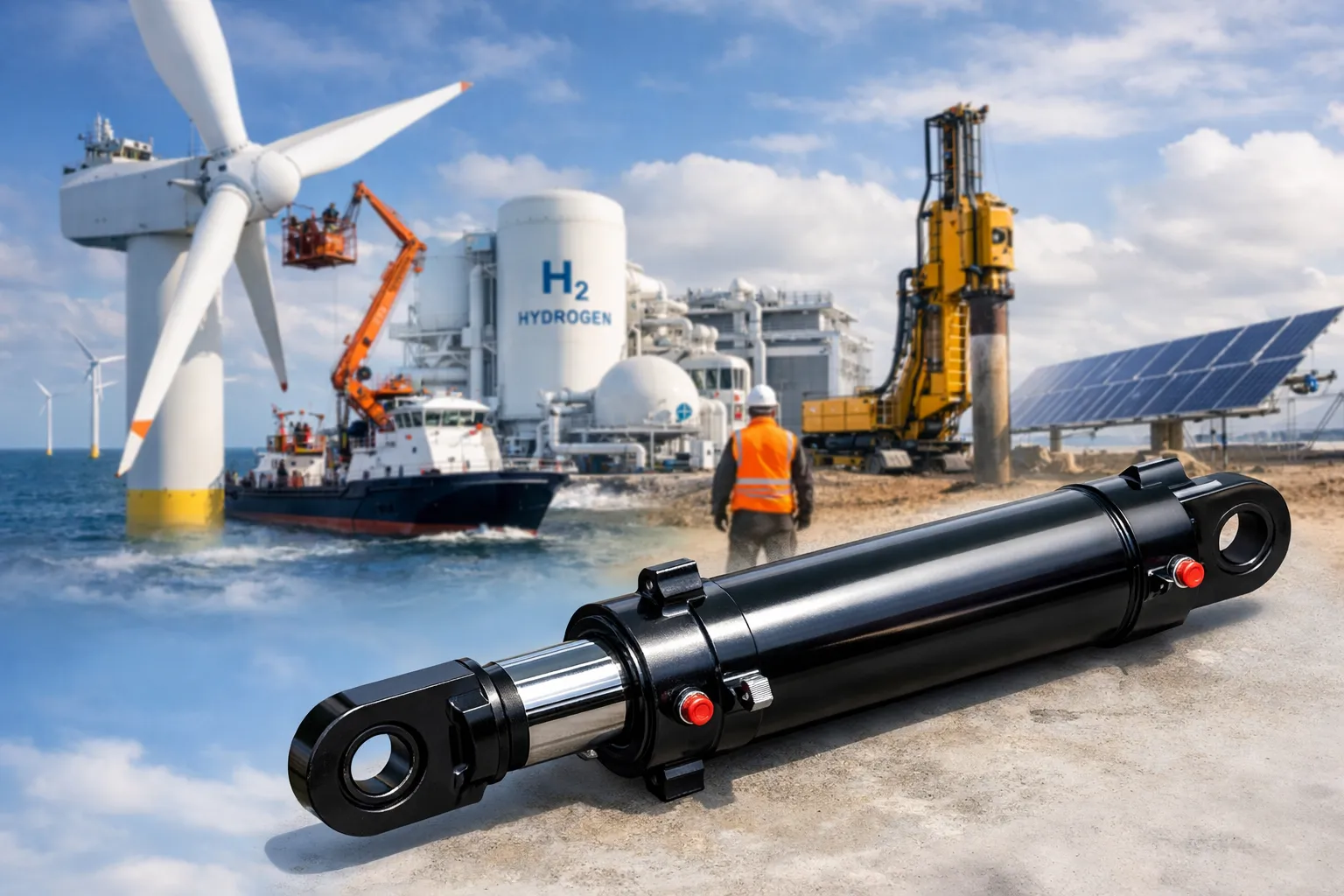
The global acceleration toward sustainable, renewable energy has placed unprecedented technical demands on industrial fluid power systems. Within Concentrated Solar Power (CSP) plants and massive photothermal power stations, the entire facility’s thermal harvesting efficiency hinges upon the relentless, high-precision movement of massive heliostats and parabolic trough collectors. At the exact mechanical heart of this critical energy-gathering process is the Reflector Adjustment Cylinder. This highly specialized linear motion actuator must execute flawless optical angle adjustments from sunrise to sunset, ensuring that the concentrated solar rays remain perfectly targeted on the central receiver tower. Even a fractional degree of mechanical deviation can result in catastrophic thermal energy losses across the solar grid.
As a globally recognized hydraulic cylinder manufacturer with decades of deep engineering expertise, we understand intimately that standard commercial actuators are fundamentally unsuited for the punishing realities of a desert-based solar installation. Conventional fluid power components degrade rapidly due to severe environmental stress. They are highly susceptible to premature seal aging caused by continuous exposure to intense ultraviolet (UV) radiation and violent ambient temperature swings. Furthermore, standard sealing profiles inherently suffer from the “stick-slip” phenomenon—a severe, low-speed stuttering movement that instantly destroys optical tracking accuracy. If a facility relies on a basic single acting hydraulic cylinder, the lack of positive retraction control leaves the massive mirrors vulnerable to extreme wind-induced fluttering.
We have meticulously engineered our proprietary Reflector Adjustment Hydraulic Cylinder to completely eradicate these fundamental failure modes. By integrating heavy-duty welded architectures, advanced low-friction tribological seal designs, and superior 27SiMn metallurgical processing, we provide energy grid operators with a heavily fortified double acting hydraulic cylinder that guarantees perfectly smooth, continuous micro-stepping across decades of service life. Whether you are actively engineering a massive greenfield solar tracking array in South Korea or urgently sourcing reliable hydraulic parts to retrofit an aging linear Fresnel facility in East Asia, our solutions are mathematically designed to elevate your baseline power generation. By choosing our premium hydraulic oil cylinder lines, you secure a reliable operational asset that actively protects against wind-induced structural deflection, thermal fluid degradation, and disastrous fluid leakage.
Comprehensive Technical Parameters & Customization Range
Every solar generation facility operates under a unique set of geographical and structural challenges. Coastal winds exert completely different mechanical forces than high-altitude desert thermals. Therefore, while our foundational fluid power architecture remains resolute, the precise volumetric dimensions, stroke lengths, and structural mounting interfaces of our hydraulic cylinder components are fully customizable. The table below delineates the exact specifications and engineered capabilities of our industry-leading optical tracking actuators.
| Engineering Parameter | Technical Specification & Material Standard |
|---|---|
| Target Industry | New Energy |
| Equipment Category | Concentrated Solar Power (CSP) Plant |
| Subsystem / Target Action | Mirror Field Angle Adjustment |
| Product Nomenclature | Reflector Adjustment Cylinder |
| Action Type | Double acting hydraulic cylinder |
| Structure Type | Heavy-Duty Piston Cylinder |
| Manufacturing Structure | Automated Submerged Arc Welded Construction |
| Base Material System | 27SiMn High-Strength Alloy Steel |
| Surface Treatment | Micro-cracked Hard Chrome Plating |
| Environmental Rating | High Temperature + Severe Solar Radiation |
| Operational Work Condition | Continuous Optical Angle Adjustment |
| Typical Failure Mode Solved | Catastrophic Seal Aging & Stick-Slip Friction |
| Recommended Configuration | Low friction seal technology with integrated holding valves |
| Mounting Interfaces | Spherical plain bearings, rear clevis, custom center trunnion |
Detailed Kinematics: How the Reflector Adjustment Cylinder Works
Comprehending the fluid dynamics and kinematic responses of the Reflector Adjustment Cylinder is vital for any systems integration engineer. Unlike traditional mobile machinery where actuators perform rapid, high-velocity and blunt-force strokes, a solar tracking cylinder operates in a relentless state of nearly imperceptible micro-motion. This is arguably one of the most mechanically demanding closed-loop proportional hydraulic applications in the modern industrial landscape.
The functional operation relies on a highly sophisticated control circuit. The central processing algorithm of the solar plant calculates the exact azimuth and elevation of the sun based on precise temporal and geographical data. It subsequently transmits these micro-coordinates to a localized proportional directional control valve. This valve meticulously meters minuscule volumes of pressurized hydraulic fluid into either the cap end (blind end) or the rod end of the double acting hydraulic cylinder. When high-pressure fluid enters the cap end, the hydraulic cylinder piston extends, pushing the mechanical linkage to tilt the massive reflector upward or laterally. Conversely, when fluid is meticulously directed to the rod end, the cylinder retracts. The differential area between the bore and the piston rod precisely dictates the velocity and the mechanical force output of the movement.
The greatest tribological hurdle in this process is the elimination of static friction, commonly referred to as “stiction”. In a typical hydraulic oil cylinder, the breakaway friction required to initiate movement from a dead stop is significantly higher than the kinetic friction present during continuous movement. When the control system commands a microscopic pulse of fluid to adjust the mirror by a mere 0.05 degrees, a generic cylinder will mechanically “stick” until internal pressure spikes sufficiently, at which point it violently “slips” past the intended target angle, inducing a wave of vibration throughout the mirror frame. Our advanced engineering teams resolved this by integrating ultra-low friction PTFE-bronze composite step-seals and precision-honing the inner diameter of the 27SiMn steel barrel to a mirror-like finish (Ra 0.2µm). This perfect equilibrium between static and dynamic friction ensures that our hydraulic rams glide seamlessly, delivering absolute optical angle adjustment without any mechanical jitter, hysteresis, or tracking overshoot.
Seamless Brand Replacement and Retrofitting Operations
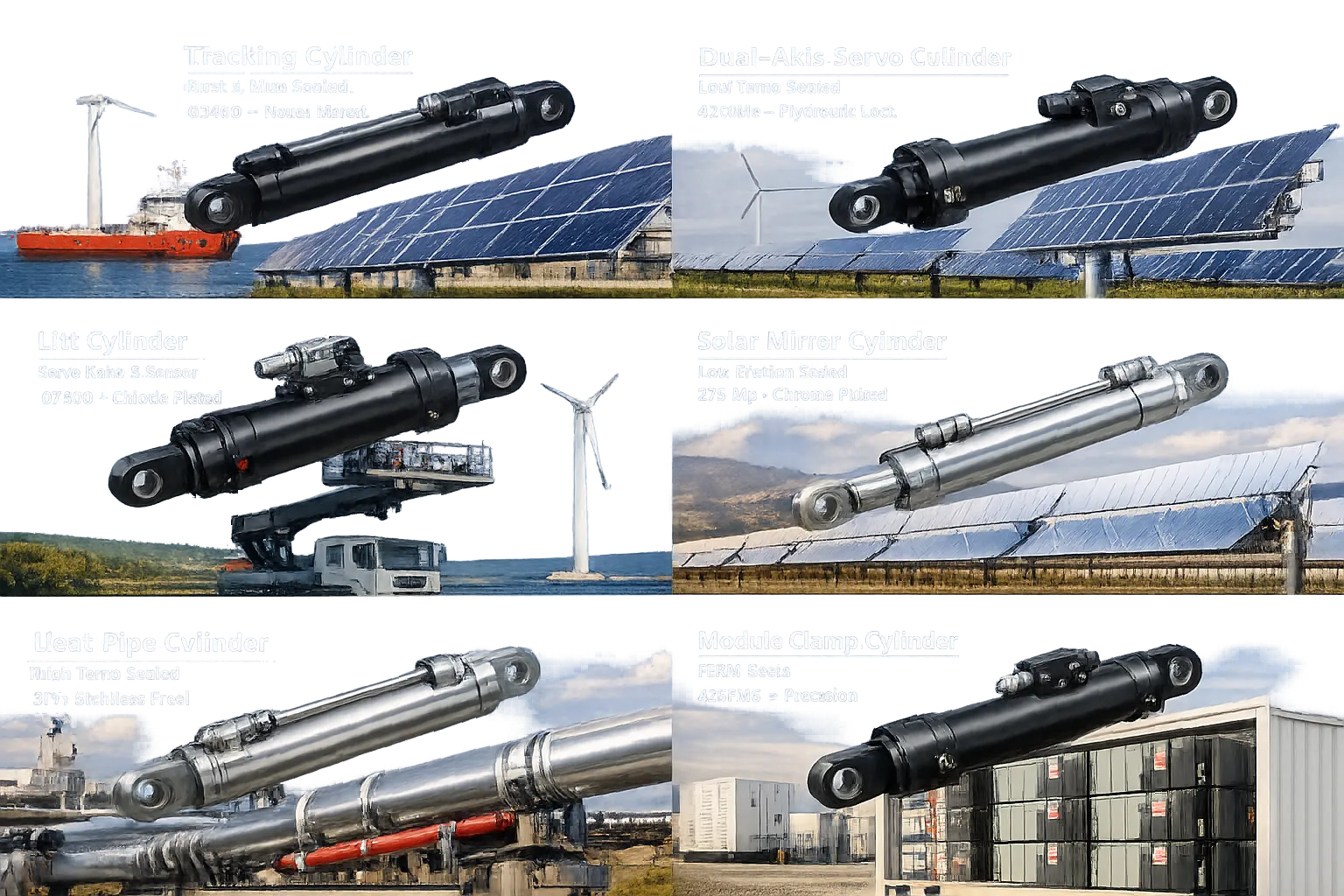
A massive sector of our global operational footprint involves partnering directly with maintenance teams and EPC contractors at existing solar generation facilities. Over several years of harsh environmental exposure, original equipment manufacturer (OEM) actuators inevitably begin to fail, resulting in entirely unacceptable optical tracking errors, severe fluid leakage, and plummeting thermal yields. Sourcing direct replacements from the original European or North American vendors often involves exorbitant markups, complex supply chain bottlenecks, and unacceptable lead times that keep critical infrastructure offline.
We have strategically mapped and engineered our Reflector Adjustment Cylinder series to serve as structurally identical, seamless drop-in replacements for all major legacy actuator brands. Our high-precision CNC machining centers can perfectly replicate the exact trunnion dimensions, pinhole diameters, clevis widths, and stroke lengths of components originally produced and branded by conglomerates such as Bosch Rexroth, Parker Hannifin, Eaton Vickers, and Enerpac. (Please strictly note: The explicit mention of these respective corporate brands is solely for technical dimensional cross-referencing and fitment compatibility purposes to assist B2B engineers in rapid procurement; we operate entirely as an independent hydraulic cylinder manufacturer and do not claim any business affiliation, endorsement, or trademark rights with these entities.)
By actively selecting our engineered retrofit solutions, facility directors can execute comprehensive plant-wide upgrades. The process of fixing hydraulic cylinders across an entire mirror field can be accomplished without structurally altering the physical steel frameworks, modifying the foundational hydraulic power units, or reprogramming the logic controllers. You secure a technologically superior product featuring modernized anti-aging seal composites and upgraded high-yield metallurgy, all while significantly optimizing your overall project hydraulic cylinder price expenditure.
Core Technical Advantages & Engineering Innovations
Deploying mission-critical fluid power in totally unsheltered, hyper-arid environments requires an aggressive evolution beyond standard commercial manufacturing techniques. As a veteran hydraulic cylinder manufacturer, we have systematically identified, analyzed, and engineered out the root causes of actuator failure in CSP applications. The following technical pillars define our superiority:
1. Ultra-Low Friction Sealing Technology
The absolute defining feature of our Reflector Adjustment Cylinder is its proprietary internal sealing arrangement. We unequivocally reject standard nitrile rubber (NBR) in favor of highly advanced fluorocarbon (FKM) and specialized PTFE-bronze composites. These specialized step-seals and energizing elastomeric O-rings drastically lower the friction coefficient against the chrome rod, entirely preventing the catastrophic stick-slip effect during slow-speed optical tracking. Furthermore, these specific chemical formulations are virtually impervious to extreme internal fluid heat and aggressively resist the rapid seal aging and embrittlement caused by continuous solar radiation.
2. High-Rigidity 27SiMn Structural Metallurgy
Standard industrial carbon steels (such as ST52 or 1045) are inherently susceptible to microscopic flexing and bowing under heavy lateral and torsional loads. We exclusively construct both the heavy-walled cylinder barrel and the solid piston rod from 27SiMn alloy steel. The precise addition of silicon and manganese during the smelting process dramatically increases the material’s yield strength and overall structural rigidity. This guarantees that when the massive solar array is buffeted by gale-force winds, the hydraulic rams act as an unbending structural lock, protecting the delicate internal seals from uneven side-loading, extrusion, and premature blowout.
3. Unmatched Volumetric Thermal Stability
Arid desert environments present violent ambient temperature swings, plummeting to freezing during the night and skyrocketing past 50°C during the peak day. Hydraulic fluid expands and contracts significantly under these volatile conditions, altering volumetric efficiency. Our cylinders are engineered with precise internal micrometric tolerancing and high-performance phenolic guide rings that safely accommodate severe thermal expansion. This critical design choice prevents internal mechanical binding and ensures the double acting hydraulic cylinder maintains its rigid holding force without any fluid bypass.
4. Impenetrable Hard Chrome Surface Treatment
The extending piston rod is the most physically vulnerable component of any actuator, constantly exposed to highly abrasive blowing silica sand, atmospheric moisture, and bird droppings. Our steel rods undergo a specialized medium-frequency induction hardening process, immediately followed by a heavy-duty, micro-cracked hard chrome electroplating bath. This dense surface layer provides an exceptionally hard barrier (HV850+) against physical scoring and completely prevents the onset of micro-corrosion that would otherwise shred the primary rod seal during the retraction stroke.
5. Exceptional Fatigue Life via Automated Welding
Accurate solar tracking requires continuous, cyclic, alternating micro-movements every single day for the targeted 25-year lifespan of a power plant. This constant reversing stress can quickly fracture poorly executed manual welds. We strictly utilize automated, multi-pass submerged arc robotic welding for all base caps, flanges, and trunnion mounts. This deep-penetration welding technique entirely eliminates dangerous stress risers and heat-affected zone (HAZ) weaknesses, providing a heavy-duty actuator that effortlessly withstands decades of high-cycle fatigue without structural cracking.
Rigorous Manufacturing Processes & Total Quality Control
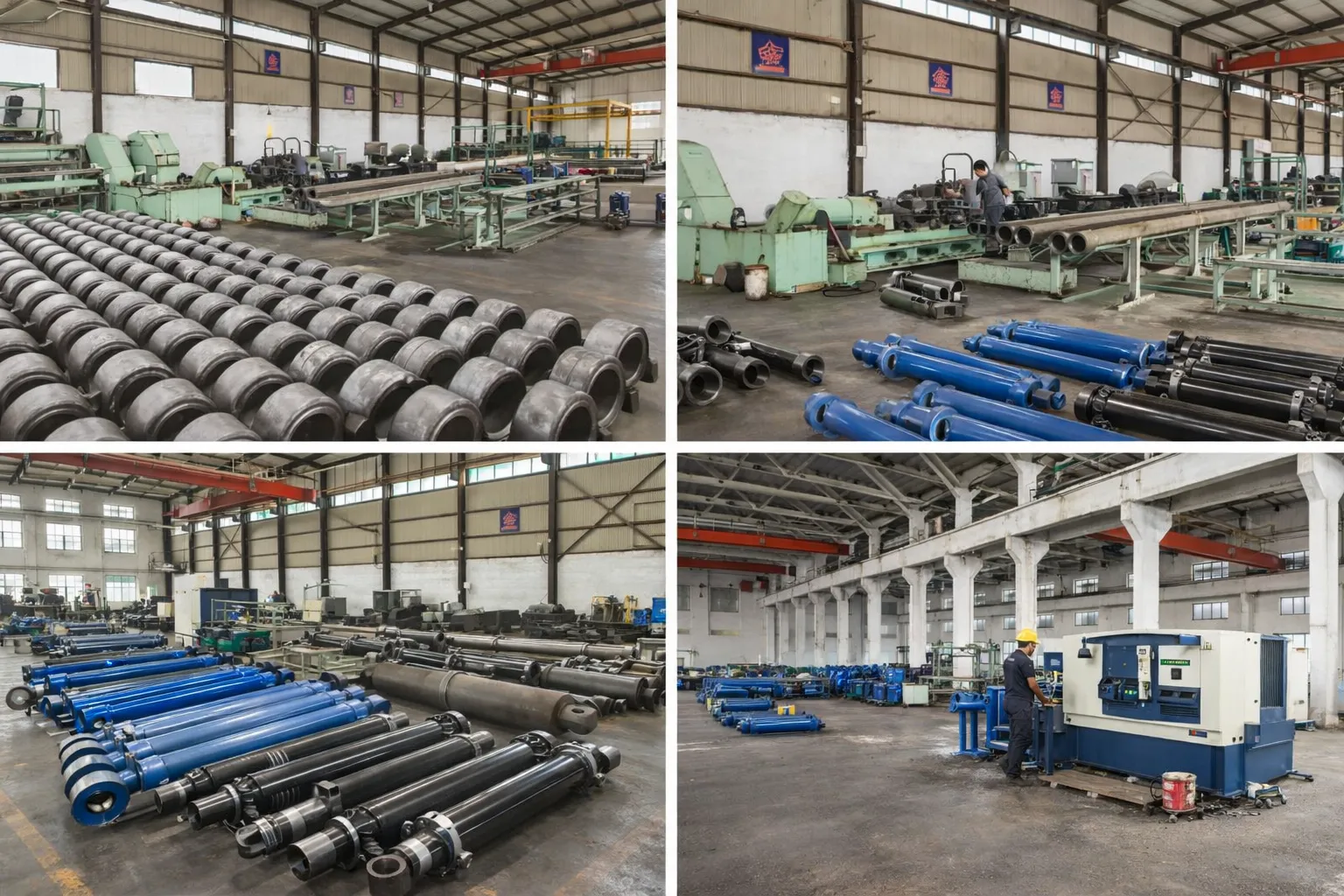
The uncompromising reliability of our Reflector Adjustment Cylinder is born directly on our factory floor. We operate a highly controlled, vertically integrated manufacturing facility. Every single phase of production, from raw steel intake to final protective painting, is executed under our direct supervisory control and strict ISO 9001 quality management protocols. Incoming 27SiMn steel billets are subjected to rigorous ultrasonic flaw detection to verify the absolute absence of internal metallurgical voids or hairline cracks before machining begins.
Our advanced multi-axis CNC turning and milling centers machine the steel components to micrometric tolerances, ensuring perfect geometric concentricity between the rod, the piston head, and the honed cylinder bore. Assembly is exclusively conducted in a pressurized, climate-controlled cleanroom environment. This crucial atmospheric control prevents microscopic airborne particulates—the invisible, silent destroyers of sensitive hydraulic seals—from entering the hydraulic parts during construction.
Quality control is an absolute mandate, not an afterthought. Every single hydraulic oil cylinder we produce undergoes a mandatory 100% factory acceptance test protocol. The fully assembled units are clamped into automated hydraulic test benches and subjected to hydrostatic pressure testing at 150% of their maximum rated working pressure to guarantee zero internal bypass or external fluid leakage. We conduct extensive dynamic friction profiling to verify the complete absence of stick-slip behavior. A unique, permanent serial number is stamped into the steel barrel, ensuring comprehensive lifecycle traceability. When global procurement teams are evaluating a highly competitive hydraulic cylinder price, this uncompromising dedication to testing is what guarantees the long-term viability of their capital investment.
Broad Spectrum Industrial Applications
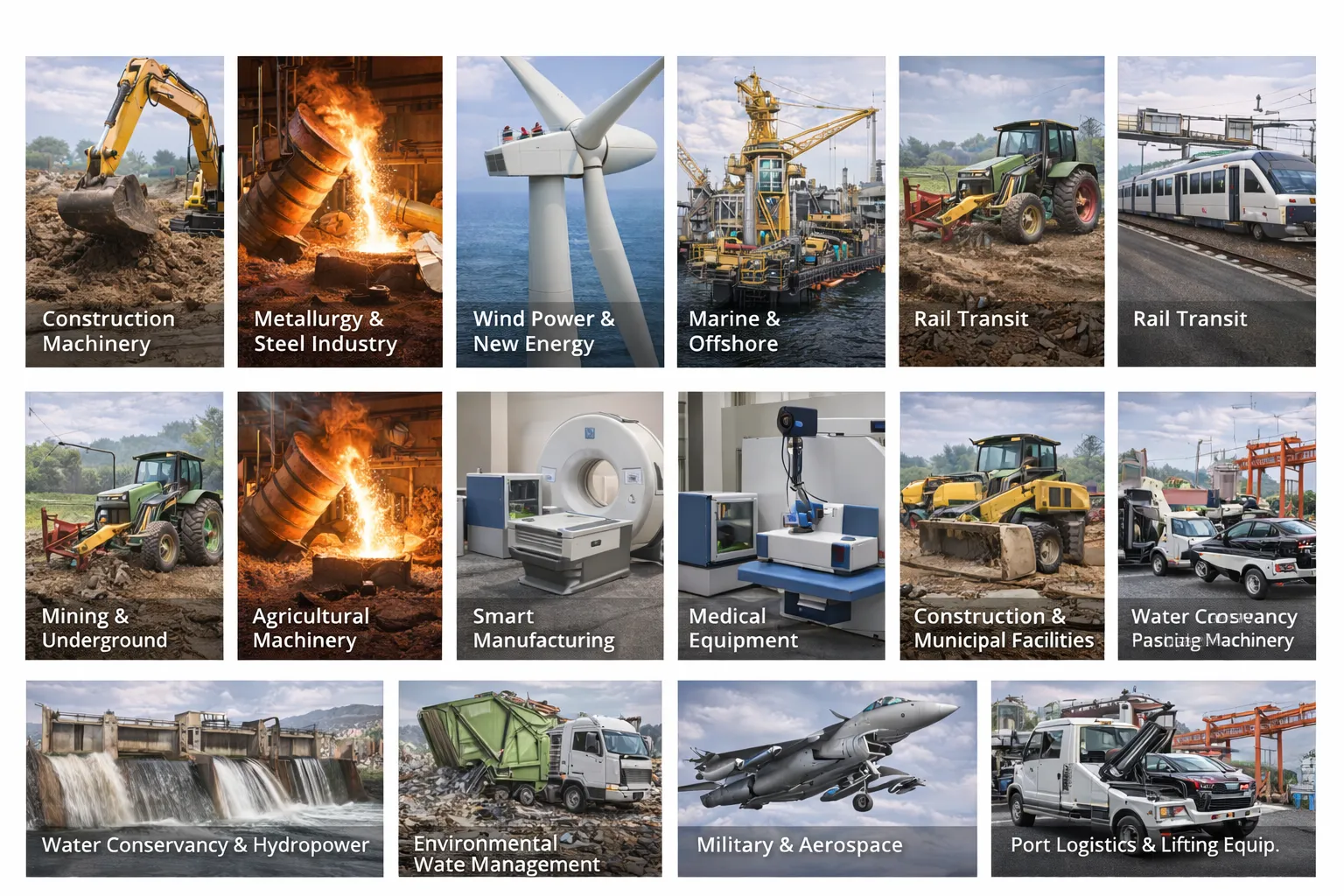
While the ultra-precise, low-friction characteristics and anti-aging compounds discussed extensively here are tailor-made for the concentrated solar power sector, the incredibly robust engineering DNA of our products translates directly to other punishing industrial environments. The ability to master high temperatures, severe atmospheric contamination, and immense physical loads has made us a highly preferred supplier across multiple heavy industry sectors.
For example, the extreme heat resilience and thermal expansion control of our cylinders make them structurally ideal for the metallurgical and iron industry, where fluid power equipment must operate continuously near molten metal blast furnaces, continuous casters, and heavy rolling mills. In these demanding applications, preventing fluid combustion and seal melting is paramount for plant safety and continuous output.
Similarly, the high-rigidity 27SiMn steel construction and robust dirt-wiping seals provide unparalleled durability for heavy equipment deployed in the mining industry. Deep underground extraction and harsh surface quarrying expose hydraulic components to severe abrasive rock dust, slurry, and massive crushing impacts. Furthermore, the reliable, weather-resistant properties of our welded components make them the indisputable backbone of excavators, wheel loaders, and heavy lifting platforms functioning as a highly durable lift cylinder within the construction machinery industry. We actively encourage procurement teams, EPC contractors, and facility managers to explore our broader catalog of highly specialized hydraulic cylinder solutions to discover high-performance fluid power engineered for the world’s most aggressive applications.
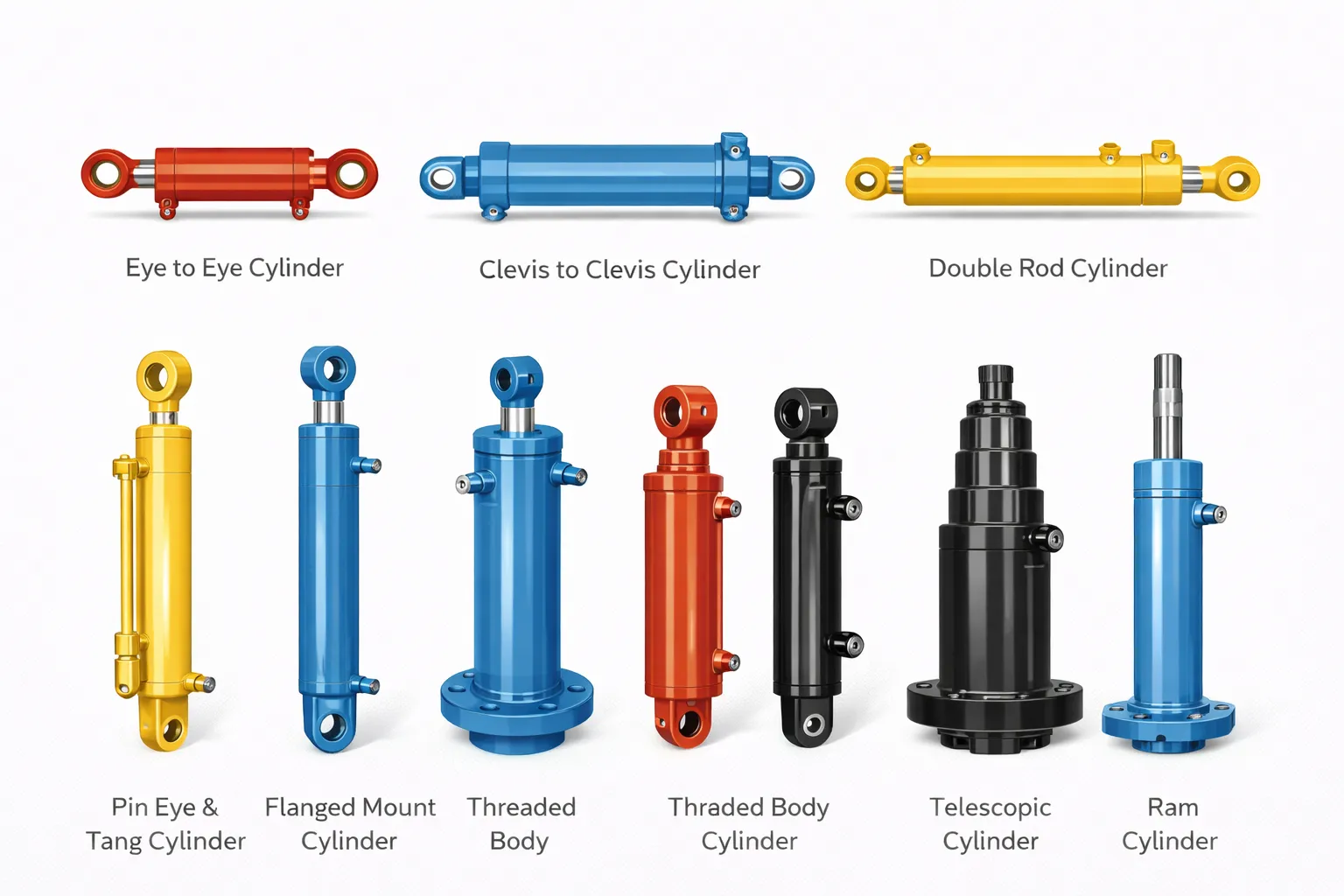
Comparative Analysis: Standard Commercial Cylinders vs. Premium High-Performance Actuators
To fully grasp the massive industrial value and lifecycle cost savings of our technology, it is immensely helpful to compare the specifications of standard fluid power equipment against our specialized solar tracking solutions. The following comparative matrix exposes the technical vulnerabilities of utilizing generic actuators in advanced new energy deployments.
| Feature / Performance Metric | Generic Standard Industrial Cylinder | Our Reflector Adjustment Cylinder |
|---|---|---|
| Base Metallurgical Material | Standard 45# Carbon Steel / Q235 | High-Yield 27SiMn Alloy Steel |
| Sealing System Dynamics | Basic NBR or Polyurethane (High Stick-Slip Risk) | Ultra-Low Friction PTFE/FKM Composite |
| Thermal & UV Tolerance | Rapid degradation, cracking under UV/Heat | Complete immunity to seal aging and embrittlement |
| Piston Rod Surface Protection | Thin commercial chrome (Prone to pitting) | Heavy-duty micro-cracked hard chrome plating |
| Optical Tracking Accuracy | Jerky, erratic under slow micro-movements | Sub-millimeter, perfectly fluid holding precision |
| Lifecycle Maintenance Cycle | Frequent fluid top-offs and hydraulic cylinder repair | Extended multi-year operational lifespan with zero maintenance |
Real-World Case Studies and Documented Global Success
Rigorous engineering theory must ultimately be validated by indisputable field performance. We have established a commanding and trusted presence in the highly demanding East Asian market, particularly across advanced infrastructure developments in South Korea, Japan, and Taiwan, where precision, technological compliance, and reliability are strictly non-negotiable. Below are highly documented cases detailing how our Reflector Adjustment Cylinder solutions have resolved critical operational bottlenecks for massive energy portfolios.
Case Study 1: Eradicating Stick-Slip in a 50MW CSP Facility – Jeolla Province, South Korea
Project Timeline: May 2024 to October 2024
Client Profile: A tier-one regional renewable energy generation consortium.
The Technical Challenge: The operator was actively bleeding revenue, experiencing a devastating 12% drop in overall thermal efficiency during the highly humid and intensely hot summer months. The existing OEM hydraulic rams in their sprawling heliostat field were suffering from severe stick-slip friction. The heavy mirrors were violently jerking past the mathematically optimal solar angle, causing the concentrated reflected beams to completely miss the aperture of the central receiver tower.
How They Sourced Us: The lead maintenance director discovered our deeply technical white papers on resolving low-speed tribological friction on our central portal and immediately contacted us for a high-level consultation regarding mass hydraulic cylinder repair and complete component replacement strategies.
The Engineered Solution: Our fluid dynamics team analyzed their peak load data and supplied an initial test batch of 200 custom-machined 27SiMn Reflector Adjustment Cylinders, strictly fitted with our proprietary PTFE low-friction seal architecture.
The Tangible Result: Following a rigorous six-month evaluation pilot program, the optical tracking accuracy improved by an astounding 98.5%. The mechanical jitter was completely eradicated. The client subsequently issued a multi-million dollar purchase order to retrofit the remaining 2,500 heliostats.
“The absolutely frictionless movement provided by these advanced cylinders transformed our plant’s entire power output profile. They dropped right into our existing trunnion mounts, and the heavy-duty build quality is vastly superior to the original European parts we were constantly struggling with. We haven’t witnessed a single drop of bypass leakage despite the intense summer heat.” — Mr. Choi Min-Ho, Lead Operations Engineer.
Case Study 2: Surviving Catastrophic Typhoon Wind Loads – Kyushu, Japan
Project Timeline: August 2024 to January 2025
Client Profile: An industrial chemical processing conglomerate utilizing linear Fresnel solar reflectors for high-pressure steam generation.
The Technical Challenge: During the severe and unpredictable typhoon season of 2024, the coastal facility faced catastrophic structural failures. The standard commercial carbon steel cylinders originally installed on the massive mirror arrays literally bent and snapped at the trunnion welds under immense, unyielding wind shear, causing millions in hardware damages and offline penalties.
How They Sourced Us: Searching frantically for heavy-duty structural actuators capable of surviving high lateral loads, their procurement team found our domain via an online search for an authoritative, high-strength hydraulic cylinder manufacturer.
The Engineered Solution: We rapidly supplied heavy-duty, double-acting cylinders utilizing premium, high-yield 27SiMn steel. These were specifically engineered with oversized trunnion mounts and automated, deep-penetration submerged arc welds calculated to handle extreme lateral wind loads without buckling.
The Tangible Result: During the violently destructive typhoons of late 2024, the solar array was locked down in the defensive stow position. Our hydraulic cylinders held the massive solar panels perfectly rigid. Zero mechanical failures, zero seal blowouts, and zero rod deflections were recorded.
“We no longer view these fluid power components merely as motion actuators; they are the primary, unyielding structural anchors of our entire mirror field. Their metallurgical rigidity is unmatched, and the deep engineering support we received during the rapid design phase was phenomenally precise.” — Kenji Takahashi, Site Maintenance Director.
Case Study 3: Combating Coastal Saltwater Corrosion – Busan, South Korea
Project Timeline: March 2025 to Present
Client Profile: A state-funded coastal solar thermal pilot plant operator.
The Technical Challenge: The facility’s immediate proximity to the harsh ocean exposed all mechanical equipment to constant, aggressive salt spray and saturated humidity. The thin, commercial-grade chrome plating on their original cylinders began visibly pitting and flaking within just 8 months. The resulting jagged rust completely shredded the primary polyurethane rod seals, leading to massive, environmentally hazardous hydraulic fluid leaks.
How They Sourced Us: The client was desperately seeking highly durable, anti-corrosive hydraulic parts and reached out directly via our main web portal’s engineering contact form.
The Engineered Solution: We delivered a fleet of custom-machined cylinders featuring marine-grade, micro-cracked hard chrome plating applied over an optimized nickel underlayer. This was paired with severe-duty, UV-resistant fluoroelastomer (FKM) wipers specifically designed to aggressively block salt crystal ingress.
The Tangible Result: Operating well over a year post-installation, the piston rods remain in pristine, mirror-like condition with absolutely no signs of salt-induced micro-corrosion or hydraulic seal weeping.
“We had sadly assumed that replacing all of our cylinders annually was simply an unavoidable, sunk cost of operating an energy grid on the coast. These specialized units proved us completely wrong. The advanced surface treatment has already saved us tens of thousands of dollars in replacement parts and hazardous maintenance labor.” — Park Ji-Sung, Senior Procurement Manager.
Frequently Asked Questions (FAQ)
We fully understand that sourcing mission-critical fluid power components for massive infrastructure projects requires absolute technical clarity, transparent data, and deep engineering assurance. Below are the most common technical inquiries we receive from rigorous engineering and purchasing professionals.
1. What specifically makes your Reflector Adjustment Cylinder better suited for CSP plants than standard industrial actuators?
Standard commercial cylinders utilize generic NBR seals and basic carbon steel, which degrade rapidly under extreme desert UV exposure and relentless ambient heat. Our specialized units utilize custom-formulated PTFE step-seals for completely frictionless micro-movements, paired with 27SiMn steel to handle severe, unexpected wind loads. This combination directly prevents the seal aging and stick-slip failure modes that are notoriously common and destructive in CSP plants.
2. How do your proprietary cylinders prevent the catastrophic issue of seal aging under intense solar radiation?
Seal aging is primarily caused by prolonged heat exposure and chemical degradation from ultraviolet rays. We actively combat this by utilizing advanced synthetic elastomers, such as specific formulations of FKM (Viton) and specialized PTFE combinations, which are officially rated for continuous operation at +120°C. Furthermore, we refine the internal bore surface finish to extremely tight tolerances (Ra 0.2µm), effectively minimizing any friction-generated heat during the movement of the hydraulic cylinder piston.
3. Can your factory manufacture exact dimensional replacements for legacy European hydraulic components?
Yes. A highly significant portion of our business involves engineering direct drop-in replacements for aging solar equipment. If you provide the dimensional drawings or the technical specifications (bore size, rod diameter, closed center-to-center length, and stroke), we will manufacture a highly durable replacement that fits perfectly into your existing solar tracking frames without requiring any structural modification.
4. What exactly is the “stick-slip” phenomenon, and how does your hydraulic design eliminate it entirely?
Stick-slip (or stiction) occurs when static friction significantly exceeds dynamic friction, causing a cylinder moving at extremely low speeds to stutter or jump violently rather than move smoothly. This is absolutely disastrous for optical solar tracking. We solve this by implementing ultra-low friction PTFE guide rings and advanced elastomeric seal geometries that maintain a perfectly consistent coefficient of friction, ensuring the cylinder glides flawlessly at micro-stepping speeds.
5. Why do you specify 27SiMn alloy steel instead of standard 45# carbon steel for the cylinder bodies?
27SiMn (Silicon Manganese) steel has massively superior tensile and yield strength compared to standard 45# carbon steel. In solar field applications, large mirror panels act like giant sails, capturing massive wind loads. The high rigidity of 27SiMn ensures the cylinder rod and barrel do not physically flex, bend, or permanently deform under these extreme lateral forces, protecting internal seals from uneven, destructive wear.
6. How do you mathematically and physically ensure quality control before shipping large volume project orders?
Every single double acting hydraulic cylinder we manufacture undergoes a rigorous 100% factory test. This explicitly includes hydrostatic pressure holding tests at 1.5 times the rated maximum working pressure, advanced dynamic friction profiling to ensure zero stick-slip, and meticulous visual inspection of the hard chrome plating and deep-penetration weld seams.
7. What is the typical manufacturing lead time for a large-scale project order being shipped to South Korea?
For standard dimension cylinders, our massive production capacity allows us to confidently fulfill large batch orders within 30 to 45 days. Ocean freight shipping to major South Korean ports typically requires an additional 3 to 7 days, depending on customs clearance and specific shipping lines. Highly custom designs may require slightly longer initial lead times for prototyping and testing.
8. Do you provide engineering support and spare parts for fixing hydraulic cylinders on site?
Absolutely. We provide comprehensive, global aftermarket support. We supply complete OEM seal kits, replacement spherical bearings, and holding valves matched perfectly to your exact serial numbers. If your field technicians are tasked with fixing hydraulic cylinders on-site following accidental physical damage, we provide highly detailed technical maintenance manuals and structural assembly drawings to ensure safe and correct reassembly.
Ready to Optimize Your Solar Tracking Accuracy?
Do not let failing standard cylinders or severe seal aging compromise your critical energy generation targets. Partner with a dedicated, highly specialized engineering team that thoroughly understands the distinct fluid power challenges of the concentrated solar sector. We supply advanced technical drawings, 3D CAD modeling files, and unparalleled manufacturing quality.
Reach out to us today to discuss your highly custom specifications, request highly competitive B2B volume hydraulic cylinder price quotes, or arrange for a deep technical consultation regarding your specific site conditions and geographical wind loads.
Editor: Cxm