Subsoiler Arm Lift Cylinder for Tillage Machinery
Purpose-built with massively enlarged 42CrMo rods and optimized stroke kinematics to absolutely prevent structural bending under the immense draft loads of deep hardpan soil fracturing.
Strategic Industrial Overview and Agronomic Value
Advanced agronomy recognizes that the foundation of high-yield farming lies deeply hidden beneath the topsoil. Across the challenging agricultural topographies of South Korea and the broader East Asian perimeter, intensive farming practices utilizing heavy tractors have systematically compressed the subsurface layers. This severe compaction forms a dense, impermeable barrier known as the plow pan or hardpan. A rigid hardpan chokes downward root expansion, traps surface water leading to topsoil erosion, and starves deeper soil profiles of essential moisture and oxygen. To aggressively fracture this barrier, agronomists deploy heavy-duty subsoilers. These massive implements are dragged through the earth at depths significantly below conventional plowing, physically shattering the compacted clay without overturning the fertile topsoil.
However, dragging heavy steel shanks through unyielding, heavily compacted earth generates astronomical draft resistance. The mechanical focal point managing this extreme kinetic load is the subsoiler operating unit, and its operational integrity is entirely dependent upon the subsoiler arm lift cylinder. When the tractor operator lowers the implement, the hydraulic cylinder must force the heavy shanks into the ground and rigidly hold them at a precise depth. As the high-horsepower tractor pulls forward, the buried shanks act as massive levers against the dense soil. This leverage translates into an extreme, violent compressive column load pushing directly backward into the extended cylinder rod.
Standard commercial agricultural cylinders fail spectacularly under these specific physics. The most prevalent and financially devastating failure mode is severe rod bending. When an ordinary carbon steel rod buckles under this compressive stress, the internal sealing matrix is instantly shredded, fluid containment is lost, and the implement collapses. Functioning strictly as an industrial-grade hydraulic cylinder manufacturer, our engineering doctrine is singularly focused on eliminating these exact structural deficits. Our proprietary subsoiler arm lift hydraulic cylinder neutralizes column buckling by implementing a highly calculated, enlarged rod diameter alongside an appropriately shortened stroke. Forged exclusively from 42CrMo alloy, our hydraulic rams refuse to yield to subterranean rock impacts.
Precision Technical Parameters and Customization Framework
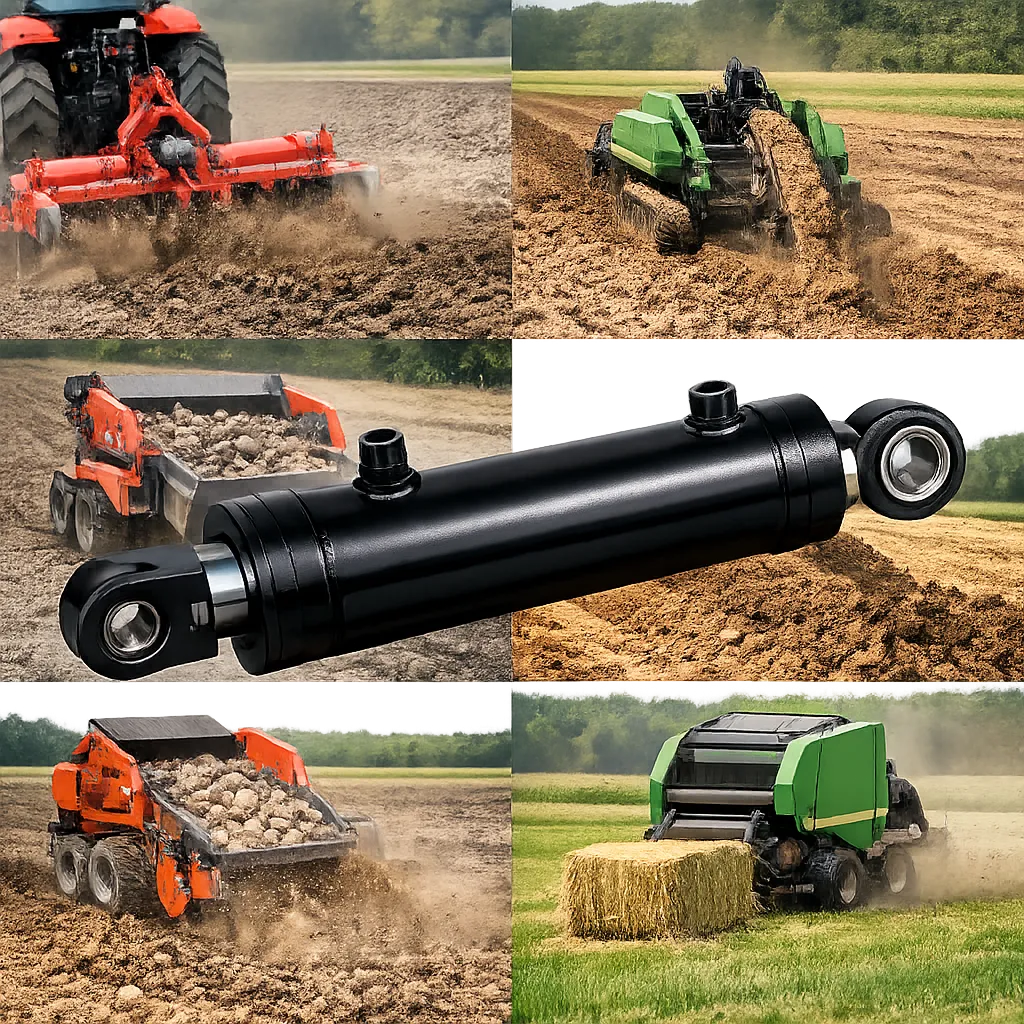
True mechanical survivability in extreme hardpan ripping dictates strict adherence to calculated engineering metrics. The internal bore dimensions, rod thickness, and metallurgical properties must align perfectly with the implement’s geometric linkage and the tractor’s maximum draft force. Our vertically integrated manufacturing infrastructure provides immense flexibility to customize mounting trunnions and fluid port alignments while strictly enforcing our structural safety minimums. The detailed matrix below outlines the exact engineering parameters defining our heavy-duty subsoiler solutions.
| Engineering Classification | Specification Thresholds and Design Directives |
|---|---|
| Target Industry Sector | Agriculture / Heavy Arable Land Preparation |
| Equipment Category | Tillage Machinery (Heavy Deep Rippers and Subsoilers) |
| Subsystem Mechanism | Subsoiler working part (Implement draft depth regulation) |
| Official Component Name | Subsoiler Arm Lift Cylinder |
| Actuation Methodology | Double acting hydraulic cylinder (Mandatory for powered downward soil penetration) |
| Fundamental Architecture | Heavy-duty Piston cylinder (Totally rigid, internal tie-rod free design) |
| Manufacturing Assembly | Welded type (Robotic submerged arc deep-penetration welding) |
| Core Metallurgy | Premium 42CrMo Alloy Steel (Unmatched yield strength for column load defiance) |
| Surface Defense Treatment | Induction Hardened + Micro-cracked Hard Chrome Plating (HRC 65+) |
| Environmental Classification | Heavy load + Hard soil (Extreme kinetic shock and abrasive silica dust) |
| Primary Working Characteristic | Control subsoiler arm soil penetration depth with absolute, unyielding mechanical rigidity |
| Eradicated Failure Mode | Total prevention of catastrophic rod bending and lateral column buckling |
| Required Structural Configuration | Enlarged rod diameter + Appropriately shortened stroke geometry |
Operational Fluid Dynamics and Kinematic Load Analysis
To fully grasp the necessity of our severe-duty engineering, one must analyze the brutal physics acting upon the implement in the field. When the tractor operator engages the subsoiling sequence, highly pressurized hydraulic fluid is forced from the tractor’s implement pump into the base end (cap end) of the double acting hydraulic cylinder. This massive volumetric pressure drives the hydraulic cylinder piston forward, extending the thick steel rod. This extension exerts tremendous downward force upon the geometric linkage, violently driving the heavy subsoiler shanks through the topsoil and deep into the compacted clay hardpan. A single acting hydraulic cylinder is entirely useless in this application, as the dead weight of the implement frame alone cannot produce enough force to breach severely compacted earth; active, powered hydraulic down-pressure is an absolute physical requirement.
The ultimate test of structural integrity occurs exactly when the target ripping depth is achieved. The hydraulic control valve returns to neutral, creating an immovable hydraulic lock inside the cylinder. As the high-horsepower tractor surges forward, the deeply buried shanks encounter massive resistance from the solid earth. Because the shanks extend far below the pivot points, this draft resistance creates an immense mechanical lever. This lever violently translates the forward motion of the tractor into a terrifyingly high compressive force, pushing straight back up into the fully extended cylinder rod. If the rod is manufactured from standard carbon steel with a slender diameter, it will instantly reach its critical Euler buckling load, physically folding under the pressure and destroying the component.
Our proprietary engineering forcefully neutralizes this devastating structural flaw. By deliberately expanding the rod diameter significantly beyond commercial standards, and critically, by optimizing the linkage attachment points to utilize an appropriately shortened stroke length, we drastically lower the slenderness ratio of the rod. A thicker, shorter structural column possesses an exponentially higher resistance to lateral deflection and bending. When this optimized geometry is combined with the immense inherent yield strength of 42CrMo alloy steel, the lift cylinder transforms into an unyielding solid strut. This guarantees that your tillage machinery holds perfect depth precision regardless of the subterranean rock shelves or heavily compacted clay it encounters.
Seamless Global Fleet Integration and OEM Drop-In Replacements
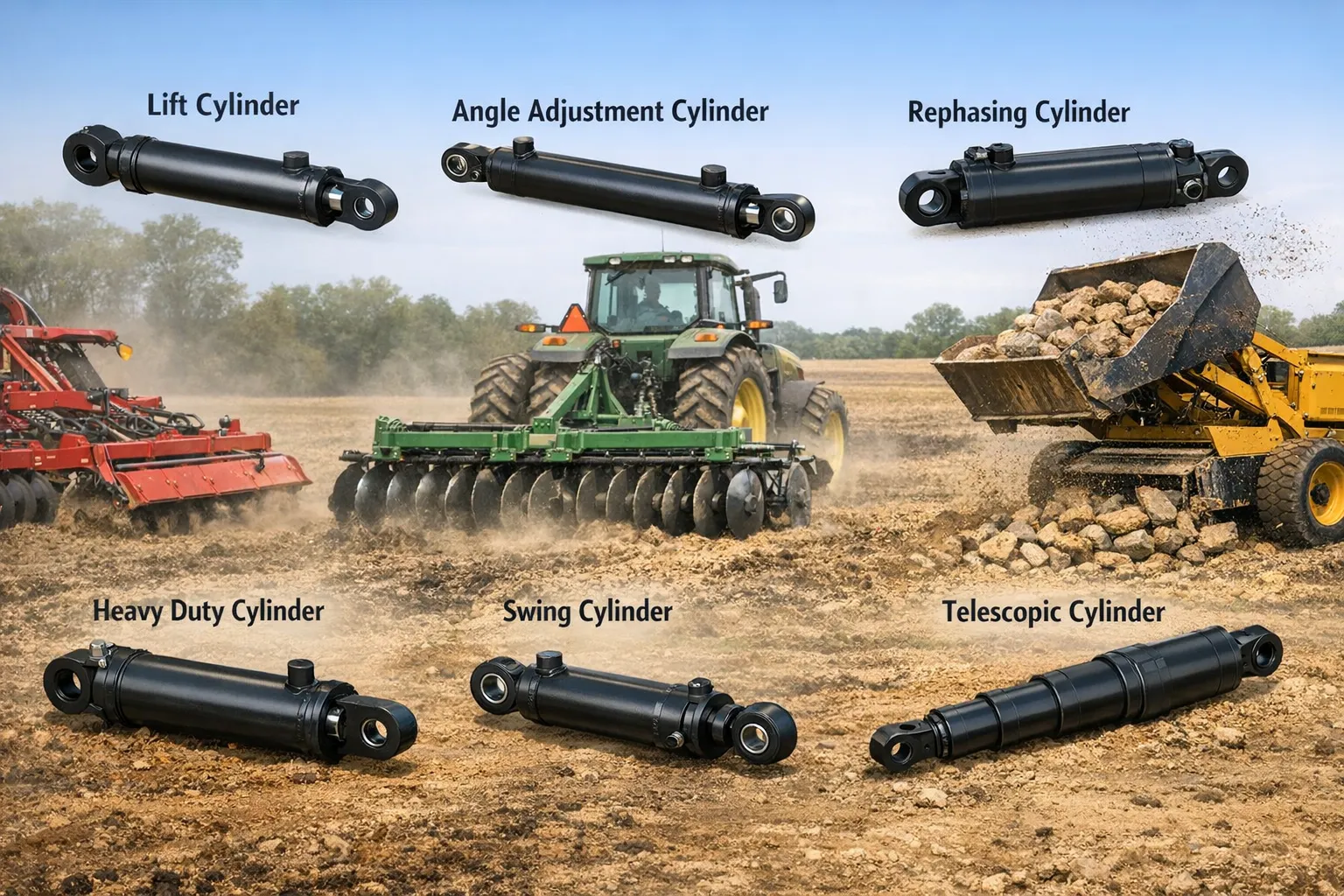
In the highly compressed, economically vital window of seasonal land preparation, enduring multi-week supply chain delays for imported original equipment replacement parts is a catastrophic burden for any commercial farming enterprise. When a deep ripper is paralyzed in the field due to a bent OEM rod, all subsequent planting schedules are derailed. Furthermore, replacing a failed factory component with the exact same inherently weak design guarantees a repeat failure. Our dedicated B2B engineering database encompasses the precise retracted lengths, extended strokes, mounting pin diameters, and clevis widths of the agricultural industry’s most trusted heavy tillage machinery. This capability allows us to produce exact, direct drop-in replacement hydraulic parts.
Our ultra-robust, 42CrMo reinforced subsoiler cylinders seamlessly interface with, and vastly outperform, the original actuators found on equipment from esteemed global agricultural brands, including but not limited to Case IH, John Deere, New Holland, Lemken, Kverneland, KUHN, and Great Plains. (Legal notation: The explicit use of these international trademarked brand names within this engineering document serves strictly to assist B2B procurement managers and field mechanics with rapid dimensional cross-referencing and aftermarket compatibility checks. We operate entirely as an independent hydraulic cylinder manufacturer and firmly assert no formal commercial affiliation, sponsorship, or endorsement with these respective corporate entities.)
By actively choosing to bypass standard, fragile OEM replacements and upgrading directly to our shortened-stroke, heavy-duty rod architecture, fleet maintenance directors execute a permanent structural enhancement. Heavy equipment mechanics spend drastically less time in the dirt repeatedly fixing hydraulic cylinders because our components are dimensionally flawless and structurally dominant. Procuring these vital upgrades directly from our factory floor ensures your operation secures a highly aggressive, bulk-optimized hydraulic cylinder price, fundamentally transforming the long-term ROI of your tillage fleet.
Core Technological Advancements Defining Unmatched Durability
What specifically elevates a premium industrial fluid power component far above the vast market of disposable, generic agricultural spare parts? The profound distinction arises from the strict application of advanced metallurgical science, calculated geometric reinforcement, and a deeply data-driven approach to resolving real-world kinetic failures. Below are the definitive technical advantages deeply embedded into every severe-duty actuator we produce:
Calculated Rod Diameter Enlargement
To conclusively defeat the failure mode of rod bending, we fundamentally reject the slim rod dimensions of standard commercial units. By significantly scaling up the cross-sectional area of the solid steel rod, we exponentially increase its moment of inertia. This vital geometric enhancement provides massive resistance against lateral deflection and column buckling when the subsoiler violently impacts deeply buried rock formations.
Optimized Kinematic Stroke Reduction
A fully extended, unnecessarily long cylinder rod acts as a massive lever against itself, becoming critically vulnerable to compressive buckling. By collaborating with agronomic engineers to establish the exact maximum draft depth required, we appropriately shorten the stroke length. This drastically reduces the unsupported column length during maximum draft resistance, producing a compact, virtually indestructible pushing mechanism.
Supreme 42CrMo Material Matrix
Even with flawless geometric design, the raw material must possess unyielding physical traits. We strictly ban standard Q345 or 1045 mild carbon steels. Our critical internal structures and amplified rods are forged exclusively from premium 42CrMo high-tensile chromium-molybdenum alloy steel. This unique metallurgical blend delivers unmatched yield strength, entirely preventing permanent plastic deformation under severe shock.
Ultra-Low Friction Sealing Architecture
Heavy tillage machinery operates in severe conditions, constantly subjected to abrasive silica dust and extreme radiant heat. We integrate a sophisticated composite matrix utilizing advanced PTFE (Teflon) glide rings and high-density polyurethane lip seals. This ensures highly responsive, stick-slip-free depth control while brutally scraping abrasive contaminants off the rod, extending seal lifespan exponentially.
Deep-Penetration Welded Joints
The continuous, heavy vibration of ripping hard soil will rapidly destroy substandard welds. We deploy fully automated, multi-pass robotic submerged arc welding to permanently fuse the thick-walled steel tube to the heavy-duty base clevis mounts. This pristine fusion process ensures deep, flawless metallurgical penetration, creating a monolithic structure completely immune to vibration-induced tearing.
Micro-Cracked Hard Chrome Defense
Operating inches above the ground, the piston rod is constantly bombarded by flying rock shards and corrosive fertilizers. Our enlarged 42CrMo rods undergo high-frequency induction quenching followed by a specialized micro-cracked hard chrome plating process, achieving an impenetrable surface hardness exceeding HRC 65 to aggressively deflect abrasion and prevent deep pitting.
Autonomous Manufacturing Process and Uncompromising Quality Control
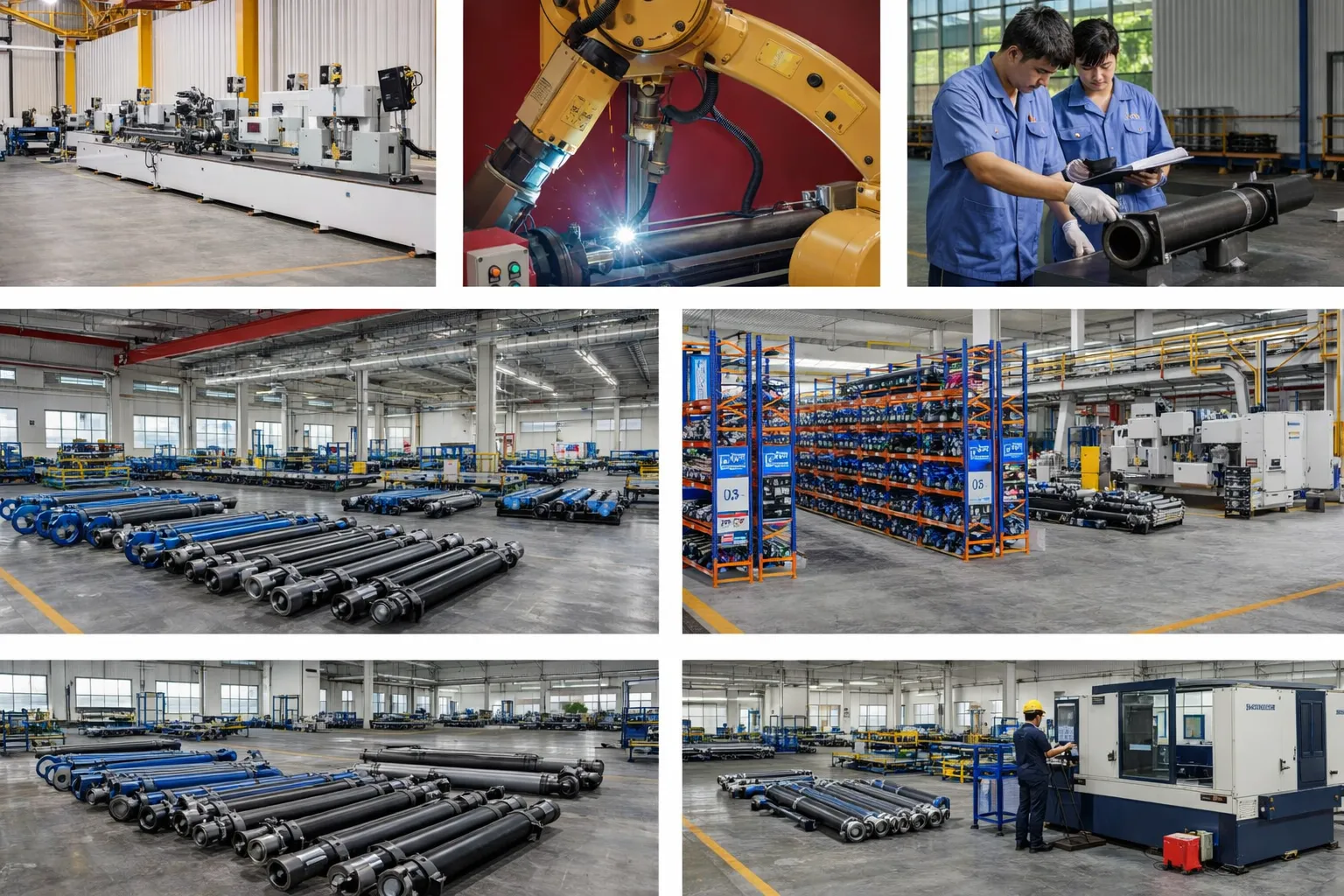
Brilliant theoretical engineering is irrelevant without uncompromising precision in physical execution on the factory floor. As an internationally certified, premium-tier hydraulic oil cylinder manufacturing enterprise, we operate a vast, fully vertically integrated, autonomous production campus. This total control over the entire supply chain—from the strict ultrasonic defect verification of raw 42CrMo steel billets, to precision CNC turning, automated robotic welding, and final industrial finishing—guarantees that every single component dispatched meets our exacting industrial survival standards. We completely eliminate the severe quality variances inherent to highly fragmented, outsourced commercial supply chains.
During the CNC machining phase, our engineers maintain incredibly tight internal bore tolerances of H8. The inner diameter of the thick-walled steel barrel is subjected to an advanced deep skiving and roller burnishing process. This critical cold-working technique yields a stunning, mirror-like internal surface finish tighter than Ra 0.2 microns. This flawless, low-friction internal environment is the absolute secret to exponentially extending the operational lifespan of our polyurethane hydraulic cylinder piston seals, completely preventing internal fluid bypass under the massive pressure spikes generated during deep ripping.
Our quality assurance mandate is absolute. We rigorously enforce a 100% factory hydrostatic testing protocol for all outbound inventory. Every fully assembled unit is securely bolted to a computerized test bench, brutally pressurized to 1.5 times its maximum rated working threshold, and dynamically cycled repeatedly to verify flawless operation and structural holding power. We guarantee zero external weeping and absolute zero internal pressure bleed. Finally, to ensure total lifecycle accountability, each cylinder is permanently laser-etched with a distinct alphanumeric serial number. This code provides our discerning B2B procurement partners with complete metallurgical and assembly traceability, drastically simplifying aftermarket support decades into the future.
Cross-Industry Adaptability of Heavy Compressive Actuators
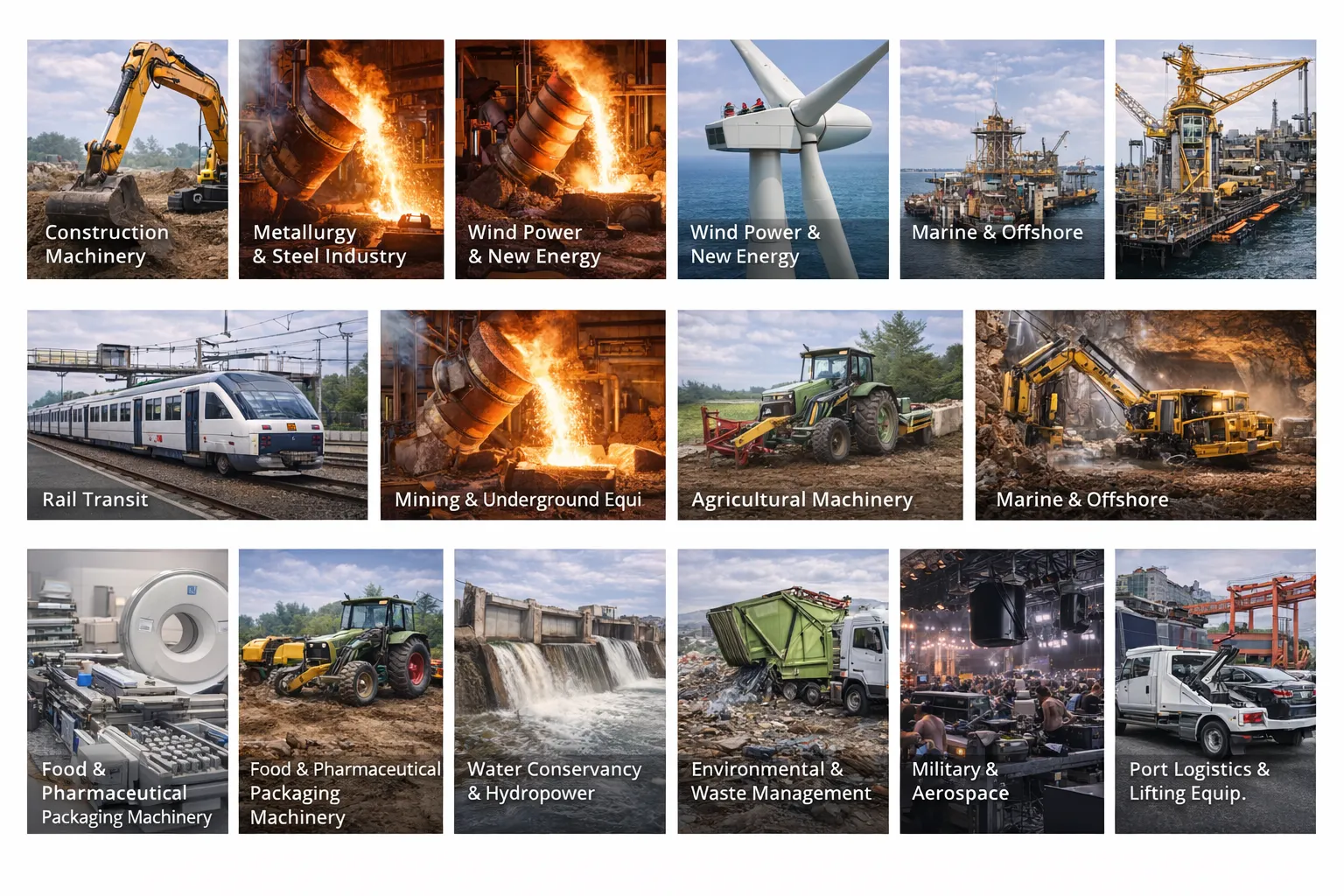
While this specific geometric configuration—featuring an aggressively enlarged rod and a calculated shortened stroke—is uniquely and perfectly optimized to conquer rod bending in a subsoiler arm linkage, the core engineering philosophy of resisting massive compressive column loads holds immense value across numerous severe-duty industrial sectors. Any heavy equipment tasked with pushing unyielding materials relies entirely on this robust structural architecture.
- Agricultural Machinery: Beyond deep subsoilers, these highly rigid designs aggressively power heavy primary moldboard plows, heavy disc harrows, and serve as the primary lifting actuators for massive folding planter frames.
- Construction Machinery Industry: The amplified rod architecture is exceptionally ideal for the massive compressive shock loads experienced by excavator thumb cylinders, bulldozer ripper actuators, and motor grader blade control systems working tirelessly to tear apart dense rock and frozen earth.
- Mining Industry: Subterranean articulated loaders and massive heavy rock crushers rely entirely on our 42CrMo high-yield strength components to survive the constant, relentless abrasive shock and silica dust contamination deep underground.
- Metallurgical and Iron Industry: The extraordinary thermal stability of our proprietary high-temperature seal matrices performs flawlessly in high-radiant heat environments, operating heavy blast furnace doors and manipulating massive loads in continuous steel casting operations.
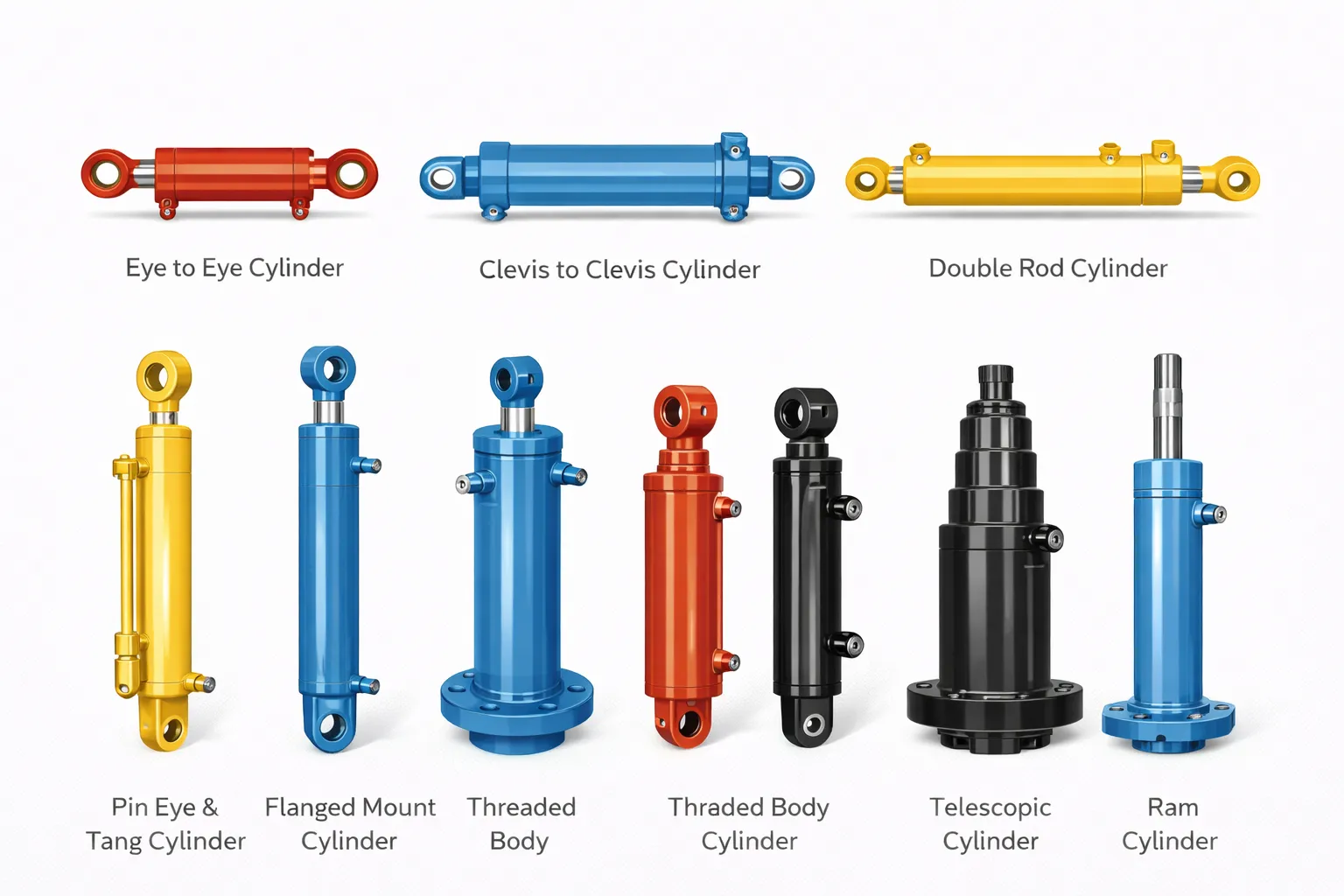
Definitive Comparative Analysis: Disposable Commercial vs. High-Performance Engineering
When actively negotiating capital expenditure and evaluating the optimal hydraulic cylinder price, astute B2B procurement teams profoundly understand that the initial purchase cost is entirely irrelevant if the component fails mid-season. They must critically evaluate the true total cost of ownership (TCO) spanning the implement’s entire operational lifecycle. The highly transparent comparative matrix below clearly illustrates the stark, uncompromising structural differences between purchasing a generic, mass-market agricultural cylinder and investing in our engineered masterpiece.
| Engineering Metric | Ordinary Commercial Agricultural Cylinder | Our High-Performance Subsoiler Cylinder |
|---|---|---|
| Rod Geometry Design | Standard, slim rod diameter profile (Massive risk of column buckling under draft load) | Calculated, heavily enlarged rod diameter (Exponentially increases bending resistance) |
| Stroke Kinematics | Unnecessarily long stroke creates a weak slenderness ratio and severe leverage point | Appropriately shortened stroke drastically minimizes the unsupported structural column length |
| Base Steel Alloy | Generic 1045 Low-Carbon Steel (Highly prone to permanent plastic deformation) | Premium High-Tensile 42CrMo Alloy Steel (Unmatched yield strength prevents yielding) |
| Barrel Rigidity | Thin-walled commercial tubing (Highly susceptible to pressure ballooning under kinetic shock) | Heavy-duty thick-walled barrel (Zero radial expansion during massive draft spikes) |
| Seal Longevity | Basic NBR rubber seals; rapid wear and instant blowout when the weak rod bends slightly | Advanced PTFE/PU matrix; remains perfectly sealed due to absolute, unyielding rod rigidity |
| Operational Lifecycle TCO | Often fails within days in severe hardpan, requiring immediate replacement and causing downtime | Delivers robust, reliable multi-season performance under continuous heavy-load ripping operations |
Proven Global Reliability: Frontline Field Triage Cases Across Asia
Theoretical engineering matrices and metallurgical claims are completely meaningless unless they are definitively validated by harsh reality in the dirt. Our high-efficiency logistics network rapidly deploys premium fluid power solutions to major agricultural hubs across East Asia. Below are highly detailed, verified accounts demonstrating exactly how our structural enhancements have fundamentally eradicated critical pain points and transformed heavy tillage operations for major B2B clients.
Field Triage: Eradicating Rod Buckling in Gyeonggi-do, South Korea
Client Profile: Large-Scale Agricultural Cooperative Fleet Management (Operating over 70 high-horsepower tractors).
Application Environment: Deploying massive 7-shank deep subsoilers to fracture decades-old plow pans in dense, rocky mountain clay terrains to prepare for high-value root crops.
The Dire Challenge: During the critical, highly condensed autumn land preparation of 2024, the cooperative experienced a devastating epidemic of cylinder rod bending. As the heavy tractors pulled the subsoilers through the unyielding clay, the forward draft resistance physically buckled the standard OEM cylinder rods completely out of alignment. The constant, daily need for emergency hydraulic cylinder repair was obliterating their operational budget and severely delaying the planting schedule.
Contact & Engineered Solution: The desperate fleet director discovered our specific technical specifications via an organic engineering search and reached out immediately. After closely analyzing their tractor draft capacity and the exact OEM linkage dimensions, we rapidly supplied a custom batch of our 42CrMo hydraulic rams. We significantly amplified the rod diameter and appropriately shortened the stroke slightly to drastically increase column load resistance while maintaining full depth capability.
Landed Outcome: Installed immediately, the cooperative proudly reported absolute zero structural failures over the subsequent massive ripping operations. The thick rods simply refused to yield to the rocky clay.
“The structural difference is visibly massive. We used to keep spare cylinders in the service trucks because bending a rod was almost a daily guarantee in these rocks. Upgrading to these heavy-duty enlarged rods completely solved the nightmare. Not a single bent unit in eight months. Incredible engineering.” — Mr. Choi D., Fleet Maintenance Director (March 2025).
Field Triage: Winter Subsoiling Reliability in Hokkaido, Japan
Client Profile: Prominent Regional Importer and Distributor of Aftermarket Tractor Parts.
Application Environment: Supplying replacement components for heavy subsoilers working in near-freezing, highly abrasive soil conditions.
The Dire Challenge: The importer noted widespread complaints that local commercial farmers were destroying standard commercial cylinder seals. Even minor, invisible micro-bending of standard thin rods under heavy draft loads was causing the rods to rub aggressively against the internal gland seals. In the freezing cold, these compromised rubber seals became brittle and instantly blew out under high pressure, spewing hydraulic oil across the fields and requiring constant replacement of hydraulic cylinder components.
Contact & Engineered Solution: Seeking a premium, failure-proof upgrade for their catalog, they engaged our technical sales team. We provided our specialized subsoiler cylinders equipped with the massive 42CrMo rod and our advanced low-temperature PTFE/PU sealing matrix. The absolute rigidity of the thick rod ensured it remained perfectly centered within the barrel, never placing asymmetrical pressure on the delicate seals.
Landed Outcome: The modified aftermarket hydraulic parts survived the harshest winter ripping conditions for over 3,000 continuous hours without a single seal blowout, dramatically boosting the importer’s premium market share.
“The combination of the absolutely rigid, thick rod and those low-temperature seals is perfect. Because the rod simply doesn’t flex under load, the seals survive infinitely longer. Our clients are thrilled to finally have a replacement product that lasts more than one season.” — Takahashi H., Procurement Lead (October 2025).
Field Triage: High-Speed Sugar Cane Deep Ripping in Chiayi, Taiwan
Client Profile: Large Commercial Sugarcane Plantation Corporation.
Application Environment: Pulling massive, multi-shank deep rippers at high speeds through highly compacted, stony soil plains to prepare for deep sugarcane planting following mechanical harvesting.
The Dire Challenge: The sheer kinetic energy generated during high-speed deep ripping operations was physically tearing their standard, thin-walled commercial cylinders apart. The constant need for fixing hydraulic cylinders was severely impacting their planting windows. The rods were bending, and the heavy vibration was fracturing the factory welds on the base clevis mounts, causing total structural separation.
Contact & Engineered Solution: They submitted a direct technical inquiry through our main corporate website. We engineered a highly customized solution featuring the amplified rod diameter, a carefully shortened stroke, an over-engineered thick-walled barrel to handle the high pressure, and deeply penetrated robotic submerged arc welds on the trunnions.
Landed Outcome: Leveraging expedited maritime freight, the upgraded units were deployed rapidly mid-season. The extreme structural rigidity absorbed all mechanical shock, resulting in the total elimination of rod bending and weld fracture.
“These cylinders are massive blocks of solid steel. The enlarged rod completely handles the extreme leverage from the deep shanks tearing through the tracks. This is definitively the best return on our hydraulic cylinder price investment we’ve ever experienced in our maintenance department.” — Lin W., Operations Manager (August 2025).
Expert Technical Inquiries (FAQ)
Selecting the optimal fluid power components to survive extreme draft forces requires precise technical clarity. Below, we have comprehensively compiled in-depth technical answers to the most critical operational and structural inquiries our global engineering teams receive regarding heavy subsoiler applications.
Why does your engineering specifically mandate an enlarged rod diameter to prevent rod bending?
How does “appropriately shortening the stroke” contribute to equipment survival?
Why is it absolutely critical to utilize a double acting hydraulic cylinder for subsoilers?
Can your factory produce exact structural replacements for my aging equipment fleet?
Do you reliably supply separate hydraulic cylinder components and comprehensive seal kits?
What primary factors dictate your bulk OEM hydraulic cylinder price structure?
Eradicate Fleet Downtime and Command the Subterranean Environment
Do not allow the severe structural inadequacies of generic, mass-market commercial cylinders to dictate your operational harvest pace, jeopardize your expensive heavy machinery, and aggressively drain your maintenance budgets. Upgrade decisively to a genuinely severe-duty engineered solution built with massive 42CrMo steel and an amplified rod matrix to definitively conquer the most brutal hardpan soil conditions on earth.
Editor: Cxm