Air Damper Drive Cylinder for Metro HVAC
Precision engineered fluid power actuation utilizing premium 316L stainless steel to guarantee absolute corrosion resistance and flawless air damper switching within the extreme humidity and fluctuating temperatures of subterranean subway environments.
Product Overview & Subterranean Environmental Resilience
Within the deeply subterranean and densely populated metro networks of South Korea, Japan, and neighboring East Asian transit hubs, passenger comfort and respiratory safety rely entirely on the continuous and flawless operation of carriage air conditioning systems. Unlike surface-level rail, subway HVAC units operate in a uniquely punishing micro-climate. As trains plunge deep underground and then emerge onto surface viaducts, the exterior equipment is subjected to rapid, extreme temperature differentials and overwhelming condensation. The Air Damper Drive Cylinder is the fundamental kinetic component tasked with physically opening and closing the heavy metallic louvers that regulate fresh air intake, cabin exhaust, and emergency smoke ventilation. It must perform this precise switching action continuously, completely ignoring the relentless moisture and corrosive dust accumulating on the carriage roof.
The primary enemy of any mechanical linkage in this specific rail application is severe structural corrosion. Generic pneumatic or standard industrial carbon steel actuators fail rapidly here. The constant cycle of humidity and thermal shock causes rapid oxidation on standard chrome rods, leading to severe pitting. When these pitted rods retract, they violently shred the internal seals of the hydraulic cylinder, resulting in fluid bypass, loss of actuating pressure, and ultimately, a jammed air damper. A jammed damper in a crowded commuter train quickly leads to dangerous cabin temperatures, high carbon dioxide levels, and severe passenger discomfort, forcing the carriage out of revenue service.
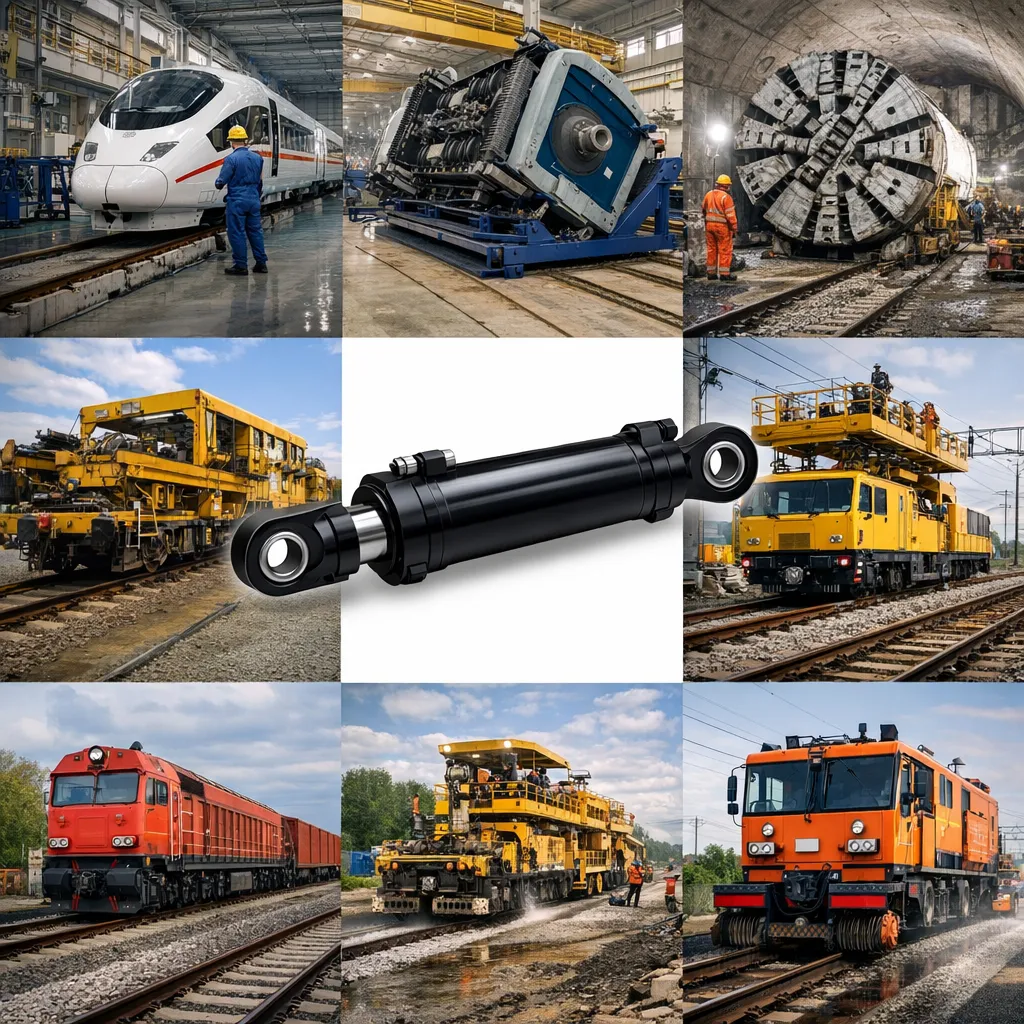
Operating as a specialized and technically advanced hydraulic cylinder manufacturer, we have strategically engineered our Air Damper Drive Hydraulic Cylinder to completely neutralize the threat of environmental corrosion. By eschewing standard materials and fully transitioning to a 100% polished 316L stainless steel architecture, we deliver an actuator that remains functionally pristine regardless of condensation, tunnel grime, or coastal humidity. For transit procurement divisions seeking to permanently eliminate HVAC mechanical failures while securing an optimal hydraulic cylinder price through massively extended component lifespan, our engineered 316L fluid power solution represents the definitive operational upgrade.
Technical Parameters & Engineering Specifications
To ensure flawless integration into the highly compact rooftop or under-floor HVAC enclosures of modern metro carriages, our engineering specifications prioritize a minimal physical footprint combined with uncompromising material integrity. The operational parameters of our hydraulic parts are heavily optimized to guarantee precise, low-friction damper switching under severe condensation. The following table provides the comprehensive engineering framework. As a vertically integrated manufacturer, we maintain absolute flexibility to customize stroke lengths, mounting geometries, and fluid port locations to fit your specific ducting layouts.
| Engineering Category | Specification Details & Customization Envelope |
|---|---|
| Industry Segment | Rail Transit |
| Equipment Category | Metro & Subway Commuter Rail |
| Subsystem / Action | Air Conditioning System (HVAC) / Air Damper Switching |
| Cylinder Designation | Air Damper Drive Cylinder |
| Action Mechanism | Double acting hydraulic cylinder (Ensures positive retraction) |
| Structure Type | Small piston cylinder (Highly compact, low-profile footprint) |
| Manufacturing Structure | Welded assembly (Eliminates tie-rod corrosion traps & vibration loosening) |
| Material System | Stainless Steel |
| Recommended Material | 316L Material across barrel, rod, and mounting caps |
| Surface Treatment | Polished (Ra ≤ 0.2µm) to repel moisture and grime adherence |
| Environmental Adaptability | Humid + Temperature Difference |
| Working Condition | Damper Switching (High-frequency proportional adjustment) |
| Failure Mode Prevented | Corrosion and subsequent seal destruction |
Operational Mechanics & Precision Fluid Control
The operational mechanics of the Air Damper Drive Cylinder are directly governed by the demands of the carriage’s climate control software. When internal cabin sensors detect rising CO2 levels or temperature spikes, the HVAC unit commands a proportional directional valve to open. This channels pressurized fluid into the extension port of our highly compact hydraulic cylinder piston chamber. Because the internal bore of our 316L stainless steel barrel is micro-polished to near-frictionless perfection, the piston advances with absolute smoothness, free from the jerky, stick-slip motion that severely plagues lower-quality pneumatic setups.
This linear thrust forces the polished stainless steel rod outward, manipulating the lever arms attached to the heavy HVAC damper louvers. The immense, incompressible power of hydraulic rams allows these relatively small cylinders to easily overpower the intense aerodynamic drag created by the train moving through a tunnel at speed, ensuring the intake vents open to exactly the required angle for optimal fresh air mixing. This precise, infinitely variable positioning is mechanically impossible to achieve with basic springs or cheap solenoids.
Equally vital is the closure phase. When the system needs to seal the cabin—such as when entering a heavily polluted tunnel or during extreme exterior freezing conditions—the active fluid routing of our double-acting design is critical. Pressurized fluid forcefully retracts the rod, pulling the heavy louvers completely flush and sealing the ducting. We intentionally avoid single acting hydraulic cylinder designs for this application. A mechanical return spring cannot provide the forceful, guaranteed closure needed to crush through accumulated winter ice or debris bridging the damper seal. Our active dual-chamber hydraulic force guarantees a perfect HVAC seal every single time.
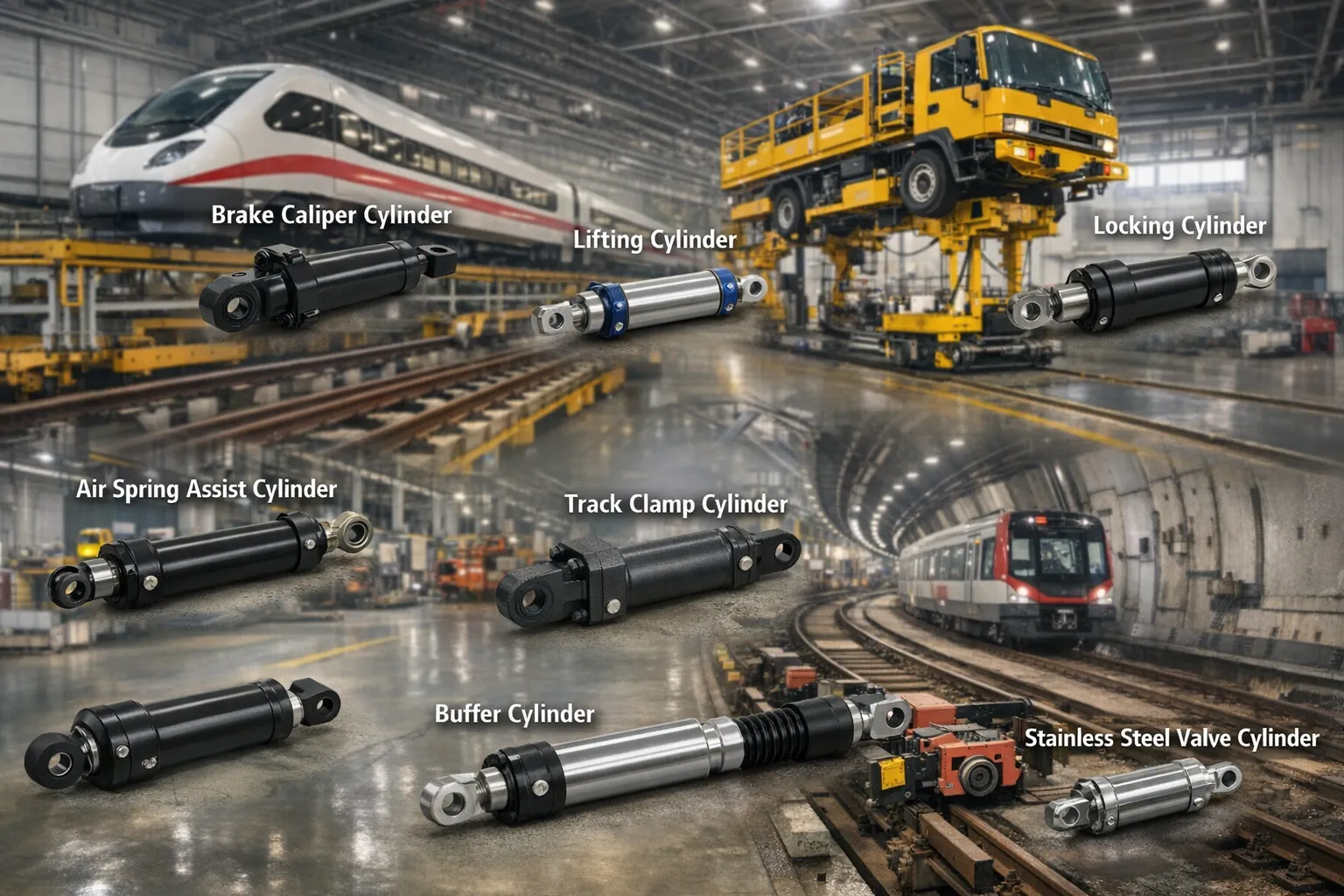
Strategic Equipment Upgrades & Seamless Compatibility
Metro transit authorities universally face tight maintenance windows and heavily restricted budgets. When legacy HVAC actuators begin failing due to systemic corrosion, sourcing exact replacements from the original European or Japanese carriage builders often involves exorbitant markups, complex international shipping logistics, and lead times stretching into several months. We specifically design our stainless steel fluid power solutions to act as precise, high-performance drop-in upgrades, bypassing OEM supply chain bottlenecks entirely.
Our mechanical reverse-engineering team carefully analyzes the mounting pin diameters, stroke lengths, retracted centers, and fluid port threading to ensure our 316L actuators align perfectly with the HVAC housings of major global rail brands. If your transit depot is currently spending excessive hours fixing hydraulic cylinders initially supplied by legacy HVAC names such as Liebherr Transportation, Merak (Knorr-Bremse), Faiveley Transport, or Denso, our engineered units will mount perfectly without requiring any structural modifications to the expensive rooftop aluminum enclosures. (Please note that referencing these specific corporate entities is done solely to assist depot maintenance teams with dimensional cross-referencing. We operate as a completely independent engineering firm and do not hold any trademark affiliation or sponsorship with these corporations.)
By choosing our 316L stainless steel hydraulic cylinder components during your next scheduled hydraulic cylinder repair or fleet-wide overhaul, you are not just replacing a part; you are permanently solving the root cause of the failure. You secure an actuator that will likely outlast the carriage itself, fundamentally lowering the lifetime maintenance cost of your passenger climate control systems.
Core Technical Advantages of Our 316L Damper Actuators
Transforming a standard industrial actuator into a component capable of surviving decades inside a condensing, vibrating subway HVAC unit requires a profound shift in material science and sealing architecture. Below are the definitive technical advantages built into every unit we manufacture.
- Absolute 316L Stainless Steel Architecture: The ultimate defense against humidity. Unlike standard carbon steel with chrome plating that eventually pits and peels, the barrel, rod, and end caps are entirely machined from solid 316L stainless steel. The addition of molybdenum makes the unit functionally immune to rust and oxidation.
- Ultra-Polished Moisture Repellent Surfaces: The exterior housing and the operating rod are mechanically polished to a mirror-like finish (Ra ≤ 0.2µm). This ultra-smooth surface physically prevents condensation droplets and corrosive tunnel dust from adhering to the metal, significantly reducing the load on the external wiper seals.
- Advanced Low-Friction Fluorocarbon Sealing: Standard polyurethane seals degrade under the constant temperature shifts of an HVAC unit. We utilize specialized fluorocarbon (FKM) and PTFE blended seals. These advanced elastomers maintain extreme flexibility at sub-zero temperatures while providing ultra-low friction, ensuring the damper never sticks during crucial switching commands.
- Compact Welded Monolithic Design: HVAC rooftop space is notoriously tight. Traditional tie-rod cylinders are bulky and provide crevices where corrosive moisture pools. Our actuators feature automated TIG welding, creating a sleek, compact, gap-free small piston cylinder structure that easily fits into crowded ducting layouts and eliminates hidden corrosion traps.
- Exceptional Vibration Tolerance: Subway carriages endure relentless harmonic rail vibration. By utilizing a welded stainless structure and precision-machined internal guide rings, our cylinders prevent the internal rattling and lateral scoring that rapidly destroy cheaper, mechanically fastened pneumatic actuators.
- Optimized Porting for Synthetic Fluids: Recognizing that many transit authorities mandate specific fire-resistant or bio-degradable fluids for passenger safety, our internal flow paths and seal matrices are chemically calibrated for total compatibility with complex synthetic fluid profiles.
- Extended Fatigue Lifespan: Because HVAC dampers adjust constantly to maintain cabin pressure, the internal geometry is optimized via finite element analysis to eliminate stress concentration points, ensuring the metal structure never succumbs to fatigue cracking over millions of micro-strokes.
- Integrated Scraper Rings: To combat urban dust and soot that inevitably enters the fresh air intake, we equip the cylinder head with a heavy-duty scraper ring. This physically ejects particulate matter from the rod before it can enter and contaminate the fluid.
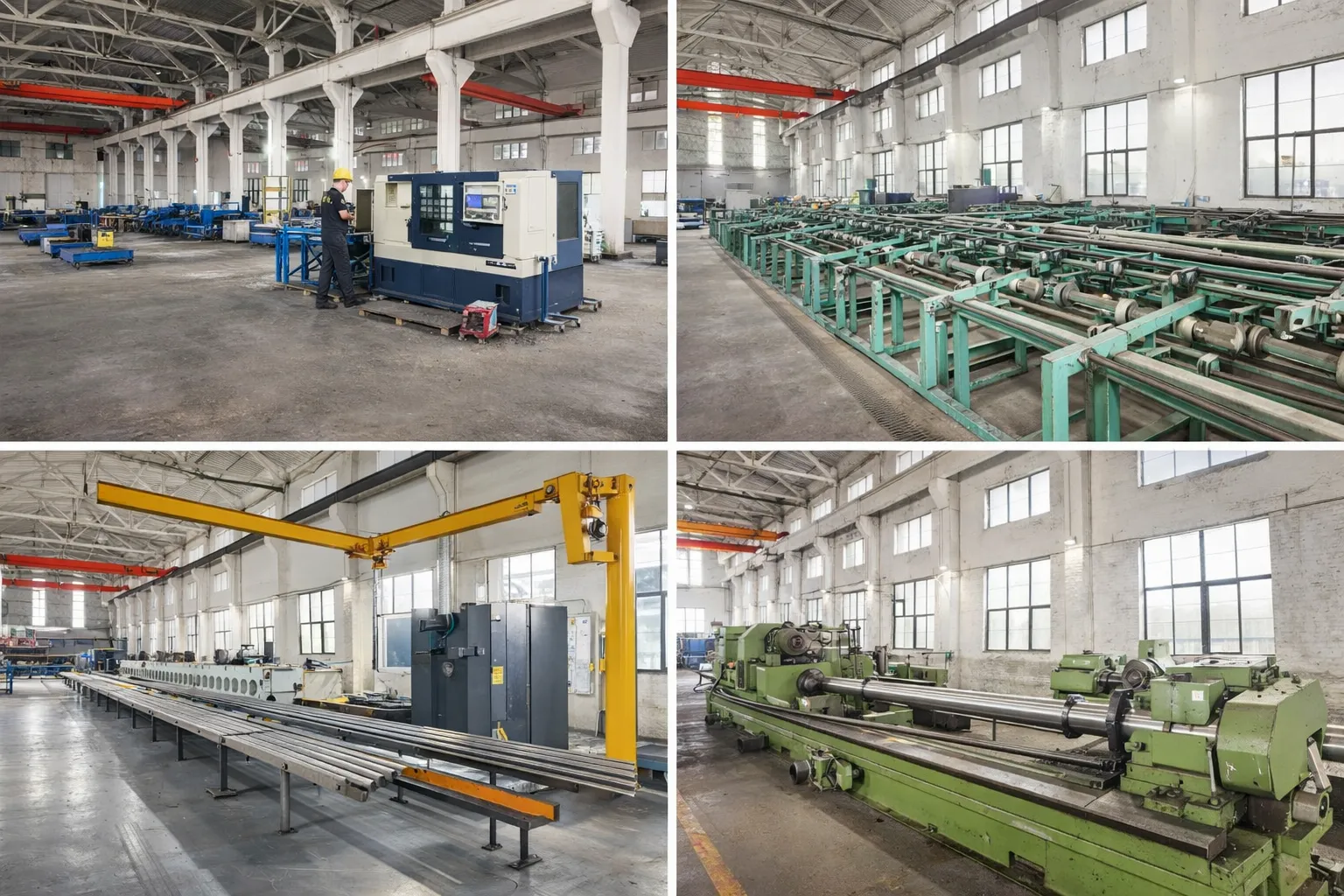
Autonomous Manufacturing & Unyielding Quality Control
The exceptional environmental resilience of our fluid power solutions is born entirely within our own highly controlled factory environment. As a fully vertically integrated manufacturer, we maintain absolute authority over the entire metallurgical and machining process. We do not source pre-made tubes. Raw 316L stainless steel billets undergo rigorous spectrographic chemical analysis to verify the exact Molybdenum and Nickel content, ensuring the metal meets true marine-grade anti-corrosion standards before entering the CNC line.
Machining stainless steel to tight tolerances requires specialized tooling and coolants to prevent work-hardening. Our multi-axis CNC lathes and milling centers achieve dimensional accuracies measured in exact micrometers. The internal bore of the 316L barrel undergoes a specialized deep-hole honing process to create an impeccably smooth surface that extends the life of the PTFE piston seals exponentially. Final assembly of all delicate internal parts is conducted in positive-pressure, climate-controlled clean rooms to eliminate any possibility of ambient dust compromising the vital hydraulic pathways.
Furthermore, our commitment to quality assurance is uncompromising. Random batch sampling is insufficient for transit-grade components. Every single unit undergoes a 100% computerized end-of-line testing protocol. We simulate rapid, high-frequency damper switching cycles at elevated pressures, constantly monitoring for microscopic internal fluid bypass or external weeping. Upon passing this rigorous simulation, the 316L housing is laser-etched with a permanent serial number, providing full digital traceability back to the original steel heat codes and the precise testing performance graphs.
Expansive Cross-Industry 316L Applications
While the compact, precision engineering detailed here is heavily calibrated for the rigorous demands of subway HVAC systems, the core fluid power principle of combining massive actuation force with the absolute corrosion resistance of 316L stainless steel holds immense practical value across numerous severe-duty industrial landscapes.
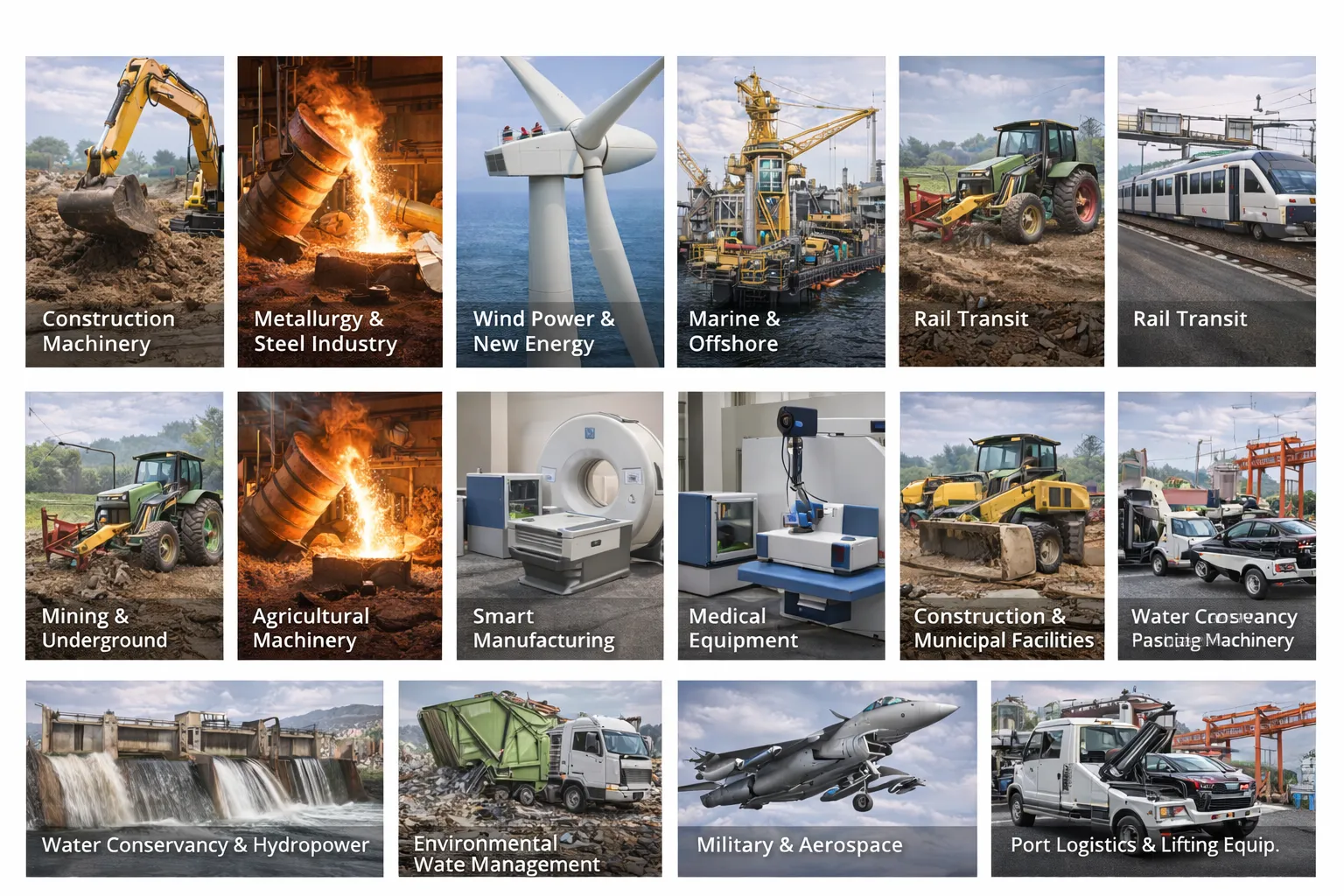
For example, the uncompromising immunity to oxidation developed for condensing rail environments is fundamentally required in the marine and offshore sector. Saltwater splash zones, shipboard hatch covers, and submerged ROV linkages demand this exact level of 316L stainless steel integration to survive. Similarly, the leak-free, hygienic nature of polished stainless steel translates perfectly to the wind power and new energy sector, where offshore wind turbine pitch control cylinders face identical extremes of coastal salt spray and humidity. We also deploy scaled-up versions of these stainless designs as critical valve-control and lift cylinder mechanisms within the highly corrosive chemical washdown environments of the metallurgical and iron industry.
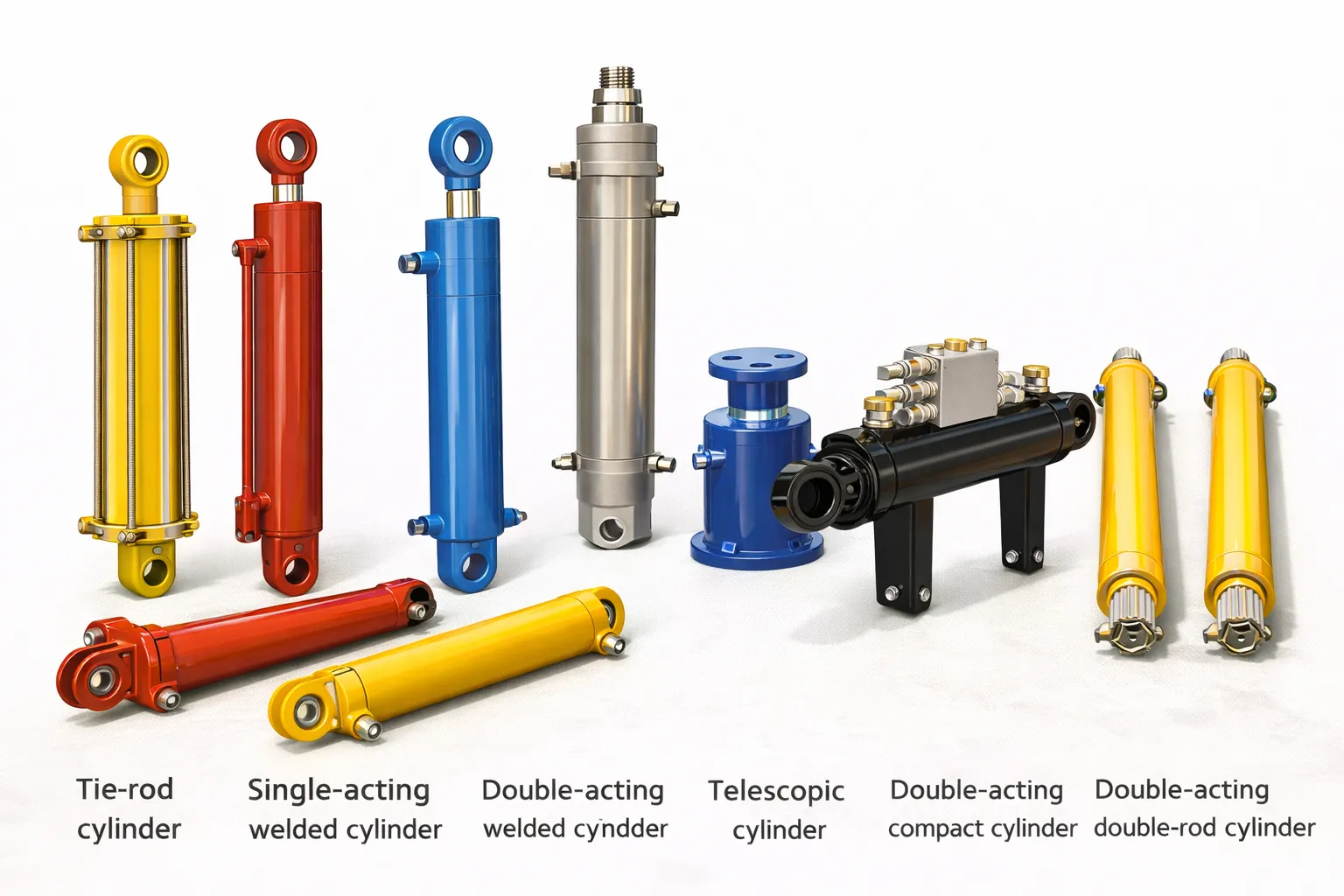
Comparative Analysis: Standard Cylinder vs. 316L Damper Cylinder
To clearly illustrate the exceptional value proposition of our specialized material engineering, the following table directly compares standard off-the-shelf industrial cylinders with our highly customized 316L subway HVAC components. These stark differences dictate the total lifecycle cost and maintenance burden placed on your depot.
| Performance Metric | Standard Commercial HVAC Cylinder | Our 316L Air Damper Cylinder |
|---|---|---|
| Corrosion Immunity | Carbon steel with basic plating. Rapidly pits and rusts under constant humidity. | 100% Solid 316L Stainless Steel. Functionally immune to rust, oxidation, and pitting in wet environments. |
| Seal Lifespan | Short. Pitted, rusty rods violently tear up standard NBR wiper seals during retraction. | Extremely Long. Polished stainless rod remains pristine, preserving the advanced PTFE seals indefinitely. |
| Structural Footprint | Bulky tie-rod assembly. Difficult to fit inside cramped rooftop HVAC housings. | Highly compact, smooth welded monolithic design. Optimizes limited spatial layouts. |
| Thermal Shock Tolerance | Basic seals shrink and leak when transitioning rapidly from warm tunnels to freezing surface tracks. | Advanced FKM elastomers maintain perfect elasticity regardless of extreme temperature swings. |
| Total Cost of Ownership | High. Requires frequent carriage removal from service for actuator replacement due to rust. | Exceptionally Low. “Install and forget” reliability drastically reduces overall depot labor costs. |
Proven Field Performance: Real-World Engineering Triumphs
Engineering specifications must be continuously validated by flawless performance in the real world. Our highly specialized fluid power solutions are actively trusted by major metropolitan transit authorities and rolling stock maintenance contractors across Asia. Here are specific deployments demonstrating our success in resolving critical HVAC operational failures for our B2B clients.
Case Study 1: Eradicating Condensation Rust on Seoul Metro
Location & Client: Metropolitan Rapid Transit Corporation, Seoul, South Korea (November 2024).
The Challenge: Commuter trains frequently transition from deep underground tunnels to elevated surface tracks. This caused massive condensation within the rooftop HVAC units. The original carbon-steel damper actuators were rusting severely within 14 months, causing the rods to seize and trapping passengers in unventilated carriages. The procurement division urgently sought a specialized manufacturer capable of solving this systemic rust issue.
Our Solution & Result: We rapidly engineered and supplied a fleet-wide batch of our 100% 316L stainless steel units. After two full years covering multiple intense summer/winter cycles, depot inspections revealed absolutely zero corrosion and flawless damper switching, completely eliminating HVAC-related carriage groundings.
“The transition to these 316L cylinders was a game-changer for our maintenance schedules. Their understanding of severe condensation environments is unparalleled. We have eliminated an entire category of frequent failures from our depot workflow. Outstanding engineering.” — Lee Kang-in, Lead Rolling Stock Engineer.
Case Study 2: Overcoming Coastal Salt Spray for Taipei MRT
Location & Client: Regional Rapid Transit Authority, Taipei, Taiwan (May 2025).
The Challenge: Elevated tracks running near the coastline subjected the train’s under-floor HVAC intakes to relentless sea-salt spray. The standard chrome-plated rods on the original European damper actuators were heavily pitted by galvanic corrosion. This pitting shredded the internal seals, leading to massive fluid leaks and immediate loss of damper control.
Our Solution & Result: We supplied units featuring our ultra-polished 316L stainless rods and advanced PTFE wiper seals. The molybdenum within the 316L alloy provided total immunity to the chlorides in the salt spray. The operational lifespan of the damper mechanisms was dramatically extended from 18 months to over 60 months, yielding an incredible return on investment.
“The marine-grade 316L material entirely solved our coastal corrosion nightmare. They perform flawlessly despite the salt and grime. We are systematically replacing all failing OEM units with these high-performance parts.” — Chen Wei-ting, Senior Procurement Manager.
Case Study 3: Resolving Spatial Constraints in Compact HVAC Overhauls
Location & Client: Subway Overhaul Contracting Firm, Tokyo, Japan (February 2026).
The Challenge: During a mid-life carriage overhaul to upgrade the HVAC cooling capacity, the engineering firm found that the new, larger condenser coils severely restricted the available space for the damper actuators. Standard bulky tie-rod cylinders simply could not fit into the newly cramped rooftop enclosures without fouling the louver linkages.
Our Solution & Result: Leveraging our CAD division, we engineered a highly customized, ultra-compact welded Air Damper Drive Hydraulic Cylinder. By eliminating the bulky end-cap tie-rods and integrating flush-mount fluid ports, we reduced the overall footprint by 25%. This allowed the contractors to seamlessly integrate the cylinder without requiring expensive modifications to the aluminum HVAC housing.
“Their ability to rapidly customize the physical geometry to solve our spatial conflict was brilliant. The compact welded design fit perfectly, and the overall price for custom units was vastly lower than adapting the entire HVAC housing.” — Hiroshi Tanaka, Chief Mechanical Contractor.
Frequently Asked Questions
For procurement managers, lead mechanical engineers, and depot maintenance directors tasked with overhauling subway environmental systems, we have compiled comprehensive answers to the most common technical inquiries regarding our stainless fluid power solutions.
1. Is the entire cylinder made of 316L, or just the rod?
2. What is the typical lead time for a fleet-wide replacement order of these stainless damper cylinders?
3. Why use hydraulic fluid instead of basic compressed air for damper switching?
4. Do you offer comprehensive hydraulic cylinder repair capabilities for legacy OEM parts?
5. Are your internal seals compatible with eco-friendly or fire-resistant synthetic fluids?
6. How do you verify the quality and grade of the 316L stainless steel used?
7. How does the double acting mechanism prevent failure in winter conditions?
Eradicate Corrosion and Secure Your Fleet’s Comfort Systems
Do not let persistent rust and rapid seal failure dictate your depot maintenance schedules. Upgrade to the ultimate environmental resilience by partnering directly with an industry-leading manufacturer capable of delivering 316L engineered excellence precisely tailored to your transit HVAC demands. Provide us with your technical drawings or legacy OEM part numbers, and let us demonstrate how our stainless fluid power solutions can elevate your operational efficiency while permanently reducing your procurement budget.
Editor: Cxm