Boom Cylinder for Concrete Machinery
Engineered with ultra-rigid 42CrMo alloy steel and advanced ceramic bushing technology. Delivering unyielding boom articulation and absolute resistance to high-pressure slurry wear and seal extrusion in severe concrete pumping environments.
Product Overview & Core Industrial Value
Within the highly demanding landscape of large-scale infrastructure development, commercial high-rise construction, and deep underground tunneling, concrete pump trucks dictate the pace of the entire project. These massive vehicles rely on a complex network of fluid power to execute two distinct but highly synchronized operations: unfolding a massive multi-stage placing boom, and forcing heavy, abrasive concrete slurry through hundreds of feet of steel piping. The structural stability and delivery efficiency of this equipment rely entirely on the mechanical fortitude of the boom cylinder and the main pumping cylinder. The boom cylinder is responsible for the precise articulation and holding power of the heavy steel boom arms, which are suspended high in the air and subjected to continuous, violent harmonic vibrations generated by the pump strokes. Simultaneously, the main pumping cylinder operates in the belly of the machine, performing rapid, high-pressure reciprocating movements to push the dense concrete mixture.
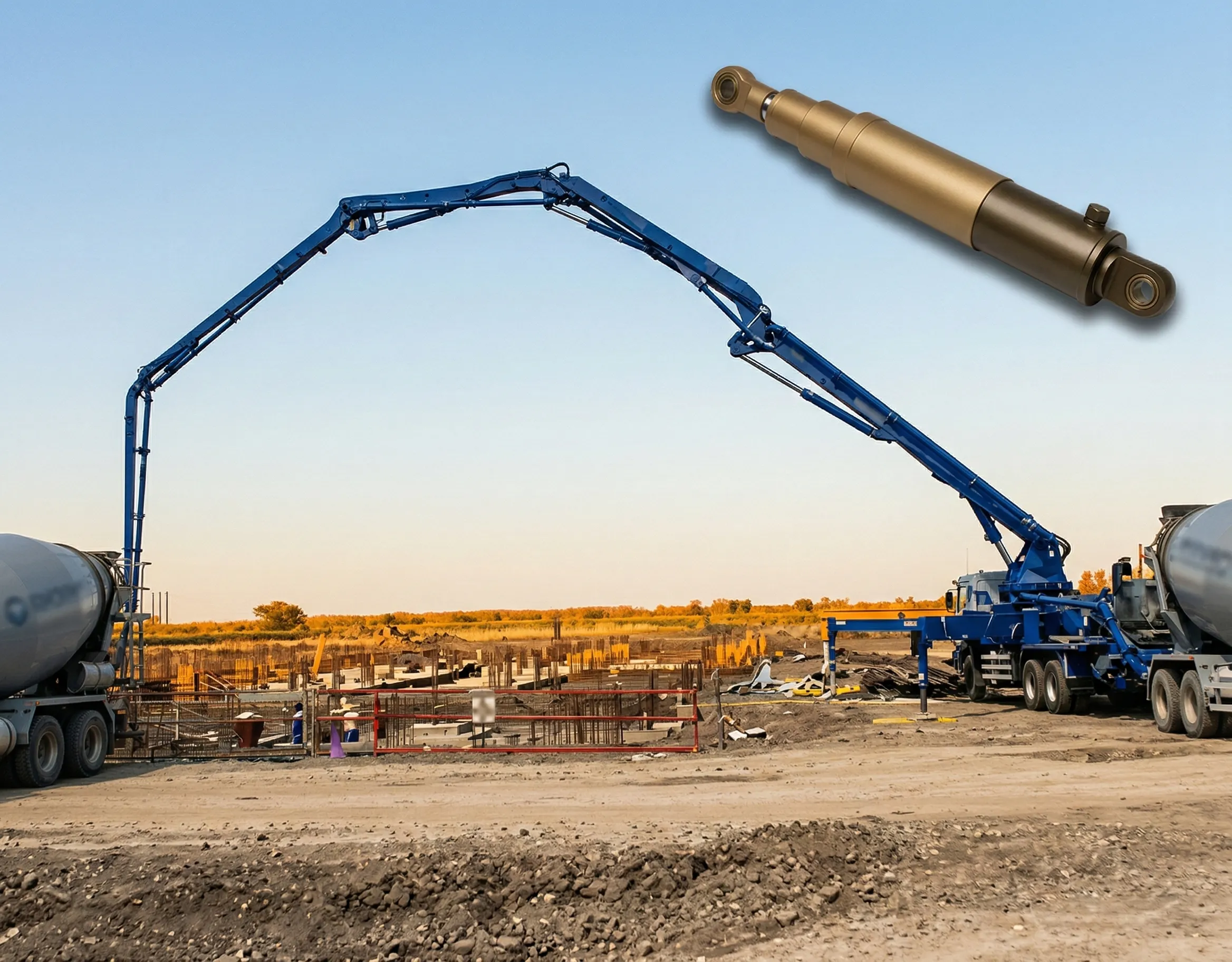
The operational environment inside a concrete pump system is arguably the most destructive application in the heavy equipment sector. The primary threat to a hydraulic cylinder in this setting is the highly abrasive and alkaline nature of concrete slurry. The mixture of cement, fine sand, and crushed aggregate acts as an aggressive lapping compound. In standard aftermarket cylinders, this high-pressure slurry forces its way past basic wipers, instantly scoring the internal barrel and violently chewing up the primary seals. This specific mechanical failure—universally identified in the field as seal extrusion and slurry wear—leads to immediate loss of pumping pressure, dangerous boom drift, and catastrophic fluid contamination. Once the seals fail, the machine is completely grounded, causing massive financial losses due to spoiled concrete batches and stalled construction crews.
We have utilized decades of specialized metallurgical research to eliminate these exact vulnerabilities. As a globally trusted hydraulic cylinder manufacturer, we have completely re-engineered the internal fluid boundary. By forging the main structural components from ultra-high-yield 42CrMo alloy steel and implementing a revolutionary ceramic bushing interface, our design physically repels abrasive particles and mathematically prevents seal extrusion under maximum pumping loads. Whether you are managing an expansive concrete leasing fleet in South Korea or outfitting specialized high-rise pumping equipment in Tokyo, upgrading your machinery to our heavy-duty hydraulic parts guarantees a profound reduction in unplanned maintenance, completely securing your high-pressure concrete delivery operations.
Comprehensive Technical Specifications
Absolute operational reliability in high-pressure slurry environments requires exact engineering parameters. The following data matrix outlines the definitive physical specifications, advanced metallurgical profiles, and targeted internal configurations of our flagship concrete pump actuators, formulated specifically for the punishing demands of the construction machinery industry.
| Engineering Parameter | Material Data & System Configuration |
|---|---|
| Target Industrial Sector | Engineering Machinery / Heavy Infrastructure |
| Primary Equipment Type | Concrete Pump Truck / Stationary Trailer Pump |
| Subsystem Application | Main Pumping System & Placing Boom Articulation |
| Actuator Designation | Boom Cylinder / Main Pumping Cylinder |
| Kinematic Action Mode | Double acting hydraulic cylinder |
| Internal Architecture | High-Pressure Piston Cylinder Structure |
| Manufacturing Construct | Robotic Deep-Penetration Welded Assembly |
| Core Metallurgical System | 42CrMo Ultra-High Tensile Alloy Steel |
| Internal Surface Defense | Integrated Ceramic Bushing Layer |
| Environmental Exposure Grade | High-Pressure Slurry + Abrasive Particulates |
| Dynamic Work Characteristics | High-Pressure Reciprocating + Extreme Abrasion |
| Fatal Failure Mode Prevented | Slurry Wear Scoring & Dynamic Seal Extrusion |
| Critical Required Configuration | Ceramic Bushing + High-Pressure Seal Group |
The Physics of Concrete Delivery: Actuation Principle
To truly comprehend why standard commercial actuators disintegrate under the load of concrete delivery, one must analyze the severe hydro-mechanical forces at play. A concrete pump system relies entirely on high-pressure fluid dynamics to execute two simultaneous tasks: extending the heavy articulated arms via the boom cylinder network, and forcing viscous concrete vertically via the pumping cylinders. Both systems operate as highly engineered double acting mechanisms. The boom actuators rely on pressurized fluid to actively control the unfolding, lifting, and precise placement of the heavy placing boom. The boom is heavily affected by harmonic resonance; every time the main pump pulses, a massive shockwave travels up the boom structure. The fluid inside the boom cylinders must act as a rigid shock absorber, holding the boom perfectly steady while dampening the violent kinetic energy.
Simultaneously, down in the hopper, the main pumping cylinders are performing continuous, rapid reciprocating strokes. The primary hydraulic pump forces high-pressure oil—often peaking well above 350 bar (5,000 PSI)—into the base port of the drive cylinder. This dense fluid pushes against the internal hydraulic cylinder piston, driving the material piston through the concrete transport tube. This action physically forces the aggregate-rich slurry up into the delivery pipes. The ultimate mechanical test occurs precisely at the sealing interface. The extreme pressure required to push concrete 50 meters into the air forces the abrasive cement paste backward against the cylinder’s internal seals.
In a standard unit equipped with basic steel and rubber components, this extreme back-pressure physically forces the soft rubber seals out of their grooves—a phenomenon called seal extrusion. Once the seal is distorted, the sharp aggregate particles easily enter the hydraulic chamber, violently scoring the metal walls and causing catastrophic failure. We have engineered a definitive, metallurgical solution to this physics problem by implementing an advanced ceramic bushing combined with a rigid high-pressure seal group. The ultra-hard ceramic surface completely resists scoring from crushed aggregate, while the specialized rigid seal matrix refuses to deform under maximum pumping pressure. This guarantees that the abrasive slurry is physically blocked from the hydraulic fluid, protecting the internal hydraulic cylinder components and ensuring continuous, leak-free concrete pouring without the constant need for fixing hydraulic cylinders.
Seamless B2B Fleet Integration & Brand Compatibility
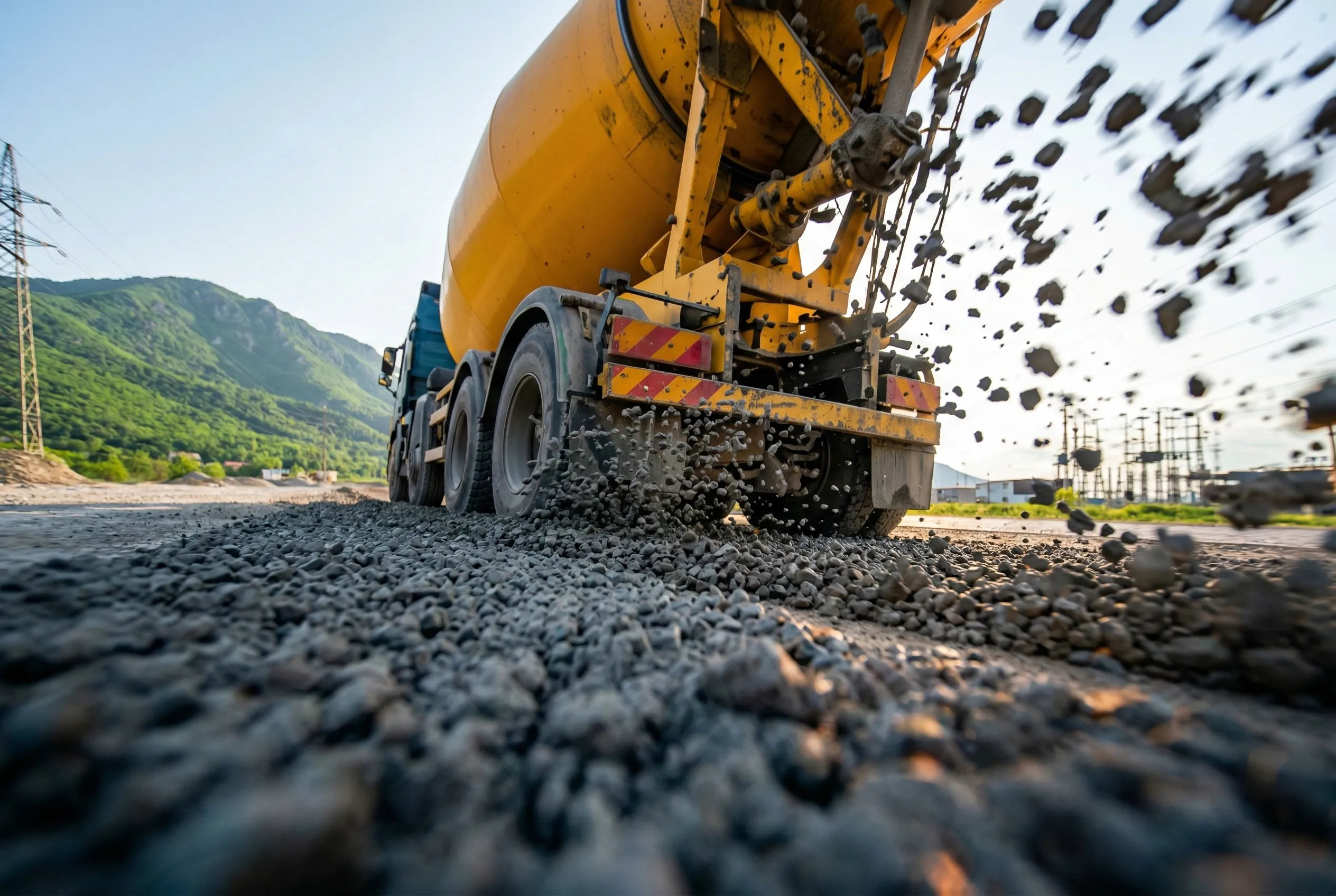
When a main pumping cylinder blows a seal or a boom cylinder begins to drift on a live construction site, the concrete pour must be halted immediately. In commercial construction, a delayed pour leads to cold joints in the concrete structure, resulting in massive financial penalties and compromised building integrity. For fleet maintenance directors tasked with the stressful job of hydraulic cylinder repair on tight deadlines, sourcing replacement parts that require custom fabrication is completely unacceptable. We meticulously reverse-engineer our concrete machinery actuators to flawlessly replicate exact OEM dimensional footprints—matching pin-to-pin closed centers, flange mounting diameters, stroke lengths, and complex high-pressure port thread pitches perfectly.
Our fatigue-resistant assemblies serve as supreme aftermarket upgrades for concrete pump trucks and trailer pumps manufactured by the industry’s leading global brands deployed extensively across South Korea, Japan, and Southeast Asia. These include exact structural fitments for heavily utilized fleets built by Putzmeister, Schwing, Sany, Zoomlion, Junjin, Everdigm, KCP, and XCMG. Upgrading your fleet to our ceramic-lined and 42CrMo models instantly restores original pumping pressure and absolute boom safety without requiring any risky chassis cutting or bracket modifications by your mechanics.
*Notice: The heavy equipment brand names, specialized pump truck models, and corporate trademarks mentioned above are utilized exclusively for the strict purpose of dimensional cross-referencing and part compatibility identification. We operate as a premier independent fluid power engineering firm and claim no formal affiliation, sponsorship, or endorsement from these original equipment manufacturers.
Five Pillars of Technical Engineering Superiority
Standard aftermarket replacements are often built to hit budget price points, utilizing cheap carbon steel and basic rubber seals that disintegrate rapidly under the abrasive assault of concrete slurry. When you procure your heavy fluid power components through our advanced engineering channels, you acquire five distinct mechanical superiorities that guarantee unparalleled longevity and pumping power:
Precision Manufacturing & Absolute Quality Verification
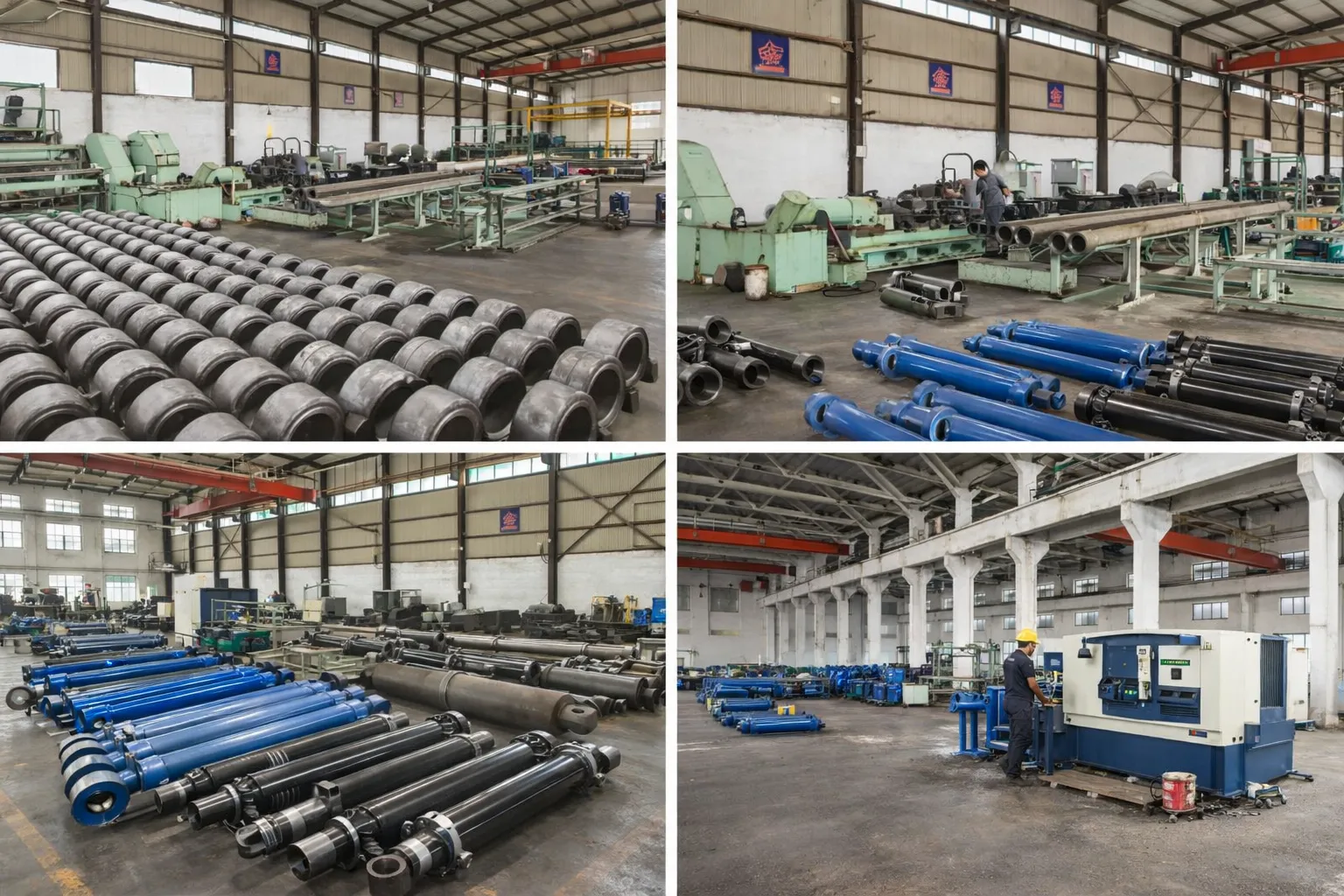
Delivering a failsafe fluid power component for high-risk, high-pressure concrete placement requires total vertical integration over the entire production lifecycle. We do not assemble outsourced, unverified parts; we execute full-process autonomous manufacturing within our advanced facilities. Our stringent quality protocol begins with exact metallurgical verification using optical emission spectrometry to certify the precise chemistry of every batch of 42CrMo alloy steel. Once certified, the internal cylinder bores are precision-machined utilizing advanced skiving and roller burnishing technology. This cold-working process physically compresses the metal grain, resulting in an internal mirror finish that practically eliminates seal friction and extends operational life massively.
Recognizing that structural joints are the primary failure point during the violent reciprocation of pumping, all robotic welds undergo rigorous ultrasonic non-destructive testing (NDT) to verify absolute internal joint integrity beneath the surface. Furthermore, the delicate installation of the high-pressure anti-extrusion seals and ceramic liners is executed strictly within pressurized, climate-controlled, dust-free cleanrooms. This highly controlled environment prevents any microscopic particulate from being trapped inside the cylinder during assembly, which would inevitably score the barrel once placed under high hydraulic pressure.
Most critically, our testing completely bypasses random batch sampling. We enforce a mandatory, uncompromising 100% factory hydrostatic holding test protocol. Every single completed boom cylinder and pumping actuator is mounted to a computerized diagnostic test bench. The unit is pressured to 1.5 times its maximum working limit to verify absolute structural integrity without any signs of barrel ballooning. We rigorously monitor for any pressure decay over a sustained holding period to verify zero internal fluid bypass. This exhaustive validation guarantees heavy-duty performance that fully justifies the optimal hydraulic cylinder price and provides ultimate peace of mind for the pump operators on the ground.
Expansive Concrete & Civil Application Scenarios
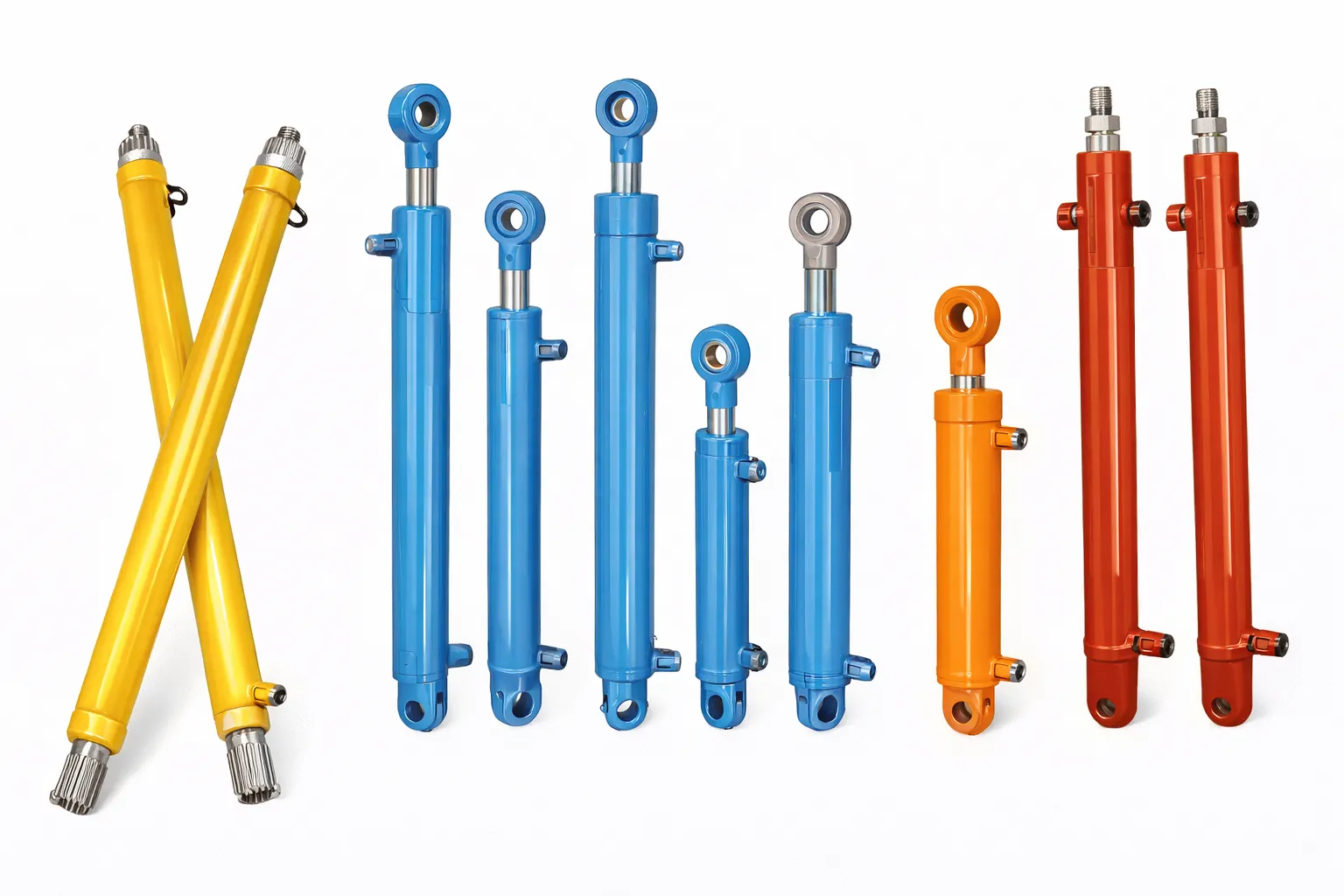
While originally architected to conquer the punishing pressure and slurry abrasion of mobile concrete pump trucks, the unparalleled seal integrity and anti-bending rigidity of our technology make it the actuator of choice across a vast array of severe-duty concrete and civil engineering sectors.
High-Rise Commercial Construction
Serving as the core high-pressure pumping actuators for stationary trailer pumps driving dense C60 concrete hundreds of meters vertically into skyscraper formwork.
Subterranean Tunnel Lining
Providing flawless reciprocating power for specialized robotic shotcrete machines spraying fast-setting concrete mixtures onto the walls of subway and highway tunnels.
Heavy Bridge & Pylon Infrastructure
Ensuring absolute boom stability against heavy river crosswinds when articulating long-reach placing booms to pour massive concrete bridge pylons over water.
Precast Concrete Manufacturing
Empowering automated stationary batching plants to consistently pump thick aggregate mixtures into precast molds without seal failure or pressure drops.
Foundation Piling Projects
Driving specialized slurry pumps used to fill deep, subterranean bored piles with wet concrete, maintaining extreme fluid pressure to prevent ground water intrusion.
Specialty Lift Cylinders
Custom-engineering highly robust, corrosion-resistant lift cylinder articulation systems for concrete placement barges operating in aggressive saltwater environments.
Comparative Analysis: Standard Commercial vs. High-Performance Concrete Actuators
Astute procurement decisions in concrete fleet management must focus strictly on risk mitigation and calculating the total cost of ownership. Replacing blown fluid seals mid-pour, dealing with cold joints, and facing massive project delay penalties far outweighs the initial component cost savings. The comparative matrix below highlights exactly why upgrading to our highly engineered ceramic-lined cylinders yields a massive operational advantage by drastically increasing pumping efficiency and eliminating seal blowouts.
| Critical Performance Metric | Standard Aftermarket Cylinder | Our Premium Concrete Cylinder |
|---|---|---|
| Internal Wall Abrasion Resistance | Standard honed steel (Easily scored by silica aggregate) | Ceramic Liner Technology (Impervious to slurry scratching) |
| High-Pressure Seal Integrity | Basic NBR rubber (Suffers massive seal extrusion under load) | Anti-Extrusion PTFE Seal Group (Holds max pressure flawlessly) |
| Boom Structural Rigidity | Standard 45# Steel (High risk of rod bending at max extension) | 42CrMo Alloy Forging (Extreme yield strength prevents bending) |
| Stroke Limit Deceleration | Rigid stops (Causes severe boom bounce and truck vibration) | Advanced Hydraulic Buffering (Smooth, floating boom stability) |
| Average Replacement Cycle | 30,000 – 50,000 Cubic Meters Pumped | 150,000+ Cubic Meters Pumped with zero seal bypass |
Verified B2B Global Success Stories
Our advanced concrete cylinder components are fiercely trusted by major construction conglomerates, concrete pumping fleets, and infrastructure developers across East Asia to ensure absolute reliability during critical pours. Review these five verified deployment scenarios detailing how our fluid power engineering resolved chronic pumping and boom articulation issues.
Case 1: Eradicating Seal Extrusion in Seoul High-Rise Construction
Location & Time: Seoul, South Korea (October 2024)
Client & Equipment: Major commercial pumping contractor utilizing a fleet of Junjin pump trucks for a 60-story skyscraper project.
The Challenge: Pumping dense C60 high-strength concrete vertically over 150 meters generated immense back-pressure. The aggregate was scoring the standard steel barrels, causing the soft rubber seals to extrude and blow out completely, resulting in disastrous mid-pour pressure loss and cold joints.
How They Found Us: The fleet maintenance director specifically searched organic listings for heavy-duty fixing hydraulic cylinders solutions focusing on anti-extrusion and ceramic liners.
The Solution & Result: We rapidly deployed our main pumping cylinders featuring the advanced ceramic liner technology and PTFE seal groups. The ceramic walls remained perfectly smooth. The fleet pumped continuously for 18 months without a single seal blowout.
“The ceramic liner is an absolute game-changer. Our internal pressures are higher than ever, yet the seals hold perfectly. It saved our reputation on this skyscraper project.” — Mr. Kim Seung-ho, Fleet Maintenance Director
Case 2: Defeating Boom Bending in Busan Port Expansions
Location & Time: Busan, South Korea (February 2025)
Client & Equipment: Marine infrastructure developer running Putzmeister 56-meter boom pumps on exposed coastal jetties.
The Challenge: Extreme coastal crosswinds applied massive lateral leverage to the fully extended placing booms. The factory 45# steel boom cylinder rods were visibly bending under the wind load, causing severe safety concerns and internal gland destruction upon retraction.
How They Found Us: Discovered our specialized metallurgical specifications while researching ultra-rigid hydraulic rams online.
The Solution & Result: We upgraded their entire fleet with our 42CrMo alloy steel boom cylinders. The immense yield strength completely neutralized the wind deflection. The booms now remain perfectly stable and the rods retract flawlessly.
“The structural rigidity of the 42CrMo rods is incredible. We operate in severe marine winds, and the boom stays rock solid. We completely stopped replacing bent cylinders.” — Director Choi, Coastal Operations Lead
Case 3: Extreme Slurry Wear Defense in Tokyo Subways
Location & Time: Tokyo, Japan (Neighboring Market, August 2025)
Client & Equipment: Subterranean tunneling contractor utilizing specialized robotic shotcrete machines.
The Challenge: Pumping highly abrasive, fast-setting shotcrete mixtures continuously scored the steel barrels of their pumping cylinders, requiring complete tear-downs and rebuilds every four weeks, severely delaying tunnel progress.
How They Found Us: Reached out to us after viewing our heavy-duty B2B specifications to order wear-resistant hydraulic cylinder components.
The Solution & Result: We supplied exact replacement actuators lined with our proprietary ceramic liner. The ceramic laughed off the abrasive shotcrete, extending their maintenance cycle from four weeks to over six months.
“The abrasive wear on standard steel was killing our timeline. The ceramic liner technology solved the problem entirely. Unbelievable durability in the worst conditions.” — Kenji Tanaka, Tunneling Supervisor
Case 4: Rapid Supply Chain Rescue for Vietnamese Highway Bridges
Location & Time: Ho Chi Minh City, Vietnam (November 2025)
Client & Equipment: National infrastructure firm operating Sany pump trucks for continuous bridge deck pours.
The Challenge: A catastrophic internal failure grounded their primary Sany pump mid-project. Local dealers quoted an outrageous 8-week lead time and exorbitant hydraulic cylinder price for a heavy-duty replacement, threatening massive contract penalties.
How They Found Us: Contacted our technical team via the website while sourcing rapid B2B vendor alternatives for hydraulic cylinder repair parts.
The Solution & Result: Using their provided part numbers, we manufactured and air-freighted a superior ceramic-lined replacement in under 12 days, allowing the contractor to hit their continuous pour deadlines without penalty.
“Incredible turnaround time without sacrificing high-end engineering features. The dimensional fit was exact, and the pricing was excellent. Highly recommended.” — Nguyen V., Procurement Manager
Case 5: Thermal Stability in Philippine Commercial Centers
Location & Time: Manila, Philippines (February 2026)
Client & Equipment: Commercial builder running high-volume Schwing stationary trailer pumps in extreme tropical heat.
The Challenge: Ambient temperatures exceeding 38°C combined with rapid, continuous pumping friction boiled the hydraulic fluid. Standard rubber seals melted and shattered, causing total pressure loss halfway through 12-hour pours.
How They Found Us: Reached out after finding our high-temperature fluid power solutions online.
The Solution & Result: We supplied main pumping cylinders outfitted with our high-temperature PTFE step-seals. The cylinders now run cool and maintain absolute fluid sealing, eliminating pressure loss completely during their hottest all-day pours.
“The thermal stability of these units is phenomenal. They pump continuously in the intense Manila heat without losing an ounce of pressure. A massive upgrade.” — Carlos M., Project Director
Frequently Asked Questions
We prioritize absolute technical clarity when engaging with heavy machinery technicians and procurement directors. Review our most frequently asked logistical and engineering questions below regarding our concrete pump truck solutions.
1. How exactly does the ceramic liner prevent slurry wear better than chrome?
2. Why is 42CrMo steel critical for the boom cylinder instead of standard carbon steel?
3. Can these act as direct drop-in replacements for Korean brands like Everdigm and Junjin?
4. Do you supply separate hydraulic cylinder components for maintenance shop rebuilds?
5. How do you prevent seal extrusion in the main pumping cylinder?
6. What is the standard manufacturing and shipping lead time to South Korea?
7. How do I initiate a technical pricing proposal for my pump truck fleet?
Eradicate Blown Seals & Secure Your Pumping Operations Today
Stop risking severe workplace accidents, extruded seals, and thousands of dollars in concrete delays due to weak aftermarket cylinders that cannot handle abrasive slurry. Partner with a true fluid power engineering expert. Whether you require a specialized dimensional drawing, a single replacement actuator, or bulk contract pricing to upgrade an entire concrete machinery fleet, our technical specialists are ready to architect your high-pressure solution.
Contact Our Engineering Division
We guarantee a deeply technical, comprehensive response to all global B2B inquiries within 24 hours.
Editor: Cxm