Product Overview & Industrial Value
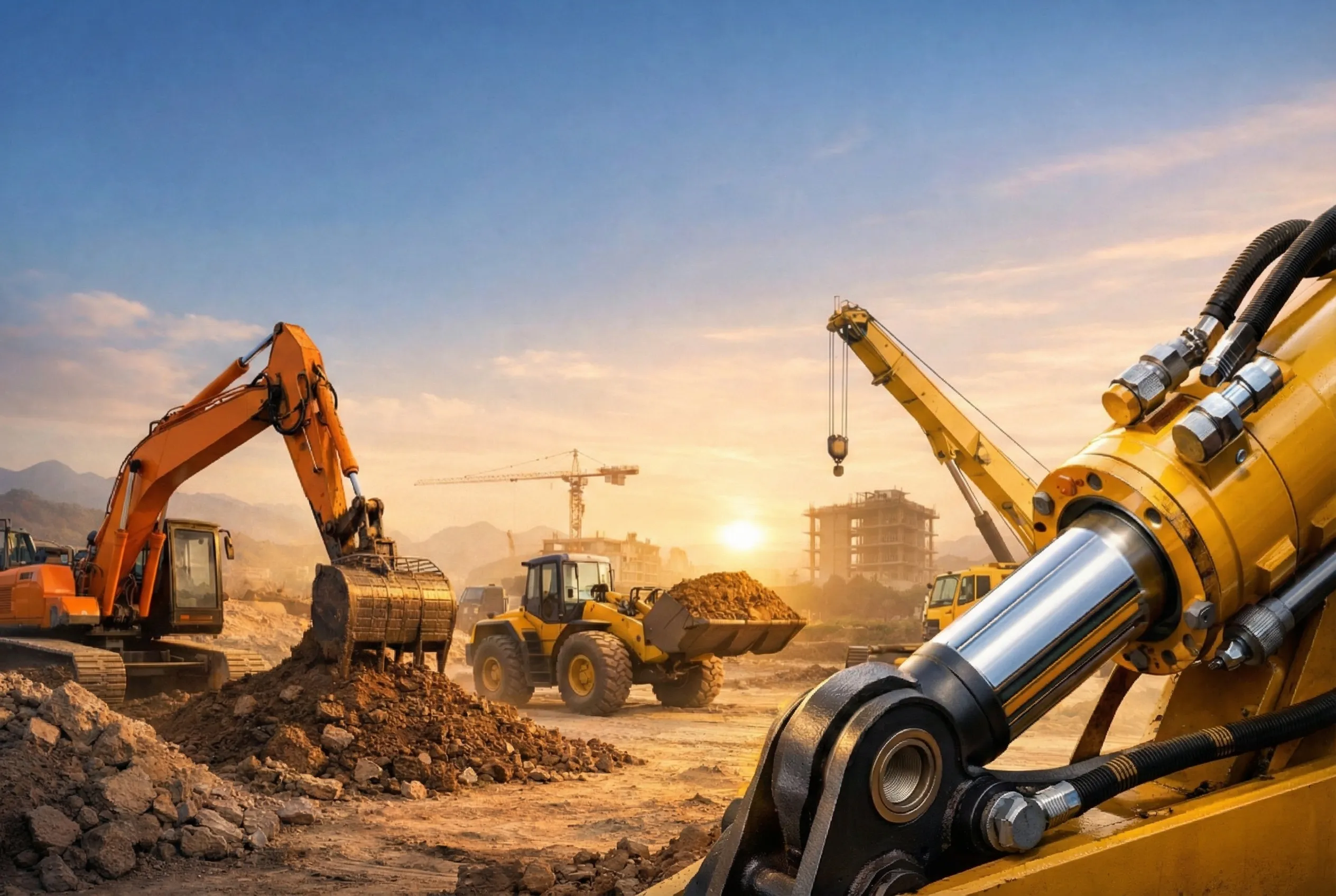
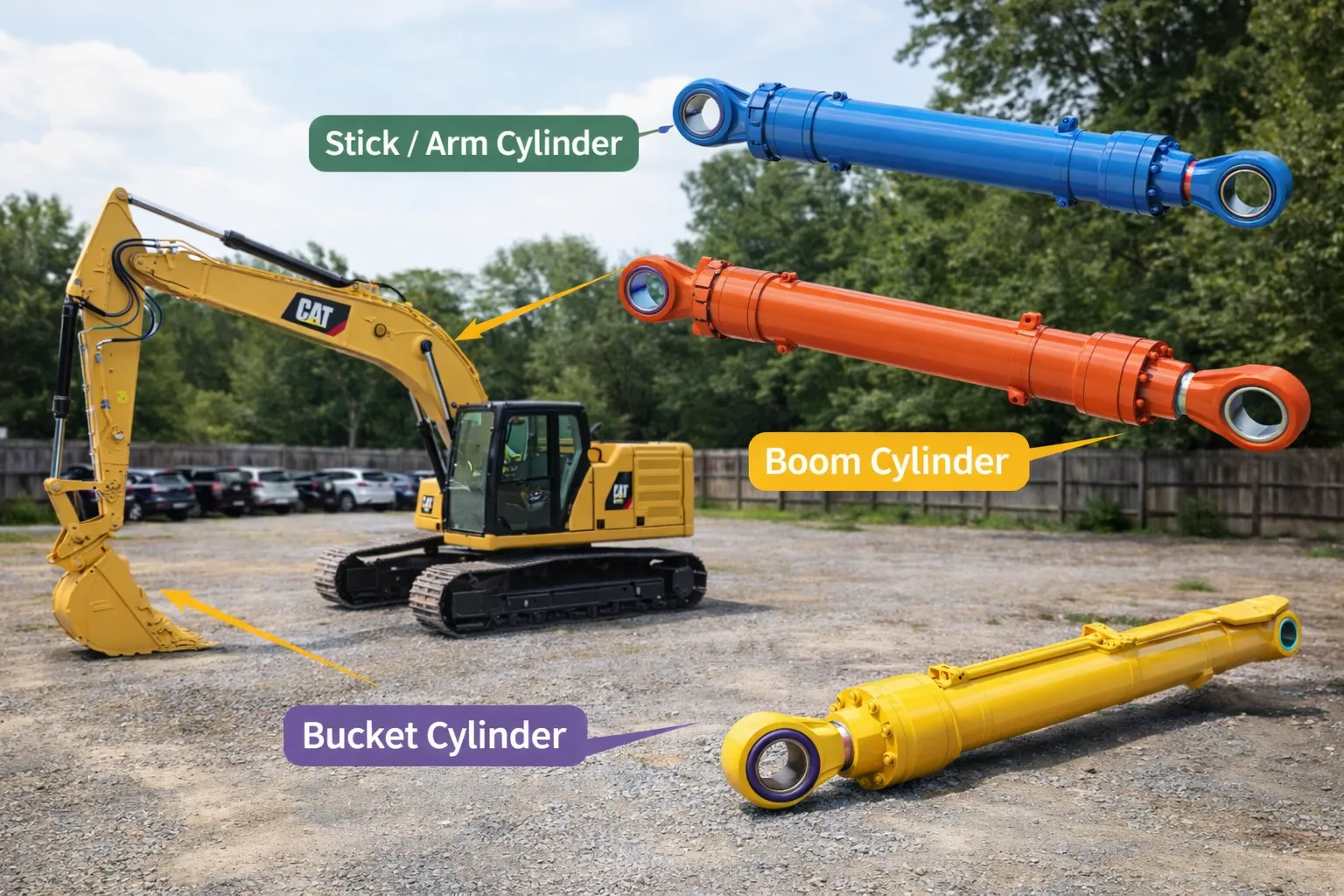
In the field of heavy earthmoving and construction, the bucket linkage is the primary point of contact with the ground. Every ounce of digging force, every heavy shock from hitting buried rock, and every abrasive particle of dust directly affects the components operating here. At the heart of this system is the bucket cylinder. Its primary job is to curl and uncurl the bucket, allowing the machine to scoop, carry, break, and dump heavy material day after day.
When your excavators are working in crushing conditions—dealing with hard rock, compacted soil, or concrete demolition—the mechanical stress placed on this specific actuator is immense. Standard commercial cylinders often fail early in these environments. The constant bombardment of abrasive dust acts like sandpaper on the moving parts, while the high-frequency vibrations and sudden pressure spikes try to pull the cylinder apart from the inside. This inevitably leads to scratched rods, blown seals, and costly machine downtime.
This is where our specialized product comes in. We design and build these cylinders to survive exactly this type of punishment. By upgrading the core materials to high-strength 42CrMo steel and applying a tough ceramic coating instead of normal chrome, we effectively stop the most common failure mode: rod surface wear. Once the rod surface gets scratched, the seals get chewed up, fluid leaks out, and the machine has to stop working. Our design prevents that chain reaction entirely, keeping the internal fluid clean and pressurized.
For fleet managers and equipment owners, especially in demanding infrastructure markets like South Korea, Japan, and the surrounding regions, the true value of a component is not just its initial purchase price. It is about how many hours it can work without needing attention. By choosing a reliable hydraulic cylinder manufacturer, you are investing directly in machine uptime. Your excavators keep digging, your projects stay on schedule, and your overall maintenance costs drop significantly. We provide a solution that works as hard as your operators do.
Technical Specifications & Customizable Range
To ensure perfect fitment and safe operation, we carefully match the specifications to your specific excavator model and the work it performs. Below is a detailed breakdown of the technical parameters for our bucket cylinder designed specifically for severe crushing work and heavy material handling.
| Parameter Category | Specification Details |
|---|---|
| Industry Focus | Engineering & Construction Machinery |
| Equipment Category | Excavator (Suitable for Mini to Heavy Mining classes) |
| Subsystem / Action Location | Bucket System / Front Linkage |
| Cylinder Name | Bucket Cylinder |
| Action Mode | Double acting hydraulic cylinder |
| Structure Type | Piston Type with End Cushioning |
| Manufacturing Structure | Welded Construction (Deep-penetration submerged arc) |
| Material System | 42CrMo Alloy Steel for Rod and Mounts |
| Surface Treatment | Ceramic Spraying (HVOF Technology) |
| Environmental Grade | Heavy Abrasive + High Kinetic Impact |
| Working Condition Feature | Crushing Condition (Granite, Concrete, Frozen Soil) |
| Typical Failure Mode Handled | Rod Surface Wear, Bending, and Seal Blowout |
| Recommended Configuration | Three-lip Dust Wiper + PTFE Glide Rings |
Specific Working Principle of the Actuator
How exactly does this unit turn pressurized fluid into many tons of digging force? The basic physics rely on fluid power conversion inside a closed chamber. Because this is a double acting hydraulic cylinder, it uses hydraulic pressure to move the rod in both directions, extending and retracting. There is no gravity return or internal spring here; it is pure, controlled mechanical power pushing and pulling against the linkage.
When the machine operator pulls the joystick to curl the bucket inward to dig, the main hydraulic pump sends high-pressure oil through the control valves and into the cap end (also known as the blind end) of the cylinder tube. The oil pushes against the entire flat surface area of the internal hydraulic cylinder piston. The physical force generated is equal to the fluid pressure multiplied by that piston surface area. Since the cap end uses the full diameter of the piston, this extension stroke produces the maximum amount of pushing force. That massive force travels down the heavy steel rod, through the H-link, and pulls the bucket teeth through the solid earth.
To dump the bucket, the process reverses. Oil is pumped into the rod end of the cylinder, while the oil in the cap end is allowed to flow back to the main hydraulic tank. On the rod end, the pressurized oil can only push against the ring-shaped area of the piston that surrounds the rod. Because this functional area is smaller, the retraction force is lower than the extension force. However, because it takes less oil volume to fill this smaller space, the rod retracts much faster. This difference in speed and force is a deliberate design choice that matches the natural work cycle of an excavator: slow, powerful digging followed by rapid lifting and dumping.
To prevent the heavy metal components from slamming into each other at the end of these very fast strokes, we integrate careful cushioning designs inside the end caps. As the piston nears the end of its travel, the oil is forced through a much smaller orifice. This creates back-pressure that safely slows down the movement and absorbs the mechanical shock, protecting both the cylinder and the excavator boom from long-term cracking.
Perfect Drop-In Replacement for Leading Brands
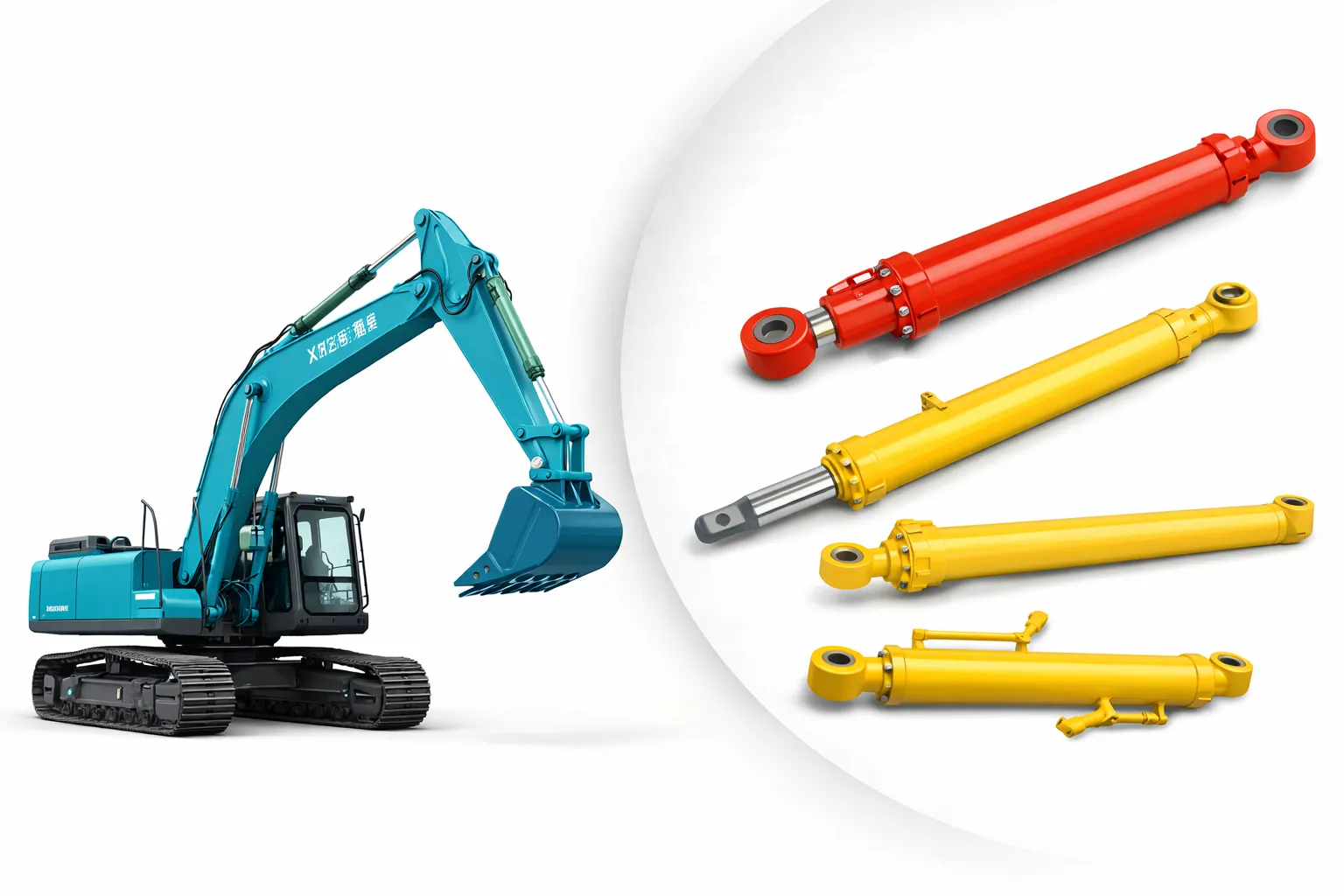
When a cylinder fails on a job site, you need a replacement that fits exactly right the first time. Modifying brackets, grinding pins, or dealing with mismatched hydraulic thread fittings wastes hours of expensive labor and delays the whole project. Our products are manufactured to exact dimensional tolerances, making them perfect drop-in replacements for many popular excavator brands operating around the world.
We supply heavy-duty replacement components that align perfectly with the mounting points of machines from Doosan, Hyundai, Volvo, Caterpillar (CAT), Komatsu, Kobelco, and Hitachi. We match the closed center length, the stroke distance, the pin eye diameters, and the clevis widths to the millimeter. (Please note that we mention these equipment brands simply to help you identify the correct replacement size for your machine; we do not claim any trademark affiliation or endorsement from these original equipment manufacturers).
By choosing our upgraded units instead of standard parts, you avoid the endless cycle of fixing hydraulic cylinders every few months when working in quarries. If you are operating a mixed fleet and need to standardize your spare parts inventory to improve maintenance efficiency, you can browse our full catalog of dimensionally accurate solutions at our hydraulic cylinder category.
Core Technical Advantages
What makes our bucket cylinder survive longer in crushing conditions than standard off-the-shelf options? The difference lies in the deep engineering details and material science. Here are the five main technical advantages we build into every unit:
1. High-Rigidity 42CrMo Steel Construction
Many standard cylinders use regular 1045 or ST52 steel for the piston rod and mounting eyes. Under the extreme side-loading that happens when a bucket gets caught on a heavy, buried rock, these softer steels can bend or deform. We use forged 42CrMo alloy steel, which contains chromium and molybdenum. This is carefully quenched and tempered to provide a much higher yield strength. This material can take severe impacts and twisting forces without bending. A straight rod means the internal seals stay perfectly aligned and do not leak.
2. Ceramic Spraying for Ultimate Surface Protection
The typical shiny hard chrome plating on a standard rod looks good, but it is actually quite brittle. In a quarry, flying rock chips will strike the rod and create microscopic cracks in the chrome. Water and dirt enter these cracks, causing rust and flaking. We replace the chrome process with High-Velocity Oxygen Fuel (HVOF) ceramic spraying. This creates an incredibly dense, non-porous ceramic layer that is much harder than chrome. It shrugs off rock strikes, does not corrode in saltwater, and keeps the rod surface perfectly smooth to protect the seals.
3. Three-Lip Dust Wiper System
In crushing and demolition work, the air is thick with abrasive silica dust. A standard single-lip rubber wiper simply cannot keep all that fine dust out of the cylinder head. Once dirt gets inside, it mixes with the oil and acts like a grinding paste, destroying the internal hydraulic cylinder components. We use a specialized three-lip wiper system. The thick outer lip blocks heavy mud and ice, the middle lip scrapes away the fine abrasive rock dust, and the inner lip manages the oil film. This multi-layer defense keeps the inside of the cylinder perfectly clean.
4. Ultra-Low Friction Sealing Technology
Excavators often work continuously for ten or twelve hours a day, performing the same motion over and over. The constant movement of the piston creates internal heat due to friction against the barrel wall. If standard rubber seals get too hot, they harden, crack, and fail. We utilize advanced PTFE (Teflon) blended step seals and heavy-duty composite guide rings. PTFE has an extremely low coefficient of friction, which drastically reduces heat generation. It also stops the annoying stick-slip juddering movement that can happen during precise grading work.
5. Thermal Stability and Fatigue Life Optimization
Every weld on a heavy-duty piece of equipment is a potential breaking point if not executed correctly. The constant pushing and pulling creates severe fatigue stress over millions of cycles. We use automated, deep-penetration submerged arc welding to attach the heavy end caps and mounting eyes. After welding, the areas are carefully stress-relieved to stabilize the metal’s grain structure and prevent brittleness. This scientific approach to metallurgy prevents the microscopic cracks that often lead to major structural failures after years of hard use.
Manufacturing Process & Strict Quality Control
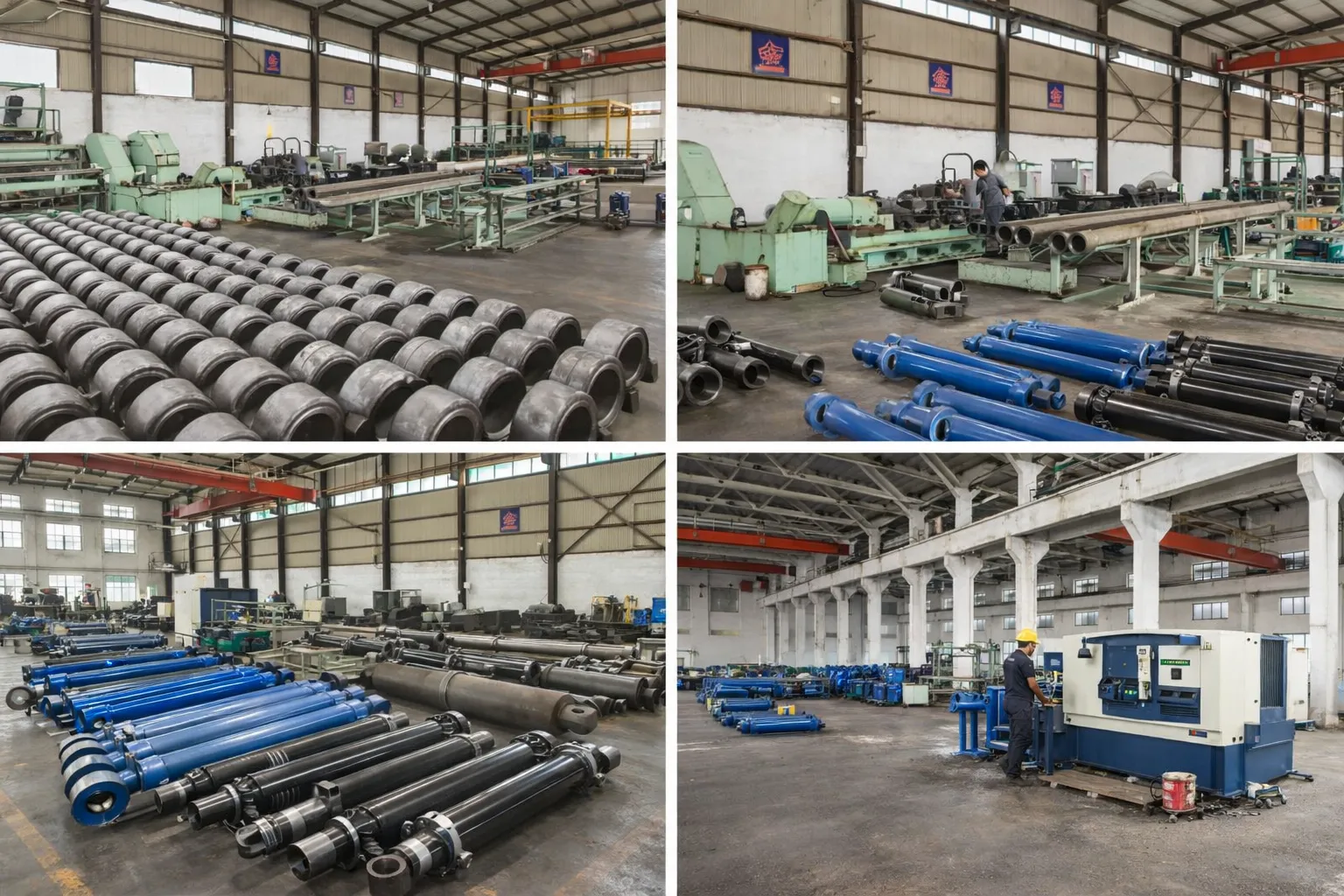
Building a reliable industrial product requires absolute control over how it is made. We handle the entire manufacturing process in-house, ensuring that every step meets our strict quality standards rather than relying on inconsistent third-party parts.
The process starts with raw material inspection. We use ultrasonic testing on the incoming 42CrMo steel billets to check for any hidden internal flaws or slag inclusions before we ever put the metal on a CNC lathe. For the cylinder tube, we use a Skiving and Roller Burnishing (SRB) process on the inside. This cold-working method is superior to traditional honing. It creates a mirror-like finish that is also highly surface-hardened by compression, giving the internal seals a perfect, low-friction surface to ride against for years.
Quality control is not just checking a few random pieces from a batch; it means testing every single product that leaves the factory. Before any cylinder is painted and packaged, it goes to our computerized testing benches. We perform a 100% hydrostatic pressure test, pushing the cylinder to 1.5 times its normal maximum working pressure. We hold that pressure and check for any internal fluid bypass across the piston, and ensure there are zero external leaks at the gland. Every unit is then stamped with a unique serial number, giving us full traceability back to the exact batch of steel and the technician who assembled it. This level of care means you get a product you can install and forget about.
Typical Industry Applications
While we have focused heavily on the excavator bucket working in crushing conditions, the rugged design principles we use apply perfectly to many other demanding heavy industries. When standard cylinders fail due to heat, dirt, or impact, our specialized solutions step in to keep operations running. You can learn more about how fluid power is used across different sectors in our dedicated guide to the application of hydraulic cylinders.
- Engineering Machinery: Beyond excavators, this durable technology is heavily used in wheel loaders, bulldozers, and motor graders that work in rough, abrasive terrain.
- Metallurgy & Heavy Manufacturing: In steel mills, cylinders must operate near blast furnaces and handle heavy slag. The ceramic coating handles the extreme radiant heat and flying hot metal much better than chrome.
- Plastics & Rubber Machinery: Large injection molding machines require massive, unyielding clamping forces. Our high-rigidity heavy-wall tubes prevent any expansion under pressure, ensuring perfect mold closure.
- Material Handling & Logistics: For heavy port equipment like reach stackers and empty container handlers, a strong lift cylinder is absolutely critical for safety when lifting heavy shipping containers high into the air.
- New Energy & Environmental Equipment: Solid waste compactors and scrap metal balers operate in very dirty, mixed-material conditions, making our three-lip wiper system essential for long life.
- Special & Custom Scenarios: We also supply specialized units for marine dredging equipment, where the ceramic coating prevents rapid saltwater corrosion, and for tunnel boring machines working deep underground in constant grit.
Comparative Analysis: Standard vs. High-Performance
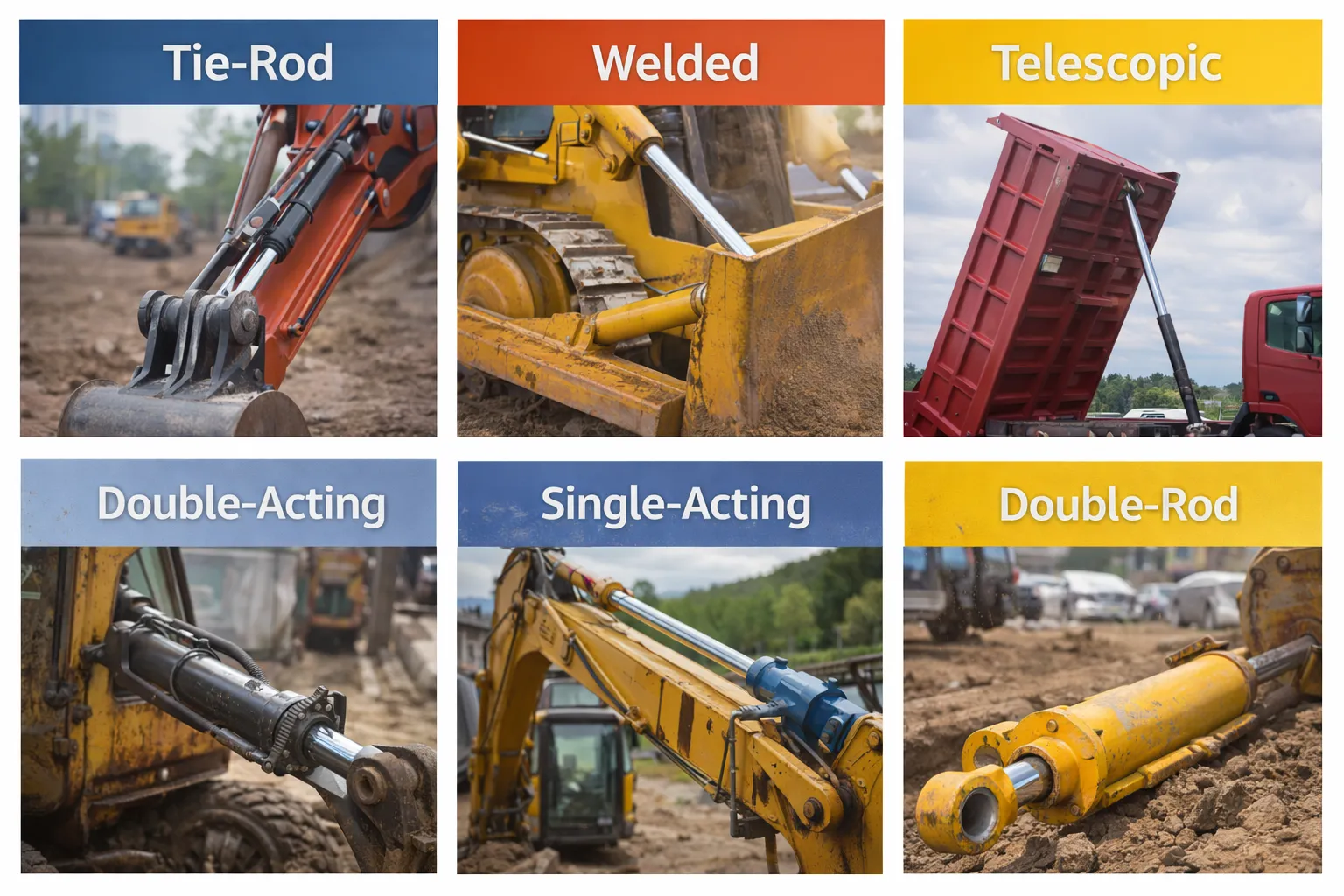
When you are looking at the hydraulic cylinder price from different suppliers, it is highly important to understand exactly what you are paying for underneath the paint. A cheaper upfront cost usually means cheaper internal materials, which always leads to early failure in a quarry. Here is how our high-performance cylinder compares directly to a standard aftermarket unit found online.
| Feature Element | Standard Ordinary Cylinder | Our High-Performance Cylinder |
|---|---|---|
| Rod Base Material | 1045 Carbon Steel (Lower strength, bends easily) | 42CrMo Alloy Steel (High yield strength) |
| Surface Treatment | Hard Chrome Plating (Micro-cracks, allows rust) | Ceramic Spraying (Scratch & impact proof) |
| Dust Exclusion System | Single-lip basic polyurethane wiper | Three-lip progressive sealing barrier |
| Friction and Heat | Standard rubber seals (High friction, heats oil) | PTFE composite seals (Ultra-low heat) |
| Lifespan in Rock Crushing | Typically 6 to 9 Months before bypass | 24 to 36+ Months (Vastly higher ROI) |
Real Case Studies: Field Proven Results
We can talk about engineering specifications and metallurgy all day, but the real proof is how the equipment performs in the dirt. Here are five practical, real-world examples of how we have helped clients across Asia solve severe maintenance problems and save money.
Case Study 1: Beating Granite Dust in South Korea
Client & Location: A large commercial quarry operator near Seoul, South Korea.
Application: Operating 30-ton class excavators strictly for breaking and loading heavy granite boulders.
How they found us: They were actively searching for a better hydraulic cylinder price online after getting tired of buying expensive OEM replacements that failed every six months.
The Result: The sharp, airborne granite dust was eating through their standard wiper seals and deeply scoring the chrome rods. We supplied our custom ceramic-coated 42CrMo units. The three-lip seal kept the dust out completely. After 18 months of hard work, the rods still look perfectly smooth with no oil weeping.
“We installed these in late 2024. Before, we planned for a major breakdown every summer. With these new units, we have not had a single leak. The ceramic coating really works exactly as they described.” – Lee Jun-ho, Maintenance Manager.
Case Study 2: Demolition Durability in Japan
Client & Location: An urban structural demolition contractor in Osaka, Japan.
Application: High-reach excavators equipped with very heavy concrete crushers and steel shears.
How they found us: Contacted us through an equipment trade network referral looking for stronger parts.
The Result: The severe mechanical shock of biting into concrete was causing the standard carbon steel rods on their machines to bend slightly. When a bent rod retracts, it destroys the internal piston seals. We provided our forged 42CrMo rods, which have the high yield strength necessary to handle those massive side loads without bending.
“The shock loads in our line of work are terrible for hydraulics. Since switching to these stronger cylinders in early 2025, we haven’t had a single bent rod on the job site. It gives our operators real peace of mind.” – Kenji Tanaka, Site Director.
Case Study 3: Marine Dredging in Taiwan
Client & Location: A coastal dredging and land reclamation company in Kaohsiung, Taiwan.
Application: Long-reach excavators working directly in salty, sandy ocean water.
How they found us: Reached out after reading an article we published about preventing saltwater corrosion on heavy machinery.
The Result: Standard chrome rods pit and rust very quickly in saltwater, tearing the seals apart. We supplied cylinders protected with our HVOF ceramic coating. Ceramic is completely inert and does not rust. The cylinders now survive the entire dredging season without needing mid-project replacements.
“Saltwater usually destroys our equipment in just a few months. We checked the ceramic rods after a full year of work (September 2025), and there was zero corrosion. An excellent, permanent upgrade.” – Chen Wei, Chief Engineer.
Case Study 4: High-Heat Scrap Handling in Vietnam
Client & Location: A large steel recycling and processing yard in Ho Chi Minh City, Vietnam.
Application: Material handling excavators running scrap magnets and orange-peel grapples.
How they found us: Searching the web for heavy-duty hydraulic parts to solve overheating issues in hot climates.
The Result: The fast, continuous lifting cycles required for sorting scrap were overheating the standard hydraulic fluid, causing the standard rubber seals to melt and fail. We installed our ultra-low friction PTFE seals, which generate far less heat against the barrel. The operating temperature dropped safely into the normal range.
“Heat was our biggest enemy in the yard. These new low-friction seals keep the oil cool even during a 12-hour shift loading scrap metal in the sun. Reviewed on November 2025.” – Nguyen Hai, Yard Supervisor.
Case Study 5: Rental Fleet Standardization in Thailand
Client & Location: A large heavy equipment rental agency in Bangkok, Thailand.
Application: A mixed fleet of 20-ton excavators rented out for various general construction and trenching jobs.
How they found us: Looking for a reliable, single-source supplier for hydraulic cylinder repair parts and complete replacement units.
The Result: They needed parts that fit perfectly without needing to modify the rental machines. We supplied exact drop-in replacements for their mixed fleet of Doosan and Caterpillar machines, matching the pin sizes and port threads exactly, saving their mechanics hours of frustrating installation time.
“Having a reliable factory that builds to the exact pin sizes of different brands makes our fleet maintenance so much easier. Fast shipping and perfect fit every time. (August 2025)” – Supachai Jittra, Fleet Owner.
Frequently Asked Questions (FAQ)
If you are a purchasing manager or a lead mechanic, you likely have specific questions before approving a new structural component for your machines. Here are the clear answers to the most common questions we receive.
Equip Your Fleet with Reliable Digging Power
Stop wasting money and valuable machine hours dealing with leaking seals and scratched rods. Upgrade to a cylinder built specifically for the harsh crushing conditions of your job site. If you need help verifying your machine dimensions or want to discuss a bulk order for your fleet, our technical engineering team is ready to assist you right now.