Finger Tine Lift Cylinder for Finger Wheel Weeders
Vibration-rated carbon steel welded cylinder with fatigue-resistant seals and integrated dust protection. Purpose-built for the relentless oscillation of mechanical weeding at speed.
How Many Weed Escapes Does a Leaking Depth Cylinder Cost You Per Hectare?
How consistent is the working depth of your finger wheel weeder across a 10-hectare field? Does the tine depth stay the same at the start of a pass as it does 300 meters later? And when the machine crosses a compacted wheel track or a soft spot between beds, does the tine assembly respond quickly enough to maintain contact with the soil, or does it skip across the surface leaving a strip of untouched weeds?
These are not academic questions. For organic vegetable and row crop growers across Korea, Japan, and Europe who depend on mechanical weeding as their primary weed management tool, every centimeter of depth inconsistency translates directly into weed escapes that require hand labor to remove. A single hydraulic cylinder controls how deep the finger tine assembly penetrates the soil. When that cylinder starts leaking internally from seal wear, the tine depth drifts gradually deeper or shallower during operation. The operator may not notice until the end of the pass reveals a visible stripe of surviving weeds.
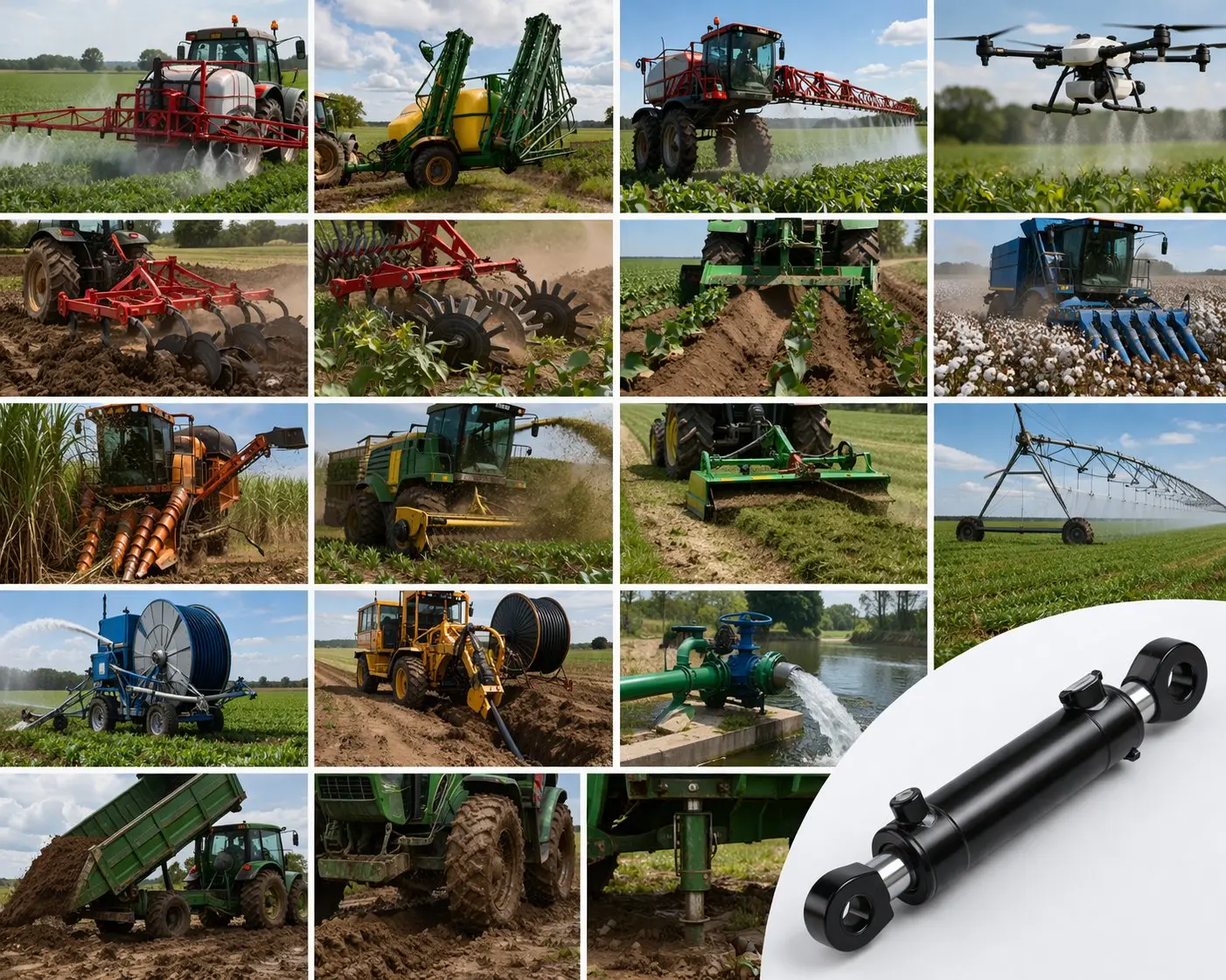
The operating environment is demanding in a specific way. A finger wheel weeder sends continuous high-frequency vibration through the tine assemblies and into the depth cylinder as the spinning finger wheels contact the soil surface at tractor speeds of 6 to 12 km/h. The cylinder piston absorbs thousands of small vibration pulses per minute while holding a set depth position under moderate hydraulic pressure. This constant micro-vibration pattern fatigues standard seals far faster than simple extend-retract cycling, which is why seal wear is the number one failure mode for cylinders in this application.
Our finger tine lift cylinder is a compact, welded-body, double acting hydraulic cylinder made from carbon steel with a chrome-plated piston rod, fatigue-resistant polyurethane seals selected for vibration environments, and an integrated dust wiper that keeps field debris out of the seal zone. It is sized to fit the narrow spaces on finger wheel weeder toolbar assemblies and calibrated for the low-pressure, high-vibration duty cycle that mechanical weeding demands.
Vibration Fatigue in Mechanical Weeding: A Problem Standard Cylinder Specs Ignore
Finger wheel weeders generate a characteristic vibration signature that is different from any other agricultural implement. The spinning finger wheels contact the soil surface at 200 to 500 rpm, and each contact event sends a vibration pulse through the tine arm, into the toolbar, and directly into the depth cylinder. At a typical operating speed of 8 km/h with a 4-row weeder, the cylinder absorbs 3,000 to 8,000 vibration pulses per minute.
These pulses are small in amplitude, typically less than 0.5 mm of piston movement per event. But they are relentless. Over a 10-hour weeding day, the piston seal experiences 1.8 to 4.8 million micro-contact events. Over a full weeding season of 200 hours across spring and summer campaigns, the total exceeds 36 to 96 million events. No standard agricultural cylinder seal is tested for this kind of fatigue loading.
The vibration affects the cylinder in three ways simultaneously:
Seal Lip Fatigue
The constant micro-oscillation flexes the seal lip at its contact point with the bore surface millions of times per season. Standard polyurethane compounds develop micro-cracks at the flex zone that propagate into visible seal lip failure. Our fatigue-rated PU compound has enhanced elastic recovery and crack-growth resistance, tested to maintain sealing integrity past 100 million micro-flex cycles in accelerated vibration bench tests.
Fitting Loosening
High-frequency vibration transmitted through the toolbar gradually loosens hydraulic port fittings and mounting pin hardware. Our port bosses are reinforced and CNC-threaded with tight tolerances after welding. We recommend ORFS (O-Ring Face Seal) port connections for this application and design our ports to accept them. Mounting pin bores are reamed to H7 tolerance with optional bronze bushings that absorb vibration energy and prevent bore elongation.
Bore Surface Micro-Wear
The vibrating piston oscillates against the bore surface at the seal contact zone. In a standard bore finish of Ra 0.4 to 0.8, the seal lip rides over surface peaks that act as micro-abrasives under vibration. Our bore is honed to Ra 0.2, reducing the peak height and creating a smoother sliding surface that generates less friction heat and less abrasive wear at the seal contact band. This directly extends seal service life in vibration-loaded applications.
How a Finger Tine Lift Cylinder Operates on a Finger Wheel Weeder
A finger wheel weeder carries multiple tine assemblies along a toolbar, each positioned between or alongside crop rows. Each assembly consists of a pair of spinning finger wheels that rotate in the soil around the base of crop plants, uprooting small weeds without disturbing the crop. The tine assembly mounts to the toolbar through a parallel linkage or pivot arm, and the finger tine lift cylinder connects between the toolbar and this linkage to control how deep the finger wheels penetrate the soil.
The operator sets the target depth based on crop stage and weed size, typically 10 to 40 mm below the soil surface. The cylinder extends to push the linkage arm downward, driving the finger wheels to the set depth. A pressure-reducing valve in the hydraulic circuit sets the downforce, allowing the tine assembly to float vertically as the terrain changes while maintaining a consistent contact pressure with the soil.
During operation, the finger wheels spin continuously and each soil contact event generates a vibration pulse that travels through the arm into the cylinder. The cylinder must hold its set position through this constant vibration bombardment without allowing the piston to drift. Internal seal bypassing would allow the piston to creep, gradually changing the tine depth during a pass. This is why vibration-resistant seals with minimal internal leakage are the critical specification for this application.
Technical Specifications
| Specification | Available Range |
|---|---|
| Bore Diameter | 25 mm – 50 mm |
| Rod Diameter | 14 mm – 28 mm |
| Stroke Length | 40 mm – 200 mm |
| Working Pressure | Up to 14 MPa (2,030 PSI) |
| Action Type | Double Acting |
| Structure | Small Welded Piston Cylinder |
| Body Material | Carbon Steel (S45C / AISI 1045) |
| Piston Rod | Carbon Steel, Hard Chrome 20+ micron |
| Body Finish | Black Oxide + Epoxy Paint |
| Piston Seal | Fatigue-Rated PU (Vibration Grade) |
| Rod Seal | NBR + PTFE Back-up Ring |
| Dust Seal | Integrated PU Wiper Ring |
| Mounting | Clevis, Pin Eye, Lug Mount, Custom |
| Port Thread | BSP / NPT / Metric |
| Operating Temperature | -20 C to +80 C |
| Environment Rating | Vibration / Agricultural Dust |
Six Advantages Designed for Vibration-Loaded Weeding Duty
STEP 01
Fatigue-Rated Vibration Seal Compound
Our piston seal uses a PU compound with enhanced elastic recovery and crack-growth resistance, tested past 100 million micro-flex cycles. Standard agricultural PU seals show measurable lip degradation at 10 to 20 million cycles under the same vibration test protocol. The seal maintains consistent contact pressure with the bore surface throughout its rated life, preventing the progressive internal leakage that causes depth drift during weeding passes.
STEP 02
Ra 0.2 Bore Finish for Reduced Vibration Wear
The bore is honed to Ra 0.2 or finer, reducing the surface peak height that causes abrasive micro-wear when the seal lip oscillates under vibration. A smoother bore produces less friction heat at the seal contact zone, slowing the thermal aging that leads to seal hardening and cracking in vibration environments.
STEP 03
Integrated Dust Wiper for Field Debris
Finger wheel weeders throw soil upward around the tine assemblies, showering the cylinder in a continuous stream of fine dirt, plant roots, and organic debris. An integrated PU wiper ring intercepts this material before it reaches the primary rod seal. The wiper lip geometry is designed for dry agricultural dust rather than wet slurry conditions, with a sharp edge profile that shears off dried soil particles effectively.
STEP 04
Ultra-Compact Welded Body
Finger wheel weeder toolbar assemblies have very tight spacing between row units, sometimes as little as 150 mm. Our welded hydraulic cylinder for agriculture eliminates external tie rods and produces the smallest possible body diameter for any given bore. A 32 mm bore cylinder has a total outside diameter of approximately 42 mm, fitting within the narrow envelope between adjacent tine arms without interference.
STEP 05
Reinforced Port Connections for Vibration Resistance
Vibration from the weeder toolbar transmits directly into port fittings and gradually loosens connections that were tight at installation. Our port bosses are reinforced with extra weld material, and threads are CNC-machined with tight tolerances after welding to ensure accurate fitting engagement. Port chamfers protect O-rings during assembly, preventing the installation damage that leads to early-life fitting leaks.
STEP 06
Mounting Pin Bores with Optional Bronze Bushings
The clevis or pin-eye mounting bores on the cylinder absorb vibration energy at the pin interface. Without bushings, the steel pin wears against the steel bore, causing bore elongation that introduces slop in the linkage and reduces depth control accuracy. Our optional phosphor bronze bushings absorb vibration shock, self-lubricate, and prevent bore wear. They are press-fit and field-replaceable when worn, extending the cylinder body life well beyond what unbushed mounts achieve.
Application Scenarios
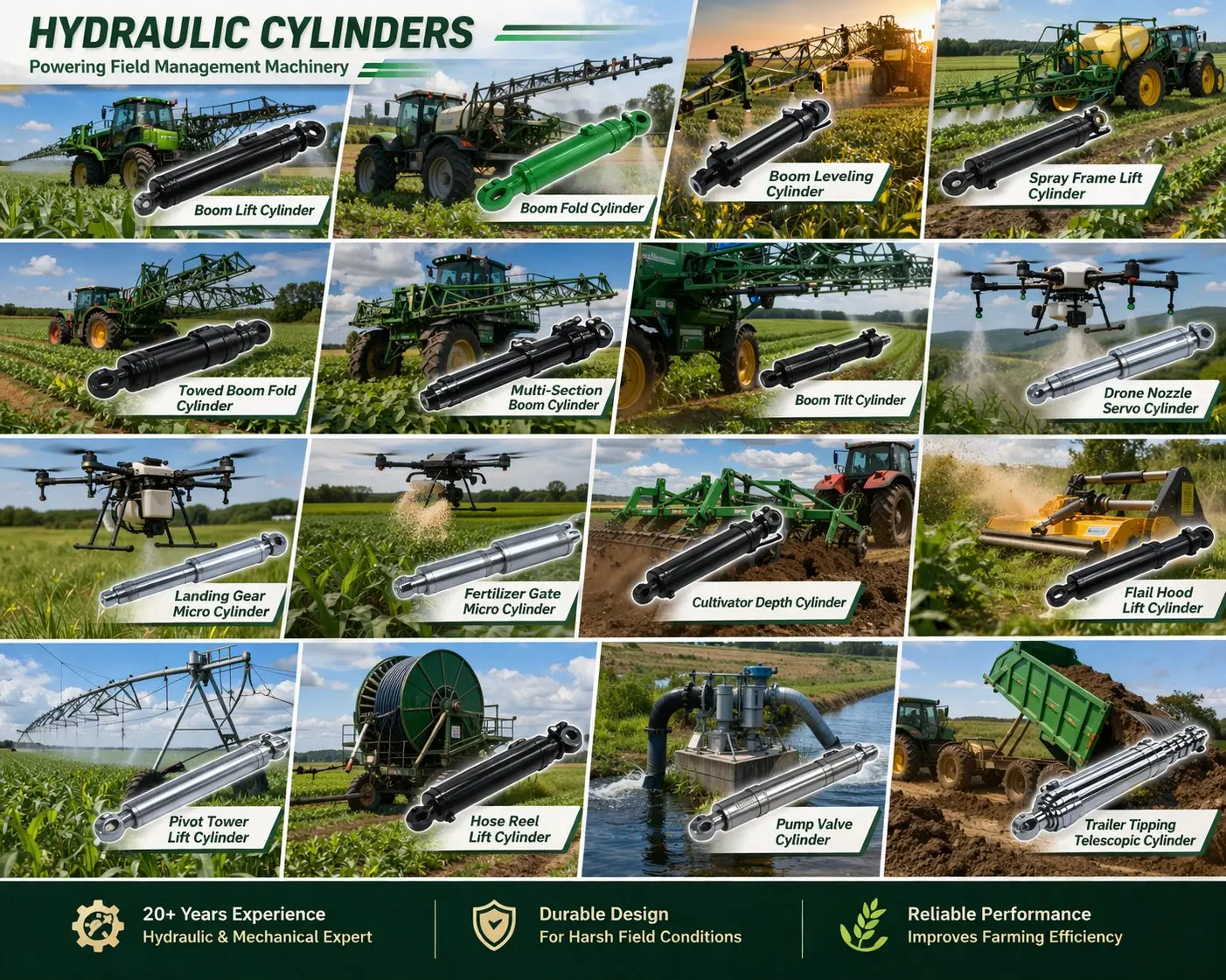
Finger Wheel Weeders: The primary application. Multi-row finger wheel weeders for organic and conventional vegetable, sugar beet, and row crop weed management. Each tine assembly requires individual depth control.
Torsion Weeder Assemblies: Torsion spring weeders with hydraulically adjustable ground pressure use the same type of small double acting hydraulic cylinder for setting tine engagement depth. The vibration profile from spring tines is comparable to finger wheels.
Brush Weeders and Rotary Hoe Units: Brush-type inter-row weeders and rotary hoe attachments generate similar vibration environments. The fatigue-rated seal and vibration-resistant port design apply directly to these machines.
Camera-Guided Smart Weeder Actuators: Precision camera-guided weeders that move individual tine tools in and out of the crop row require cylinders with very low friction and fast response. Our Ra 0.2 bore and low-preload seal design delivers the responsiveness these sensor-controlled systems need.
Greenhouse Rail-Mounted Weeding Units: Automated greenhouse weeding robots that run on rails use small hydraulic cylinders for tine depth adjustment at very light loads. The compact body and low breakaway pressure of our cylinder fit this application well.
Manufacturing and Quality Control
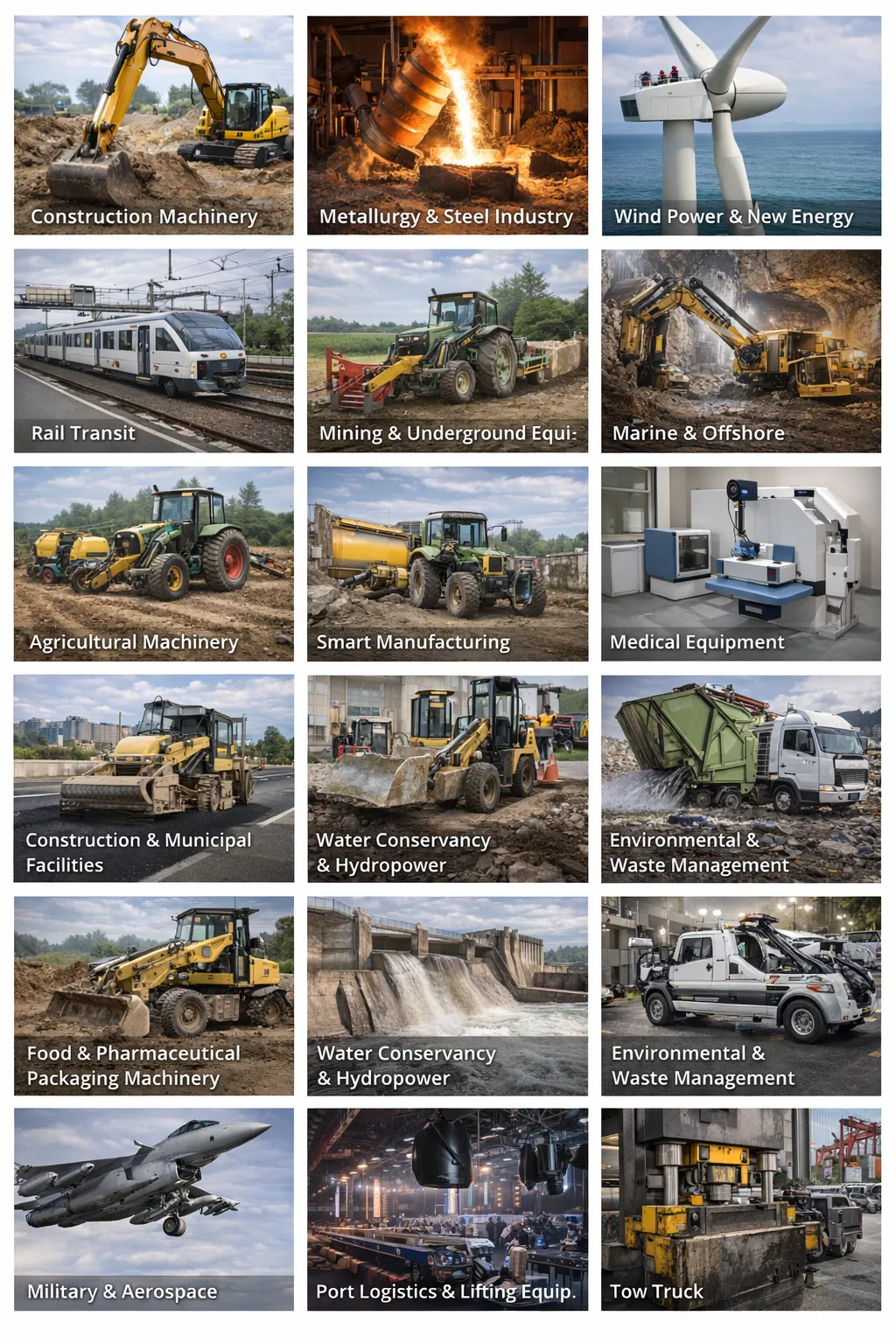
Every cylinder is built in-house in our ISO 9001 certified facility. Carbon steel tube and rod stock verified by spectrometer on every incoming batch. Bores CNC bored and honed to Ra 0.2 in single-setup runs for batch consistency. Rods ground to h7 and chrome plated to 20+ micron. MIG welded by certified operators. Seals sourced from single manufacturing lots per order. 100% pressure tested at 1.5 times rated pressure for three minutes with full leak inspection. Serial numbered with ten-year traceability to material, seal lot, and test data. Material test reports and pressure certificates included as standard with every shipment.
Standard Small Cylinder vs. Our Finger Tine Lift Cylinder
| Weeding-Relevant Metric | Standard Small Cylinder | Our Finger Tine Cylinder |
|---|---|---|
| Seal Life Under Continuous Vibration | 10 – 20 million flex cycles | 100+ million flex cycles |
| Bore Finish | Ra 0.4 – 0.8 | Ra 0.2 or finer |
| Depth Drift Under Vibration (1-hr test) | 2 – 5 mm | Less than 0.5 mm |
| Dust Protection | None or basic rubber wiper | Integrated PU wiper ring |
| Mounting Bore Option | Steel on steel | Optional bronze bushing |
| Service Life in Weeder Duty | 1 – 2 seasons | 4 – 6 seasons |
Customer Case Studies
Pyeongtaek City, Gyeonggi-do, South Korea
Customer: Organic vegetable cooperative managing 220 hectares of cabbage, radish, and green onion production using mechanical weeding as primary weed control
How They Found Us: Equipment supervisor searched for “finger weeder hydraulic cylinder vibration resistant” on Google in February 2025.
Results: Replaced tine lift cylinders on all 14 weeder units before the 2025 spring campaign. Through two full weeding campaigns (spring and summer), zero seal replacements were needed. Depth consistency across each field improved noticeably, and the cooperative’s field supervisors reported a measurable reduction in weed escapes requiring hand labor.
“Organic weeding depends entirely on mechanical tools. When the cylinder drifts, weeds survive and we pay for hand crews. These cylinders held depth all season. Our hand weeding hours dropped by about 25% compared to last year.” – Ms. Jung, Field Operations Manager, November 2025
Asan City, Chungcheongnam-do, South Korea
Customer: Agricultural equipment dealer specializing in European-brand mechanical weeding implements
How They Found Us: Referral from a sugar beet grower who had tested our cylinders. First order placed April 2025.
Results: Tested 30 cylinders across customer machines during the 2025 season. Warranty claim rate: zero. The dealer has since listed our cylinders as their aftermarket replacement standard and reports customer feedback consistently highlights the improved depth holding performance compared to OEM units.
“European weeder OEM cylinders are expensive and have long lead times. These are half the price, faster delivery, and actually hold depth better in vibration conditions. My customers notice the difference immediately.” – Mr. Yun, Dealer Owner, October 2025
Tokachi District, Hokkaido, Japan
Customer: Sugar beet farming corporation using finger wheel weeders across 1,800 hectares
How They Found Us: Found our hydraulic cylinders for agricultural machinery pages through a web search in January 2025.
Results: Hokkaido volcanic soils produce exceptionally fine dust that accelerates seal wear. Our integrated dust wiper and fatigue-rated seals extended cylinder service life from 1.5 seasons to 4 seasons on the farm’s machines. Annual cylinder procurement costs dropped by approximately 60%.
“We run 12 weeders hard for two months every summer. The volcanic dust here eats cylinder seals for breakfast. These ones lasted three times longer than what we were using before.” – Mr. Sato, Equipment Manager, September 2025
Chiang Rai Province, Thailand
Customer: Contract farming operation providing mechanical weeding services for organic vegetable farms in northern Thailand
How They Found Us: Found our website through a Google search in July 2024. Ordered 40 units in September 2024.
Results: Year-round tropical weeding puts extreme hours on equipment. Our cylinders completed 14 months of continuous service without seal replacement on machines running 6 days a week. The operator estimates annual savings of approximately 35% on hydraulic parts for their weeder fleet.
“In Thailand there is no off-season for weeds. Our weeders run all year. Cylinder seals used to last three to four months. These have been running 14 months and counting.” – Mr. Chai, Owner, November 2025
Antalya Province, Turkey
Customer: Greenhouse vegetable producer using rail-mounted automated weeding systems
How They Found Us: Their automation integrator found our specifications through a web search in March 2025.
Results: The compact body and low breakaway pressure fitted perfectly within their automated rail weeding system. Weeding depth accuracy improved compared to the generic cylinders they had been using. The producer ordered 60 additional units for expansion into two new greenhouses.
“Our automated system needs cylinders with very precise response at low pressure. The generic ones were too sluggish. These respond much faster and the depth stays exactly where the computer sets it.” – Mr. Demir, Automation Engineer, July 2025
Frequently Asked Questions
What cylinder bore size is right for a finger wheel weeder tine assembly?
Why do finger weeder cylinders wear out faster than other farm cylinders?
Can these cylinders replace OEM units on European weeder brands?
What is the lead time and minimum order quantity?
Fewer Weed Escapes Start With a Cylinder That Holds Depth Through the Vibration
Share your weeder model, tine assembly configuration, and current cylinder dimensions. We will recommend a vibration-rated replacement and provide a quotation within 48 hours.
Editor: Cxm