Furnace Cover Lift Cylinder for Converter
Engineered exclusively to conquer high temperature smoke and abrasive dust in metallurgical plants, ensuring uninterrupted continuous steel production.
Product Overview & Core Industrial Value
Operating within the heavy metallurgy sector requires mechanical components that can withstand some of the most punishing industrial environments on the planet. At the absolute core of any modern steelmaking facility is the basic oxygen furnace, commonly known as the converter. This massive vessel transforms molten iron into high-grade steel through intense chemical reactions. Securing and managing the atmosphere above this molten bath is the furnace cover system. The critical mechanical component responsible for maneuvering this multi-ton steel structure with absolute precision is the furnace cover lifting hydraulic cylinder. If this single component fails, the entire smelting process is brought to an immediate and immensely costly standstill.
Standard commercial fluid power actuators simply cannot survive the ambient conditions surrounding a converter. The local atmosphere is permanently saturated with extreme high temperature smoke and dust, alongside corrosive gases. When standard equipment is deployed here, it rapidly succumbs to a catastrophic failure mode: seal aging. Standard elastomeric materials bake, harden, and crack within weeks, leading to severe fluid leakage, sudden loss of system pressure, and dangerous drifting of the heavy cover. Furthermore, the abrasive metallic particulate matter adheres to standard piston rods, dragging contaminants into the internal gland and completely destroying the internal sealing architecture. This forces maintenance crews into an endless, exhausting cycle of fixing hydraulic cylinders rather than optimizing overall plant output.
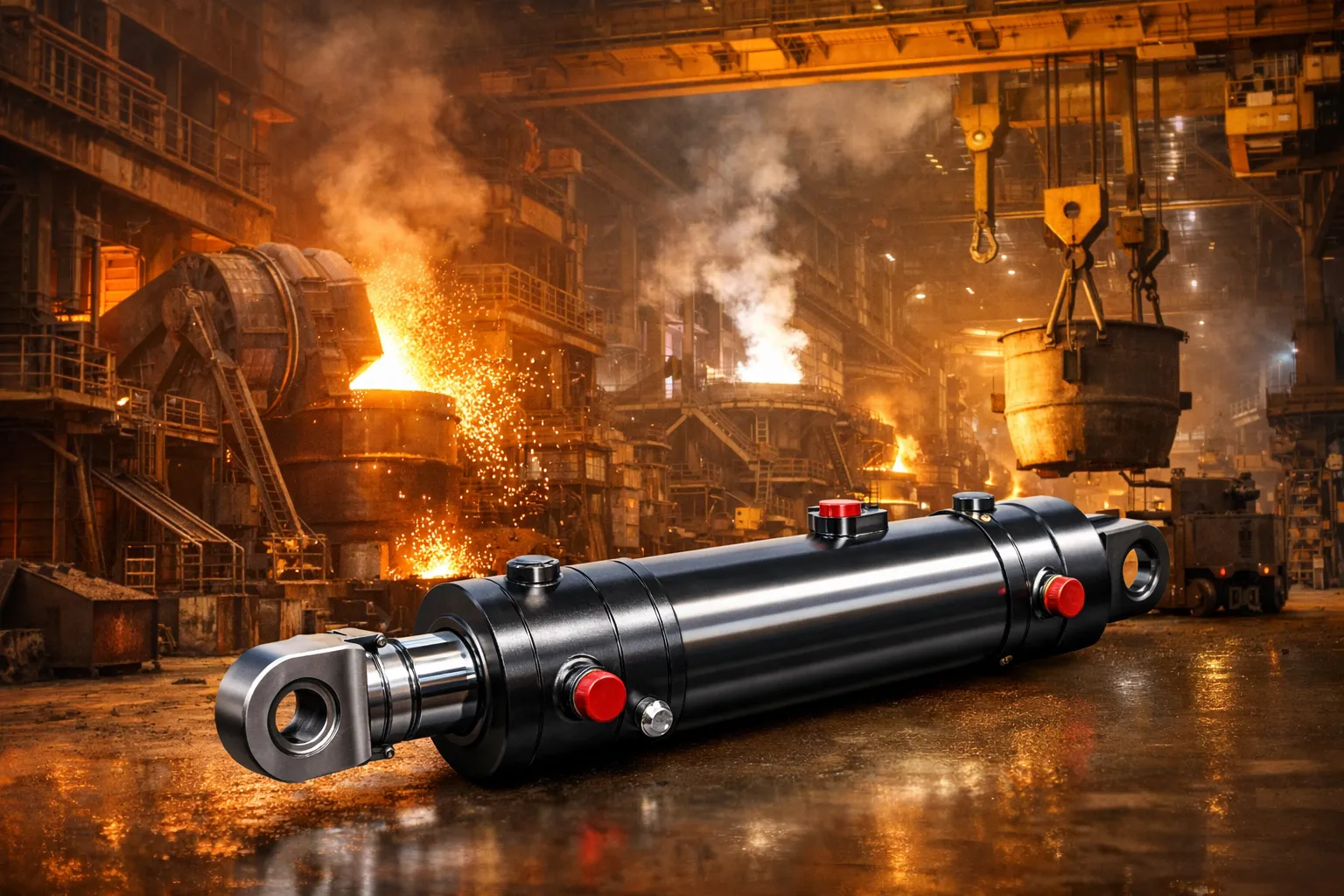
As a highly experienced and globally trusted hydraulic cylinder manufacturer, our unique market positioning is built entirely on solving these exact severe-duty engineering challenges. We do not produce generic, lightweight components. Instead, we have developed a specialized, heavy-duty furnace cover lifting cylinder that features an advanced high temperature seal matrix and a high-rigidity welded alloy steel body. By proactively eliminating the root causes of thermal and particulate degradation, our products dramatically extend your mean time between failures (MTBF). Investing in our purpose-built hydraulic oil cylinder solutions guarantees maximum uptime, safeguards your personnel, and significantly lowers the total lifecycle cost of your heavy machinery.
Comprehensive Technical Parameters & Customization
Achieving flawless mechanical operation requires exact engineering specifications. Every converter facility possesses unique structural layouts, varying cover weights, and specific hydraulic circuit pressures. The table below outlines the foundational technical parameters of our application-specific lifting mechanisms, highlighting the extensive customization envelope we offer to perfectly match your facility’s spatial and operational demands.
| Parameter Category | Specification Data & Customization Range |
|---|---|
| Target Industry | Metallurgy Industry |
| Equipment Category | Converter / Basic Oxygen Furnace (BOF) |
| Subsystem Function | Furnace cover system |
| Component Name | Furnace cover lifting hydraulic cylinder |
| Action Methodology | Double acting hydraulic cylinder |
| Structural Design | Heavy-duty Piston cylinder |
| Manufacturing Framework | Fully Welded structure for maximum rigidity |
| Material System | Forged Alloy steel (e.g., 42CrMo, 27SiMn) |
| Surface Treatment | Induction hardened & micro-cracked Chrome plated rod |
| Environmental Adaptability | Continuous exposure to High temperature smoke and dust |
| Primary Working Action | Lifting furnace cover smoothly under heavy asymmetric load |
| Typical Failure Mode Prevented | Premature Seal aging and internal fluid bypass |
| Recommended Core Configuration | Advanced High temperature seal matrix (FKM/PTFE blends) |
| Mounting Interface Options | Base Clevis, Trunnion, or Flange mount with spherical bearings |
Operational Mechanics & Advanced Fluid Dynamics
To fully appreciate the robustness of this equipment, one must understand the complex fluid dynamics and immense mechanical forces at play. In a commercial scale steel plant, the furnace cover assembly weighs tens of thousands of kilograms. Maneuvering this massive structural lid requires an actuator capable of translating hydraulic fluid pressure into overwhelming, yet meticulously controlled, linear mechanical force. Unlike older systems that might employ a single acting hydraulic cylinder relying solely on gravity for retraction, our engineered solution utilizes a highly optimized double acting hydraulic cylinder mechanism.
During the operational lifting phase—necessary for scrap charging or pouring hot metal—the plant’s programmable logic controller shifts the main directional control valve. Highly pressurized fire-resistant hydraulic fluid is pumped vigorously into the cap end (the blind base) of the cylinder chamber. Based on fundamental hydrostatic principles, this fluid pressure acts uniformly across the entire face of the internal hydraulic cylinder piston. The resulting multiplication of force effortlessly overcomes the dead weight of the cover and any mechanical stiction in the guide rails, driving the hardened alloy steel rod outward to elevate the lid. The internal bore must be flawlessly smooth to ensure this motion occurs without violent juddering, which could damage the delicate refractory brickwork.
Conversely, the lowering phase is equally critical and hazardous. Because the cover is phenomenally heavy, gravity would cause it to plummet uncontrollably if fluid were simply released. The double-acting design actively directs pressurized fluid into the rod end of the cylinder while simultaneously restricting the exhaust fluid leaving the cap end via precision counterbalance valves. This active hydraulic resistance ensures the massive cover descends at a safe, continuous velocity. Furthermore, our lift cylinder integrates progressive hydraulic cushioning mechanisms. As the piston approaches the final millimeters of its stroke, fluid is forced through a decreasing orifice, smoothly decelerating the moving mass and allowing the lid to seat gently onto the converter vessel without a concussive structural impact.
Seamless Legacy Brand Replacement & Plant Upgrades
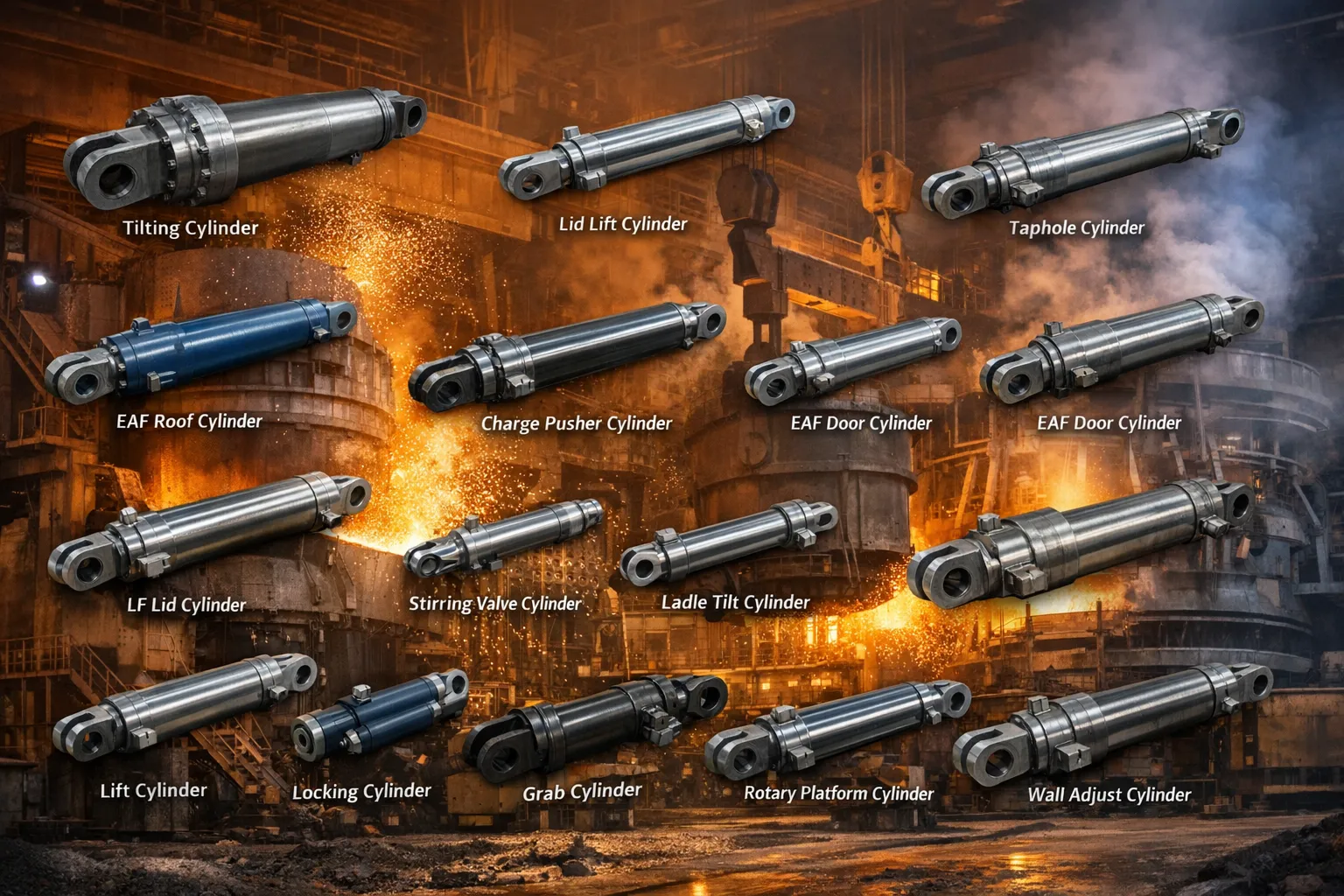
We deeply understand the frustrating realities faced by maintenance engineers managing aging steelmaking facilities. Many existing converter systems were initially commissioned using standard industrial actuators supplied by major global fluid power brands. When these original units inevitably succumb to the extreme thermal environment, sourcing exact replacements from the original equipment manufacturer (OEM) often involves agonizingly long production lead times and an exceptionally inflated procurement cost. A plant simply cannot halt production for twenty weeks waiting for a replacement actuator.
Our dedicated engineering department specializes in reverse-engineering and manufacturing direct, 1:1 drop-in dimensional replacements for legacy cylinders originally produced by leading brands such as Bosch Rexroth, Parker Hannifin, Eaton Vickers, and Enerpac. (Please note: We explicitly state that the mention of these brand names is strictly for the purpose of communicating dimensional structural compatibility and assisting plant technical personnel in sizing equivalent equipment. We operate independently and hold no trademark affiliation or endorsement from these respective corporate entities.)
By selecting our custom-engineered metallurgical series to replace your failing hydraulic rams, your facility achieves a perfect physical fit. We meticulously match the pin-to-pin retracted length, trunnion bracket widths, rod end thread pitches, and fluid port orientations. This allows your maintenance crew to install our superior hydraulic parts flawlessly without ever needing to perform costly structural modifications to the converter framework or alter the existing hydraulic pipework. You receive a vastly superior, thermally resilient product with a highly favorable hydraulic cylinder price-to-performance ratio.
Five Uncompromising Core Technical Advantages
Designing heavy machinery to survive the primary metals industry requires overcoming very specific physics and chemistry hurdles. What fundamentally differentiates our application-specific cylinder from a basic commercial catalog item? It is the obsessive micro-engineering applied to every internal component. Here are five defining advantages:
1. Superlative High-Temperature Sealing Architecture
The absolute weakest point in a generic industrial cylinder is the Polyurethane or Nitrile (NBR) sealing package. These standard materials begin to rapidly harden, vulcanize, and shatter when ambient radiant temperatures exceed 80°C. We completely abandon these basic elastomers. Instead, we utilize an advanced matrix of Fluoroelastomer (FKM/Viton) compounds combined with Polytetrafluoroethylene (PTFE) energized glide rings. This specialized high temperature seal configuration thrives in continuous ambient heat approaching 200°C, maintaining a flawless hydrostatic barrier and entirely eliminating the root cause of premature seal aging.
2. Extreme Structural Rigidity via Welded Alloy Steel
Furnace covers generate immense shock loads and slight lateral deflections during their transit cycle. Standard tie-rod cylinders, which are held together by four external threaded rods, are inherently flawed for this application; they stretch and shift under sudden pressure spikes, causing the end caps to misalign and leak fluid. We employ a heavy-wall welded alloy steel construction. The forged end caps are fused directly to the thick-walled seamless barrel using automated submerged arc welding. This creates a monolithic, incredibly rigid pressure vessel that absorbs concussive shock forces without microscopic deformation.
3. Multi-Layered Particulate Defense Mechanism
Airborne high temperature smoke and dust in a steel plant is jagged and violently abrasive. If crystallized slag adheres to a retreating piston rod, it acts like a grinding compound, rapidly destroying the main pressure seals and scoring the internal gland. We implement an uncompromising tandem exclusion system. We utilize aggressive, heavy-duty metallic scraper rings that physically shear hardened slag off the rod, backed immediately by high-density, heat-resistant polymer wipers. This guarantees the rod is perfectly clean before it re-enters the hydraulic chamber.
4. Precision Fluid Dynamics and Anti-Friction Honing
To maneuver a multi-ton cover smoothly, internal friction must be ruthlessly minimized to prevent the “stick-slip” phenomenon, which causes dangerous vibrational juddering that can destroy refractory linings. The internal bore of our cylinder barrels undergoes deep-hole skiving followed by precision roller burnishing, achieving a mirror-like surface finish (Ra < 0.2 µm). When paired with our low-friction PTFE piston wear bands, the hydraulic cylinder extends and retracts with buttery smoothness, reducing heat generation within the fluid and providing millimeter-perfect positional accuracy.
5. Optimized Thermal Dissipation and Fatigue Life
Equipment operating mere meters from molten metal must cope with severe thermal gradients. Utilizing advanced 3D Finite Element Analysis (FEA) software during the engineering phase, we map out mechanical stress concentrations and thermal expansion rates. We optimize the wall thicknesses, fluid port geometries, and weld profiles to ensure the cylinder dissipates heat naturally while avoiding mechanical binding. Furthermore, the thick layer of micro-cracked hard chrome plating on the rod retains microscopic pockets of oil, ensuring continuous lubrication even in scorching, bone-dry environments.
Autonomous Manufacturing Excellence & Quality Control
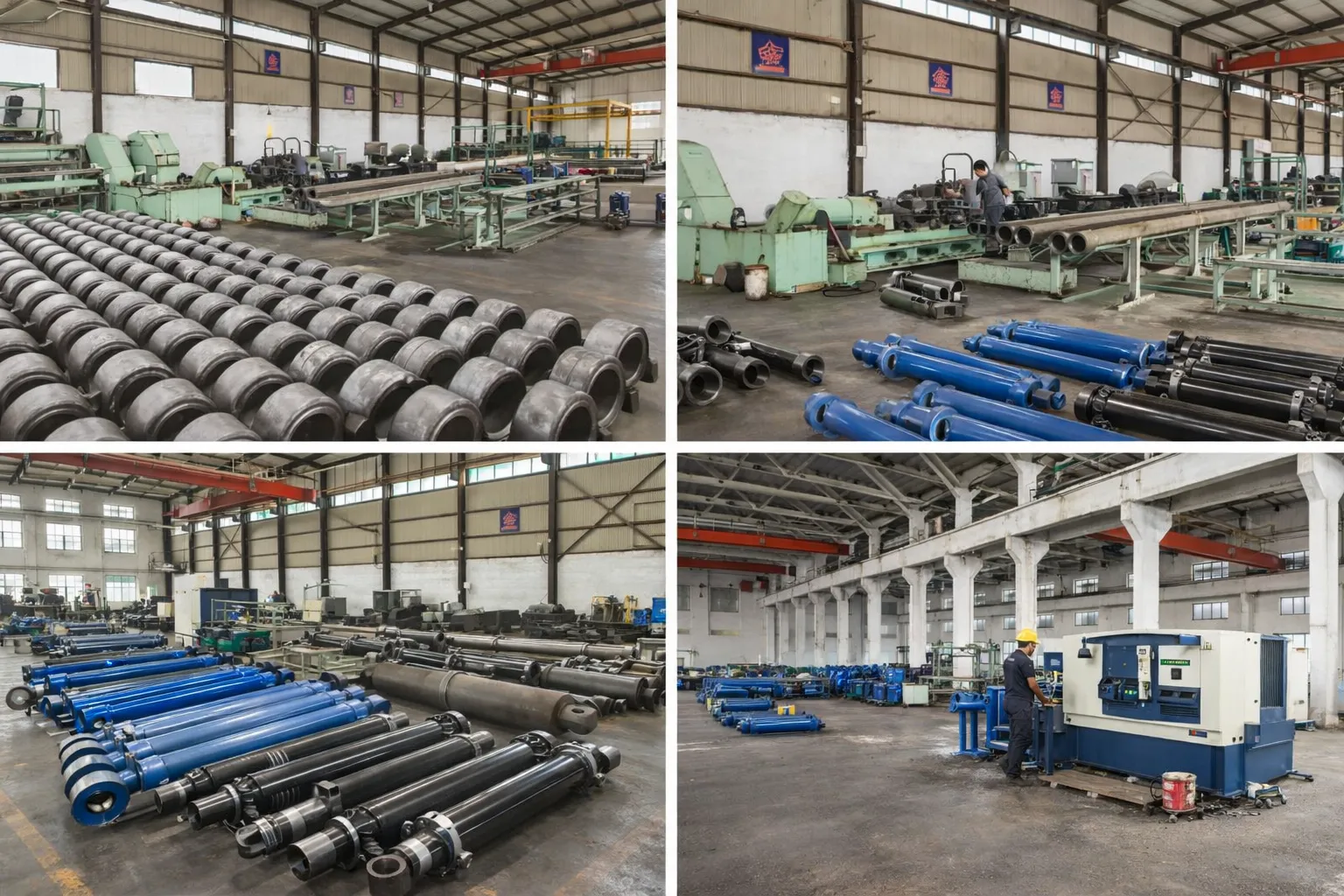
True industrial reliability cannot merely be inspected into a product at the end of the assembly line; it must be meticulously built into it at every single step of fabrication. We maintain absolute vertical control over our entire production lifecycle within our highly advanced, ISO-certified manufacturing facilities. From the moment the raw steel billets arrive until the finished, painted cylinder is crated for international export, our quality assurance protocols are utterly uncompromising.
The production process begins with strict raw material traceability. Every batch of incoming alloy steel is subjected to optical emission spectrochemical analysis and ultrasonic flaw detection to guarantee there are no internal voids, slag inclusions, or microscopic fractures that could compromise structural integrity under extreme pressure. The machining of all critical internal components—such as the rod glands, pistons, and end caps—is executed on state-of-the-art multi-axis CNC turning and milling centers, ensuring that geometric concentricity tolerances are held to strict micrometer standards.
Final assembly takes place in dedicated, climate-controlled environments to prevent any airborne shop contaminants from entering the sensitive seal packages. Crucially, before any unit is authorized for dispatch, it must survive our mandatory 100% factory testing protocol. Each cylinder is connected to a dynamic automated test rig and hydrostatically pressurized to 1.5 times its maximum rated continuous working pressure. We electronically monitor for internal volumetric bypass leakage, external fluid weeping, and verify smooth stroke execution under simulated loads. Every single cylinder is permanently etched with a unique serial number, ensuring complete lifecycle traceability for materials and simplifying any future hydraulic cylinder repair requirements.
Broad Heavy-Industry Applications
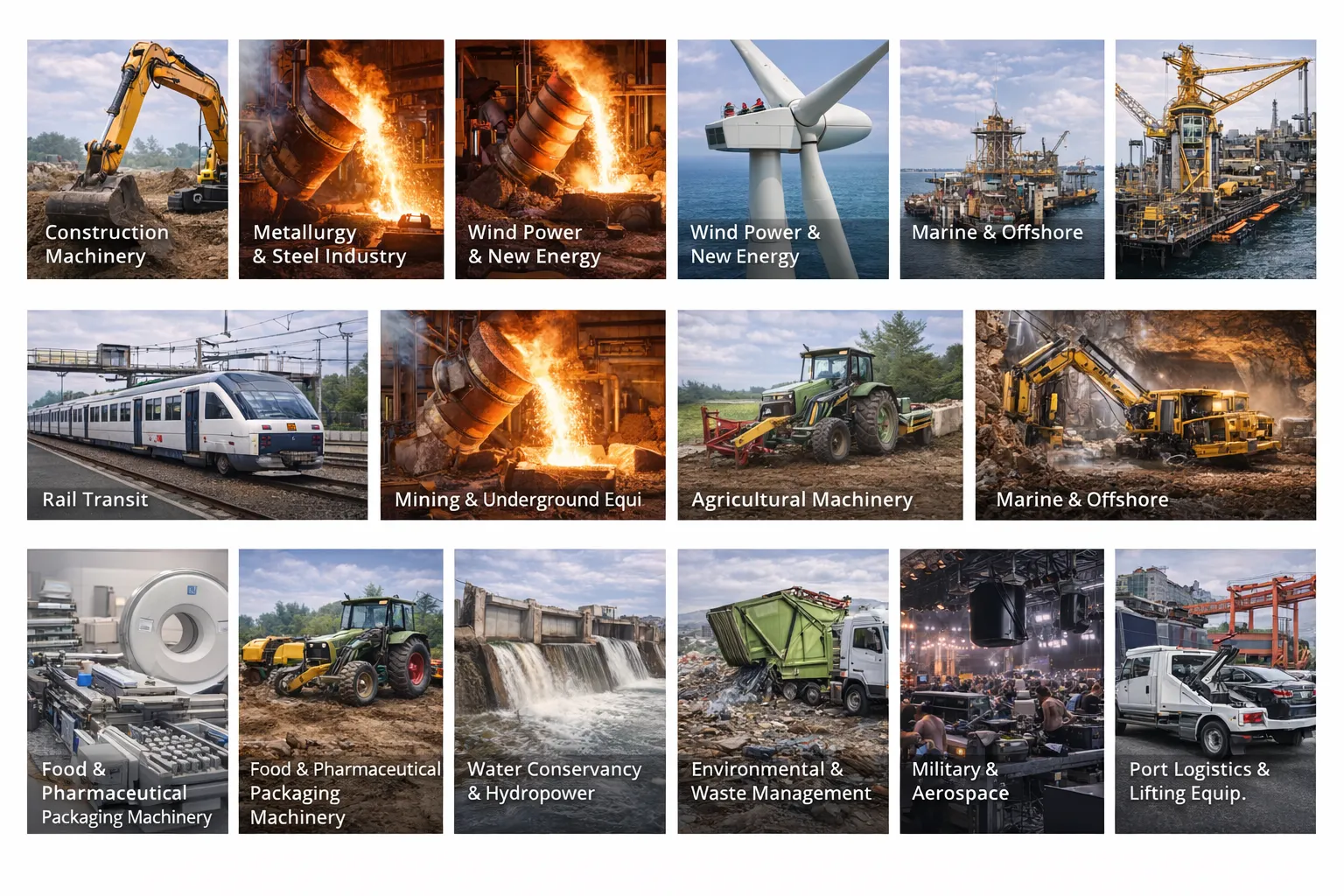
While the intense, high-stakes demands of steelmaking converters drove the initial engineering behind this specific product line, the resulting robust architecture is highly sought after across numerous other severe-duty industrial sectors globally. Mechanical technologies designed to survive molten metal splashes and abrasive particulate dust translate seamlessly into providing supreme reliability in other harsh environments.
For operations extending beyond the steel mill, our superior sealing matrix and particulate defense technologies are incredibly effective within the mining industry. In primary jaw crushers, underground continuous miners, and heavy excavators, airborne rock dust and silica present a constant threat to hydraulic integrity, a threat our tandem metallic scrapers easily neutralize. Likewise, the sheer lifting force and unyielding structural rigidity we engineer into these welded units make them absolutely ideal for the heavy lifting demands found within the construction machinery industry, particularly in deep tunnel boring machines and heavy piling rigs exposed to the elements.
From massive tonnage plastic injection molding machines requiring rapid, perfectly parallel clamping forces, to automated material handling and port logistics equipment battling continuous saline corrosion, we provide fluid power solutions that endure. We also supply specialized actuators for new energy applications, such as wind turbine pitch controls and environmental waste-to-energy plant incinerator grates.
Comparative Analysis: Standard Commercial vs. High-Performance Engineering
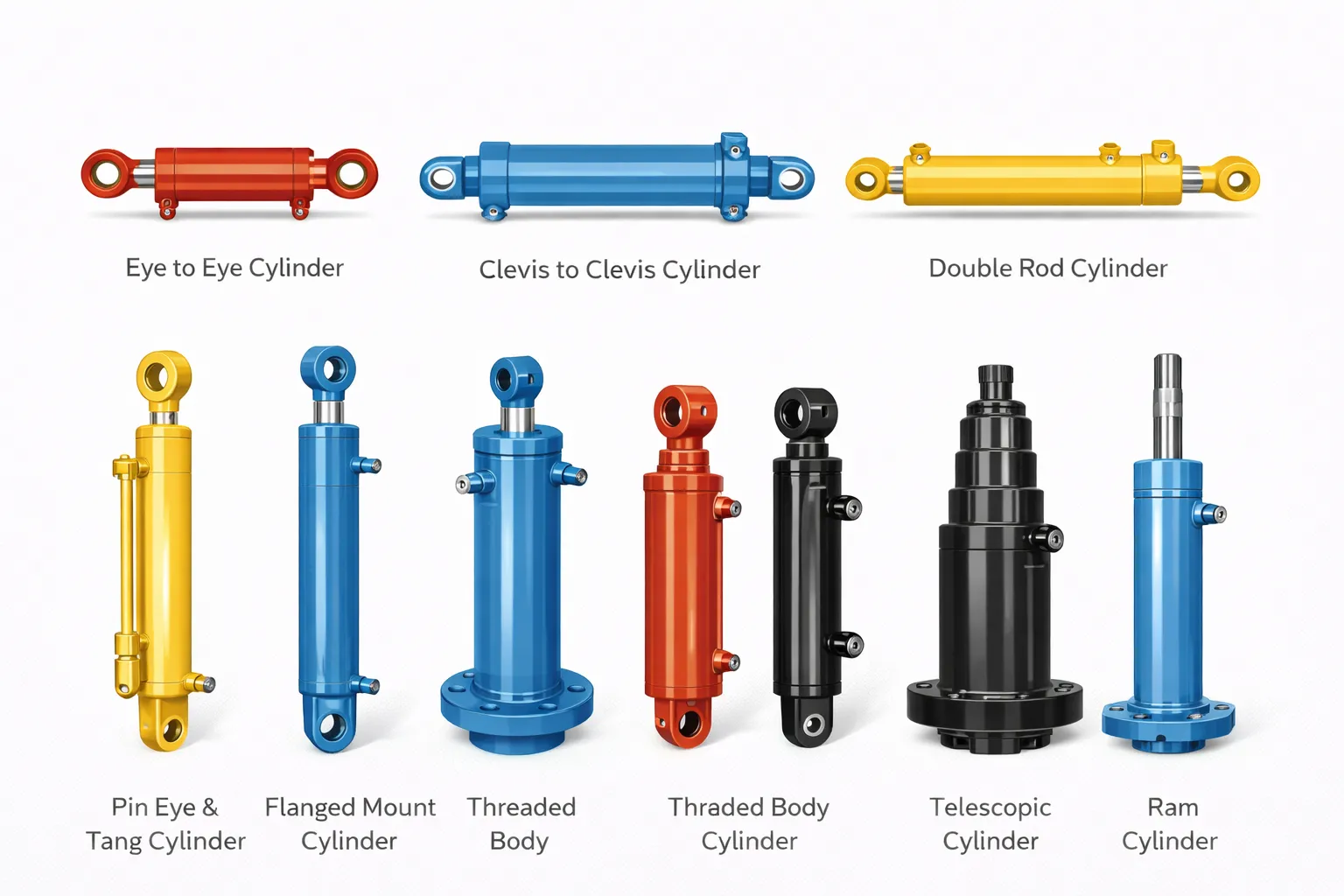
Strategic procurement decisions in heavy manufacturing must carefully weigh the initial capital expenditure against the long-term total cost of ownership. The comparison table below highlights the critical engineering divergences between generic off-the-shelf actuators and our application-specific metallurgical solutions, illustrating exactly why an upgrade provides a massive return on investment.
| Engineering Metric | Ordinary Industrial Cylinder | Our High-Performance Furnace Cylinder |
|---|---|---|
| Seal Material & Heat Tolerance | Standard NBR/Polyurethane. Rapid thermal degradation and failure above 80 Celsius. | High-Temp FKM (Viton) & PTFE composite. Highly stable continuous operation up to 200 Celsius. |
| Contamination Defense | Basic single-lip soft polymer wiper. Easily breached and melted by hot abrasive slag. | Tandem heavy-duty metallic scrapers paired with a secondary high-temperature elastomer wiper. |
| Structural Architecture | Tie-rod construction. Highly susceptible to stretching, bowing, and leaking under severe lateral shock. | Heavy-wall, fully welded alloy steel body with deep penetration robotic welds for absolute rigidity. |
| Rod Surface Treatment | Standard thin commercial chrome plating (approx. 20 microns). Very prone to impact pitting. | Induction hardened steel substrate base covered with thick micro-cracked hard chrome (>50 microns). |
| Friction Coefficient | Standard honed tube. Frequently causes stick-slip juddering under heavy asymmetrical loads. | Ultra-low friction dynamics via precision skived & roller burnished bore (Ra < 0.2 microns). |
| Maintenance Frequency | Extremely high. Requires constant fluid top-offs, seal repacking, and emergency breakdown interventions. | Extremely low. Significantly extends MTBF, ensuring true “fit and forget” reliability for the plant. |
Proven Global Success: Real B2B Case Studies in East Asia
Theoretical engineering claims must always hold up to the harsh, unforgiving realities of actual plant operation. Our fluid power solutions are trusted by some of the most prominent industrial conglomerates across Asia. Below are five verified field deployments where our engineering team successfully resolved critical operational bottlenecks for our corporate clients in South Korea and surrounding industrial hubs.
Case 1: Eradicating Seal Failure at a Major Integrated Steelworks
Location: Pohang, South Korea | Application: 300-Ton Basic Oxygen Furnace (BOF) Cover Lifting System
The Challenge & Contact: In early 2024, the plant’s chief reliability engineer was dealing with catastrophic seal failures every three to four months. The ambient radiant heat near the converter mouth was melting the standard polyurethane seals of their European OEM actuators. They discovered our capabilities via a targeted search for high-temperature hydraulic solutions and initiated a technical consultation through our web portal.
Solution & Result: We custom-engineered a set of four synchronized double acting hydraulic cylinders utilizing our proprietary FKM sealing matrix and integrated external thermal reflection shields. Since installation, the units have surpassed 20 months of continuous operation with zero recorded fluid bypass.
“The thermal resistance of these specialized lifting cylinders has completely transformed our maintenance schedule. We have eliminated the unscheduled converter shutdowns, saving us hundreds of thousands in lost production time. Outstanding engineering quality.” — Plant Maintenance Director.
Case 2: Upgrading Rod Protection in Highly Abrasive Smelting
Location: Incheon, South Korea | Application: Heavy-Duty Slag Door Actuation on an EAF
The Challenge & Contact: Extremely high concentrations of abrasive airborne slag dust were deeply scoring the piston rods of their existing standard cylinders within weeks of installation. The client met our engineering representatives at an industrial fluid power exhibition in Seoul in late 2023 and requested an immediate site audit.
Solution & Result: We supplied highly robust cylinders fitted with our tandem heavy-duty metallic scrapers and upgraded the piston rod surface to an induction-hardened substrate with 60-micron hard chrome plating. The severe scoring issue was entirely eradicated.
“The dual-scraper design is incredibly effective in this harsh environment. The rods remain perfectly smooth despite the severe daily dust exposure. Our annual budget for replacing damaged components has dropped significantly.” — Lead Procurement Manager.
Case 3: Eliminating Stick-Slip Vibrations in Precision Forging
Location: Busan, South Korea | Application: Large Scale Smelting Furnace Roof Swivel and Lift
The Challenge & Contact: When lowering their multi-ton furnace cover, their standard commercial cylinders caused a severe shuddering, stick-slip effect. These intense mechanical vibrations were disturbing the sensitive atmospheric controls and damaging the refractory bricks. They submitted an inquiry through our official website portal looking for smoother alternatives in mid-2024.
Solution & Result: Working closely with their engineering team, we supplied precision-honed cylinders (Ra 0.2µm) equipped with specialized low-friction PTFE composite guide bands and custom proportional valving ports to ensure a perfectly smooth, judder-free descent.
“The powered descent of the 15-ton lid is now completely seamless. The ultra-low friction dynamics eliminated the mechanical shuddering entirely, saving our expensive refractory lining. Brilliant technical execution.” — Process Automation Lead.
Case 4: Extending Fatigue Life Under Massive Shock Loads
Location: Gwangyang, South Korea | Application: Emergency Ladle Transfer Actuators
The Challenge & Contact: The heavy manufacturing facility frequently faced cracked welds and stretched tie-rods on the base clevis mounts of their existing cylinders due to massive hydraulic shock pressures during emergency load transfers. A regional industrial distributor recommended our custom heavy-duty manufacturing services.
Solution & Result: We delivered a customized solution featuring a forged end-cap design and full-penetration robotic multi-pass welding to specifically handle the severe lateral stress, totally replacing their weak tie-rod designs.
“We installed these heavy-wall welded units during our winter maintenance shutdown. They have effortlessly handled emergency shock loads that previously sheared our old cylinders right off the mounts. The robust build quality is immediately evident.” — Mechanical Reliability Engineer.
Case 5: Cost-Effective, High-Speed Replacement of Legacy Brands
Location: Kitakyushu, Japan | Application: Furnace Door Lifting Mechanism Retrofit
The Challenge & Contact: The specialized high-grade alloy mill needed to urgently replace an obsolete European brand cylinder that had catastrophically failed, but they could not afford to alter the existing structural steelwork. The OEM quoted a 24-week lead time. They contacted our export engineering team directly via email in January 2025.
Solution & Result: Using the provided legacy drawings, we reverse-engineered a 1:1 dimensional drop-in replacement, manufactured it within 5 weeks, and shipped it via expedited freight. It installed perfectly without a single modification to the plant framework.
“The dimensional accuracy was flawless. We bolted it right onto the old trunnion mounts, saving us days of expensive welding and downtime. A truly reliable global supplier offering an exceptional hydraulic cylinder price.” — Lead Mechanical Designer.
Frequently Asked Questions (FAQ)
Professional procurement and plant engineering requires precise technical clarity before committing to heavy machinery upgrades. Below are comprehensive answers to the most common inquiries our corporate partners ask regarding our severe-duty fluid power solutions.
1. What is the absolute maximum ambient temperature these cylinders can operate in?
2. Can you manufacture a direct, drop-in replacement for my existing legacy brand cylinder?
3. What are your typical production and delivery lead times to South Korea?
4. Do you supply separate spare parts and seal kits for routine plant maintenance?
5. How exactly do you prevent the internal piston from binding or stick-slip under heavy loads?
6. Why is your heavy-wall welded structure superior to standard tie-rod cylinders in this application?
7. Are your cylinders physically tested before being shipped to my facility?
Secure Your Continuous Metallurgical Production Today
Do not allow generic fluid power components and premature seal aging to dictate the uptime of your steel plant. Partner with a specialized fluid power manufacturer who truly understands the severe demands of radiant heat, heavy asymmetrical loads, and abrasive airborne dust. Upgrade to a highly reliable Furnace Cover Lifting Hydraulic Cylinder and eliminate costly, unscheduled maintenance shutdowns permanently.
Editor: Cxm