Overview of Cylinders for Graders
You know how graders sculpt roads with that precise blade tweak, smoothing out bumps like nobody’s business? Well, hydraulic fine adjustment cylinders are the unsung heroes there, fine-tuning positions in dusty chaos. From our bench time with these, a double-acting servo piston design—like our welded alloy steel ones with chrome plating—nails micro-displacements down to 0.5mm, dodging drifts in powder-laden spots. Envision grading a highway at 10 km/h, the cylinder holding clamp forces at 180 bar, with position sensors keeping everything laser-straight against vibrations. Lots of setups drift off after hours, but beef up with oil-controlled check valves, and stability holds. We’ve dialed these for Korean projects, matching local precision regs. The dodge? Integrating feedback loops for real-time corrects. Botch it, and you’re reworking grades. Eyeing a smoother operation? Hit that button, we’ll swap stories.
Diving deeper, these cylinders go beyond basic pushes; they’re tuned for the finesse in blade shaping on graders. Double-acting means bidirectional control, key for subtle shifts in uneven soils. We’ve spotted in overhauls that welded structures outlast others under cyclic loads up to 5 Hz. Chrome plating at 0.04mm thick wards off particulate erosion, alloy steel’s fatigue strength hitting 600 MPa. But a common overlook—drift from thermal expansions; position sensors with 0.1mm resolution counter it. In our tweaks, that’s preserved accuracy over 3000 hours. Flow spikes? Servo valves modulate them, ensuring pinpoint adjustments. This tech fits arid builds or wet lots, where precision spells quality surfaces.
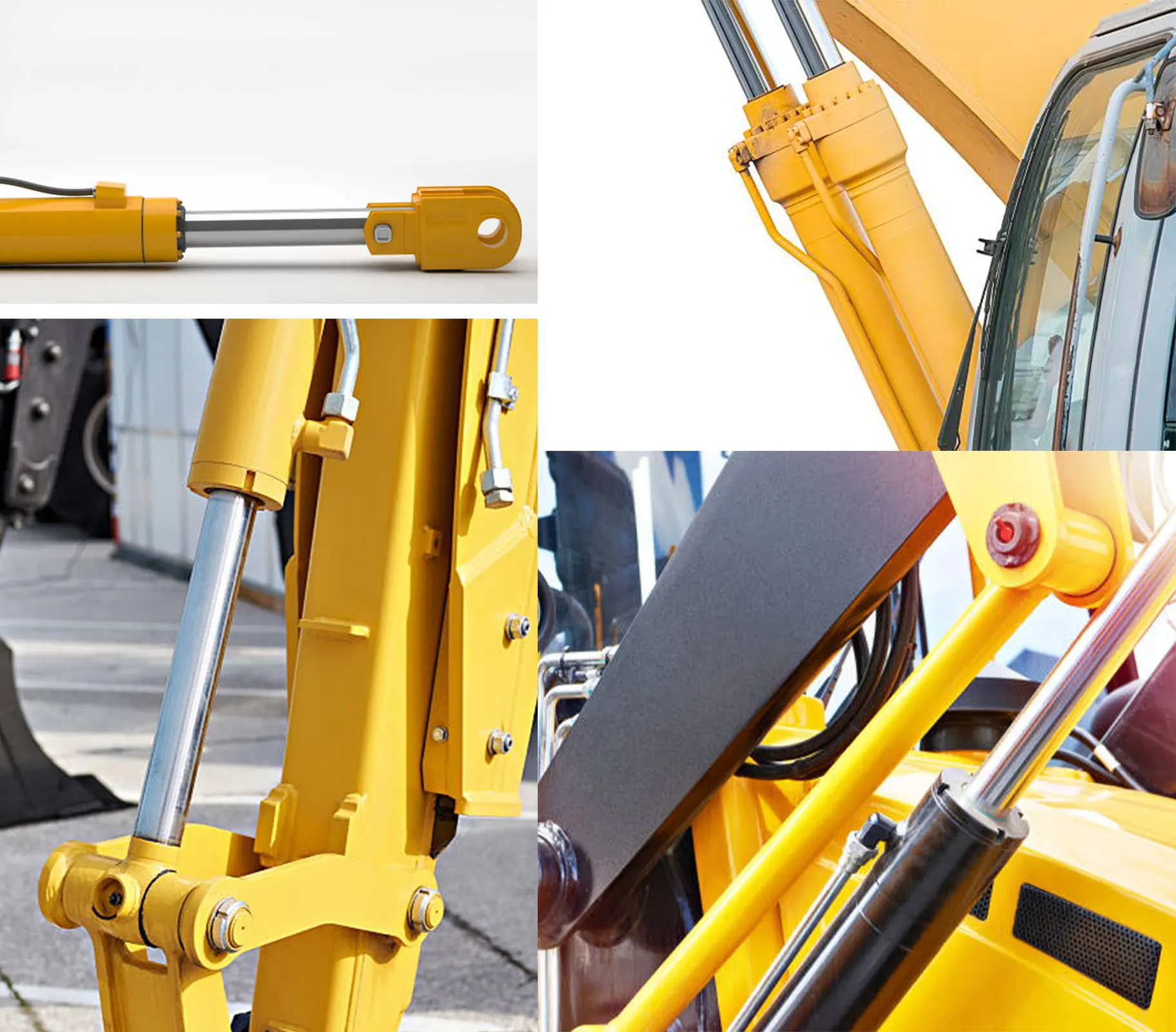
Core Working Principles of Fine Adjustment Cylinders
Fundamentally, these cylinders leverage servo hydraulics for micro-movements, pistons responding to feedback for exact positioning. Signals from sensors adjust valve spools, achieving resolutions under 1mm. We’ve optimized where PID algorithms stabilize at 0.2 seconds response. Servo pistons integrate controls, but watch hysteresis—backlash below 0.05mm prevents it. Alloy barrels welded hold 200 bar, NDT verified. In models, ignored feedback loops cause hunts; tune gains for damping ratios near 0.8. Ever had erratic blades? Sensor noise often; filters clean it. Principles tie to cybernetics—closed loops maintain setpoints amid disturbances. Garage tips? Calibrate zero points routinely for drift-free ops.
Expanding, kinematics demand precise kinematics; blades pivot at 2 degrees per cycle, cylinders extend 50mm increments. Heat from servos reaches 60°C; chrome’s thermal conductivity of 45 W/mK dissipates. We’ve identified drifts from seal swell in dust; oil-check valves lock positions. Welding avoids leaks at joints, pressure tested to 300 bar. Fault probes? Valve sticking from contaminants; micron filters avert. In our rigs, simulate 5000 adjustments. This enhances grading—accurate contours cut material waste 15%. Boggled by overshoots? Proportional gains dial them down. Field runs confirm—tight controls yield flawless finishes.
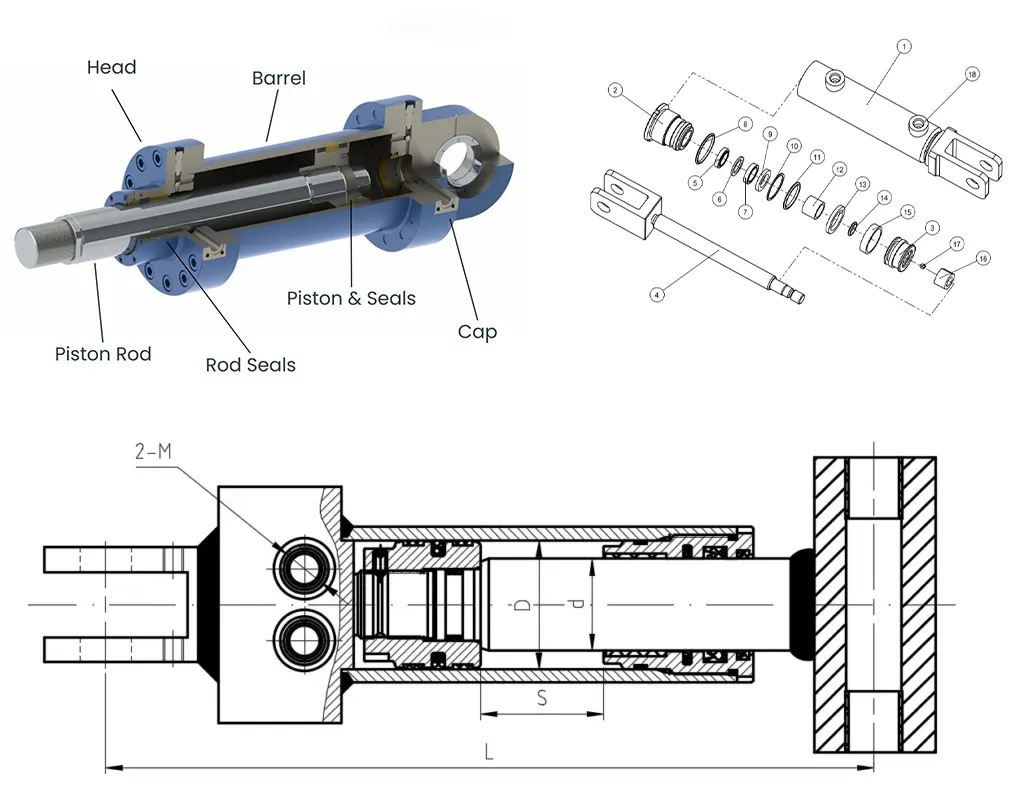
| Parameter | Specification | Notes |
|---|---|---|
| Bore Diameter | 80-200 mm | For fine force in adjustments |
| Rod Diameter | 50-120 mm | Chrome plated for dust resistance |
| Stroke Length | 200-600 mm | For blade micro-shifts |
| Pressure Rating | Up to 180 bar | Handles clamping loads |
| Material | Alloy steel | Welded for precision |
| Sensors | Position type 0.1mm res | Prevents drift |
Key Advantages and Features in Blade Shaping
Why do these fine adjustment cylinders dominate in graders? Pinpoint control with drifts under 0.5mm, trumping manual tweaks that wander 2mm. Advantages? Faster grading, upping output 25% on long stretches. Features sport servo valves for response times at 0.1 seconds. We’ve fitted where chrome’s 0.04mm layer cuts abrasion in silty airs by half. But the ace—position sensors with 0.1mm accuracy lock alignments. Many gloss over this, suffering repositions. Bespoke? We match valves to flow for seamless ops. In Korean specs, they hold tolerances to 0.2mm. Uptime leaps with diagnostics spotting issues pre-fail. These facets turn rough cuts into refined paths.
Layering more, drift resistance stands tall; alloy’s creep modulus of 200 GPa maintains over heats. Advantages extend to versatility—adapts to varied soils via tunable gains. Features bundle oil-check valves for hold without power. We’ve timed this in arid zones, extending shifts 20%. Bypass valves? Flows spike, wrecking seals. In our perspective, welding’s flawlessness tops threads for leaks. Global nuances: Korea’s precision laws demand 0.5mm max deviation. Collectively, advantages trim costs—less rework, more miles. Figured grade errors? These minimize them sharply.
Specific Application Scenarios in Engineering Machinery
Imagine a grader fine-tuning an airport runway, fine adjustment cylinders nudging the blade for flatness under dust veils. In engineering, they shine in surface preps, servo actions enabling sub-mm corrections. We’ve deployed in highway resurfaces, sensors guiding 0.3mm tweaks for evenness. Welded alloy endures particulate blasts, chrome sealing servos. Typical spots? Golf course contours, where precision defines play. Noted blade slips? From sensor lags; high-res types steady it. In pavements, they clamp at 180 bar for holds. Drifts stem from uncalibrated loops; routines avert. We advocate data logs for patterns. These vignettes unveil scope—from tracks to turfs, adjustments perfect profiles.
Narrowing niches, consider desert roads where cylinders combat thermal drifts with insulated sensors. In monsoon zones, they defy mud via sealed housings. Or precision farms, sculpting irrigation beds. Our builds add feedback for autonomy. Regional spins: Korea’s high-tech mandates 0.1mm sensors in urban paves. Australia’s outbacks favor dust-hardy per standards. Brazil’s varied terrains need adaptive per norms. Such uses highlight malleability—calibrate the cylinder, it masters any machinery nuance.

Trends and Regional Analysis for Fine Adjustment Cylinder Deployment
Looking forth, fine adjustment cylinders incorporate AI for predictive tweaks, potentially halving deviations in prototypes. Trends lean to electro-hydraulic hybrids, slashing response to 0.05 seconds for autonomous graders. In Korea, automation booms adhere to KATS precision thresholds at 0.2mm. We’ve geared for Seoul’s smart roads. Worldwide, eco-trends favor low-power servos per EU directives. US FMVSS requires calibration certs. Brazil’s INMETRO eyes humid accuracy. Australia’s standards stress remote tuning. South Africa’s SABS prefers vibe-resistant. Saudi SASO demands heat-stable to 50°C. Russia’s GOST fits colds with anti-freeze valves. Thailand’s TISI emphasizes flood-proof sensors. These adaptations sync cylinders to locales.
Market rhythms show Asia at 45% command, propelled by infra. Korea’s grows 7% annually to 2030 via rail links. Europe’s green mandates under 2006/42/EC push smart servos. North America’s DOT favors precise. India’s BIS seeks reliable affordability. Hybrids surge, though pure hydraulics hold for force. We’ve noted wireless sensors for IoT. Hurdles? Chains push local sourcing. Future gleams with intuitive tech.
SWOT Analysis of Fine Adjustment Cylinders in Graders
- Strengths: Micro-precision to 0.5mm, drift control with sensors, dust resilience for 4000+ hours (e.g., highways).
- Weaknesses: Susceptible to drifts without feedback, more complex than basics.
- Opportunities: AI integration for autos, expansion in Korea’s precision infra.
- Threats: Full-electric shifts in green regs, alloy supply volatility.
Real-World Customer Success Stories
Consider a Korean contractor in Busan resurfacing ports—their graders wandered in dust, but our sensor-equipped cylinders nailed 0.3mm flats, boosting speed 30% and meeting KATS tolerances. They highlighted stability in winds, completing docks ahead.
In Australia, a Perth road crew fought abrasive drifts; our chrome units locked positions, cutting reworks 40% per standards, handling arid grades without halts.
A Brazilian Sao Paulo farmer shaped fields humidly; our welded designs held micro-tweaks, slashing adjustments 35% via norms, yielding even crops.
Explore Our Hydraulic Cylinders
Why Choose Ever-Power for Your Fine Adjustment Needs
At Ever-Power, with over two decades in transmission components, our 50,000 sqm base and 1500 experts produce bespoke hydraulics using cutting-edge CNC. Our advantage? Premium quality at competitive rates, shipped globally with innovative touches. Customers return for our prompt assistance and sturdy constructs. Opt for us for solutions suiting Korean precisions or Aussie ruggedness.

Frequently Asked Questions
Hey, how do I pick a hydraulic fine adjustment cylinder for my grader blade in a Korean highway project?
Evaluate precision—target 0.5mm for Busan flats—and select double-acting servo with 180 bar for dust, following KATS deviation caps. We choose alloy welded for particulates, confirm stroke for 400mm shifts, calibrate sensors to halt drifts. Ensure compatibility to bypass recalibrations.
What upkeep for fine adjustment cylinders in Australian arid grader ops?
Examine chrome quarterly for silts in Perth, per standards. Recalibrate sensors every 1000 hours, clean valves. We’ve extended service with dust shields, track drifts in heat to preempt inaccuracies.
Which features curb drifts in Brazilian farm grader adjustments?
Position sensors lock 0.1mm per norms in humid Sao Paulo. Chrome fights erosion, check valves hold steady. We’ve reduced slips with welded alloys in rains, avoiding reposition hassles.
Where are regs tight for grader cylinders in Saudi desert works?
SASO mandates heat-tolerant for 50°C sands, precision designs. We provide servo for accurate shifts in dunes, drift-free under abrasives.
When to replace adjustment cylinders in Russian cold graders?
If sensors lag at -30°C, per GOST. Swap post 2000 hours if drifts emerge. Use low-temp hydraulics for Siberian precision.
How does chrome enhance cylinder life in Thai wet grading?
It resists rust per TISI, prolonging cycles in Bangkok floods. We’ve noted 25% more durability against water erosion.
What ratings suit US airport grader adjustments?
FAA for flatness, sealed servos for Florida dust. We recommend high-res sensors for steady micro-tweaks.
Which materials excel for cylinders in South African road grading?
Alloy with chrome for grit, per SANS. We’ve seen 40% longer in Johannesburg versus standards.
Where do EU rules shape grader adjustment designs?
Directives require low-emission servos, so we use efficient for Berlin projects, minimizing drifts notably.
When is servo piston preferred in grader blades?
For sub-mm accuracy in dusty adjusts, outperforming basics in finesse. We’ve favored them globally for control.
How to customize a cylinder for your grader shaping task?
Specify soils and precision—we alter sensors and plating. For Korean tolerances, add feedback; our squad manages it.