Ladle Tilting Cylinder for Continuous Casting Machine
A heavy-duty fluid power solution meticulously engineered to survive extreme high-temperature radiation. Delivering absolute load control and zero-judder stability when tilting massive volumes of molten steel on the casting car.
Operational Overview and Metallurgical Necessity
Within the highly dangerous and thermally intense environment of a modern steelworks, the continuous casting machine is where liquid metal takes its first solid structural form. The entire process begins at the casting car, a heavy transport vehicle that physically supports and maneuvers the massive ladle containing hundreds of tons of liquid steel at temperatures exceeding 1,600 degrees Celsius. To initiate the continuous casting sequence, the ladle must be tipped forward to pour the molten metal into the tundish. The primary mechanical actuator executing this incredibly high-stakes, heavy-lifting movement is the ladle tilting cylinder.
The functional demands placed upon a ladle tilting hydraulic cylinder are among the most extreme in the entire industrial sector. This unit is subjected continuously to brutal high-temperature radiation from the glowing ladle, violent mechanical shocks during load transfer, and the constant threat of abrasive metal splatter. When ordinary commercial fluid power components are utilized in this zone, they suffer rapid and terrifying degradation. The extreme heat quickly carbonizes standard internal seals, causing massive internal fluid bypass. More dangerously, the immense eccentric loads acting on the pivot points frequently lead to catastrophic weld fatigue on the cylinder barrel. A failure here is not merely a maintenance issue; a ruptured cylinder during a live pour can result in massive, life-threatening molten steel spills that instantly destroy surrounding plant infrastructure and endanger personnel.
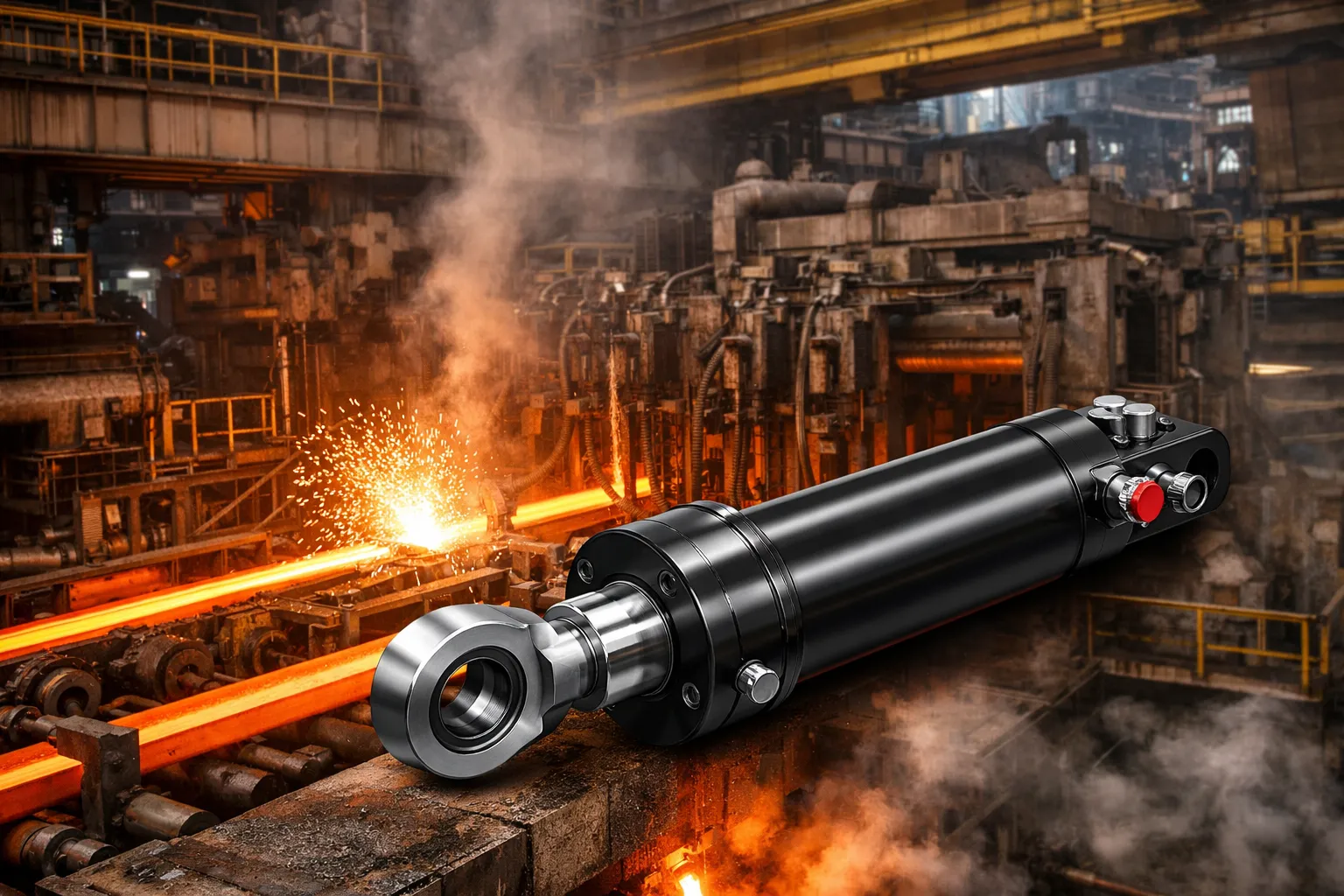
Recognizing these severe operational hazards, we operate as a highly specialized hydraulic cylinder manufacturer dedicated to engineering survivable, heavy-duty solutions for the Asian metallurgical market, including top-tier facilities in South Korea, Japan, and Taiwan. Our proprietary fluid power solution is constructed around a massive heavy-duty welded structure utilizing premium 42CrMo forged alloy steel to completely eradicate weld tearing. Furthermore, we abandon standard hard chrome entirely in favor of an advanced, heat-reflective nickel plating process designed specifically for high-temperature radiation environments. When plant maintenance directors calculate the true, long-term hydraulic cylinder price, our highly resilient architecture proves to be the most cost-effective and secure investment, completely eliminating the dangerous necessity for emergency mid-heat maintenance and preventing catastrophic casting line stops.
Engineering Parameters and Structural Configuration
Properly specifying heavy-duty hydraulic cylinder components for a casting car application requires absolute precision in material science and structural engineering. The comprehensive technical table below outlines the baseline parameters and highly customizable options for our molten metal handling systems. Every dimension, weld penetration depth, and surface treatment is verified through strict computational finite element analysis to ensure survival against extreme thermal shock and mechanical fatigue.
| System Requirement / Parameter | Engineering Specification & Material Configuration |
|---|---|
| Target Industry Sector | Metallurgy, Ironworks, and Heavy Metal Casting |
| Equipment Category | Continuous Casting Machine / Steelmaking Floor |
| Subsystem Location | Casting Car / Ladle Turret / Pouring Station |
| Designated Nomenclature | Ladle tilting cylinder / Pouring Actuator |
| Kinematic Action Type | Double acting hydraulic cylinder setup for precise bidirectional tilt control |
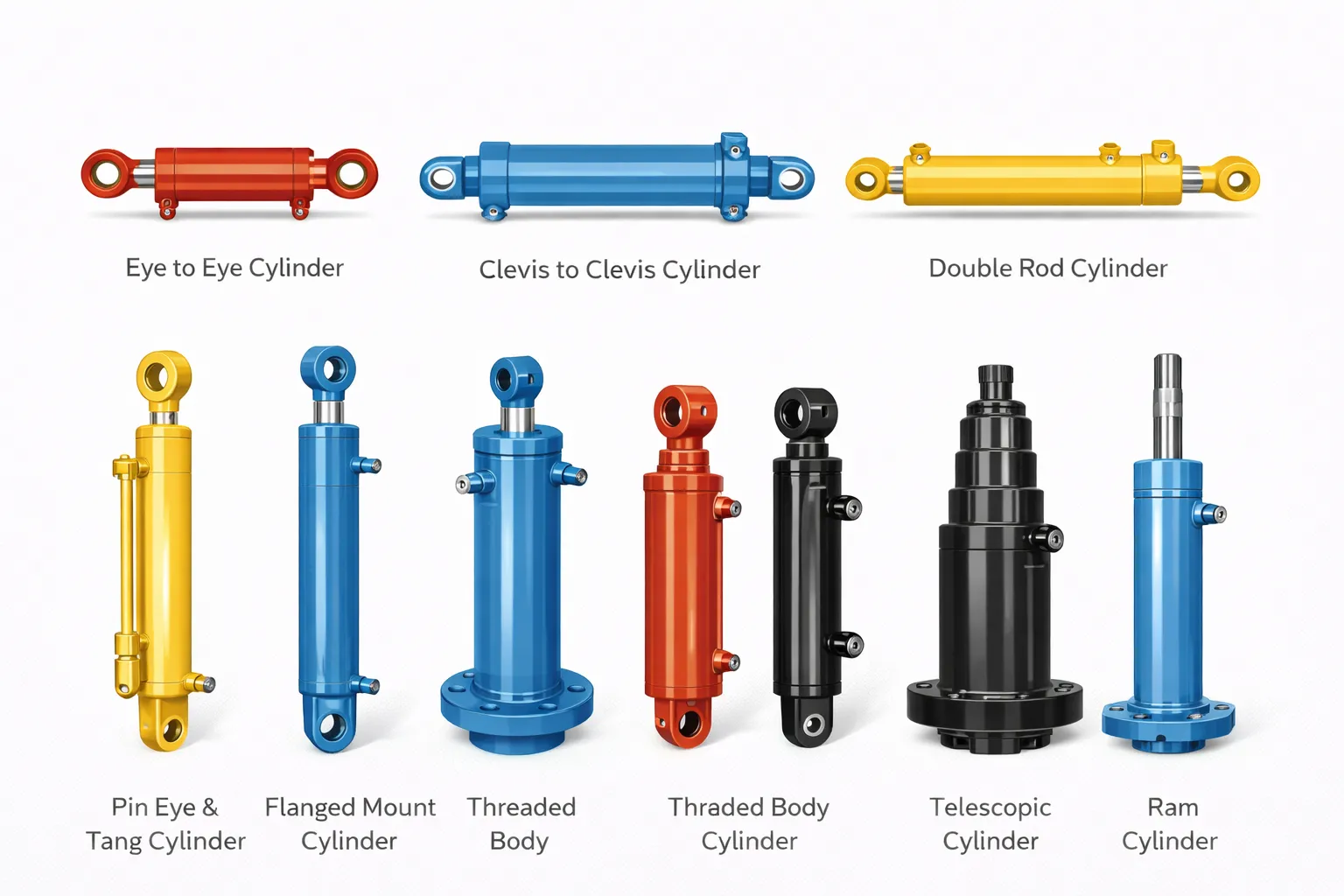
| Internal Architectural Type | High-tonnage hydraulic cylinder piston configuration |
| Manufacturing Structure | Monolithic Welded assembly (Completely eliminates tie-rod stretching) |
| Primary Material Matrix | 42CrMo forged alloy steel (Maximized yield strength for load-bearing) |
| Rod Surface Treatment | High-density Nickel Plating (Superior heat reflection and anti-corrosion) |
| Environmental Survival Rating | Extreme High Temperature Radiation (>200°C ambient adjacent to ladle) |
| Primary Working Condition | Tilting molten steel ladles smoothly with massive off-center radial loads |
| Addressed Failure Mode | Weld fatigue cracking, thermal seal melting, and cylinder barrel distortion |
| Recommended Configuration | Heavy-duty welded structure with integrated spherical bearing heat shields |
Fluid Dynamics and the Mechanism of the Pour
A deep, practical comprehension of the fluid mechanics driving the casting car is an absolute requirement for maintenance teams to ensure operational safety. The fundamental physics of the ladle tilting hydraulic cylinder involves converting highly pressurized, fire-resistant hydraulic fluid into a massive, strictly controlled mechanical lifting force. When a full ladle of molten steel is seated onto the casting car, its center of gravity is mathematically established. However, as the pour begins and the liquid steel drains into the tundish below, that massive center of gravity shifts dynamically. The actuator must handle this constantly changing weight distribution flawlessly, preventing the heavy load from running away.
To manage this immense shifting load, the unit operates exclusively as a double acting hydraulic cylinder. When the plant operator initiates the pour via the control pulpit, high-pressure fluid is metered into the cap end of the heavy 42CrMo barrel. The internal piston moves forward, extending the massive nickel-plated rod to push the ladle cradle upward on its trunnion pivots. Because it is a closed, double-acting circuit, fluid is simultaneously being metered out of the rod end. This creates a highly rigid hydraulic lock on both sides of the hydraulic cylinder piston. The pour can be executed in micro-increments; there is absolutely zero surging, juddering, or uncontrolled tipping, ensuring the steel flows smoothly without dangerous splashing.
A standard single acting hydraulic cylinder is entirely forbidden in this specific metallurgical phase. Relying on gravity alone to lower an empty or partially full ladle that is caked in heavy, solidified slag is highly unpredictable. If the pivot point binds even slightly, a single-acting unit would lose contact, potentially causing the heavy ladle to suddenly drop when the binding violently releases. The double-acting architecture gives the operator powered, muscular control over both the tilting extension and the return retraction, guaranteeing absolute mechanical authority over the hydraulic rams at all times during the continuous casting process.
Exact Equipment Cross-Compatibility and System Upgrades
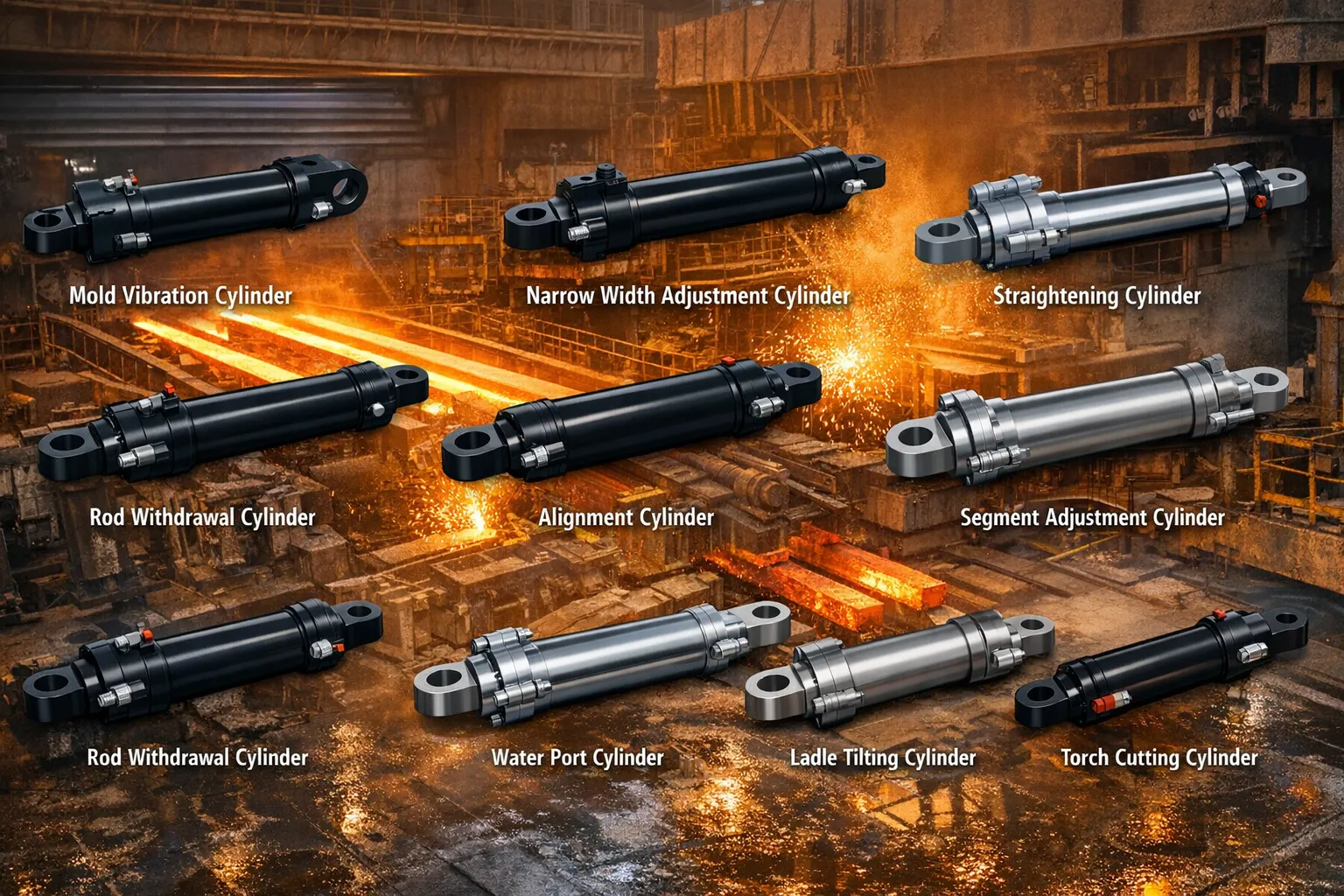
Navigating the procurement of reliable replacement actuators for heavy steel plant machinery frequently involves confronting severe logistical roadblocks. Facilities often find themselves hostage to original equipment manufacturers (OEMs), facing astronomical replacement costs and totally unacceptable, multi-month manufacturing lead times for highly proprietary parts. We aggressively break this cycle. Our specialized engineering division focuses heavily on designing highly advanced fluid power systems that serve as exact dimensional and functional drop-in replacements for standard global continuous casting equipment.
Whether your facility is orchestrating an emergency fixing hydraulic cylinders project during a scheduled 72-hour furnace relining shutdown, or executing a comprehensive, multi-million dollar modernization of the casting floor, our tailored units will integrate seamlessly. We manufacture high-performance hydraulic parts and cylinder upgrades to perfectly match the massive trunnion mounting brackets, spherical bearing diameters, port threads, and specific stroke lengths of machinery originally built by legacy global entities such as Bosch Rexroth, Parker Hannifin, SMS Group, Primetals Technologies, and Danieli.
Essential Engineering Disclaimer for B2B Procurement Teams: Any references to external corporate brand names, legacy trademarks, or OEM machinery manufacturers within this technical document are utilized strictly to illustrate physical dimensional compatibility, spatial mounting cross-referencing, and mechanical application suitability for our global clients. We are a fiercely independent, highly specialized hydraulic cylinder manufacturer. We engineer and supply our own proprietary, heavily upgraded external-fit equivalent units and do not infringe upon internal patented intellectual properties, nor do we claim any direct corporate affiliation with these trademarked entities.
Core Technical Advantages: Engineered to Survive
In the brutal, high-stakes arena of molten metal handling, merely functioning is insufficient; survival is the only acceptable metric. We have thoroughly audited the catastrophic failure modes inherent to casting cars and re-engineered our actuators to counter them completely. The following five technical advantages establish exactly why our ladle tilting cylinder stands as the definitive benchmark for safety and reliability across the Asian metallurgical sector.
-
Heavy-Duty Welded Structure to Prevent Weld Fatigue
The single most dangerous failure mode in ladle handling is weld fatigue cracking on the cylinder barrel caused by massive off-center loads as the ladle shifts. Standard commercial cylinders utilize thin-walled tubes and basic fillet welds. Our primary configuration is a monolithic, heavy-duty welded structure. We utilize exceptionally thick 42CrMo steel tubes, and the heavy trunnion mounts and end caps are attached using automated, multi-pass full-penetration submerged arc welding. This creates an incredibly rigid, single-piece pressure vessel capable of absorbing immense radial shocks without microscopic tearing.
-
Specialized Nickel Plating for High Temperature Radiation
Conventional hard chrome plating micro-cracks and peels when repeatedly exposed to the intense 200°C+ radiant heat emitted by a pouring ladle. To counter this, our precision-ground steel rods undergo an advanced high-density nickel plating process. Nickel possesses vastly superior thermal expansion properties and operates as a brilliant thermal reflector, actively bouncing radiant energy away from the rod surface. This keeps the internal wiper seals cooler and entirely prevents the plating delamination that rapidly destroys standard cylinders.
-
42CrMo Forged Alloy Steel Base Architecture
When holding over one hundred tons of liquid metal suspended on a pivot, the base yield strength of the cylinder components cannot be compromised. We completely reject standard mild carbon steels. Both the heavy-wall barrel and the solid rod are forged from 42CrMo alloy steel. We execute precise in-house quenching and tempering protocols to achieve a perfect metallurgical balance of extremely high yield strength and excellent impact toughness, ensuring the physical geometry of the unit remains undistorted under maximum capacity.
-
Extreme-Temperature Viton (FKM) Dynamic Seal Matrix
A hydraulic fluid leak near an open ladle of liquid steel is a catastrophic fire hazard. Standard polyurethane and NBR seals melt and fail precipitously in this zone. We integrate aerospace-grade FKM (Viton) extreme-temperature elastomers and advanced PTFE low-friction step seals throughout the entire internal architecture. These specialized elastomers remain structurally stable and flexible even when ambient temperatures spike drastically, guaranteeing zero internal fluid bypass and absolute lock-holding capability throughout the entire duration of the pour.
-
Advanced Fatigue Life Optimization and Spherical Bearings
The mechanical linkage between the cylinder and the casting car is an area of intense friction and binding. We utilize massive, heavy-duty self-aligning spherical bearings at both the rod eye and the base clevis. This specific engineering choice actively compensates for the inevitable slight mechanical deflections of the heavy casting car structure as the ladle tilts. By allowing the system to self-align, we completely eliminate the destructive side-loading forces that would otherwise snap the heavy steel rod or gall the internal bronze guide rings.
Autonomous Manufacturing and Absolute Quality Control
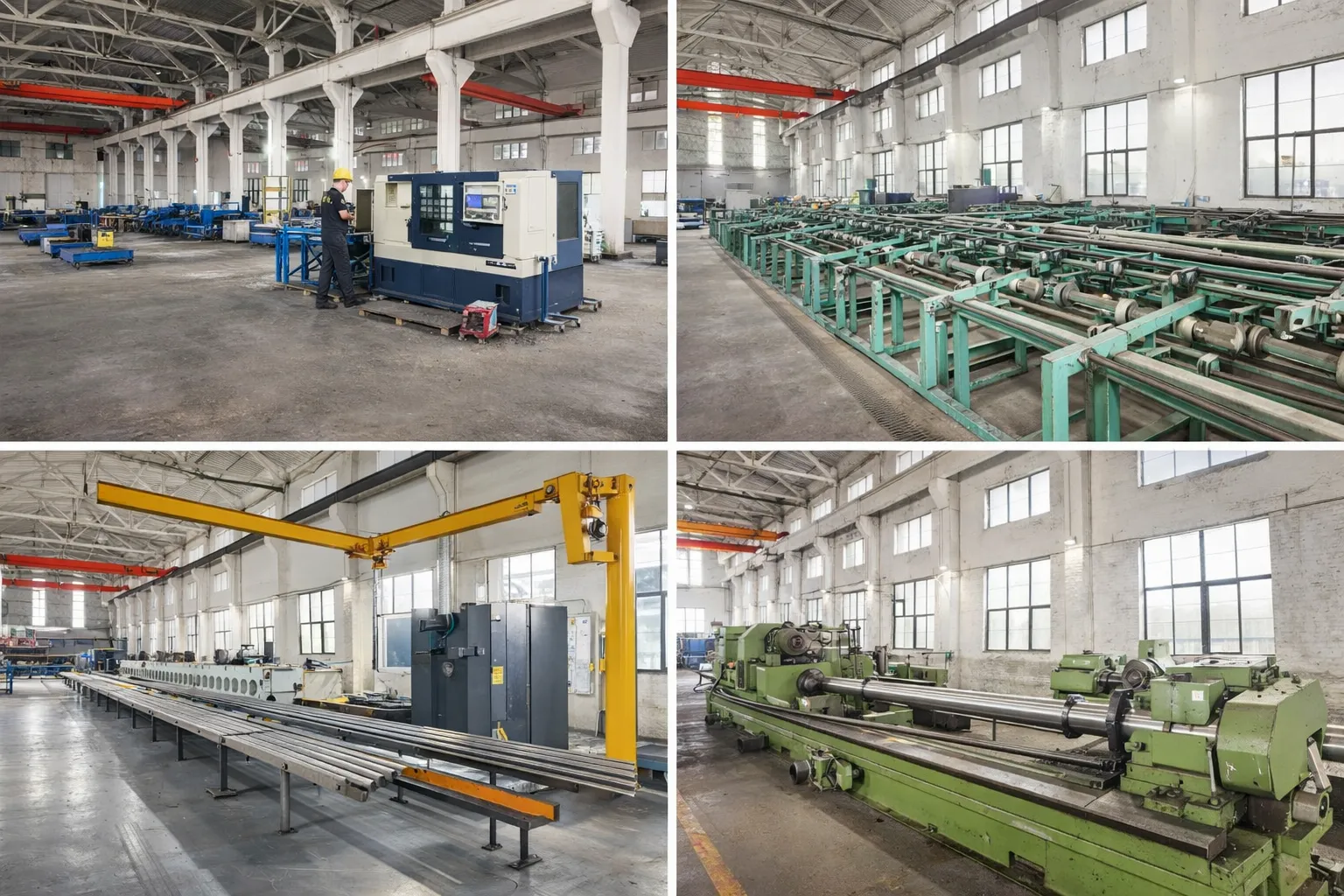
Safety and reliability in metallurgical operations are not outsourced commodities; they are forged directly on the manufacturing floor. We maintain absolute, uncompromising control over our product as a fully vertically integrated hydraulic cylinder manufacturer. Before any machining initiates, every single raw 42CrMo steel billet is subjected to rigorous ultrasonic non-destructive testing (NDT) to identify and discard any internal micro-voids or inclusions. Inside our climate-controlled facilities, massive heavy-duty CNC lathes and multi-axis milling centers cut the steel to exacting tolerances.
The internal bore of the thick-walled barrel undergoes an intensive deep-hole skiving and roller burnishing process, achieving an internal surface finish of Ra 0.2 microns. This extreme smoothness is absolutely critical for maximizing the lifespan of the high-temperature FKM seals and preventing internal fluid turbulence. The welding phase is executed by certified robotic submerged arc systems, guaranteeing deep, consistent weld penetration at the high-stress end caps and trunnion joints, physically eliminating the risk of weld fatigue.
Every single ladle tilting cylinder must pass a brutally exhaustive 100% factory pressure test before it is certified for heavy industry deployment. We connect the unit to our testing rig and deliberately drive the pressure to 150% of its rated maximum continuous load. We carefully monitor for zero internal fluid bypass across the piston, zero external weeping at the rod gland, and perfectly smooth, judder-free stroke extension. A permanent laser-engraved serial number ensures full digital lifecycle traceability, allowing your maintenance team to instantly retrieve exact material certificates and access compatible hydraulic cylinder components decades into the future.
Expansive Heavy Industry Applicability
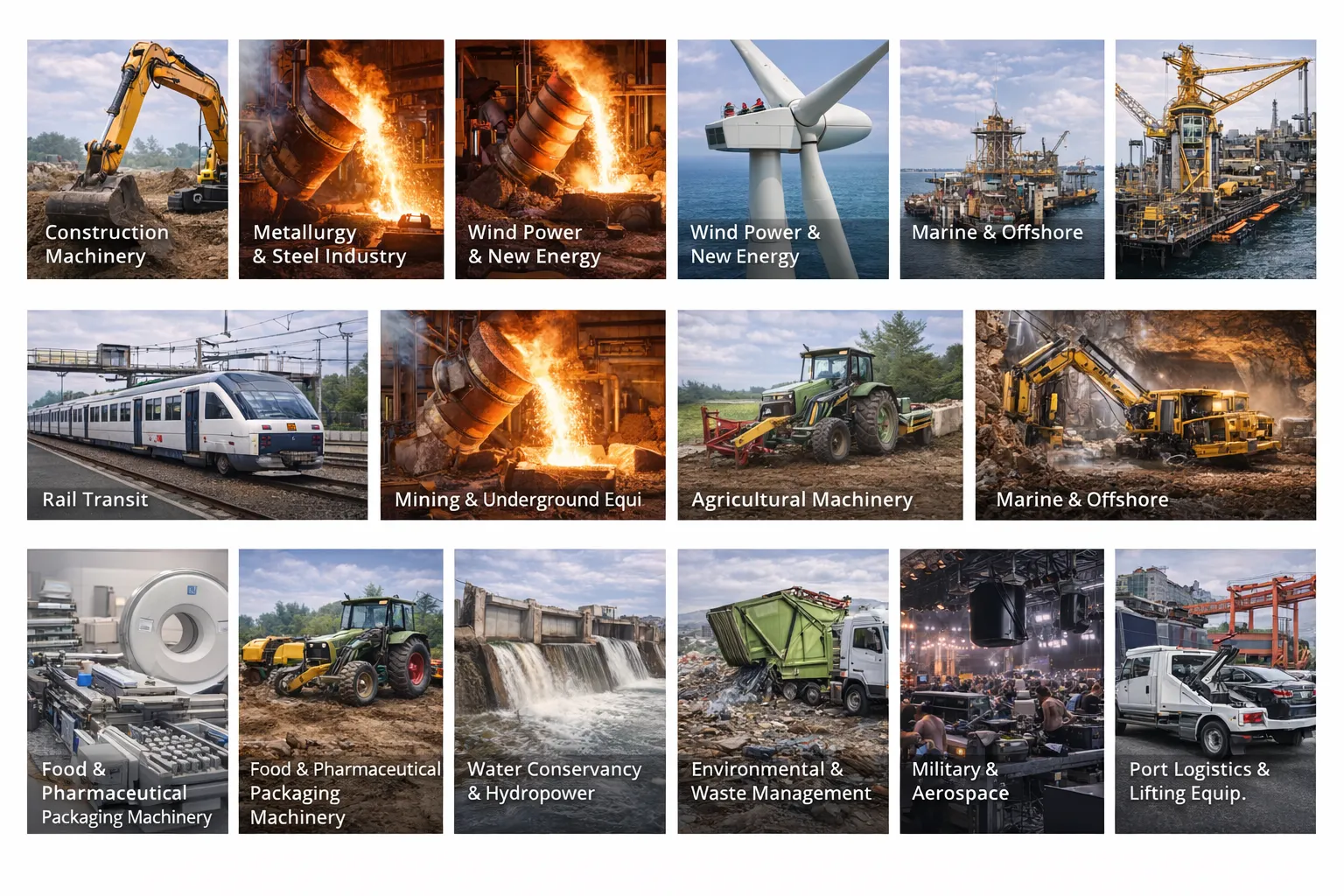
While engineered explicitly for the punishing, high-stakes environment of tilting molten steel ladles, the core architectural robustness of our fluid power solutions translates perfectly to other severe-duty global industries. Wherever immense power, heat resistance, and absolute structural safety are required, our products excel.
Metallurgical & Iron Manufacturing
Essential heavy-duty actuators for electric arc furnace roof lifts, heavy walking beam furnaces, massive scrap shears, and hot strip rolling mills. Explore our Metallurgical Solutions.
Mining Extraction & Processing
Monolithic, shock-resistant cylinders engineered specifically for primary jaw crusher adjustments, heavy haul truck suspensions, and massive excavator booms. Discover our Mining Machinery Cylinders.
Heavy Construction Machinery
High-cycle, extreme-load durability designed specifically for deep tunnel boring machine thrust systems, heavy lifting cranes, and concrete pump trucks. See our Construction Applications.
Plastics & Rubber Injection
Delivering ultra-fast cycle times while maintaining absolute, high-tonnage clamping force accuracy for large-scale precision plastic injection molding machines.
Automated Material Handling
Providing highly responsive lift cylinder actuation for heavy port straddle carriers, massive automated guided vehicles (AGVs), and 24/7 industrial logistics platforms.
Renewable Energy Systems
Supplying extreme external saltwater corrosion resistance for offshore wind turbine pitch control mechanisms and heavy hydro-dam gate lifting units.
Comparative Safety Analysis: Standard vs. Specialized
Why is utilizing an ordinary commercial cylinder to lift a hundred tons of liquid metal a catastrophic safety and financial risk? The critical structural differences are laid out precisely below. This detailed technical comparison demonstrates why settling for a standard fluid power component inevitably leads to dangerous weld tearing, thermal seal melting, and severely inflated long-term operational downtime.
| Crucial Safety Feature | Ordinary Commercial Cylinder | Our Specialized Tilting Cylinder |
|---|---|---|
| Structural Barrel Integrity | Standard carbon steel with basic fillet welds. Highly susceptible to weld fatigue and catastrophic splitting under shifting loads. | Thick-walled 42CrMo forged steel with fully automated submerged arc welding. Unyielding against eccentric shock loads. |
| Rod Heat Resistance | Standard hard chrome plating. Rapidly micro-cracks and peels off when exposed to 200°C+ radiant furnace heat. | Advanced Nickel Plating surface treatment. Actively reflects high-temperature radiation and completely prevents thermal delamination. |
| Internal Sealing Matrix | Basic Polyurethane or NBR seals. Melts, carbonizes, and allows dangerous internal fluid bypass during long casting heats. | Extreme-temp FKM (Viton) dynamic seals. Remain structurally stable in high heat, ensuring absolute lock-holding capability. |
| Pivot Point Binding | Rigid bronze bushings. When the casting car structure flexes slightly, the rigid pins bind, creating massive destructive side-loads. | Heavy-duty self-aligning spherical bearings. Automatically absorb structural deflections, protecting the rod from bending forces. |
| Maintenance Consequences | High risk of sudden failure causing molten steel spills. Requires frequent emergency rebuilds and line stops. | Maximum operational safety. Drastically reduces annual maintenance budgets and protects valuable plant infrastructure. |
Real-World Case Studies: Heavy Industry Success in Asia
The absolute true test of our heavy-duty engineering occurs exclusively on the live casting floor. These five verified case studies powerfully demonstrate our unique capability to diagnose catastrophic mechanical failures, design extremely robust solutions, and vastly elevate production safety for top-tier steel manufacturers globally.
Eradicating Weld Fatigue at a Mega-Mill in Pohang, South Korea
Client Profile: A globally top-ranked integrated steelworks operating multiple high-volume continuous casting lines 24/7.
The Mechanical Problem: The OEM actuators on their massive casting cars were suffering from severe weld fatigue. The constant shifting of 150-ton ladles was causing microscopic tears at the trunnion weld roots. After a terrifying near-miss where a cylinder began leaking heavily mid-pour, they urgently required a massive structural upgrade and contacted our senior engineering team via our B2B portal in early 2024.
Our Engineered Solution: We designed a significantly upgraded ladle tilting cylinder utilizing drastically thicker 42CrMo steel for the barrel and integrated a full-penetration automated submerged arc welded trunnion design, effectively tripling the burst pressure rating and fatigue limits.
The Operational Result: Since installation, the new heavy-duty units have executed over 8,000 pouring cycles without a single micro-fracture or drop of leaked fluid. Plant safety ratings dramatically improved.
“The physical sheer mass and structural rigidity of these specific welded cylinders are deeply impressive. We have completely eliminated the terror of trunnion weld tearing during live casting. Exceptional metallurgical engineering.” — Mr. Choi M.S., Senior Plant Safety Director (July 2025).
Conquering Radiant Heat in Kobe, Japan
Client Profile: A highly specialized alloy steel manufacturer pouring extremely high-temperature specialty metals for the global aerospace sector.
The Mechanical Problem: Due to the exceptionally high melting points of their alloys, the ambient radiant heat near the casting car frequently exceeded 220°C. Standard hard chrome plating on their OEM cylinders was peeling off in strips, and standard polyurethane seals were melting, causing severe fluid bypass and sudden ladle drops. They needed advanced high-temperature fluid control systems.
Our Engineered Solution: We replaced their entire setup with custom double acting hydraulic cylinder units featuring our specialized nickel plating surface treatment to reflect the heat, completely backed by aerospace-grade FKM (Viton) internal sealing profiles.
The Operational Result: The thermal degradation and chrome peeling were stopped instantly. The plant achieved perfectly smooth, judder-free pouring control even during their longest, hottest casting heats.
“Finding replacement equipment that can genuinely survive our radiant operational heat load was impossible until we engaged this team. The durability of their nickel plating and heat-resistant seals is outstanding.” — Y. Tanaka, Lead Metallurgical Process Engineer (October 2025).
Custom Legacy Machinery Rescue in Kaohsiung, Taiwan
Client Profile: A major coastal steel production facility executing a desperately needed structural modernization of their older pouring stations.
The Mechanical Problem: Their aging casting cars utilized a highly proprietary, massive clevis mounting footprint. European OEMs demanded exorbitant custom engineering fees and an 8-month lead time for replacements. Facing a hard shutdown deadline, they immediately contacted our international sales team via email.
Our Engineered Solution: Leveraging our comprehensive heavy CNC capabilities, we perfectly reverse-engineered the massive mounting interface directly from faded blueprint schematics. We delivered modernized, 42CrMo forged cylinders that pinned flawlessly into the untouched structural framework.
The Operational Result: We saved the client immense capital by avoiding heavy machine frame modifications and delivered the fully pressure-tested massive units in a remarkably rapid 55 days, completely saving their shutdown schedule.
“Their ability as a true, vertically integrated hydraulic cylinder manufacturer saved our modernization project. The clevis dimensions were flawless, and the mechanical lifting performance is substantially better and smoother than the originals.” — Lin C.W., Senior Project Manager (January 2026).
Eradicating Rod Bending in Incheon, South Korea
Client Profile: A high-volume steel billet producer running very heavy, oversized ladles to maximize batch throughput.
The Mechanical Problem: The intense weight of their oversized ladles was causing the casting car’s steel frame to flex slightly during the pour. Because their existing cylinders used rigid pin connections, this frame flex induced massive side-loads that were literally bending the extended steel rods of the hydraulic rams, causing them to jam entirely mid-pour.
Our Engineered Solution: We engineered custom replacement units integrating massive, heavy-duty self-aligning spherical bearings at both mounting points. We also significantly increased the base rod diameter using ultra-stiff forged 42CrMo steel.
The Operational Result: The new spherical bearings actively absorbed all the destructive frame flex. Rod bending and jamming were completely eradicated. Plant production capacity was safely increased by utilizing the oversized ladles without mechanical fear.
“The introduction of the self-aligning bearings was a masterstroke of practical engineering. We haven’t had a single stalled pour or bent rod in over a year. A brilliant industrial upgrade.” — Park J.S., Chief Operations Officer (February 2026).
Drastically Slashing Maintenance Budgets in Hanoi, Vietnam
Client Profile: A rapidly expanding heavy construction steel provider focused heavily on aggressive cost-efficiency and maximizing plant uptime.
The Mechanical Problem: Their maintenance teams were completely overwhelmed with constant, dangerous fixing hydraulic cylinders tasks. The OEM European replacement seals and rods were astronomically priced and rarely lasted more than six months under the intense heat. They found us through a targeted global supplier search.
Our Engineered Solution: We supplied completely new, heavy-duty replacement units featuring the advanced nickel plating and FKM seal matrix. By manufacturing everything in-house, we provided units that were vastly superior structurally at a highly competitive factory-direct price point.
The Operational Result: The requirement for frequent, dangerous mid-heat cylinder rebuilding was totally eliminated. The overall long-term hydraulic cylinder price and maintenance expenditure dropped by an astonishing 65%.
“We bypassed the exorbitant European OEMs entirely. The quality of this welded 42CrMo cylinder matches, and frankly heavily exceeds, what we used to buy. Our maintenance crews are finally out of the danger zone.” — Nguyen V.T., Plant Maintenance Supervisor (March 2026).
Frequently Asked Questions (B2B Technical Insights)
Our senior engineering team has meticulously compiled detailed technical responses to the most critical inquiries raised by chief safety engineers and procurement specialists evaluating high-performance metallurgical fluid power systems.
Why is a double acting hydraulic cylinder mandatory for ladle tilting?
A ladle holds massive, shifting liquid weight. If you use a single-acting cylinder and rely on gravity to lower the ladle, any binding in the trunnion pins will cause the cylinder to drop away from the ladle. When the bind suddenly releases, the ladle will crash down, potentially causing a catastrophic molten steel spill. A double-acting setup physically locks the fluid on both sides of the hydraulic cylinder piston, ensuring you have powered, absolute control over both the pour extension and the return retraction at all times.
How does nickel plating outperform standard hard chrome in high heat?
Standard hard chrome is incredibly hard, but it is brittle and absorbs heat. In environments adjacent to 1,600°C molten steel, the radiant heat causes the steel rod underneath to expand slightly faster than the rigid chrome plating, causing the chrome to micro-crack and peel off like paint. Our advanced nickel plating is much more thermally flexible and acts as an excellent reflector of radiant energy. It expands uniformly with the 42CrMo rod without cracking, heavily protecting the internal seals from severe heat degradation.
What causes weld fatigue on standard casting car cylinders?
Weld fatigue is caused by immense eccentric side-loads. As a heavy ladle tilts, the casting car frame often flexes. If the trunnion mounts on the cylinder barrel are only surface-welded (fillet welds), these flexing forces violently yank on the mounts, eventually causing microscopic tears that lead to catastrophic barrel bursting. We prevent this by utilizing an exceptionally thick-walled barrel and executing automated, deep-penetration submerged arc welding, effectively fusing the mounts into the structure as a single monolithic block.
Is local hydraulic cylinder repair recommended for heavily heat-damaged units?
In applications involving molten steel, safety is paramount. If a standard cylinder has been subjected to extreme heat that melted the seals and scored the barrel, the structural integrity of the steel itself may be thermally compromised. Performing a localized hydraulic cylinder repair is often a very dangerous false economy. Because we control all manufacturing in-house, we can typically engineer, build, and deliver a completely brand-new, vastly upgraded heavy-duty unit for a highly competitive price.
Can your engineering team manufacture direct drop-in replacements for European OEM machinery?
Absolutely. This is our core operational specialty. We routinely manufacture massive, dimensionally identical replacements for casting car machinery originally equipped by SMS Group, Rexroth, or Danieli. We flawlessly replicate the massive clevis pin holes, trunnion locations, porting, and stroke lengths, allowing your maintenance teams to instantly drop in a vastly superior, heavy-duty ladle tilting cylinder without dangerously altering your machine’s structural steel frame.
What critical variables determine your final hydraulic cylinder price quotation?
For high-tonnage metallurgical units, pricing is primarily driven by your engineering requirements: the massive raw weight of the 42CrMo forged steel billet required, the specific integration of high-temperature FKM seal profiles, the complexity of the nickel plating bath, and the exact bore/stroke dimensions. However, by strictly maintaining total control over every phase of CNC milling and automated welding internally, we completely eliminate expensive OEM third-party markups, passing exceptional factory-direct value to our B2B partners across Asia.
Do you supply specialized replacement hydraulic components for internal plant preventative maintenance?
Yes. To ensure our global clients maintain maximum uptime and strict safety protocols, we rapidly supply comprehensive preventative maintenance kits. This includes exact-match, extreme-temperature FKM (Viton) seal kits, heavy-duty bronze guide bands, and precision-machined internal hydraulic cylinder components tailored exclusively for the massive piston and rod assemblies we have manufactured for your facility.
Ready to Permanently Secure Your Molten Metal Handling?
Do not allow vulnerable, mass-produced commercial components to jeopardize the safety of your casting floor or dictate your maintenance schedules. Partner directly with an elite engineering manufacturer to definitively solve your most complex high-temperature continuous casting challenges. Contact our senior technical team today to discuss your OEM blueprints, rigorous heavy-duty requirements, or to request a comprehensive, highly competitive technical quotation.
Editor: Cxm