Leveling Cylinder for Drilling Rigs
Engineered with a heavy-duty extended guide bushing to conquer severe eccentric loads, ensuring absolute structural verticality and precision fine adjustment in the most demanding foundation engineering environments.
Product Overview & Industrial Value
In the highly demanding sectors of deep foundation construction, piling, and geotechnical exploration across South Korea and East Asia, the physical stability and exact spatial alignment of heavy machinery dictate the success of the entire operation. Before a rotary head ever engages the earth, the drilling mast must be perfectly plumb. If a multi-ton drill tower is even marginally misaligned, the immense torque generated during excavation transfers unevenly down the drill string. This angular deviation inevitably leads to accelerated wear on expensive drill bits, compromised borehole geometry, massive frictional heat, and an unacceptably high risk of catastrophic drill pipe fracture. The primary structural component responsible for achieving and relentlessly holding this critical vertical alignment is the leveling cylinder. Positioned at the structural base of the heavy rig derrick, these specialized actuators bear the monumental weight of the machine while constantly compensating for unstable, shifting ground conditions.
Operating construction equipment in mountainous, uneven, and rocky terrains introduces a particularly brutal mechanical challenge: eccentric loading, commonly known in engineering as side-loading. When a massive drilling rig is positioned on a sloped site, gravity forces the heavy mast to push laterally against the actuator’s extended rod. Standard fluid power components are inherently vulnerable to this severe lateral stress. The side-load creates an extreme leverage point at the cylinder head, forcing the rod to scrape violently against the internal metal gland. This immense friction results in rapid rod eccentric wear, which instantly shreds the primary fluid seals and causes catastrophic hydraulic blowouts. As an experienced hydraulic cylinder manufacturer, our engineering team recognized that ordinary linear actuators were failing prematurely in these harsh environments, driving up maintenance downtime for fleet operators.
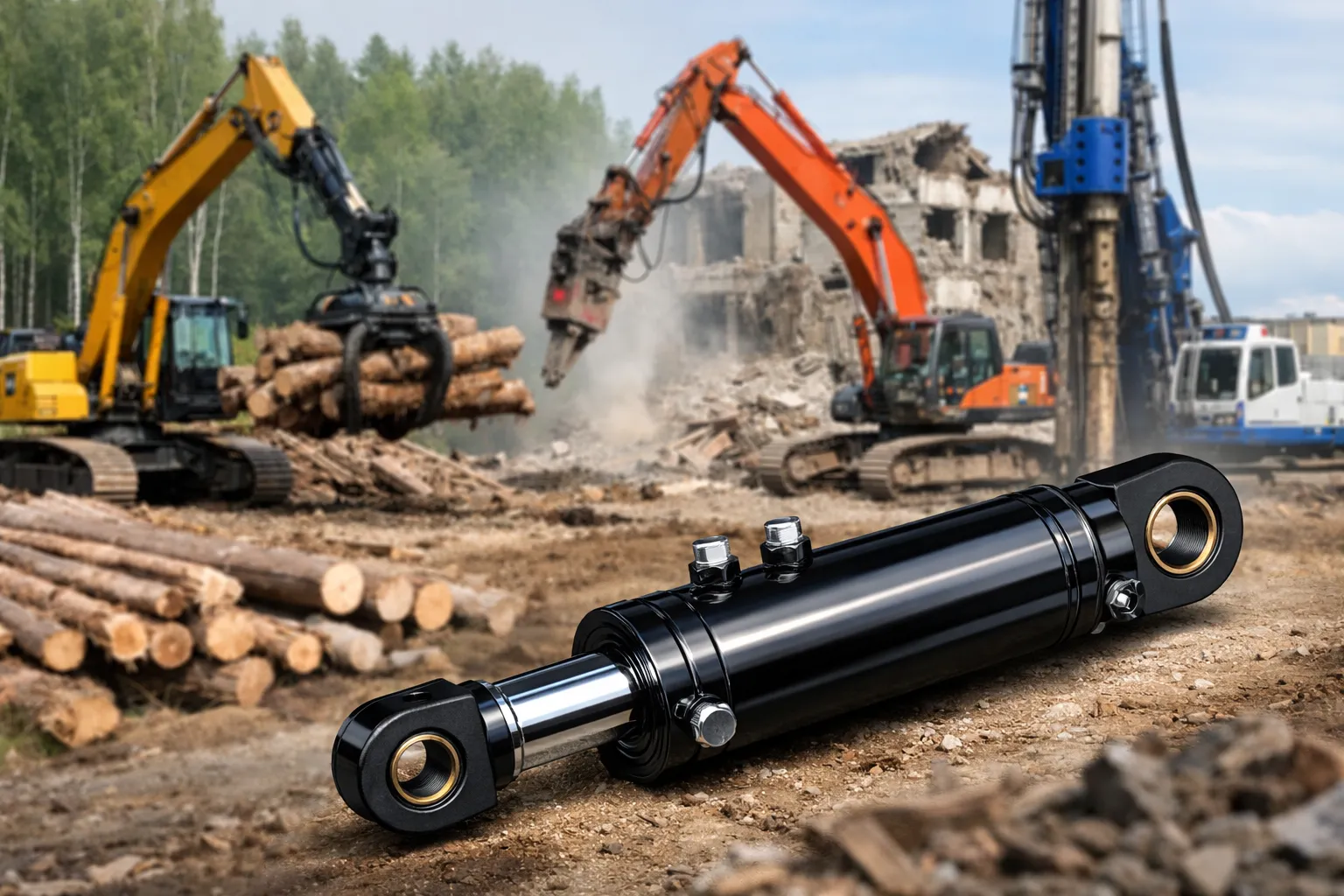
To definitively solve this industry-wide vulnerability, we fundamentally re-architected the internal geometric structure of our stabilization systems. Our flagship leveling hydraulic cylinder integrates an exceptionally elongated, high-strength extended guide bushing. This critical design enhancement radically increases the internal bearing surface area, allowing the hydraulic cylinder to safely absorb and widely distribute massive lateral forces. The rod remains perfectly centered, totally neutralizing the threat of eccentric wear. By upgrading your drilling fleet with our specialized technology, you eliminate unpredictable downtime and secure an outstanding hydraulic cylinder price-to-performance ratio. You gain the operational peace of mind that your machinery will perform precise, butter-smooth fine adjustments and hold unyielding verticality, no matter how severe the job site conditions become.
Comprehensive Technical Parameters
Rigorous engineering and intelligent procurement require absolute transparency in technical specifications. The following table delineates the foundational architectural parameters and material properties of our specialized mast alignment solutions, optimized for the punishing realities of modern foundation drilling.
| Engineering Category | Specification Details & Customization Range |
|---|---|
| Target Industry | Construction Machinery / Deep Foundation Engineering |
| Equipment Category | Rotary Drilling Rig / Piling Rig / Core Drill |
| Subsystem / Action | Drill Tower Leveling / Mast Plumb Alignment |
| Actuator Designation | Leveling Cylinder |
| Action Mechanism | Double acting hydraulic cylinder (Powered push and pull) |
| Structure Type | Heavy-Duty Piston Type |
| Manufacturing Build | Deep-Penetration Welded Assembly (Vibration resistant) |
| Core Material System | Forged Alloy Steel (e.g., 42CrMo for high yield strength) |
| Rod Surface Treatment | Multi-stage Hard Chrome Plated (Extreme abrasion resistance) |
| Environmental Workload | Severe Eccentric Load / High Side-Load Angles |
| Primary Working Characteristic | Micrometric Fine Adjustment (Zero stick-slip precision) |
| Typical Failure Mode Prevented | Rod Eccentric Wear resulting in seal blowout and scoring |
| Recommended Configuration | Extended Guide Bushing (Maximizes internal bearing surface) |
| Mounting Options | Heavy-duty Trunnion, Spherical Plain Bearings, Flange |
In-Depth Working Principle: Mastering Micrometric Fine Adjustment
To truly appreciate the heavy-duty durability of this equipment, one must examine the internal fluid dynamics and the physics of heavy load manipulation. The system operates strictly as a double acting hydraulic cylinder. Unlike simpler single-acting mechanisms that rely on gravity or weak internal springs for retraction, our double-acting configuration utilizes highly pressurized hydraulic oil to govern both the outward extension and the inward retraction strokes. When the rig operator uses the cabin joysticks to align the derrick, proportional control valves direct pressurized fluid from the main pump into either the cap end or the rod end of the cylinder barrel.
As the hydraulic fluid enters the internal chamber, it acts directly upon the full face of the hydraulic cylinder piston. The immense hydrostatic pressure generates the massive linear thrust required to physically lift or pull the leaning drill tower against the force of gravity. However, the most challenging phase of this operation is the fine adjustment process. When the mast is close to perfect verticality, the operator must make minute, fractional corrections. Standard rubber seals create high static friction against the barrel wall, causing a dangerous phenomenon known as “stick-slip.” The operator attempts a one-millimeter adjustment, the piston binds, fluid pressure builds, and suddenly the cylinder jerks forward five millimeters, violently shaking the entire rig structure and throwing the inclinometer off.
Our engineering team completely eradicated this operational danger by outfitting the piston and gland with a proprietary low-friction PTFE (Polytetrafluoroethylene) polymer sealing matrix. This advanced material drastically reduces breakaway friction, allowing the piston to glide with buttery smoothness regardless of the operating speed or massive static load. This ensures the operator can execute flawless, micrometric fine adjustments. Once perfect plumb alignment is achieved, pilot-operated check valves—bolted directly to the cylinder’s hydraulic ports—snap shut. These valves mechanically trap the fluid inside the barrel, turning the cylinder into a rigid, unyielding column of steel and oil that will not sag, even if a primary hose bursts elsewhere on the machine.
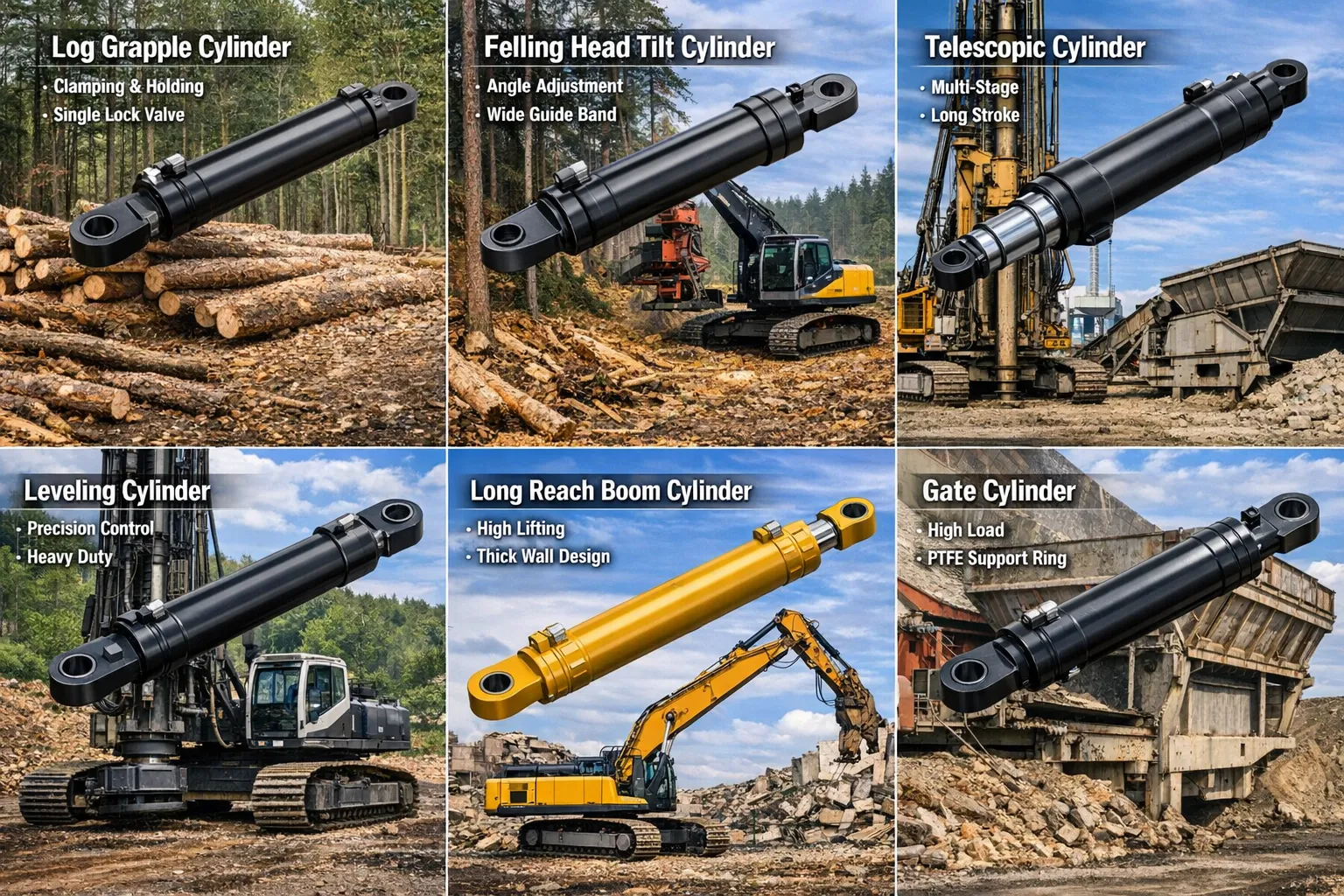
Seamless Machinery Replacement and Fleet Compatibility
In the high-stakes world of commercial foundation construction, an idle drilling rig translates directly into hemorrhaging capital and severe project delays. When an original factory leveling actuator suffers a seal blowout or a severely bent rod, waiting weeks for the overseas shipment of heavily marked-up OEM parts is rarely a viable option. We solve this logistical nightmare by engineering our premium leveling solutions to serve as flawless, drop-in aftermarket replacements. Procuring dimensionally accurate hydraulic parts from a specialized, independent manufacturer drastically reduces your maintenance turnaround time and keeps your fleet operational.
Our extensive engineering database contains the exact pin-to-pin retracted lengths, stroke capacities, trunnion mounting widths, spherical bearing bore sizes, and metric fluid port threads required for modern heavy machinery. We regularly manufacture and supply heavy-duty aftermarket components that perfectly integrate with the world’s leading drilling rig platforms. Choosing our robust products makes the process of fixing hydraulic cylinders a straightforward, bolt-on procedure for your maintenance mechanics, requiring absolutely zero cutting, welding, or structural alteration to the expensive rig frame. Instead of struggling with inferior rebuilds, installing our complete assemblies guarantees long-term reliability.
Technical Disclaimer: The citation of specific heavy machinery brands, corporate names, and equipment models (such as Bauer, Soilmec, Casagrande, Liebherr, and Epiroc) is provided strictly for the purpose of illustrating dimensional compatibility, guiding technical fitment, and assisting our B2B clients in accurate component selection. We operate strictly as an independent aftermarket manufacturer and claim no affiliation, sponsorship, endorsement, or trademark rights with these respective original equipment manufacturers.
Core Technical Engineering Advantages
What elevates a basic fluid power actuator into a specialized piece of foundation engineering equipment? It requires targeted metallurgical engineering and tribology to neutralize the exact physical forces that destroy ordinary cylinders on a job site. Here are the five definitive technical advantages embedded into every unit we produce:
1. Extended Guide Bushing Technology (Anti-Eccentric Wear)
This is our most critical architectural upgrade. When a rig is leveled on a rocky slope, the mast’s weight pushes laterally against the rod. A standard, short guide sleeve creates a sharp fulcrum point, causing immense localized pressure that grinds the rod against the metal gland. By utilizing a heavily extended guide bushing, we exponentially stretch this internal bearing surface. This widely disperses the lateral force, keeping the rod perfectly centered, totally preventing rod eccentric wear, and saving the primary pressure seals from immediate destruction.
2. Ultra-Low Friction PTFE Sealing Matrix
As detailed previously, flawless fine adjustment requires the complete elimination of stick-slip. Standard NBR rubber seals grip the barrel too tightly at low speeds. Our custom seal matrix utilizes PTFE-blended step seals backed by high-grade polyurethane energizers. This provides a remarkably low coefficient of friction, ensuring the rod extends and retracts with absolute fluidity, allowing the rig operator to execute micrometric mast adjustments with complete confidence and structural safety.
3. High-Rigidity Alloy Steel Forging
The structural integrity of the cylinder dictates the stability of the entire drill tower. Standard carbon steel lacks the necessary yield strength and will physically bend or permanently deform when subjected to extreme lateral bending moments. We construct our heavy-duty barrels and rods from premium high-yield alloy steel. After rigorous thermal quenching and tempering, this forged steel achieves immense rigidity, resisting deflection and maintaining perfect geometric alignment under the heaviest side-loads.
4. Multi-Stage Hard Chrome Plating
Drilling sites are highly abrasive environments characterized by flying rock shards, silica dust, and highly acidic groundwater. The exposed alloy steel rod is protected by an advanced, multi-stage hard chrome plating process. This creates an exceptionally thick, micro-cracked surface layer with an incredibly high Rockwell hardness rating. It provides an impenetrable barrier against physical rock scoring and environmental rust, ensuring the rod remains flawlessly smooth to protect the wiper seals as they cycle back and forth.
5. Deep-Penetration Welded Structural Integrity
Rotary drilling produces continuous, violent, low-frequency vibrations that reverberate through the massive rig chassis. Traditional tie-rod cylinders are highly susceptible to this mechanical fatigue; the long bolts stretch, and the end caps inevitably begin to leak. We utilize a heavy-duty, monolithic welded construction. The base mounts, end caps, and heavy trunnions are permanently fused to the barrel using automated submerged arc welding. This guarantees deep weld penetration, resulting in a fatigue-resistant structure capable of absorbing thousands of hours of violent drilling harmonics without cracking.
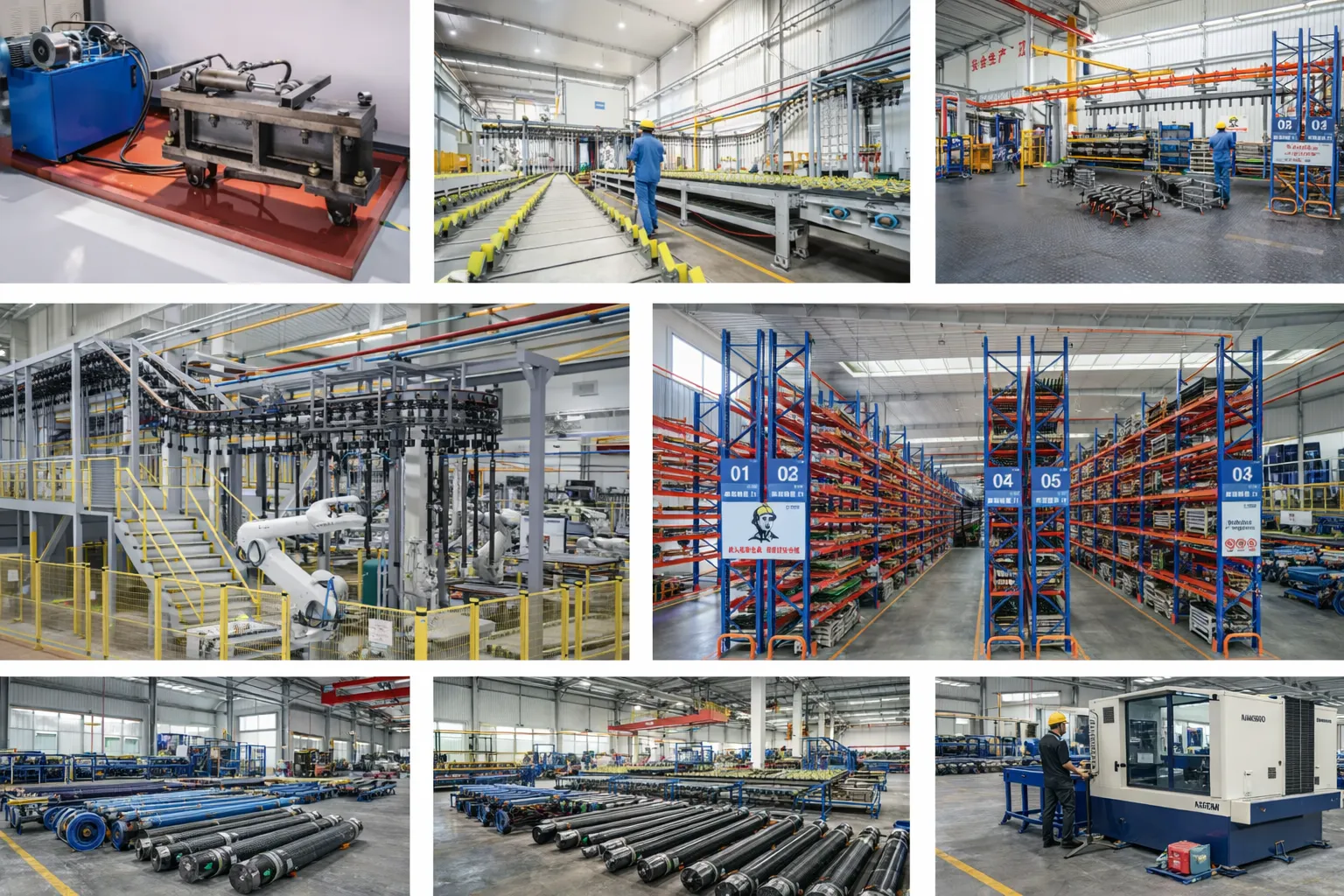
Manufacturing Craftsmanship & Uncompromising Quality Control
Consistently producing world-class hydraulic rams demands absolute authority over the entire production ecosystem. We operate as a fully integrated, autonomous manufacturing facility. We do not rely on third-party sub-assemblies of questionable origin. From the moment the raw alloy steel billets arrive at our loading docks, every phase of production—including CNC precision turning, deep-hole boring, robotic welding, and final assembly—is executed entirely in-house under strict quality management protocols. Our internal barrel bores undergo specialized skiving and roller burnishing to create a mirror-like finish, drastically reducing friction and maximizing seal lifespan.
However, precision machining is meaningless without rigorous empirical validation. Quality assurance is integrated into our daily manufacturing ethos. Every single leveling cylinder is subjected to a mandatory 100% factory hydrostatic pressure test before it is approved for global dispatch. We connect the assembled units to advanced test benches and pressurize them to 1.5 times their maximum rated working pressure. By monitoring digital transducers for any microscopic pressure decay over extended hold periods, we definitively verify the absolute integrity of the structural welds, the internal piston seals, and the load-holding check valves.
To ensure total accountability and lifecycle support, every approved unit is permanently laser-engraved with a unique alphanumeric serial number. This provides lifetime traceability of the specific metallurgical batch, the machining tolerances, the assembly technician, and the final pressure test metrics. This rigorous tracking guarantees that when you contact us years later for routine maintenance, we can instantly retrieve your exact build data and supply precise components.
Expansive Industry Applications
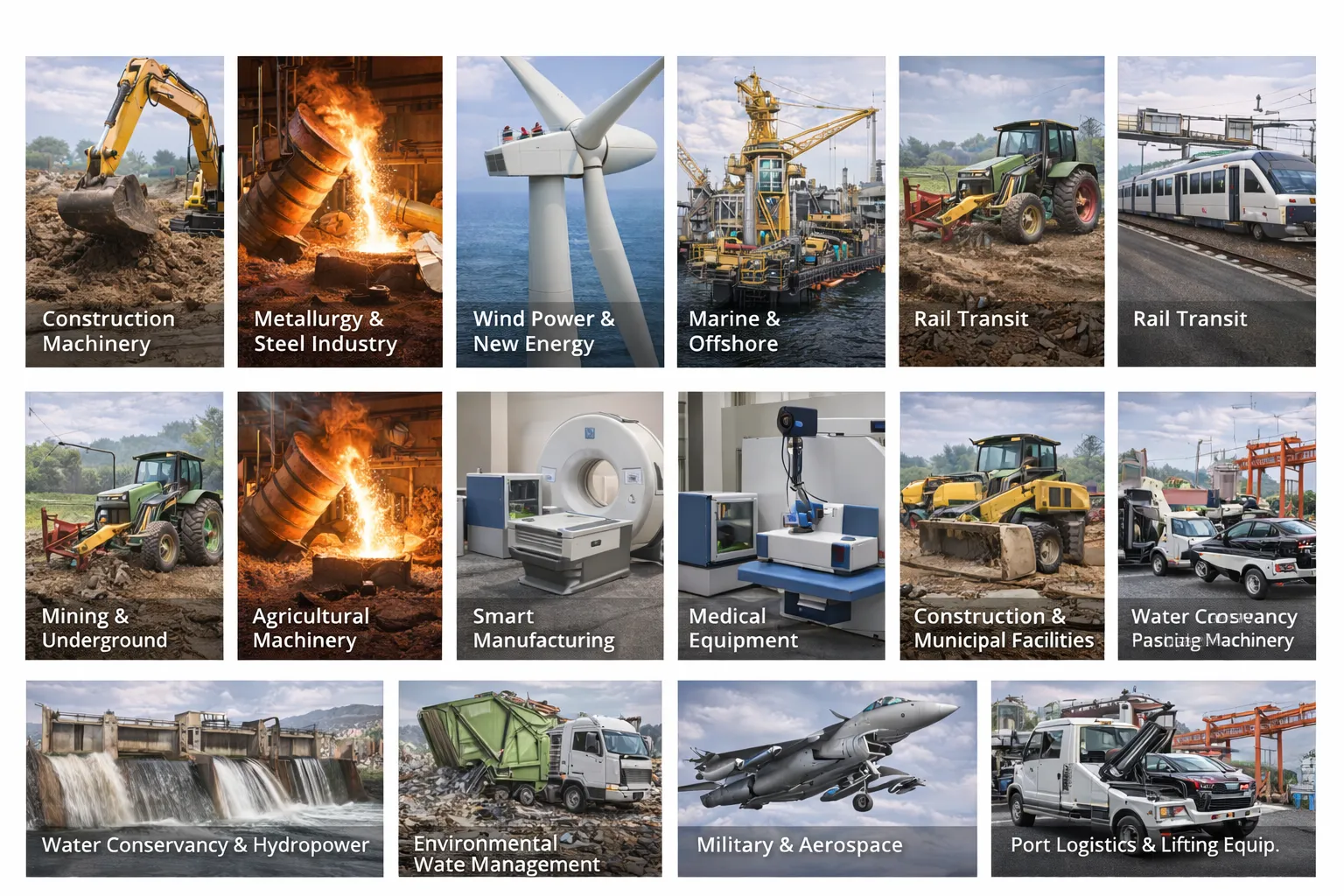
While this specific architecture is heavily optimized to neutralize the extreme eccentric loads associated with drill mast leveling, the underlying engineering principles—immense rigidity, micro-precision fine adjustment, and zero-leakage holding power—make these heavy-duty actuators highly sought after across a multitude of heavy industrial sectors. We invite procurement officers and fleet managers to explore our broader capabilities within the construction machinery industry and beyond.
- Foundation & Piling Construction: Acting as the primary stabilization and outrigger force on continuous flight auger (CFA) rigs, pile drivers, and heavy crawler cranes operating on unstable, sinking urban development sites.
- Mobile Cranes & Lifting Equipment: Providing the critical wide-stance stabilization required before heavy boom deployment, often utilizing a robust lift cylinder configuration for vertical outrigger deployment.
- Metallurgy & Heavy Manufacturing: Utilized in massive steel foundries for the precise tilting and leveling of heavy molten metal ladles and continuous casting platforms, where thermal stability and high load capacity are paramount.
- Material Handling & Port Logistics: Integrated into heavy-duty reach stackers, ship-to-shore gantry cranes, and automated straddle carriers requiring robust, vibration-resistant lifting mechanisms.
- Specialized Custom Scenarios: Our engineering team routinely designs bespoke fluid power solutions for specialized heavy-haul transport trailers that must self-level dynamically while moving multi-ton transformers over highly uneven, mountainous terrain.
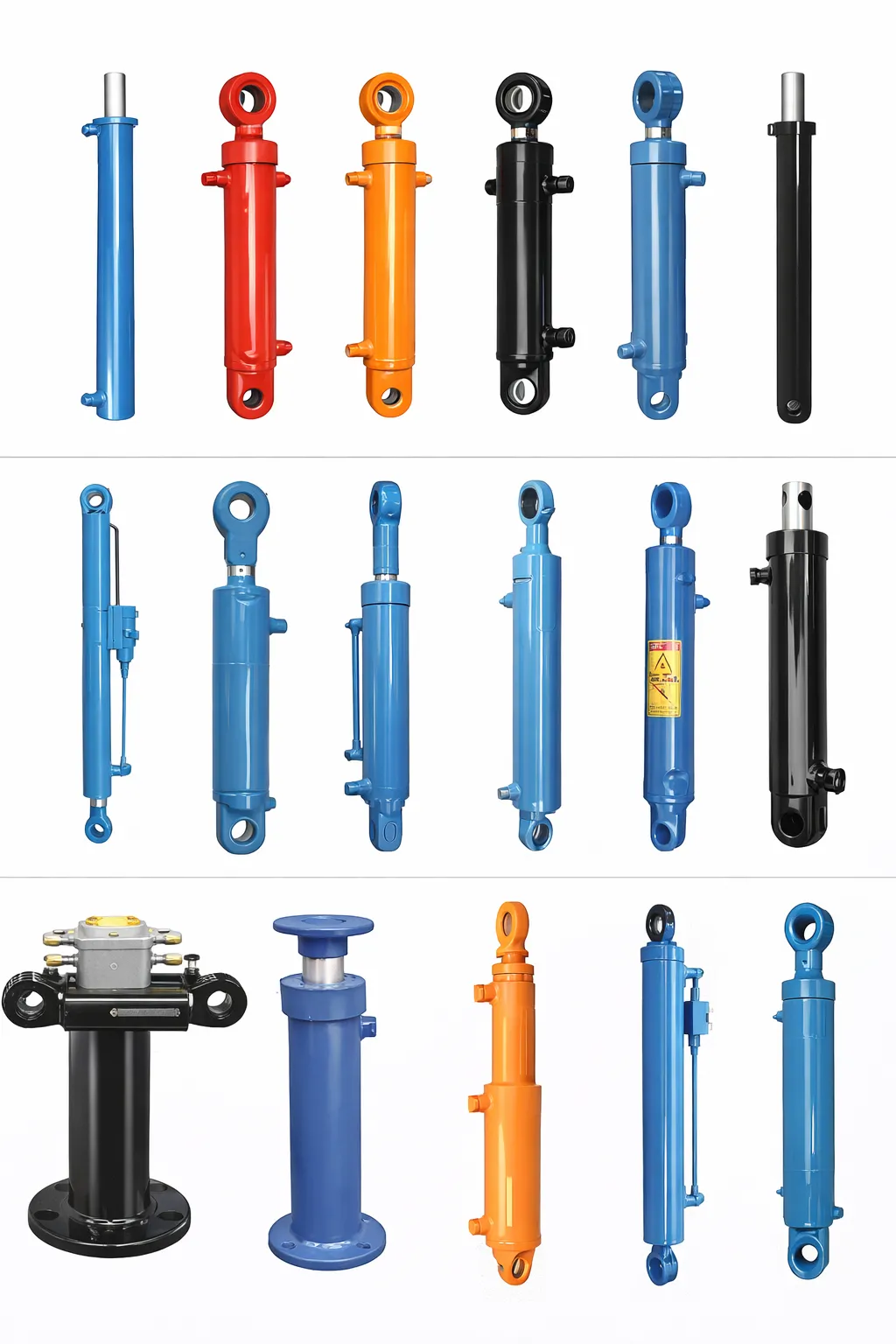
Comparative Analysis: Standard vs. Our High-Performance Leveling
Making an intelligent, long-term B2B procurement decision requires looking far beyond the initial purchase order. The comparative analysis table below highlights the stark mechanical contrasts between ordinary aftermarket actuators and our highly optimized leveling units, demonstrating exactly why upgrading yields a vastly superior return on investment and slashes total equipment downtime.
| Engineering Feature | Standard Market Cylinder | Our High-Performance Leveling Cylinder |
|---|---|---|
| Eccentric Load Defense | Standard short gland (Highly susceptible to rapid rod eccentric wear) | Extended Guide Bushing (Absorbs and widely disperses lateral forces) |
| Fine Adjustment Quality | Basic NBR seals (High friction causes erratic, jerky stick-slip movement) | PTFE-Blended Matrix (Buttery smooth, microscopic precision leveling) |
| Base Material Strength | Standard Carbon Steel (Prone to flexing and permanent bending under load) | Forged Alloy Steel (Exceptional rigidity and hoop stress resistance) |
| Vibration Tolerance | Tie-rod assembly (Bolts stretch and fatigue under continuous rig vibration) | Heavy-Duty Welded Structure (Monolithic build totally resists fatigue) |
| Operational Lifecycle | High failure rate requiring frequent mid-project teardowns and resealing | Massively extended MTBF, ensuring maximum rig availability and lower TCO |
Proven Global Reliability: 5 Real-World Case Studies
Advanced engineering theories are only valuable if they perform flawlessly in the mud, rock, and brutal weather of active job sites. Our significant presence in the East Asian B2B market validates the uncompromising durability of our systems. Here are five fully documented success stories where our fluid power solutions resolved critical operational bottlenecks for international contractors.
1. Eliminating Rod Eccentric Wear on Coastal Granite (South Korea)
Client Profile & Location: A tier-one civil foundation contractor developing port facility infrastructure in Busan, South Korea.
The Challenge: Their fleet of heavy rotary rigs was operating on highly uneven coastal granite. The severe slopes created massive side-loads during setup, causing the standard leveling actuators to suffer deep rod scoring and seal blowouts within mere weeks of operation. The resulting fluid leaks halted construction continuously.
Contact Route: The fleet maintenance director discovered our technical capabilities through an organic online search for heavy-duty anti-scoring solutions.
The Solution & Result: We retrofitted the rigs with our custom models featuring the heavy-duty extended guide bushing. The expanded internal bearing area perfectly neutralized the lateral rock deflections. Leakage incidents dropped to zero, massively increasing rig uptime.
“The structural integrity of these upgrades is phenomenal. We used to halt drilling constantly to repack seals. Since installing the extended guide design in October 2024, we haven’t had a single failure.” — Mr. Park Min-ho, Fleet Director, August 2025.
2. Achieving Absolute Micro-Precision in Tight Urban Zones (Japan)
Client Profile & Location: An urban infrastructure company specializing in deep bored piles in highly congested areas of Tokyo, Japan.
The Challenge: Drilling between skyscrapers requires millimeter-perfect mast verticality to avoid striking adjacent subterranean utilities. Their standard cylinders exhibited severe “stick-slip” jitter during fine adjustment, making precision impossible and endangering surrounding structural foundations.
Contact Route: Reached out to our international sales team after viewing our metallurgical specifications at a regional heavy machinery expo.
The Solution & Result: We provided custom units fitted with our proprietary PTFE low-friction seals. The heavy drill mast could now be adjusted smoothly by fractions of a degree, completely eliminating all erratic, jerky movements.
“The fluidity of the actuation is exactly what we needed. Our operators can dial in the mast angle perfectly without any jarring movements, ensuring total safety around Tokyo’s complex utility lines.” — Kenji Sato, Lead Engineer, March 2025.
3. Defeating Tropical Moisture and Mud Corrosion (Vietnam)
Client Profile & Location: A bridge construction consortium building elevated highway pilings in Hanoi, Vietnam.
The Challenge: The intense tropical monsoon humidity, combined with abrasive, highly acidic river mud, was rapidly pitting the thin commercial chrome on their factory cylinders. The resulting deep rust shredded the polyurethane wiper seals within weeks, destroying the hydraulic cylinder components.
Contact Route: Sourced our factory directly via a B2B procurement portal looking for specialized surface treatments capable of surviving the jungle environment.
The Solution & Result: We supplied replacement units featuring heavily upgraded, multi-stage hard-chrome plating and aggressive dual-lip dirt wipers. The rods remained completely pristine despite being constantly submerged in abrasive slurry.
“We were losing days of work dealing with rusted rods. Since installing your robust actuators last year, we haven’t had a single weather-related hydraulic failure. Exceptional durability.” — Nguyen Tran, Site Manager, November 2025.
4. High-Frequency Vibration Resistance (Taiwan)
Client Profile & Location: A specialized contractor executing slope stabilization and rock drilling in the mountainous regions near Taichung, Taiwan.
The Challenge: Drilling deep into solid mountain rock generated violent, continuous, high-frequency vibrations that traveled straight down the rig frame. Their standard tie-rod leveling cylinders were vibrating loose, causing structural cracking and severe hydraulic fluid leaks.
Contact Route: Reached out to our technical team through an industry referral specifically asking for heavy-duty welded alternatives to replace their failing tie-rod designs.
The Solution & Result: Deployed our monolithic, heavily welded cylinder architecture. The deep-penetration automated welds easily absorbed the violent rock-drilling vibrations without a single structural compromise or loosened fitting.
“The structural integrity of these welded units is phenomenal. We put them through hell in the mountains, and they haven’t leaked a single drop of fluid or shown any metal fatigue.” — Lin W., Operations Manager, February 2026.
5. Mixed Machinery Fleet Standardization (Malaysia)
Client Profile & Location: A large geotechnical engineering firm managing a massive exploration fleet operating out of Kuala Lumpur, Malaysia.
The Challenge: Managing spare parts for a heavily mixed fleet of varying OEM rig brands was chaotic and highly expensive. They needed a reliable, single-source supplier to standardize their aftermarket leveling components to simplify maintenance logistics.
Contact Route: Submitted a formal Request for Quote via our enterprise procurement portal.
The Solution & Result: We engineered dimensionally compatible mounting brackets, trunnions, and stroke lengths that allowed our standardized hydraulic rams to fit perfectly across their entire mixed fleet, drastically simplifying their inventory and reducing mechanic confusion.
“The ability to use one standardized, high-quality component across different rig brands has cut our inventory holding costs by 35%. The drop-in replacement was flawless, and the performance is vastly superior.” — Ahmad Abdullah, Procurement Lead, August 2025.
Frequently Asked Questions
Industrial machinery upgrades demand absolute technical clarity to ensure fleet safety and operational continuity. Below, our engineering team comprehensively addresses the most critical inquiries from international drilling contractors regarding our leveling systems.
1. Why is an extended guide bushing strictly necessary for mast leveling?
Drilling masts are towering, heavy structures. When a rig is positioned on uneven, sloped terrain, the rig’s center of gravity shifts, creating massive lateral torque known as eccentric loading. A standard, short guide sleeve acts as a sharp fulcrum point, causing the rod to bend slightly and scrape forcefully against the metal gland. Our extended guide bushing provides a significantly larger internal surface area to absorb and widely distribute this severe lateral force, keeping the rod perfectly centered and preserving the delicate internal seals.
2. Can I use a single acting hydraulic cylinder to save on equipment costs?
No, utilizing a single acting system is extremely dangerous and wholly inappropriate for rig leveling. Single acting cylinders rely entirely on the physical weight of the mast or a weak internal spring to retract. They lack the powered control needed to actively pull the mast backward against an incline or yank heavy outrigger pads out of deep mud. A double acting hydraulic cylinder is absolutely mandatory, as it utilizes highly pressurized fluid to forcefully control both the extension and retraction, ensuring total command over the rig’s spatial orientation.
3. How does PTFE sealing improve the fine adjustment process?
Poor fine adjustment is almost always caused by ‘stick-slip’—a physical phenomenon where high-friction standard rubber seals grip the steel barrel tightly until fluid pressure builds up enough to cause a sudden, violent jerky movement. By incorporating premium PTFE-blended low-friction step seals, we drastically lower the static friction coefficient. This allows the rod to glide smoothly even at microscopic hydraulic flow rates, permitting the operator to bump the mast into perfect verticality with absolute, stutter-free precision.
4. Are your replacements fully compatible with European machinery brands?
Yes. Our engineering division maintains a vast database of dimensional specifications for major global construction brands. By precisely matching the retracted/extended lengths, trunnion mounting widths, spherical bearing diameters, and metric fluid port threads, our replacement actuators install directly into your European or Asian rig without the need for cutting, welding, or permanently modifying your existing expensive boom structures.
5. When performing hydraulic cylinder repair, do you supply field maintenance kits?
Absolutely. We support the complete, long-term lifecycle of our products. We supply comprehensive, OEM-grade seal kits, replacement heavy-duty wear bands, and extended guide bushings. Because every unit we build is laser-serialized, your maintenance team can simply provide the serial number, and we will immediately dispatch the exact, precision-matched components required, making fixing hydraulic cylinders a rapid process in your maintenance shop.
6. What is the typical lead time for bulk custom orders delivered to East Asia?
As a fully autonomous manufacturing facility equipped with automated CNC machining and robotic welding cells, our production turnaround is highly efficient and independent of third-party delays. Standard replacement models are frequently in inventory. For custom-machined units, production typically takes 15 to 20 business days. Ocean freight logistics from our specialized loading docks to major shipping hubs like Busan, Incheon, or Tokyo generally add only an additional 5 to 7 days in transit, ensuring your fleet is upgraded swiftly.
Secure Your Drilling Rig with Unyielding Precision
Do not allow standard aftermarket components to jeopardize your equipment’s verticality or halt your expensive foundation projects due to rapid eccentric rod wear. Equip your heavy fleet with a structurally superior leveling hydraulic cylinder explicitly engineered to dominate severe lateral forces, eliminate seal blowouts, and provide millimeter-perfect fine adjustment on the world’s most difficult job sites.
Editor: Cxm