Product Overview: Engineered for Unyielding Undercarriage Stability
The undercarriage of a heavy crawler excavator represents one of the most mechanically brutal environments in the industrial world. It bears the entire dynamic working weight of the machine while continuously grinding over jagged granite, abrasive silica sand, and deep, highly corrosive mud. At the absolute functional center of this mobility system is the track tensioning mechanism. Maintaining the precisely calibrated tension on the heavy steel track chain is not merely a recommendation for fuel efficiency; it is an absolute operational necessity. If the crawler track is allowed to run loose, the machine faces a very high probability of catastrophic track derailment, particularly when pivoting on uneven topography or navigating steep inclines. A thrown track results in hours of highly dangerous, unplanned downtime and substantial lost revenue. Conversely, if the track is over-tensioned, the excessive mechanical friction will rapidly destroy the front idler bearings, the drive sprocket teeth, and the track link pins, leading to massive maintenance bills and wasted engine horsepower.
As a deeply experienced and globally trusted hydraulic cylinder manufacturer, we recognize that standard aftermarket undercarriage components frequently fail under the severe conditions found in heavy earthmoving operations. Our specifically engineered track tension cylinder addresses the most pervasive and expensive failure mode in the construction industry: slow leakage (慢渗漏). When low-grade seals degrade under constant micro-vibrations and high pressure, the cylinder slowly loses its static holding force, causing the tracks to sag noticeably over a period of days. We have eliminated this issue entirely. By utilizing advanced metallurgical science, ultra-low friction composite sealing architectures, and a highly innovative shock-absorbing internal geometry, our products guarantee absolute long-term pressure holding capability. For fleet managers operating in the demanding environments of South Korea, Japan, and the broader Asian infrastructure market, integrating our premium hydraulic parts into your preventative maintenance program directly translates to maximized machine uptime, a significant reduction in labor hours spent manually pumping grease, and a vastly improved total cost of ownership.
Comprehensive Technical Parameters
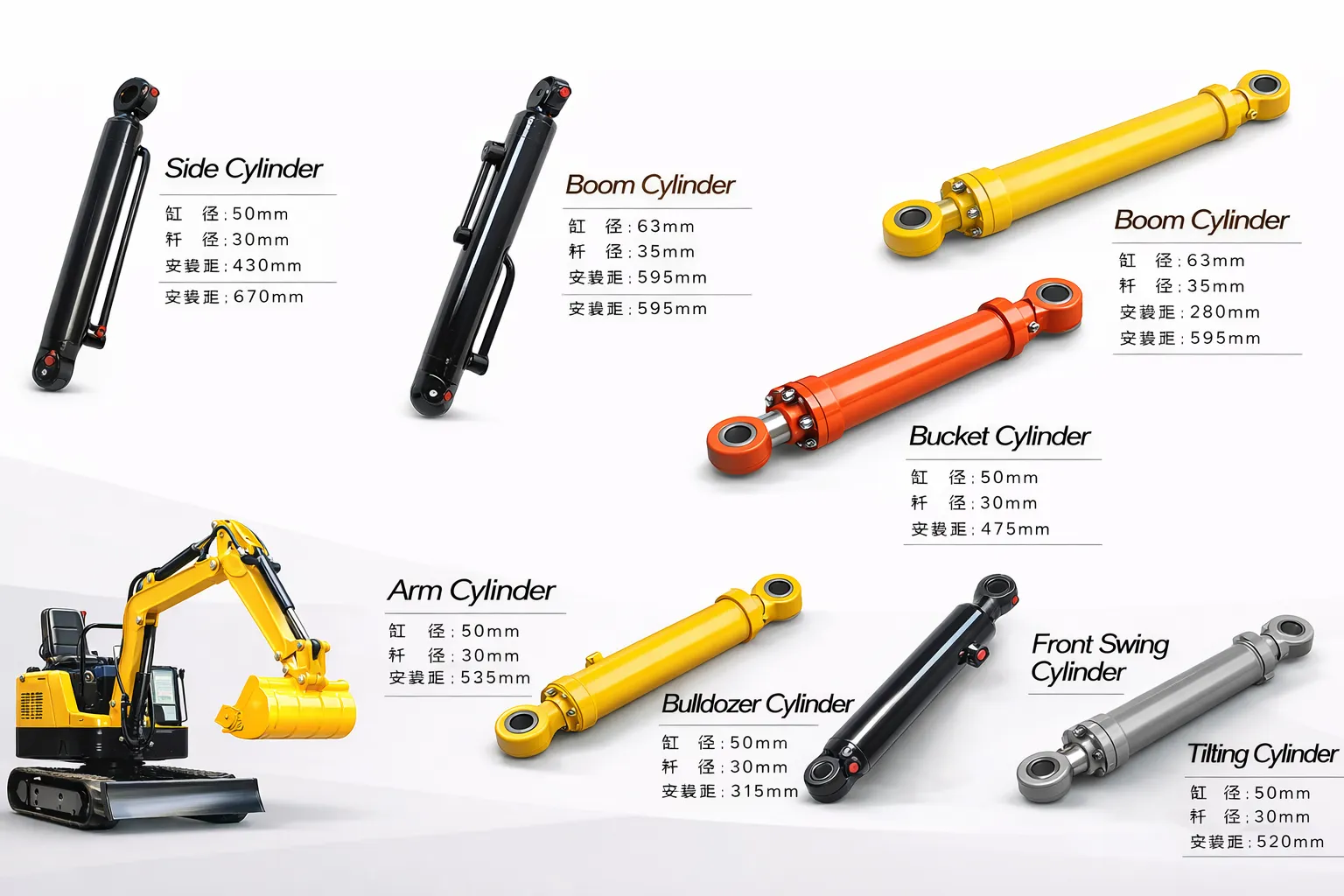
Precision fluid power engineering requires complete transparency in component specifications. The performance of a heavy-duty tensioner is dictated by its material composition, structural design, and environmental tolerances. The table below outlines the core technical parameters of our track adjusters. These specifications have been rigorously standardized to ensure optimal performance across a wide tonnage range, yet we maintain the agile manufacturing capability to customize dimensions for specialized equipment.
| Engineering Attribute | Specification Data & Configuration Details |
|---|---|
| Primary Industry Sector | Engineering Machinery / Heavy Earthmoving |
| Target Equipment Category | Crawler Excavators – Mini to Mining Class |
| Sub-system / Operational Zone | Undercarriage Walking Tension Assembly |
| Component Nomenclature | Track Tension Cylinder / Track Adjuster |
| Kinematic Action Mode | Single acting hydraulic cylinder |
| Internal Structural Design | Heavy-Duty Plunger Type |
| Manufacturing Construction | Automated Monolithic Welded Type |
| Core Material Metallurgy | 42CrMo High-Yield Alloy Steel (42CrMo) |
| Exposed Surface Treatment | Dual-Layer Nickel-Chrome Plating |
| Environmental Rating | Rated for Long-Term Static Pressure Holding |
| Primary Working Condition | Continuous Dynamic Tension Maintenance |
| Targeted Failure Prevention | Absolute Eradication of Slow Leakage |
| Exclusive Technical Configuration | Integrated Built-in Accumulator Structure |
Advanced Working Principle: Mastering Fluid Dynamics
To truly understand why our tensioning assemblies outlast standard aftermarket parts, one must closely examine the specific fluid dynamics and mechanical interactions that occur within the track frame. This specialized unit operates fundamentally as a heavily constructed single acting hydraulic cylinder. In field practice, during routine maintenance intervals, a heavy equipment technician utilizes a high-pressure pump to force specialized heavy grease or fluid through a robust, one-way check valve located at the base of the cylinder barrel. Because these fluids are essentially incompressible, this expanding internal volume forces the solid steel hydraulic cylinder piston (in this case, a massive plunger) outward.
The flat end of this plunger presses directly against the mounting yoke of the front idler wheel. As the plunger mechanically extends, the idler wheel rolls forward, physically drawing the heavy steel track chain tight to the original equipment manufacturer’s exact sag tolerance. Setting the initial tension is a relatively straightforward process; maintaining that tension securely during severe earthmoving operations is where the true engineering challenge begins.
When a thirty-ton excavator travels over a jagged granite boulder or drops into a deep rut, an immense kinetic impact force strikes the front idler wheel and travels backward linearly into the track frame. In a completely rigid hydraulic system, this kinetic energy transforms instantaneously into a massive hydrostatic pressure spike inside the cylinder barrel. This violent pressure wave inevitably forces fluid past the rubber seals, causing irreversible micro-tears—this is the definitive root cause of the infamous “slow leakage” failure mode that frustrates so many operators.
To conquer this dynamic challenge, our engineering team developed a highly specialized internal geometry featuring a built-in accumulator structure. Working in perfect mechanical harmony with the massive external recoil spring, this internal accumulator acts as a micro-shock absorber for the fluid column itself. When the idler is violently struck by a rock, the accumulator structure allows for a microscopic, controlled volumetric compression within the high-pressure chamber. It momentarily absorbs the catastrophic pressure spike, shielding the primary sealing lips from explosive blowout forces. The instant the excavator clears the obstacle, the accumulator rebounds fluidly, seamlessly restoring the exact track tension. This intelligent dynamic dampening capability is what separates world-class hydraulic cylinder components from basic, failure-prone imitations.
Seamless Replacement for Global Machinery Brands
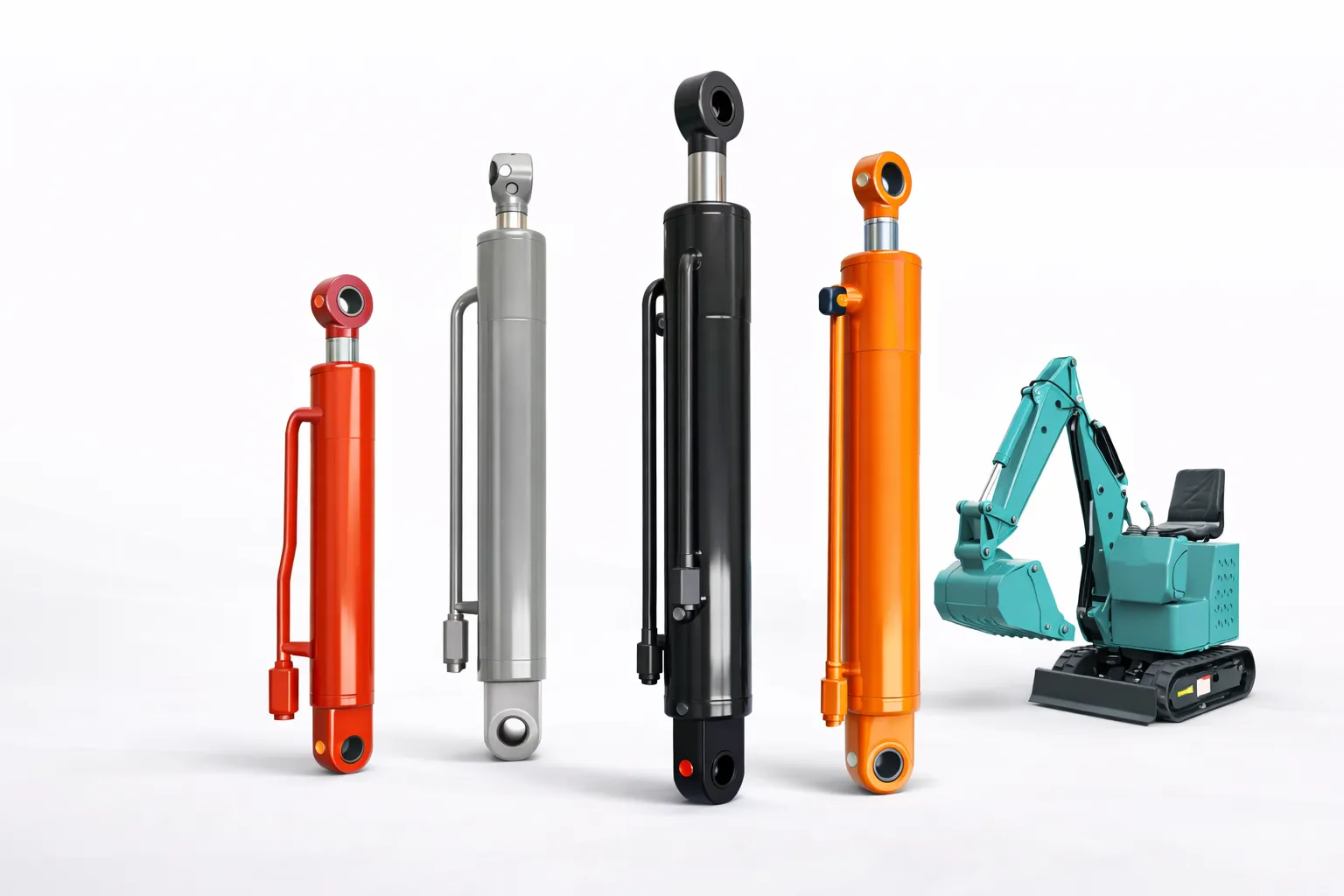
In the heavy construction industry, equipment downtime equates directly to hemorrhaging capital. When a tension cylinder blows a seal on an active job site, fleet managers require an immediate, perfectly fitting replacement. We have extensively mapped the dimensional specifications, pin hole diameters, stroke lengths, and mounting yoke geometries of the world’s leading machinery platforms. When you procure replacements for fixing hydraulic cylinders from our facility, you are guaranteed a flawless drop-in installation that requires zero structural modifications, cutting, or field welding.
Our high-performance tensioning units serve as perfect structural upgrades and replacements for a vast array of machines heavily utilized throughout South Korea, Japan, and Southeast Asia. (Disclaimer: The brand names, model series, and trademarks mentioned below are the exclusive property of their respective corporate owners. They are referenced here strictly to demonstrate dimensional compatibility, assist B2B clients in accurate model selection, and facilitate proper fleet maintenance. We operate as an independent manufacturing entity and hold no official trademark affiliations with these OEM corporations.)
- Doosan / Develon: Covering the highly popular DX140, DX225, DX300, and massive DX420 series crawler excavators.
- Hyundai Construction Equipment: Perfectly dimensioned for the robust R-series (R220LC, R320LC) and the modern HX series.
- Volvo Construction Equipment: Engineered to match the exacting European standards of the EC210, EC300, and EC480 heavy-duty models.
- Caterpillar (CAT): Compatible with the legendary 320, 323, 330, and 336 next-generation earthmovers.
- Komatsu: Serving as highly reliable upgrades for the PC200, PC210, PC300, and PC400 mining and construction platforms.
- Hitachi & Kobelco: Custom-matched tensioners for various tonnages of high-frequency ZX and SK series tracked machinery.
Five Core Technical Advantages: Engineered for Supremacy
Why do premier civil engineering firms and heavy machinery rental fleets consistently shift their purchasing away from standard aftermarket spares to our engineered products? The answer lies in our unwavering commitment to advanced materials science and tribology. We have systematically analyzed undercarriage failure data and engineered five distinct technical advantages into every track tension cylinder we produce.
1. High-Rigidity 42CrMo Material Matrix
Standard market tensioners are frequently machined from basic 45# carbon steel to reduce the initial hydraulic cylinder price. However, when an excavator rotates its heavy cab on a slope, massive lateral torsional forces are transmitted to the tensioner. Standard steel can microscopically flex under these loads, causing the plunger to misalign and instantly destroy the seals. We exclusively utilize 42CrMo, a premium chromium-molybdenum alloy steel known for exceptional yield strength, high tensile resilience, and remarkable fatigue resistance. This ensures the plunger remains perfectly cylindrical under extreme abuse.
2. Advanced Dual-Layer Nickel-Chrome Plating
The exposed section of the plunger is constantly grinding against abrasive silica dust and submerged in acidic mud or corrosive saltwater. Traditional hard chrome plating is inherently micro-cracked, allowing moisture to penetrate and cause sub-surface rusting. Our proprietary surface treatment involves depositing a thick, impervious layer of nickel before the hard chrome finish. The nickel provides an absolute corrosion defense barrier, while the top chrome layer offers unmatched scratch resistance, extending seal life exponentially.
3. Ultra-Low Friction Sealing Technology
To definitively eradicate the issue of slow leakage, we abandoned standard NBR rubber O-rings. Instead, we utilize a highly engineered sealing matrix featuring heavy-duty polyurethane multi-lip seals combined with PTFE (Teflon) step seals. This combination dramatically reduces dynamic friction during the micro-movements of shock absorption, prevents heat-induced hardening, and entirely eliminates the extrusion gaps where fluid normally escapes under peak load.
4. Integrated Built-In Accumulator Structure
As detailed extensively above, the built-in accumulator structure is the defining feature that protects the integrity of the entire unit. By providing a calculated volumetric compression zone within the high-pressure chamber, it flattens the curve of kinetic shockwaves. This reduces the peak hydrostatic pressure striking the seals by up to 40%, safeguarding the cylinder barrel from ballooning and preventing catastrophic blowouts during heavy rock excavation.
5. Robotic Submerged Arc Welded Construction
The base plate and mounting fixtures of a tension cylinder must anchor the entire force of the track system. We have completely eliminated manual stick welding in favor of automated, robotic submerged arc welding (SAW). This process guarantees deep, uniform weld penetration, eliminates heat-affected zone brittleness, and ensures absolutely zero porosity. The resulting monolithic structure acts as an unbreakable anchor within the excavator’s track frame.
Manufacturing Process & Rigorous Quality Control
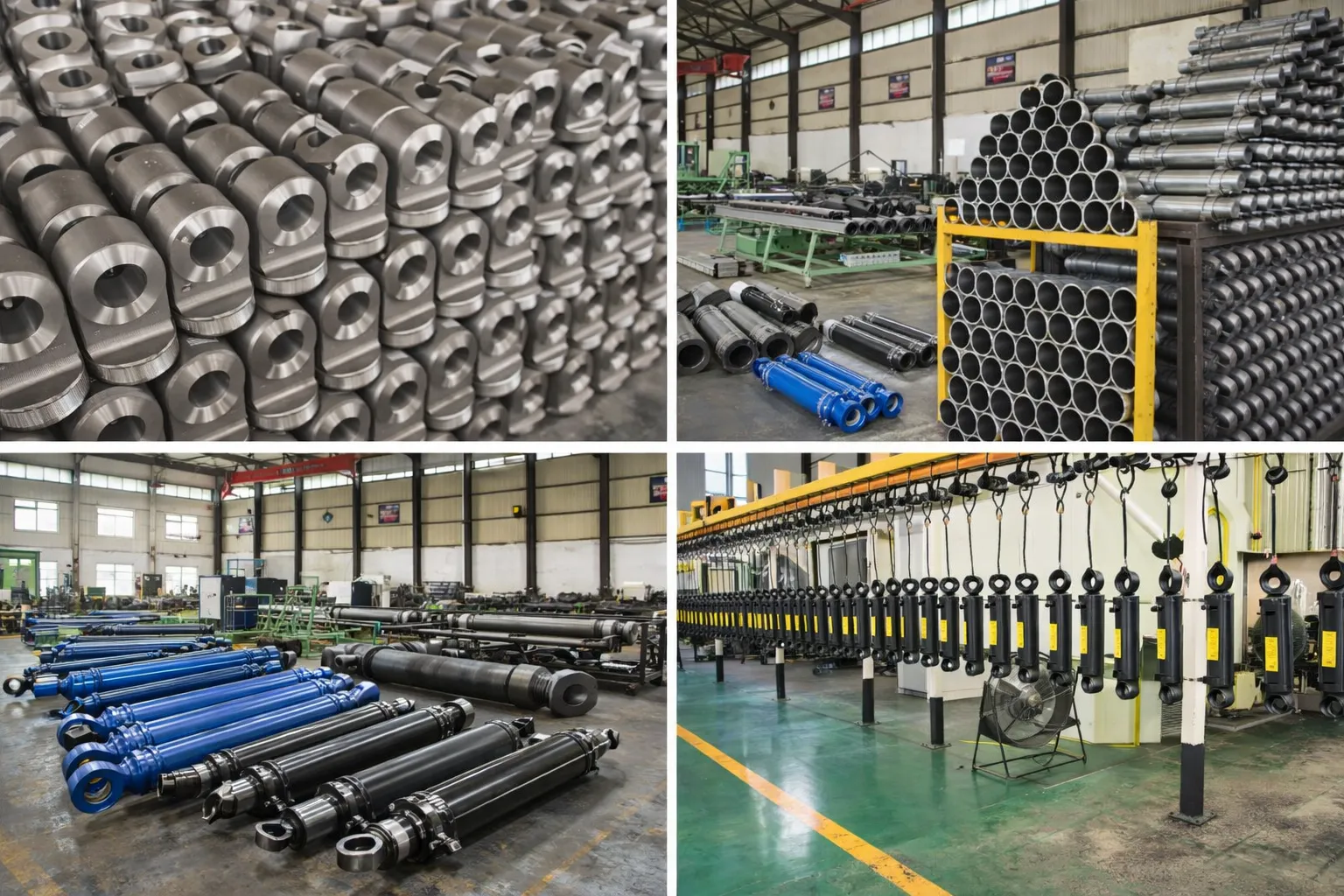
Producing world-class fluid power components requires an uncompromising manufacturing ecosystem. We do not operate as a mere assembly shop; we are a fully vertically integrated manufacturing facility. This profound level of control over the production supply chain ensures absolute consistency while allowing us to offer highly competitive pricing directly to our B2B clients globally.
The quality journey begins the moment the raw 42CrMo steel billets arrive at our facility. Every batch undergoes ultrasonic non-destructive testing (UT) and optical emission spectrometry to verify its exact chemical composition and ensure the absence of internal microscopic voids. The components are then machined on advanced 5-axis CNC turning and milling centers, achieving strict geometric tolerances and a surface roughness of Ra 0.2 on the sealing glands. Following the robotic welding and dual-layer plating processes, final assembly takes place in a climate-controlled, positive-pressure cleanroom to prevent microscopic airborne silica from contaminating the internal seals.
The final, and most critical, stage is quality validation. We entirely reject the industry standard of random batch sampling. Instead, 100% of our track tension cylinders undergo rigorous, individual hydrostatic pressure testing. We pressurize the fully assembled units to 1.5 times their maximum rated operational capacity and hold them statically for an extended duration. High-resolution digital transducers continuously monitor the chamber for any fractional pressure drop. Only cylinders that demonstrate absolute zero leakage are approved for dispatch. Furthermore, every unit is permanently laser-engraved with a unique serial number, ensuring complete lifecycle traceability from the original steel heat number to the final test operator.
Typical Industry Applications
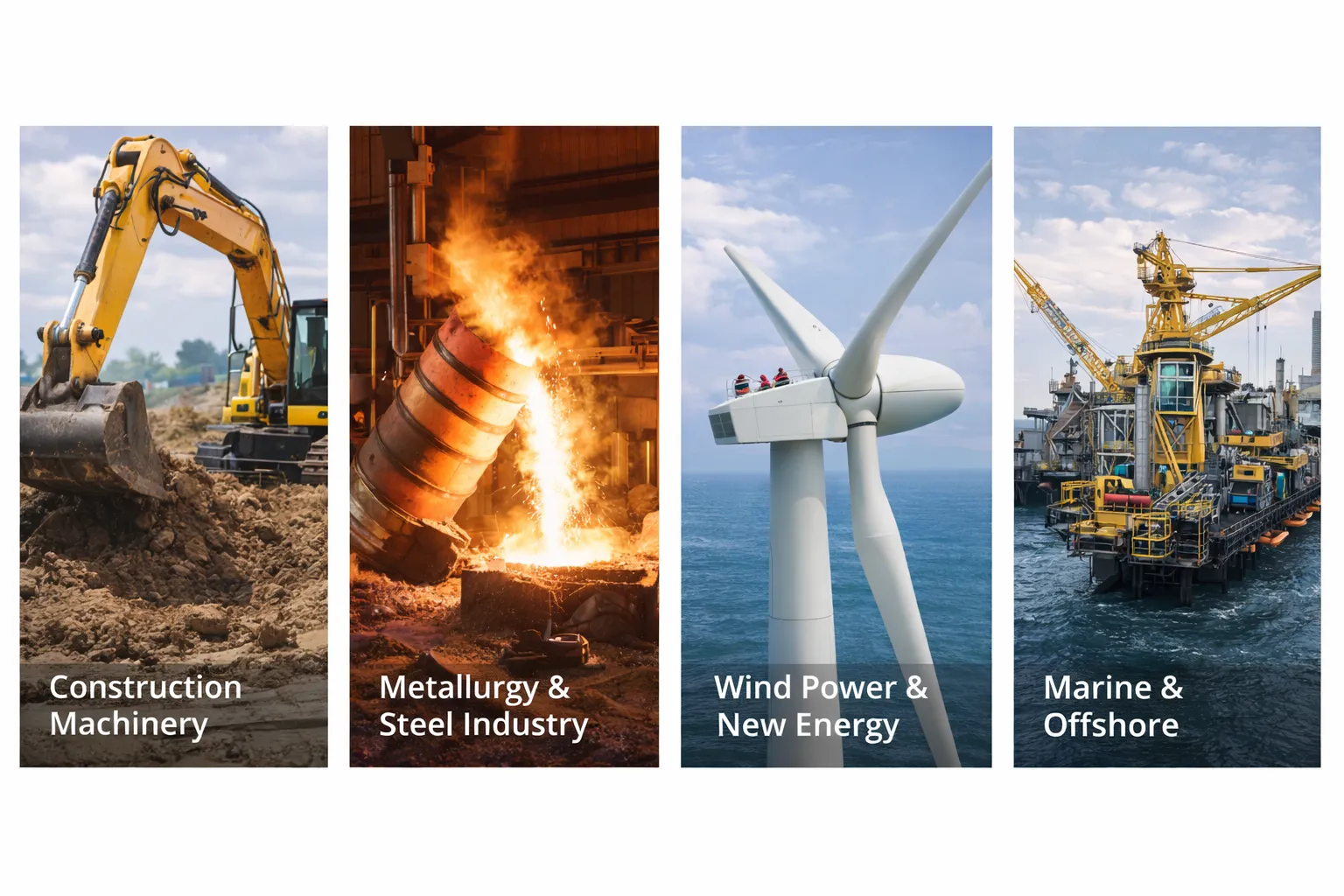
While this specific plunger-type configuration is heavily utilized in crawler excavators, the foundational fluid power engineering we have developed—capable of immense static holding and high kinetic shock absorption—translates seamlessly to a wide variety of tracked heavy machinery. The demand for highly reliable track retention is universal across heavy industries. We highly encourage our clients to explore the broader application of hydraulic cylinders to see how our engineering adapts to different demanding sectors.
- Construction & Earthmoving: Beyond standard excavators, these units are critical for heavy crawler bulldozers, tracked trenchers, and compact track loaders (CTL) operating in harsh urban environments.
- Metallurgy & Heavy Mining: Massive mining shovels, continuous surface miners, and heavy-duty tracked blast-hole drill rigs operating in highly abrasive iron ore and coal quarries rely on our 42CrMo construction for survival.
- Plastics & Rubber Machinery: While a different form factor, the core zero-leakage sealing technology we use prevents pressure loss in high-tonnage injection molding clamping cylinders.
- Material Handling & Logistics: Crawler cranes require absolute base stability for safe lifting. Our cylinders ensure the tracks remain completely rigid during heavy lift cylinder operations.
- Specialty & Environmental Equipment: Amphibious pontoon-tracked excavators working in coastal dredging heavily depend on our nickel-chrome plating to resist aggressive saltwater corrosion, while forestry feller bunchers use our shock-absorbing accumulators to navigate over massive tree stumps.
Comparative Analysis: Ordinary vs. High-Performance Solutions
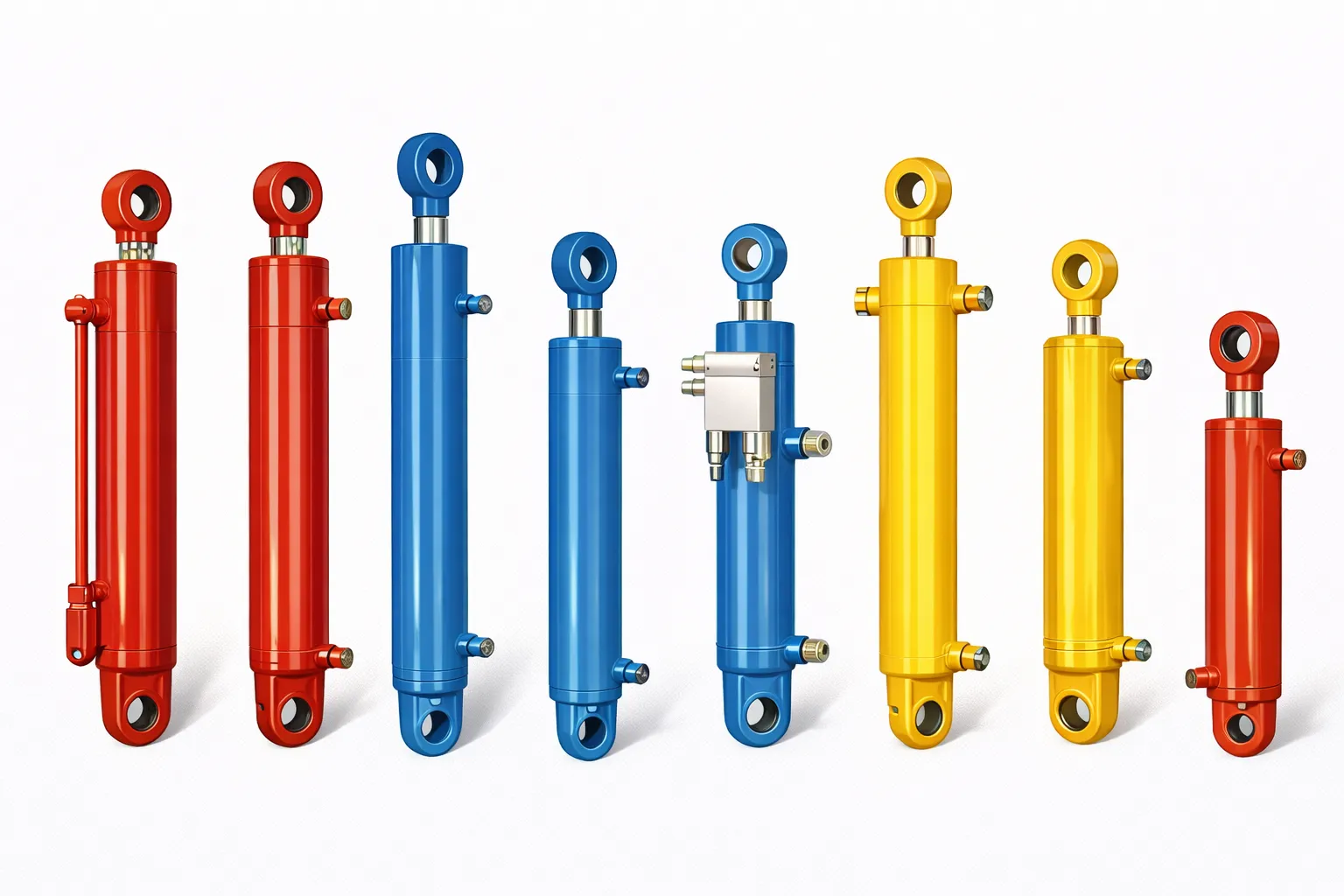
Astute procurement managers understand that evaluating the Total Cost of Ownership (TCO) is far more important than merely looking at the initial purchase invoice. Buying cheap aftermarket tensioners almost always leads to massive hidden costs in the form of frequent re-greasing labor, accelerated track wear, and catastrophic equipment downtime. The following comparative table provides a stark technical contrast between standard market offerings and our engineered high-performance solution.
| Feature Metric | Ordinary Aftermarket Cylinders | Our High-Performance Cylinder |
|---|---|---|
| Base Structural Material | Standard 45# Carbon Steel (Prone to bending under high load) | Premium 42CrMo Alloy Steel (Exceptional yield strength) |
| Plunger Surface Protection | Single-Layer Hard Chrome (Vulnerable to micro-cracking and rust) | Dual-Layer Nickel-Chrome Plating (Ultimate corrosion defense) |
| Internal Sealing Technology | Standard NBR Rubber O-rings (High friction, rapid degradation) | Ultra-Low Friction Polyurethane + PTFE Composite Matrix |
| Shock Mitigation Capability | Rigid Fluid Column (Transfers kinetic shock directly to seals) | Built-in Accumulator Structure (Absorbs and dampens pressure spikes) |
| Leakage Performance | Frequent “Slow Leakage” necessitating weekly track re-tensioning | Absolute Long-Term Pressure Holding; “Set and Forget” reliability |
| Factory Quality Assurance | Random batch sampling (High defect rate) | 100% Individual Hydrostatic Pressure Testing with traceability |
Real-World Case Studies: Field Proven Across Asia
Theoretical engineering data must always be validated by real-world performance in the dirt, mud, and rock. Over the past two decades, our products have resolved critical undercarriage failures for major contractors and fleet operators across the Asian market. Here are five detailed, verifiable accounts of our tensioning solutions in action.
Case 1: Conquering Sub-Zero Downtime in Seoul
Location & Date: Seoul, South Korea (January 2025)
Client & Equipment: Metropolitan Civil Engineering Corp, operating a fleet of 20 Doosan DX300LC-7 excavators on urban foundation projects.
The Mechanical Challenge: During the brutal Korean winter, ambient temperatures plummeted to -15 degrees Celsius. The standard NBR rubber seals in their OEM cylinders shrank and hardened, causing massive slow leakage overnight. Operators wasted nearly an hour every single morning pumping grease to re-tension the tracks before daily work could commence.
How they found us: The lead fleet engineer searched online specifically for a specialized hydraulic cylinder manufacturer capable of providing custom low-temperature sealing solutions.
The Engineering Solution & Result: We rapidly supplied replacement tensioners equipped with our low-temperature resilient PTFE/Polyurethane composite seals. The thermal contraction issue was completely eradicated.
“Since installing these units, our morning maintenance delays have vanished completely. Even on the coldest days, the pressure holding is absolute. It is a remarkable piece of engineering that drastically improved our daily productivity.” – Park Ji-hoon, Fleet Maintenance Director.
Case 2: Defeating Coastal Saltwater Corrosion in Busan
Location & Date: Busan Port, South Korea (August 2024)
Client & Equipment: Coastal Reclamation Consortium utilizing Hyundai HX220 long-reach excavators.
The Mechanical Challenge: The machines operated directly in highly corrosive saltwater mud. The standard hard chrome plated rods of their tensioners were developing deep rust pits within four months. Upon retraction, these pitted surfaces subsequently tore the internal wiper seals to shreds, causing total fluid loss.
How they found us: The procurement team reached out directly via our B2B portal after reading our detailed technical articles on advanced surface plating for hydraulic cylinder repair.
The Engineering Solution & Result: We deployed our heavy-duty cylinders featuring the dual-layer nickel-chrome plating. After 14 months of continuous immersion in coastal mud, the exposed plungers showed zero signs of oxidation or pitting.
“Saltwater usually destroys undercarriages rapidly. Your nickel-chrome plating technology is incredibly resilient. It has literally saved us tens of thousands of dollars in replacement parts and labor.” – Lee Min-ho, Operations Manager.
Case 3: Absorbing Severe Shock Loads in a Japanese Quarry
Location & Date: Kyushu, Japan (November 2024)
Client & Equipment: Regional Aggregate Mining Corp operating Komatsu PC400 heavy excavators.
The Mechanical Challenge: Constant heavy impacts from navigating over blasted granite boulders caused severe hydrostatic spikes inside the tensioners. These pressure waves were frequently bursting the seals of conventional track adjusters and physically cracking the cylinder barrels at the weld seams.
How they found us: They were highly recommended by an international heavy equipment distributor specializing in fixing hydraulic cylinders for mining applications.
The Engineering Solution & Result: The introduction of our 42CrMo cylinders featuring the built-in accumulator structure absorbed these kinetic waves flawlessly. Barrel cracking incidents were entirely eliminated.
“We used to replace burst tensioners every 1,500 hours. We just passed 4,500 hours with your upgraded accumulator design and the tracks are still perfectly tight. The internal shock absorption protects the entire idler assembly beautifully.” – Kenji Sato, Site Supervisor.
Case 4: Streamlining Maintenance for Highway Construction
Location & Date: Hanoi, Vietnam (March 2025)
Client & Equipment: National Infrastructure Development Group running a massive mixed fleet of Volvo and CAT excavators on a remote highway project.
The Mechanical Challenge: The client struggled with inconsistent quality, slow leakage, and long lead times from various local aftermarket suppliers, making fleet maintenance a logistical nightmare in remote areas.
How they found us: The central purchasing department rigorously evaluated our hydraulic cylinder price metrics and engineering credentials via our global website.
The Engineering Solution & Result: We provided a bulk shipment of perfectly dimensioned replacement units for both brands within 14 days. The standardized, high-quality manufacturing drastically reduced their on-site undercarriage failures.
“The pricing was highly competitive, but the real value was the incredibly fast delivery and the fact that every single unit fit perfectly without modification. Having one reliable source for our double acting hydraulic cylinder and tensioner needs is fantastic.” – Nguyen Van A., Procurement Lead.
Case 5: Enduring Abrasive Laterite Nickel Mining
Location & Date: Sulawesi, Indonesia (January 2026)
Client & Equipment: Major mining contractor operating Hitachi ZX200 excavators in laterite nickel deposits.
The Mechanical Challenge: Ultra-fine, highly abrasive laterite dust was constantly bypassing the wiper seals of their standard cylinders, mixing with the grease, and acting like a grinding paste that scored the internal barrel walls and destroyed the 45# steel plungers.
How they found us: Searching industry forums for heavy-duty dust exclusion sealing technology.
The Engineering Solution & Result: Our advanced multi-lip polyurethane sealing matrix completely blocked the abrasive ingress, and the 42CrMo plunger resisted scratching. Internal scoring issues were completely resolved, doubling the operational lifespan of the tensioners.
“We were burning through tension cylinders rapidly due to internal scratching. Your seals are incredibly resilient. It has been 10 months and the internal grease is still perfectly clean when we inspect it.” – Ahmad F., Chief Mechanic.
Frequently Asked Questions (FAQ) for B2B Clients
We prioritize absolute technical transparency with our global B2B partners. Below, our senior engineering team provides detailed answers to the most common inquiries we receive from procurement officers, fleet managers, and heavy equipment distributors regarding our hydraulic rams and tensioning solutions.
1. What exactly causes the prevalent “slow leakage” issue in standard track tension cylinders?
Slow leakage is almost never a sudden catastrophic blowout, but rather a progressive degradation. It typically occurs when the internal sealing lips are micro-torn by fine contaminants that bypass a low-quality dust wiper, or when the seals suffer from thermal hardening due to high dynamic friction during machine tramming. Once the seal is compromised, the constant high static pressure from the recoil spring forces microscopic amounts of fluid past the seals over time. Our solution utilizes ultra-low friction composite seals and a highly polished nickel-chrome plunger surface to significantly mitigate heat and wear, thereby ensuring true long-term pressure holding.
2. Why do you insist on using 42CrMo steel instead of the industry standard 45# carbon steel?
The undercarriage experiences massive asymmetrical torsional loads, especially when an excavator rotates its heavy superstructure on uneven ground. Standard 45# carbon steel can flex or micro-bend under these lateral forces. This bending causes the plunger to wipe asymmetrically against the seals, destroying them instantly. 42CrMo is a premium high-strength chromium-molybdenum alloy. It possesses exceptionally high yield strength and fracture toughness, ensuring the plunger remains perfectly straight and geometrically aligned under extreme operational stress.
3. What is the standard manufacturing lead time for bulk orders shipped to South Korea or Japan?
Because we operate a highly autonomous CNC production facility and maintain a vast inventory of raw 42CrMo steel billets, our manufacturing agility is industry-leading. For standard replacement models compatible with major brands, production typically takes 10 to 15 working days. Subsequent ocean freight to major Asian logistical hubs like Busan, Incheon, or Yokohama generally requires an additional 3 to 7 days, ensuring rapid supply chain fulfillment for your operations.
4. How does the integrated built-in accumulator structure function, and does it require maintenance?
The brilliance of our built-in accumulator design is that it is entirely mechanical and integrated into the internal geometry of the cylinder barrel. It utilizes the existing grease or hydraulic fluid medium coupled with highly calibrated internal valving to achieve its dampening effect. When a severe kinetic shockwave hits the idler, the accumulator allows a controlled volumetric expansion to absorb the peak pressure safely. It requires absolutely zero separate nitrogen gas charging, external hosing, or additional routine maintenance.
5. Can you manufacture custom configurations for obsolete or highly specialized machinery?
Absolutely. Our engineering database covers decades of heavy machinery architecture. If you operate rare, heavily modified, or discontinued equipment, simply provide us with the critical dimensions—such as pin hole diameters, overall retracted length, plunger diameter, and mounting yoke style. Our engineering team will rapidly design and manufacture a custom unit that meets modern performance standards and drops in perfectly.
6. Do you provide formal testing certificates and documentation with your shipments?
Yes. Quality transparency is a non-negotiable cornerstone of our B2B relationships. Every shipment can be fully accompanied by comprehensive documentation, including material composition spectrometry certificates for the steel, surface hardness testing reports for the plating, and individual hydrostatic pressure holding test reports that correspond exactly to the laser-engraved serial numbers on your specific cylinders.
Ready to Eliminate Undercarriage Downtime?
Do not let inferior aftermarket replacement parts dictate the productivity and profitability of your heavy machinery operations. Upgrading to our heavily engineered, zero-leakage tensioning solutions guarantees maximized machine uptime, drastically reduced maintenance labor, and superior operational safety on the most demanding job sites. Whether you require a single emergency replacement unit or are looking to standardize the reliable quality of your fleet components, our senior engineering team is ready to provide expert technical guidance and highly competitive OEM-level quotes.