
Electric Furnace Lifting Cylinder
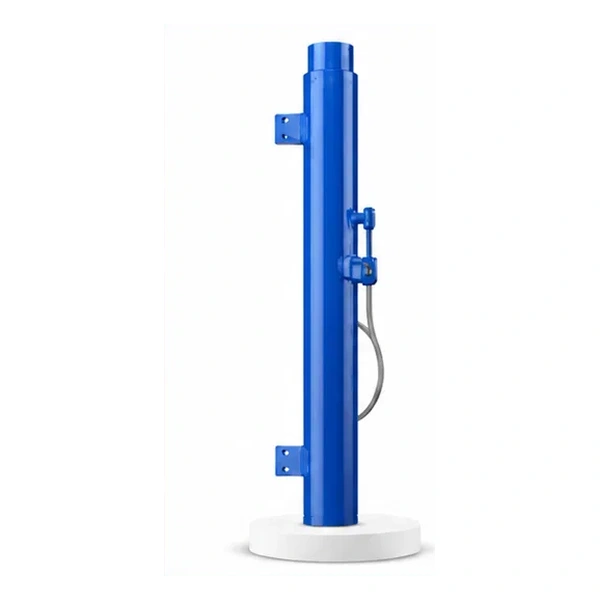
Real-Time Regulation
The Cylinder
That Never Stops Moving
The cover lifts a few times per heat. The tipping cylinder acts once. The lock engages and disengages. Every other EAF cylinder operates intermittently. The electrode lifting cylinder operates continuously — adjusting the electrode height every second throughout the 40–70 minute melt cycle, tracking the arc impedance in real time. It is the fastest-cycling, most responsive cylinder on the furnace.
What the Electrode Lifting Cylinder Actually Controls
In an electric arc furnace, three graphite electrodes descend through the furnace cover into the metal charge. An electric arc jumps between each electrode tip and the metal surface — the arc temperature exceeds 3,000 °C, melting the scrap below it. The distance between the electrode tip and the metal surface is the arc length — and the arc length determines the arc's electrical impedance, its heat output, and the stability of the melting process.
The electrode lifting cylinder raises and lowers each electrode to maintain the optimal arc length. As the scrap melts and collapses (the charge "caves in"), the metal surface drops — and the electrode must follow it down to maintain the arc. If the arc becomes too long (electrode too high), the arc becomes unstable and can extinguish. If the arc becomes too short (electrode too low), the electrode tip contacts the molten metal — a short circuit that wastes power and erodes the electrode. The lifting cylinder keeps each electrode in the narrow band between these two extremes. Korea Ever-Power manufactures electrode lifting cylinders as part of the electric furnace cylinder family.
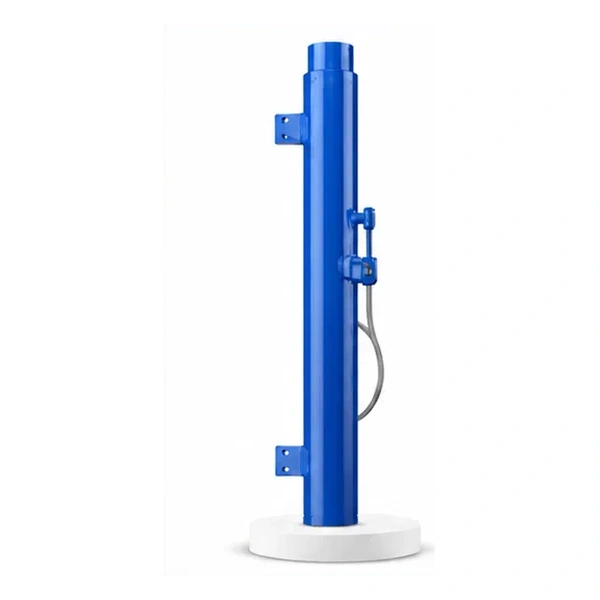
Technical Specifications
| Parameter | Value |
|---|---|
| Product | Electric Furnace Lifting Cylinder (Electrode) |
| Function | Real-time electrode height regulation |
| Bore Diameter | 100 mm |
| Rod Diameter | 70 mm |
| Working Pressure | 14 MPa |
| Maximum Thrust | 53 KN |
| Quantity per Furnace | 3 (one per electrode, independently controlled) |
| Certification | ISO 9001 · 100% hydrostatic tested |
Closed-Loop Automatic Regulation — No Human in the Loop
Every other EAF cylinder is commanded by the operator — press a button to lift the cover, move a joystick to tilt the furnace. The electrode lifting cylinder is different: it operates under fully automatic closed-loop control. The operator sets the target arc current; the electrode regulator handles the rest.
The electrode regulator samples the arc current and voltage at 50–100 Hz (every 10–20 milliseconds). From these measurements, it calculates the arc impedance — which is directly related to the arc length.
If the impedance is too high (arc too long → electrode too far from metal), the regulator commands the lifting cylinder to lower the electrode. If too low (arc too short → electrode too close), it commands the cylinder to raise it.
A servo or proportional valve opens in proportion to the error signal — large error = fast correction, small error = gentle adjustment. The cylinder moves the electrode up or down by millimetres to centimetres, continuously tracking the target.
This cycle runs 3,000–6,000 times per minute, for 40–70 minutes per heat, for 20–30 heats per day. The lifting cylinder performs more position corrections per day than any other cylinder in the EAF system — and each correction must be smooth, lag-free, and overshoot-free.
53 KN — Why Responsiveness Matters More Than Force
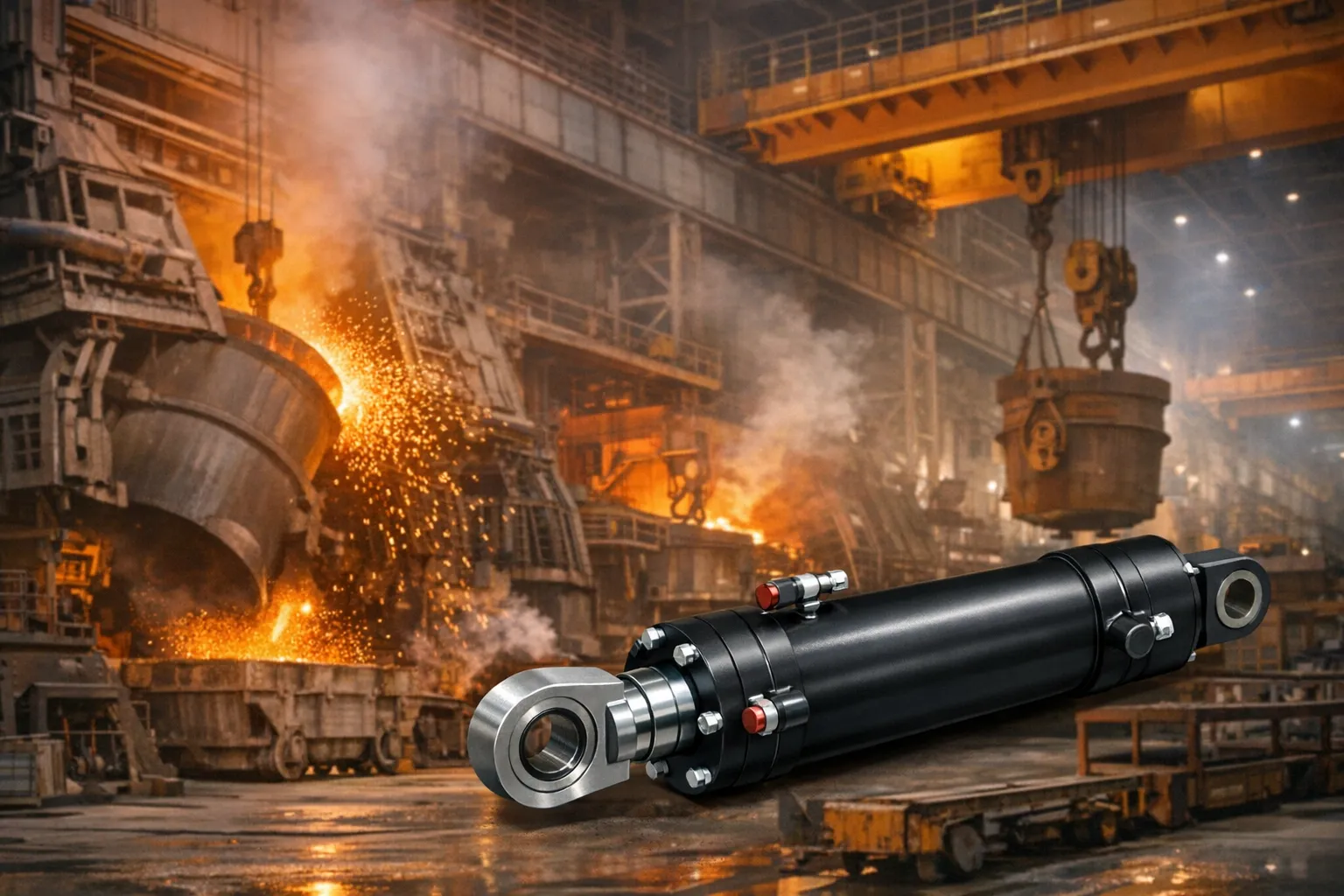
The electrode lifting cylinder's 53 KN thrust is the second lowest in the EAF family (after the 17 KN lock cylinder). But force is not what this cylinder needs — responsiveness is. The 53 KN is more than enough to raise and lower a graphite electrode (which weighs 1–5 tonnes, supported partly by the mast column); the engineering challenge is how fast and how precisely the cylinder responds to the regulator's command signal.
A slow or laggy electrode response means the arc length oscillates around the target instead of tracking it smoothly. An oscillating arc causes power flickering (visible as light flicker in the local electricity grid), increased electrode consumption (each arc break-and-reignite erodes the electrode tip), and inconsistent melting (uneven temperature distribution in the bath).
Korea Ever-Power engineers the electrode lifting cylinder for minimum hydraulic lag — low friction seals (PTFE composite, not elastomer), tight bore-to-piston clearance (minimising internal leakage that slows response), and direct-mount servo valve provisions on the cylinder port face. The result is a cylinder that responds to a step command in under 50 milliseconds — fast enough to track even the most rapid arc disturbances during the bore-in phase of melting.
Three Electrodes, Three Cylinders, Three Independent Control Loops
Every EAF has three electrodes arranged in a triangular pattern. Each electrode has its own arc, its own current, and its own optimal height — which differs from the other two because the scrap charge is never perfectly uniform. Each electrode has its own dedicated lifting cylinder, its own servo valve, and its own regulator channel. The three cylinders operate simultaneously but independently.
Cylinder #1 responds to the Phase A arc impedance. At any moment, this electrode may be descending into a cavity in the scrap while the other two are stable — each cylinder tracks its own electrode's unique arc condition independently of the others.
Cylinder #2 may be raising its electrode to lengthen the Phase B arc (increasing voltage for higher power input in that zone), while Cylinder #1 is simultaneously lowering its electrode to shorten the Phase A arc (reducing arc instability in a collapsed scrap region).
Cylinder #3 operates on the Phase C feedback loop. The three-phase electrical balance of the EAF depends on all three arcs operating at their target impedance — which means all three lifting cylinders must respond accurately to their own regulator channels without cross-interference.
Korea Ever-Power manufactures the three electrode lifting cylinders as a matched set — identical bore, rod, seal specification, and friction characteristics — so that the same regulator gain settings produce the same response speed and accuracy on all three electrodes. Contact the hydraulic cylinder engineering team for electrode regulation cylinder specifications.
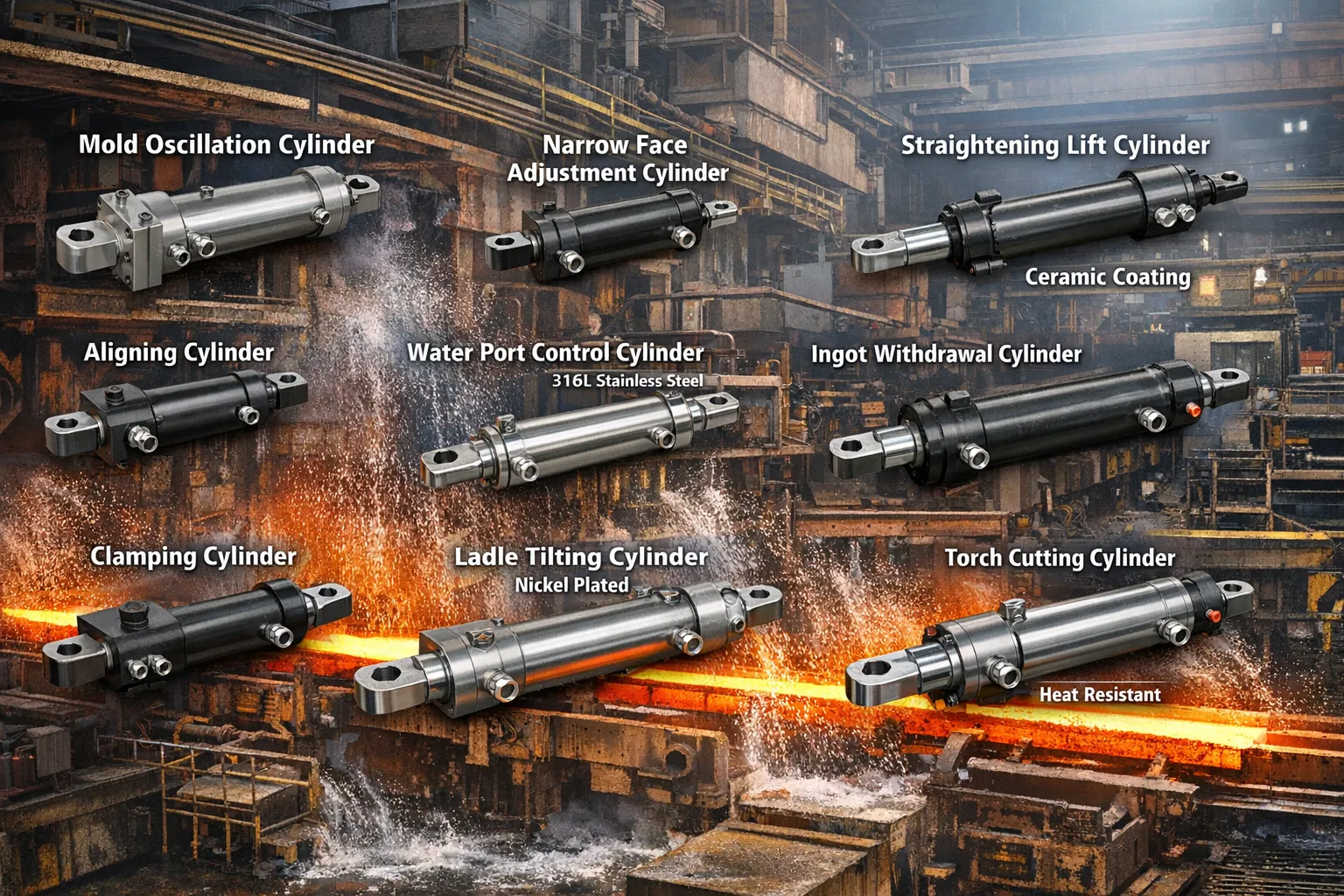
Manufacturing for Servo-Grade Response
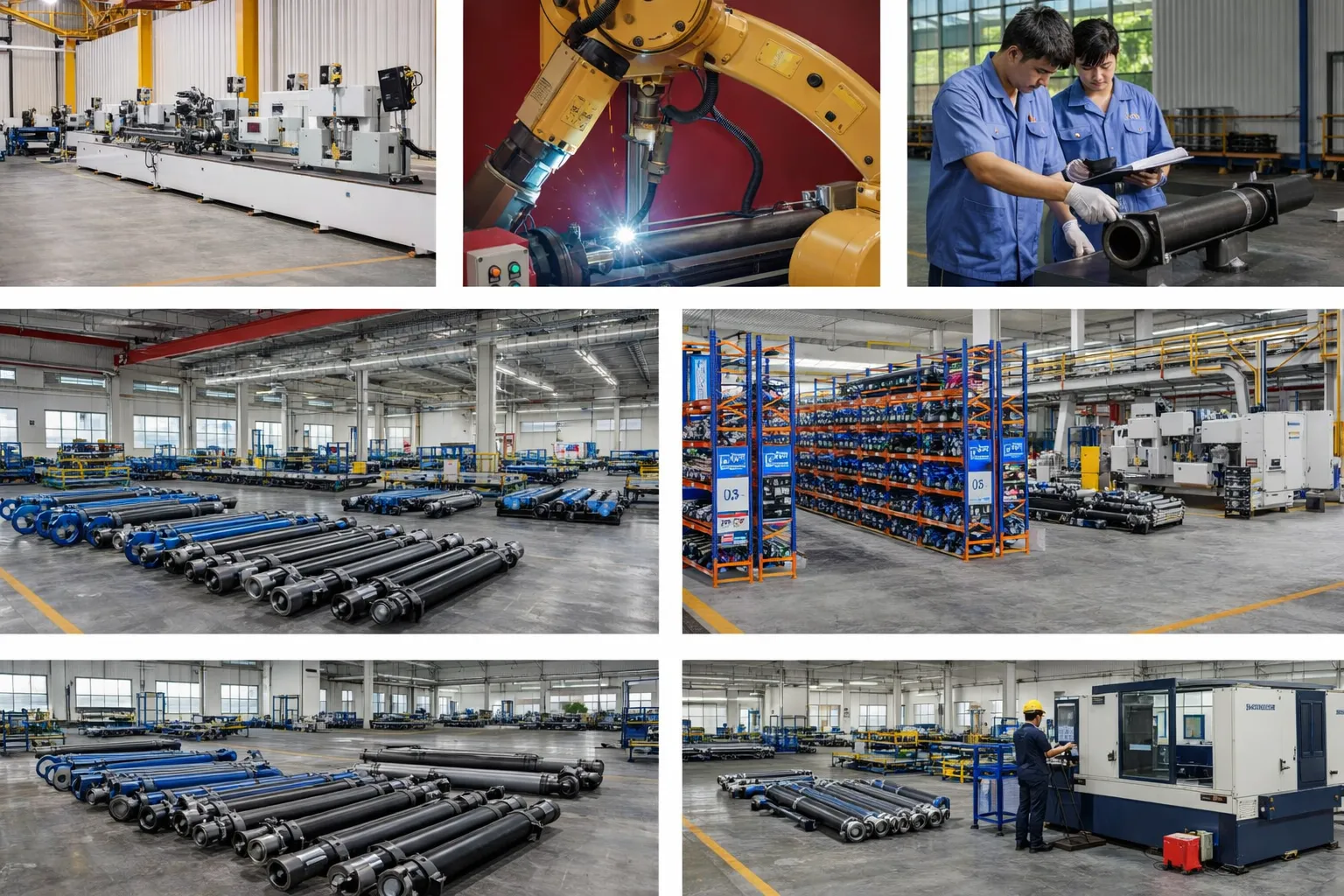
The electrode lifting cylinder's 100 mm bore is small by EAF standards, but the manufacturing precision is the highest of any cylinder in the furnace system. The bore finish (Ra 0.1–0.2 µm — tighter than the standard 0.2–0.4 µm used for other EAF cylinders) ensures consistent, low-friction piston motion for predictable servo response. Any bore roughness variation translates directly into friction variation — which the regulator interprets as a load change and overcorrects, causing the electrode to oscillate.
The piston seals are low-friction PTFE composite — not the FKM elastomer used on the larger EAF cylinders. Elastomer seals generate higher static friction (stiction) which causes stick-slip at the small, slow corrections the electrode regulator demands. PTFE composite seals have nearly equal static and dynamic friction coefficients — enabling the cylinder to respond smoothly to corrections as small as 1–2 mm without sticking.
Every electrode lifting cylinder set (3 cylinders) is functionally tested for servo response — step response time, frequency response, and friction symmetry between extend and retract — before shipment. The three cylinders must exhibit matched response characteristics so the same regulator gain tuning produces balanced arc regulation across all three electrodes.
OEM & ODM
FAQ
Related Categories
Lisätiedot
| Editor |
|---|
Tutustu myös
-
Pressurized Hydraulic Cylinder for Vulcanizing Machine
-
Tipping Cylinder for Vulcanizing Machine
-
Filter Press Hydraulic Cylinder
-
Hydraulic Press Mobile Workbench Cylinder
-
Cement Equipment Roll over Cylinder
-
Injection Molding Machine Ejection Cylinder
-
Hydraulic Press Front Side Shift Cylinder
-
Hydraulic Press Master Cylinder


























