Wind Door Hydraulic Cylinder for Ventilation System
Engineered explicitly with premium 316L stainless steel and a monolithic welded structure to eradicate pitting corrosion. Delivering high-frequency, absolute bidirectional control in the most humid and aggressively corrosive underground environments.
Product Overview & Core Industrial Value
Within the uncompromising environment of subterranean resource extraction and heavy tunnel engineering, atmospheric management is the fundamental baseline for operational safety. Deep mine shafts and extensive underground networks depend on highly complex ventilation systems to continuously cycle fresh oxygen, dilute combustible methane gas, and forcefully exhaust toxic diesel particulate matter. To direct these massive air currents effectively, heavy steel bulkheads and air doors must open and close with absolute reliability. The primary mechanical force driving this critical infrastructure is the Wind Door Cylinder. Given the hazardous nature of these environments, a failure in airflow regulation instantly compromises the safety of all underground personnel and halts production entirely.
Standard industrial actuation equipment is simply not designed to survive the reality of a deep mine. These locations are characterized by a relentless combination of high humidity, constantly dripping groundwater, and severe acidity caused by dissolved sulfates and chlorides. When a conventional hydraulic oil cylinder is installed in such a demanding environmental grade, the thin hard-chrome plating on its rod quickly develops microscopic stress fractures. Highly corrosive moisture penetrates these fissures, initiating a severe form of localized galvanic degradation known as pitting. Once the rod surface pits, it transforms into an abrasive file that rapidly shreds the internal sealing matrix, resulting in catastrophic fluid leakage and total mechanical paralysis.
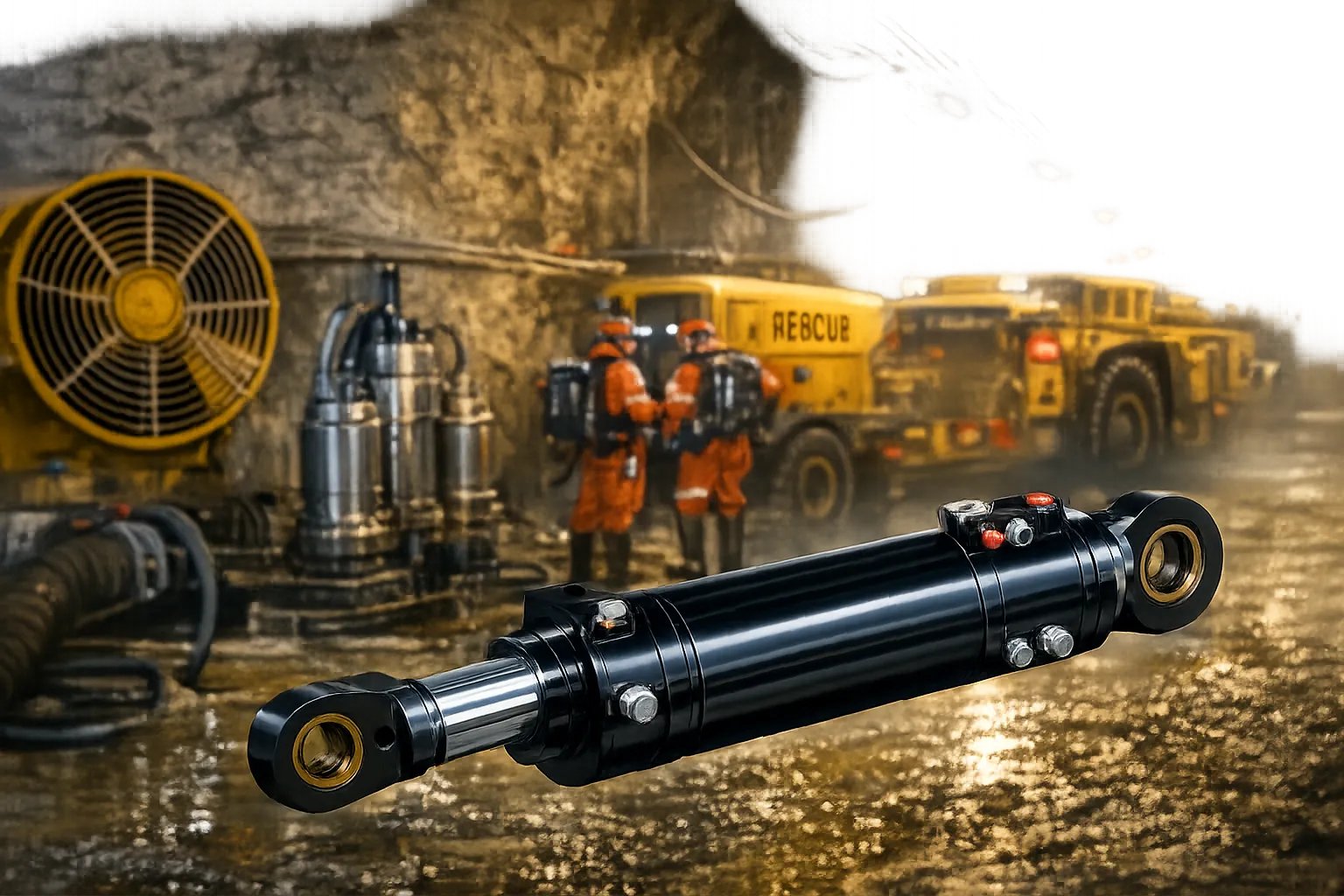
Our specialized Wind Door Hydraulic Cylinder is precisely engineered to eliminate this exact failure mode. By utilizing a solid 316L stainless steel material system combined with a heavy-duty welded manufacturing structure, we deliver an actuator that thrives in humid and corrosive conditions. As a leading hydraulic cylinder manufacturer serving the stringent industrial sectors of South Korea, Japan, and Southeast Asia, our unique positioning focuses on long-term preventative engineering. By deploying a pitting-resistant actuator designed specifically for frequent switching, facility operators drastically maximize their operational uptime. When evaluating the overall lifecycle, eliminating continuous emergency replacements makes our high-performance hydraulic cylinder the most economically efficient investment, significantly optimizing the total hydraulic cylinder price for procurement divisions.
Comprehensive Technical Parameters
Achieving mechanical longevity requires uncompromising adherence to precise specifications. Because underground architectural layouts and aerodynamic pressure loads vary significantly across different mining sites, we offer a comprehensive range of customizable dimensions. The following table outlines the foundational engineering parameters and specialized configurations that define our heavy-duty ventilation actuation systems.
| Engineering Specification | Parameter Designation & Technical Details |
|---|---|
| Target Industry | Mining Equipment / Subterranean Heavy Industry |
| Equipment Category | Ventilation System / Atmospheric Control |
| Subsystem / Specific Action | Damper Drive / Wind Door Actuation |
| Primary Component Name | Wind Door Cylinder / Wind Door Hydraulic Cylinder |
| Operational Action Mode | Double acting (Powered extension and controlled retraction) |
| Internal Structural Type | Piston type (High surface area for maximum force transfer) |
| Manufacturing Structure | Welded construction (Monolithic design to eliminate vibration loosening) |
| Base Material System | Stainless Steel (Solid alloy, completely replacing carbon steel) |
| Advanced Surface Treatment | Precision Polished (Roughness Average less than 0.2 micrometers) |
| Designed Environmental Grade | Humid + Corrosive (Immune to acidic groundwater exposure) |
| Specific Working Condition | Frequent switching (High-cycle rate modulation) |
| Targeted Typical Failure Mode | Total prevention of Pitting corrosion and abrasive seal laceration |
| Recommended Alloy Configuration | 316L (Molybdenum-enriched for ultimate chemical resistance) |
| Basic Specification Range | Bore: 50mm – 350mm | Stroke: 100mm – 4000mm | Pressure: 16 – 25 MPa |
| Installation Method Options | Trunnion mounts, Rear Clevis, Front Flange, Spherical Bearing eyes |
The Mechanical Physics: Working Principle
To fully comprehend the durability of the Wind Door Cylinder, one must examine the fluid kinematics that govern its operation. In a deep shaft, massive primary exhaust fans create intense aerodynamic pressure differentials. Forcing a heavy steel ventilation door to open against this invisible wall of moving air requires an immense, highly controlled linear thrust.
It is imperative to understand why a single acting hydraulic cylinder is entirely inadequate for this application. Single-acting mechanisms rely on hydraulic fluid to push the rod outward, but depend entirely on a mechanical spring or the pull of gravity to return to their resting state. In a subterranean wind tunnel, a passive spring simply lacks the brute force necessary to pull a heavy door completely shut against a violent draft, which can lead to dangerous air leakage and door flutter. To counter this, our units are strictly configured as a double acting hydraulic cylinder, granting the automated control system unyielding, active power in both directions.
The heavy-walled cylinder barrel features two distinct fluid ports. When the programmable logic controller (PLC) commands the door to open, high-pressure fluid is pumped into the cap end (the blind end) of the barrel. This fluid exerts thousands of pounds of force directly against the full surface area of the internal hydraulic cylinder piston. This translates into a smooth, overwhelming linear extension that effortlessly swings the damper open. Conversely, to seal the passage, directional control valves redirect the fluid into the rod end. The pressurized fluid acts upon the annular area of the piston, forcibly retracting the rod and pulling the door tightly against its sealing frame.
Furthermore, the working condition of frequent switching poses a massive risk of mechanical shock. If a heavy steel door is permitted to slam at high speed, the kinetic energy will inevitably shatter the structural hinges and internal hydraulic parts. We resolve this by integrating specialized hydraulic cushioning blocks at the extreme ends of the piston stroke. As the door approaches its fully open or closed position, escaping fluid is intentionally restricted through a narrow orifice. This gracefully throttles the movement, decelerating the massive door smoothly and silently, preserving the integrity of the entire infrastructure.
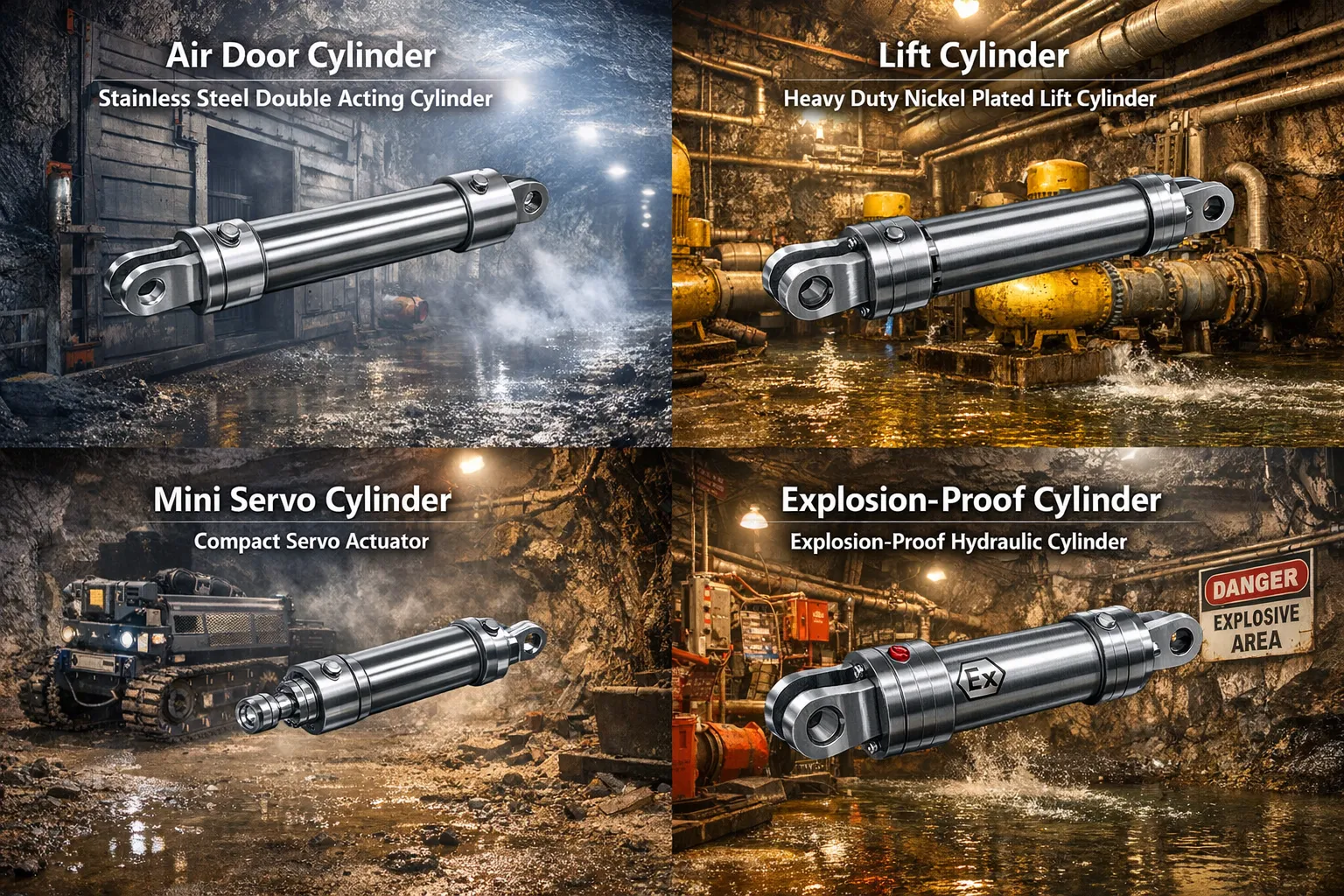
Seamless Upgrades and Legacy Brand Compatibility
A primary challenge for procurement managers tasked with overhauling an aging ventilation network is finding upgraded components that fit within the physical footprint of legacy machinery. When standard components fail, redesigning structural mounts and re-welding heavy linkages is incredibly costly and time-consuming. We have specifically engineered our Wind Door Hydraulic Cylinder series to eliminate this logistical hurdle.
Our engineering division utilizes internationally standardized dimensional metrics. By meticulously matching the pin-to-pin retracted length, the exact stroke travel, bore diameters, and fluid port threadings (such as NPT, BSPP, or SAE), our heavy-duty 316L units function as flawless, drop-in replacements for standard equipment originally supplied by legacy global manufacturers. For the strict purpose of dimensional cross-referencing and technical selection convenience, our hydraulic rams are frequently deployed to directly replace failing units from brands including Bosch Rexroth, Parker Hannifin, Eaton Vickers, SMC, and Enerpac.
Please note that mentioning these specific machinery brands does not constitute trademark infringement, nor does it imply any direct business affiliation; all trademarks remain the property of their respective corporate entities. Our objective is to simplify the process of fixing hydraulic cylinders for your maintenance teams. By upgrading to our purpose-built stainless steel actuators, your facility achieves absolute environmental immunity without the necessity of altering existing mechanical linkages, thereby drastically reducing the time required for comprehensive hydraulic cylinder repair.
Five Core Technical Advantages
What elevates our engineered fluid power solutions above the standard commercial offerings saturating the market? The distinction lies in our uncompromising dedication to specialized metallurgy and advanced internal tribology. Here are the five core technical advantages built into every unit we manufacture:
1. Absolute Pitting Resistance via 316L Stainless Steel
Standard carbon steel relies on a microscopic layer of hard-chrome plating. Under dynamic load, this plating develops micro-fissures. Highly acidic mine water penetrates these cracks, creating galvanic cells that rapidly rust the underlying steel, causing the surface to blister and pit. We completely eradicate this failure mode by utilizing solid 316L stainless steel. The high molybdenum content in the 316L alloy creates an impenetrable passive oxide layer, granting the rod supreme immunity against chloride-induced pitting.
2. Monolithic High-Rigidity Welded Construction
Conventional tie-rod cylinders are held together by four external bolts. Under the relentless vibration of massive ventilation fans and the sudden aerodynamic shockwaves of underground blasting, these tie-rods easily stretch and vibrate loose, leading to catastrophic fluid blowouts. Our Wind Door Cylinder features a heavy-duty welded structure. The heavy-walled barrel is permanently TIG welded to the end caps, forming a monolithic, hyper-rigid body that flawlessly resists structural deflection and violent side-loading.
3. Ultra-Low Friction Sealing Technology
The frequent switching requirement of automated air doors demands that the piston initiate movement constantly. Traditional nitrile rubber seals create high static friction, generating massive heat and causing jerky, “stick-slip” motion. We engineer our internal matrix using proprietary composite PTFE step seals and advanced polyurethane wipers. This ultra-low friction dynamic allows for perfectly smooth proportional control of the doors while effectively preventing thermal seal degradation.
4. Advanced Precision Surface Polishing Protocol
The longevity of any dynamic seal is entirely dependent on the surface finish of the extending rod. We do not merely machine our 316L stainless rods; we subject them to rigorous multi-stage centerless grinding and mechanical polishing. We achieve a surface roughness (Ra) of less than 0.2 micrometers. This mirror-like finish glides effortlessly through the seals, forcefully repelling abrasive rock dust while keeping the hydraulic oil completely contained.
5. Thermal Stability and Fatigue Life Optimization
Operating an actuator continuously generates intense internal fluid heat. Through advanced Finite Element Analysis (FEA), our engineering team optimizes the internal porting geometries and the physical clearances surrounding the hydraulic cylinder piston. This careful calculation promotes rapid heat dissipation and allows for natural thermal expansion of the metals without internal binding, pushing the fatigue life of the actuator into the millions of cycles.
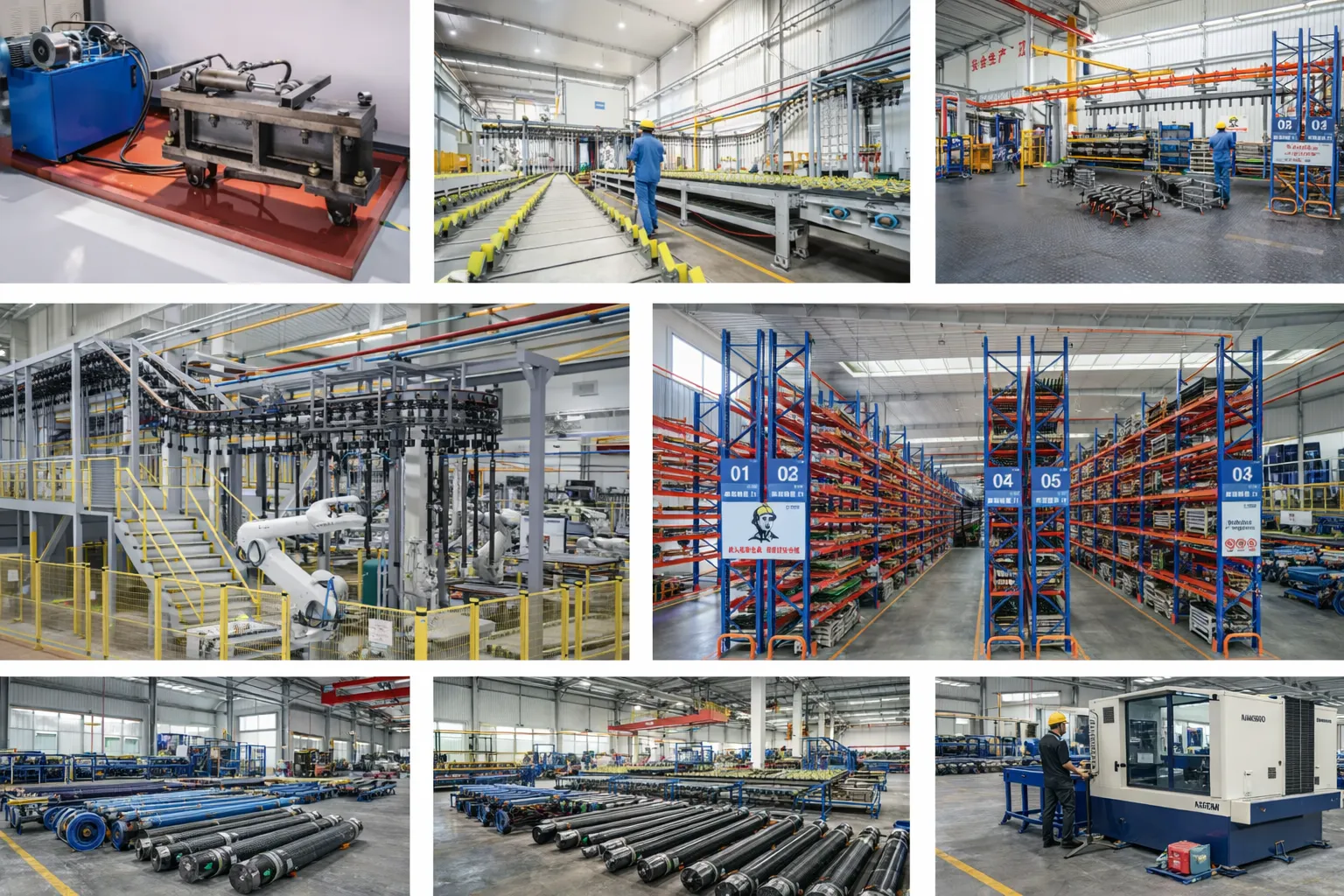
Autonomous Manufacturing & Uncompromising Quality Control
True industrial reliability cannot be achieved by merely assembling outsourced components. As a dedicated, full-spectrum manufacturer, we maintain absolute autonomous control over the entire production pipeline. Our manufacturing journey begins with stringent metallurgical verification. Every batch of raw stainless steel is tested via optical emission spectrometry to confirm its chemical composition and verify the critical high molybdenum content before any machining commences.
Our production facility utilizes state-of-the-art multi-axis CNC turning and milling centers, allowing us to hold internal bore concentricity to micron-level tolerances. The heavy-duty welding phase is executed by certified professionals operating automated orbital TIG welding robotics, which deliver deep, uniform penetration without compromising the structural integrity of the steel. Post-welding, we utilize ultrasonic non-destructive testing (NDT) to inspect structural seams, ensuring the total absence of microscopic voids or inclusions.
The culmination of our rigorous quality control is the mandatory 100% factory pressure test. We completely reject the concept of random batch sampling. Every single cylinder is securely mounted to our computerized hydraulic test benches and subjected to dynamic pressures 1.5 times greater than its maximum rated capacity. We meticulously check for external seal integrity, internal bypass leakage, and stroke smoothness. Finally, every unit is permanently laser-engraved with a serialized identification number. This provides our global clients with full lifecycle traceability, simplifying the future procurement of specific replacement hydraulic cylinder components decades down the line.
Versatile Industry Applications
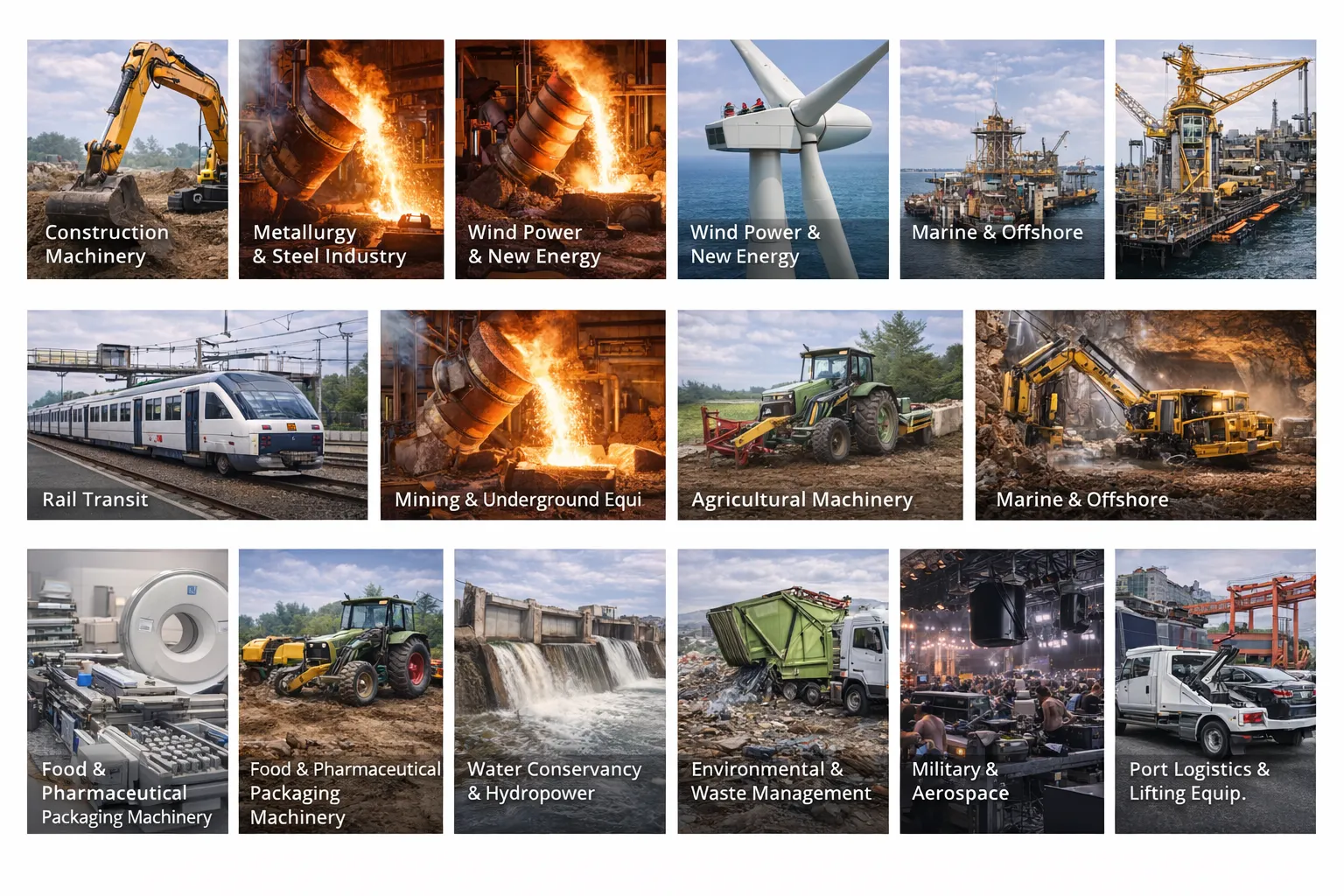
While definitively designed and highly optimized as a primary actuator for extreme underground ventilation systems, the inherent pitting resistance, immense structural rigidity, and high-frequency capabilities of this 316L welded structure translate perfectly to a wide array of demanding heavy industrial sectors. By exploring our comprehensive hydraulic cylinder portfolio, clients frequently adapt this specific build for other grueling applications.
- Mining Industry Equipment: Beyond ventilation air doors, these corrosion-resistant cylinders are ideal for actuating heavy aggregate hopper gates, massive conveyor belt tensioners, and emergency isolation bulkheads deep underground.
- Construction Machinery Industry: Employed extensively within massive tunnel boring machines (TBMs) where wet, abrasive slurry destroys standard equipment in weeks. They function brilliantly as robust steering actuators and as a highly durable lift cylinder.
- Metallurgy & Heavy Forging: Operating blast furnace exhaust dampers and heavy slag scrapers where ambient heat and corrosive process gases are a constant threat to standard plating.
- Marine & Offshore Platforms: The solid 316L stainless construction makes them the definitive choice for operating splash-zone equipment, deck hatches, and ROV deployment arms where salt spray induces rapid galvanic rusting.
- Chemical Processing & Wastewater: Providing reliable linear actuation for massive sluice gates and high-pressure filtration presses exposed to acidic organic compounds and hydrogen sulfide.
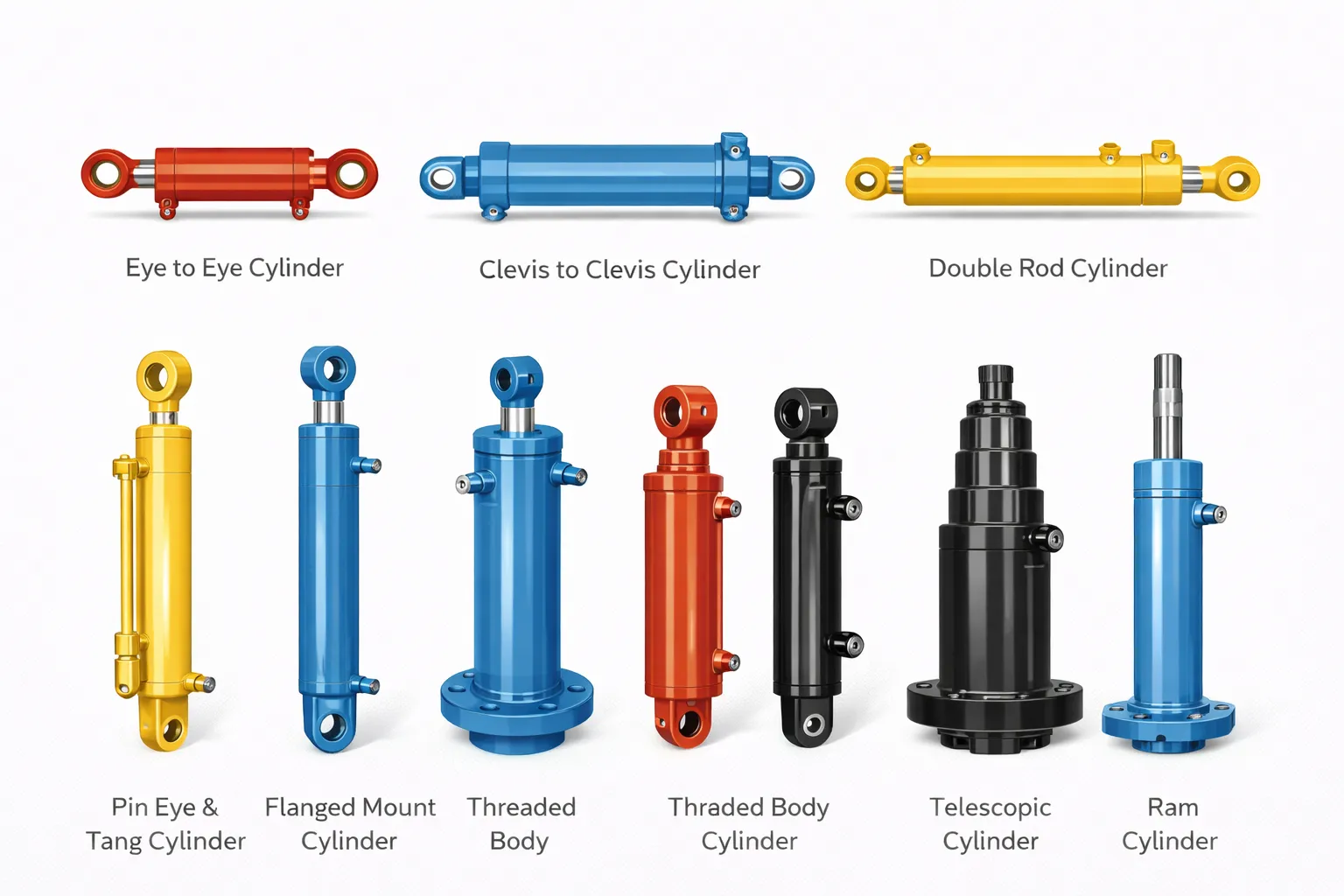
Comparative Analysis: Standard Commercial vs. High-Performance
Procurement teams and lead engineers must evaluate beyond the initial purchase order. The true metric of industrial value is the Total Cost of Ownership (TCO). This comparative analysis clearly illustrates why investing upfront in a purpose-built 316L Wind Door Hydraulic Cylinder drastically outperforms standard carbon steel alternatives when deployed in aggressive environmental settings.
| Performance Metric | Standard General-Purpose Cylinder | Our 316L Wind Door Cylinder |
|---|---|---|
| Rod Core Material | 1045 Carbon Steel | Solid 316L High-Molybdenum Stainless Steel |
| Surface Protective Layer | Thin Hard Chrome Plating (Micro-cracks easily) | No plating required; deep mechanical polishing |
| Pitting Corrosion Resistance | Extremely Poor in humid and acidic conditions | Exceptional Immunity (Prevents sub-surface rust) |
| Seal Friction Profile | Standard NBR Rubber (High drag, rapid heating) | Composite PTFE Matrix (Ultra-low friction dynamics) |
| Vibration & Shock Tolerance | Low. External tie-rods loosen under heavy blast impact | Maximum. Fully welded monolithic structure |
| Average Lifespan (Mining) | 4 to 8 Months before major seal blowout | 36 to 60+ Months of continuous reliability |
Proven Field Performance: 5 Real-World Case Studies
Theoretical engineering metrics are ultimately validated in the field. Our high-performance fluid power solutions are trusted by leading industrial consortiums across East Asia and globally. Below are five meticulously documented instances where our specialized Wind Door Cylinder permanently resolved critical operational failures, drastically improving facility safety and productivity.
Case 1: Deep Shaft Coal Extraction Facility (Taebaek, South Korea)
The Challenge: A major national mining corporation operating deep in the Taebaek mountains was experiencing catastrophic failures of their primary air door actuators. The extreme humidity combined with highly acidic, sulfur-rich groundwater was causing severe pitting on their standard carbon steel rods within four months. This led to blown seals, massive fluid leaks, and highly dangerous losses of ventilation pressure at the working face.
The Engineering Solution: The facility’s chief procurement engineer contacted us via our B2B portal in March 2024 after searching for corrosion-resistant hydraulic parts. We fast-tracked a custom batch of fully welded, 316L stainless steel double-acting cylinders featuring heavy-duty stroke cushioning.
The Verified Outcome: Installed in May 2024, the units have operated continuously with frequent daily switching. Recent ultrasonic inspections confirm absolutely zero surface pitting and no fluid bypass, effectively saving the mine an estimated $65,000 annually in emergency hydraulic cylinder repair costs.
“Upgrading to your 316L polished cylinders completely eliminated our weekend maintenance emergencies. The rods remain impeccably smooth despite the horrific atmospheric conditions down here. The quality of your engineering is unmatched.” — Mr. Kang Ji-hoon, Lead Mechanical Superintendent (December 2025)
Case 2: Coastal Tunnel Boring Project (Busan, South Korea)
The Challenge: During a massive highway tunneling project near the coast, saline groundwater intrusion filled the atmosphere with extremely corrosive salt spray. The standard hydraulic actuators controlling the emergency exhaust dampers were rusting heavily, causing the doors to bind and delaying critical blast-clearing operations.
The Engineering Solution: Referred to our team by a heavy machinery consultant in August 2024, we supplied our advanced Wind Door Hydraulic Cylinder equipped with specialized dual-lip polyurethane wiper seals to simultaneously repel saltwater and abrasive cement dust.
The Verified Outcome: The heavy-duty 316L material entirely rejected the saline oxidation. The project successfully concluded its 18-month boring phase without a single actuator failure or damper jamming incident.
“Your team’s understanding of environmental exclusion sealing is phenomenal. We demanded high-speed, flawless actuation for our safety bulkheads in a terrible salt-fog, and these welded cylinders delivered perfectly.” — Park Min-su, TBM Chief Engineer (February 2026)
Case 3: Automated Copper Extraction Facility (Hokkaido, Japan)
The Challenge: The implementation of a fully automated, PLC-controlled ventilation system required the air doors to modulate over 150 times a day to allow autonomous transport vehicles to pass. Standard urethane seals in their previous equipment were rapidly overheating due to friction, leading to severe thermal breakdown and catastrophic fluid blowouts.
The Engineering Solution: They found our detailed technical whitepapers via organic search in late 2023. We engineered a thermally optimized solution utilizing our proprietary PTFE-blended step seals and enlarged internal fluid flow ports to drastically reduce internal heat generation during high-speed actuation.
The Verified Outcome: Operational temperatures of the cylinders dropped by 20°C. The seal lifespan was effectively quadrupled, allowing the automated transport system to function 24/7 without bottleneck delays.
“Their deep understanding of fluid tribology and seal dynamics solved a massive headache for our automation team. Replacing the old units with these high-spec hydraulic rams was the smartest operational decision we made this year.” — Kenji Sato, Operations Automation Lead (January 2025)
Case 4: Heavy Steel Mill Exhaust Damper Retrofit (Kaohsiung, Taiwan)
The Challenge: Standard actuators controlling furnace fume extraction dampers were failing. The combination of intense radiant heat and corrosive sulfur dioxide gas was destroying the chrome plating. The erratic, sticking door movements caused dangerous fume leaks onto the factory floor.
The Engineering Solution: The plant manager contacted us in May 2025 to inquire about a highly competitive hydraulic cylinder price for a permanent stainless upgrade. We supplied custom 316L units featuring articulating spherical bearing mounts to absorb structural deflection caused by intense thermal expansion.
The Verified Outcome: The client documented a massive 300% increase in operational uptime for their exhaust control network. The precise proportional airflow control accuracy increased dramatically.
“The robust machining on the internal components is evident. The side-loading and stick-slip issues we fought with for years are completely gone. A brilliant, highly durable solution.” — Lin Wei-chen, Facility Procurement Manager (November 2025)
Case 5: Extensive Underground Coal Extraction (Quang Ninh, Vietnam)
The Challenge: The facility originally installed a cheap single acting hydraulic cylinder system to operate their heavy air doors. The passive spring return was entirely insufficient to pull the doors shut against the violent underground wind currents, leading to severe air pressure losses and dangerous door slamming.
The Engineering Solution: After a technical consultation in July 2024, we supplied oversized, thick-walled 316L double acting hydraulic cylinder assemblies featuring advanced hydraulic cushioning blocks at both ends of the stroke.
The Verified Outcome: Uninterrupted airflow control. The active bidirectional fluid power closed the doors firmly against the draft, while the soft-stop cushioning eliminated the mechanical slamming entirely, saving the concrete frames from shattering.
“The active retraction force of the double-acting system changed everything. We bolted them in, and we haven’t had to touch them since. The build quality and the soft-stop cushioning are simply spectacular.” — Nguyen Thanh, Mine Safety Officer (August 2025)
Expert Insights: Frequently Asked Questions (FAQ)
Integrating specialized fluid power equipment requires thorough technical evaluation. To assist engineering teams and B2B procurement managers, we have detailed the answers to the most common inquiries regarding our heavy-duty actuation solutions.
1. Why is 316L stainless steel specifically required for a Wind Door Cylinder in mining applications?
Standard carbon steel relies on a microscopic layer of hard chrome plating for protection. In harsh, wet mining environments subjected to continuous mechanical stress, this chrome develops micro-fissures. Acidic mine water containing dissolved chlorides enters these cracks, causing rapid sub-surface oxidation known as pitting corrosion. 316L stainless steel contains a high percentage of molybdenum, which fundamentally alters its metallurgical structure to resist chloride penetration. This makes it practically immune to pitting in these extremely humid and corrosive underground conditions, ensuring the rod remains permanently smooth.
2. Can your actuators serve as a direct drop-in replacement for my existing legacy cylinders?
Absolutely. As a comprehensive engineering manufacturer, we specialize in precise dimensional interchangeability. Provided you can supply us with the original engineering drawing, part number, or the critical dimensions (bore, rod diameter, stroke length, port threading, and pin-to-pin mounting measurements), we can manufacture a vastly superior 316L version that will bolt directly into your existing structural mounts without requiring any modifications to your heavy machinery or hydraulic pipework.
3. What dictates the final hydraulic cylinder price for a custom 316L order?
The final hydraulic cylinder price is determined by several core physical factors: the total required stroke length and bore diameter (which dictate the raw volume and weight of the solid 316L stainless steel required), the specific internal sealing configuration (e.g., standard low-friction PTFE vs. extreme-temperature FKM), and the complexity of the machined mounting hardware. However, when factoring in the total elimination of frequent downtime and the massively extended lifespan, our cylinders offer a profoundly lower Total Cost of Ownership (TCO) compared to continuously replacing standard commercial units.
4. Why must a ventilation actuator be a double acting hydraulic cylinder rather than single acting?
Ventilation doors in deep mines are subjected to massive aerodynamic forces due to the pressure differentials created by primary surface extraction fans. A single acting hydraulic cylinder relies on gravity or a mechanical internal spring to return. These passive forces are vastly insufficient to securely pull a heavy steel door shut against a violent underground wind current. A double acting hydraulic cylinder utilizes pressurized fluid for both extension and retraction, granting the automated control system absolute, unyielding mechanical control over the door’s position at all times, thereby preventing dangerous slamming.
5. Do you supply replacement hydraulic cylinder components for field maintenance?
Yes, our commitment extends well beyond the initial delivery. We maintain a comprehensive inventory of all internal hydraulic cylinder components—including custom PTFE seal kits, heavy-duty bronze guide rings, and spherical bearings—specifically cataloged to the laser-engraved serial number of your unit. Furthermore, while our 316L cylinders rarely fail, our bolted gland designs make the process of fixing hydraulic cylinders on-site highly straightforward for your trained maintenance technicians.
6. How do you address the ‘frequent switching’ requirement inherent in ventilation automation?
Frequent switching creates rapid internal heat buildup and accelerates seal wear due to continuous dynamic friction. We combat this tribological challenge through extreme precision mechanical polishing of the 316L rod, bringing the surface roughness to a near-mirror finish (Ra < 0.2). This drastically lowers the coefficient of friction. Additionally, we integrate advanced hydraulic cushioning blocks at the end of the stroke, ensuring that rapid opening and closing cycles do not result in violent mechanical impacts that would otherwise shatter the internal piston assemblies.
7. How does the welded construction compare to tie-rod designs in heavy machinery?
Tie-rod designs are held together by four exterior bolts, which are highly susceptible to stretching and loosening when exposed to the severe vibration, heavy impact shocks, and aerodynamic pressure spikes common in mining. Our heavy-duty welded construction permanently fuses the thick-walled barrel to the end caps using automated robotics. This creates a monolithic, hyper-rigid structure that easily absorbs lateral deflection and entirely prevents the catastrophic fluid blowouts associated with loose tie-rods.
8. Are your products compatible with fire-resistant or water-glycol hydraulic fluids?
Yes. In many coal mining and high-temperature metallurgical applications, the use of fire-resistant fluids (such as HFA, HFB, or HFC water-glycol emulsions) is mandatory for safety compliance. When specified during the design phase, our engineers will install customized internal seal packages and guide rings crafted from specific elastomers designed for total chemical compatibility with these fluids, preventing seal swelling, chemical degradation, or fluid contamination.
9. What are the typical lead times for shipping customized units to South Korea or Japan?
For standard custom configurations utilizing our stocked 316L billets and low-friction seal matrices, engineering, manufacturing, and rigorous testing generally require 3 to 4 weeks. Ocean freight from our facility to major industrial ports like Busan or Yokohama typically adds an additional 4 to 6 days. For highly urgent infrastructure replacement situations, we offer expedited manufacturing protocols and international air freight options to minimize your facility’s downtime.
10. How do I initiate an engineering consultation and receive an accurate quote?
To provide a precise technical proposal and quotation, our engineering team simply requires your basic operational parameters: desired bore diameter, rod diameter, total stroke length, maximum operating pressure, and preferred mounting style (e.g., clevis, trunnion, flange). You can submit these details, along with any existing technical drawings or photographs of failed units, directly through our contact portal. We guarantee a comprehensive engineering response and cost analysis within 24 to 48 hours.
Upgrade Your Critical Ventilation Infrastructure Today
Do not allow inadequate standard actuators to dictate your maintenance schedule or compromise the fundamental safety of your underground operations. Partner with a proven fluid power engineering leader to deploy the most resilient, pitting-resistant actuation solutions available on the global market.
Contact Our Engineering Specialists
Submit your specific technical parameters, and our team will deliver a comprehensive proposal and accurate cost analysis promptly.
Editor: Cxm