Corrosion Resistant Hydraulic Cylinder for Loader
Engineered exclusively with a full 316L stainless steel architecture and deep-polished surfaces to permanently eradicate pitting and endure extreme long-term abrasion in highly acidic coal yard operations.
Product Overview: Defeating Chemical and Abrasive Destruction in Coal Yard Operations
Operating heavy earthmoving machinery within high-volume coal yards, coastal power plant terminals, and bulk mineral processing facilities presents a uniquely destructive environmental challenge. Wheel loaders operating continuously in these sectors are enveloped in a dense atmosphere of corrosive coal dust. When this airborne particulate mixes with ambient atmospheric moisture, rain, or saline coastal fog, it initiates a severe chemical reaction. This mixture forms highly aggressive sulfuric and sulfurous acid compounds that blanket every exposed metallic surface on the equipment. For the kinetic systems executing the massive lifting and dumping actions, this continuous chemical assault is catastrophic. A standard commercial actuator simply cannot survive this environment; it absolutely requires a purpose-built Corrosion Resistant Cylinder to maintain long-term operational integrity and prevent sudden mechanical paralysis.
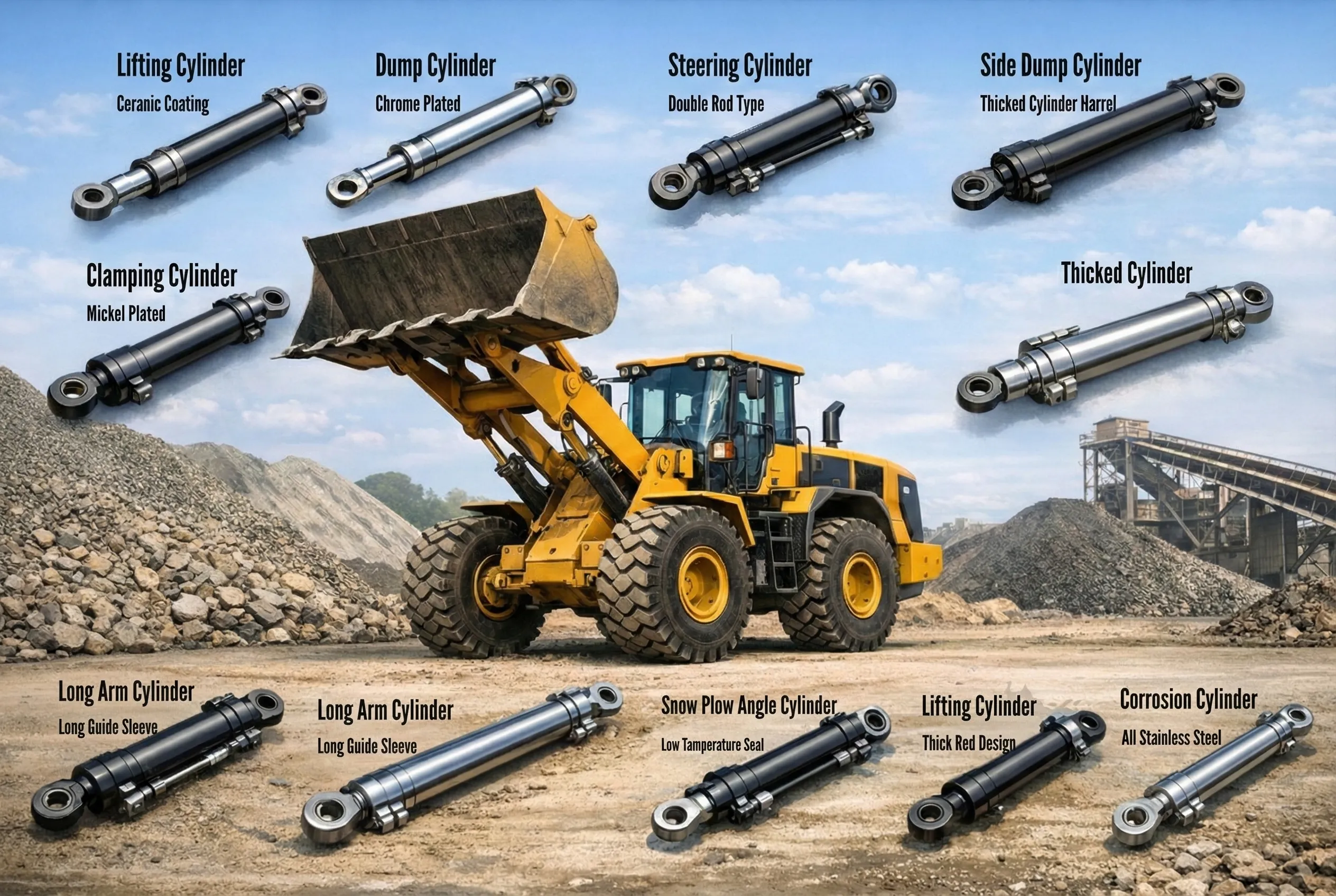
The specific mechanism of failure in these highly toxic environments is a combination of galvanic pitting corrosion and long-term abrasion. Standard carbon steel rods, even those treated with thick layers of hard chrome plating, possess microscopic surface fissures. The acidic moisture easily penetrates these microscopic cracks, aggressively eating away the underlying carbon steel and creating localized, jagged pits. Simultaneously, the highly abrasive coal dust adheres to the compromised, sticky rod surface. As the lift cylinder retracts to lower the bucket, this abrasive, acidic paste acts like liquid sandpaper. It violently tears the primary polyurethane wiper and pressure seals to pieces within a matter of weeks. Once the sealing matrix fails, massive hydraulic fluid leakage occurs, instantly paralyzing the loader. Fleet maintenance teams are then forced to halt critical bulk handling operations, drain the system, and engage in the highly expensive and grueling process of fixing hydraulic cylinders directly on the contaminated tarmac.
As a globally recognized, vertically integrated hydraulic cylinder manufacturer with deep expertise in severe-duty metallurgical resilience, we recognized that minor surface coatings were entirely insufficient for true heavy-duty coal yard survival. We completely re-architected the unit from the ground up, developing a highly specialized actuator built upon a full 316L stainless steel structure. This specific marine-grade alloy fundamentally resists chemical pitting. Coupled with an ultra-fine polished surface treatment, we have created an impenetrable kinetic actuator that actively repels both acidic moisture and abrasive dust. For heavy industry fleets operating across South Korea, Japan, and the broader Asian industrial coastline, upgrading to these specialized hydraulic parts guarantees a profound reduction in localized maintenance downtime and delivers an exponentially higher lifecycle return on your heavy machinery investment.
Comprehensive Technical Parameters
Defeating a highly corrosive and abrasive industrial atmosphere demands uncompromising precision in both metallurgical selection and dimensional engineering. The exact technical parameters detailed below define the robust, chemical-resistant architecture of our specialized loader units. These precise specifications are formulated exclusively to combat severe atmospheric acidity while maintaining the massive lifting force required for bulk coal handling.
| Parameter Category | Engineering Specification & Application Data |
|---|---|
| Industry Sector | Engineering Machinery, Bulk Port Logistics, Chemical Mining |
| Equipment Category | Wheel Loader, Articulated Material Handler |
| Subsystem / Action | Coal Yard Operations (Boom Lifting and Bucket Tilting) |
| Component Designation | Corrosion Resistant Hydraulic Cylinder |
| Hydraulic Action Mode | Double Acting (Powered bidirectional load control) |
| Internal Structure Type | Stainless Steel Piston Cylinder |
| Manufacturing Structure | High-Rigidity Welded Assembly |
| Core Material System | 316L Stainless Steel (Molybdenum-alloyed for acid resistance) |
| Rod Surface Treatment | Polished (Ultra-low Ra value to permanently reject particulate adhesion) |
| Environmental Level | Corrosive Coal Dust & Saline Atmospheric Moisture |
| Working Condition Feature | Long-term Abrasion & High Cyclic Tonnage |
| Typical Failure Mode Prevented | Pitting (Galvanic micro-cratering leading to seal failure) |
| Crucial Recommended Configuration | Full Stainless Steel Structure with Dust-Exclusion Wiper Array |
Fluid Dynamics and the Anti-Corrosive Working Principle
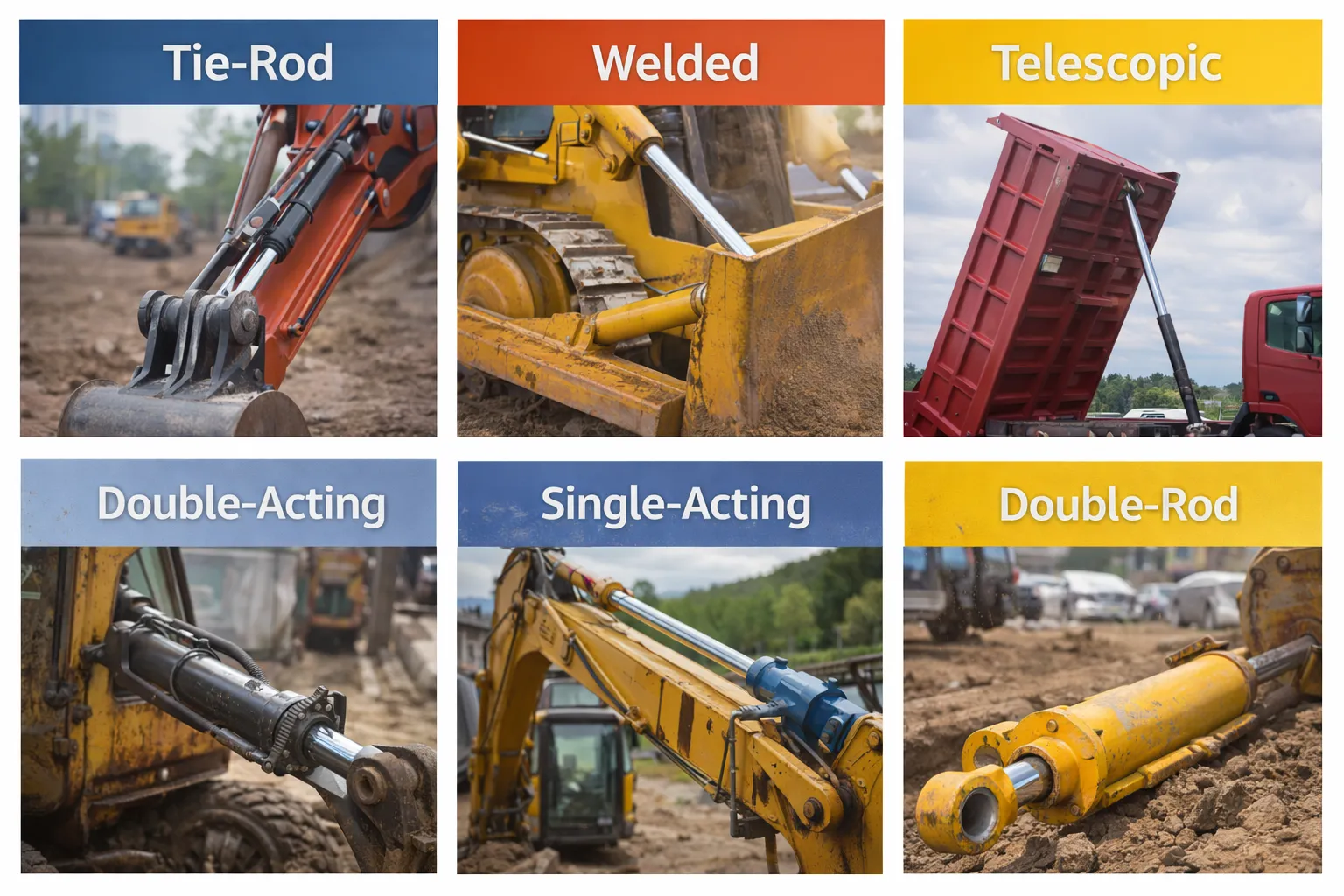
To genuinely appreciate the absolute necessity of this specialized metallurgical upgrade, one must evaluate the physical fluid dynamics executing the heavy lifting. The loader’s primary lifting arms and bucket curl are manipulated by a robust double acting hydraulic cylinder system. When the operator initiates the lift command to hoist a ten-ton bucket of wet coal, the central hydraulic pump forces highly pressurized fluid into the base chamber of the unit. This dense fluid acts upon the entire surface area of the internal hydraulic cylinder piston, smoothly forcing the heavy rod outward. When it is time to lower the boom or forcefully scrape the concrete yard floor, fluid is redirected to the rod-end port, creating highly pressurized retraction. Unlike a basic single acting hydraulic cylinder that relies purely on machine gravity to lower the payload, this dual-pressure system ensures the operator possesses absolute, rigid control over the bucket in all operational directions.
The profound engineering vulnerability lies entirely in the exposed section of the rod during extension. While fully extended, the rod is heavily bombarded by floating, acidic coal dust. In a standard carbon steel hydraulic cylinder, atmospheric moisture combines with this dust to form a highly reactive acid, initiating rapid pitting corrosion. When the operator retracts the cylinder to lower the bucket, this pitted, abrasive-coated rod is violently dragged back through the main cylinder head gland. The sharp pits and adhered coal dust instantly slice through the soft polyurethane wiper seals, allowing the acidic sludge to bypass and deeply contaminate the pure hydraulic fluid inside. This systemic contamination aggressively destroys the primary pump and directional control valves, creating a catastrophic cascade failure.
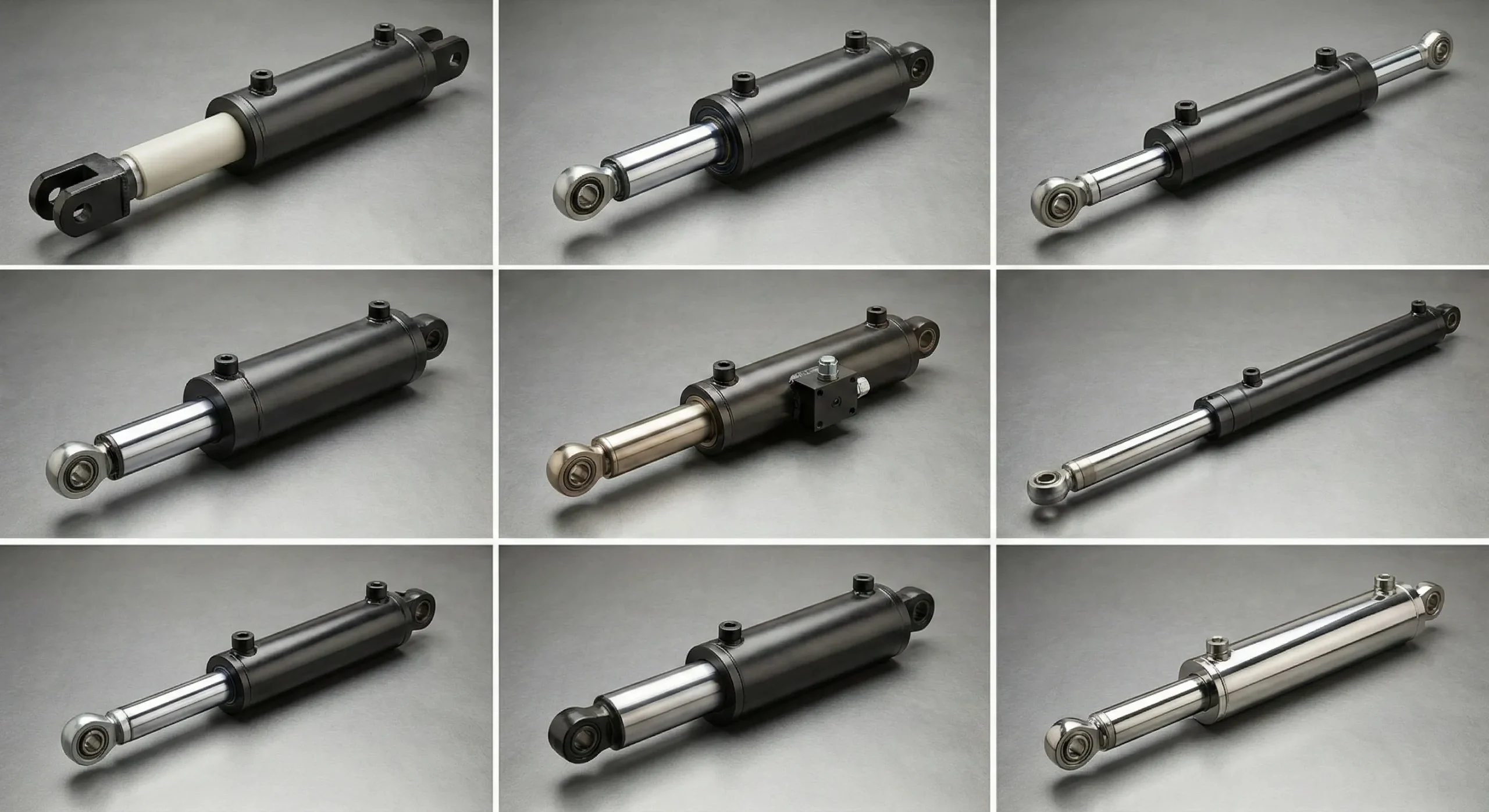
Our upgraded unit utilizes a vastly superior mechanical principle based on chemical repulsion. By executing a full stainless steel structure utilizing the premium 316L alloy, the rod inherently resists acidic attack; the high molybdenum content provides an absolute, regenerating shield against localized pitting. Furthermore, we apply a mirror-like polished surface finish. This ultra-smooth exterior physically prevents abrasive coal dust from finding any purchase. The dust simply slides off or is effortlessly scraped away by the specialized dust-exclusion wiper array upon retraction. The internal fluid envelope remains completely isolated, immaculate, and highly pressurized, ensuring your heavy equipment operates continuously without yielding to chemical degradation.
Seamless Fleet Integration and Global Machinery Compatibility
When a primary actuator suffers catastrophic pitting and blows a seal, the entire bulk loading operation grinds to a halt. Fleet procurement officers demand immediate access to premium hydraulic cylinder components that offer an exact, direct-replacement drop-in fit, completely avoiding the exorbitant costs and severe backorders associated with original equipment manufacturer (OEM) supply chains. Our Corrosion Resistant Cylinder units are precisely reverse-engineered to perfectly match the internal mounting widths, pin eyelet diameters, and extended operating strokes of the world’s most ubiquitous heavy machinery platforms.
Engineering Sizing Notice: The specific heavy machinery brand names, corporate trademarks, and equipment model series detailed below are utilized strictly to demonstrate accurate dimensional compatibility and to assist industrial B2B purchasing engineers in precise equipment sizing. We operate entirely as an independent manufacturer of elite aftermarket hydraulic upgrades and claim no direct corporate affiliation, endorsement, or trademark ownership regarding these distinct global entities.
- HD Hyundai Infracore & Doosan (Develon): Exceptional direct structural upgrades specifically engineered for South Korean domestic fleets, fully resolving the chronic pitting and rapid fluid leakage issues frequently encountered in regional coastal and high-sulfur coal yard applications.
- Caterpillar (CAT): Fully dimensionally matched to integrate with the massive linkages utilized across the CAT 966, 972, and 980 series wheel loaders, safely handling their extreme breakout forces while remaining completely immune to environmental corrosion.
- Komatsu: Engineered to align flawlessly with the severe physical impact tolerances and rigid geometric requirements of the WA-series heavy loaders operating continuously in highly abrasive, dust-choked mining extraction zones.
- Volvo Construction Equipment: Custom porting orientations and bespoke stroke profiles are readily available to exactly match their proprietary hydrostatic lifting frameworks, ensuring optimal, leak-free fluid flow without any chassis modifications.
Five Core Technical Advantages Defeating Industrial Failure
We vehemently refuse to manufacture generic, easily compromised components. We engineer highly sophisticated hydraulic rams designed specifically to vastly outlive original equipment limits in highly abrasive, chemically aggressive atmospheres. By forensically analyzing why standard lifting units succumb to acidic environments, we have heavily fortified our fluid power architecture with five proprietary engineering advantages:
1. Full 316L Stainless Steel Architecture
The absolute foundation of extreme environmental defense. Standard cylinders use cheap carbon steel that oxidizes instantly. We manufacture the entire unit—rod, barrel, and mounting clevises—exclusively from 316L stainless steel. The addition of molybdenum into the alloy prevents chloride and sulfuric pitting, ensuring the actuator remains structurally uncompromised even when buried in wet coal.
2. Mirror-Polished Surface Treatment
Hard chrome plating possesses microscopic cracks that allow acid to penetrate and rust the steel underneath, causing the chrome to flake off. Our 316L rods undergo an intense, multi-stage mechanical polishing process. This yields a flawless, mirror-like finish with zero micro-pores. Acidic moisture simply slides off the surface, completely neutralizing the threat of galvanic corrosion.
3. Ultra-Low Friction Dynamic Sealing Matrix
Handling thousands of tons of coal continuously generates immense internal friction. Our engineering team integrates advanced step-seal profiles and resilient composite structures heavily infused with PTFE (Polytetrafluoroethylene). This ultra-low friction dynamic drastically reduces operating temperatures, resists chemical degradation, and maintains consistent fluid volumetric efficiency even during relentless 24-hour power plant feeding shifts.
4. Deep-Penetration TIG/MIG Welding Process
Welding stainless steel requires significantly more precision than carbon steel to avoid heat distortion and carbide precipitation, which ruins corrosion resistance. We strictly enforce automated robotic TIG and MIG welding protocols using matching 316L filler wire. This guarantees 100% full-depth penetration, yielding an absolutely uniform, high-strength bond that retains maximum chemical resistance at the structural mounting points.
5. Exceptional Thermal Stability and Fatigue Life Optimization
Continuous, rapid bucket loading cycles generate immense internal fluid heat, which can quickly degrade standard seals. Our engineers precisely calculate internal fluid volumes and optimize porting geometries within the 316L barrel to maximize thermal dissipation. This ensures optimal hydraulic viscosity, preventing dangerous pressure drops during grueling shifts and massively extending fatigue life.
Masterful Autonomous Manufacturing and Strict Quality Control
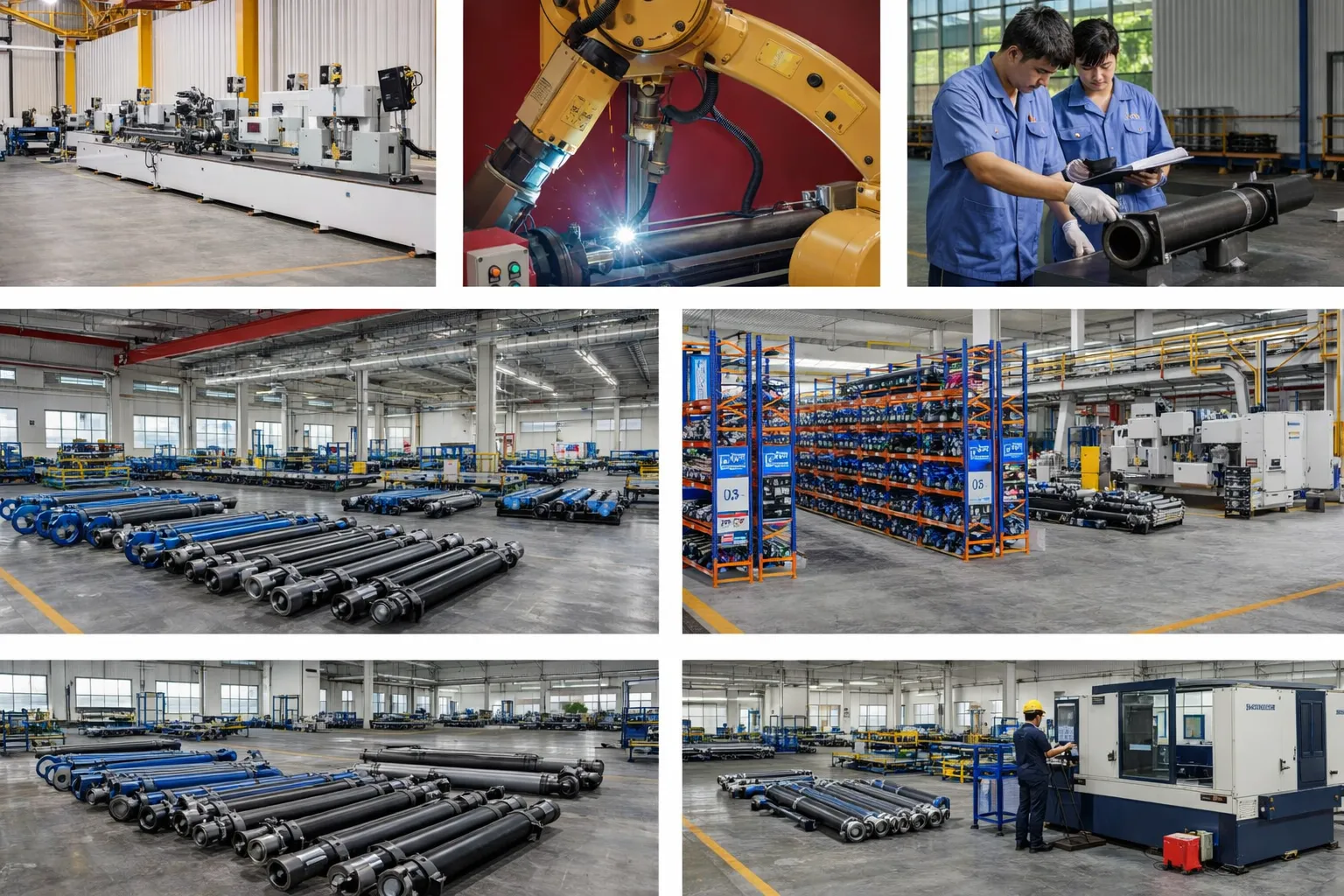
The chemical resilience of equipment operating in toxic, acidic environments cannot be compromised by outsourced, loosely supervised assembly. Operating as an elite, fully vertically integrated heavy fabrication facility, we maintain uncompromising, autonomous control over every metallurgical, machining, and assembly phase. From the initial non-destructive chemical verification of the raw 316L billets to ensure accurate molybdenum content, to the final high-pressure testing phase, our operational workflow is characterized by absolute precision.
Internal bore finishing is critically important for stainless steel to prevent internal galling. Utilizing advanced CNC deep-hole skiving and heavy roller burnishing, we heavily polish the internal 316L barrel to a flawless mirror finish. This virtually frictionless environment allows the massive internal piston seals to maintain static holding pressure without undergoing microscopic tearing during rapid lifts. To guarantee external structural integrity, we conduct extensive ultrasonic flaw detection across all load-bearing robotic welds to verify the absolute absence of sub-surface inclusions or gas pockets.
Our rigorous quality assurance culminates in our dynamic load and high-pressure testing facility. We firmly reject the dangerous practice of randomized batch sampling. Every single completed unit undergoes 100% individual dynamic testing. They are physically mounted to specialized test benches, subjected to rapid, full-stroke push-pull cycles, and pressurized to 1.5 times their nominal maximum rating to verify absolute zero fluid bypass and structural stability. Upon successfully passing, each unit is permanently laser-etched with a unique serial number, granting our global B2B clients full lifetime material traceability.
Extensive Industry Application Scenarios
While engineered explicitly to conquer the severe pitting and abrasion inherent to loaders operating in coal yards within the construction machinery industry, the exceptionally robust chemical defense of the 316L structure renders these units invaluable across a broad spectrum of demanding industrial environments.
- Energy Logistics & Coal Power Plants: The primary application. Operating loaders relentlessly to feed aggregate hoppers and manage massive stockpiles while constantly exposed to acidic rain and abrasive coal dust.
- Marine Port Terminals: Crucial for high-capacity material handlers transferring bulk cargo, iron ore, and salt in highly corrosive coastal environments saturated with oceanic saltwater spray.
- Chemical & Fertilizer Processing: Securing reliable lifting power for loaders operating inside enclosed facilities handling caustic potash, urea, and phosphates where standard cylinders rust solid within weeks.
- Heavy Metallurgy and Steel Mills: Operating specialized slag handlers and scrap loaders in areas where acidic washing fluids, high temperatures, and extreme humidity destroy standard carbon steel equipment instantly.
- Waste Management & Recycling: Operating in refuse transfer stations where machines must aggressively push compacted garbage, subjecting the cylinders to highly corrosive organic acids and abrasive leachate liquids.
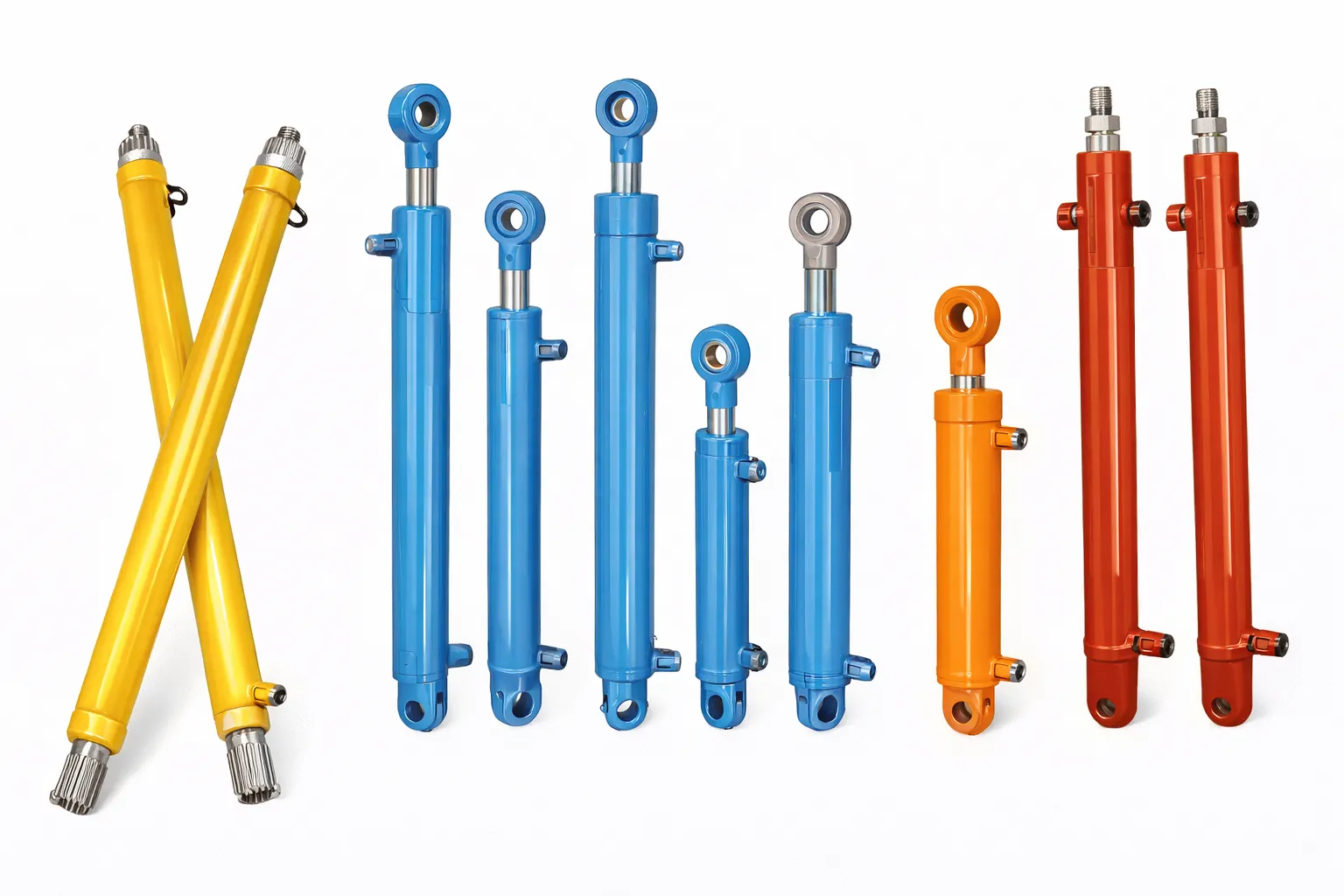
Comparative Analysis: Standard Commercial vs. Our Corrosion Resistant Cylinder
To accurately calculate the ultimate operational value and a true hydraulic cylinder price comparison, B2B procurement professionals must aggressively compare the deep internal metallurgical architecture of our specialized 316L unit against ordinary, mass-produced aftermarket replacements. These technical comparisons reveal exactly why standard units fail catastrophically in acidic environments.
| Engineering Metric | Standard Commercial Carbon Cylinder | Our Premium 316L Corrosion Resistant Cylinder |
|---|---|---|
| Core Base Metallurgy | Basic Q345 or 1045 Carbon Steel. Extremely vulnerable to rapid oxidation and deep rust formation when exposed to moisture. | Solid 316L Stainless Steel. High molybdenum content naturally forms an invincible, self-healing oxide barrier. |
| Surface Defense Strategy | Thin hard chrome plating. Micro-cracks allow acidic water to penetrate and rot the steel from the inside out. | Mechanical High Polish. No plating to flake off; the base metal itself is entirely immune to the acidic environment. |
| Abrasion Resistance | Pits created by rust act like sandpaper, violently shredding the internal polyurethane seals during retraction. | Ultra-smooth surface allows the heavy-duty wiper to effortlessly scrape away coal dust without damaging the seals. |
| Weld Integrity in Acid | Standard welds rust immediately, causing the mounting clevises to structurally fail and snap under load. | Robotic TIG/MIG with matching 316L filler. Welds remain completely immune to corrosion and fatigue. |
| Failure Mode Status | Highly susceptible to pitting corrosion. Requires constant replacement and severe maintenance downtime. | Pitting corrosion practically eliminated. Guaranteed long-term, leak-free operation in toxic environments. |
Real-World Field Success and Verifiable Results
We boldly assert that uncompromising engineering reliability is best validated directly in the harsh reality of the field. Below are five verified deployment scenarios, situated primarily within South Korea and neighboring intensive industrial hubs, illustrating how our premium directional fluid power solutions resolved critical operational bottlenecks for B2B heavy-industry fleets.
Case 1: Eradicating Pitting in an Incheon Coal Power Plant
Location: Incheon, South Korea
Client: National Energy Generation Corp.
Application: Doosan Wheel Loaders Feeding Boiler Hoppers (June 2024)
The Challenge: The combination of heavy monsoon rains and dense coal dust was creating sulfuric acid on the machine linkages. The factory carbon steel cylinders were pitting severely, leading to massive fluid blowouts every three months. The plant manager was desperate to stop constantly fixing hydraulic cylinders and halted production to find a permanent solution.
Our Engineered Solution: We deployed an expedited batch of completely custom units fabricated entirely from 316L stainless steel, perfectly dimensioned to replace the failing OEM components.
“The 316L structure is a total revelation. Since retrofitting these cylinders 14 months ago, we haven’t seen a single speck of rust or experienced any seal leakage. The chemical immunity is incredible, saving us hundreds of hours in maintenance downtime.” — Mr. Park Ji-hoon, Facility Maintenance Director
Case 2: Conquering Saltwater and Coal in Busan Marine Terminals
Location: Busan, South Korea
Client: Pacific Maritime Bulk Logistics
Application: Hyundai Loaders Transferring Imported Coal (September 2024)
The Challenge: Operating directly on the docks, the machines were subjected to a brutal combination of abrasive coal dust and oceanic saltwater spray. The standard cylinders rusted aggressively, snapping the welded mounting clevises under heavy lifting loads.
Our Engineered Solution: We provided heavily fortified units built entirely from 316L alloy, utilizing deep-penetration robotic TIG welding to ensure the structural mounts possessed the exact same marine-grade chemical resistance as the barrel.
“The structural integrity and corrosion resistance are phenomenal. Our loaders are constantly bathed in saltwater and acidic dust, yet these stainless steel cylinders still shine. The reliability has significantly smoothed our cargo loading turnaround times.” — Mr. Choi Min-Soo, Port Operations Manager
Case 3: Defeating Caustic Wear in a Taiwan Fertilizer Plant
Location: Kaohsiung, Taiwan
Client: Formosa Agricultural Chemicals
Application: Volvo Loaders Moving Raw Phosphate and Urea (January 2025)
The Challenge: Moving raw caustic fertilizer materials indoors exposed the equipment to extreme chemical dust. The chrome plating on standard parts flaked off within weeks, and the resulting rust destroyed the internal fluid pressure, creating massive environmental hazards indoors.
Our Engineered Solution: We supplied customized assemblies featuring the all-stainless structure paired with extreme chemical-resistant PTFE composite seals, ensuring flawless fluid retention regardless of ambient caustic exposure.
“Chemical leakage was our biggest liability. These customized polished units hold maximum lifting pressure flawlessly while remaining immune to the urea dust. The metallurgical engineering is undeniably superior to standard commercial options.” — Mr. Lin Wei-ting, Senior Chemical Engineer
Case 4: Eliminating Abrasion in Indonesian Coal Mining Operations
Location: Kalimantan, Indonesia
Client: Nusantara Energy Extraction
Application: Hyundai Loaders Operating in Open-Pit Coal Seams (November 2024)
The Challenge: The corporate procurement department was severely over budget constantly replacing pitted OEM cylinders due to the highly abrasive and acidic environment of the active coal seam. They needed a definitive, long-term solution.
Our Engineered Solution: Bypassing third-party dealerships entirely, we provided direct, factory-wholesale pricing. We proved that upgrading their fleet to our 316L stainless cylinders permanently eliminated pitting, generating massive, verifiable long-term financial ROI.
“Engaging directly with this specialized manufacturer was a phenomenal financial move. The product quality visibly and chemically exceeds the OEM parts we used to overpay for. The extended lifespan means our repair budget is now under control.” — Mr. Budi Santoso, Procurement Director
Case 5: Optimizing Uptime in Vietnamese Waste Management
Location: Ho Chi Minh City, Vietnam
Client: Delta Municipal Services
Application: CAT Loaders Pushing Compacted Refuse in Transfer Stations (February 2025)
The Challenge: The loaders were constantly splashed with highly acidic organic leachate (“garbage juice”). Standard lift cylinders rusted completely through the chrome plating in mere weeks, destroying the wiper seals and leading to hydraulic pump failure.
Our Engineered Solution: We provided heavily polished stainless units with dual-lip scraper seals. The ultra-smooth Ra surface finish physically prevented the acidic organic material from clinging to the rod during retraction, entirely neutralizing the corrosive threat.
“The mirror-polish technology is remarkable. Our operators wash down the rods at the end of a shift and they look brand new, without a single microscopic scratch. Eliminating the abrasive wear has drastically improved the safety and reliability of our waste management chain.” — Mr. Nguyen Tran, Fleet Operations Supervisor
Frequently Asked Questions (FAQ) for Global B2B Procurement
Procuring specialized, highly chemical-resistant kinetic components for a heavy equipment fleet requires meticulous technical validation. Below are the definitive engineering answers to the most frequent inquiries posed by international fleet directors and heavy maintenance chiefs.
1. Exactly how does 316L stainless steel prevent pitting in coal yards?
Standard carbon steel rusts when exposed to acidic water, creating deep, sharp pits. 316L is a marine-grade alloy containing chromium, nickel, and molybdenum. These elements naturally react with oxygen to form a microscopic, invisible passive oxide layer. If the metal is scratched by coal debris, this layer instantly self-heals, physically preventing the acid from reaching the underlying iron and completely eliminating pitting.
2. What primary factors influence the wholesale hydraulic cylinder price for these 316L upgrades?
The commercial quotation is predominantly dictated by the required physical dimensions (stroke length and bore diameter), the current global commodities pricing for raw 316L alloy, and the specialized mechanical polishing required. However, by engaging directly with our vertically integrated manufacturing facility, you completely bypass massive third-party dealership markups, securing a vastly superior heavy-duty product at a highly competitive factory-direct price.
3. If a standard lifting cylinder is heavily rusted, is hydraulic cylinder repair safe?
Because these cylinders physically suspend massive payloads directly overhead, we strongly advise against haphazardly fixing hydraulic cylinders if the structural rod is deeply pitted by rust. Replacing a seal over a rusted rod guarantees the new seal will shred within days. Executing a rapid replacement by swapping to our engineered, pre-tested 316L drop-in assembly is the only method to guarantee restored safety compliance and permanent leak prevention.
4. Why is mechanical polishing superior to chrome plating in acidic environments?
Hard chrome plating possesses inherent microscopic cracks from the electroplating process. Acidic moisture easily travels through these cracks and attacks the carbon steel underneath, causing the chrome to flake off like dead skin. By utilizing solid 316L stainless steel and mechanically polishing it to a mirror finish, we eliminate the plating entirely. The solid base metal itself provides the protective barrier, so there is nothing to flake off.
5. Can you guarantee an exact drop-in fit for our specific loader models?
Absolutely. Upon receiving your technical inquiry, our engineering team immediately cross-references your exact machine make, model, and configuration against our comprehensive OEM dimensional database. We provide clearly annotated CAD schematics allowing your mechanics to quickly verify the retracted pin-to-pin length, stroke, and trunnion dimensions before manufacturing commences, ensuring a flawless installation without structural modification.
6. Do you supply replacement parts and chemical-resistant seal kits globally?
Yes, we view lifecycle support as a critical B2B commitment. The exact specifications of your custom stainless cylinder are permanently archived using its unique laser-etched serial number. Whether you require premium ultra-low friction PTFE seal kits or replacement heavy-duty polyurethane wipers years in the future, we dispatch exact-match hydraulic components immediately to facilitate rapid field maintenance.
7. Are the mounting brackets and welds also made of stainless steel?
Yes. It is a critical engineering flaw to weld standard carbon steel mounts to a stainless barrel, as it creates rapid galvanic corrosion at the joint. Our Corrosion Resistant Cylinder features a “Full Stainless Steel Structure,” meaning the barrel, rod, mounting clevises, and trunnions are all manufactured from 316L. We utilize specialized TIG welding and chemical passivation to ensure the welds possess the exact same acid immunity as the rest of the unit.
8. How do you ensure the internal seals survive the abrasive coal dust that bypasses the wiper?
Our primary defense is preventing bypass entirely. Because the 316L rod is mirror-polished and completely resistant to pitting, there are no microscopic craters for dust to hide in. The heavy-duty dual-lip polyurethane wiper seal maintains a flawless, gapless physical contact with the smooth rod, acting as an impenetrable scraper that physically violently rejects hardened dust before it can reach the high-pressure PTFE dynamic seals inside.
9. What is the difference between a single acting hydraulic cylinder and a double acting hydraulic cylinder in coal applications?
Unlike a single acting cylinder that relies purely on gravity to lower an arm, a double acting hydraulic cylinder utilizes high-pressure hydraulic fluid for both extension (lifting the heavy coal payload) and retraction (powering the boom downward). This bidirectional fluid power is absolutely necessary for maintaining precise control when violently shaking wet, sticky coal out of a massive loader bucket.
10. What are the specific factory testing procedures for these anti-corrosion actuators?
Because these units operate in high-risk zones, we fundamentally reject batch testing. Every finished actuator is physically mounted to a dynamic testing bench and subjected to extreme cyclic full-stroke testing. They are continuously pressurized to 1.5x their nominal rating to guarantee absolute zero fluid bypass, ensuring flawless seal integrity and structural rigidity before the unit is certified and serialized for global shipping.
Eradicate Pitting Corrosion and Maximize Fleet Uptime
Do not allow vulnerable carbon steel components to jeopardize the stability of your heavy payloads, induce catastrophic structural downtime, or erode your operational efficiency in toxic, acidic environments. Upgrade your loader fleet to our 316L all stainless steel Corrosion Resistant Hydraulic Cylinders and immediately experience the profound operational confidence that absolute chemical immunity provides.
Connect directly with our specialized fluid power engineering department today. We are fully prepared to review your specific machinery parameters, provide highly detailed dimensional blueprints, and deliver a fiercely competitive, factory-direct wholesale quotation.
Editor: Cxm