Collector Tube Open/Close Cylinder for CSP Station
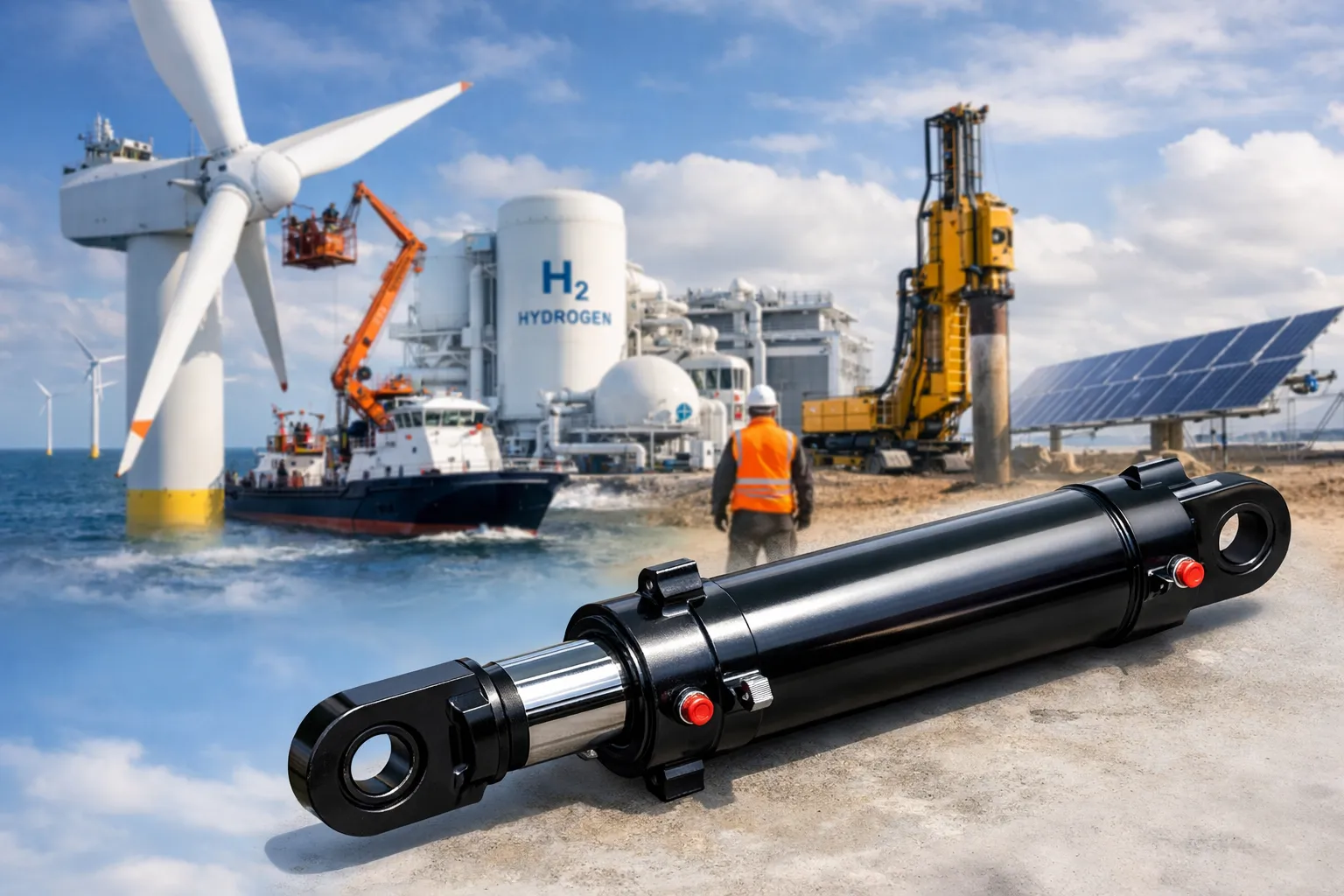
Engineered with highly polished 316L stainless steel and high-temperature elastomeric seals to deliver uncompromising reliability in the most severe renewable energy environments.
Product Overview & Core Industrial Value
Operating a Concentrated Solar Power (CSP) facility is a constant battle against environmental extremes. The absolute core of these renewable energy stations is the thermal collection system. In both parabolic trough and linear Fresnel configurations, a network of highly fragile glass vacuum tubes absorbs concentrated solar radiation to heat thermal transfer fluids to massive temperatures. To guarantee optimum thermal efficiency, these arrays must accurately track the daily trajectory of the sun while retaining the capability to rapidly assume a defensive stow position during severe meteorological events. This critical physical manipulation is exclusively driven by the collector tube opening and closing cylinder.
Standard industrial fluid power equipment is entirely inadequate for this application. Solar thermal plants are frequently constructed in harsh geographies, particularly the coastal and mountainous regions of South Korea, where equipment is subjected to a relentless combination of high ambient temperatures, abrasive silica dust, and highly corrosive chloride-rich sea air. An ordinary actuator will quickly suffer from severe external rusting, which subsequently shreds the wiper seals and causes catastrophic internal fluid blowouts. As a specialized hydraulic cylinder manufacturer, we deeply understand that a failure in the tracking actuation system paralyzes the entire energy generation block.
To resolve these inherent vulnerabilities, we have meticulously developed a specialized collector tube opening and closing cylinder. Our unique industrial positioning completely abandons standard carbon steel designs in favor of a solid 316L stainless steel piston cylinder architecture. This metallurgical upgrade provides an absolute defense against localized pitting corrosion. Combined with our advanced high-temperature sealing technology, our hydraulic cylinder guarantees decades of uninterrupted, leak-free operation. When assessing the long-term operational costs of a utility-scale solar grid, investing in our zero-maintenance fluid power solutions provides an extraordinarily favorable hydraulic cylinder price-to-performance ratio, ultimately maximizing your facility’s energy yield and financial profitability.
Technical Parameters & Customization Matrix
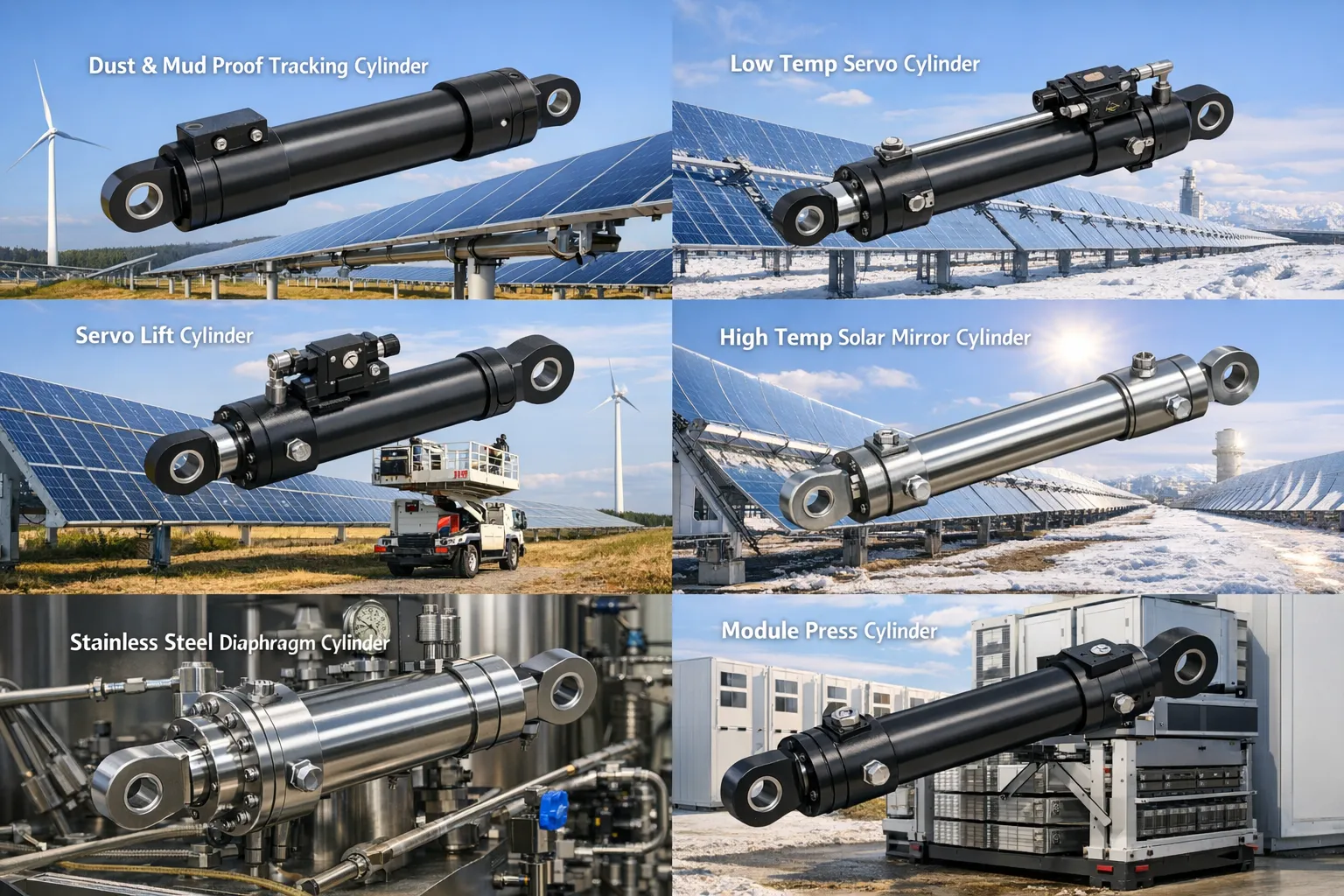
Integrating fluid power into a complex solar tracking linkage requires exact dimensional tolerances and precise force calculations. Our engineering team routinely customizes the internal bore sizes, stroke lengths, and mounting configurations to accommodate the specific wind shear loads and structural mass of your unique solar field. The comprehensive table below details our primary specifications and customizable technical boundaries.
| Engineering Category | Specification Details & Adaptable Ranges |
|---|---|
| Industry Sector | New Energy / Concentrated Solar Power (CSP) Stations |
| Subsystem Group | Heat Collector Tube Actuation System |
| Component Designation | Collector tube opening and closing cylinder |
| Primary Action Mode | Double acting hydraulic cylinder (Powered extension and retraction) |
| Architectural Structure | Stainless steel piston cylinder (No tie-rods) |
| Manufacturing Method | Heavy-duty automated TIG welded assembly |
| Base Material System | Premium Solid 316L Austenitic Stainless Steel |
| Surface Machining Finish | Precision mechanical polishing (Surface Roughness Ra less than 0.2) |
| Environmental Adaptation Grade | Extreme high temperature + aggressive coastal corrosion |
| Primary Working Condition | Open and close collector tube arrays under dynamic wind loads |
| Crucial Failure Mode Prevented | Chloride corrosion pitting and thermal elastomeric seal melting |
| Seal Configuration Focus | Viton (FKM) and PTFE composite matrix for continuous 200 C+ tolerance |
| Installation Interface Options | Self-lubricating spherical bearings, heavy forged trunnions, rod clevis |
Fluid Dynamics & Operational Working Principle
To fully appreciate the necessity of high-grade engineering in a solar farm, one must understand the complex bidirectional fluid mechanics occurring within the actuation unit. A CSP station operates via a centralized programmable logic controller (PLC) that continuously monitors solar trajectory, fluid temperatures, and localized wind speeds via anemometers. When the plant initiates the morning deployment phase to begin heating the thermal transfer fluid, the central hydraulic power unit (HPU) drives highly pressurized synthetic oil into the blind end (cap end) port of the cylinder barrel.
This pressurized fluid acts immediately against the massive surface area of the internal hydraulic cylinder piston. Because hydraulic fluids are essentially incompressible, this translates into an overwhelming, yet perfectly smooth, linear extension force. This force physically pushes the mechanical linkages, rotating the heavy protective covers away from the glass receiver tubes to capture the sunlight. During this extremely slow, deliberate tracking movement, the micro-polished internal bore and the proprietary low-friction PTFE guide rings ensure that the motion is completely free of the erratic “stick-slip” phenomenon. Eliminating this vibration is absolutely mandatory to prevent the fragile glass vacuum tubes from shattering under mechanical shock.
Conversely, the system must act as a rapid-response safety mechanism. If a severe coastal storm approaches, the control valves instantly reverse the hydraulic flow. Fluid is aggressively pumped into the rod end port while the cap end freely vents back into the reservoir. This hydraulic pressure acts upon the annular area of the hydraulic cylinder piston, forcefully retracting the rod and pulling the heavy collector covers securely shut. In these high-wind scenarios, relying on a basic single acting hydraulic cylinder that uses only gravity or mechanical springs to retract is exceptionally dangerous, as aerodynamic uplift can easily rip the covers open. Our genuine double acting hydraulic cylinder utilizes pressurized fluid to hydraulically lock the covers in the stowed position, providing unyielding structural rigidity against typhoon-level wind shear.
Seamless Field Upgrades & Brand Replacement Compatibility
A significant portion of operational solar thermal arrays globally were initially constructed using standard off-the-shelf industrial components supplied by large fluid power conglomerates. While these generic units function adequately in climate-controlled indoor factories, they rapidly deteriorate when subjected to the extreme realities of an outdoor CSP facility. When plant directors face chronic equipment failure, they are often paralyzed by the assumption that upgrading the actuation system will require costly structural modifications and welding to the existing solar frames.
We engineered a direct solution to this crisis. Our technical department has meticulously cataloged the dimensional footprints, closed-center distances, and fluid port thread pitches of the industry’s most common legacy actuators. Consequently, our hydraulic rams function as perfect, drop-in replacements for equivalent models originally manufactured by brands such as Parker Hannifin, Bosch Rexroth, Eaton Vickers, SMC, and Hydac. (Please be advised: Mention of these specific corporate brand names is provided exclusively for the purpose of engineering cross-referencing, dimensional sizing, and facilitating equipment upgrades for plant maintenance teams. We maintain absolute respect for all intellectual property rights and operate as a wholly independent manufacturing entity.) By supplying dimensionally identical 316L stainless steel solutions, we ensure that executing routine fixing hydraulic cylinders tasks or orchestrating full-scale plant retrofits becomes a seamless, plug-and-play operation, dramatically accelerating your return to full power generation.
8 Core Technical Advantages: Engineered for Extreme Environments
Safeguarding massive renewable energy infrastructure requires uncompromising mechanical superiority. The deep engineering advantages of our collector tube opening and closing cylinder clearly separate it from commercial-grade alternatives:
-
1. Total Eradication of Pitting Corrosion (316L Metallurgy)
Standard cylinders utilize carbon steel protected only by a microscopic layer of hard chrome plating. In coastal regions, airborne chloride ions easily penetrate micro-cracks in the chrome, aggressively attacking the base steel. This causes severe subsurface rust that flakes the chrome away, creating a jagged surface that instantly shreds the rod seals. We construct our entire pressure vessel and rod from pure 316L austenitic stainless steel. The high molybdenum content in 316L creates a passive, self-healing oxide layer that completely neutralizes chloride attacks, making the unit fundamentally immune to localized pitting corrosion.
-
2. Extreme High-Temperature Elastomeric Integrity
Because these actuators operate in extreme proximity to heat transfer fluid piping and concentrated solar focal lines, ambient temperatures frequently spike to highly destructive levels. Standard nitrile (NBR) or polyurethane seals will literally bake, harden into plastic, and crack, resulting in massive internal fluid bypass. We integrate aerospace-grade fluorocarbon (FKM/Viton) and bronze-filled PTFE step seals. These advanced polymers comfortably retain their memory and dynamic sealing force at continuous operational temperatures exceeding 200 C.
-
3. Unyielding Heavy-Duty Welded Rigidity
Parabolic solar troughs act as giant sails during violent windstorms, transferring immense lateral bending moments and severe torsional forces directly into the actuator. Traditional tie-rod cylinders physically stretch, shift, and leak fluid under these intense side-loading conditions. Our design employs a thick-walled, fully welded architecture. By permanently fusing the heavy end caps to the cylinder barrel via deep-penetration automated TIG welding, we create a monolithic pressure vessel capable of absorbing massive aerodynamic stress without flexing.
-
4. Micro-Polished Ultra-Low Friction Surfaces
To achieve the flawlessly smooth, micro-millimeter actuation necessary to track the sun without shattering the glass receiver tubes, exceptional internal tribology is required. We subject our solid 316L rods and internal honed bores to a rigorous multi-stage mechanical and electro-polishing sequence, achieving a mirror-like surface roughness (Ra) of less than 0.2 micrometers. This drastically minimizes dynamic friction and drastically extends the lifecycle of all internal hydraulic cylinder components.
-
5. Advanced Thermal Expansion Optimization
A desert solar plant undergoes a brutal diurnal thermal cycle, shifting from freezing midnight temperatures to blazing midday heat. Utilizing advanced Finite Element Analysis (FEA), our engineers meticulously calculate the differential thermal expansion coefficients of our specific steel alloys and polymer seals. We optimize the mechanical diametrical clearances around the hydraulic cylinder piston so the unit absolutely never binds when expanding hot, nor bypasses fluid when contracting cold.
-
6. Aggressive Environmental Debris Scraper Systems
Fine silica dust from desert sandstorms and crystallized salt from marine fogs are constant environmental threats. If particulate matter enters the gland, it acts like sandpaper against the primary seals. We integrate aggressively profiled, dual-lip metallic and high-density polymer scraper rings. These components work synergistically to physically and forcefully shear baked-on dirt away from the retracting rod, ensuring internal fluid contamination remains at absolute zero.
-
7. Precision Spherical Articulation
As vast solar structures settle over years or warp slightly under thermal loads, misalignment induces severe, lethal side-loading onto rigid actuators. We equip our structural mounting points with oversized, high-load capacity, self-lubricating spherical plain bearings. These bearings articulate smoothly to absorb structural misalignment, dramatically extending the lifespan of the internal rod guide rings.
-
8. Modular Serviceability & Field Maintenance
Despite their extreme durability, realistic plant management dictates that eventually, wear parts may need inspection decades down the line. We design robust threaded gland architectures that allow for rapid on-site disassembly using standard heavy tooling. This highly modular design enables swift hydraulic cylinder repair and seal replacement without requiring the unit to be shipped back to a factory, ensuring your maintenance teams are never stalled.
In-House Manufacturing Craftsmanship & Quality Control
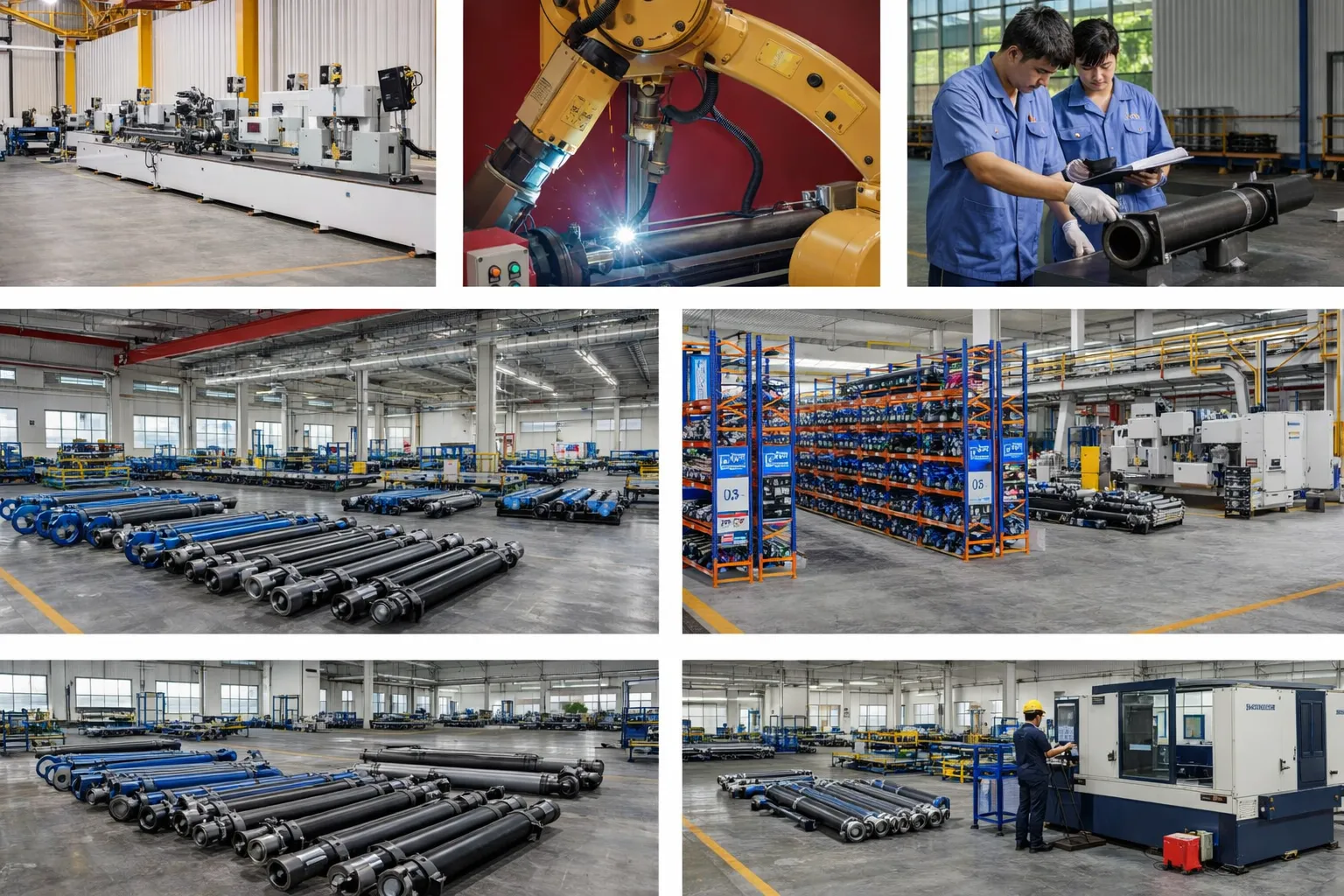
The distinction between a generic parts assembler and a world-class OEM fluid power partner lies directly in the rigor of the production environment. We execute 100% of our critical manufacturing operations in-house. Upon the arrival of raw 316L stainless steel billets, our metallurgy lab performs Positive Material Identification (PMI) via optical emission spectroscopy to verify the exact chemical composition, ensuring the molybdenum levels are correct for extreme corrosion resistance.
The physical machining is conducted on advanced multi-axis CNC turning and milling centers, guaranteeing that all threaded components and inner bore tolerances are cut to exact micrometer specifications. The crucial welding of the pressure vessel is performed exclusively by certified technicians utilizing automated robotic TIG/MIG systems. This deep-penetration welding completely eliminates the risk of internal porosity or heat-affected zone (HAZ) embrittlement, ensuring massive structural integrity.
Quality assurance is an absolute, unyielding mandate. Before any collector tube opening and closing cylinder is cleared for shipping, it is subjected to an exhaustive factory testing protocol. We perform dynamic functional testing and a mandatory hydrostatic pressure hold test, deliberately pushing the unit to 150% of its maximum rated operational pressure to verify zero internal bypass and absolute external seal integrity. Following testing, each unit is permanently laser-etched with a unique serial number, providing our B2B clients with complete, decades-long traceability for all hydraulic parts and material certificates.
Cross-Industry Adaptability & Extreme Applications
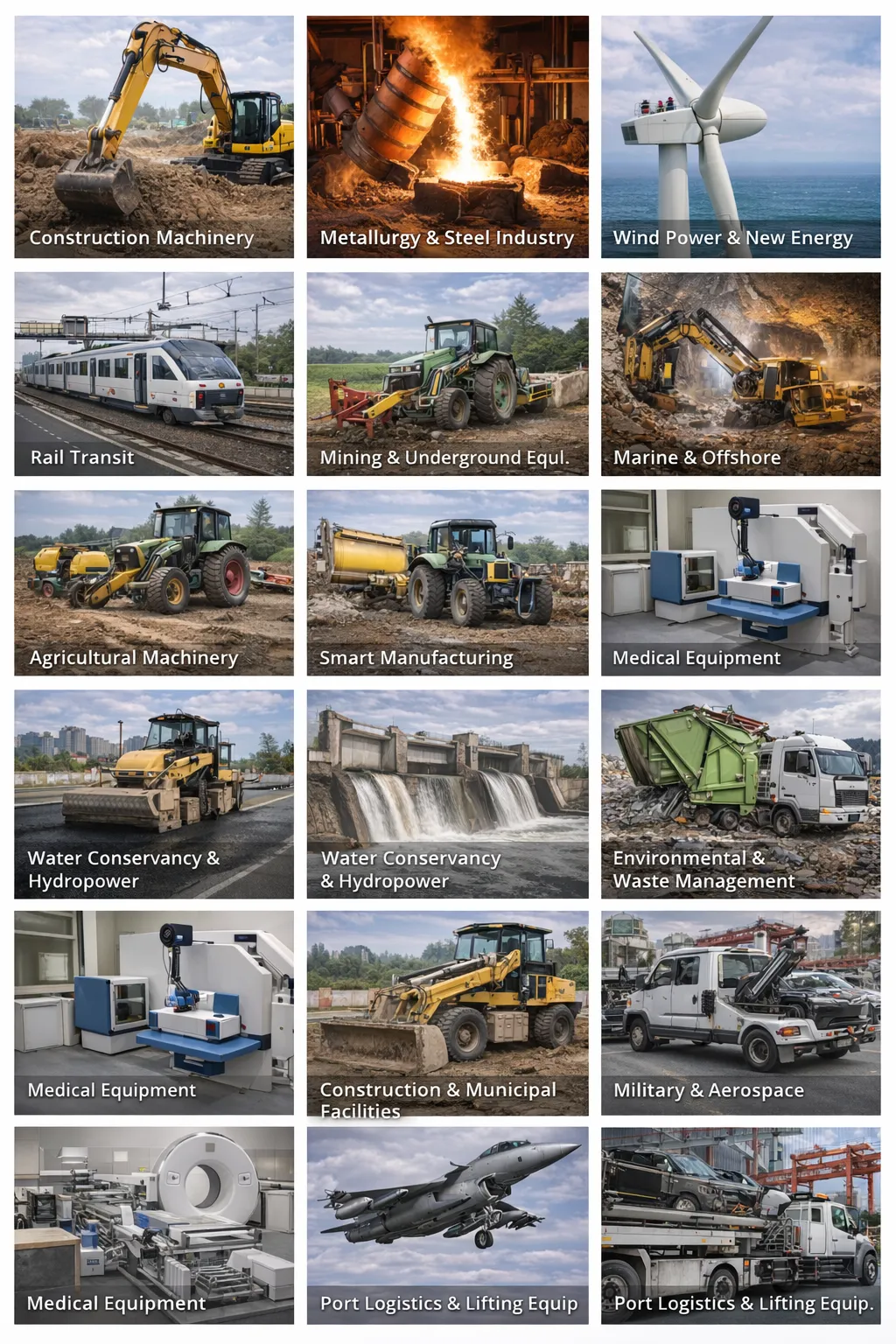
While meticulously engineered as the ultimate lift cylinder for the brutal environment of the solar thermal new energy sector, the foundational technology—extreme temperature tolerance, unyielding anti-corrosion properties, and robust welded structures—makes these actuators indispensable across a wide spectrum of punishing heavy industries. We continually supply tailored fluid power solutions for facilities where failure is simply not an option:
- Metallurgical and Iron Industry: Powering continuous casting manipulators, electric arc furnace doors, and hot rolling mills where ambient radiant heat, molten metal splash, and abrasive metallic dust effortlessly destroy conventional actuation systems.
- Mining Industry: Delivering massive, highly reliable force for deep-subterranean slurry valves, heavy rock crushers, and bulk material stacker-reclaimers operating continuously in highly acidic mine groundwater and relentless vibration.
- Construction Machinery Industry: Upgrading the operational limits of specialized tunnel boring machines, heavy bridge-laying cranes, and massive coastal dredging equipment that require fail-safe performance under dynamic load and saltwater immersion.
- Plastics & Rubber Machinery: Perfect for high-volume injection molding environments requiring clean-room level cleanliness combined with extreme clamping forces and absolute zero fluid leakage.
- Material Handling & Logistics: Providing highly efficient and clean single acting hydraulic cylinder and double acting units for automated warehouse robotics, heavy-duty dock levelers, and scissor lifts.
- Special & Customized Scenarios: From offshore subsea ROV deployment cages to high-stress aerospace testing rigs, our engineering department routinely adapts this resilient technology for highly bespoke extreme-environment challenges.
We invite you to discover our broader manufacturing capabilities by exploring our comprehensive Hydraulic Cylinder Product Portfolio.
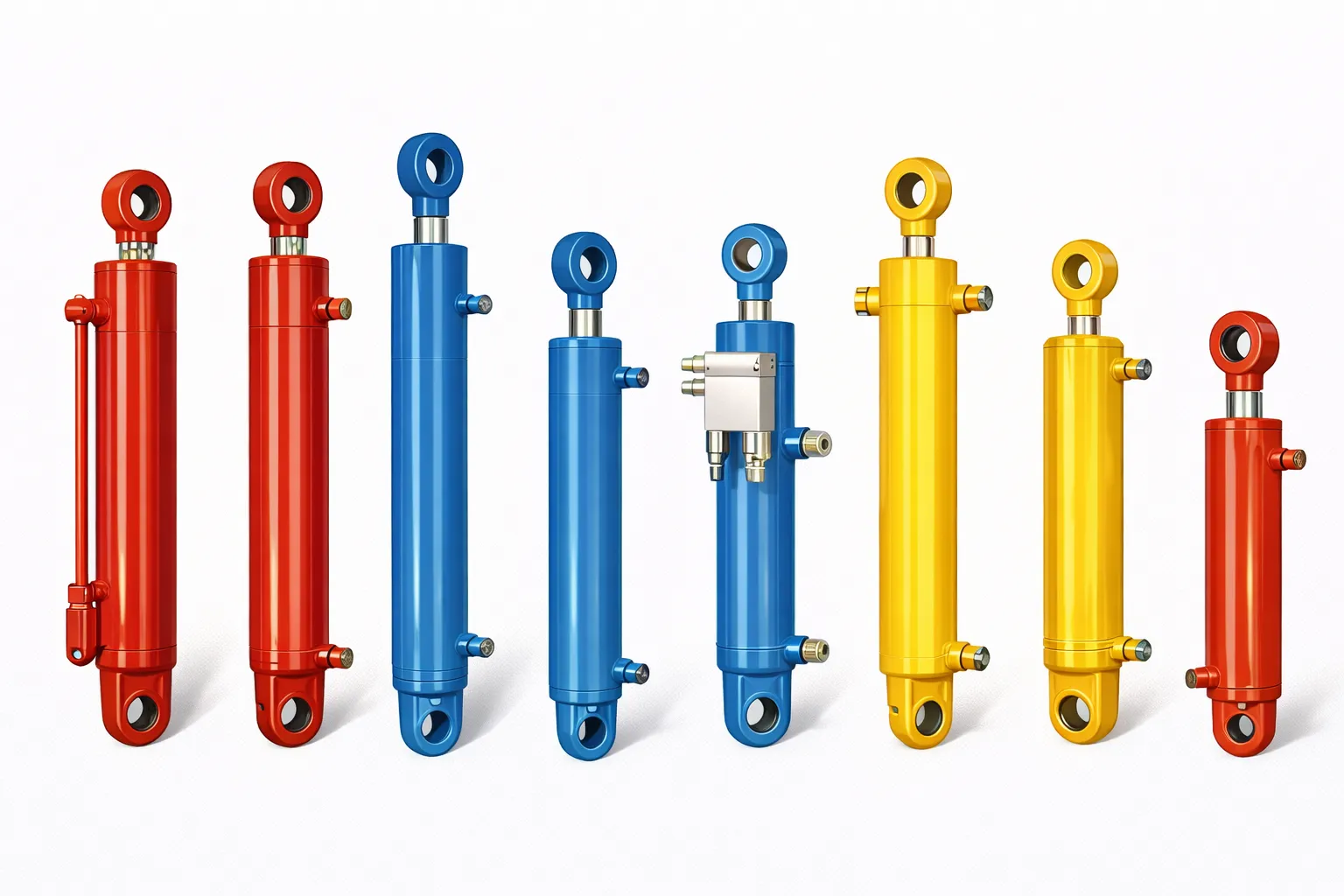
Comparative Analysis: Standard Carbon Steel vs. 316L High-Performance
Engineering decisions must be guided by empirical data and long-term economic realities. When calculating the Total Cost of Ownership (TCO) over a 25-year solar thermal facility lifespan, the upfront procurement costs pale in comparison to the staggering expenses associated with catastrophic failure, system downtime, crane rentals, and emergency field service. The table below starkly contrasts standard off-the-shelf industrial cylinders with our purpose-built CSP actuation solutions.
| Performance Metric | Standard Industrial Cylinder | Our 316L High-Performance CSP Cylinder |
|---|---|---|
| Core Base Metallurgy | Carbon Steel (e.g., Q345, 1045) | Premium Solid 316L Austenitic Stainless Steel |
| Pitting Corrosion Resistance | Very Poor. Rapid oxidation and chrome flaking in coastal/humid air. | Exceptional. Absolute immunity to chloride-induced pitting. |
| Thermal Seal Threshold | Max 80 C – 100 C (Standard NBR / Polyurethane limits) | Continuous 200 C+ (Advanced FKM / PTFE Composites) |
| Kinematic Smoothness | Prone to severe stick-slip, inducing dangerous mechanical judder. | Ultra-smooth precise motion via Ra < 0.2 polished surfaces. |
| Expected Maintenance Cycle | 12 to 24 months before catastrophic seal blowout or severe rust. | Decades of minimal intervention, true “install-and-forget” design. |
Global Engineering Success: Real Case Studies in Asia
Theoretical engineering must be validated by relentless, real-world application. Our footprint across East Asia and the broader global market clearly demonstrates our capacity to solve the most complex fluid power crises for major energy providers.
Case Study 1: Resolving Coastal Pitting Corrosion in Jeollanam-do, South Korea
Client & Location: A major regional utility operating a 50MW parabolic trough CSP plant on the southwestern coast of South Korea (August 2024).
The Challenge: Located merely two kilometers from the ocean, the facility battled dense, saline sea fog constantly. The original chrome-plated carbon steel cylinders began exhibiting severe pitting corrosion within eight months of commissioning. The abrasive, pitted rods quickly shredded the polyurethane wiper seals, resulting in massive hydraulic fluid blowouts that contaminated the soil and halted power generation.
Engagement & Solution: The chief maintenance engineer discovered our expertise while searching for a specialized hydraulic cylinder manufacturer capable of custom stainless fabrication. We delivered 180 custom-engineered 316L collector tube opening and closing hydraulic cylinders, integrating advanced dual-lip marine scrapers to violently eject crystallized salt.
The Result: Approaching two years of continuous operation, the plant has recorded zero seal failures and zero corrosion pitting. The maintenance budget for actuator replacement was reduced by a staggering 85%.
“The metallurgical transition to your 316L cylinders was the turning point for our facility’s profitability. The rods remain mirror-bright despite the brutal coastal atmosphere. Truly outstanding engineering.” — Park Ji-hoon, Lead Plant Operations Engineer.
Case Study 2: Conquering Extreme Radiant Heat in Kyushu, Japan
Client & Location: An advanced industrial processing facility utilizing a rooftop linear Fresnel solar thermal array to generate high-pressure steam for manufacturing (February 2025).
The Challenge: The confined rooftop space meant ambient temperatures near the focal receiver consistently hovered around 180 C. Their standard industrial cylinders suffered rapid thermal degradation; the rubber seals baked into hardened plastic, causing the holding pressure to bleed off internally. The mirror arrays would slowly drift out of focus during the day, plummeting thermal efficiency.
Engagement & Solution: They reached out seeking immediate hydraulic cylinder repair solutions to halt the thermal drift. We rapidly prototyped and supplied a batch of highly customized double acting hydraulic cylinders equipped with our proprietary FKM high-temperature seal matrix and thermal-isolation rod boots.
The Result: The thermal drift was entirely eliminated. The precise, hydraulically locked positioning increased their daily steam generation efficiency by 6.4%.
“We were losing significant thermal yield simply because the old cylinders couldn’t hold position under heat. Your high-temp seals are remarkable. The fluid dynamic stability is perfect.” — Kenji Sato, Director of Energy Infrastructure.
Case Study 3: Typhoon Resilience for an EPC Contractor in Taiwan
Client & Location: A leading Engineering, Procurement, and Construction (EPC) firm constructing a new utility-scale solar thermal installation in southern Taiwan (November 2023).
The Challenge: Taiwan’s fierce typhoon season requires solar arrays to execute emergency stowing maneuvers under extreme crosswinds. The EPC’s previous projects utilized tie-rod cylinders that physically bent and bound under the massive lateral wind sheer, permanently jamming the arrays open during devastating storms.
Engagement & Solution: The procurement team contacted us to negotiate a highly competitive hydraulic cylinder price for a highly rigid, heavy-wall alternative. We provided our heavy-duty welded structure cylinders featuring oversized 316L rods and forged trunnion mounts, engineered specifically to absorb severe torsional shock without deflecting.
The Result: During the intense typhoons of late 2025, the entire array was safely and repeatedly stowed within minutes, with zero instances of mechanical binding or structural deformation reported.
“The sheer structural rigidity of your welded cylinders gave us immense peace of mind during the storm season. They overpower the wind loads effortlessly. You are our definitive standard for all future projects.” — Lin Wei-chen, Senior Procurement Manager.
Case Study 4: OEM Supply Chain Integration in Busan, South Korea
Client & Location: A prominent B2B solar tracking equipment integrator manufacturing premium systems for global export (May 2024).
The Challenge: The integrator desperately needed a dependable manufacturing partner capable of supplying large, consistent volumes of specialized actuators with stringent ISO tolerances. Their previous supplier suffered from terrible batch inconsistency, leading to massive warranty claims overseas.
Engagement & Solution: We established a dedicated robotic assembly and testing line specifically for their custom SKUs. By utilizing our fully autonomous manufacturing process, we guaranteed 100% factory pressure testing on every single unit before it was crated for ocean freight.
The Result: We now serve as their exclusive fluid power supplier, delivering monthly container loads with a defect rate of absolute zero. The flawless reliability drastically reduced their overseas warranty claims.
“Consistency is absolutely everything in our business. The high quality of the machining and welding has elevated our own tracking product’s reputation across the Asian export market.” — S.Y. Choi, Head of Procurement.
Frequently Asked Questions (FAQ) for B2B Procurement
We prioritize absolute transparent communication and technical education. Below are detailed, expert responses to the most common engineering inquiries posed by international procurement teams and lead plant engineers.
1. Why is 316L stainless steel an absolute necessity, and does it justify the initial hydraulic cylinder price?
Standard carbon steel rusts rapidly, and even lower-grade 304 stainless steel is highly vulnerable to chloride-induced pitting. 316L contains 2% to 3% molybdenum, providing vastly superior resistance to localized pitting corrosion caused by salt air or desert alkalis. While the initial hydraulic cylinder price is higher due to raw material costs and specialized welding requirements, it eliminates the devastating costs of frequent seal blowouts, fluid spills, and plant downtime, delivering a vastly superior Return on Investment over a 20-year operational lifecycle.
2. Can you manufacture these cylinders to exactly match our existing legacy OEM footprint?
Yes, absolutely. A significant portion of our business involves upgrading legacy solar fields. As an agile manufacturer, we meticulously customize the retracted pin-to-pin dimensions, stroke lengths, bore diameters, and mounting bracket styles (clevis, trunnion, flange) to ensure our collector tube opening and closing cylinder drops perfectly into your existing structural framework without requiring any localized cutting or welding modifications.
3. How does your high-temperature seal technology actually function under extreme heat?
We completely abandon standard NBR (Nitrile) elastomers, which begin to permanently harden and crack above 100 C. Instead, we utilize FKM (Fluorocarbon) and PTFE (Polytetrafluoroethylene) composite matrices. These advanced polymers are chemically inert and maintain their structural elasticity and compressive sealing force in continuous ambient temperatures exceeding 200 C, ensuring zero internal fluid bypass even near the focal receiver tubes.
4. Do you supply replacement parts for ongoing hydraulic cylinder repair over the plant’s lifespan?
Certainly. We believe in empowering our clients’ maintenance teams. We can supply comprehensive, matched seal kits, replacement glands, and individual hydraulic cylinder components tailored to your specific serial numbers. Our equipment is designed with threaded, highly serviceable glands to make on-site hydraulic cylinder repair straightforward and efficient, minimizing your dependency on expensive external contractors.
5. Are these specific cylinders compatible with environmentally acceptable lubricants (EALs)?
Yes. We intimately understand that modern renewable energy plants often mandate biodegradable hydraulic fluids to prevent soil contamination in the rare event of an accidental line rupture. During the engineering consultation phase, simply specify your intended fluid (e.g., synthetic esters, polyglycols), and we will specifically adapt the elastomeric compound of the seals to guarantee 100% chemical compatibility without swelling or shrinkage.
6. How do your cylinders perform in high-frequency micro-adjustment scenarios to avoid stick-slip?
Eliminating stiction is a foundational cornerstone of our tracking design. We achieve this by polishing the inner bore and rod to a microscopic mirror finish (Ra < 0.2) and utilizing bronze-filled PTFE step seals rather than traditional thick rubber lip seals. This reduces breakaway friction dramatically, ensuring the slow, creeping movements required to track the sun are incredibly smooth and absolutely vibration-free.
7. What are the shipping logistics and lead times for South Korea and the broader Asian market?
Our integrated autonomous manufacturing process ensures rapid turnaround times. Standard batch orders are typically manufactured, tested, and crated within 30 to 45 days. Sea freight logistics to major ports like Busan, Incheon, or Kaohsiung adds only a few days of transit. We provide rigorous seaworthy, moisture-proof crating to ensure the highly polished equipment arrives in pristine condition, ready for immediate deployment.
8. Do you physically test every double acting hydraulic cylinder before shipping?
Yes, absolutely. Quality control is mandatory, not optional. We conduct 100% factory hydrostatic pressure testing on every single unit, pushing it to 150% of its rated operating pressure to guarantee there are zero internal leaks and the welds are structurally perfect before it ever leaves our facility. This ensures total safety for your personnel and equipment.
Ready to Engineer Unyielding Reliability for Your Plant?
Protect your renewable energy infrastructure with specialized hydraulic actuation that actively defies coastal corrosion, high thermal temperatures, and relentless mechanical fatigue. Connect directly with our engineering specialists to discuss your precise payload metrics, dimensional requirements, and aggressive operating environments.
Editor: Cxm