Harrow Frame Lift Cylinder For Tillage Machinery
Expertly engineered for absolute precision in harrow tine depth control. Fortified with Q345D structural steel and an advanced anti-rust oil protocol to permanently eradicate rod pitting in high-humidity agricultural environments.
Product Overview: The Core Mechanism of Precision Seedbed Preparation
In the highly systematic sector of commercial agriculture, turning the soil is only the first step toward a successful harvest. Once primary deep plowing is completed, the earth is typically left in massive, dense clods that are entirely unsuitable for mechanical seeding. The critical secondary phase of tillage involves the deployment of the tooth or disc harrow. As the tractor pulls this heavy, wide iron framework across the field, the harrow teeth shatter the clods, uproot newly emerged weeds, and meticulously level the topsoil to create an aerated, uniform seedbed. However, the operational success of the harrow is entirely dependent upon precisely controlling its working depth. If the implement penetrates too deeply, it unearths nutrient-poor subsoil, excessively evaporates retained moisture, and massively overloads the tractor’s engine, burning unnecessary diesel fuel. If it glides too shallowly, the seedbed remains clodded and uncultivated. The mechanical responsibility for regulating this vital vertical dimension belongs strictly to the Harrow Frame Lift Cylinder. This crucial actuator serves as the dynamic suspension system, actively pushing the implement down into the earth and lifting it clear during transport.
Unlike primary subsoiling plows that face immense, sudden shock loads from buried boulders, harrowing is generally characterized as a light-to-medium draft load operation accompanied by continuous, high-frequency kinetic vibration. However, for agricultural fleets operating in the intensive farming landscapes of East Asia—particularly the humid valleys and terraced fields of South Korea, Japan, and Vietnam—the true enemy of fluid power is not merely kinetic force, but severe environmental exposure. Standard commercial actuators are simply not equipped to survive these realities. The most pervasive and destructive failure mode in this specific application is severe rod pitting. During the damp off-season, or when parked outdoors under heavy morning dew, microscopic atmospheric moisture mixed with acidic agricultural fertilizers settles on the exposed chrome rod. This moisture penetrates the microscopic pores inherent in standard commercial chrome plating, violently oxidizing the underlying steel. As this rust expands, it causes the chrome to flake, creating rough, jagged craters. The very next time the hydraulic cylinder is actuated and retracts, these sharp craters act like a coarse file, instantly shredding the internal polyurethane pressure seals. This leads to massive, uncontrollable fluid leaks and total hydrostatic failure.
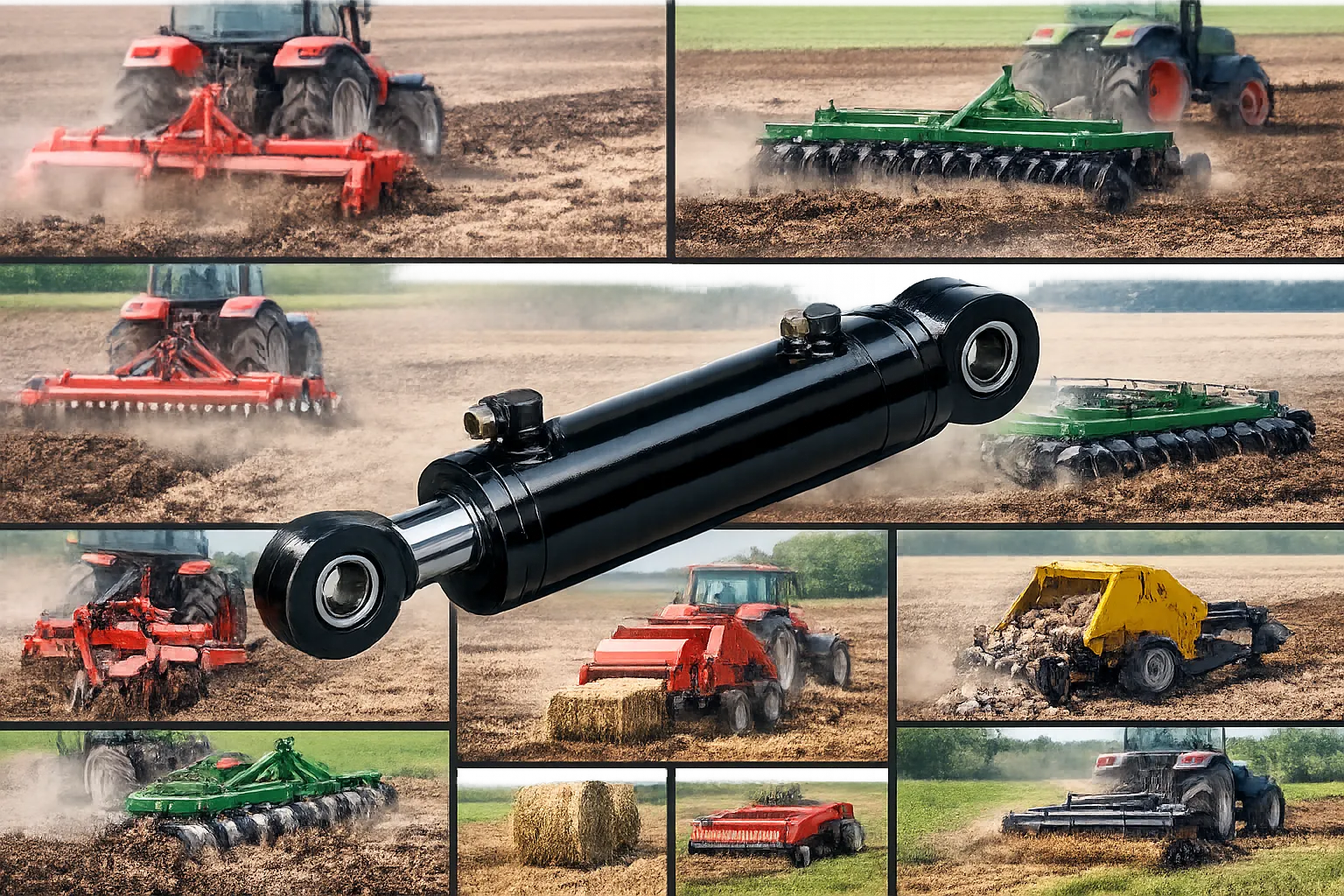
As an elite, vertically integrated hydraulic cylinder manufacturer, our engineering division has comprehensively re-designed the agricultural suspension actuator to permanently neutralize this exact threat. Our highly specialized Harrow Frame Lift Hydraulic Cylinder utilizes a proprietary surface defense matrix. We combine heavily micro-cracked hard chrome with a deep-penetrating anti-rust oil coating process at the factory, paired alongside a physically aggressive mechanical mud scraper ring. This totally isolates the steel from the damp atmosphere, ensuring the rod remains pristine and the internal fluid boundary is utterly unbreached. Astute procurement managers understand that the initial hydraulic cylinder price is irrelevant if the component fails during the heavily compressed, weather-dependent planting season. By integrating our engineered hydraulic parts into your machinery fleet, you systematically eliminate the chronic implement drift and sudden seal failures that financially cripple farming operations.
Comprehensive Engineering Parameters and Material Specifications
Flawless integration into existing OEM tractor hydraulic circuits requires absolute adherence to standardized dimensional tolerances and advanced material science. The technical data matrix provided below clearly outlines the specialized metallurgical composition, structural framework, and environmental defense protocols engineered into our harrow suspension systems. Operating as a massive autonomous manufacturing facility, we possess the comprehensive CNC machining capabilities required to precisely customize stroke lengths, pin hole diameters, and fluid port thread sizes to match any global machinery requirement.
| Technical Parameter Category | Engineering Specifications and Material Data |
|---|---|
| Industrial Application Sector | Agriculture |
| Equipment Classification | Tillage Machinery |
| Mechanical Sub-system / Action | Harrow Tooth Lifting and Frame Suspension |
| Fluid Power Nomenclature | Harrow Frame Lift Cylinder / Harrow Frame Lifting Hydraulic Cylinder |
| Kinematic Action Mode | Double acting hydraulic cylingder |
| Internal Design Architecture | Heavy-Duty Piston Cylinder |
| Manufacturing Construction | Precision Welded Type Assembly |
| Core Material System | Q345D High-Strength Low-Alloy Structural Steel |
| Rod Surface Treatment | Precision Hard Chrome Plated |
| Environmental Operating Level | Light to Medium Load Duty Cycle (High humidity and dirt exposure) |
| Primary Operational Objective | Actively control harrow teeth soil penetration depth |
| Targeted Failure Mode Defeated | Severe rod surface pitting, moisture oxidation, and seal laceration |
| Mandatory Defense Configuration | Specialized Anti-Rust Oil Coating + Aggressive Mud Scraper Design |
Operational Mechanics: Achieving Micro-Adjustments Through Fluid Dynamics
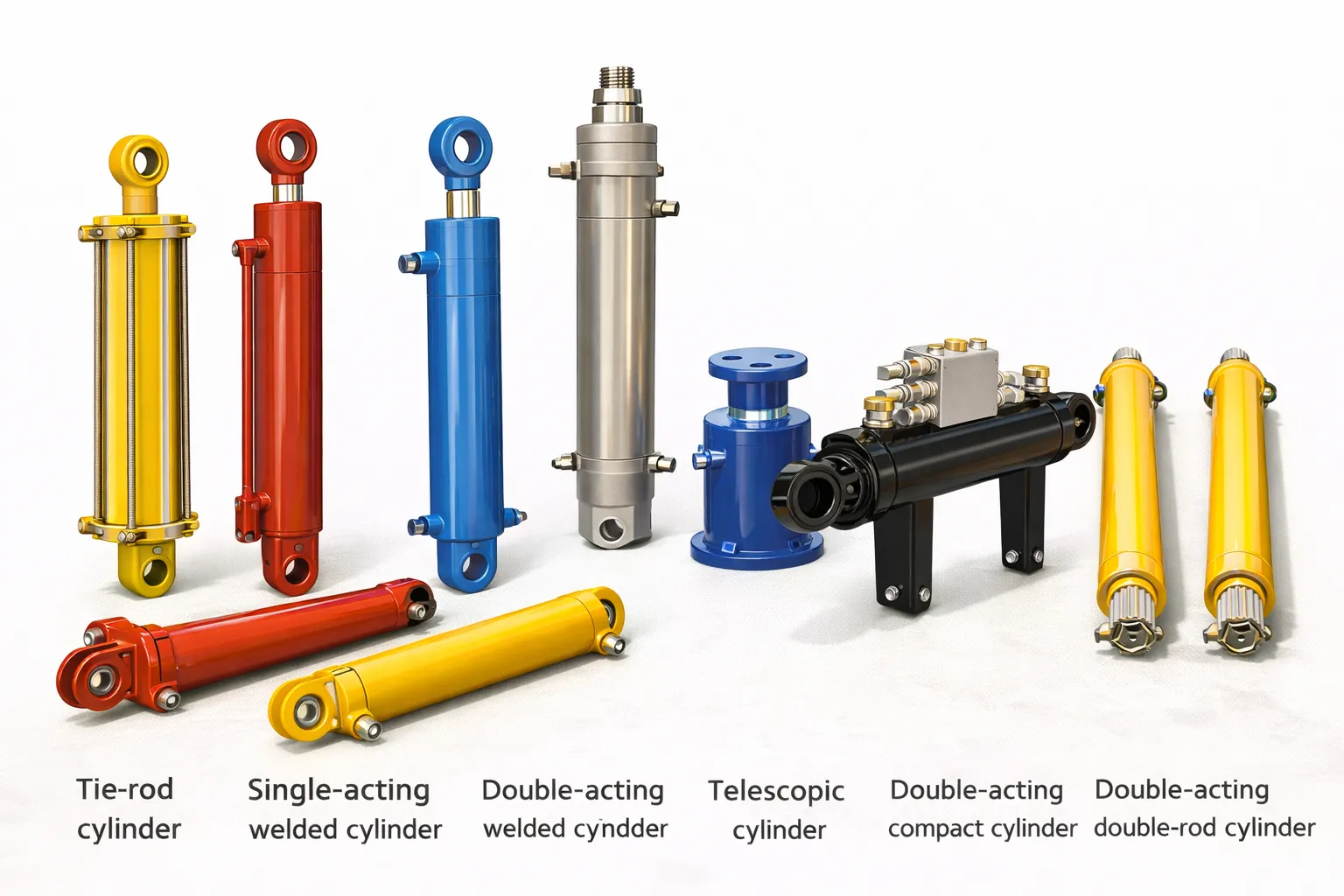
The actual field operation of a wide, folding harrow implement requires a highly responsive, bidirectional fluid power circuit. Because the implement must be actively pushed downward into compacted clay to cut through dense surface trash, and simultaneously requires powerful lifting force to navigate headland turns or clear unforeseen obstacles, relying on a single acting hydraulic cylingder is fundamentally impossible. Single-acting systems lack the mechanical capability for powered extension in the downward direction, relying entirely on gravity and implement dead-weight to drop. In rough, high-resistance soil, a gravity-drop system will merely bounce harmlessly across the surface. Therefore, our agricultural suspension geometry exclusively utilizes a highly rigid double acting hydraulic cylingder. This advanced setup allows highly pressurized hydraulic oil from the tractor’s auxiliary pump to actively push the internal piston in both directions, granting the operator absolute, positive control over the implement frame.
When the operator actuates the cabin spool valve to engage the harrow, high-pressure fluid floods into the cap end (base) of the cylinder barrel. This incompressible fluid generates immense linear force against the complete surface area of the internal hydraulic cylinder piston. This forcefully pushes the hardened chrome rod outward, altering the linkage geometry and driving the heavy harrow teeth deeply into the earth. The exact volumetric flow of fluid metered into the unit dictates the precise millimeter depth of soil penetration. Once the directional valve returns to neutral, our proprietary internal sealing matrix acts instantly. It traps the fluid perfectly inside the Q345D steel barrel, forming an absolute hydrostatic lock. The lift cylinder immediately becomes an unyielding steel strut. Despite the constant bouncing, pulling, and violent kinetic vibration of the tractor moving over rugged terrain, the implement depth remains flawlessly consistent.
To raise the implement for road transport or rapid turning, the fluid routing is reversed. Pressurized oil enters the rod-end port, acting against the annular area of the piston, forcibly pulling the rod back inside the barrel. It is during this crucial retraction phase that our specific environmental engineering shines. The exposed rod is heavily coated in wet clay, acidic fertilizers, and silica grit. The integrated, heavy-duty polyurethane mud scraper aggressively and physically shaves the rod entirely clean, functioning like a stiff chisel. This perfectly repeatable cycle ensures that zero external contaminants breach the clean fluid reservoir, maximizing the lifespan of the entire tractor hydraulic system.
Direct OEM Equipment Interchangeability and Retrofit Logistics
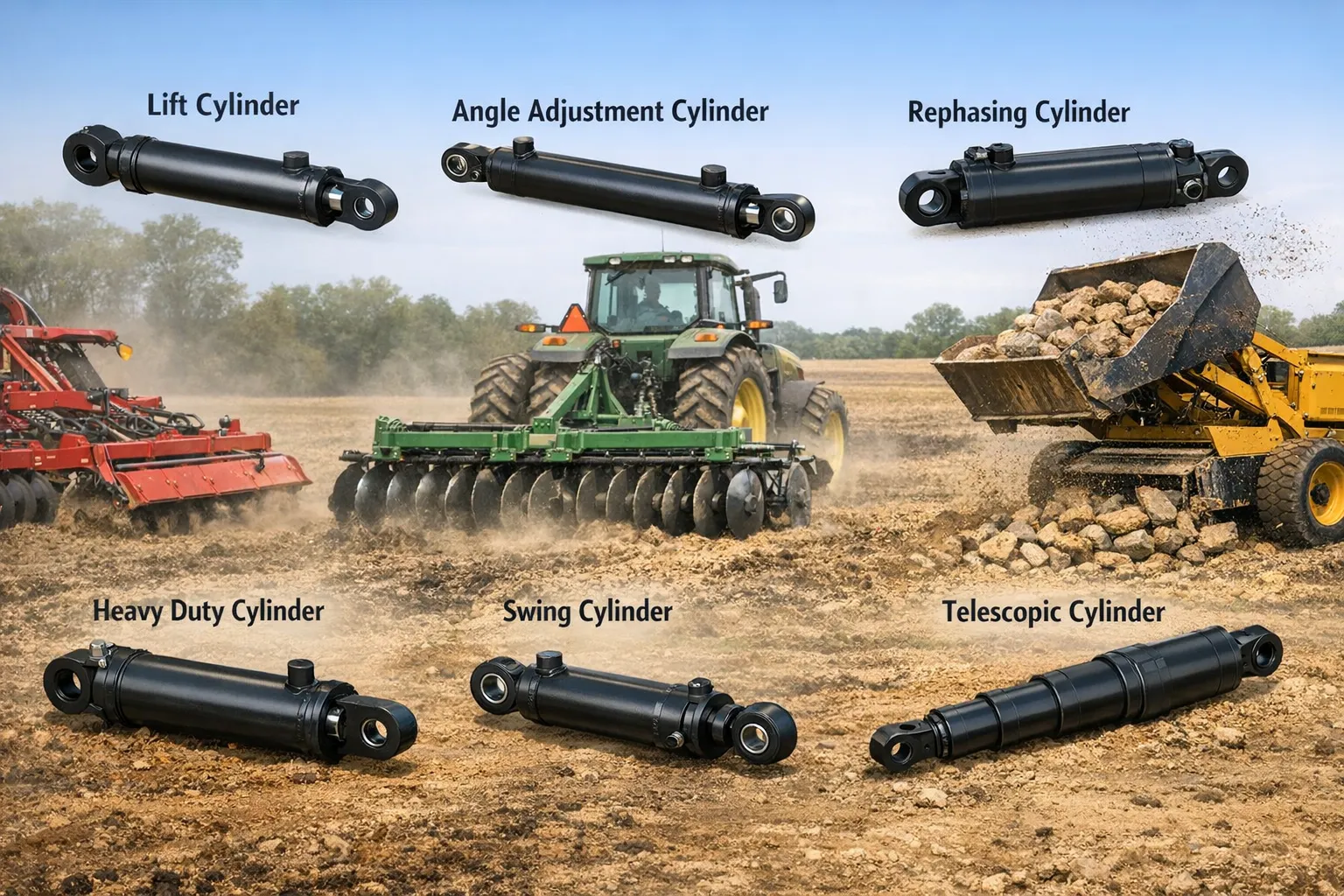
When a mechanical suspension failure stalls critical field preparation, farm procurement teams and mechanics do not have the luxury of waiting weeks for custom bracket fabrication or dealing with complex structural modifications. Immediate access to exact-dimension, heavily fortified replacement parts is paramount. Our engineering division actively designs aftermarket solutions that fundamentally out-perform the factory originals while maintaining completely identical mounting geometries. This ensures that a tired, weeping actuator can be unpinned and directly swapped in the dirt using standard hand tools.
For the strict logistical purpose of dimensional cross-referencing and mechanical fitment sizing (and explicitly without implying direct corporate endorsement or trademark violation), our highly resilient Harrow Frame Lift Cylinder configurations serve as flawless drop-in upgrades for a vast range of heavy machinery heavily utilized across the South Korean and broader Asian market. Fleet directors frequently procure our hydraulic cylinder components to seamlessly overhaul aging suspension systems on tractors and attached implements manufactured by global leaders such as Daedong (KIOTI), LS Mtron, TYM Tractors, Kubota, Yanmar, Iseki, Mahindra, Case IH, and John Deere.
By proactively upgrading standard commercial units with our specialized agricultural components before they suffer catastrophic seal blowouts, farm enterprises can drastically stabilize their seasonal maintenance budgets. Relying on highly engineered parts completely eliminates the frustrating, repetitive cycle of constantly fixing hydraulic cylinders that were simply never built to survive outdoor monsoon storage.
Seven Core Technical Advantages: Defeating Pitting and Abrasive Wear
The profound operational gap between a generic commercial actuator and a specialized agricultural instrument lies entirely in the microscopic details of its metallurgical construction and its environmental exclusion defenses. Here are the core engineering decisions that secure our system’s unmatched field supremacy:
1. Advanced Anti-Rust Oil Permeation Technology
To aggressively combat the massive problem of rod pitting during humid, outdoor off-season storage, the exterior chrome rod is chemically treated and bathed in a highly specialized, tenacious anti-rust oil prior to shipment. This oil penetrates deeply into the microscopic pores of the chrome, creating a highly hydrophobic barrier that actively repels atmospheric moisture and corrosive morning dew.
2. Q345D Low-Alloy Welded Construction
Standard 45# carbon steel can become highly brittle and crack at the weld seams under constant field vibrations. We strictly utilize Q345D low-alloy structural steel, boasting exceptional impact toughness and superior low-temperature performance, ensuring the structural integrity of the barrel and mounting clevises never degrades over thousands of acres.
3. Aggressive Particulate Mud Scraper
A standard soft rubber dust ring is entirely useless against wet farm clay; it simply bends inward. We integrate an oversized, rigid dual-lip heavy-duty polyurethane mud scraper into the rod gland. It physically chisels hardened mud, ice, and crushed vegetation off the rod during the retraction stroke, providing 100% environmental exclusion.
4. Deep Micro-Cracked Hard Chrome
The high-tensile steel rod is heavily plated with a thick layer of specifically formulated micro-cracked hard chrome. This microscopic network effectively holds tiny amounts of internal lubricating oil to drastically reduce dynamic friction against the seals, while simultaneously presenting an incredibly hard, scratch-resistant barrier against flying field stones.
5. Ultra-Low Friction CNC Skived Barrel
The interior of the Q345D barrel is heavily skived and roller-burnished on multi-axis CNC machines to achieve a mirror-like Ra 0.2 finish. This totally eliminates microscopic machining ridges, drastically reducing seal drag, lowering operating temperatures, and vastly extending the overall fatigue life of the high-pressure piston seals.
6. Thermally Stable High-Grade Sealing System
Because tractors run extensive 14-hour shifts in direct summer heat, we abandon cheap rubber in favor of high-grade imported polyurethane and PTFE-energized seals. These maintain complete dimensional stability and hydrostatic locking capability even when hydraulic fluid temperatures naturally spike under continuous heavy load.
7. Automated Robotic Weld Integrity
The structural clevis mounts and hydraulic fluid ports are permanently fused to the barrel using advanced robotic pulse-MIG welding cells. This automated technology guarantees 100% uniform weld penetration and strictly controls the heat-affected zone (HAZ), entirely eliminating the porosity and brittle fractures associated with manual welding.
Autonomous Manufacturing and Unyielding Quality Assurance
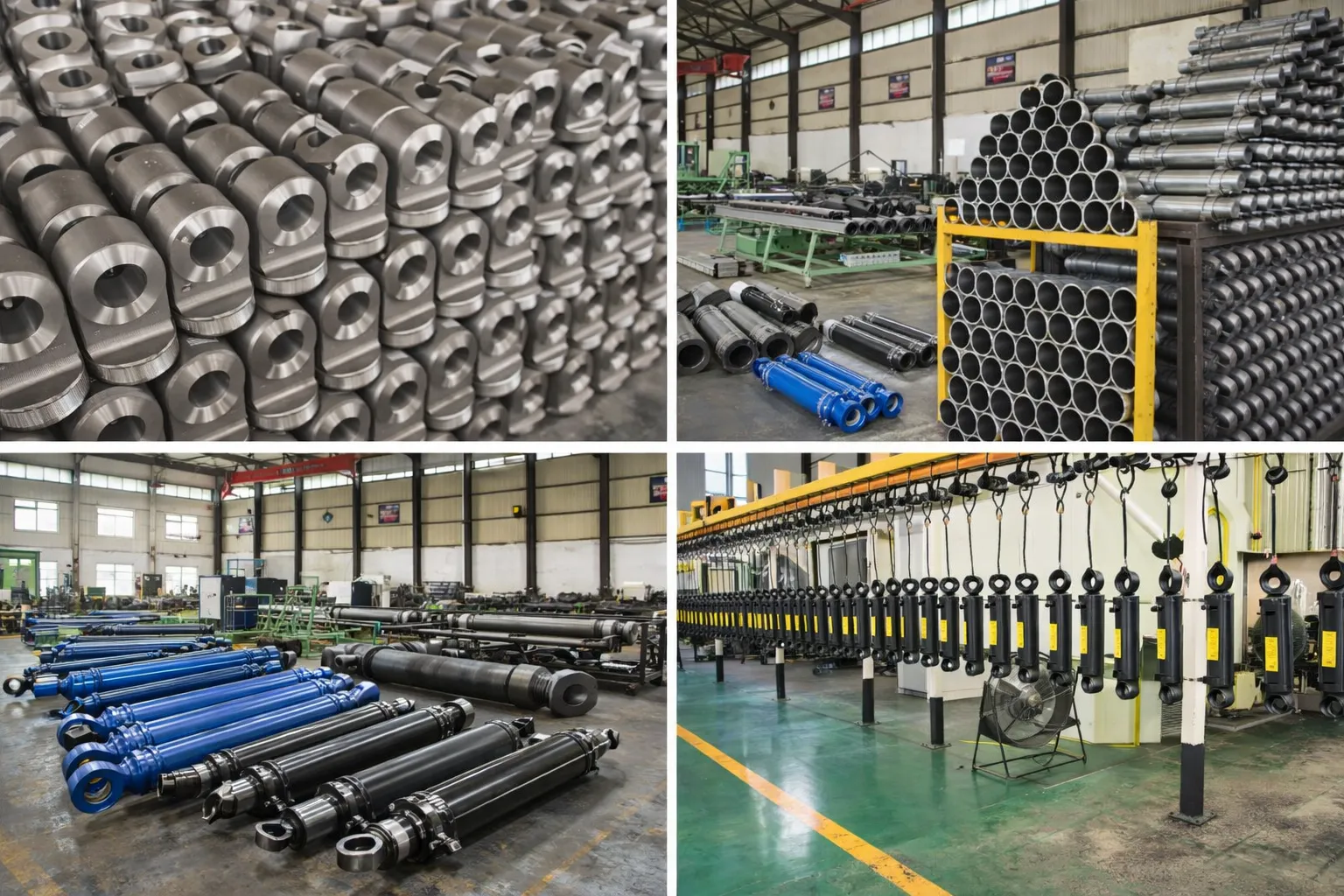
Flawless mechanical reliability in the dirt is birthed directly on the factory floor. As a fully autonomous hydraulic cylinder manufacturer, our internal processes are highly guarded and heavily regulated. We completely control the manufacturing timeline from raw steel delivery to final containerization, entirely rejecting reliance on inconsistent third-party parts suppliers. Every single billet of Q345D steel is metallurgically verified upon arrival using optical emission spectrometry to confirm the exact alloy composition perfectly matches our demanding structural blueprints. Our multi-axis robotic welding cells lay down perfectly uniform, deep-penetration weld beads that totally eliminate the inconsistencies of manual assembly.
We absolutely refuse to rely on hopeful batch sampling. Prior to receiving its final protective enamel and anti-rust oil coating, every single manufactured unit is rigidly bolted to our computerized diagnostic test benches. The cylinder is dynamically cycled multiple times and subjected to a severe static hydrostatic hold at 150% of its rated maximum working pressure. Highly sensitive digital transducers verify absolute zero internal bypass across the piston seals, and zero external weeping. Upon passing this draconian test, a unique serial alphanumeric matrix is laser-etched deeply into the base, establishing permanent, undeniable traceability directly back to the assembly technician and the raw material heat batch.
Broader Industrial Adaptability Beyond Agriculture
The highly successful engineering logic behind this mud-resistant, corrosion-deflecting actuator makes it incredibly valuable in other severe-duty sectors. A mechanical device perfectly designed to survive complete exposure to harsh weather and aggressive silica dust is highly sought after by engineers in adjacent fields who battle similar extremes of environmental contamination.
Consequently, this heavily fortified Q345D architecture, combined seamlessly with our aggressive polyurethane scraper technology, is frequently deployed into the construction machinery industry for use on compact track loaders and mini-excavators working in heavy dirt. Furthermore, the massive engineering focus on preventing rod pitting and chemical corrosion makes this exact sealing logic highly effective when scaled up for the demanding dust environments of the mining industry and the caustic atmosphere of the metallurgical and iron industry. World-class fluid power engineering is fundamentally universal across heavy industries.
Comparative Breakdown: Commercial Grade vs. High-Performance Engineering
For B2B procurement professionals executing large volume purchasing decisions, viewing a direct technical comparison is highly clarifying. Opting for cheaper initial hardware inevitably leads to cascading maintenance costs in the very near future. The following table illustrates the stark differences in philosophy between standard off-the-shelf parts and our purpose-built system.
| Design Element | Standard Commercial Cylinder | Our Specialized Harrow Lift Cylinder |
|---|---|---|
| Rod Pitting Defense | Thin commercial chrome. Easily breached by acidic dew, leading to rapid rust, blistering, and seal slicing. | Thick hard chrome + deep anti-rust oil saturation process. Creates an impenetrable moisture barrier. |
| Barrel Metallurgy | Basic 45# carbon steel. Rigid but highly susceptible to weld fatigue cracking over time under vibration. | Q345D Low-alloy steel. Massive impact toughness and superior low-temperature fatigue resistance. |
| Particulate Exclusion | Soft NBR rubber dust ring. Simply bends and allows wet clay and silica to enter the barrel unhindered. | Rigid, dual-lip Polyurethane mud scraper. Physically chisels and rejects caked mud safely away from seals. |
| Depth Hold Capability | Often suffers from slow internal bypass across cheap seals, causing the harrow depth to drift upward during long rows. | Absolute hydrostatic lock. High-grade PTFE/Poly seals hold the implement depth flawlessly all day. |
| Quality Verification | Random statistical batch sampling. High operational chance of receiving a defective or weeping unit. | 100% individual dynamic pressure cycle testing before shipment. Zero functional defects shipped. |
Verified Field Results: Solving Real World Agricultural Failures
Theoretical engineering means absolutely nothing until it is proven in the mud. By collaborating tightly with global agricultural cooperatives, we have successfully replaced massive quantities of failing OEM hardware, directly increasing crop yields through reliable machinery uptime.
Case Study 1: Eradicating Rod Pitting in South Korean Humid Conditions
Client Profile: Regional Agricultural Cooperative, Gyeongsangbuk-do, South Korea.
The Challenge: The cooperative stores over 50 heavy disc harrows outdoors during the long, highly humid monsoon off-season. The OEM cylinders on the frames were suffering severe rod pitting from the constant condensation. When the tractors started up for spring tilling, the rusted, pitted rods acted like cheese graters, shredding the internal seals within hours and causing massive hydraulic leaks across the entire fleet.
The Solution & Result: They located our B2B portal through an online search for robust hydraulic parts. We supplied a complete fleet upgrade utilizing our Q345D Harrow Frame Lift Cylinder, specifically treated with our proprietary deep anti-rust oil coating and aggressive scrapers. Installed in early 2024, the equipment sat outside for a full monsoon season. Upon spring start-up in 2025, zero seals failed. The fleet experienced 100% uptime for the entire planting window.
“The amount of money and labor we spent previously on constantly fixing hydraulic cylinders was bankrupting our maintenance budget. These new units totally repelled the rust. The hydraulic cylinder price was incredibly fair for a product that actually survives our severe climate.” — Mr. Choi, Fleet Director (April 2025)
Case Study 2: Stopping Weld Fatigue for a Japanese Tillage OEM
Client Profile: Tillage Implement Manufacturer, Niigata Prefecture, Japan.
The Challenge: A well-respected implement manufacturer was facing exponentially increasing warranty claims because the suspension cylinders on their heavy-duty tines were cracking right at the base welds due to high-frequency chatter in highly compacted, rocky soil. Their local supplier was using cheap 45# carbon steel that simply could not handle the vibration over time.
The Solution & Result: We rapidly re-engineered their actuation system utilizing our Q345D low-alloy steel architecture and applied our automated robotic pulse-MIG welding process. We delivered the prototype batch within 20 days. The superior impact toughness of the Q345D completely absorbed the structural vibrations. The OEM immediately adopted our highly reliable hydraulic cylinder components as their primary factory standard, dropping their warranty claim rate to near zero.
Case Study 3: Defeating Abrasive Mud in Vietnamese Paddies
Client Profile: Large Commercial Rice Cultivation Enterprise, Mekong Delta, Vietnam.
The Challenge: Harrowing flooded rice paddies involves highly abrasive, chemically treated mud slurries. Standard rubber wiper seals were failing rapidly on their tractors, allowing wet clay to bypass and destroy the internal piston rings, causing massive oil leaks directly into the paddy water ecosystem.
The Solution & Result: We provided custom-dimensioned units featuring our aggressive dual-lip polyurethane mud scrapers. The mechanical chiseling action of the scraper kept the rod perfectly clean during retraction, extending the operational lifecycle from 4 months to over 2 years of continuous, leak-free service without any environmental contamination.
Technical FAQ for Procurement and Engineering
To fully support our international B2B clients, fleet maintenance teams, and mechanical engineers, we provide absolute transparency regarding the technical specifications and global logistics of our heavy-duty tillage systems.
Permanently Solve Your Agricultural Actuation Failures
Do not let weak commercial steel and inadequate sealing technology continuously drain your maintenance budget and stall your tractors in the field. Partner directly with a premier engineering facility to integrate completely mud-resistant, heavily fortified actuation hardware into your fleet.
Send our engineering team your required pin-to-pin dimensions, current OEM part numbers, or descriptions of your current field failures for an immediate, highly detailed technical consultation.
Editor: Cxm