Plow Frame Lift Cylinder for Tillage Machinery
Engineered specifically for the moldboard plow turning section. Delivering unyielding mechanical lifting power and absolute seal integrity in the most abrasive, muddy, and demanding agricultural environments.
Product Overview and Industrial Value
When you are managing modern agricultural operations, the reliability of your tillage machinery directly dictates the pace of your entire planting season. The moldboard plow is a heavy, aggressive implement designed to physically invert the topsoil, bury crop residue, and break up compacted hardpans. Navigating this heavy steel through the earth requires immense draft force from the tractor, but controlling the implement itself—raising it at the headlands for a turn and lowering it to an exact depth—relies entirely on the Plow Frame Lift Cylinder.
In an open-air farming environment, fluid power equipment faces brutal conditions. Standard commercial actuators simply are not built to survive constant exposure to airborne silica dust, highly acidic chemical fertilizers, and deep, abrasive muddy water. As a highly specialized hydraulic cylinder manufacturer with decades of field analysis experience, we have identified that standard equipment routinely fails due to severe rod pitting and rapid internal seal wear. These failures lead to loss of lifting pressure, fluid leaks, and unacceptable downtime during the narrowest operational windows of the year.
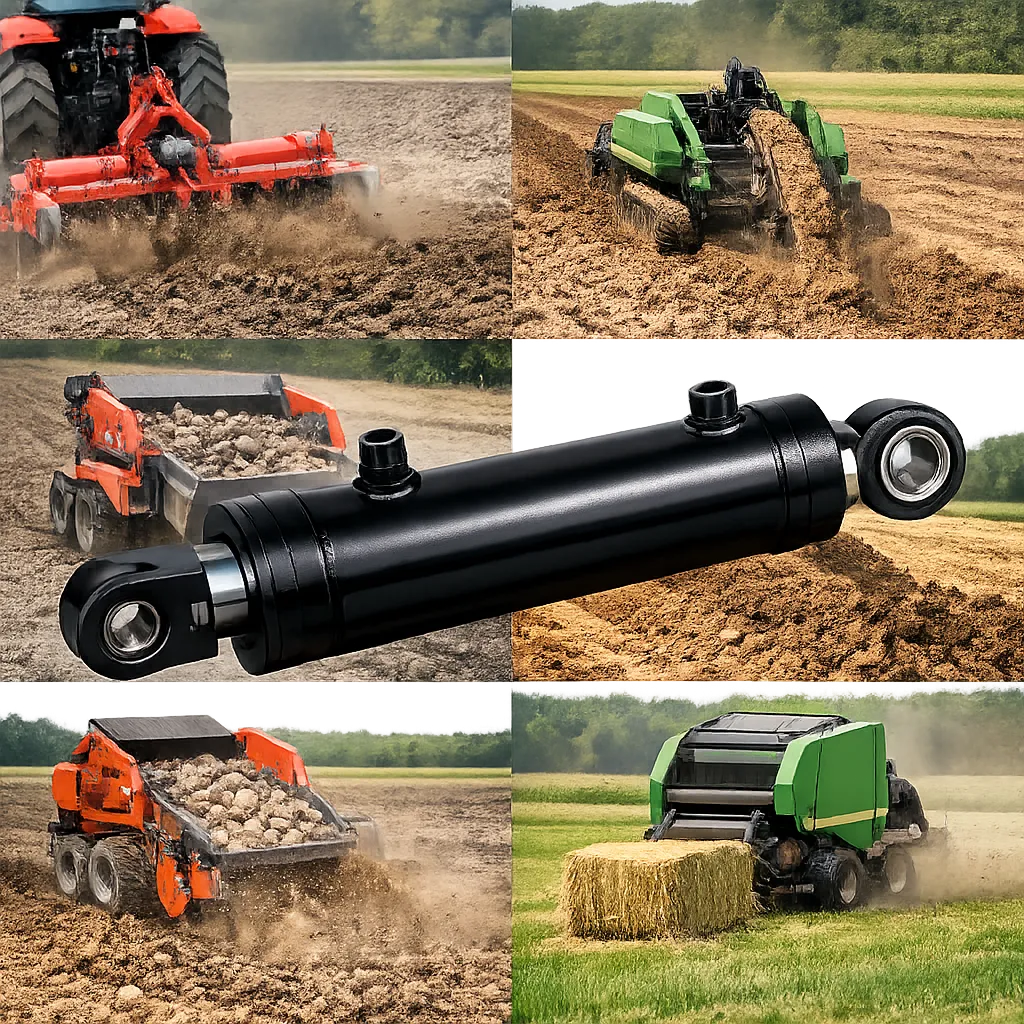
Our custom-engineered Plow Frame Lift Hydraulic Cylinder is precisely positioned to eradicate these agricultural pain points. We do not just assemble standard components; we over-engineer the critical weak links. By integrating heavily enlarged rod diameters to prevent buckling under subterranean rock strikes, and utilizing aggressive polyurethane mud scrapers to keep the rod clean, we physically protect the internal hydraulic cylinder piston seals. Investing in our robust hydraulic parts ensures that your fleet remains in the field producing results, drastically reducing the labor and capital wasted on constantly fixing hydraulic cylinders mid-season.
Comprehensive Technical Specifications
Proper mechanical integration requires exact dimensional and material alignment. The matrix below outlines the baseline parameters and customizable engineering configurations of our heavy-duty tillage actuators. If you require broader industrial fluid power options, we invite you to browse our complete hydraulic cylinder catalog.
| Parameter Category | Engineering Specification & Range | Design Rationale |
|---|---|---|
| Target Industry | Agriculture / Heavy Farming | Optimized for high-vibration off-highway use. |
| Equipment Category | Tillage Machinery | Withstands extreme dynamic soil resistance. |
| Subsystem / Action | Moldboard Plow Turning Section | Manages heavy structural articulation. |
| Cylinder Designation | Plow Frame Lift Cylinder | Core actuator for implement depth control. |
| Action Mode | Double Acting Hydraulic Cylinder | Powered force in both extension and retraction. |
| Structure Type | Piston Cylinder / Heavy-Duty Welded Type | Eliminates tie-rod stretch under high pressure. |
| Core Material System | Q345D Low-Alloy Structural Steel | Exceptional low-temperature impact toughness. |
| Surface Treatment | Micro-crack Hard Chrome Plating (25+ μm) | Defends against chemical corrosion and pitting. |
| Environmental Grade | Open-air + Heavy Dust + Muddy Water | Fully sealed against extreme contamination. |
| Working Condition Feature | Controls overall lifting of the plow frame | Requires zero internal fluid bypass. |
| Typical Failure Modes | Rod pitting, Severe seal wear, Rod buckling | Our engineering directly mitigates these issues. |
| Recommended Configuration | Enlarged rod diameter + Mud scraper ring + Wear-resistant seals | Creates an impenetrable defense for maximum lifespan. |
Operational Fluid Dynamics: Working Principle
Understanding the physical translation of fluid power is essential for optimizing field performance. A single acting hydraulic cylinder relies solely on gravity or the deadweight of the implement to lower itself. In aggressive tillage, gravity is not enough to force plowshares into hard, compacted subsoils. Therefore, our unit is engineered strictly as a double acting hydraulic cylinder. This architecture utilizes highly pressurized hydraulic fluid from the tractor’s auxiliary pump to actively drive both the extension and the retraction strokes, granting the operator absolute, positive control over the implement.
When the operator shifts the remote valve to raise the equipment, high-pressure fluid floods into the cap-end (base) port of the cylinder. This fluid acts uniformly against the complete surface area of the internal hydraulic cylinder piston. The resulting hydrostatic force is immense, driving the rod outward. This mechanical extension smoothly pivots the heavy moldboard plow frame out of the dirt, providing crucial ground clearance for safe headland turns or road transport.
Conversely, to engage the earth, the valve is reversed. Pressurized fluid is routed into the rod-end port, acting on the annular area of the piston, while fluid from the cap end safely vents back to the reservoir. This generates a powerful retraction force that actively pulls the plow frame downward, forcing the blades to penetrate the soil to a strict, calibrated depth. Because the fluid is locked within the chamber by high-quality hydraulic cylinder components, the implement maintains a perfectly rigid holding position, preventing depth drift even when the plow strikes uneven subterranean resistance.
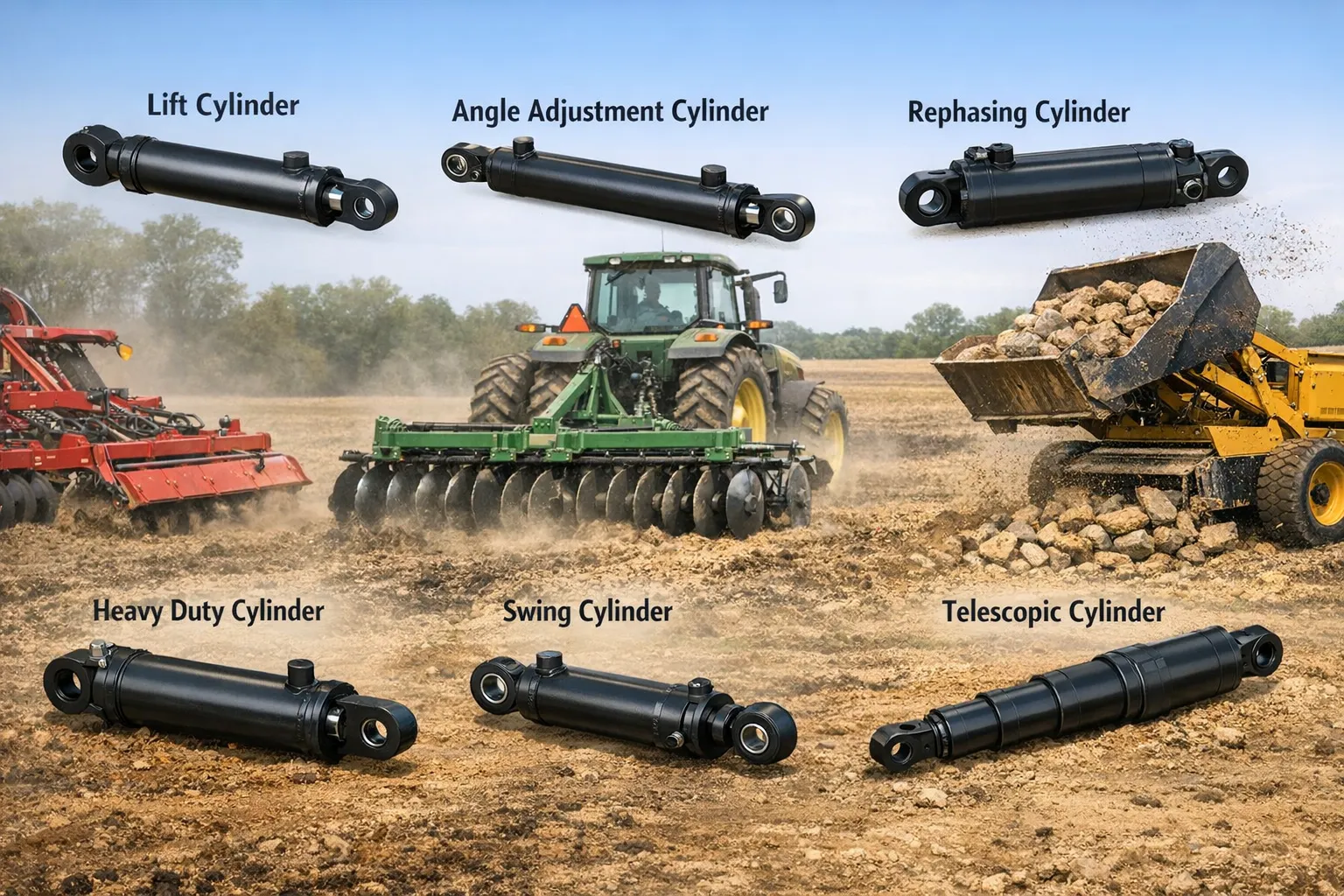
Seamless Retrofitting and OEM Equipment Compatibility
Fleet managers cannot afford to wait weeks for expensive original equipment parts during the narrow planting window. We engineer our custom lift cylinder models to act as perfect dimensional and functional upgrades for major global agricultural machinery brands. Our units flawlessly match exact pin-to-pin retracted lengths, extended stroke dimensions, and specific mounting geometries (such as clevis, cross-tube, or trunnion styles).
We regularly supply direct aftermarket replacements for machinery manufactured by industry leaders such as Kubota, John Deere, Case IH, Lemken, Kverneland, and LS Tractor. (Notice: The mention of these original equipment manufacturer brand names is strictly intended to assist our clients in cross-referencing sizes and verifying application compatibility. We operate independently and do not claim any trademark affiliation or endorsement by these entities.)
By choosing our premium aftermarket hydraulic rams, you are completely bypassing the markup of dealership parts and upgrading to a structural component designed to outlast the tractor itself.
Core Engineering and Metallurgical Advantages
What transforms a standard fluid actuator into an elite agricultural powerhouse? It is the deliberate anticipation and elimination of field-specific failure modes through advanced metallurgy and tribology. Here are the core technical advantages defining our product line:
1. Enlarged Anti-Buckling Rod Architecture
When a plow impacts an underground boulder, immense lateral shockwaves travel through the linkage. Standard rods frequently buckle under this sudden compressive load. By mathematically calculating the maximum draft resistance, we utilize an appropriately enlarged rod diameter machined from high-yield carbon steel. This exponentially increases the column’s buckling resistance, ensuring the rod remains perfectly straight under violent dynamic loads.
2. Aggressive Polyurethane Mud Scraper
Muddy water and airborne silica dust are the ultimate enemies of internal seals. When a contaminated rod retracts, it drags abrasive paste into the barrel. We solve this by integrating an aggressive, heavy-duty dual-lip polyurethane mud scraper ring into the gland. This high-durometer wiper physically shears baked-on clay and ice off the rod before it breaches the primary fluid barrier.
3. Q345D Low-Temperature Structural Steel
Tillage operations frequently begin in freezing early-spring conditions where standard carbon steel becomes brittle and can fracture at the weld seams. We construct the cylinder barrel and all mounting brackets from Q345D high-strength low-alloy steel. This specialized metallurgy offers exceptional impact toughness down to sub-zero temperatures, completely eliminating the risk of brittle fracture.
4. Micro-Cracked Hard Chrome Plating
Agricultural equipment sits outdoors, constantly exposed to corrosive fertilizers and high humidity, leading to devastating rod pitting. Our piston rods undergo a multi-stage grinding protocol followed by a thick (25+ microns), strictly controlled hard chrome plating process. This creates an impenetrable armor that resists mechanical denting while the micro-cracked surface topology perfectly retains lubricating oil.
5. Ultra-Low Friction Wear-Resistant Sealing
Continuous field operation generates high hydraulic heat, which rapidly degrades standard nitrile rubber. Inside the precision-honed barrel, our piston is equipped with an advanced PTFE-blended composite sealing matrix. This high-technology configuration provides an ultra-low friction coefficient, drastically reducing heat generation and ensuring exceptionally smooth, judder-free implement movement.
6. Deep-Penetration Welded Construction
Unlike generic tie-rod cylinders that can stretch or weep fluid under intense vibration, our heavy-duty product utilizes a fully welded architecture. The base cap and high-pressure port fittings are secured using automated multi-pass submerged arc welding. This generates a monolithic pressure vessel that is entirely immune to fatigue cracking over millions of cycles.
Autonomous Manufacturing and Rigorous Quality Control
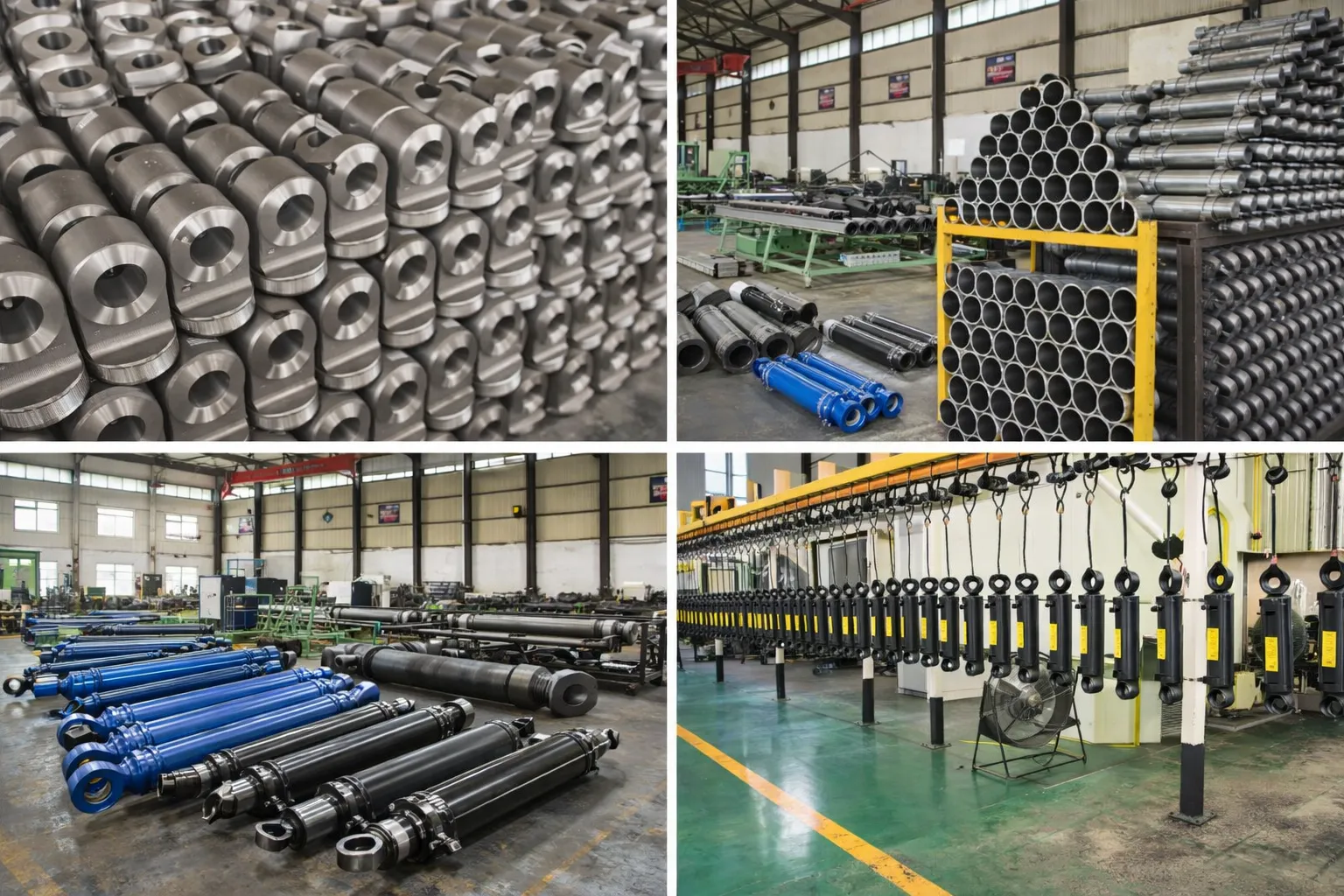
True mechanical reliability cannot be achieved by merely assembling outsourced parts; it must be systematically manufactured into the component from the raw material level upwards. By operating a vertically integrated manufacturing facility, we maintain absolute sovereign control over the entire production lifecycle. From the initial ultrasonic scanning of the raw Q345D steel billets to detect sub-surface imperfections, to the final application of weather-resistant industrial epoxy paint, our quality control protocols are uncompromising.
The internal architecture of our hydraulic parts is sculpted using advanced multi-axis CNC turning and milling centers. This automation allows us to achieve incredibly tight dimensional tolerances and superior surface finishes on the barrel bore and gland housings, ensuring that the seal compression is mathematically perfect, entirely preventing internal side-loading. Following the automated robotic welding phase, every critical structural seam undergoes ultrasonic non-destructive testing (NDT) to confirm total lack of internal porosity.
Before any hydraulic cylinder leaves our docks, it is subjected to an exhaustive 100% factory pressure testing regimen. We mount each unit to high-capacity test benches and pressurize them to 1.5 times their maximum rated working pressure. We conduct stringent static holding tests to verify absolute zero fluid bypass, ensuring the plow will not drift during operation. Finally, a unique serial number is laser-etched into the barrel, providing full material traceability for any future lifecycle maintenance.
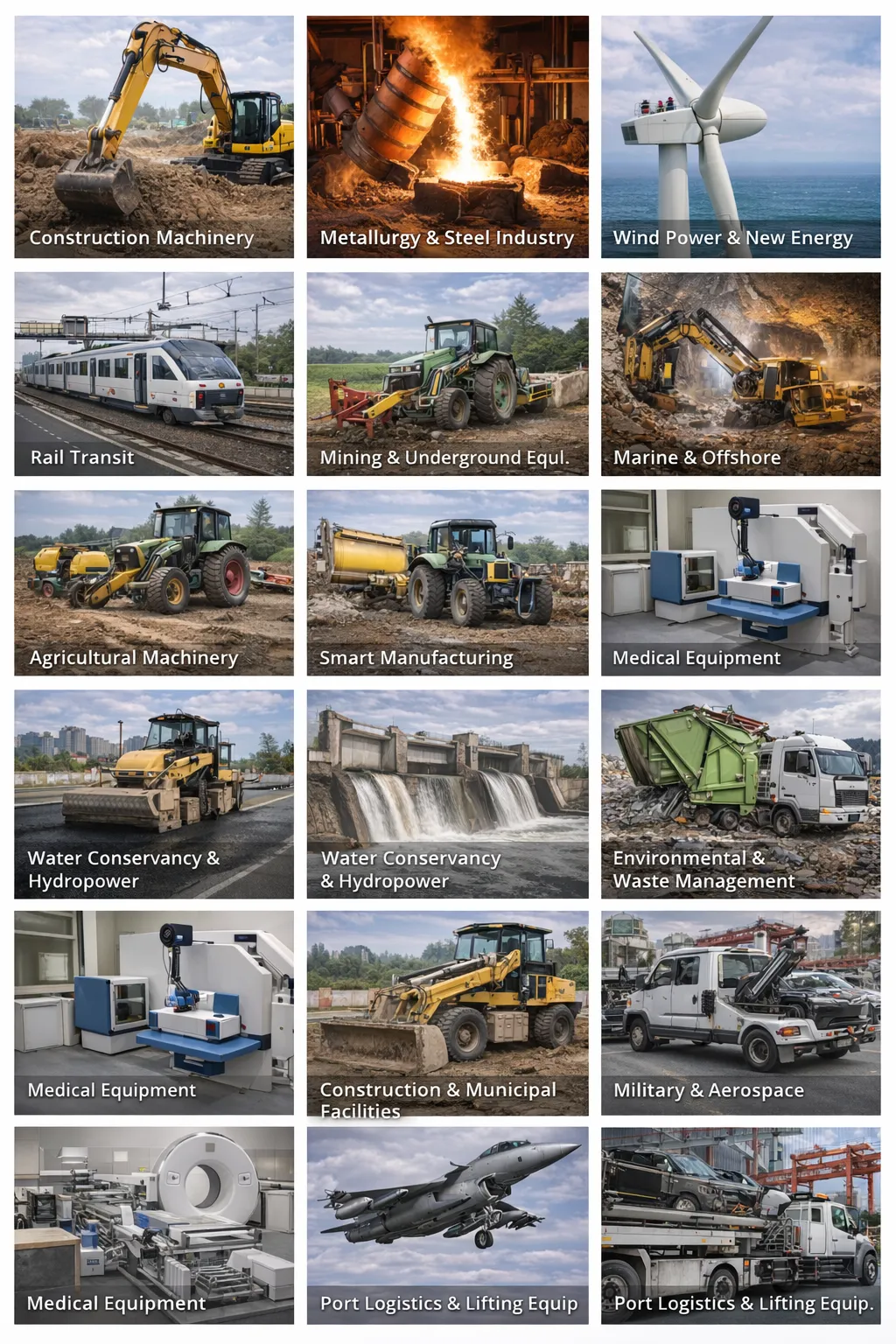
Cross-Industry Adaptability of Heavy-Duty Fluid Power
While the physical geometry of the Plow Frame Lift Cylinder is meticulously optimized for agricultural tillage, the underlying resilient technology we have developed translates flawlessly across multiple severe-duty industrial landscapes. The engineering capacity to completely reject abrasive mud, survive brutal impact shocks without rod buckling, and operate continuously without fluid leakage is in immense demand globally.
- Earthmoving Operations: Our aggressive scraper seal technology and enlarged anti-buckling rods are directly applicable to the construction machinery industry, protecting excavator boom and bucket actuators from silica dust and rock strikes.
- Subterranean Extraction: Equipment operating deep underground faces unprecedented continuous load cycles and abrasive rock particulates. Our highly robust welded structures are a premier choice for the mining industry.
- Heavy Manufacturing: Foundries require unique thermal fluid technologies to maintain system integrity under extreme temperatures. Discover our specialized components designed for the metallurgical and iron industry.
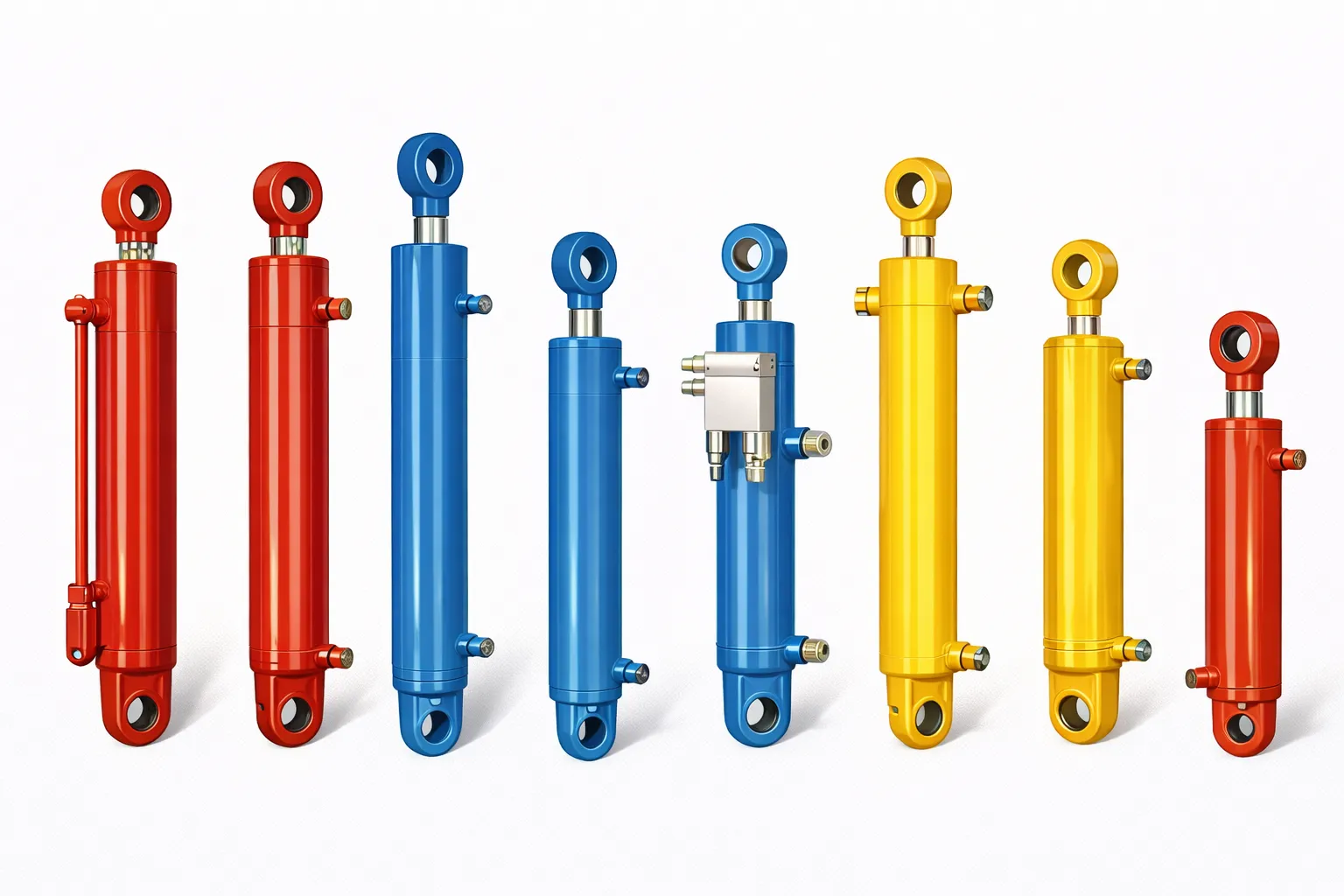
Comparative Analysis: Standard Commercial vs. High-Performance
Evaluating the true hydraulic cylinder price requires looking far beyond the initial purchase invoice. A cheaper initial purchase often leads to expensive downtime, lost crop yield, and continuous repair bills. The comparative matrix below clearly illustrates why upgrading to our specialized fluid power components is a fundamentally sound business decision.
| Engineering Feature | Standard Aftermarket Agricultural Cylinder | Our High-Performance Lift Cylinder |
|---|---|---|
| Rod Deflection Defense | Standard diameter; highly prone to bending or buckling under heavy subterranean draft loads. | Appropriately enlarged diameter; absolute rigidity and zero buckling risk during rock strikes. |
| Contamination Exclusion | Basic single-lip nitrile wiper; quickly overwhelmed by thick mud, allowing dirt to destroy internal seals. | Aggressive multi-lip polyurethane scraper ring; physically shears away all dried mud and ice. |
| Anti-Pitting Resistance | Thin commercial chrome flash; susceptible to rapid stone pitting and acidic fertilizer corrosion. | Thick (25+ μm) micro-crack hard chrome plating; acts as an impenetrable surface armor. |
| Structural Metallurgy | Common carbon steel tubing; risks brittle weld fractures during freezing early spring temperatures. | Q345D High-Strength Low-Alloy steel; provides exceptional low-temperature impact toughness. |
| Total Cost of Ownership | Extremely high; requires frequent mid-season repairs, fluid replacement, and yields massive downtime. | Exceptionally low; engineered for multiple seasons of continuous, heavy-duty, maintenance-free operation. |
Proven Global Field Performance
The theoretical superiority of our engineering is definitively proven in the mud, dust, and unforgiving realities of commercial agriculture. Below are documented cases detailing how our fluid power solutions have directly resolved chronic mechanical failures for our international partners across the Asian market.
Case Study 1: Eradicating Contamination Leaks in South Korean Paddy Fields
Location & Client: Gyeongsangbuk-do, South Korea — Large-scale Regional Agricultural Cooperative operating a diverse fleet of high-horsepower tractors.
The Challenge: During the wet autumn plowing season of 2024, standard OEM lift cylinders on their moldboard plows were weeping fluid after just 300 hours. The highly abrasive, wet-mud paddy conditions were utterly destroying the rod seals, leading to massive environmental contamination and unacceptable downtime.
Contact & Solution: The chief maintenance engineer discovered our specialized capabilities via an organic web search targeting solutions for “agricultural seal failure and hydraulic cylinder repair“. We rapidly manufactured and exported a fleet-wide batch of our upgraded cylinders, integrating our heavy-duty polyurethane mud scraper rings and ultra-thick chrome rods.
The Result: After installation, the cooperative experienced zero seal failures across two consecutive harvesting seasons, reducing fleet hydraulic maintenance downtime by over 85%.
Case Study 2: Conquering Abrasive Volcanic Soil in Hokkaido, Japan
Location & Client: Hokkaido, Japan — Independent commercial potato and wheat farming enterprise utilizing heavy European tillage implements.
The Challenge: Operating in highly abrasive, dry, volcanic ash soil (Andosols) caused extremely rapid internal wear. The ultra-fine silica dust was easily bypassing generic aftermarket wiper rings, mixing with the oil, and scoring the inside of the cylinder barrels within weeks.
Contact & Solution: The owner contacted our engineering team directly through our website form. We prescribed our custom double acting hydraulic cylinder equipped with advanced PTFE wear bands and our specific dust-exclusion gland architecture.
The Result: Seal replacement intervals were extended from once a season to once every three years. Oil consumption and fluid replacement costs dropped dramatically.
Case Study 3: Defeating Severe Rod Pitting in Tropical Plantations
Location & Client: Central Highlands, Vietnam — Heavy Agricultural Equipment Refurbishment Center specializing in reviving imported tractors.
The Challenge: The combination of extreme tropical humidity, constant submersion in flooded paddies, and acidic chemical fertilizers caused rapid galvanic corrosion and severe rod pitting on standard cylinders. This pitting acted like sandpaper, destroying internal seals.
Contact & Solution: They sourced us directly from an international trade directory seeking a reliable hydraulic cylinder manufacturer. We supplied an upgraded aftermarket replacement line featuring our 30-micron micro-cracked hard chrome plating process, establishing an impenetrable barrier.
The Result: The new cylinders exhibited zero signs of corrosion even after extended outdoor off-season storage. Warranty claims for the refurbishment center were virtually eliminated.
Frequently Asked Questions
We believe in total engineering transparency. To assist procurement managers, fleet operators, and OEM designers in evaluating our fluid power solutions, we have compiled detailed answers to the most common technical inquiries regarding our heavy-duty cylinders.
1. How exactly does your cylinder design prevent the severe rod pitting that destroys standard units?
Rod pitting is initiated by chemical corrosion (from acidic soils and fertilizers) and exacerbated by physical impacts from flying stones. We utilize a high-yield Q345D steel rod that undergoes an induction hardening process. It is then heavily plated with a strictly controlled, micro-cracked hard chrome layer exceeding 25 microns. This creates a dense, impenetrable metallurgical barrier that rejects acidic moisture and withstands direct physical impacts, preserving the smooth surface required for the internal hydraulic cylinder piston seals to function properly.
2. Can I request custom dimensional parameters, such as specific stroke lengths or pin diameters, for my machinery?
Absolutely. Custom engineering is our core competency. While we maintain standard configurations that drop-in replace major OEM brands, our technical team can easily tailor the cylinder bore, rod diameter, exact stroke length, closed pin-to-pin dimensions, and mounting geometries (clevis, spherical bearing, trunnion) to perfectly match the kinematics of your specific moldboard plow frame.
3. How does your design physically manage the violent shock of hitting a subterranean rock?
When a plow strikes an immovable object, massive lateral and compressive shockwaves travel directly through the mechanical linkage into the cylinder rod. We manage this physically by enlarging the rod’s cross-sectional area to exponentially increase its buckling resistance threshold. Structurally, the Q345D deep-penetration welded barrel absorbs the kinetic energy without fracturing, ensuring the implement remains intact.
4. What justifies your hydraulic cylinder price compared to generic aftermarket options?
The true cost of a cheap, generic cylinder includes the inevitable operational downtime, lost harvest yields, and continuous replacement costs. Because you are purchasing directly from a vertically integrated factory without middleman markups, our pricing is exceptionally competitive. You are investing in direct-from-factory industrial-grade metallurgy, robotic precision welding, and premium wear-resistant sealing technology that consistently delivers a significantly lower total cost of ownership.
5. Do you supply aftermarket repair kits, and is maintenance complex?
Yes, we provide comprehensive, exact-match OEM-grade seal kits containing all necessary heavy-duty mud scrapers, PTFE U-cups, O-rings, and wear bands. Because our cylinders are designed with standardized, easily accessible threaded glands, routine fixing hydraulic cylinders in your fleet can be executed efficiently by your maintenance personnel using standard heavy shop tools, ensuring lifelong serviceability.
6. What is the typical lead time for a bulk commercial order shipped to South Korea or surrounding regions?
Because we maintain a robust, vertically integrated inventory of raw Q345D steel and pre-machined internal components, our typical manufacturing and quality testing lead times for standard bulk agricultural orders run strictly between 25 to 35 days. Ocean freight logistics to major ports in South Korea, Japan, or Taiwan generally require an additional 5 to 10 days. We are highly accustomed to synchronizing our production with tight seasonal agricultural schedules.
Eliminate Implement Failure from Your Agricultural Operations
The mechanical reliability of your tillage machinery should never be left to chance, nor should your operational profitability be drained by the constant cycle of fluid leaks and component replacement. By upgrading to our heavily armored, precision-engineered Plow Frame Lift Cylinder, you are definitively ensuring that your equipment will perform flawlessly through the toughest soils and the most abusive weather conditions.
Editor: Cxm