Press Wheel Pressure Cylinder for Precision Drill Seeders
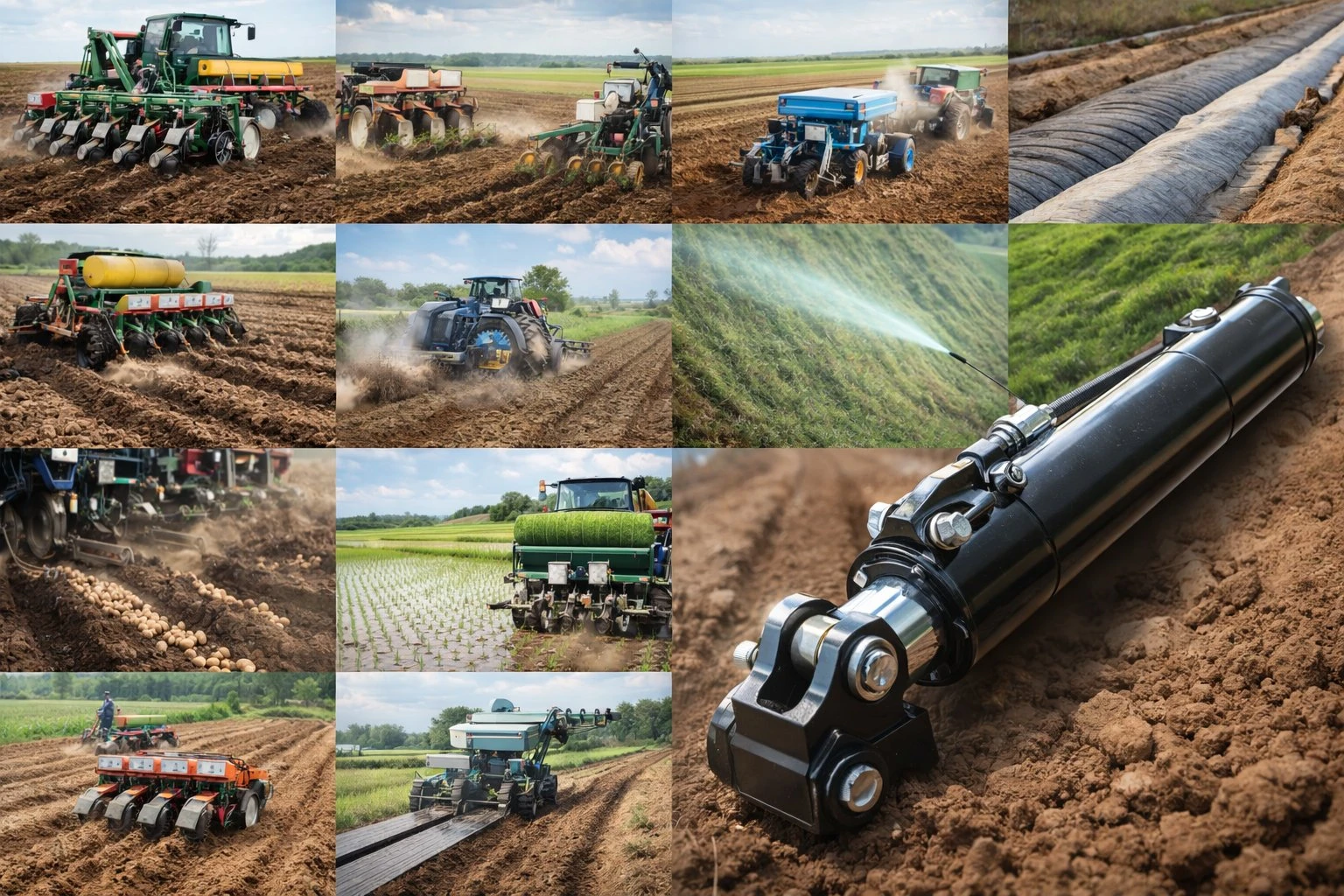
Wear-resistant, double acting welded cylinder with integrated dust exclusion. Engineered for accurate and repeatable seed-to-soil contact pressure across every row.
The 15% Germination Gap Most Growers Never Trace Back to Their Press Wheels
Field research conducted across multiple grain-belt regions shows that uneven press wheel pressure can reduce germination rates by 10 to 15 percent compared to fields where every row receives consistent soil compaction around the seed. That gap does not come from seed quality, moisture levels, or planting depth. It comes from the fact that some rows get firm seed-to-soil contact while others do not, simply because the hydraulic cylinder controlling the press wheel has lost its ability to maintain uniform downforce.
On a precision drill seeder running 24 or 36 rows across a 12-meter working width, the terrain under each press wheel is different. One wheel rolls over a soft furrow, another crosses a compacted wheel track, and a third hits a patch of loose crop residue. The press wheel pressure adjustment cylinder on each row must respond to these variations in real time, maintaining a target compaction force regardless of what the soil surface is doing beneath it. When the cylinder seals wear down and internal leakage begins, pressure holding drifts. Some wheels push too hard, crusting the soil over the seed. Others push too lightly, leaving air pockets that dry out the seed before it can germinate.
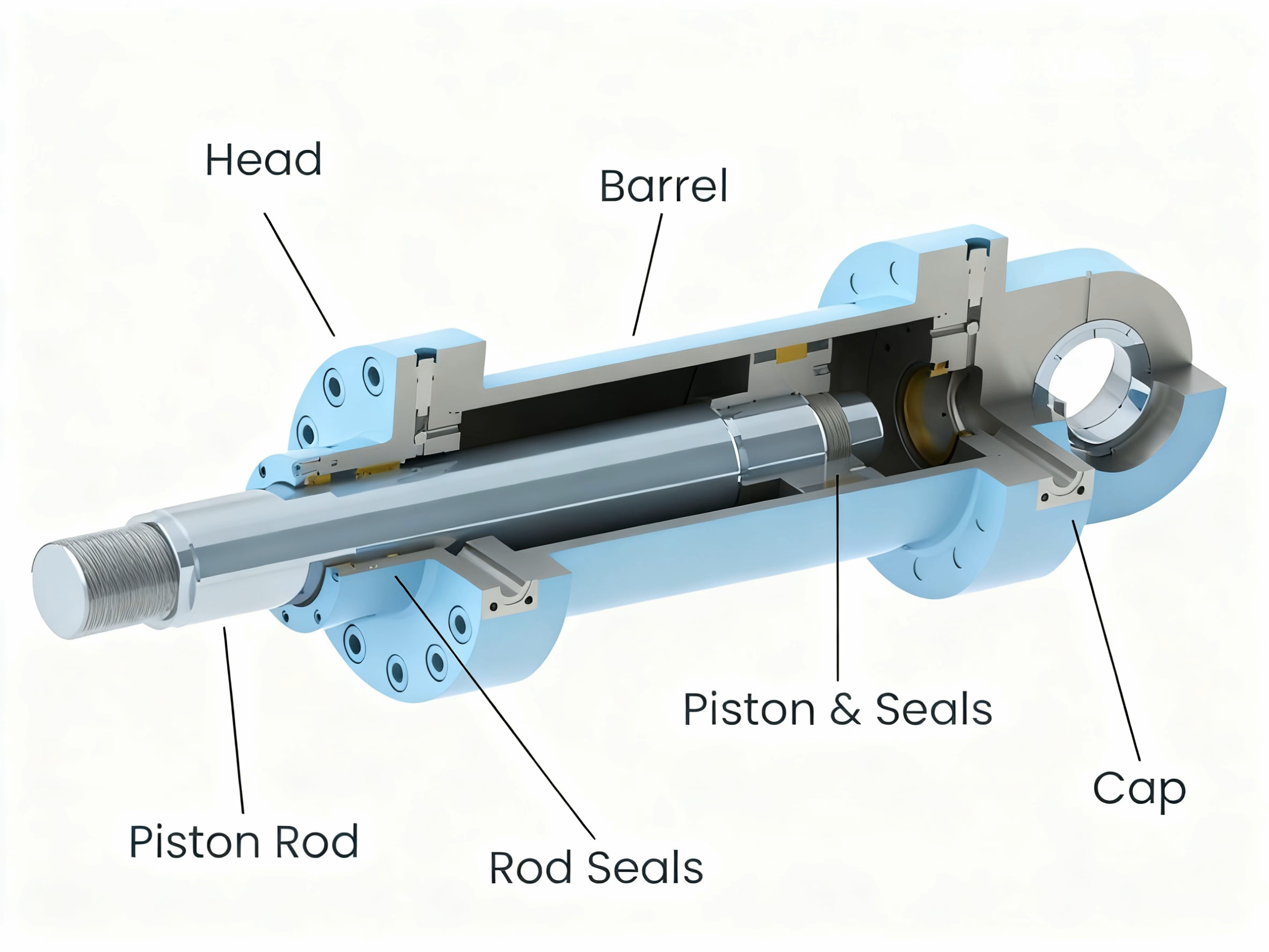
Our press wheel pressure hydraulic cylinder is designed specifically for this application. It is a compact, welded-body, double acting hydraulic cylinder built from carbon steel with a chrome-plated piston rod, wear-resistant polyurethane seals, and an integrated dust exclusion ring that targets the primary failure mode in this application: progressive seal wear from field debris ingress. The cylinder is sized to fit the narrow spaces between seeder row units and calibrated for the low-pressure, high-frequency cycling that press wheel systems demand.
Whether you build precision drill seeders, distribute aftermarket hydraulic parts for planting equipment, or manage a fleet of seeders on a large farming operation, this page covers the technical details, field performance data, and ordering information you need to make an informed sourcing decision.
Understanding Press Wheel Mechanics and Why Cylinder Performance Matters
Before diving into cylinder specifications, it helps to understand what the press wheel actually does and why the quality of the agricultural hydraulic cylinder behind it has such a direct impact on crop establishment.
After a seed is placed into the furrow by the metering unit and covered by the closing discs, the press wheel follows immediately behind. Its job is to press the loose soil firmly around the seed, eliminating air gaps and establishing capillary contact between the seed coat and the surrounding moisture. This compaction creates the conditions the seed needs to imbibe water and start germination. Too little pressure leaves the seed in an air pocket where it desiccates. Too much pressure creates a hard crust that the emerging seedling cannot break through, especially in clay-heavy soils after a rain event.
The ideal press wheel force varies by soil type, moisture content, and crop species. Wheat and barley in medium-textured soils typically need 35 to 70 kg of downforce per wheel. Canola, with its smaller and more fragile seed, may need only 15 to 30 kg. The operator sets this target force through the hydraulic system that feeds the press wheel cylinder. The cylinder then holds that force constant as the seeder travels across the field at 10 to 15 km/h.
The challenge is that holding constant force on a moving press wheel is not the same as holding a fixed position. The cylinder must allow the press wheel to float vertically as the ground surface rises and falls, while maintaining a steady downward pressure. This means the piston is constantly oscillating in small, rapid movements, rarely making a full extend-retract stroke. The sealing surfaces inside the cylinder experience continuous micro-sliding under pressure without the lubrication benefit of a full-stroke oil wash. This operating pattern accelerates seal wear faster than almost any other agricultural cylinder application, which is why standard seals fail prematurely and why wear-resistant seal materials are critical for this specific duty.
Technical Specifications
All parameters below are customizable to match your specific drill seeder model and press wheel assembly geometry. These ranges represent our standard production envelope for press wheel pressure cylinders.
| Specification | Available Range |
|---|---|
| Bore Diameter | 25 mm – 63 mm |
| Rod Diameter | 14 mm – 36 mm |
| Stroke Length | 40 mm – 250 mm |
| Working Pressure | Up to 16 MPa (2,320 PSI) |
| Burst Pressure | 48 MPa (6,960 PSI) |
| Action Type | Double Acting |
| Cylinder Structure | Small Welded Piston Cylinder |
| Body Material | Carbon Steel (S45C / AISI 1045) |
| Piston Rod | Carbon Steel, Hard Chrome 20+ micron |
| Body Finish | Black Oxide / Epoxy Paint / Electrophoretic Coat |
| Piston Seal | Wear-Resistant Polyurethane (High-Cycle Grade) |
| Rod Seal | NBR + PTFE Back-up Ring |
| Dust Exclusion | Integrated PU Wiper Ring |
| Mounting Options | Clevis, Pin Eye, Lug Mount, Flange, Custom Bracket |
| Port Thread | BSP / NPT / Metric (per request) |
| Operating Temperature | -20 C to +80 C |
| Hydraulic Fluid | ISO VG 32 / VG 46 Mineral Oil |
| Duty Rating | Light-Medium / High-Cycle Agricultural |
Seven Reasons This Cylinder Outperforms Standard Press Wheel Units
A press wheel cylinder spends its entire working life in a demanding micro-cycling pattern that generic agricultural cylinders were never intended to handle. Here is what we built into this design to address the specific stresses of press wheel duty.
Press Wheel Pressure Setting Guide by Soil Type and Crop
Choosing the right press wheel cylinder is only half the equation. Setting the correct downforce for your soil conditions and crop type is equally important. Use this reference table as a starting point when calibrating your seeder’s press wheel hydraulic system. Actual optimal settings may vary depending on soil moisture at planting time and local field conditions. The cylinder bore and system pressure values shown assume a standard clevis mounting geometry.
| Soil Type | Crop | Target Wheel Force | Recommended Bore | System Pressure | Notes |
|---|---|---|---|---|---|
| Sandy Loam | Wheat / Barley | 40 – 55 kg | 32 mm | 5 – 7 MPa | Moderate pressure; avoid crusting |
| Sandy Loam | Canola / Rape | 15 – 25 kg | 25 mm | 3 – 5 MPa | Light touch; small seed is crush-sensitive |
| Clay Loam | Wheat / Barley | 50 – 70 kg | 40 mm | 4 – 6 MPa | Higher force to close clay furrow walls |
| Clay Loam | Corn / Soybean | 55 – 80 kg | 40 mm | 5 – 7 MPa | Firm close; monitor for sidewall smearing |
| Silt Loam | Rice (Dry-Seeded) | 30 – 45 kg | 32 mm | 4 – 6 MPa | Light-medium; silt crusts easily |
| Heavy Clay | Wheat | 60 – 90 kg | 50 mm | 5 – 8 MPa | High force; reduce if soil is wet |
The values above are field-tested guidelines based on common drill seeder configurations. For help selecting the correct cylinder bore and stroke for your specific machine, request custom cylinder specifications through our technical inquiry form.
Operating Principle: Constant-Force vs. Constant-Position Control
A press wheel cylinder operates in constant-force mode, which works fundamentally differently from the constant-position mode used in depth control or row spacing applications. Understanding this difference helps explain why press wheel cylinders need specific seal and bore characteristics that standard position-holding cylinders do not provide.
In constant-position mode, the control valve locks oil on both sides of the piston and the cylinder holds a fixed rod extension. In constant-force mode, the system maintains a set pressure on one side of the piston (usually the rod side for push-down applications) while allowing the rod to float freely as the press wheel follows the ground contour. A pressure-reducing valve in the circuit sets the target force, and the cylinder simply transmits that force to the wheel without resisting vertical movement.
This means the piston moves constantly, oscillating up and down in sync with every bump, rut, and slope change the press wheel crosses. At a seeding speed of 12 km/h on typical agricultural ground, the piston may complete 30 to 60 micro-strokes per minute. Over a 10-hour planting day, that adds up to 20,000 to 35,000 individual piston movements, each one sliding the seal lip across the bore surface under full working pressure.
Standard cylinder seals are designed and tested for full-stroke cycling, where the seal lip sweeps the entire bore length with each cycle. In full-stroke duty, the oil film is replenished across the complete seal contact zone with every extension and retraction. In micro-stroke duty, the same narrow band of the seal lip slides back and forth over the same narrow section of the bore, and the oil film in this zone breaks down much faster. This is why a seal rated for 5,000 hours in full-stroke service may fail in under 1,500 hours when used in press wheel micro-cycling conditions, and why our seal selection for this cylinder is fundamentally different from what we install in depth or spacing cylinders.
Application Scenarios
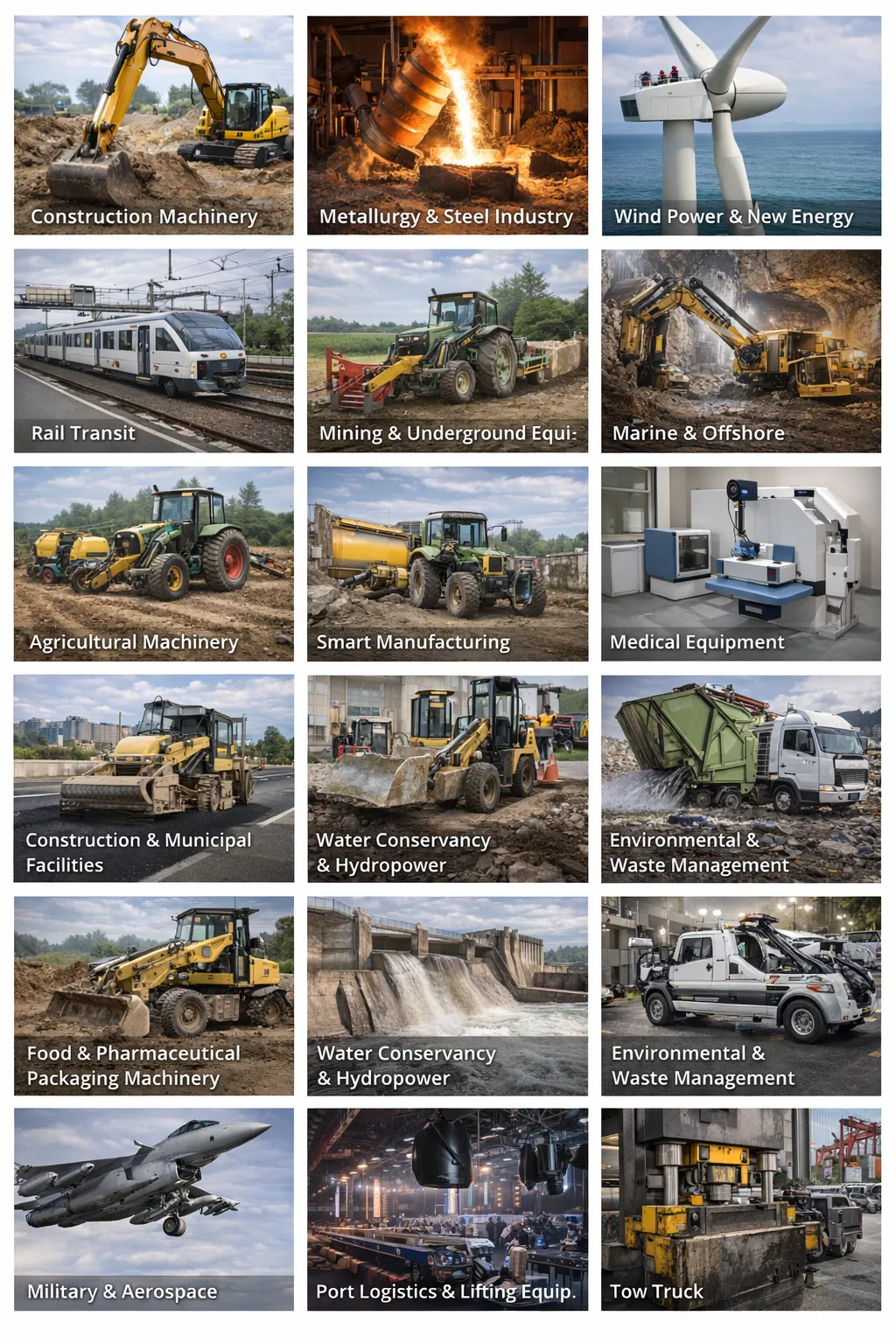
The constant-force, high-cycle operating profile of this cylinder applies to any situation where a hydraulic cylinder for planting equipment needs to maintain a consistent pushing force on a floating element. Here are the primary applications our customers use these cylinders for.
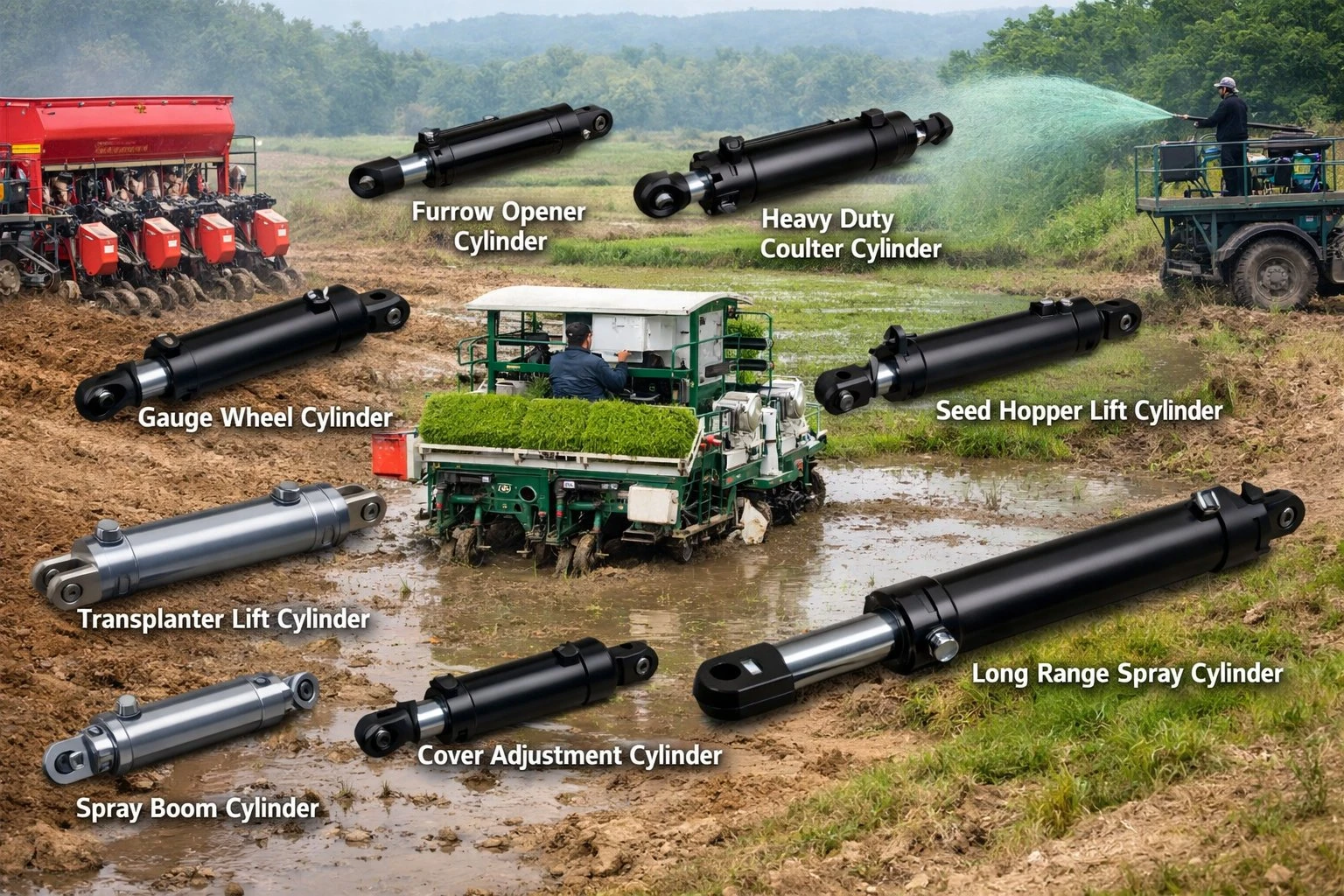
Precision Drill Seeder Press Wheels: The primary application. Every row unit on a precision drill seeder requires individual press wheel force control. Our cylinder provides the low-friction, micro-stroke performance needed for uniform compaction across working widths of 6 to 18 meters, covering 24 to 72 individual press wheel stations.
Planter Closing Wheel Pressure: Closing wheels on planters fold the furrow walls back over the seed before the press wheel arrives. The closing force needs to match soil conditions without smearing wet clay or leaving gaps in dry sandy soil. Our cylinder’s low breakaway pressure enables the subtle force adjustments that closing wheel systems require.
Seed Firmer and Press Finger Mechanisms: Some precision seeders use hydraulically actuated press fingers that push individual seeds into the furrow bottom before the closing discs engage. These mechanisms operate at very low forces (5 to 15 kg) and need cylinders with minimal internal friction. Our 25 mm bore option with the low-preload seal profile is sized for this application.
Gauge Wheel Down-Pressure on Planters: Gauge wheels set alongside the opener disc regulate planting depth by rolling on the undisturbed soil surface. Hydraulic down-pressure cylinders apply controlled force to keep the gauge wheels in firm contact with the ground, preventing depth variation when the planter crosses soft spots. This is another constant-force, micro-cycling application that benefits from our wear-resistant seal technology.
Grass and Pasture Seed Drill Press Rollers: Grass seed drills used for pasture establishment and turf renovation use narrow press rollers behind each seed slot. The required compaction force for grass seed is very light, making low-breakaway performance critical. Our cylinders maintain smooth, responsive control even at the 2 to 3 MPa pressure settings typical for these applications.
Manufacturing and Quality Control
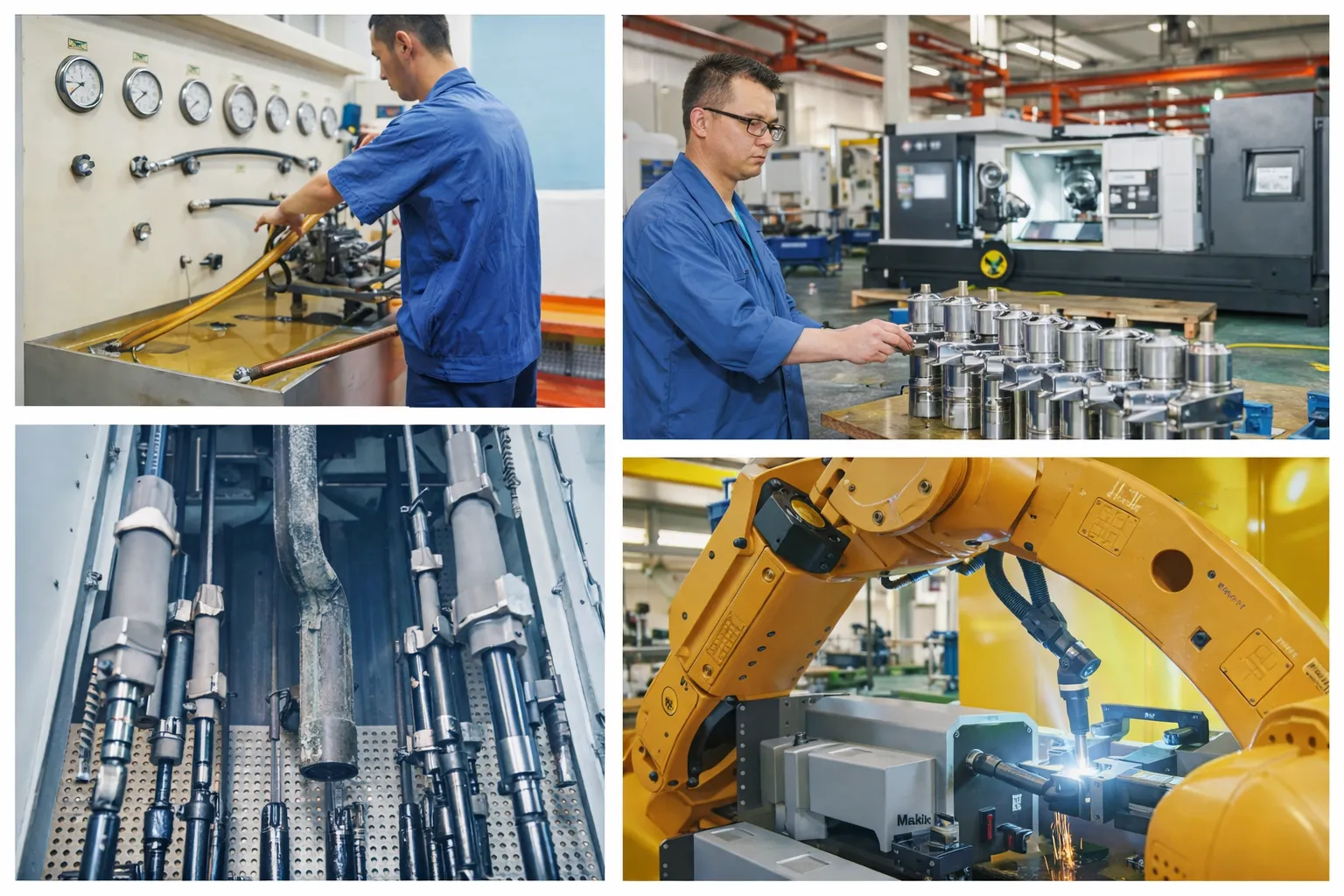
Press wheel cylinders are ordered in large batches, typically 24 to 72 units per seeder. Unit-to-unit consistency is not just desirable in this application; it is mandatory. A single cylinder that behaves differently from its neighbors creates a visible stripe of poor germination in the field. Our manufacturing process is built around delivering the dimensional and performance uniformity that multi-row applications demand.
Material control: Carbon steel tube and rod stock for each production batch is sourced from a single mill heat to eliminate material property variations between cylinders in the same order. Incoming material is verified by spectrometer and hardness test before release to production.
Batch machining: All cylinders in an order are bored and honed in a single machine setup to maintain bore diameter consistency within plus or minus 0.01 mm across the batch. Piston rods are ground and chrome plated in the same fixture run. This single-setup approach eliminates the machine-to-machine variation that causes cylinder-to-cylinder performance spread.
Seal lot matching: Piston seals, rod seals, and wiper rings for each order are drawn from a single manufacturing lot. This ensures that seal material hardness, lip geometry, and friction characteristics are identical across every cylinder in the batch. Mixed seal lots are the most common cause of uneven breakaway pressure in multi-cylinder installations, and we eliminate this variable at the source.
Welding and assembly: Barrel-to-cap welds are performed by MIG welding with 100% visual inspection. Assembly takes place in a filtered-air clean area using lint-free tooling. Each cylinder is flushed with filtered oil before seal installation.
100% individual testing with batch reporting: Every finished cylinder is pressure tested at 1.5 times rated working pressure for three minutes, with leakage check and breakaway pressure measurement recorded. A batch test report showing the measured breakaway pressure for each individual unit is included with shipment, giving the buyer documented proof that all cylinders in the set perform within specification. Each unit carries a unique serial number linked to material batch, seal lot, and test data for at least ten years.
Certifications: ISO 9001 certified facility. Material certificates, dimensional inspection records, and pressure test reports included as standard. CE-supporting documentation available for OEM customers.
Generic Small Cylinder vs. Our Press Wheel Pressure Cylinder
When a seeder OEM or aftermarket buyer selects a press wheel cylinder from a general hydraulic catalog, the following performance gaps typically emerge after the first planting season. This table compares metrics that directly affect seeding uniformity and maintenance costs.
| Metric That Affects Seeding Uniformity | Generic Small Cylinder | Our Press Wheel Cylinder |
|---|---|---|
| Seal Life Under Micro-Cycle Duty | 200,000 – 300,000 cycles | 800,000+ cycles |
| Breakaway Pressure | 0.8 – 1.5 MPa | Less than 0.3 MPa |
| Batch Bore Tolerance | +/- 0.03 – 0.05 mm | +/- 0.01 mm |
| Breakaway Pressure Variation Within Batch | +/- 20 – 30% | +/- 5% maximum |
| Dust Exclusion | None or basic rubber wiper | Integrated PU wiper ring |
| Bore Surface Finish | Ra 0.4 – 0.8 | Ra 0.2 or finer |
| Body Diameter (32 mm bore example) | 52 – 58 mm (tie-rod) | ~42 mm (welded) |
| Individual Test Report Included | Batch pass/fail only | Per-unit breakaway and leak data |
Related Products and Spare Parts
Hydraulic Power Unit: Compact self-contained units designed to drive cylinders and other actuators in pump stations. Available in single-phase and three-phase electric motor configurations (0.75 to 7.5 kW) with reservoir sizes from 5 to 60 liters. Pump station power units feature epoxy-coated reservoirs for humidity resistance and are pre-matched to our cylinder bore and pressure specifications for plug-and-play installation. Diesel-driven units available for remote stations without reliable power supply.
Hydraulic Pump: Gear pumps and vane pumps for cylinder drive circuits in pump station applications. Flow rates from 2 to 40 liters per minute, selected to match the speed and force requirements of base lift, valve actuator, and sluice gate operating systems. SAE, DIN, and metric flange mounting options.
Hydraulic Motor: Low-speed, high-torque motors for auxiliary drive applications in drainage and irrigation systems. Suitable for powering gate valve mechanisms, screen cleaning systems, and other rotary actuators alongside cylinder installations. Orbital and gear motor types from 50 to 500 cc displacement.
Replacement Piston Rod: Factory-matched replacement piston rods for all our cylinder models. Same Q345D material grade, chrome thickness, surface finish, and dimensional tolerance as the original production rod. Drop-in replacement that restores full performance when rod reconditioning after extended service is not economical. Supplied with a new rod seal kit for complete rod-end rebuild.
Replacement Cylinder Barrel: Precision-honed replacement barrels for field rebuild. Same Q345D material, bore finish (Ra 0.2), seal groove dimensions, and port thread specifications as original production. Supplied pre-coated with immersion-grade epoxy. Complete rebuild kit including barrel, piston seal, wear ring, and O-rings available as a single part number for streamlined ordering.
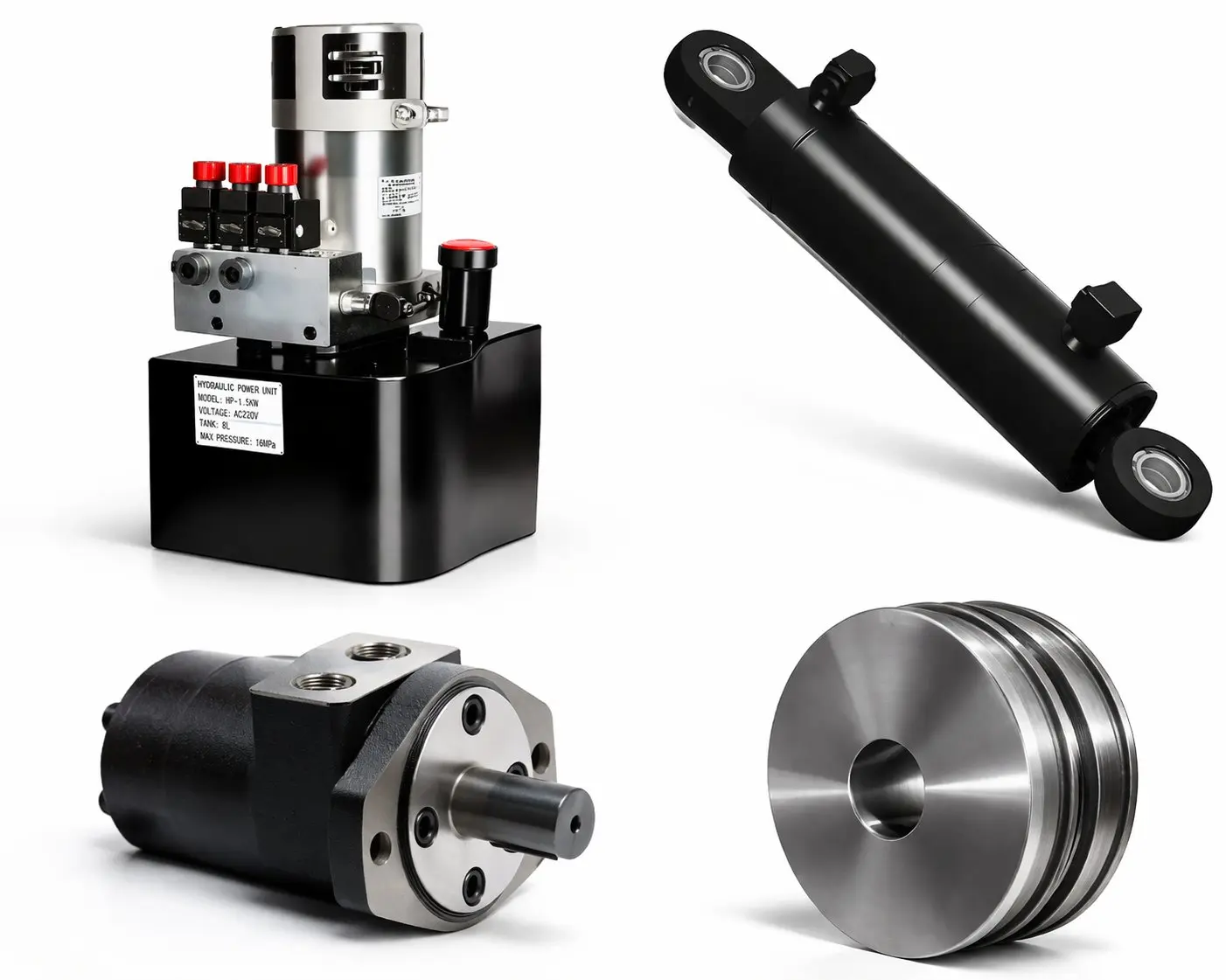
All related products and spare parts are available to order alongside new hydraulic cylinders for sale or separately for existing installations. Our engineering team provides system-matched recommendations that consider the complete hydraulic circuit to ensure all components work together for optimal performance and longevity.
Customer Results From the Field
Gimhae City, Gyeongsangnam-do, South Korea
Customer: Precision agricultural equipment OEM producing 24-row and 36-row drill seeders for the domestic Korean market and export to Southeast Asia
Challenge: Their previous press wheel cylinder supplier delivered batches with breakaway pressure variations exceeding 25% between units, causing visible row-to-row germination differences that triggered field complaints from dealer customers.
How They Found Us: Their engineering director searched for “precision hydraulic cylinder for seeder press wheel” on Google in November 2024 after losing a key dealer account over germination uniformity complaints.
Results: After evaluating a trial batch of 36 cylinders, breakaway pressure variation across the set measured under 4%. Field trials on two production seeders during the 2025 spring barley season showed germination uniformity improvement from a coefficient of variation of 12% down to 4% across the working width. The OEM has since switched 100% of press wheel cylinder procurement to our factory, ordering approximately 2,400 units per year.
“We spent two years trying to solve a germination consistency problem by adjusting seed meters and closing discs. Turns out the problem was in the press wheel cylinders all along. When every cylinder pushes with the same force, every row comes up the same. The solution was embarrassingly simple once we found the right supplier.” – Mr. Baek, Engineering Director, May 2025
Jeju Province, South Korea
Customer: Agricultural cooperative managing large-scale grain and vegetable production on volcanic soils
Challenge: Jeju’s porous volcanic soils produce very fine abrasive dust during dry planting periods. The cooperative was replacing press wheel cylinder seal kits on their drill seeders every season at significant labor and parts cost.
How They Found Us: Referral from a mainland Korean dealer who had been purchasing our cylinders since 2023. Initial inquiry received by phone in February 2025.
Results: Our cylinders with integrated dust wiper rings completed the full 2025 spring and autumn planting campaigns with zero seal replacements, saving the cooperative approximately 60 hours of workshop labor and the cost of 84 individual seal kits across their fleet. The machinery supervisor noted that press wheel force remained consistent throughout both campaigns with no detectable performance decline.
“The volcanic soil on Jeju is like fine sandpaper. It gets into everything. We accepted annual seal replacement as a cost of farming here until these cylinders went two full seasons without needing any attention. That saved us real money and, more importantly, time during the busy planting weeks.” – Ms. Ko, Machinery Supervisor, November 2025
Ibaraki Prefecture, Japan
Customer: Agricultural machinery research and development center attached to a major Japanese planter manufacturer
Challenge: The center was developing a next-generation 28-row drill seeder with individual hydraulic press wheel control for the domestic Japanese grain market. Their internal cylinder prototypes had breakaway pressure that was too high for accurate control at the light force settings needed for canola and grass seed drilling.
How They Found Us: Found our product listings while browsing double acting hydraulic cylinder options with low-friction specifications. Contacted our engineering team in September 2024.
Results: After testing five sample units on their dynamometer bench, they measured breakaway pressure averaging 0.22 MPa, which was less than a third of what their internal prototype achieved. The R&D center approved our cylinder for integration into their new seeder platform. We are now in serial production supply, delivering 400 units per quarter starting from the 2026 production year.
“For canola drilling, the press wheel force window is extremely narrow. If the cylinder has too much static friction, the wheel either pushes too hard or not at all. The breakaway pressure on these units is low enough that our control system can modulate force in increments of 2 to 3 kg per wheel. That is exactly the resolution we needed.” – Lead Development Engineer, via technical evaluation report, January 2025
Buri Ram Province, Thailand
Customer: Rice farming cooperative using dry-seeded rice drill technology to reduce water consumption in the northeast region
Challenge: Dry-seeded rice requires very precise press wheel force to compact the sandy silt soil around the seed without crusting. The cooperative’s imported drill seeders came with generic press wheel cylinders that lost pressure consistency within one planting season, leading to uneven germination across the paddy.
How They Found Us: Their agronomist discovered our website through a Google search for “hydraulic cylinder for seeding machine rice drilling” in August 2024. After exchanging specifications by email, they ordered a trial batch of 48 cylinders.
Results: The trial batch was installed across two 24-row drill seeders for the November 2024 dry season planting. Germination uniformity across the working width improved by an estimated 18% compared to the previous season with the original cylinders. The cooperative re-ordered for their remaining four machines before the 2025 season and reported that all cylinders maintained their original performance through the full campaign without seal replacement or adjustment.
“Dry-seeded rice is still new in our region. The success depends on every seed getting good soil contact. When we replaced the cylinders and saw the germination difference, even the skeptical farmers were convinced. Now the whole cooperative has adopted the new cylinder standard.” – Mr. Prasert, Head Agronomist, March 2025
Konya Province, Turkey
Customer: Agricultural equipment manufacturer building drill seeders for the Turkish domestic market and Middle East export
Challenge: Central Anatolian soils are extremely dry and dusty during the autumn wheat planting season. The manufacturer’s existing cylinder supplier could not provide units with adequate dust protection, resulting in frequent warranty claims for leaking press wheel cylinders within the first 200 operating hours.
How They Found Us: Met our representative at the Konya Agriculture Fair in September 2024. After reviewing our dust exclusion design documentation, they requested prototype samples for evaluation.
Results: Prototype testing through the 2024 autumn wheat planting season showed zero leakage at 400 hours on machines operating in the dustiest conditions the Konya basin produces. The manufacturer approved our cylinder as standard equipment on their 2025 model year seeders and has placed a blanket order for 3,600 units annually. Warranty claims related to press wheel cylinder leakage dropped from 11% of machines to under 1% in the first production year. They also now source custom hydraulic cylinder options from us for other machine sub-systems.
“Konya dust kills cylinders faster than any other region I know. Our old supplier told us it was normal and that farmers should replace seals every year. You showed us it does not have to be that way. Our warranty costs are down, our dealers are happy, and we look like we improved the whole machine when really we just fixed one component.” – Mr. Aydin, Product Engineering Manager, April 2025
Frequently Asked Questions
What cylinder bore size should I choose for press wheel pressure on a grain drill?
Why do press wheel cylinder seals wear out faster than other agricultural cylinder seals?
Can these cylinders replace OEM press wheel cylinders on major drill seeder brands?
How important is cylinder-to-cylinder consistency for multi-row drill seeders?
What is the minimum order quantity for press wheel cylinders?
How do I check if press wheel pressure is even across all rows on my drill seeder?
Do you ship large press wheel cylinder orders to Korea, Japan, and the Middle East?
Every Row Deserves the Same Press Wheel Force
Tell us your drill seeder model, row count, and target press wheel force. We will recommend a matched cylinder set, confirm compatibility, and deliver a detailed quotation within 48 hours.
Editor: Cxm