Boom Aerial Work Vehicle Upper Arm Hydraulic Cylinder
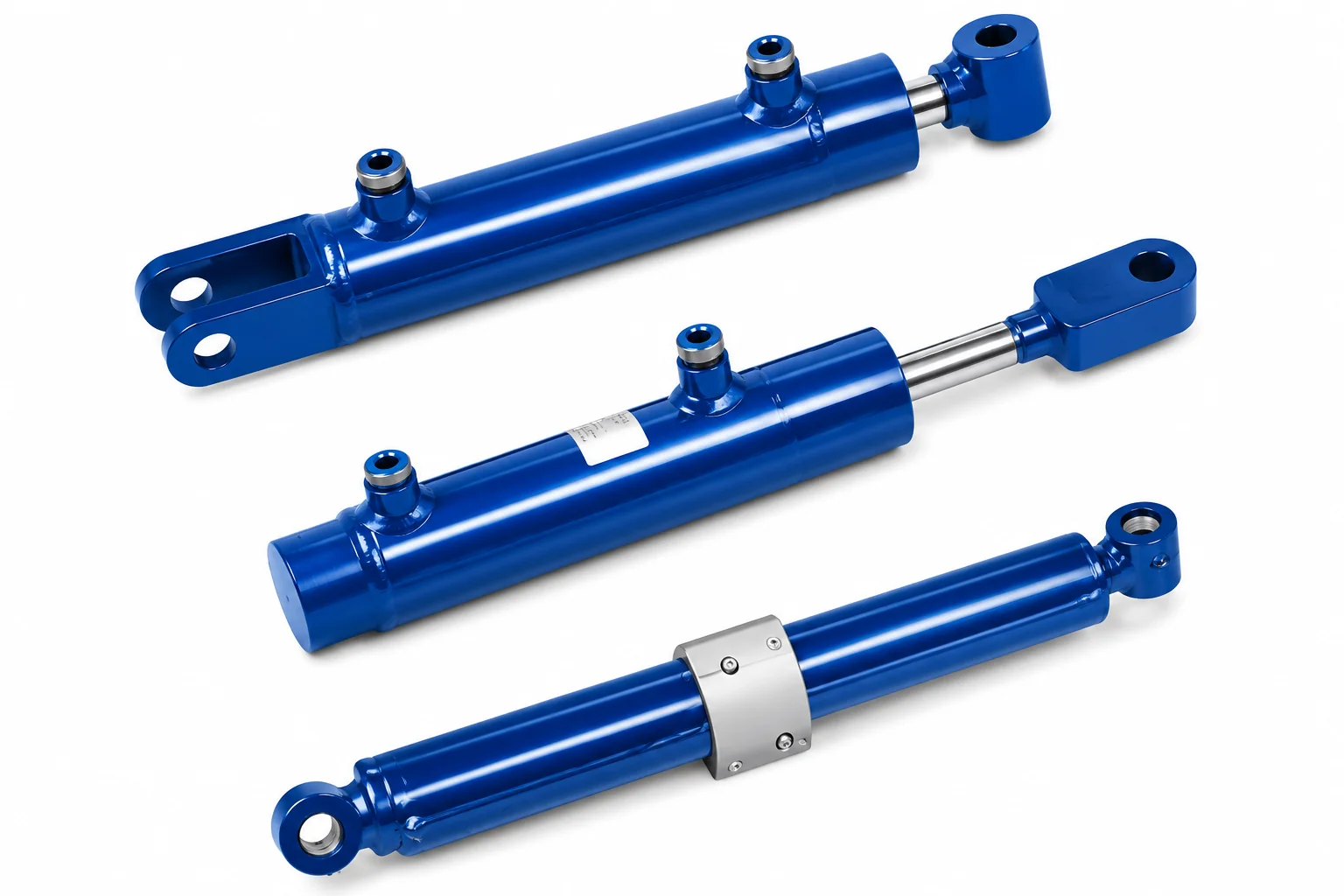
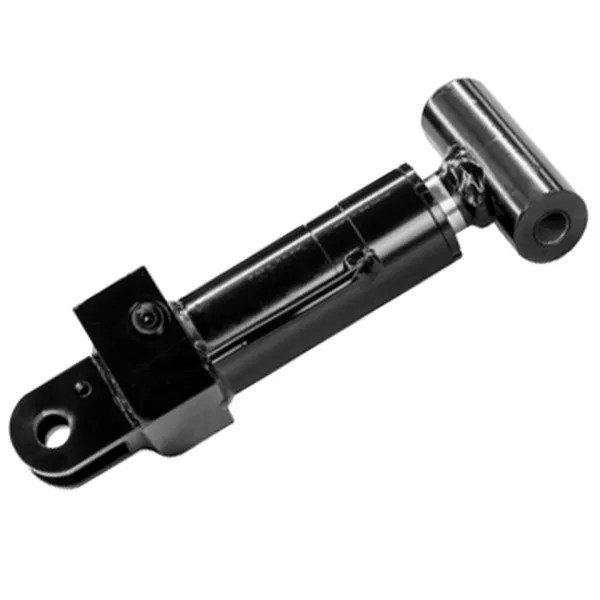
Technical Specification — GTHZ210C Upper Arm Cylinder
| Cylinder Name | Drawing Number | Bore (D) | Rod (d) | Stroke (S) | Install Dist (L) | Pressure | Ports (M) | Weight |
|---|---|---|---|---|---|---|---|---|
| Upper arm cylinder | GTHZ210C-620500-000 | Φ110 | Φ75 | 815 | 1433 | 23 MPa | 2-Φ9 | 100 kg |
| Function | Jib articulation — up-and-over positioning at the knuckle joint |
| Acting Type | Double-acting (raise jib & lower jib under full hydraulic control) |
| Rod-to-Bore Ratio | 0.68 — optimised for balanced extend/retract force |
| Port Style | 2-Φ9 banjo fitting ports (high-flow) |
| Body Material | 20# / 45# / Q345B steel |
| Seal Options | Parker, NOK, Hallite, Busak Shamban |
| Certification | ISO 9001:2015, ISO 14001, ISO 45003 |
| MOQ / Warranty | 1 piece / 1 year |
What the Upper Arm Cylinder Does — Jib Articulation at the Knuckle Joint
An articulating boom lift has two main boom sections connected by a knuckle joint — a large pin-connected hinge that allows the upper section (jib) to pivot independently of the lower section. The upper arm cylinder spans this knuckle, extending to push the jib upward and retracting to pull it downward. This articulation gives the boom lift its defining capability: up-and-over reach. The platform can go up to clear a building parapet, over the parapet wall, and then back down to work on the building facade — a manoeuvre that a straight telescopic boom cannot perform.
The upper arm cylinder cycles more frequently than the lower arm cylinder because jib articulation is the primary positioning tool — operators constantly adjust the jib angle to reach different work points on a structure, while the main boom elevation stays relatively constant. On a typical work shift involving facade inspection or electrical installation, the upper arm cylinder may cycle 50–100 times compared to 5–10 cycles for the lower arm. This higher cycle frequency drives faster seal wear and makes the upper arm cylinder a more frequent replacement item than the lower arm on the same machine.
Why Φ110 — A Larger Bore Than the Lower Arm, Despite Carrying Less Weight
The upper arm cylinder has a Φ110 bore — 10% larger than the lower arm's Φ100. This seems counterintuitive: the upper arm carries less mass (only the jib, platform, and personnel — not the entire boom), so why does it need a larger bore? The answer lies in the retract direction.
Extend: Pushing the Jib Up
When the upper arm cylinder extends, it pushes the jib upward against gravity. The full piston area (Φ110 = 9,503 mm²) is available for this push. At 23 MPa, the extend force is approximately 219 kN — more than sufficient to raise the jib, platform, and rated personnel load through the full articulation arc.
Retract: Pulling the Jib Down
When the upper arm cylinder retracts, it pulls the jib downward — with gravity assisting, but against the inertia and wind resistance of the jib section. The retract force comes from the annular area (bore area minus rod area). With the Φ75 rod, the annular area is 5,085 mm², producing a retract force of approximately 117 kN at 23 MPa. If the rod were Φ80 (like the lower arm), the annular area would drop to 4,476 mm² — a 12% reduction in retract force that would slow jib descent and reduce the operator's downward positioning control.
The lower arm cylinder prioritises buckling resistance (Φ80 rod, ratio 0.80) because it operates at low angles with long rod extension. The upper arm cylinder prioritises balanced extend/retract force (Φ75 rod, ratio 0.68) because the operator needs strong bidirectional control at the knuckle. Different engineering priorities → different bore/rod combinations, even though both cylinders serve the same machine.
Upper Arm vs Lower Arm — Engineering Comparison
| Parameter | Upper Arm (this product) | Lower Arm |
|---|---|---|
| Bore | Φ110 (larger) | Φ100 |
| Rod | Φ75 | Φ80 (thicker) |
| Rod-to-bore ratio | 0.68 (force-balanced) | 0.80 (anti-buckling) |
| Stroke | 815 mm | 1,458 mm (longer) |
| Pressure | 23 MPa (higher) | 21 MPa |
| Weight | 100 kg | 137 kg (heavier) |
| Cycle frequency | High (50–100/shift) | Low (5–10/shift) |
| Design priority | Balanced bidirectional force | Extreme buckling resistance |
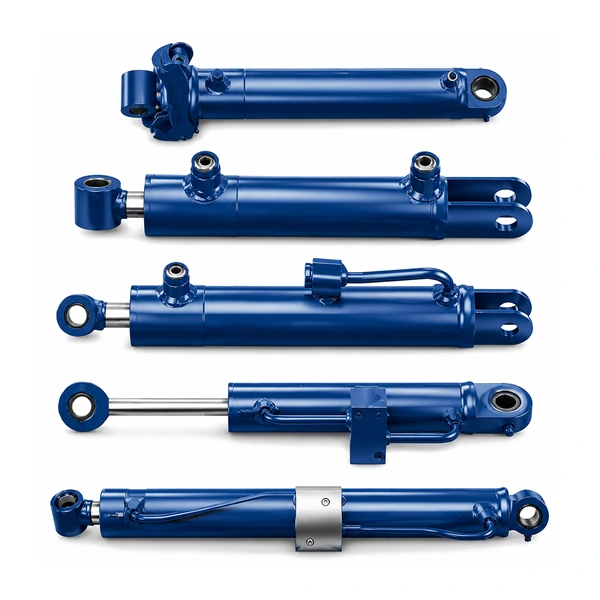
Up-and-Over Reach — The Capability That Only the Upper Arm Cylinder Provides
A telescopic boom lift can reach high and far — but only in a straight line from the machine's base. It cannot reach over a wall, behind a structure, or into a recessed area below the boom elevation. The upper arm cylinder on an articulating boom lift unlocks these work positions by folding the jib section independently of the main boom angle.
The lower arm raises the boom above the wall height. The upper arm cylinder then extends to angle the jib downward over the wall, positioning the platform on the building side. This is the most common up-and-over manoeuvre — used for rooftop HVAC maintenance, window installation on set-back floors, and building facade work above overhanging structures.
The lower arm raises the boom to the underside of the overhang. The upper arm cylinder retracts to fold the jib horizontally, sliding the platform underneath the structure. This is used for bridge inspection, canopy maintenance, and industrial pipeline access where the work area is below and behind the structural element.
The lower arm extends horizontally to position the knuckle above the target area. The upper arm cylinder then extends to lower the jib vertically downward into the space — like lowering a platform into a pit, a shaft, or an atrium from above. The 815 mm stroke allows the jib to articulate through approximately 135° of total travel at the knuckle — from fully elevated to near-vertical descent.
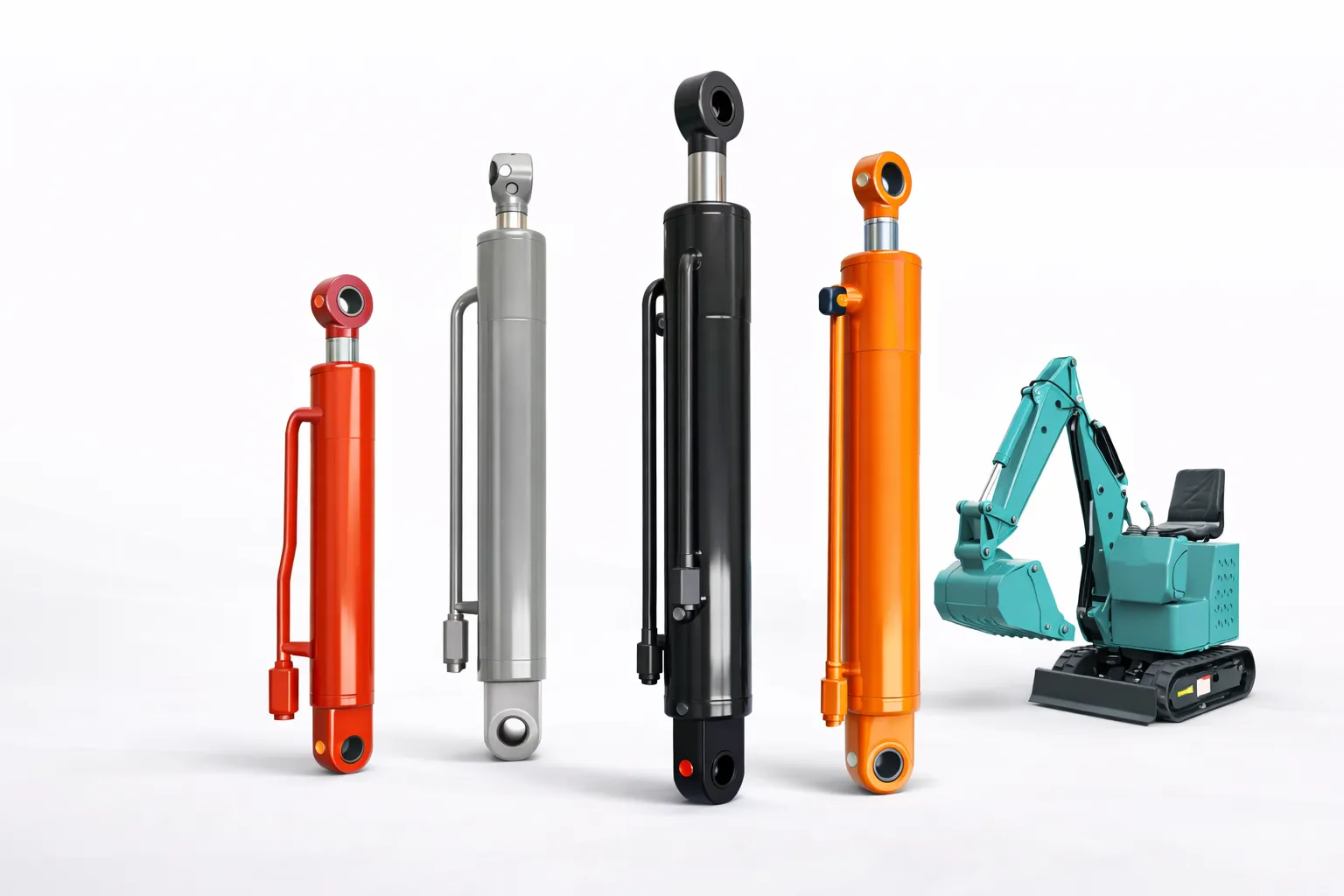
Upper Arm Cylinder — Technical Questions
Customer Reviews
Verified Purchase · June 2025
Replaced the upper arm cylinder on our GTHZ210C articulating boom after the original started drifting at the knuckle — the jib would slowly drop about 5° over 10 minutes when we were doing facade work at 18 metres. Extremely unsettling for the guys in the basket. The Ever-Power replacement eliminated the drift completely. Jib now holds rock-solid at any angle. The Φ110 bore is impressive — this is a big, serious cylinder. Needed a forklift to unload it from the truck. Installation took about 3 hours including bleeding the circuit. Back in service and working perfectly.
Verified Purchase · April 2025
We specialise in high-rise building maintenance in Auckland using articulating boom lifts. The upper arm cylinder fails before the lower arm on every machine in our fleet — we estimate roughly 2:1 replacement ratio. The Ever-Power GTHZ210C-620500-000 gives us a viable alternative to the OEM channel, which in New Zealand means 8–12 week shipping from Europe or the US. Ever-Power delivers to Auckland in about 4 weeks, and the price difference funds the air freight if we need to expedite. Two units installed, both performing well after 5 months of daily use.
Verified Purchase · February 2025
Functionally excellent. The jib articulation is smooth and precise — better than the original cylinder at 6,000 hours. My only concern is cosmetic: the paint finish on the barrel was slightly uneven in one area, with a visible run mark. It doesn't affect performance or durability, but on a 100 kg cylinder that costs this much, the finish should be consistent. I'd give five stars if the paint quality matched the machining quality, which is outstanding.
Verified Purchase
We ordered the upper arm and lower arm cylinders together for a complete boom rebuild at 10,000 hours. Both arrived in one shipment, 26 days to Jeddah. Our technician installed both in a single day — having both cylinders ready at the same time meant we only needed to crane-support the boom once instead of twice. Combined cost was about 45% of the OEM equivalent for both cylinders. The boom lift has been back in service for 4 months with zero issues on either cylinder.
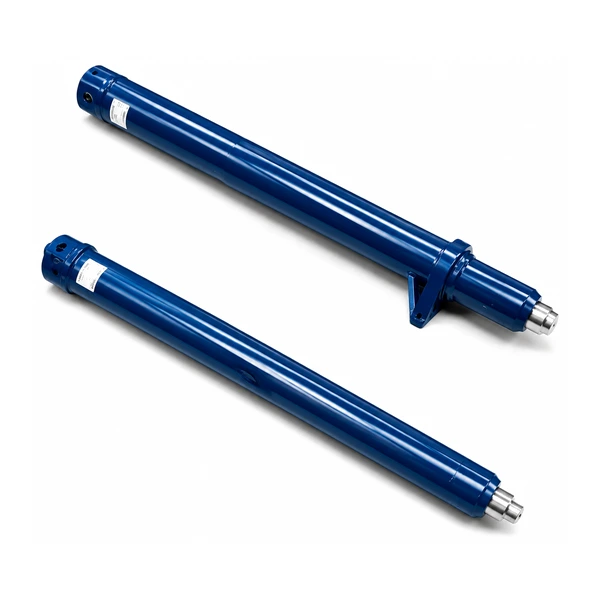
Complete Boom Lift Cylinder Set
Informations complémentaires
| Editor | Cxm |
|---|
Produits similaires
-
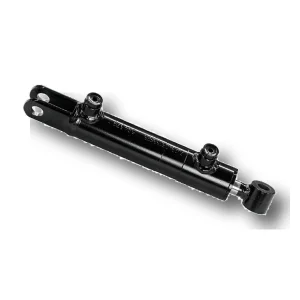
Scissor Lift Steering Cylinder | EP-HCYY11112004 Model
-
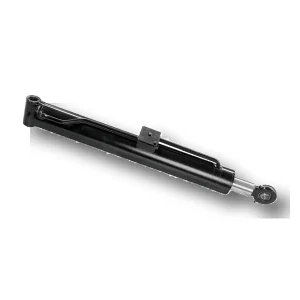
Boom Lift Hydraulic Cylinder Set | 8 Models | Bore Φ40–110mm
-
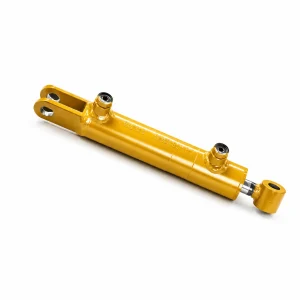
HCYY11112005 Main Boom Angle Cylinder for Aerial Work Vehicles
-
HCYY11112004 Steering Cylinder for Aerial Work Vehicles
-
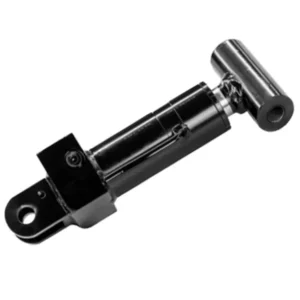
Boom Aerial Work Vehicle Floating Hydraulic Cylinder — Platform Levelling
-
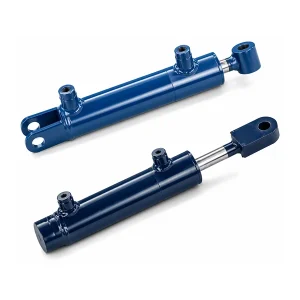
Scissor Fork Aerial Work Vehicle Steering Hydraulic Cylinder — Double-Acting
-
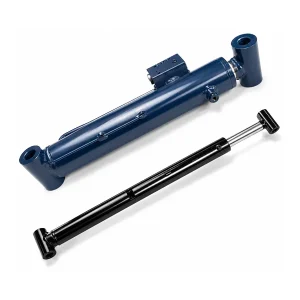
Scissor Fork Aerial Work Vehicle Lifting Hydraulic Cylinder
-
Boom Aerial Work Vehicle Floating Hydraulic Cylinder