Durable Hydraulic Cylinders — 5 Stage Telescopic For Sale
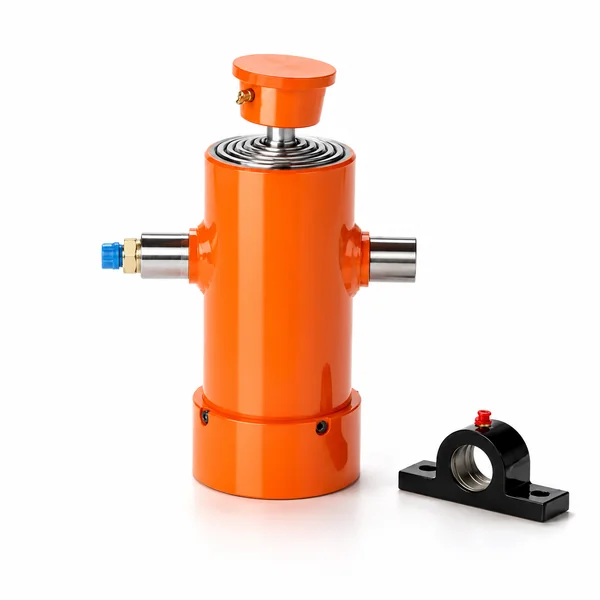
Durable 5 stage telescopic hydraulic cylinder — durability engineering explained. “Durable” is not an accident — it is the result of four specific engineering decisions made during the design and manufacturing process: correct wall thickness for the working pressure (with safety margin), appropriate steel grade for the fatigue environment, controlled stress concentrations at welds and stage junctions, and proper guide ring support to prevent bore scoring from side loads. This page explains how each decision contributes to the cylinder’s long-term durability under repeated dump truck tipping cycles.

DURABILITY ENGINEERING
5-STAGE · BUILT TO LAST

Durable 5 Stage
Telescopic Cylinder
What Engineering Decisions Make a Cylinder Last

A telescopic hydraulic cylinder on a dump truck extends and retracts thousands of times per year under full load. Each cycle applies pressure to the barrel walls, stress to the welds, friction to the seals, and lateral force to the guide rings. Durability is the cylinder's ability to withstand these repeated loads over years of service without structural failure, permanent deformation, or accelerated wear. It is engineered — not hoped for.

Stages5
Bore2–6″
Built For10,000+ Cycles
QualityISO 9001

Korea Ever-Power engineers durability into every 5-stage telescopic cylinder through four specific design and manufacturing decisions. Each decision addresses a different failure mode — and together they produce a cylinder that operates reliably through years of heavy-duty dump truck tipping service. This page explains those four decisions so you can evaluate any supplier's durability claim against engineering fundamentals rather than marketing promises.
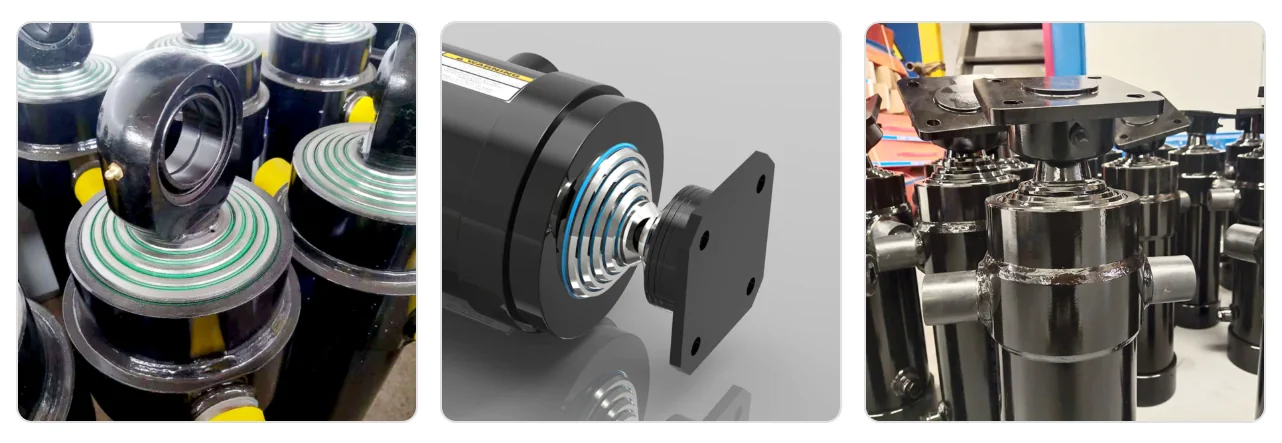
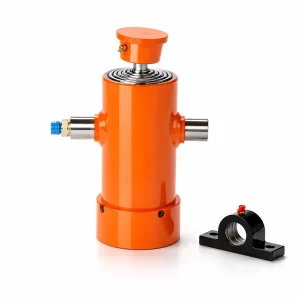
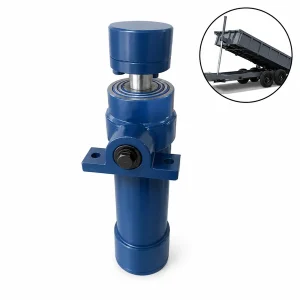
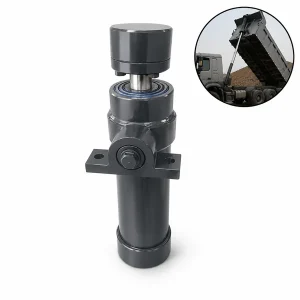
Telescopic Hydraulic Cylinder Detail 1  

Durable 5 Stage Telescopic — Parameters

Stage Count 5 stages
Bore / Rod / Stroke / Pin 2–6″ / 1.125–4″ / 4–100″ / 0.5–2″
Port Options G / SAE / NPT / M
Design Standard Wall thickness per ISO 6022 · 1.5× proof · 4× burst margin
Material Seamless steel tube — tensile ≥520 MPa, yield ≥350 MPa
Certification / Lead Time ISO 9001 / 25–35 days / 1 year warranty

Four Engineering Decisions That Determine Durability

Every telescopic cylinder failure can be traced to a deficiency in one of these four areas. A durable cylinder gets all four right — and a cheap cylinder cuts corners on at least one.

1. Wall Thickness — Resisting Internal Pressure

The barrel wall must be thick enough to contain the working pressure with a safety margin that accounts for pressure spikes, fatigue cycling, and material variability. The wall thickness is calculated from the Barlow formula (relating pressure, bore diameter, and material yield strength) with a design factor — typically 2.5–4× the working pressure for the minimum burst strength. A 5-stage cylinder has five barrels, each at a progressively smaller diameter — but each must independently meet the wall thickness requirement for the working pressure.

How shortcuts reduce durability: Using thinner-walled tube (to reduce material cost or outer diameter) lowers the safety margin. The cylinder may pass the 1.5× proof test but operate closer to its ultimate strength — meaning pressure spikes, fatigue cycling, and any wall thickness variation from manufacturing can push it toward failure during service. Korea Ever-Power calculates wall thickness with the full design factor and verifies it with the 1.5× proof test on every unit.

2. Steel Grade — Fatigue Resistance Under Repeated Loading

A dump truck telescopic cylinder is a fatigue-loaded component — every tipping cycle applies and removes pressure from the barrel walls. Over thousands of cycles, fatigue micro-cracks can initiate at stress concentrations (weld toes, thread roots, bore surface imperfections) and grow until the barrel fails. The steel grade determines the fatigue endurance limit — the stress level below which the steel can withstand an essentially unlimited number of cycles without fatigue cracking.

How shortcuts reduce durability: Using lower-grade steel (ordinary structural tube instead of hydraulic-grade seamless tube) reduces the fatigue endurance limit. The cylinder may function initially but develop fatigue cracks after 2,000–5,000 cycles — whereas hydraulic-grade steel at the correct wall thickness can sustain 10,000+ cycles without fatigue initiation. Korea Ever-Power uses seamless steel tube with documented tensile and yield strengths verified by mill certificates.

3. Weld Quality — Managing Stress Concentrations

The welds at the end caps, port bosses, and mounting brackets are the most common locations for fatigue crack initiation because they create stress concentrations — geometric discontinuities where the stress is locally higher than the surrounding material. The weld profile (smooth transition vs sharp toe), the weld penetration (full vs partial), and the absence of defects (porosity, undercut, lack of fusion) all determine how severe the stress concentration is — and therefore how quickly a fatigue crack initiates.

How shortcuts reduce durability: Poorly profiled welds with sharp toes, undercut, or incomplete penetration create severe stress concentrations that initiate fatigue cracks in hundreds of cycles — not thousands. Korea Ever-Power's qualified welding procedures (WPS) and certified welders produce consistent, smooth-profiled welds with full penetration at pressure-containing joints, minimising stress concentrations and maximising fatigue life.

4. Guide Ring Support — Preventing Bore Scoring

Guide rings centre the plunger inside the bore, preventing metal-to-metal contact under side loads. A dump truck operating on uneven terrain, or a front-push hoist with angular cylinder movement, applies significant side loads to the plunger. Without adequate guide rings, the plunger contacts the bore wall — scoring both surfaces. Bore scoring creates permanent damage: the scratches cut the seals on every subsequent stroke, causing progressive leakage that worsens over time and cannot be repaired without re-honing the bore.

How shortcuts reduce durability: Undersized guide rings, cheap guide materials, or missing guide rings at some stage junctions allow bore scoring under normal operating conditions. Once the bore is scored, the cylinder's service life is permanently shortened — every seal replacement on a scored bore wears faster than on a smooth bore. Korea Ever-Power installs correctly dimensioned guide rings at every stage junction using wear-resistant materials (PTFE composite or phenolic) appropriate for the application's side-load profile. For all telescopic, forklift, and aerial work vehicle cylinders, guide ring quality is a core durability requirement.

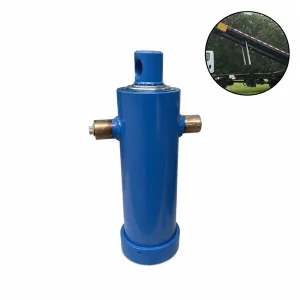
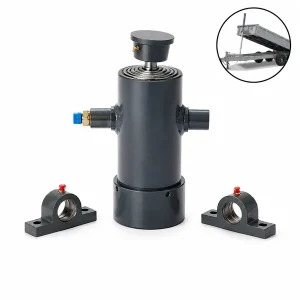
Telescopic Hydraulic Cylinder 2

Durability vs Cost — Where the Money Goes

Durability costs money at the manufacturing stage — but saves more money over the cylinder's service life. Understanding where the durability investment goes helps you evaluate whether a lower-priced cylinder has genuinely found manufacturing efficiency or has cut corners that will cost you later.

Durability Factor Cost Impact What Happens If Cut
Correct wall thickness +5–10% material Barrel bulge or burst under pressure spikes
Hydraulic-grade steel +10–15% material Fatigue cracking at 2,000–5,000 cycles
Qualified welding +5–10% labour Weld crack propagation from fatigue
Quality guide rings +2–5% parts Bore scoring → permanent seal wear acceleration
The durability premium is small:
Adding all four durability factors together, the manufacturing cost premium is approximately 20–35% compared to a cylinder built with the minimum material, cheapest welds, and no guide rings. This 20–35% investment extends the cylinder's service life from 1–3 years to 5–8+ years — a return on investment that makes durability the most cost-effective specification choice for any fleet operator. Korea Ever-Power includes all four durability factors in every cylinder as standard — they are not optional upgrades. Browse the complete durable hydraulic cylinder range for all applications.

OEM & ODM — Durability-Engineered Cylinders
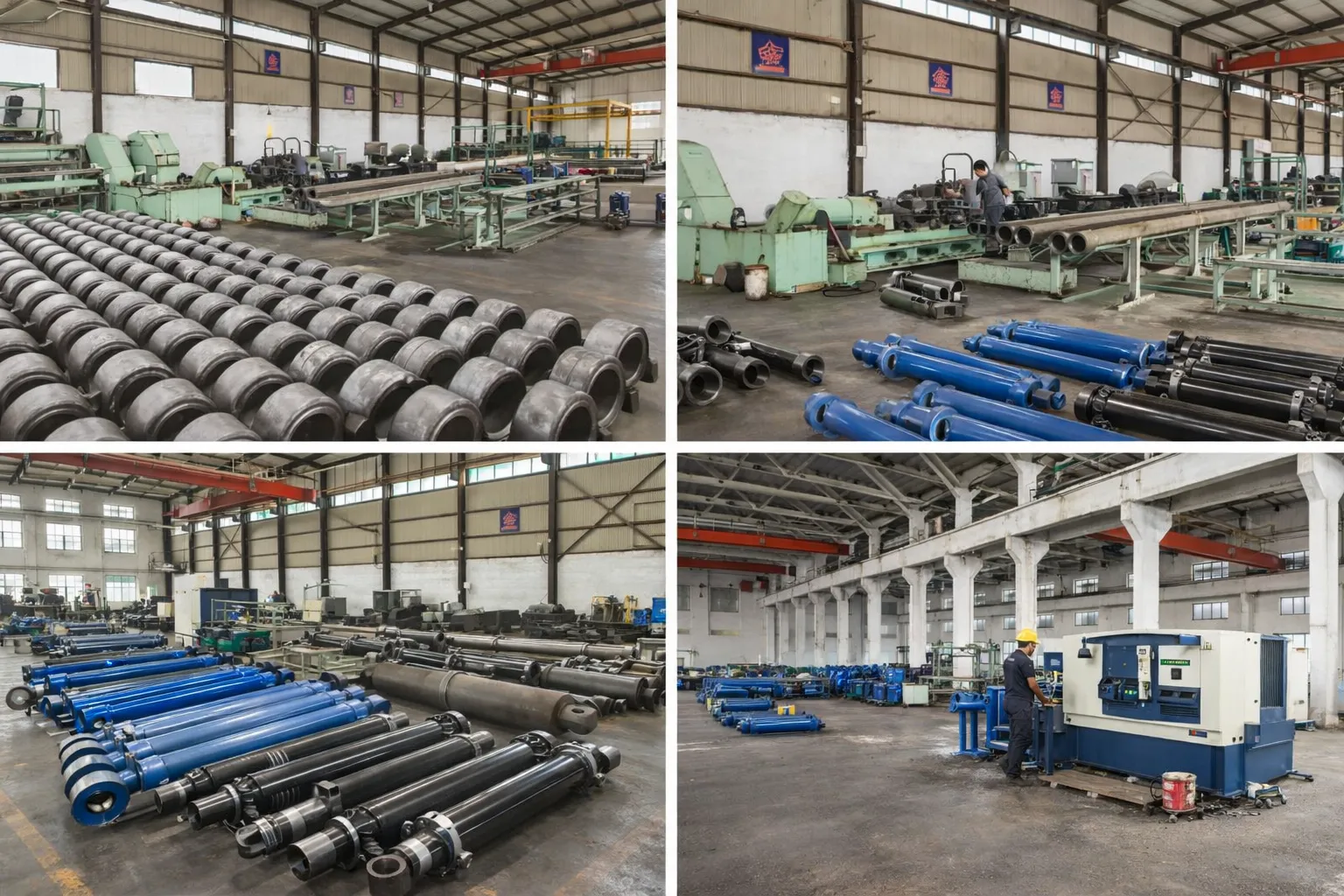
What You Provide

Bore, rod, stroke, 5-stage, mounting, ports, working pressure — plus duty cycle information: expected tipping cycles per day, expected service years, and operating environment (terrain type, load variation, temperature range). This information lets the engineering team verify the wall thickness and material grade are appropriate for your specific fatigue loading profile.

What the Factory Delivers

Drawing with wall thickness, material grade, and guide ring specification confirmed. Samples available. Production 25–35 days. 100% pressure test at 1.5× with individual certificate. Mill certificates for steel tube on request. 1-year warranty. Contact the telescopic cylinder engineering team for quotation.

Durability engineering manufacturing

Durability Engineering — FAQ

How many tipping cycles should a durable telescopic cylinder last?

A properly engineered telescopic cylinder should withstand a minimum of 10,000 full-pressure cycles without structural failure (barrel, welds, mountings). The seals and guide rings are wear items that need replacement at 3,000–8,000 cycle intervals depending on the operating environment, but the steel structure — barrels, welds, chrome plungers — should last the full design life. At 20 tipping cycles per day, 250 working days per year, 10,000 cycles represents approximately 2 years. At 10 cycles per day, it represents 4 years. The seal overhaul interval determines when you service the cylinder; the structural fatigue life determines when you replace it.

Can I verify the wall thickness of a cylinder I've received?

Yes — with an ultrasonic thickness gauge. Measure the barrel wall thickness at several points and compare against the drawing specification. If the measured thickness is significantly below the drawing value, the cylinder may not meet the design pressure rating. Korea Ever-Power documents the wall thickness on the engineering drawing and manufactures from seamless tube with documented wall thickness tolerance — the buyer can verify compliance with an ultrasonic measurement on the delivered cylinder.

Is a 5-stage cylinder less durable than a 3-stage because it has more welds?

A 5-stage has more welds (more end caps) — but if each weld is executed to the same qualified procedure, the fatigue life per weld is the same as a 3-stage. More welds means more potential fatigue initiation sites, which is why weld quality is proportionally more important on higher stage-count cylinders. A 5-stage with excellent welds is as durable as a 3-stage with excellent welds. A 5-stage with poor welds has 60% more potential crack initiation sites than a 3-stage with poor welds. Weld quality amplifies durability on multi-stage cylinders — it does not reduce it if done correctly.

Field Reports

R
Rick D. — Heavy-Duty Dump Truck Fleet
Verified Purchase · Canada · May 2025
★★★★★

Our 25-tonne dump trucks average 30 tipping cycles per day — approximately 7,500 per year. We replaced the previous supplier's cylinders (which developed weld cracks at the end cap after 18 months / ~11,000 cycles) with Ever-Power 5-stage. After 14 months (~10,500 cycles), the Ever-Power cylinders show no structural issues — no weld cracks, no barrel deformation, no bore scoring. We ultrasonically measured the wall thickness on 2 cylinders at the 12-month service inspection — both measured within 0.2 mm of the drawing value. The durability engineering on these cylinders is genuine.

S
Stefan K. — Construction Tipper OEM
Verified Purchase · Poland · March 2025
★★★★★

We requested mill certificates for the seamless steel tube on our first Ever-Power order — the certificates confirmed the tensile and yield strengths match hydraulic-grade specifications. We also cross-sectioned one end cap weld from a sample cylinder and inspected it under magnification — full penetration, smooth weld profile, no porosity or undercut. This is the level of weld quality that resists fatigue cracking. 40 cylinders across our tipper production line, 12 months in service with zero structural issues across the entire batch. We no longer cross-section welds — the first sample proved the quality is consistent.

L
Lee H. — Rough Terrain Dump Fleet
Verified Purchase · USA · February 2025
★★★★☆

Our dump trucks operate on rough, uneven terrain — the side-loading on the telescopic cylinder is severe. Previous supplier's cylinders developed bore scoring within 6 months because the guide rings were undersized for our side-load conditions. The Ever-Power cylinders use wider, thicker guide rings that handle the lateral force without allowing metal contact. Four stars because the seals still need replacement every 8–10 months due to the extreme dust environment (not a cylinder defect — it's the operating conditions). But critically, the bore surfaces remain unscored after 12 months — the guide rings are doing their job. When we reseal, the bore is still smooth — which means the replacement seals last their full expected life.

Other Hydraulic Cylinder Categories
Forklift

Durable Forklift Cylinders →

Same durability engineering — HCYY OEM.

AWV

Long-Life AWV Cylinders →

Durability-engineered for high-cycle platform duty.

All

Hydraulic Cylinder Durability Specialist →

Every cylinder built for long service life.

Informations complémentaires

Editor

Cxm