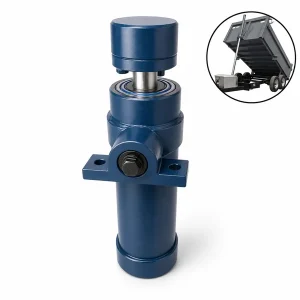
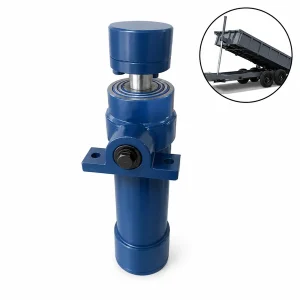
Factory Direct Sale Dump Truck Hydraulic Hoist Cylinder
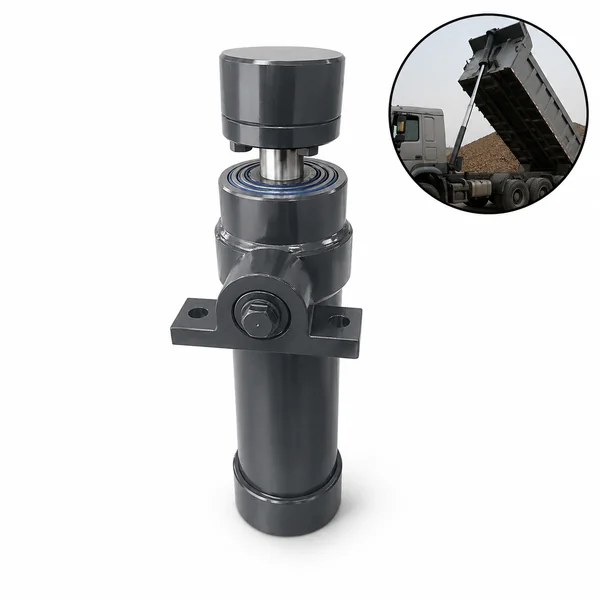
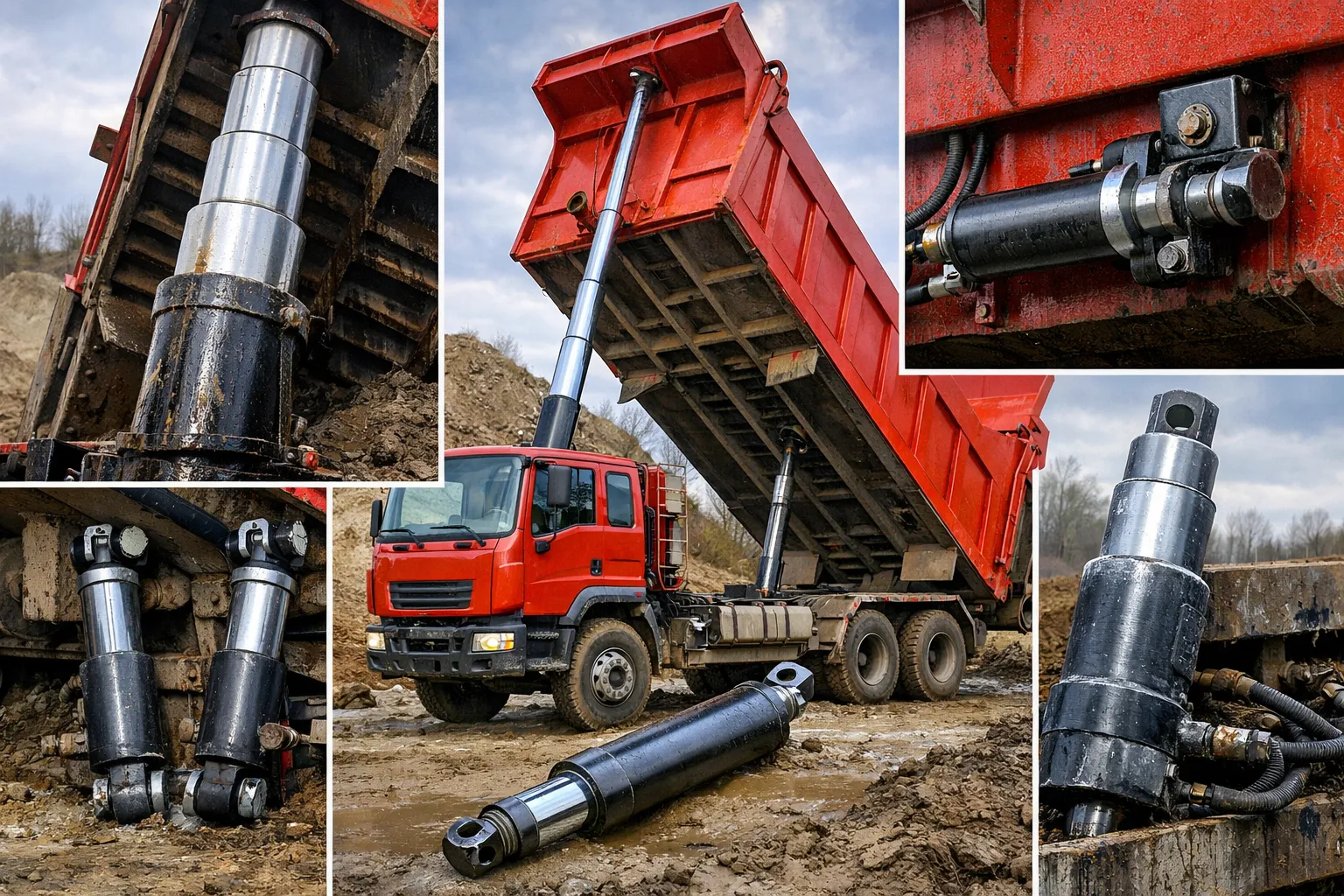
Dump truck hydraulic hoist cylinder — multistage telescopic, factory direct. A “hoist” is the mechanism that tips the dump body. The telescopic hydraulic cylinder is the actuator inside the hoist — but the way the cylinder is mounted, the angle it pushes, and whether it needs single or double-acting depends on the hoist type. Three hoist configurations dominate the dump truck market: front-push (cylinder behind the cab pushing forward), under-body (cylinder beneath the dump body pushing straight up), and scissor (cylinder driving a scissor linkage that multiplies force). This page explains each hoist type and which telescopic cylinder specification each one requires.

HOIST MECHANISMS
FACTORY DIRECT

Dump Truck
Hydraulic Hoist Cylinder
Multistage Telescopic — Three Hoist Types

The "hoist" is the complete tipping mechanism — and the multistage telescopic hydraulic cylinder is the power actuator at its heart. But the same cylinder performs very differently depending on how the hoist mounts it. A front-push hoist uses the cylinder at a shallow angle and often needs double-acting. An under-body hoist uses the cylinder nearly vertical and works with single-acting. A scissor hoist multiplies the cylinder's force through a linkage. Understanding your hoist type is the first step to specifying the correct cylinder.

3 Types
Hoist Mechanisms
2–6″
Bore Range
4–100″
Stroke Range
Factory
Direct Sale
Front-Push
Under-Body
Scissor
OEM & ODM
Telescopic Dump Truck Hydraulic Cylinder 1

Korea Ever-Power manufactures telescopic hoist cylinders for all three dump truck hoist configurations — and the cylinder specification changes meaningfully depending on which hoist type you operate. The bore, stroke, and stage count may be the same across hoist types, but the acting type (single vs double), the mounting geometry, and the force requirements differ. This page explains each hoist type, how the telescopic cylinder integrates into each one, and what to specify when ordering a replacement or OEM hoist cylinder.

Hydraulic Hoist Cylinder — Customisation Parameters

Bore / Rod / Stroke / Pin 2–6″ / 1.125–4″ / 4–100″ / 0.5–2″ (all customisable)
Acting Type Single-acting OR double-acting — depends on hoist type
Port Options G / SAE / NPT / M
Hoist Types Served Front-push · Under-body · Scissor
Body / Certification Steel / ISO 9001 / 100% pressure tested
Lead Time / Warranty 25–35 days / 1 year

Dump truck hydraulic hoist cylinder

Three Hoist Mechanisms — How Each Uses the Telescopic Cylinder Differently

Every dump truck tips its body using one of three hoist mechanisms. The telescopic cylinder is the common power source across all three — but the geometry, forces, and acting type requirements are different for each. Knowing your hoist type determines the correct cylinder specification.

1. Front-Push Hoist — Cylinder Behind the Cab

The telescopic cylinder mounts vertically or near-vertically behind the cab and pushes the front underside of the dump body. As the cylinder extends, the body pivots upward around the rear hinge. The cylinder angle starts shallow (30–45° from horizontal on many configurations) and becomes steeper as the body rises.

Acting type:

Often double-acting — the shallow starting angle may not generate enough gravity component for reliable retraction, especially with aluminium bodies.

Stage count:

Typically 3–5 stages — the cylinder must be long enough to push the body to full tipping angle from the cab-to-body distance.

Bore:

3–6 inch for medium-to-large trucks. The shallow angle means the effective lifting force is reduced by the cosine of the angle — requiring a larger bore to compensate.

2. Under-Body Hoist — Cylinder Beneath the Dump Body

The telescopic cylinder mounts vertically (or near-vertically) beneath the dump body floor, between the chassis rails. The cylinder pushes straight up against the body floor. This is the most common hoist type for standard dump trucks — the vertical orientation means the full cylinder force acts against gravity, and the body weight provides reliable gravity return.

Acting type:

Usually single-acting — the vertical mount plus the dump body weight provides ample gravity retract force. Double-acting only needed for aluminium bodies or controlled lowering.

Stage count:

Typically 3–5 stages — the cylinder must fit within the frame depth when retracted and extend to the full body height when tipping.

Bore:

3–6 inch. The vertical orientation delivers 100% of the cylinder force as lifting force — no angle loss. This is the most force-efficient hoist configuration.

3. Scissor Hoist — Cylinder Driving a Linkage

The telescopic cylinder extends horizontally (or near-horizontally) and drives a scissor linkage that converts the horizontal extension into vertical lift. The linkage multiplies the cylinder's force mechanically — allowing a smaller bore cylinder to lift a heavier load. Scissor hoists are common on flatbed trucks, roll-off containers, and hook-lift systems.

Acting type:

Typically double-acting — the horizontal cylinder orientation means gravity cannot retract the stages. The linkage geometry may also require active pull-back force.

Stage count:

Typically 2–3 stages — the scissor linkage multiplies extension, so the cylinder stroke can be shorter than the total body lift height.

Bore:

2–4 inch — smaller than front-push or under-body because the linkage multiplies force. The trade-off is slower tipping speed (more linkage travel per unit of cylinder extension).

Hoist Type Comparison — Cylinder Specification Impact

Specification Factor Front-Push Under-Body Scissor
Cylinder orientation 30–60° from horizontal Near-vertical Horizontal
Typical acting type Double-acting Single-acting Double-acting
Force efficiency 50–85% (angle loss) 100% (vertical) Linkage multiplied
Typical bore range 3–6″ 3–6″ 2–4″
Typical stages 3–5 3–5 2–3
Gravity return? Marginal Reliable No
Common applications Medium-large dump trucks Most standard dump trucks Flatbed, roll-off, hook-lift
Key takeaway:
When ordering a replacement hoist cylinder, always specify your hoist type. The same dump truck model may be available with different hoist configurations depending on the body builder, and the cylinder specification differs between them. A cylinder specified for an under-body hoist (single-acting, vertical mount) will not work correctly on a front-push hoist (needs double-acting, angled mount). Browse the full range of hydraulic hoist cylinders for all hoist types.

OEM & ODM — Specifying the Hoist Cylinder

When ordering a hoist cylinder, specify the hoist type in addition to the standard dimensional parameters. This allows the engineering team to verify that the bore, acting type, and mounting geometry are correct for your specific hoist configuration. For OEM body builders designing new hoist systems, Korea Ever-Power provides application engineering support to match the telescopic cylinder specification to the hoist geometry.
What You Provide

Bore, rod, stroke, stage count, acting type (SA or DA), retracted length, mounting type, port thread, working pressure, AND hoist type: front-push, under-body, or scissor. For replacements: old cylinder measurements plus the mounting angle and hoist configuration. For new designs: hoist linkage drawing if available.

What the Factory Delivers

Drawing 2–3 days. Samples available. Production 25–35 days. 100% pressure test (single or dual-circuit depending on acting type) with certificate. 1-year warranty. For new hoist designs: the engineering team can calculate the required bore, stroke, and stage count from your hoist geometry and payload specification. Contact the hydraulic cylinder manufacturer for quotation.

types-of-hydraulic-cylinders-3

Hydraulic Hoist Cylinder — FAQ

How do I identify which hoist type my dump truck uses?

Look at where the telescopic cylinder is mounted. If it sits behind the cab and pushes forward against the body front — it is a front-push hoist. If it sits vertically between the chassis rails, directly under the dump body floor — it is an under-body hoist. If it connects to a scissors-shaped linkage mechanism that opens as the body rises — it is a scissor hoist. If unsure, photograph the hoist area and send it to Korea Ever-Power — the engineering team can identify the type from the photos.

Can I change from one hoist type to another?

Technically yes, but it requires significant structural modification to the truck chassis and dump body — new mounting brackets, new hinge positions, and potentially a different hydraulic circuit. It is not a simple cylinder swap. Hoist type changes are typically done by professional body builders during a full body replacement, not as a cylinder-only retrofit. If you are replacing only the cylinder, match the existing hoist type exactly.

Which hoist type is the most reliable?

Under-body hoists are generally considered the most straightforward — fewer moving parts (no linkage), direct vertical force application, and reliable gravity return. Front-push hoists add the complexity of angled force and double-acting requirements. Scissor hoists add the linkage mechanism, which introduces additional pivot pins and bushings that wear over time. However, each hoist type exists for a reason — they each solve specific vehicle geometry and payload constraints that the other types do not address equally well.

Does Korea Ever-Power manufacture the complete hoist assembly, or only the cylinder?

Korea Ever-Power manufactures the telescopic hydraulic cylinder — the power actuator within the hoist. The hoist frame, mounting brackets, hinge pins, and scissor linkage (if applicable) are typically manufactured by the dump body builder or a hoist assembly specialist. Korea Ever-Power supplies the cylinder component to these body builders and hoist assemblers as an OEM part. For forklift applications and aerial platform applications, the same manufacturer-direct model applies.

Field Reports

W
Werner K. — Front-Push Hoist OEM
Verified Purchase · Germany · May 2025
★★★★★

We build front-push hoist systems for 15–25 tonne dump trucks. The cylinder mounts at 38° from horizontal at the start of the tipping stroke. Double-acting is mandatory — the angle is too shallow for gravity return with our aluminium bodies. Ever-Power double-acting 4-stage, 5-inch bore, SAE ports. 30 hoist cylinders delivered over 12 months. The consistency is critical for us — every cylinder must fit our hoist frame without adjustment. Ever-Power delivers ±0.5 mm on every critical dimension, every batch. This is what factory-direct quality looks like.

A
Ahmed R. — Under-Body Hoist Fleet
Verified Purchase · UAE · March 2025
★★★★★

Our fleet uses under-body hoists — the simplest configuration. Vertical cylinder, single-acting, gravity return. Ever-Power 4-stage, 5-inch bore, metric ports. The vertical mount delivers 100% of the cylinder force as lifting force — no angle loss. We specified FKM seals because our trucks operate in desert temperatures exceeding 50 °C ambient. 20 hoist cylinders, all performing well in extreme heat. Single-acting keeps the cost down — we don't need double-acting because the heavy steel bodies retract the vertical cylinder reliably.

M
Mike T. — Scissor Hoist Fabricator
Verified Purchase · USA · February 2025
★★★★☆

We fabricate scissor hoists for roll-off container trucks. The telescopic cylinder extends horizontally and drives the scissor linkage. Double-acting is essential — gravity can't retract a horizontal cylinder. Ever-Power double-acting 2-stage, 3-inch bore, SAE ports. The 2-stage is sufficient because the scissor linkage multiplies the stroke — we only need 24 inches of cylinder stroke to achieve 48 inches of body lift through the linkage geometry. Four stars because I initially ordered too large a bore (4-inch) before the Ever-Power team calculated that 3-inch was adequate with our linkage ratio. Their engineering guidance saved me money on the second order.

Other Hydraulic Cylinder Categories
Forklift

Forklift Lift & Tilt Cylinders →

HCYY OEM replacement and aftermarket.

AWV

Aerial Work Vehicle Cylinder Range →

15 types — scissor, boom, articulating, and mast.

All

Hydraulic Cylinder Price List →

Telescopic, welded, tie-rod — factory pricing.

Informations complémentaires

Editor

Cxm