Jack-up Offshore Platform Lifting Cylinder
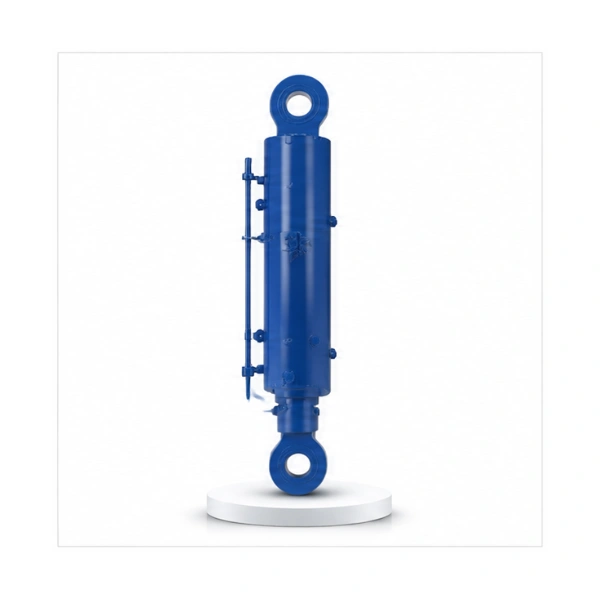
Jack-up Offshore Platform Lifting Cylinder
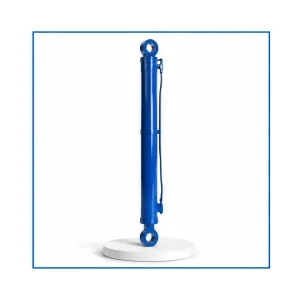
Lifting a 15,000-tonne platform out of the sea — one 2.15-metre stroke at a time. The lifting cylinder pushes the ring beam upward along each leg, raising the entire platform above the wave zone. The largest bore (700 mm) in the offshore hydraulic cylinder range.
Technical Specifications
| Parameter | Specification |
|---|---|
| Product Name | Jack-up Offshore Platform Lifting Cylinder |
| Features | Lifting and lowering the platform by driving the ring beam |
| Bore Diameter | Up to 700 mm |
| Rod Diameter | Up to 420 mm |
| Stroke | Up to 2,150 mm |
| Working Pressure | Up to 32 MPa |
| Sensor | External displacement sensor configurable |
| Application | Jack-up Offshore Platform |
How Jack-up Platform Jacking Works
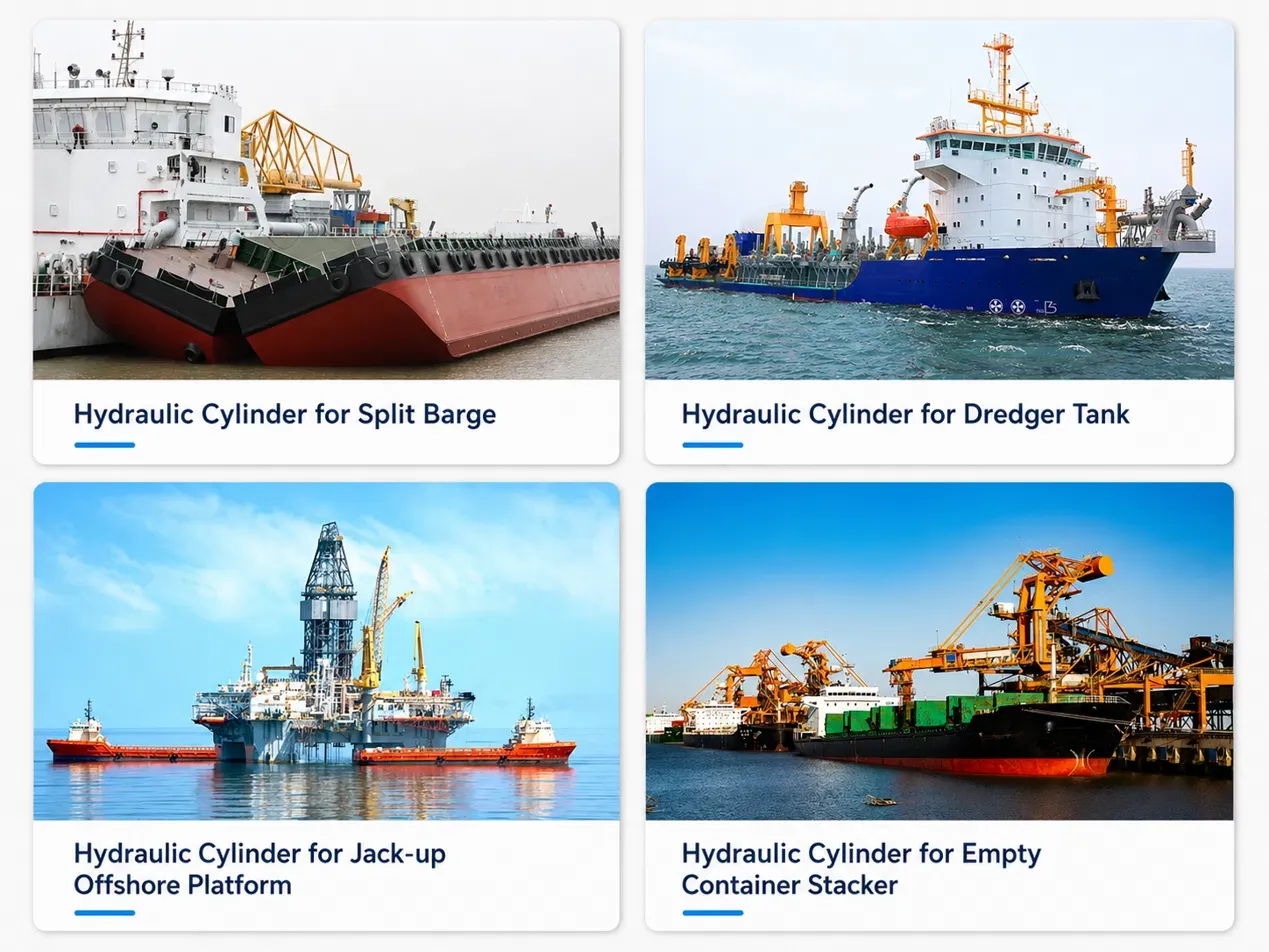
A jack-up platform has 3–4 vertical steel legs that can be lowered through the hull to the seabed. Once the legs are standing on the seabed, the lifting cylinders push the platform hull upward along the legs — lifting the entire structure out of the water and above the wave zone. This process is called "jacking up" and typically raises the platform 10–30 metres above sea level.
Each lifting cylinder has a stroke of up to 2,150 mm. The platform is lifted in incremental steps: the cylinder extends one full stroke (2.15 m), then a locking mechanism (the bolt cylinder, #10) pins the ring beam in place while the lifting cylinder retracts for the next stroke. This step-and-lock sequence repeats until the platform reaches the desired elevation.
The 700 mm bore is the largest in the offshore hydraulic cylinder range — generating the massive thrust needed to lift thousands of tonnes of platform structure, equipment, and crew accommodation against gravity and wind loading.
Why the Lifting Cylinder Works with the Bolt Cylinder
The lifting system uses two cylinder types working in precise coordination — if either fails, the platform cannot move safely:
Pushes the ring beam upward by one stroke (2,150 mm), raising the platform. Bore 700 mm provides the massive force required. The cylinder does the heavy lifting — but cannot hold the platform at height by itself (hydraulic lock is not considered safe for long-term load holding).
Inserts a steel pin through the ring beam to mechanically lock the platform at the current height. Once the pin is engaged, the lifting cylinder can safely retract without the platform dropping. The pin carries the platform weight, not the hydraulic pressure.
Safety and Reliability Features
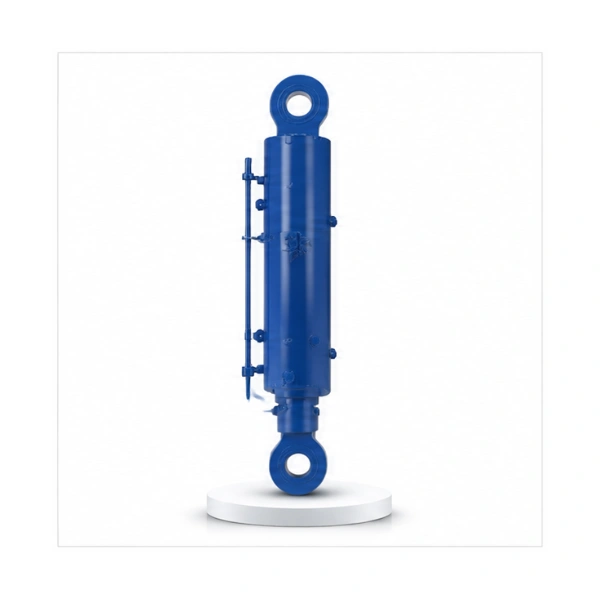
- External displacement sensor — reports cylinder position to the jacking control system. Enables synchronised jacking across all legs (critical to prevent platform tilt) and provides position feedback for the bolt cylinder engagement sequence.
- ️ Overload protection — integrated relief valves prevent pressure spikes during jacking caused by wave impact, leg friction, or uneven seabed settlement. The lifting cylinder must withstand dynamic loads from storm conditions while the platform is jacked up.
- Synchronisation across legs — the automation system monitors all lifting cylinders simultaneously and adjusts flow rates to keep the platform level within ±25 mm across all legs. Uneven jacking risks structural damage or leg failure.
- ⚙️ Redundant hydraulic supply — the jacking system has redundant pumps and valves. A single pump failure cannot leave the platform in an unsafe intermediate position. Contact the Korea Ever-Power hydraulic cylinder team for jack-up platform projects.
Lifting Cylinder OEM & ODM
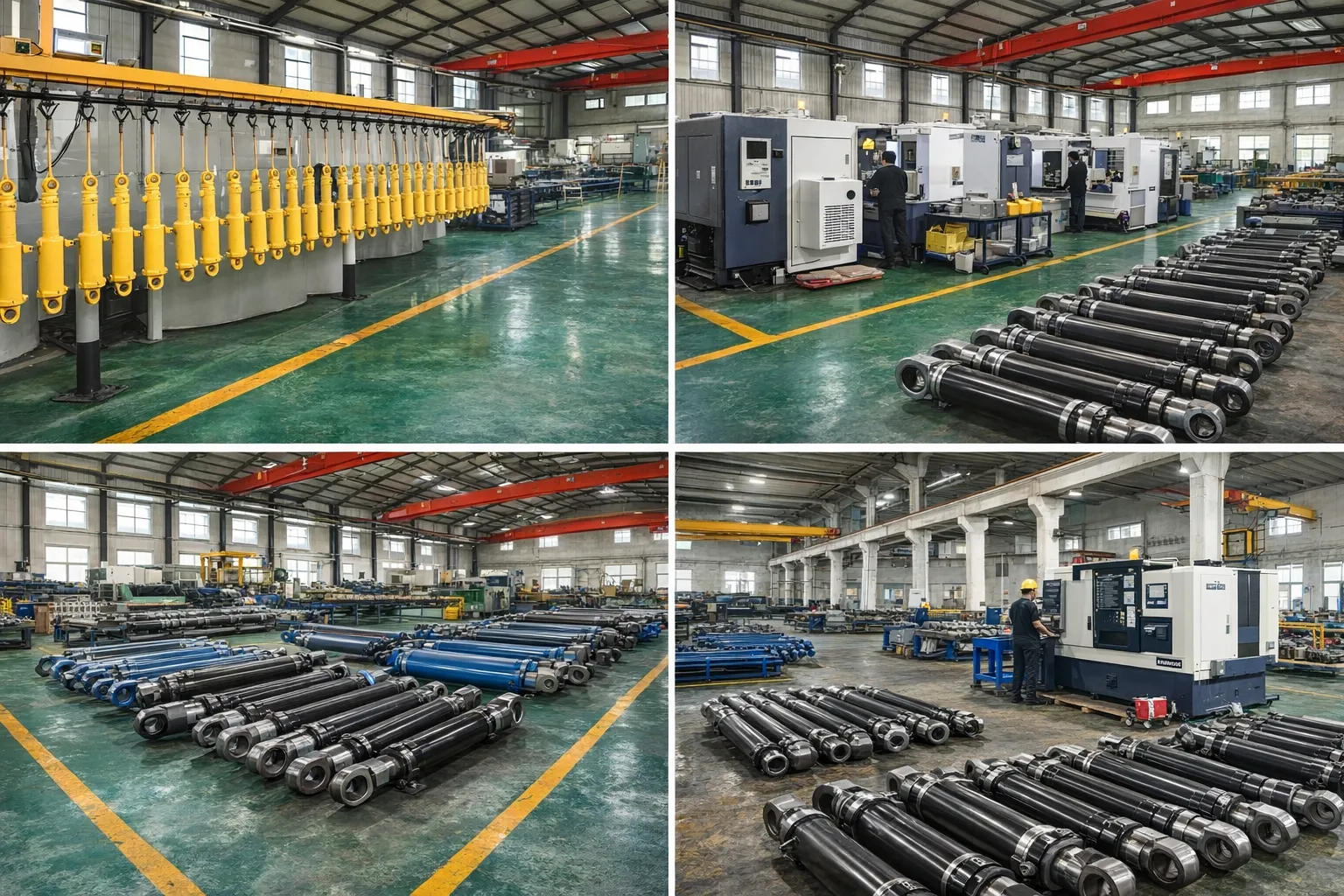
Korea Ever-Power manufactures jack-up lifting cylinders for new-build and existing platforms. Provide the platform weight, number of legs, ring beam dimensions, jacking speed requirement, leg friction estimate, and classification society requirement. The factory delivers complete cylinder sets with displacement sensors, integrated valves, test certificates, and seal kits. Deep-hole boring up to 700 mm bore in-house.
Frequently Asked Questions
What Our Customers Say
"We ordered 12 lifting cylinders (bore 650 mm) for a 3-leg jack-up barge. The dimensional consistency across all 12 cylinders was impressive — maximum force variation was under 1.5% across the set. Critical for synchronised jacking."
Eng. A. Al-Sayed — Structural Engineer, Saudi Arabia
"The displacement sensors integrated into the lifting cylinders feed directly into our Siemens jacking control system. Level accuracy across 3 legs is consistently within ±15 mm — well within our ±25 mm tolerance."
K. Vermeer — Automation Lead, Netherlands
"Solid lifting cylinders for our jack-up maintenance vessel. The 700 mm bore cylinders are heavy (each over 5 tonnes) and required careful handling during installation. Performance has been good through 4 jacking cycles so far."
R. Santoso — Marine Superintendent, Indonesia
"Korea Ever-Power provided the complete lifting cylinder set with ABS class documentation. The material certificates and witnessed test reports were accepted by ABS without comment. Very smooth classification process."
Capt. J. Harper — Operations Manager, US Gulf of Mexico
"Replacement lifting cylinders for a 20-year-old jack-up barge. The original manufacturer no longer exists. Korea Ever-Power reverse-engineered from our measurements and delivered cylinders that match the original ring beam interface perfectly."
M. Tran — Chief Engineer, Vietnamese offshore contractor
Related Hydraulic Cylinder Categories
Informations complémentaires
| Editor |
|---|
Produits similaires
-
Stacker Reclaimer Skeleton Pitch Cylinder
-
Stacker Reclaimer Chaser Pitch Cylinder
-
Reach Stacker Telescopic Cylinder
-
Ro-ro Platform Latch Cylinder (Mechanical Self-Locking)
-
Cutter Suction Dredger Piling Cylinder
-
Trailing Suction Dredger Heave Compensation Cylinder
-
Ro-ro Platform Main Operating Cylinder
-
Empty Container Stacker Tilt Cylinder