Side Guide Cylinder for Rolling Mill
Engineered specifically to execute precise lateral guiding while surviving the most severe abrasive dust and heavy impact loads in continuous metallurgical operations.
Product Overview & Core Industrial Value
In the intensely demanding environment of modern metallurgical processing, maintaining the exact trajectory of a hot or cold steel strip is paramount to production success. As multi-ton steel slabs are reduced to thin strips and travel at extraordinarily high speeds toward the mill stands or the downcoiler, any minor deviation from the absolute centerline can result in catastrophic production issues. These issues range from damaged strip edges and poor coil winding to severe mill cobbles that can physically damage the equipment and halt a plant’s entire output for days. The heavy mechanical assemblies responsible for continuously capturing and keeping the steel strip perfectly centered are the guide arms. The critical, high-force driving mechanism behind these massive steel guide arms is the highly specialized Side Guide Cylinder.
Operating any fluid power system in this specific zone presents a uniquely destructive set of variables that standard catalog components simply cannot handle. As the high-temperature steel passes through the line, the cooling process generates massive, continuous clouds of extremely abrasive iron oxide scale, metallic dust, and intense radiant heat, all mixed with high-pressure synthetic cooling water. When a generic commercial hydraulic cylinder is deployed in this lateral guiding position, the abrasive dust rapidly settles onto the extended steel rod. As the actuation sequence commands the rod to retract, this encrusted metallic dust is dragged directly past the standard, single-lip wiper seals. The iron scale acts exactly like liquid sandpaper, severely scratching and scoring the chrome plating, and ultimately shredding the main internal pressure seals. This sequence leads directly to rapid fluid hemorrhage, total loss of holding pressure, and immediate mechanical failure.

As a premier hydraulic cylinder manufacturer with decades of deep-rooted experience resolving failures in heavy industry, we have engineered a highly targeted solution designed specifically to defeat this exact failure mode. Our bespoke Side Guide Hydraulic Cylinder units are meticulously engineered from the ground up. They feature an uncompromising heavy-duty welded architecture, forged entirely from high-yield 27SiMn alloy steel, and incorporate our proprietary triple wiper seal configuration designed specifically for environments choked with abrasive dust. This holistic engineering approach guarantees that your automated guiding systems remain functional and responsive, eliminating the relentless, costly cycle of emergency maintenance, extending equipment life, and drastically optimizing the true hydraulic cylinder price by ensuring uninterrupted, profitable plant operation.
Technical Specifications & Customization Parameters
Because individual rolling mills differ drastically in their rolling tonnage, maximum strip width, and hydraulic pressure infrastructure, we provide comprehensive engineering customization to perfectly match your facility’s exact requirements. The following technical matrix details the core engineering benchmarks and material selections of our guide arm actuation systems, demonstrating our capacity to meet extreme B2B demands.
| Engineering Parameter | Specification Details & Range |
|---|---|
| Target Industry | Metallurgy (Hot & Cold Strip Processing, Heavy Plate Mills) |
| Equipment Category | Rolling Mill (Roughing Stands, Finishing Stands, Downcoiler Systems) |
| Subsystem / Core Action | Guide Arm System / Dynamic Lateral Guiding & Strip Centering |
| Product Nomenclature | Side Guide Cylinder (Width Adjustment Actuator) |
| Actuation Method | Double Acting Hydraulic Cylinder (Bi-directional force) |
| Structure Type | Hydraulic Cylinder Piston Type (Precision concentricity) |
| Manufacturing Structure | Heavy-Duty Welded Construction (Vibration and shock-resistant) |
| Material System | 27SiMn High-Strength Seamless Alloy Tube (Superior impact toughness) |
| Surface Treatment | Deep Hard Chrome Plated (HRC 65+ for maximum wear resistance) |
| Environmental Rating | Extreme: Heavy Dust, Abrasive Particles, and Synthetic Coolants |
| Working Condition Characteristics | Severe Lateral Guiding Impact, Continuous High-Frequency Adjustment |
| Targeted Failure Mode | Rod Wear (Scoring), Dust Intrusion, and Consequent Seal Rupture |
| Recommended Configuration | Triple Wiper Seals, Extended Composite Guide Bands |
Operational Dynamics: Mastering Lateral Guiding Mechanics
Deeply understanding the mechanical demands and fluid dynamics placed on these hydraulic parts is essential for recognizing the value of our engineered design. When a steel slab is reduced to a thin strip, it travels over the motorized roller tables at extreme velocity. Before entering the critical nip of the rolling mill stands or successfully threading into the mandrel of the downcoiler, the strip must be perfectly aligned to the exact center line of the machinery to prevent edge folding or telescoping coils.
The heavy steel guide arms sit parallel on either side of the roller table. Our heavy-duty double acting hydraulic cylinder is mechanically linked directly to these arms. Operating through high-response proportional servo valves connected to the mill’s automation system, pressurized fluid is directed into the base chamber. This extends the hydraulic cylinder piston rod with immense force, pushing the arms inward to gently but firmly constrain the edges of the moving steel strip. Conversely, when the system needs to open, fluid is pumped into the rod end chamber to instantly retract the arms, accommodating wider strip widths or allowing a misaligned, out-of-gauge head end to pass without causing a jam.
The true engineering complexity arises from the lateral guiding action itself. The edges of the hot steel are almost never perfectly straight; they undulate, wave, and strike the guide arms violently as the material feeds forward. These immense lateral impacts are transferred directly backward through the mechanical linkages and straight into the Side Guide Cylinder. Furthermore, the immense physical friction between the speeding steel strip and the cast-iron guide arms creates a continuous shower of hot, abrasive iron oxide dust. Our hydraulic units are meticulously designed with high-yield materials to absorb these brutal mechanical shockwaves without bending, all while utilizing advanced sealing geometry to keep their internal pressure chambers immaculately clean against the external particulate storm.

Seamless Global Equipment Replacement & Compatibility
Mill operators frequently suffer from agonizingly extended lead times and highly inflated procurement costs when forced into sourcing replacement actuators exclusively from the original equipment manufacturers based overseas. We specialize in providing an intelligent alternative: exact drop-in replacements that completely upgrade your system’s reliability without requiring any welding, cutting, or modifications to your existing mill infrastructure.
Our custom-engineered Side Guide Hydraulic Cylinder units can be dimensionally tailored to flawlessly replace standard machinery components originally supplied by prominent global brands such as Bosch Rexroth, Parker Hannifin, Eaton Vickers, SMS Group, Primetals Technologies, and Danieli. (Disclaimer: These global brand names are cited solely for B2B technical cross-referencing, dimensional matching, and convenience in equipment selection for our clients. This does not imply any official affiliation, endorsement, or constitute trademark infringement.)
By meticulously replicating the mounting trunnions, clevis pin diameters, overall stroke lengths, and exact fluid port threads, we ensure your maintenance teams can execute rapid, seamless changeouts. This level of compatibility turns a routine, frustrating session of fixing hydraulic cylinders into a strategic, permanent plant reliability upgrade that immediately pays dividends in increased uptime.
Core Technical Advantages: Engineered for Survival
Why do major steel producers and heavy manufacturers in East Asia and beyond continuously rely on our fluid power expertise? The answer is embedded deeply within our specialized design architecture, created specifically to combat the destructive metallurgical triad of high impact, abrasive dust, and intense heat. Here are the five foundational engineering advantages of our system:
1. Proprietary Triple Wiper Seal Architecture
The absolute primary failure mode in lateral guiding is rod wear caused by abrasive particles. A single standard wiper seal simply cannot clear heavy, baked-on iron scale. We deploy an advanced triple wiper configuration in the gland. The first heavy metallic scraper physically fractures and removes large crusted scale; the second highly resilient elastomer cuts away the fine, airborne dust; the third specialized PTFE seal blocks microscopic contaminants from entering the fluid. This robust system ensures the retracting hydraulic rams remain perfectly clean, exponentially extending the lifespan of the internal pressure seals.
2. Unyielding 27SiMn Alloy Construction
When multi-ton slabs of moving steel violently impact the guide arms, the shockwaves travel directly backward into the cylinder barrel. Standard plain carbon steels (like 1045) can elastically deform, balloon, or warp under this continuous lateral stress. We strictly manufacture our primary components from 27SiMn (Silicon Manganese) high-strength seamless steel. This specific alloy offers vastly superior tensile strength, exceptional structural toughness, and excellent stability under heavy, repetitive impact loads, preventing the barrel from bulging or bending.
3. Optimized Hard Chrome Surface Matrix
To successfully combat the relentless sandpaper effect of airborne iron dust, a standard thin commercial chrome layer is highly insufficient. We utilize a deep-layer, precisely controlled hard chrome plating process. Our engineers dictate a specific micro-crack density on the chrome surface that perfectly retains thin, vital films of hydraulic lubrication, while simultaneously presenting an incredibly hard external barrier (exceeding HRC 65) against physical scratches and scoring, effectively halting premature rod wear before it begins.
4. Heavy-Duty Welded Impact Absorption
Standard tie-rod cylinders are completely unsuitable for the severe, low-frequency vibrations of a heavy rolling mill; the bolts simply stretch and vibrate loose, causing immediate leaks. Our Side Guide Cylinder utilizes a robust, heavy-duty welded construction. By deploying automated robotic submerged arc welding, we create deep-penetration, stress-relieved joints connecting the trunnions and end caps directly to the barrel. This monolithic, ultra-rigid structure absorbs massive lateral mechanical shocks without ever loosening or weeping fluid over time.
5. Enhanced Thermal & Fatigue Stability
Operating mere feet away from radiant hot steel slabs can cause standard polyurethane seals to melt, harden, or crack prematurely. We equip our customized units with high-temperature aerospace-grade FKM (Viton) elastomers wherever thermal spikes are a risk. Furthermore, rigorous Finite Element Analysis (FEA) guides the precise design of our rod eyes, clevises, and mounting points to eliminate stress concentrators, ensuring an infinite structural fatigue life across millions of high-frequency, high-pressure micro-actuations.
Precision Manufacturing & Absolute Quality Control
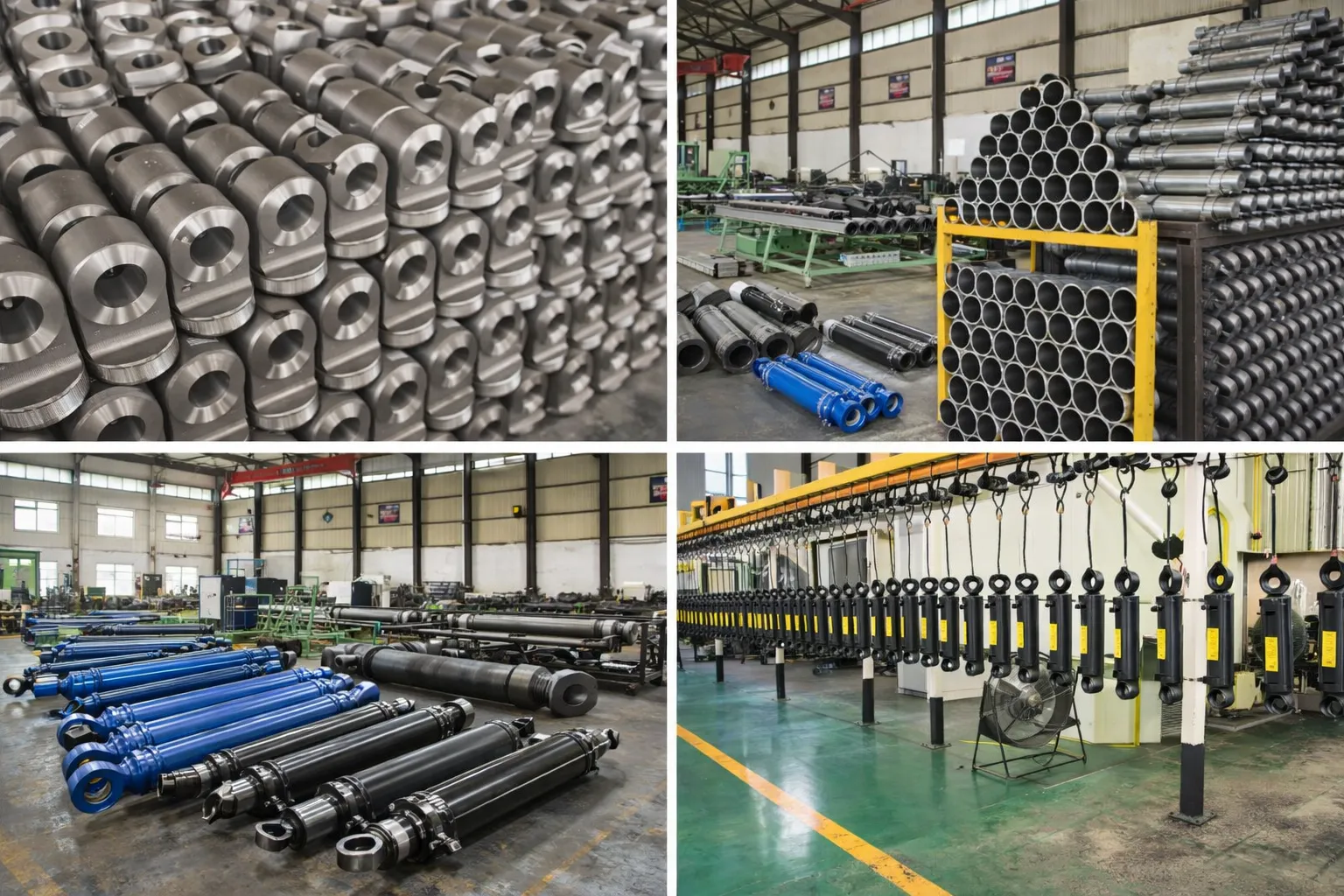
Delivering true industrial resilience requires an uncompromising manufacturing environment. We do not outsource our core competencies; we maintain a fully autonomous, vertically integrated production facility. Every piece of raw 27SiMn steel forging and seamless tube that enters our plant undergoes exhaustive ultrasonic Non-Destructive Testing (NDT) upon arrival to verify absolute metallurgical integrity and screen for any microscopic internal voids or material inclusions before any machining begins.
The internal bores of the barrels are meticulously machined using heavy CNC deep-hole turning, followed by advanced skiving and roller burnishing. This specialized process physically compresses the internal metal crystalline surface, yielding an impeccable mirror finish (Ra ≤ 0.2µm) that drastically reduces internal seal friction. The exterior piston rods are turned, precision-ground, induction-hardened, and electro-plated under incredibly strict environmental controls to guarantee perfect dimensional concentricity and an unblemished surface.
Quality assurance in our facility is never left to statistical batch sampling. Every single piece of our assembled hydraulic cylinder components is mandated to undergo 100% rigorous computerized hydrostatic testing. We securely mount the units and subject both the base and annular chambers to pressure spikes up to 1.5 times their rated maximum to verify zero internal fluid bypass and absolute structural perfection. Finally, a unique alphanumeric serial identification is permanently laser-engraved onto every barrel, providing our clients with lifetime traceability and dramatically simplifying the procurement process for any future hydraulic cylinder repair requirements.
Broad Industrial Deployment Across Punishing Environments
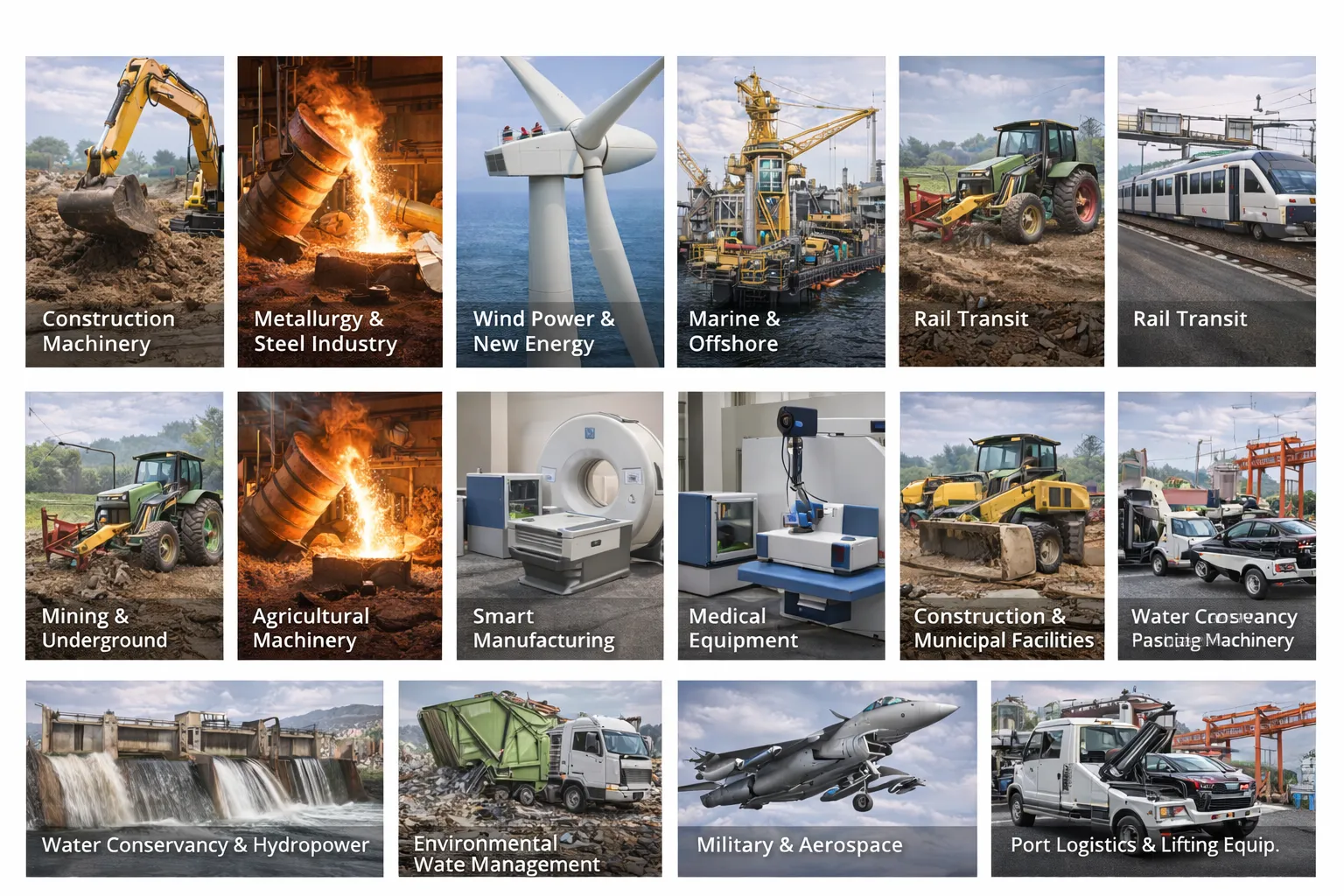
While our advanced dust-exclusion and high-impact-resistant architecture is undeniably the ultimate solution for rolling mill lateral guiding, these robust engineering principles make our fluid power systems highly sought after and successful across numerous heavy industries globally, wherever environmental hostility is the norm:
- Metallurgical and Iron Industry: Beyond guide arms, we supply heavy actuation for continuous casting lines, downcoiler pinch rolls, walking beam furnace pushers, and massive scrap shears.
- Mining Industry: Primary jaw crushers, heavy apron feeders, and underground roof supports operating in absolute abrasive rock dust conditions.
- Construction Machinery Industry: Heavy excavators, large wheel loaders, and tunneling shields requiring immense push/pull breakout forces while buried in soil and silica.
- Material Handling & Logistics: High-capacity port straddle carriers, automated guided vehicles (AGVs), and heavy lift cylinder applications demanding fail-safe load holding.
- Plastic & Rubber Machinery: High-tonnage injection molding presses requiring ultra-rigid, highly accurate clamping force without microscopic deflection.
Comparative Analysis: Standard vs. Heavy-Duty Side Guide Solutions
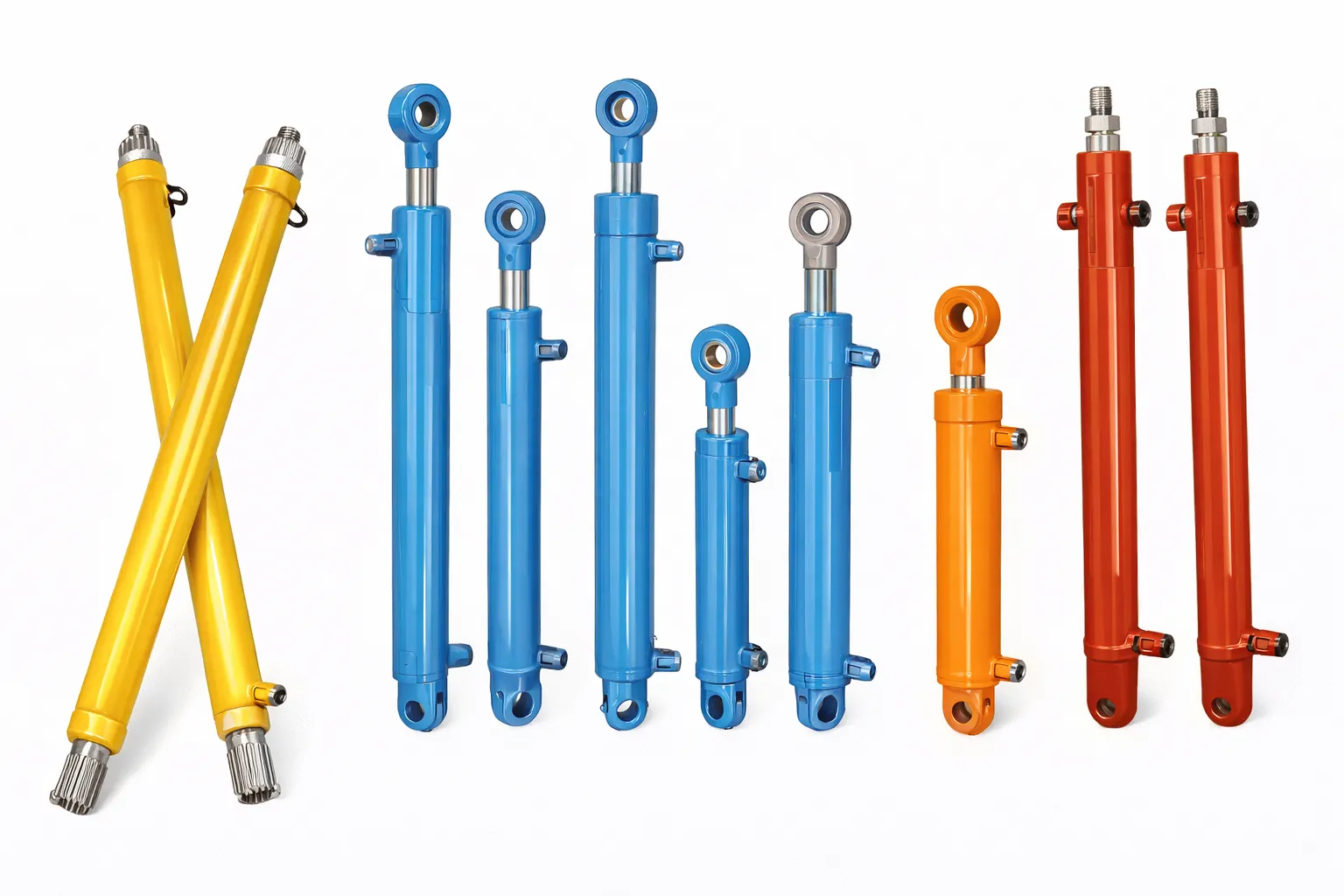
When corporate maintenance departments and procurement teams evaluate the initial hydraulic cylinder price, they must critically factor in the devastating financial cost of unplanned mill downtime. The table below clearly illustrates why generic catalog actuators fail rapidly in guide arm applications, and exactly how our specialized metallurgical engineering provides a permanent, cost-saving solution.
| Critical Operational Variable | Standard Commercial Hydraulic Cylinder | Our Specialized Side Guide Cylinder |
|---|---|---|
| Dust & Scale Exclusion | Single standard polyurethane wiper. Easily overwhelmed by heavy iron scale, leading to rapid seal destruction. | Proprietary Triple Wiper architecture. Completely strips abrasive dust, ensuring absolute rod cleanliness. |
| Structural Material Stability | Basic 1045 Carbon Steel. Highly susceptible to flexing, stretching, and fatigue under lateral impact. | 27SiMn High-Strength Alloy. Exceptional yield strength perfectly absorbs massive lateral shocks. |
| Rod Surface Defense | Thin commercial chrome plating. Scratches easily, exposing base metal to rapid rust and abrasive wear. | Deep-layer, optimized micro-crack hard chrome. Functionally impervious to scoring from embedded scale. |
| Construction Style | Tie-rod design. Mill vibrations cause bolts to stretch, creating immediate and persistent fluid leaks. | Heavy-Duty Welded monoblock. Stress-relieved for infinite structural rigidity and zero loose parts. |
| Maintenance Frequency | Frequent failures. Usually requires complete rod and seal replacement every 3 to 6 months. | Exponentially increased longevity. Capable of 18 to 24+ months of continuous, leak-free lateral guiding. |
Proven Global Success: Real-World Industrial Case Studies
The ultimate testament to robust engineering is performance on the actual factory floor. Our specialized fluid power teams have continuously resolved severe mechanical failures for heavy industry across East Asia and globally. Below are five documented case studies detailing exactly how our customized components radically improved plant reliability.
Case 1: Eradicating Severe Rod Wear in Pohang, South Korea
Client Details: Integrated Steel Mill | Application: Hot Strip Downcoiler Guide Arm
The Challenge: The plant’s standard guide cylinders suffered catastrophic rod wear every four months. Thick, highly abrasive iron scale fell directly onto the extended rods and bypassed the OEM seals, tearing them apart and causing massive fluid puddles in the coiler pit.
How They Found Us: Their lead maintenance engineer actively searched online for a specialized hydraulic cylinder manufacturer capable of solving scale intrusion.
The Results: In early 2024, we supplied fully redesigned units featuring our proprietary triple wiper seal system and heavily densified chrome plating. As of today, the rods remain brightly polished and completely un-scored, extending their continuous maintenance interval by over 300%.
“Your triple wiper technology completely neutralized the scale dust problem. We haven’t had a single hydraulic leak in the coiler pit since installation, drastically cutting our cleanup costs.” — Mr. Choi, Mechanical Lead.
Case 2: Absorbing Extreme Lateral Impact in Ulsan, South Korea
Client Details: Aluminum Rolling Facility | Application: Reversing Mill Entry Side Guide
The Challenge: High-speed lateral impacts from heavy aluminum slabs threading into the mill were physically bending the 1045 carbon steel rods of their OEM actuators, causing the guide arms to jam and misalign the strip.
How They Found Us: Referred directly to our engineering division by a trusted local fluid power systems distributor.
The Results: We engineered custom Side Guide Cylinder replacements using 27SiMn forged alloy steel. The vastly superior yield strength of the material completely absorbed the shockwaves. They have experienced zero bent rods or jammed arms in 18 months of rigorous, multi-shift production.
“The 27SiMn material rigidity is exactly what we needed. The guide arms are more stable than ever, preventing costly edge damage to our aluminum coils.” — Lee S.H., Production Manager.
Case 3: Rapid European OEM Replacement in Kobe, Japan
Client Details: Specialty Alloy Steel Mill | Application: Reversing Cold Mill Strip Centering
The Challenge: The mill faced a devastating 24-week delay for spare cylinders from their European equipment supplier, heavily threatening a major quarterly plant production target.
How They Found Us: Discovered our capabilities online while urgently searching for rapid hydraulic parts reverse-engineering services.
The Results: By utilizing their technical schematic drawings, we rapidly reverse-engineered the entire assembly. We manufactured and air-freighted identical, upgraded double acting hydraulic cylinder units in just 4 weeks, rescuing their production schedule.
“It was a perfect drop-in fit. We bolted them onto the existing trunnion mounts without altering a single hydraulic pipe or bracket. Flawless execution.” — K. Tanaka, Plant Engineering Lead.
Case 4: Halting Thermal Seal Failure in Kaohsiung, Taiwan
Client Details: Hot Strip Mill Operator | Application: Roughing Stand Edger Adjustment
The Challenge: Intense radiant heat from the passing slabs combined with hot scale dust was literally baking the standard polyurethane seals onto the piston rod, causing massive fluid blow-by and loss of clamping pressure.
How They Found Us: Contacted us directly through our official B2B website looking for specialized high-temperature hydraulic solutions.
The Results: We upgraded the entire internal architecture with aerospace-grade FKM (Viton) seals supported by heat-shielded composite guide bands. Deployed in late 2023, the units handle the thermal load effortlessly without losing a bar of pressure.
“Our thermal degradation issues are completely gone. The actuators hold rigid clamping pressure perfectly despite the brutal heat of the roughing stands.” — C.W. Lin, Reliability Engineer.
Case 5: Upgrading Heavy Logistics in Incheon, South Korea
Client Details: Port Coil Handling & Logistics Center | Application: Heavy Coil Transport Vehicle
The Challenge: Standard commercial tie-rod cylinders on their transport carts were stretching and loosening under the constant vibration of driving over uneven port terrain while carrying 30-ton steel coils.
How They Found Us: Searched for companies specializing in heavy-duty fixing hydraulic cylinders and welded components.
The Results: We replaced the weak tie-rod designs with our heavy-wall welded monoblock construction. The immense structural rigidity eliminated the vibration-induced leaks entirely, massively improving vehicle uptime and safety.
“Switching to your welded cylinder design was the best maintenance decision we’ve made this year. They take an absolute beating on the docks and simply don’t leak.” — Park M.S., Fleet Maintenance Manager.
Technical B2B Engineering FAQ
For procurement managers, supply chain directors, and plant reliability engineers evaluating their facility’s fluid power strategy, we provide detailed, transparent technical answers to the most common operational inquiries.
1. Why is rod wear so prevalent in guide arm applications, and how do you prevent it?
2. Can you manufacture these units to exactly match our existing European OEM dimensions?
3. What is the precise advantage of 27SiMn steel over standard carbon steel in this application?
4. How do you handle emergency replacement orders for facilities in South Korea?
5. Do you provide spare parts like the internal piston or custom seal kits?
6. How do I initiate a technical inquiry and what drives the final pricing?
Secure Your Production Lines Against Abrasive Dust and Impact
Do not let abrasive scale and extreme lateral impacts dictate your plant’s maintenance schedule. Upgrade to an actuation system engineered specifically for survival and precision in the harshest metallurgical zones. Partner with our specialized engineering team to permanently resolve your rod wear and fluid leakage issues today.
Editor: Cxm