
Stirring Gas Valve Cylinder for Ladle Refining
Advanced stainless steel servo actuation engineered exclusively to master argon flow control, eradicate seal wear, and conquer extreme gas corrosion in secondary metallurgy environments.
Product Overview & Core Metallurgical Value
Within the highly sensitive ecosystem of secondary steelmaking, the Ladle Refining Furnace (LF) represents the absolute critical junction where raw liquid steel is transformed into exacting, high-purity alloy grades. A foundational requirement for achieving strict chemical homogenization, thermal equalization to within incredibly tight tolerances, and the successful flotation of non-metallic inclusions is the continuous, precisely modulated injection of inert gases. Typically utilizing argon or nitrogen, this gas is forced through porous refractory plugs located at the bottom of the steel ladle, creating a powerful, deep-bath stirring effect. Regulating this vital gaseous flow requires a mechanical actuation system capable of instantaneous, microscopic positional adjustments based on continuous data feed from the plant automation network. This demanding responsibility is exclusively handled by the Stirring Gas Valve Cylinder.
Deploying standard fluid power components within the immediate vicinity of an LF station introduces a uniquely destructive set of environmental and mechanical challenges. The local atmosphere is heavily saturated with reactive sulfurous gas byproducts outgassing from synthetic slags, airborne metallic dust, and intense radiant heat. When standard commercial hydraulic rams are utilized in this specific gas flow control application, they fail rapidly and predictably. The primary and most costly failure mode is premature seal wear, immediately compounded by severe exterior gas corrosion. The microscopic impurities within the industrial gas lines, combined with exterior atmospheric corrosives, rapidly degrade standard elastomeric sealing compounds. Once these seals harden, swell, or micro-tear, precise servo control of the gas valve is permanently lost. This results in erratic argon bubbling, which can cause catastrophic splashing of molten steel, failure to achieve targeted alloy chemistry, and ultimately, the complete scrapping of a multi-million-dollar steel heat. Plant reliability engineers are subsequently trapped in a continuous, exhausting cycle of fixing hydraulic cylinders under stressful emergency conditions rather than focusing on proactive production improvements.
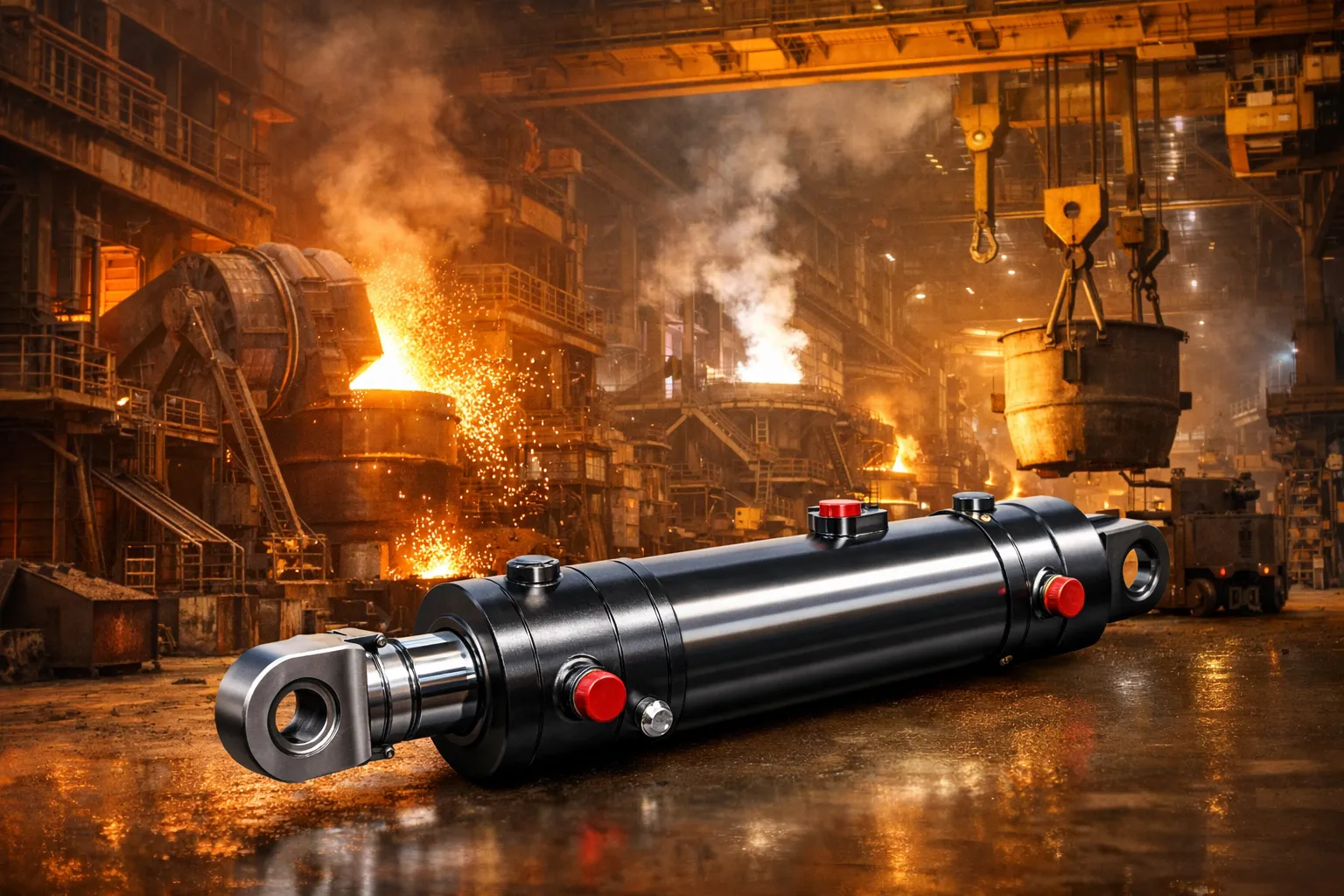
Operating as an elite, globally recognized hydraulic cylinder manufacturer, our specialized engineering division has entirely reimagined this critical actuator. We deliver a highly specialized, small-displacement servo-architecture hydraulic oil cylinder explicitly designed to dominate the LF stirring environment. By utilizing an uncompromising combination of solid stainless steel construction, ultra-precision surface polishing, and advanced Perfluoroelastomer (FFKM) sealing matrices, our solution definitively eliminates the root causes of gas corrosion and dynamic seal degradation. Upgrading your ladle refining stations with our custom-engineered hydraulic parts guarantees uninterrupted, flawlessly smooth gas flow modulation, drastically reduces maintenance downtime, and ensures your metallurgical output consistently meets the most rigorous global quality specifications.
Comprehensive Technical Parameters
Achieving flawless micro-positioning for argon flow control dictates that the mechanical specifications of the hydraulic cylinder must be stringently defined. Every metallurgical facility utilizes distinct proprietary valve blocks, varying gas pressures, and specific continuous casting rhythms. The engineering matrix below delineates the core technical parameters of our LF stirring actuators, highlighting the extensive customization capabilities we offer to perfectly align our product with your facility’s exact spatial constraints and electronic control architecture.
| Engineering Parameter | Specification Data & Customization Range |
|---|---|
| Primary Industry Sector | Metallurgical and Iron Industry |
| Equipment Category | Ladle Refining Furnace (LF) / Vacuum Degassing Station |
| Subsystem / Specific Action | LF Stirring / Micro-precision Gas Flow Control |
| Actuator Designation | Stirring Gas Valve Cylinder |
| Kinematic Methodology | Double acting hydraulic cylingder operation |
| Structural Body Type | High-response Small servo cylinder |
| Material System Base | Solid Stainless Steel 316L or 17-4PH |
| Surface Treatment & Finish | Electrolytic Polishing Ra < 0.1 microns |
| Environmental Grade | Severe Gas Corrosion + Radiant Heat |
| Primary Operational Role | Linear micro-positioning for Flow Control |
| Typical Failure Mode Prevented | Aggressive internal Seal Wear & stiction |
| Recommended Core Configuration | FFKM Seal Matrix |
| Mounting Interface Options | Precision Front Flange, Threaded Nose, or Custom Manifold |
Operational Physics & Servo Fluid Dynamics
To fully grasp the exceptional performance of this micro-positioning equipment, one must thoroughly examine the specialized fluid dynamics required for servo-grade gas regulation. In a ladle refining environment, the flow rate of argon must transition seamlessly from a gentle stirring action for thermal homogenization to an intense, vigorous bubbling required for deep desulfurization. This highly variable flow is managed by a mechanical proportional valve connected directly to our specialized actuator. Unlike heavy lift mechanisms that might employ a simple single acting hydraulic cylingder relying passively on gravity or mechanical springs for retraction, the metallurgical gas valve requires continuous, active, and perfectly stiff hydrostatic control. Consequently, our highly specialized solution utilizes an ultra-low friction double acting hydraulic cylingder architecture married tightly to high-frequency servo proportional valves.
During the active refining cycle, the plant’s automated control system continuously analyzes the melt data and sends high-speed analog signals (typically 4-20mA) to the servo control block. Pressurized, highly filtered hydraulic fluid is instantly routed with micrometer precision into either the cap end or the rod end of the cylinder chamber. This ultra-precise fluid delivery acts upon the highly polished hydraulic cylinder piston. Because we manufacture the internal bore and the piston with exceptionally tight concentricity tolerances and unparalleled surface finishes, the resulting linear movement is completely devoid of the “stick-slip” phenomenon—a common flaw where static friction causes the cylinder to jerk forward unpredictably. The piston rod glides seamlessly, minutely adjusting the aperture of the attached mechanical gas valve.
This continuous, high-frequency dither (micro-pulsing back and forth) demands an internal environment completely free of friction-induced heat. The double-acting design ensures that exact fluid pressure is actively maintained on both sides of the piston simultaneously. This rigidly locks the gas valve into its commanded position when the electronic signal demands a steady flow state. This active hydrostatic clamping entirely eliminates flow drift, a dangerous condition where mechanical vibration from the heavy steelworks equipment could otherwise cause a poorly designed lift cylinder or loose actuator to accidentally shift, severely compromising the metallurgical safety and quality of the entire ladle heat.
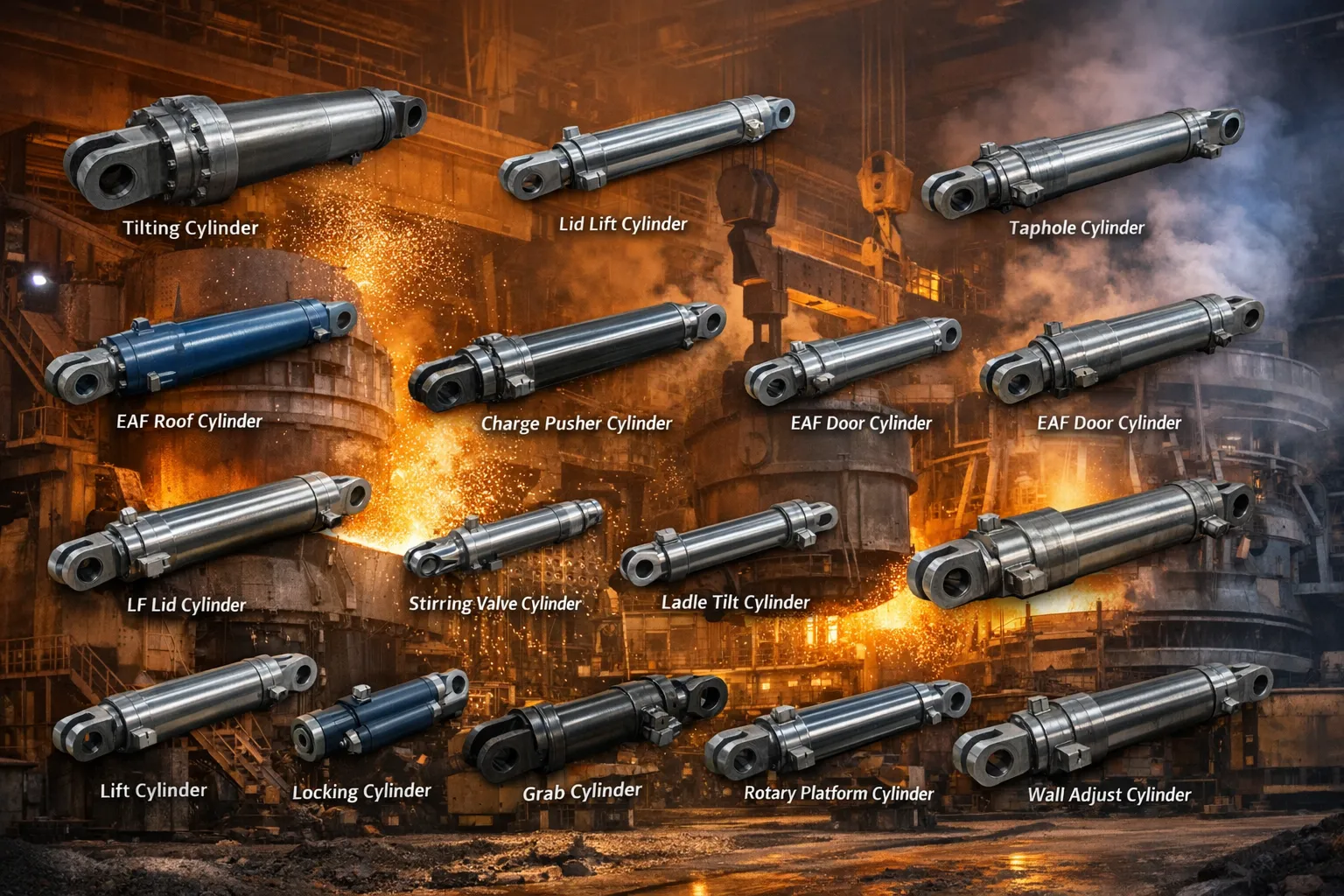
Flawless Legacy Brand Replacement & Proactive Modernization
Process automation engineers and maintenance directors operating established secondary refining facilities routinely confront a severely frustrating supply chain reality. The original gas flow control manifolds in their LF stations were typically commissioned decades ago, utilizing small-displacement servo cylinders supplied by dominant multinational fluid power corporations. Because these standard commercial units are not explicitly hardened against the specific combination of sulfurous gas corrosion and radiant heat found on an LF deck, they experience rapid degradation. Attempting to source exact replacements from the original European or American equipment manufacturer often involves navigating complex global supply chains, resulting in unacceptably long lead times exceeding 20 weeks and an exponentially inflated hydraulic cylinder price. A continuous-casting steelworks simply cannot afford to suspend its refining capabilities waiting for legacy replacement parts.
Our dedicated project engineering division specializes in completely resolving this critical procurement bottleneck. We possess extensive, proven expertise in the reverse-engineering and rapid manufacturing of direct, 1:1 dimensional drop-in replacements for failing small servo equipment originally produced by prominent brands such as Bosch Rexroth, Parker Hannifin, Moog, and Eaton Vickers. (We state unequivocally that our specific reference to these corporate brand names is utilized strictly for the professional engineering purpose of communicating dimensional structural interoperability to plant technical staff. We operate completely independently as a custom manufacturer and maintain no trademark affiliation, sponsorship, or endorsement from these respective entities.)
By strategically specifying our custom-engineered Stirring Gas Valve Cylinder to replace your deteriorating legacy equipment, your maintenance department secures a flawless physical and electronic upgrade. We meticulously replicate the exact flange dimensions, precision rod-end threading, integrated LVDT sensor cavities, and fluid port spacing. This allows your instrument technicians to seamlessly install our superior, corrosion-resistant stainless steel hydraulic cylinder components during a brief, scheduled maintenance window, without ever needing to modify the intricate gas piping or reprogram the complex PLC control loops.
Five Uncompromising Engineering Advantages
Engineering a fluid power device capable of executing millions of microscopic positional adjustments while continuously bathed in corrosive gases requires an absolute obsession with material science. What fundamentally elevates our application-specific cylinder above a standard industrial catalog item? Below are five definitive technical superiorities that guarantee unparalleled reliability in your LF station.
1. Absolute Gas Corrosion Immunity via Solid Stainless Steel
The immediate environment surrounding a ladle contains high concentrations of sulfurous gases, fluorides, and oxidized particulate outgassing from the molten synthetic slag. Standard painted carbon steel cylinders rapidly blister, rust, and flake, allowing heavy contamination to breach the wiper seals. We construct the entire structural body—barrel, end caps, and mounting flanges—from high-grade 316L/17-4PH Stainless Steel. The exterior undergoes an advanced electrolytic polishing process, creating a mirror-like surface that prevents corrosive gases from finding microscopic anchoring points and entirely stops abrasive dust from adhering.
2. Unparalleled Chemical Resistance with FFKM Seal Technology
The absolute weakest link in a generic cylinder operating near an LF station is the internal dynamic sealing package. Standard NBR, Polyurethane, or FKM seals physically melt and chemically decompose when exposed to aggressive atmospheric gases and elevated ambient temperatures, resulting in rapid seal wear. We bypass this failure mode entirely by utilizing ultra-premium Perfluoroelastomer (FFKM) seal matrices. FFKM provides chemical resistance nearly identical to solid PTFE (Teflon) but crucially possesses the elastomeric memory required for dynamic hydrostatic sealing.
3. Ultra-Low Friction Dynamics for Micro-Servo Control
To manipulate the argon flow valve with the extreme precision demanded by metallurgical engineers, the actuator must respond to minute fluid inputs instantly. The internal stainless steel bore of our cylinder undergoes precision honing and roller burnishing to achieve a surface finish of Ra < 0.1 µm. When this microscopically smooth surface interacts with our specialized PTFE-energized FFKM glide rings, the coefficient of breakaway friction approaches zero. This entirely eradicates stick-slip judder, allowing perfect tracking of the proportional PLC control signal.
4. High-Frequency Dither and Fatigue Life Optimization
Regulating a gas valve involves millions of tiny, rapid direction reversals (dithering) rather than long, sweeping mechanical strokes. This concentrated micro-movement can cause localized lubrication starvation and severe metal fatigue in standard components. Our engineering team optimizes the internal fluid port geometries to actively flush and re-lubricate the dynamic sealing zones during micro-strokes. We utilize single-piece forged stainless steel components and advanced thread rolling techniques to maximize the root strength of the mechanical connections, surviving millions of rapid servo cycles.
5. Exceptional Thermal Stability in Radiant Environments
Operating in the shadow of a ladle carrying 150 tons of 1600°C molten steel subjects the actuator to intense radiant thermal loads. Standard cylinders suffer from uneven thermal expansion, which causes the internal piston to bind against the barrel wall, resulting in erratic gas flow. The specific stainless steel alloys we utilize are selected for their highly uniform thermal expansion coefficients. Combined with high-temperature fluid formulations, our cylinder maintains perfectly consistent operational clearances, ensuring zero mechanical binding regardless of ambient temperature spikes.
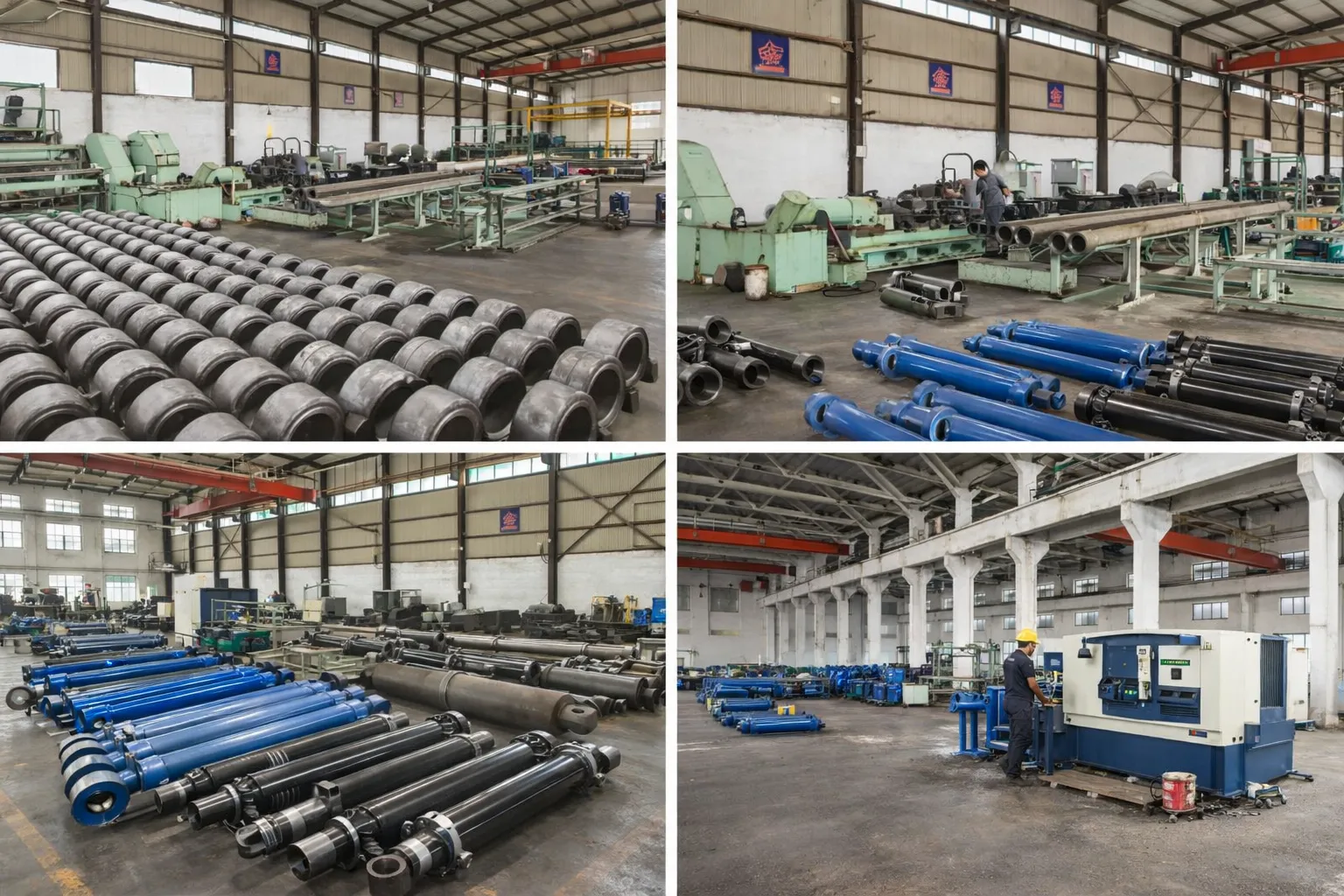
Autonomous Manufacturing Excellence & Quality Control
Genuine, repeatable industrial reliability in servo-grade equipment cannot simply be inspected into a finished product; it must be methodically built into the component at every single stage of its fabrication. We maintain absolute vertical control over our entire production lifecycle. Operating from cutting-edge, ISO-certified manufacturing facilities, we execute every process—from the initial CNC machining of raw stainless steel billet to the final servo-response testing—entirely in-house. This autonomy allows us to strictly govern quality protocols that greatly exceed standard commercial fluid power manufacturing practices.
The fabrication process begins with uncompromising material traceability. Every batch of 316L stainless steel is subjected to deep spectrochemical analysis to verify its exact chromium and molybdenum content, ensuring maximum resistance to gas corrosion. The intricate internal components are shaped on state-of-the-art multi-axis CNC turning and milling centers. We hold geometric concentricity tolerances to strict single-digit micrometer standards. Assembly occurs in dedicated, clean-room equivalent, climate-controlled environments to prevent any airborne metallurgical dust from contaminating the highly sensitive FFKM sealing architectures during installation.
Most critically, before any Stirring Gas Valve Cylinder is authorized for global dispatch, it must unequivocally pass our mandatory 100% factory dynamic testing regime. We strictly prohibit batch sampling. Each individualized unit is mounted to a computerized test rig and hydrostatically pressurized. We electronically monitor the unit for microscopic internal volumetric bypass, verify external sealing integrity, and—crucially—test the servo-response curve by graphing its linear displacement against proportional fluid inputs to ensure zero stick-slip behavior. Every approved unit is permanently laser-etched with a unique serial identifier, ensuring total lifecycle traceability and instantly streamlining any future hydraulic cylinder repair logistics.
Cross-Industry Deployment of Corrosion-Resistant Actuation
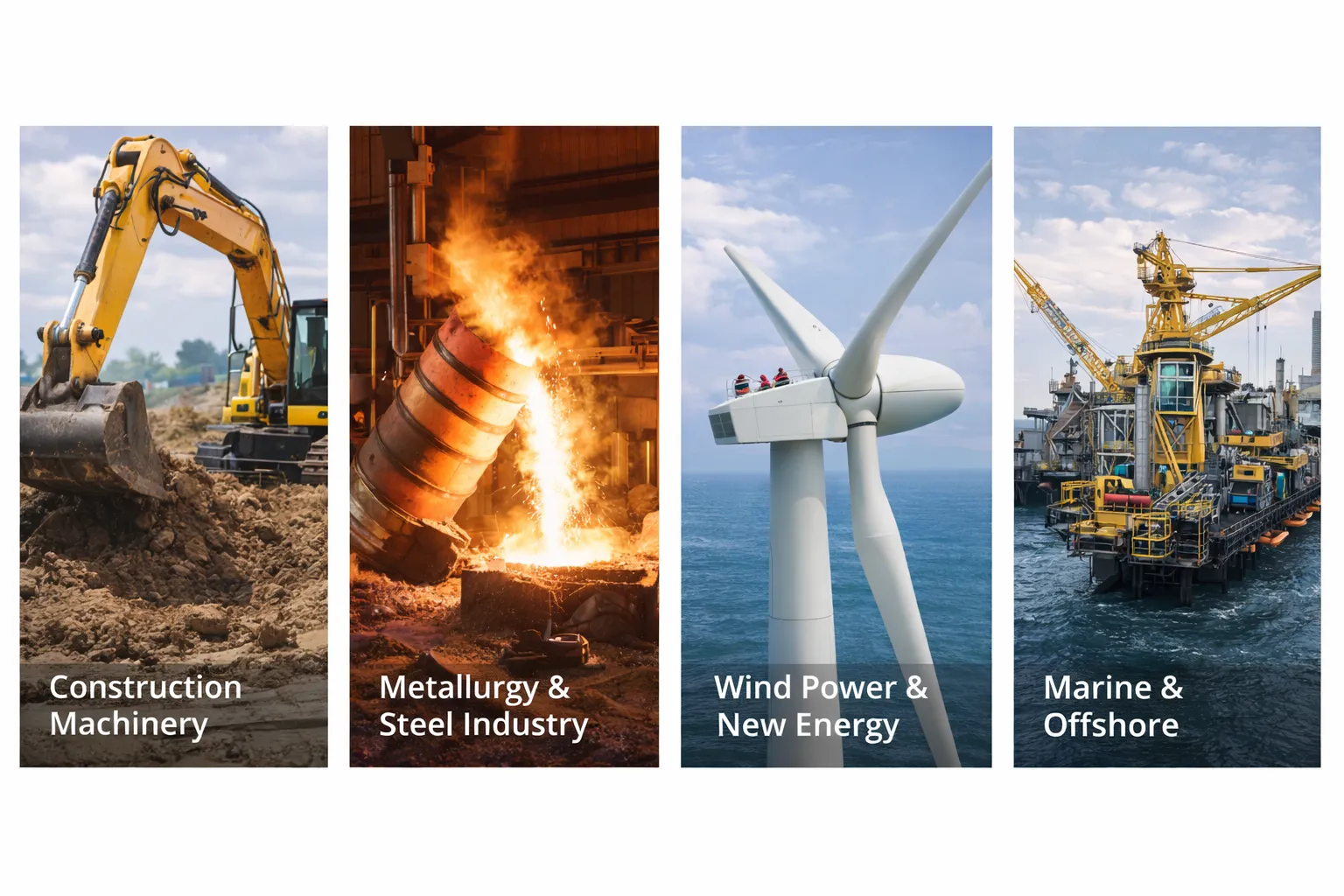
While the exceptionally harsh, chemically aggressive atmosphere of the Ladle Refining Furnace drove the primary engineering behind this specific stainless steel product line, the resulting technological architecture is highly prized across a multitude of other severe-duty industrial sectors globally. A fluid power mechanism designed to operate flawlessly while surrounded by corrosive sulfurous gases and execute micro-metric positioning translates seamlessly into providing supreme, unbroken reliability in other extreme environments where standard carbon steel cylinders rapidly disintegrate.
Beyond our established engineering dominance in the metallurgical sector, our fully polished stainless steel actuators and FFKM seal matrices are highly specified within advanced chemical processing and petrochemical refining. In environments dealing with aggressive acids, caustic wash-downs, or highly saline coastal atmospheres, our technology entirely eliminates external rusting and internal fluid contamination. Furthermore, the absolute precision control inherent to this design makes it a superior choice for highly specialized mining industry applications, specifically in deep subterranean slurry flow control where acidic mine water destroys standard equipment within weeks.
Similarly, the environmental sealing capability and frictionless operation we engineer into these units make them invaluable for sensitive operations within the construction machinery industry—particularly in specialized underwater trenching equipment and marine dredging valve controls where exposure to corrosive saltwater is constant. Our high-performance engineering principles prove universally applicable wherever absolute precision meets extreme environmental hostility.
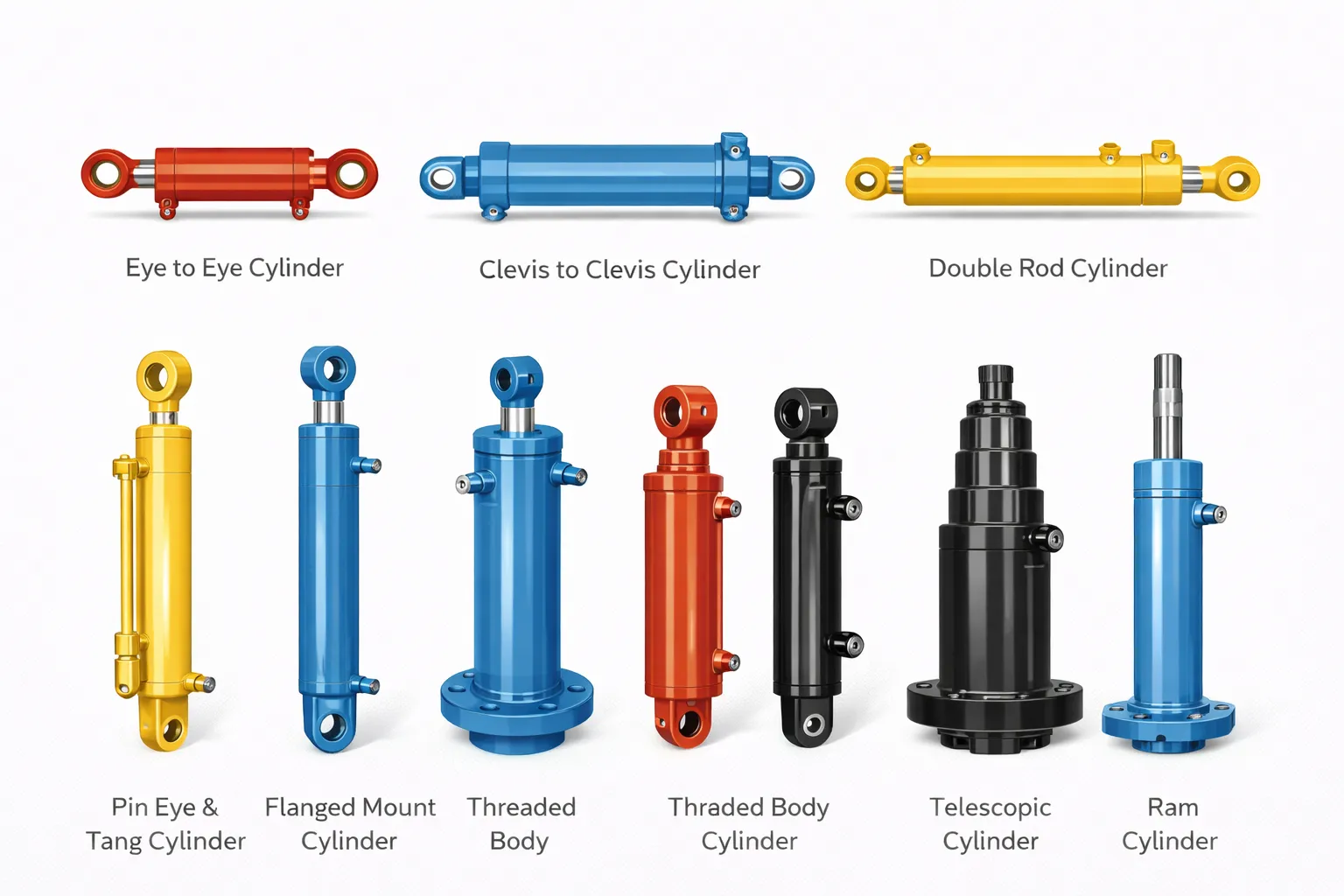
Comparative Analysis: Standard Commercial Actuators vs. Metallurgical Engineering
Strategic procurement in heavy industrial operations requires a clear evaluation of initial capital outlay versus the long-term total cost of ownership and the catastrophic risks of metallurgical batch failure. The comparative matrix below highlights the profound engineering differences between utilizing standard off-the-shelf industrial servo actuators and upgrading to our highly specialized Stirring Gas Valve Cylinder, clearly demonstrating why our technology provides a massive return on investment.
| Critical Engineering Metric | Ordinary Commercial Servo Cylinder | Our High-Performance Stainless Servo |
|---|---|---|
| Structural Material & External Finish | Painted Carbon Steel. Paint rapidly blisters under radiant heat, leading to severe, destructive external rusting and scaling. | Fully Polished 316L/17-4PH Stainless Steel. Absolute immunity to ambient gas corrosion and zero external particulate adhesion. |
| Seal Chemistry & Longevity | Standard NBR / Viton. Melts and chemically decomposes rapidly when exposed to sulfurous ladle outgassing. | Premium FFKM (Perfluoroelastomer) Matrix. Unrivaled chemical resistance, guaranteeing years of leak-free dynamic sealing. |
| Friction Dynamics & Motion Control | Standard commercial honing (Ra 0.4 – 0.8µm). Causes micro-stiction during high-frequency servo dithering, leading to erratic flow. | Ultra-precision polishing and lapping (Ra < 0.1µm). Ensures glass-like smoothness for perfectly linear, zero-friction gas modulation. |
| Thermal Stability Profile | Uneven thermal expansion causes piston binding. Standard seals melt or carbonize above 120°C near the ladle. | Uniform thermal expansion alloys combined with FFKM seals flawlessly withstand ambient radiant heat approaching 300°C. |
| Maintenance & Operational Reality | Requires constant recalibration, frequent seal replacements, and risks entire steel heats due to erratic argon bubbling. | Exceptional MTBF. Secures perfect alloy chemistry, eliminates unscheduled LF downtime, and slashes spare parts budgets. |
Proven Global Success: Verified Field Deployments in East Asia
Rigorous engineering theory must always be validated against the harsh, unforgiving realities of active heavy industry. Our highly specialized fluid power solutions are actively trusted by major metallurgical conglomerates across the Asian manufacturing belt. Below are five verified field deployments where our engineering team successfully eradicated critical, highly expensive operational bottlenecks for our B2B partners in South Korea, Japan, and Taiwan.
Case Study 1: Eradicating Gas Corrosion and Valve Stiction
Location: Pohang, South Korea | Application: 250-Ton LF Bottom Argon Blowing Valve Control
The Operational Challenge & Contact: In early 2024, the plant’s chief reliability engineer was battling severe external rusting and internal seal degradation on their generic carbon steel actuators. The corrosive ladle gases were destroying the equipment, causing the gas valves to stick and severely disrupting their desulfurization times. They discovered our stainless steel capabilities via our dedicated web portal and initiated immediate contact.
Engineered Solution & Result: We custom-engineered a suite of fully polished 316L stainless steel Stirring Gas Valve Hydraulic Cylinders equipped with our ultra-low friction FFKM seal matrices. Since deployment, the plant has recorded zero erratic valve movements, and the external bodies remain completely unblemished by the corrosive atmosphere.
“The polished stainless steel design is an absolute game-changer for our LF deck. The chemical resistance is phenomenal, and the micro-control of the argon flow is smoother than the original European OEM units we previously used.” — Melt Shop Maintenance Director, Pohang.
Case Study 2: Achieving Absolute Precision in High-Grade Alloy Stirring
Location: Incheon, South Korea | Application: Specialty Steel Ladle Metallurgy Facility (LMF)
The Operational Challenge & Contact: A facility producing aerospace-grade alloys required exceptionally precise gas bubbling to achieve perfect thermal homogeneity without causing slag entrapment. Their existing standard actuator setup suffered from severe stick-slip, making delicate flow adjustments impossible. They met our technical representatives at an industrial fluid power symposium in Seoul.
Engineered Solution & Result: We delivered our high-performance servo-cylinders featuring precision-honed internal bores (Ra 0.1µm) and specialized PTFE-energized glide rings. This completely neutralized internal static friction. The PLC can now adjust the argon valve in increments of less than 0.5 millimeters flawlessly.
“The friction dynamics on these specialized cylinders are incredible. We finally have the absolute, dialed-in control over our argon stirring that our strict metallurgical recipes demand. Product rejection rates have plummeted.” — Lead Process Metallurgist, Incheon.
Case Study 3: Drastically Reducing Maintenance Expenditure in Heavy Smelting
Location: Gwangyang, South Korea | Application: Multi-Station LF Argon Flow Manifolds
The Operational Challenge & Contact: A massive integrated steelworks was spending an exorbitant portion of their annual budget simply rebuilding and replacing cylinders on their argon manifolds because the standard polyurethane seals were melting continuously in the radiant heat. They requested an immediate technical audit via our direct email contact.
Engineered Solution & Result: By upgrading their entire manifold actuation system to our specialized FFKM-equipped stainless units, the seal degradation completely ceased. We extended their mean time between failures (MTBF) from an abysmal 4 weeks to over 16 months of uninterrupted service.
“The return on investment was realized within the first quarter. We have practically eliminated our emergency breakdown interventions on the LF deck. These units are built specifically for the reality of a steel mill.” — Senior Plant Reliability Manager, Gwangyang.
Case Study 4: Solving High-Frequency Fatigue in Proportional Dithering
Location: Kobe, Japan | Application: Automated Continuous Ladle Stirring Control
The Operational Challenge & Contact: The highly automated control system constantly “dithered” the gas valve to maintain precise pressure. This high-frequency micro-cycling was causing the standard cut threads on the piston rod ends to develop microscopic fatigue fractures and shear completely off. They contacted our export engineering division in late 2024.
Engineered Solution & Result: We manufactured a custom batch of actuators utilizing forged, single-piece stainless steel rod designs and heavily implemented thread rolling technology to vastly increase the root fatigue strength. The physical shearing failure was entirely eliminated.
“The metallurgical engineering behind their rod and thread design is vastly superior to the commercial units we were purchasing. They effortlessly handle the relentless high-frequency servo cycling our automation demands.” — Mechanical Design Chief, Kobe.
Case Study 5: Rapid Emergency Drop-In Replacement for European Legacy Equipment
Location: Kaohsiung, Taiwan | Application: High-Temperature LF Station Valve Actuation
The Operational Challenge & Contact: A critical argon control cylinder suffered a catastrophic mechanical failure. The original European OEM quoted a highly inflated hydraulic cylinder price and a devastating 22-week lead time, which threatened to halt an entire specialty alloy casting line. The desperate procurement team found us via a search for rapid custom cylinder manufacturing.
Engineered Solution & Result: Working directly from the legacy OEM dimensional schematics, our engineering team rapid-prototyped and manufactured a flawless 1:1 dimensional stainless steel drop-in replacement. We delivered the fully tested, vastly superior unit in under 5 weeks, allowing the plant to resume casting operations with zero structural modifications required.
“The dimensional accuracy was absolute perfection. We bolted it right onto the existing manifold and plugged in the LVDT. Their ability to deliver a vastly superior custom product at a fraction of the OEM lead time makes them a critical operational partner.” — Lead Procurement Engineer, Kaohsiung.
Frequently Asked Questions (FAQ)
Executing strategic procurement for critical servo-grade heavy machinery requires absolute technical clarity and confidence. Below are detailed, engineering-level answers to the most frequent operational inquiries our corporate B2B partners raise regarding our specialized secondary metallurgy fluid power solutions.
Fortify Your Secondary Refining Precision Today
Do not allow generic commercial fluid power components and highly vulnerable standard seals to dictate the profitability and chemical accuracy of your multi-million dollar steel heats. Partner with a dedicated fluid power engineering team that truly understands the immensely destructive forces of gas corrosion, radiant heat, and the absolute necessity of zero-stiction micro-positioning. Upgrade your Ladle Furnace stations to a purpose-built Stirring Gas Valve Cylinder and permanently eliminate erratic argon bubbling.
Editor: Cxm


























