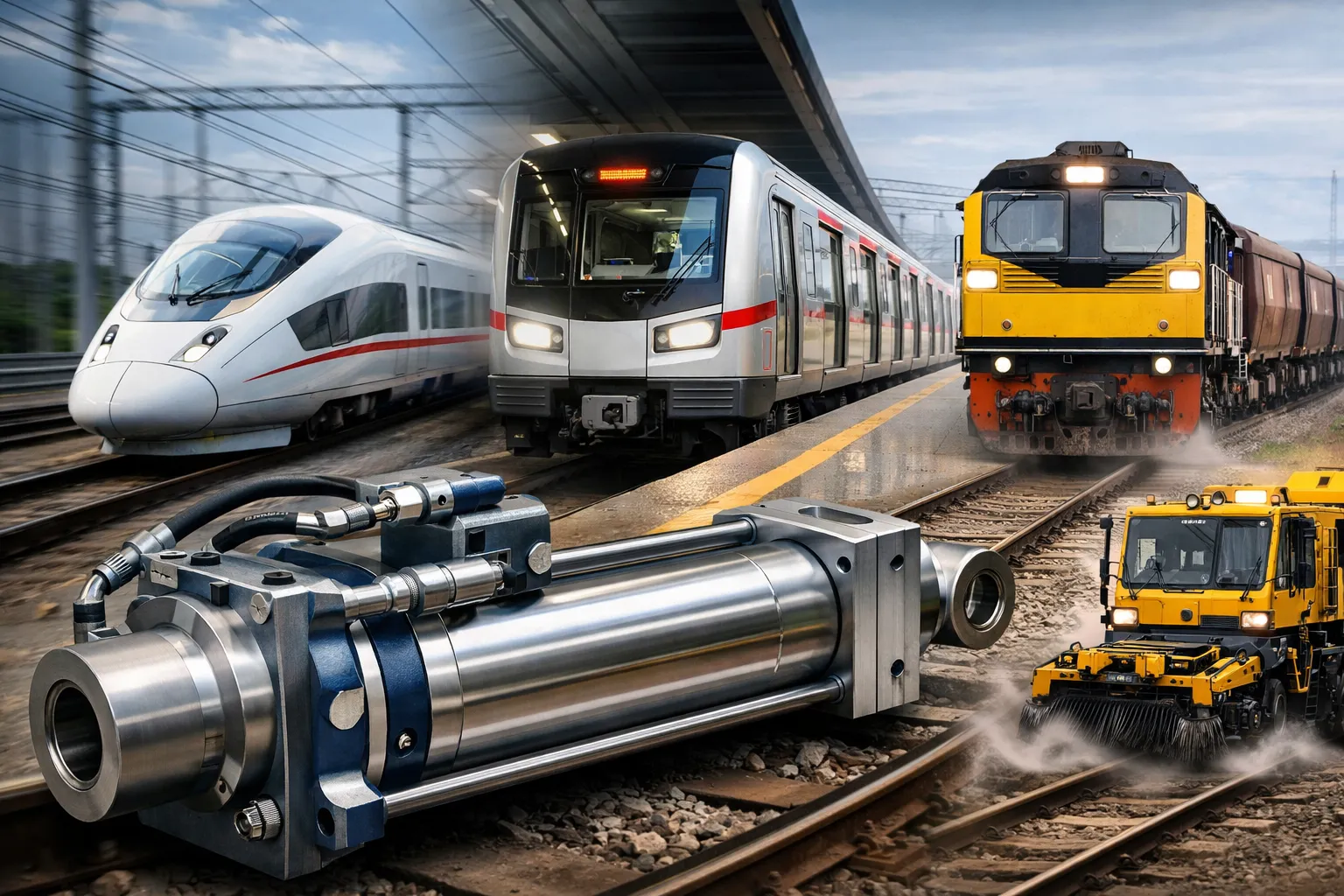
System Overview & Core Industrial Value
Sustaining the exact geometric alignment of modern high-speed railway networks is a continuous, monumental engineering undertaking. Across the mountainous topographies and extreme weather zones of South Korea, Japan, and Taiwan, track infrastructure inevitably shifts under the immense dynamic tonnage of commercial rolling stock. To restore absolute track geometry, transit authorities deploy specialized heavy-duty track maintenance vehicles, including ballast tampers, dynamic track stabilizers, and ballast regulators. During nocturnal track-possession windows, these massive machines must frequently shift their working superstructures laterally across their own running bogies to precisely align their tamping tines or profiling blades with misaligned rails. This critical lateral traversing action is exclusively powered by a dedicated fluid power actuator known as the translating cylinder.
The working environment beneath a track maintenance locomotive is extraordinarily hostile. Unlike standard factory automation where a typical hydraulic cylinder operates in a clean, climate-controlled setting, the translating hydraulic cylinder is positioned mere inches above the track bed. It is constantly bombarded by flying crushed granite ballast and thick metallic dust generated from rail grinding. More severely, during monsoon seasons or heavy rain, the cylinder operates while submerged in highly abrasive silica mud and water. Furthermore, the active operation of tamping banks sends violent, high-frequency harmonic vibrations directly through the chassis into the cylinder mounts. When standard commercial fluid power components are utilized in this application, they suffer rapid and catastrophic failure. Abrasive slurry easily bypasses standard wiper seals, severely scoring the internal pressure boundaries and causing immense fluid leakage.
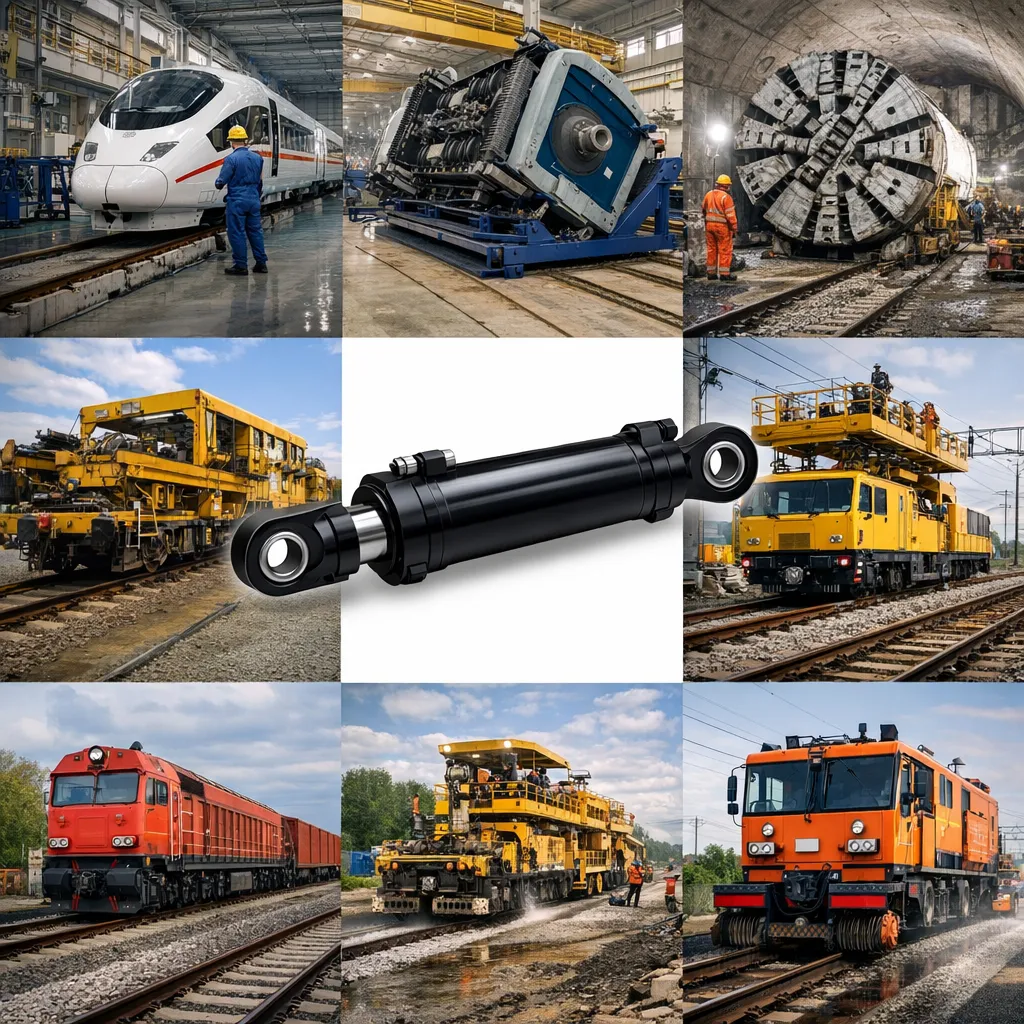
Operating as an elite hydraulic cylinder manufacturer, we have fundamentally re-engineered the architectural standard for railway fluid power to neutralize these exact failure modes. Recognizing that traditional designs fail to exclude track slurry and cannot survive immense vibration, we developed a highly specialized translating cylinder. By integrating a proprietary triple-lip dust wiper configuration that physically scrapes the rod clean on every retraction stroke, alongside a monolithic welded Q345D alloy steel construction that utterly rejects vibrational fatigue, we provide rail contractors with an impenetrable solution. By drastically extending the operational lifespan of the traversing mechanism, our engineering directly optimizes fleet uptime and delivers a phenomenally competitive long-term hydraulic cylinder price to value ratio for transit procurement departments focused on lowering their total cost of ownership.
Comprehensive Technical Parameters
Developing a fluid power component capable of pushing a multi-ton locomotive chassis requires strict adherence to demanding metallurgical and tribological standards. The comprehensive table below outlines the specific engineering baselines and customizable configurations embedded into our transit-grade translating hydraulic cylinder line. Every parameter has been calculated to endure the harshest railway maintenance applications on the planet.
| Engineering Specification | Customizable Range & Configuration Details |
|---|---|
| Target Industry | Rail Transit Infrastructure & Heavy Track Logistics |
| Equipment Category | Track Maintenance Vehicles, Ballast Tampers, Dynamic Stabilizers |
| Subsystem & Action | Translation System / Horizontal Car Body Shifting |
| Product Designation | Translating Cylinder |
| Action Mode | Double acting hydraulic cylinder – High-pressure fluid controls both left and right directional thrusts. |
| Structure Type | Piston Cylinder – Engineered for high-load linear displacement within confined chassis spaces. |
| Manufacturing Structure | Monolithic Welded Assembly – Completely eliminates external tie-rods, preventing structural vibration loosening. |
| Material System | Q345D Low-Alloy Steel – Provides exceptional structural yield strength and sub-zero impact toughness. |
| Surface Treatment | Micro-Cracked Hard Chrome Plated – Resists flying track ballast pitting and heavy atmospheric corrosion. |
| Environmental Grade | Severe Continuous Vibration + Immersion in Mud/Water |
| Typical Failure Mode Solved | Seal Wear (Caused by abrasive particulate destroying internal pressure boundaries). |
| Recommended Configuration | Triple-Lip Dust Wiper – A physical, multi-stage barrier that scrapes the external rod completely dry. |
Operational Fluid Dynamics & Working Principle
The fundamental mechanical role of the translating cylinder is converting highly pressurized hydraulic fluid into precise, linear lateral motion. When a ballast tamper operator needs to align the vibrating tines with slightly offset tracks, they engage the traversing control. The vehicle’s main hydraulic manifold routes fluid at extreme pressures—frequently exceeding 210 Bar—directly into the directional control valve block governing the translation system. The precision of this movement determines the overall quality of the track alignment, making the responsiveness of the cylinder absolutely vital.
Because shifting a multi-ton carriage requires active force in both directions, the system inherently demands a high-displacement double acting hydraulic cylinder. A rudimentary single acting hydraulic cylinder relying on a mechanical return spring is physically incapable of dragging a heavy steel chassis back to its center point. If the machine must translate to the right, fluid is violently forced into the cap-end port. This high-pressure fluid acts against the broad surface area of the internal hydraulic cylinder piston, forcefully driving the heavy chrome rod outward. This extension pushes against the sliding trunnion mounts, physically translating the entire superstructure across its heavy-duty guide rails. Conversely, to translate to the left, fluid is diverted into the rod-end port, pulling the chassis back with equal, unyielding power.
The true engineering crucible occurs during the retraction stroke. The exposed section of the rod is inevitably covered in wet, abrasive track mud and gritty oil. As the rod is pulled back into the hydraulic parts assembly, it attempts to drag this abrasive sludge into the sealing gland. This is where our advanced tribological engineering executes its primary function. The specialized triple-lip dust wiper acts as a staged mechanical barricade. The rigid outer lip plows off heavy mud clumps. The secondary lip shears away fine, clinging silica paste. The tertiary inner lip ensures absolute dryness. This guarantees that only a perfectly clean, microscopic oil film passes into the primary high-pressure seal, entirely averting the seal wear that plagues lesser commercial actuators and maintaining absolute pressure integrity.
Strategic OEM Fleet Replacement & Compatibility
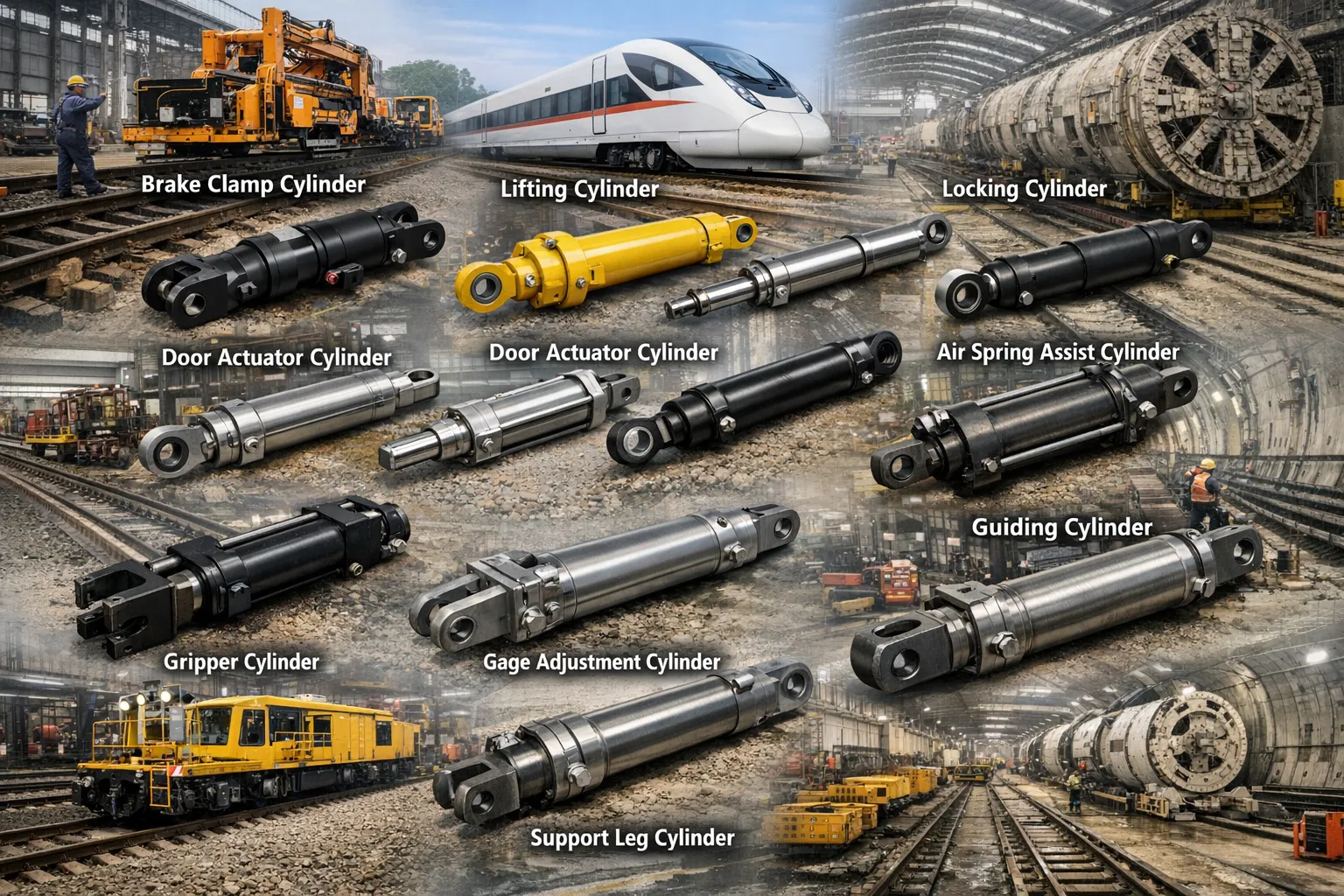
Fleet managers responsible for national track infrastructure are frequently constrained by slow-moving supply chains monopolized by major European and North American machinery integrators. Sourcing replacement hydraulic cylinder components from the original manufacturer often involves devastating lead times stretching past twenty weeks and highly inflated procurement markups that obliterate annual maintenance budgets. Our engineering division restores total procurement autonomy to your depot by supplying meticulously reverse-engineered, exact drop-in replacement units.
Procurement Engineering Disclaimer: The customized translating hydraulic cylinder models produced by our facility are dimensionally engineered to serve as perfect functional replacements for traversing actuators originally installed on heavy rail equipment manufactured by Plasser & Theurer, Loram Maintenance of Way, Harsco Rail, Matisa, and Speno. We cite these corporate brand names explicitly for technical cross-referencing, stroke dimension matching, and to facilitate accurate procurement for your fleet engineers. We function as a wholly independent hydraulic cylinder manufacturer and assert no official trademark affiliation, authorized dealership status, or sponsorship from these respective OEM entities.
By collaborating directly with our fluid power facility, your maintenance depot ensures identical matching of retracted pin-to-pin dimensions, precise stroke capacities, bore sizes, and fluid port thread pitches. Upgrading your track maintenance fleet requires absolutely zero structural cutting, welding, or retrofitting to the vehicle chassis. Technicians simply unbolt the leaking OEM unit and install our heavily reinforced translating cylinder. This immediately resolves chronic seal wear issues while securing a highly advantageous hydraulic cylinder price for the entirety of your scheduled winter overhaul program.
7 Core Technical Engineering Advantages
Applying generic industrial fluid power to the harsh realities of a railway track bed guarantees rapid equipment failure. Our components are explicitly over-engineered to dominate this specific environmental biome. Below are the definitive technical characteristics forged into every unit we produce:
1. Triple-Lip Dust Wiper Configuration
The absolute countermeasure to extreme mud exposure. Standard single-lip wipers easily flex, allowing wet grit to bypass into the gland. Our proprietary triple-lip polyurethane architecture acts as a staged mechanical plow. It shears away wet slurry, fine abrasive silica, and standing water, entirely eradicating the primary cause of internal seal scoring and extending cylinder life by hundreds of thousands of cycles.
2. Q345D Low-Temperature Metallurgy
Track maintenance frequently occurs during harsh winter nights to minimize passenger traffic disruption. Standard 1045 carbon steel becomes dangerously brittle in sub-zero environments, prone to micro-fracturing under impact loads. We utilize Q345D low-alloy steel, which possesses exceptional low-temperature impact toughness, ensuring the barrel easily absorbs immense lateral shocks even at -20°C.
3. Monolithic Welded Structural Integrity
A ballast tamper generates continuous, violent high-frequency vibration. Cylinders held together by external threaded tie-rods rapidly stretch, loosen, and suffer fluid blowouts under this acoustic stress. We utilize automated robotic orbital welding to permanently fuse the heavy end caps directly to the Q345D barrel, guaranteeing a monolithic structural immunity to harmonic loosening.
4. Micro-Cracked Hard Chrome Resistance
The reciprocating piston rod operates mere inches from crushed granite track ballast. We apply an exceptionally dense layer of micro-cracked hard chrome plating engineered for extreme abrasion resistance. This creates a rock-hard exterior that deflects stone impacts, while the microscopic fissures retain lubricating oil to prevent atmospheric rust during off-season vehicle storage.
5. High-Rigidity Bearing Guide Bands
Car body translation involves pushing immense asymmetrical weight. If the chassis binds slightly, it introduces massive radial side-loads onto the rod. We incorporate ultra-wide, phenolic-resin infused PTFE guide bands within the internal hydraulic parts. These heavy-duty bearings easily absorb off-axis forces, ensuring the steel piston never scores the honed barrel wall.
6. Optimized Fatigue Life via FEA
During the digital design phase, our engineers deploy rigorous Finite Element Analysis (FEA) to simulate the extreme push/pull kinetic forces required for heavy locomotive translation. We mathematically reinforce stress concentration zones around the trunnion mounts and rod eyes, ensuring a dynamic fatigue life that drastically outperforms standard OEM equipment parameters.
7. Accessible Depot Repair Architecture
We vehemently oppose the concept of forced obsolescence. While built to survive brutal conditions, maintenance is an eventual reality. We construct our front glands with highly secured, yet easily accessible threaded interfaces. This conscious design choice empowers your local depot technicians to access the internals and perform rapid fixing hydraulic cylinders directly on their workbenches, drastically improving lifecycle ROI.
Manufacturing Excellence & Total Quality Traceability
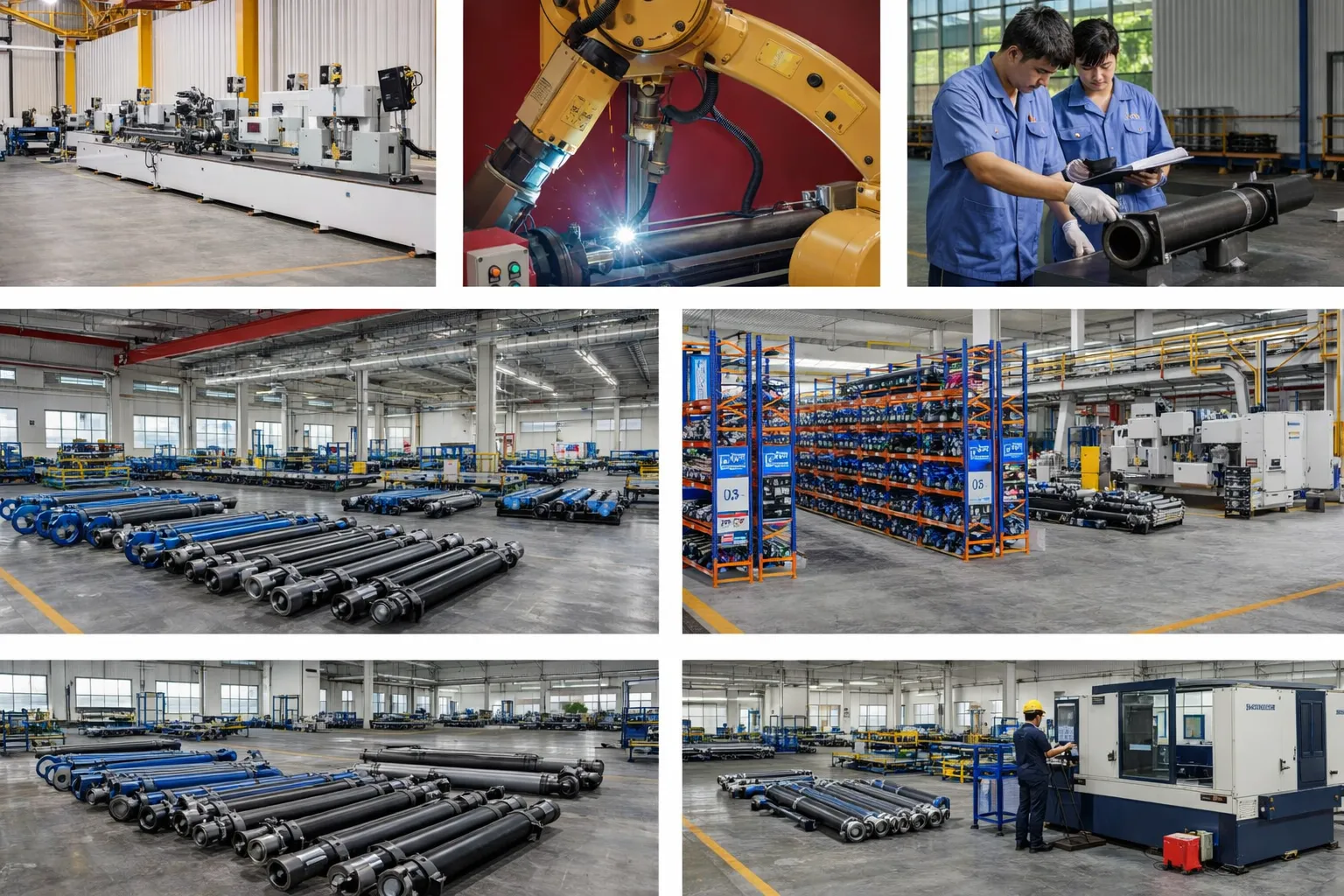
Manufacturing heavy-duty rail infrastructure components leaves absolutely no margin for metallurgical error. As a fully vertically integrated hydraulic cylinder manufacturer, we retain total jurisdiction over our entire production ecosystem. Our stringent quality control protocol initiates the moment raw Q345D steel billets arrive at our facility. We deploy strict ultrasonic flaw detection (NDT) and optical emission spectrometry to verify internal homogeneity and confirm the exact carbon/manganese chemical composition prior to any machining. This ensures absolute material purity before a single chip of steel is cut.
The intricate internal boring and honing of the Q345D barrel are executed on advanced multi-axis CNC turning centers, achieving dimensional H8 bore tolerances measured in strict micrometers. The structural integrity of the translating cylinder relies heavily on its joints; all end caps are mated to the barrel using automated robotic orbital welding, ensuring deep, uniform penetration without microscopic slag inclusions. To ensure the delicate triple-lip seals are not compromised by airborne workshop debris, final assembly is executed exclusively within a climate-controlled, positive-pressure cleanroom.
We categorically reject randomized batch sampling. 100% of our production volume undergoes extreme Factory Acceptance Testing (FAT). Every single translating hydraulic cylinder is mounted to a dynamic test rig and subjected to a hydrostatic pressure hold test at 150% of its maximum operational rating to verify absolute zero internal and external fluid leakage. Upon passing, a unique, permanent alphanumeric serial number is laser-engraved onto the housing. This provides transit clients with complete backward traceability, linking the physical actuator directly to its specific material heat records, CNC operator logs, and final performance test data.
Cross-Industry Heavy Industrial Applications
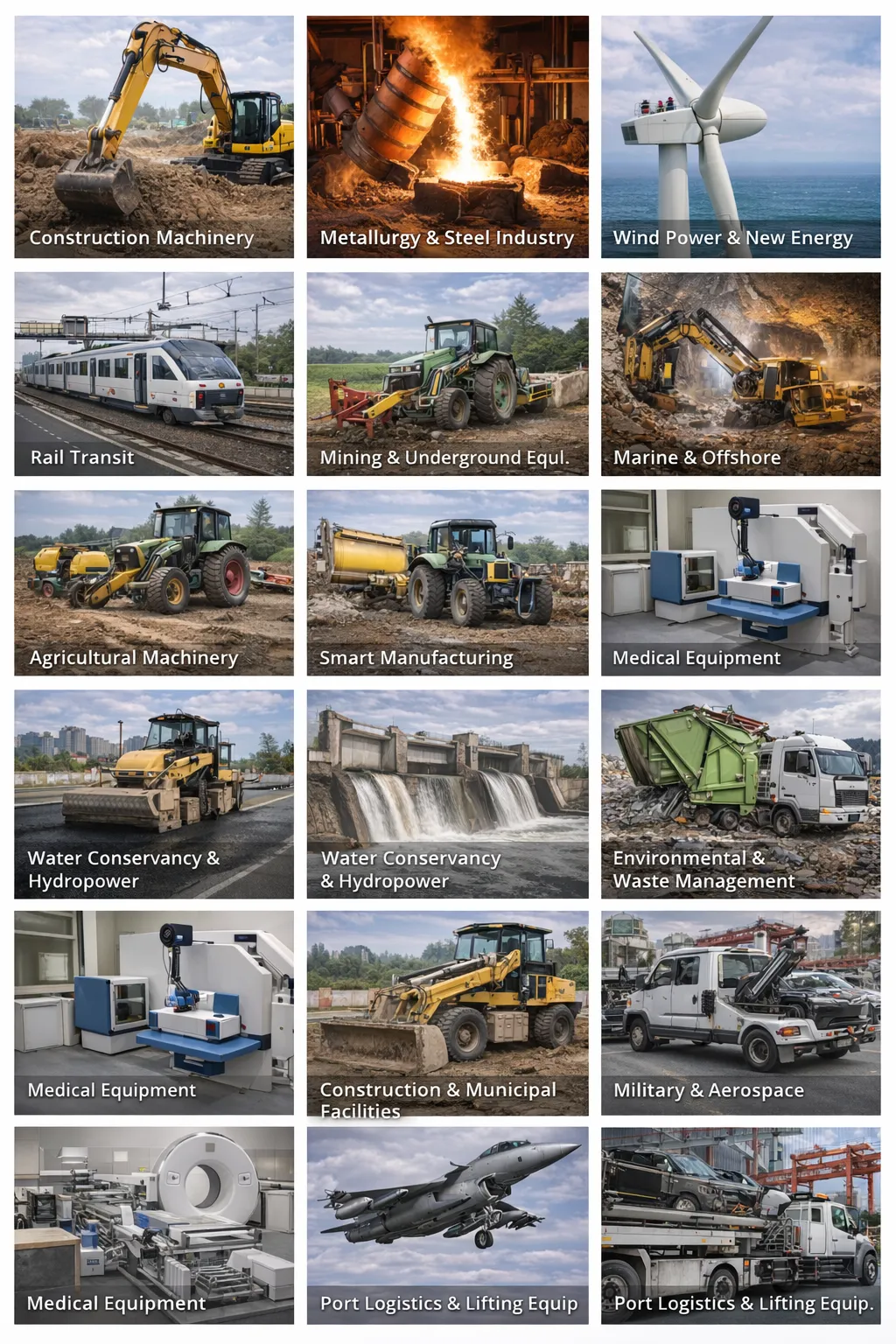
While the sophisticated triple-lip sealing matrix and high-toughness Q345D welded structure are natively optimized for the violent vibration and mud intrusion of track maintenance vehicles, these fundamental engineering principles make our heavy-duty cylinders exceptionally valuable across multiple demanding industrial sectors.
- Track Maintenance Vehicles: The primary application; actively translating the superstructure of ballast tampers, track geometry cars, and heavy rail grinders across the rail axis.
- Heavy Earthmoving Machinery: The extreme mud resistance is perfect for the construction machinery industry, acting as a highly durable steering actuator or a robust lift cylinder on excavators working deep in abrasive trench mud.
- Underground Resource Extraction: Supplying the mining industry with highly durable traversing cylinders for continuous miners and heavy subterranean conveyor alignment platforms submerged in abrasive rock slurry.
- Maritime Cargo Logistics: The thick micro-cracked chrome plating and advanced exclusion seals make it highly effective in powering deck crane traversing mechanisms exposed to continuous corrosive saltwater spray.
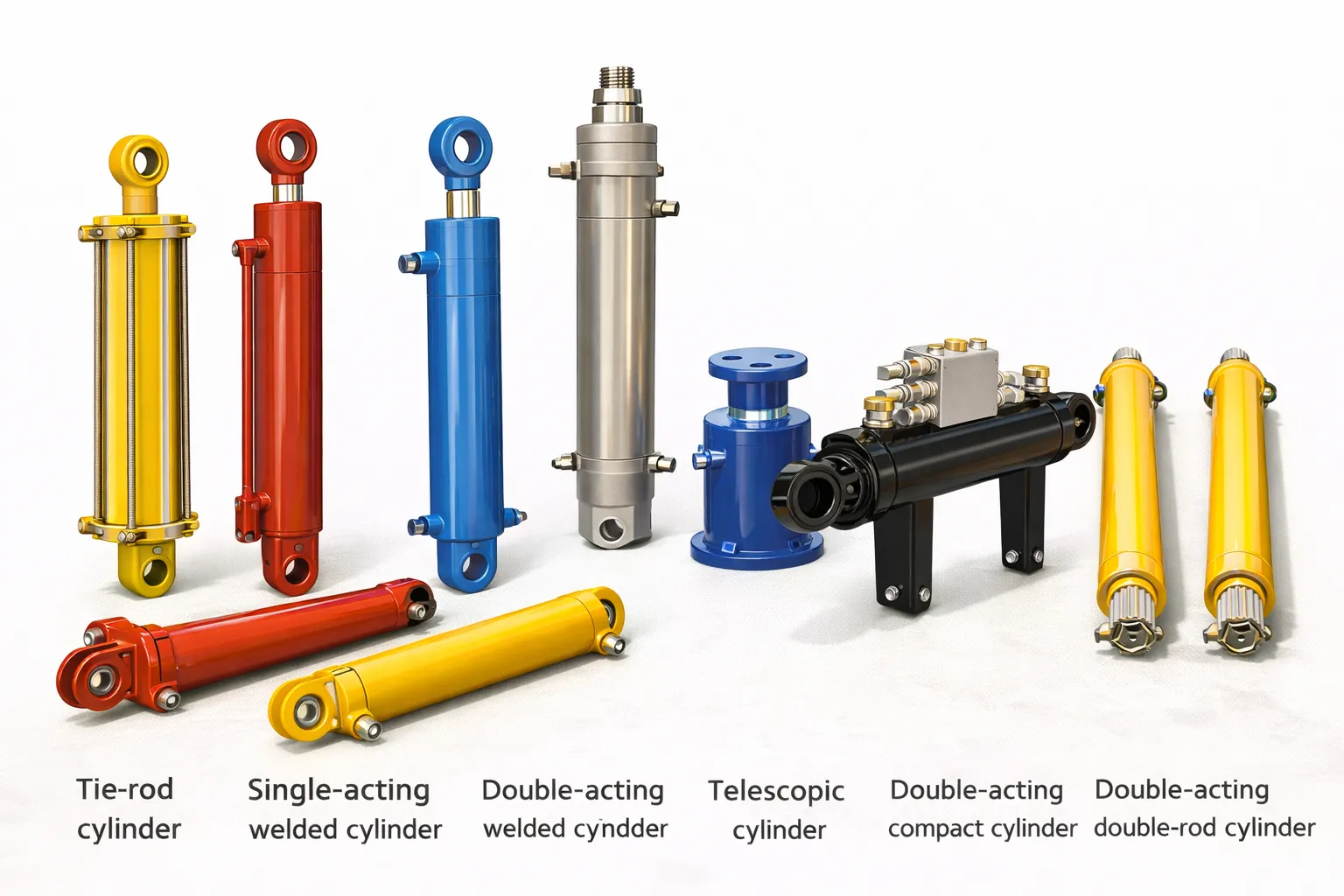
Comparative Analysis: Generic Actuators vs. Engineered Translating Cylinders
When procurement managers evaluate lifecycle maintenance costs, understanding the technical disparity between generic off-the-shelf hydraulic rams and purpose-built rail mechanisms is vital. The comparative table below clearly outlines why upgrading to our specific architecture maximizes track maintenance uptime.
| Operational Metric | Generic Industrial Cylinder | Our Translating Hydraulic Cylinder |
|---|---|---|
| Contaminant Exclusion (Mud/Water) | Standard single-lip wiper allows fine silica mud to enter the gland, acting as sandpaper against the main seal. | Triple-lip polyurethane dust wiper acts as a mechanical plow, totally preventing abrasive slurry ingress. |
| Material Toughness (Sub-Zero) | Standard 1045 carbon steel becomes highly brittle and prone to micro-fracturing in winter temperatures. | Q345D low-alloy steel maintains exceptional ductile impact toughness even during freezing nighttime operations. |
| Vibration Resistance | Tie-rod assembly stretches and violently chatters loose under the immense harmonic vibration of a ballast tamper. | Monolithic robotic-welded joints guarantee the structure will never shake loose or lose fluid compression. |
| Fluid Power Delivery | Often incorrectly configured as a single acting hydraulic cylinder unable to forcefully pull weight backwards. | High-displacement double acting hydraulic cylinder ensuring immediate, forceful bilateral traverse control. |
| Maintenance Autonomy | Often friction-welded completely shut, forcing total, expensive unit replacement when basic seals finally wear out. | Threaded head gland enables rapid, in-depot rebuilds via precise seal kits, drastically extending lifecycle ROI. |
Global Engineering Success: Real Case Studies in East Asia
Rigorous metallurgical specifications only hold true value when continuously validated by real-world operation on the track. Our fluid power solutions actively maintain the geometric safety of the busiest railway corridors in the world. Below are documented deployments where track maintenance contractors partnered with our engineering bureau to eliminate critical mechanical failures.
Case Study 1: Resolving Seal Destruction in the South Korean Monsoon Season
Date & Location: July 2024 | Seoul-Busan KTX Corridor, South Korea.
Client Profile: National Railway Infrastructure Maintenance Contractor.
The Operational Challenge: During the intense summer monsoon season, the track bed becomes completely saturated with abrasive silica mud. The contractor’s fleet of ballast regulators was suffering horrific downtime; the mud was bypassing the standard wiper seals on their OEM traversing cylinders, shredding the internal urethane pressure boundaries and causing massive hydraulic fluid blowouts right in the middle of their strict 3-hour nighttime maintenance windows.
The Solution Delivered: The lead fleet engineer utilized our online portal to source heavy-duty replacement components. We immediately supplied a highly reinforced batch of translating cylinder units explicitly fitted with our triple-lip dust wiper configuration, designed precisely to physically plow the wet mud off the rod.
The Tangible Result: Installed across 15 active regulators, the new cylinders operated flawlessly through the entire monsoon season with zero recorded seal failures. The contractor completely eradicated their mid-shift leakage issues, drastically improving their operational metrics and securing a superb ROI on their initial procurement.
“The triple-lip seal design is phenomenal. It physically scrapes the mud away where the European OEM cylinders just dragged it inside. Our fleet hasn’t missed a single track mile since installation.” — Mr. Choi, Lead Depot Manager.
Case Study 2: Conquering Sub-Zero Brittle Fractures in Japan
Date & Location: January 2025 | Hokkaido Railway Network, Japan.
Client Profile: Regional Track Maintenance Operator.
The Operational Challenge: Operating ballast tampers in the dead of winter at -20°C exposed a severe metallurgical flaw in their existing commercial cylinders. The standard 1045 steel barrels became dangerously brittle in the cold. When the operator shifted the heavy car body, the sudden fluid pressure spike caused a catastrophic longitudinal crack along the cylinder barrel, halting all work.
The Solution & Result: We replaced the entire array with our Q345D alloy steel translating hydraulic cylinder models. The superior low-temperature ductile impact toughness of the Q345D material easily absorbed the high-pressure spikes in freezing conditions. The operator experienced zero structural fractures for the remainder of the deep winter season, guaranteeing safety and reliability.
Case Study 3: Eradicating Vibrational Loosening in Taiwan
Date & Location: Mid-2025 | Taichung City, Taiwan.
Client Profile: High-Speed Rail Infrastructure Servicer.
The Operational Challenge: Continuous, violent harmonic vibration from dynamic track stabilization equipment was literally shaking the bolted tie-rods of the traverse cylinders loose, causing sudden depressurization and halting operations entirely across the high-speed network.
The Solution & Result: We implemented our fully welded, heavy-duty double acting hydraulic cylinder design. The monolithic structure completely eliminated the mechanical weak points. Furthermore, the accessible threaded gland design allowed the client’s mechanics to handle hydraulic cylinder repair locally at the depot when wiper seals eventually required replacement, drastically cutting down their maintenance lead times and optimizing their logistics budget.
Expert B2B Engineering FAQ
Procuring heavy-duty fluid power for railway maintenance demands strict technical validation. Below is a comprehensive assembly of the most frequent technical inquiries our engineering bureau receives from track maintenance supervisors and fleet procurement directors across the Asia-Pacific region.
1. Exactly how does the triple-lip dust wiper protect the main pressure seal?
2. Why is Q345D steel necessary instead of standard carbon steel?
3. Can this cylinder handle the intense vibration of a ballast tamping machine?
4. Can we purchase replacement parts for localized depot maintenance?
5. Why does car body translation require a double acting hydraulic cylinder?
6. What is your manufacturing lead time for delivery to South Korea or Taiwan?
Optimize Your Track Maintenance Fleet Operations Today
Do not allow persistent seal wear and structural vibration failures to paralyze your track maintenance machinery during critical nighttime operations. Partner with a veteran fluid power manufacturing entity that deeply understands the harsh realities of railway infrastructure work. Whether you require a specialized prototype to overcome severe mud exposure or are initiating a comprehensive, fleet-wide traversing system modernization, our engineering experts are prepared to deliver a definitive, zero-leakage translating cylinder solution perfectly matched to your specifications.
Editor: Cxm