System Overview & Core Industrial Value
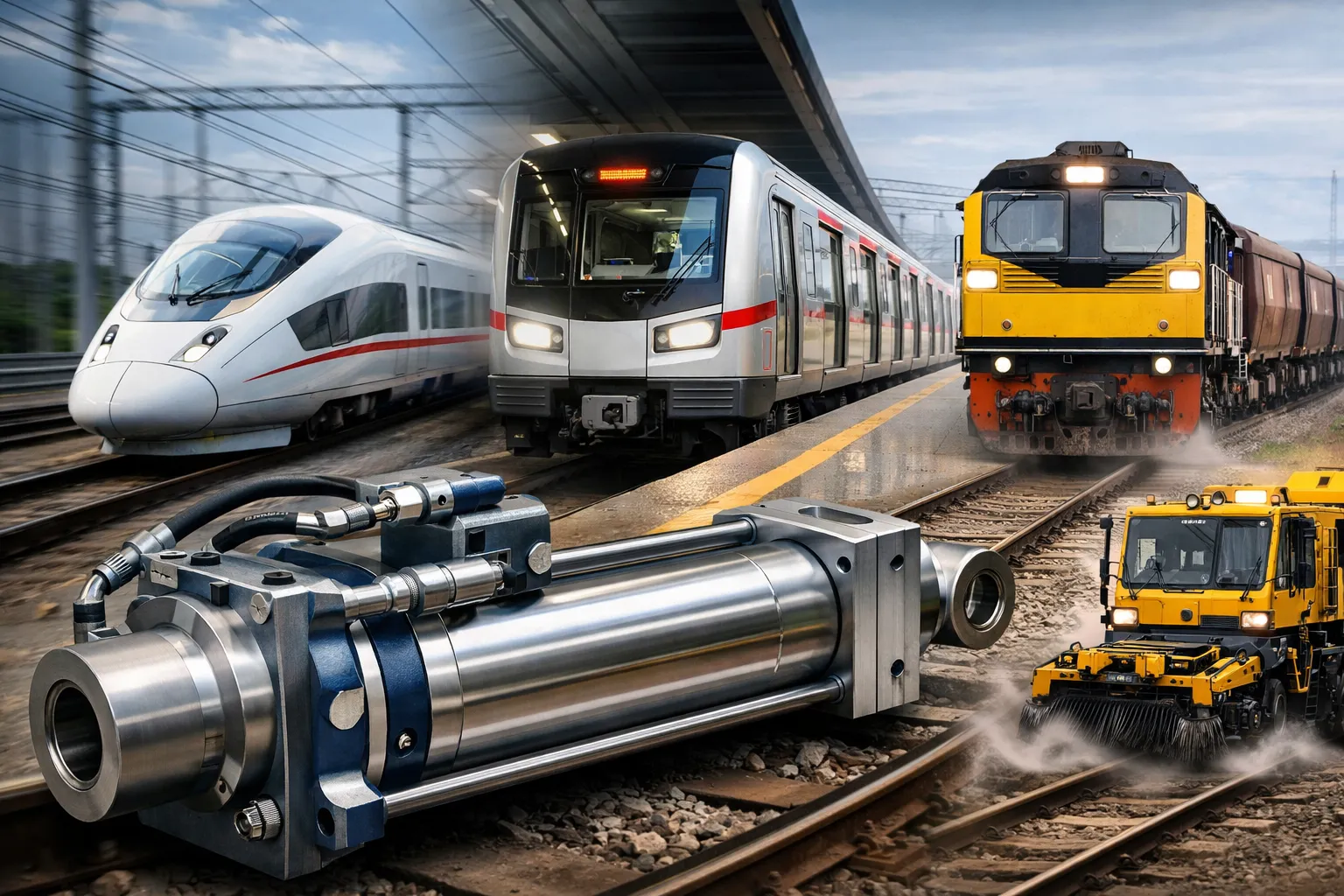
Maintaining the operational safety and aesthetic integrity of global mass transit networks requires continuous, heavy-duty track maintenance. Across the sprawling railway infrastructure of South Korea, Japan, and neighboring East Asian transit hubs, fallen leaves, urban debris, snow, and displaced granite ballast accumulate rapidly along the rail web. To clear these obstructions, transit authorities rely on specialized track sweeping vehicles. These massive machines utilize highly abrasive, rapidly rotating circular brushes (brush pans) positioned near the rail track to physically scour the environment. Because the geometry of a railway network is immensely complex, featuring switches, tight curves, station platform edges, and signal transponders, these spinning brush pans cannot remain in a fixed position. They must constantly shift outward, retract inward, and tilt to achieve the perfect sweeping angle. This precise, continuous spatial adjustment is exclusively controlled by the Brush Disc Offset Cylinder.
Operating a hydraulic cylinder in this specific zone introduces an extraordinary mechanical challenge that destroys standard commercial fluid power components in a matter of weeks. When the heavy, spinning brush pan encounters a dense pile of wet debris or accidentally grazes compacted track ballast, the rotational resistance translates into a massive lateral twisting force. In fluid power engineering, this is known as an eccentric load. Instead of the force pushing linearly down the center of the steel rod, it attempts to physically bend the rod sideways inside the barrel. If a standard industrial actuator or ordinary hydraulic rams are utilized for this angle adjustment function, this immense side-load forces the steel rod to scrape violently against the sealing gland. This phenomenon, categorized as rod eccentric wear, instantly tears the internal urethane seals, causes catastrophic hydraulic fluid blowouts, and leaves the sweeping vehicle completely disabled on the track.
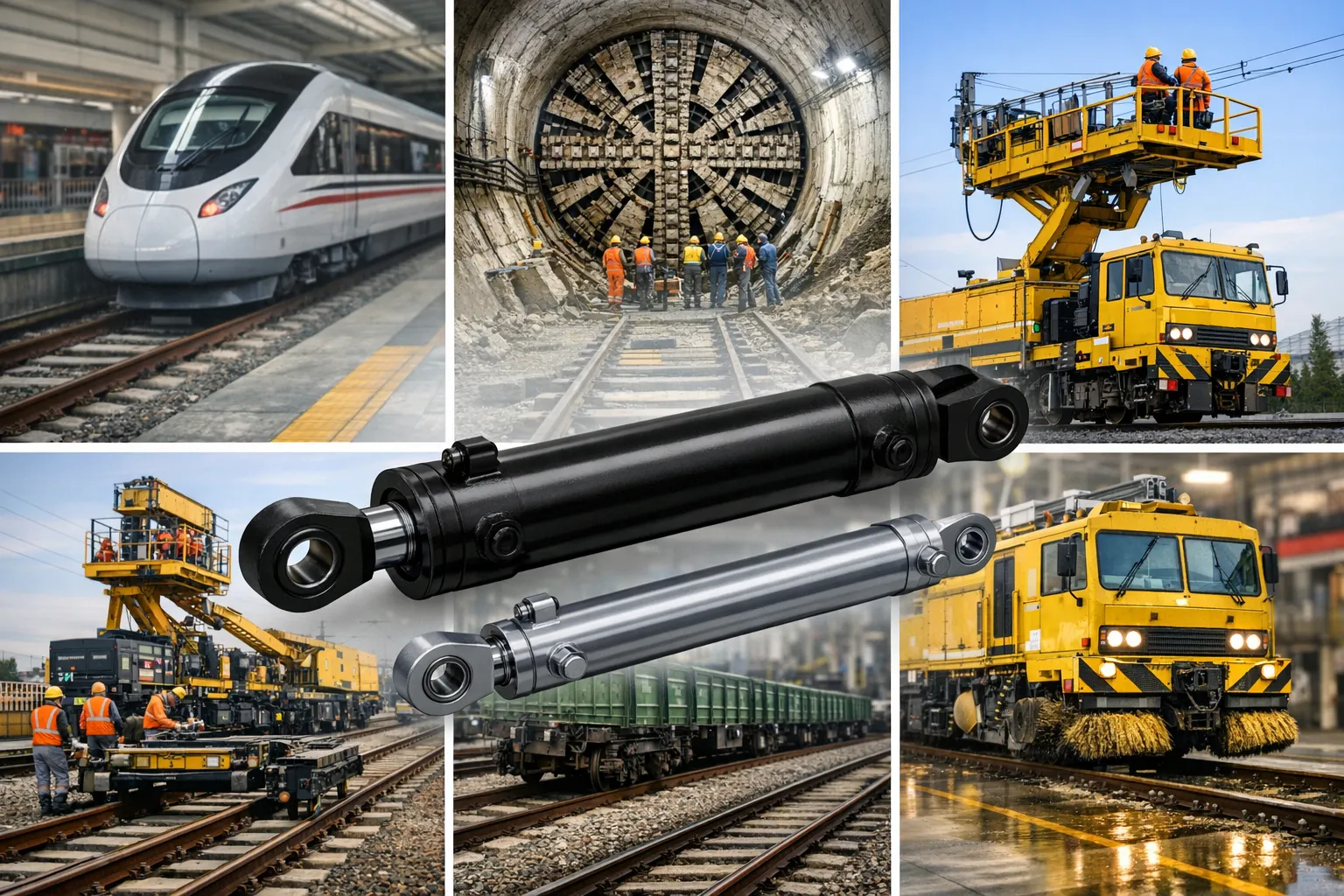
Recognizing that standard designs were structurally inadequate for offset sweeping systems, we completely reimagined the internal architecture to create the definitive Brush Disc Offset Hydraulic Cylinder. By utilizing high-yield 27SiMn alloy steel to prevent barrel distortion and integrating highly specialized wide guide rings within the internal assembly, we created a mechanical structure capable of absorbing massive eccentric twisting without allowing the rod to score the seal matrix. This specific architectural upgrade guarantees that transit contractors can conduct continuous angle adjustments across the harshest track environments, vastly extending the operational lifespan of the offset system and securing an extraordinarily competitive return on their hydraulic cylinder price investment.
Comprehensive Technical Engineering Parameters
Designing a fail-safe fluid power actuator capable of handling continuous offset twisting forces requires exacting adherence to rigorous metallurgical and tribological standards. The comprehensive technical matrix below outlines the specific engineering baselines and customizable configurations embedded into our transit-grade hydraulic parts. Every parameter has been calculated to endure the harshest structural loads present in railway sweeping applications.
| Engineering Specification | Customizable Range & Structural Configuration Details |
|---|---|
| Target Industry | Rail Transit Infrastructure & Track Maintenance Logistics |
| Equipment Category | Track Sweeping Vehicles, Ballast Regulators, Snow Clearing Locomotives |
| Subsystem & Action | Offset System / Brush Pan Lateral Translation and Tilt |
| Product Designation | Brush Disc Offset Cylinder |
| Action Mode | Double acting hydraulic cylinder – Fluid forcefully controls both outward extension and inward retraction. |
| Structure Type | Small Piston Cylinder – Highly compact linear profile engineered to fit securely within restricted undercarriage arms. |
| Manufacturing Structure | Welded Construction – Entirely eliminates external tie-rods, completely preventing chassis vibration loosening. |
| Material System | 27SiMn Alloy Steel – Exceptional yield strength prevents the barrel from distorting under severe lateral forces. |
| Surface Treatment | Micro-Cracked Hard Chrome Plated – Presents a rock-hard shield against flying track debris and atmospheric rust. |
| Environmental Grade | Eccentric Load – Subjected to intense, continuous asymmetrical twisting and bending forces. |
| Primary Working Condition | Angle Adjustment – Dynamic holding of spatial geometry while the sweeping implement absorbs kinetic impact. |
| Typical Failure Mode Solved | Rod Eccentric Wear (Unilateral metal-on-metal friction leading to rapid seal blowout). |
| Recommended Configuration | Wide Guide Ring – Oversized internal bearing surfaces engineered to mathematically disperse lateral bending forces. |
Operational Fluid Dynamics & The Mechanics of Angle Adjustment
To comprehend the profound engineering value of the Brush Disc Offset Cylinder, one must closely examine the fluid dynamics and kinetic realities occurring during active railway cleaning. The heavy rotating brush is mounted on an articulating arm at the front or side of the sweeping vehicle. When the train operator needs to navigate around a station platform or switch track, they engage the offset controls in the cabin. The main hydraulic pump immediately diverts highly pressurized fluid, frequently exceeding 210 Bar, into the directional control manifold, driving fluid into the cap-end port of the actuator.
Because angular adjustment requires precise, forceful control in multiple directions, the system inherently demands a fully tuned double acting hydraulic cylinder. If the vehicle utilized a simple single acting hydraulic cylinder reliant on gravity or a spring, it would lack the mechanical strength to pull the heavy, spinning brush back into a stowed position against the resistance of mud and debris. In our double-acting architecture, the high-pressure fluid acts against the surface area of the internal hydraulic cylinder piston, forcefully driving the heavy chrome rod outward to change the pan’s angle. Once the desired geometry is reached, the fluid is locked within the chamber, turning the steel rod into an immovable structural brace holding the sweeping implement in position.
The true test of the system occurs when the vehicle moves forward and the spinning brush engages the track. As the bristles hit uneven granite ballast or dense trash, it creates an aggressive, chaotic kickback. Because the brush is mounted at an offset angle, this kickback force does not travel straight down the piston rod; instead, it acts as a massive lever attempting to snap the rod sideways. In generic hydraulic cylinder components, this eccentric load easily pushes the steel rod through the thin oil film, causing it to violently gouge the bronze or steel sealing gland. Our specialized architecture entirely intercepts this failure. By integrating ultra-wide, heavy-duty phenolic resin guide rings within the internal assembly, the side-load is captured and dispersed across a massive bearing surface. The steel rod remains perfectly concentric, sliding effortlessly without ever touching the metal walls. This specific mechanical adaptation is the core reason our units outlast standard commercial equipment by a massive margin.
Strategic OEM Fleet Replacement & Procurement Independence
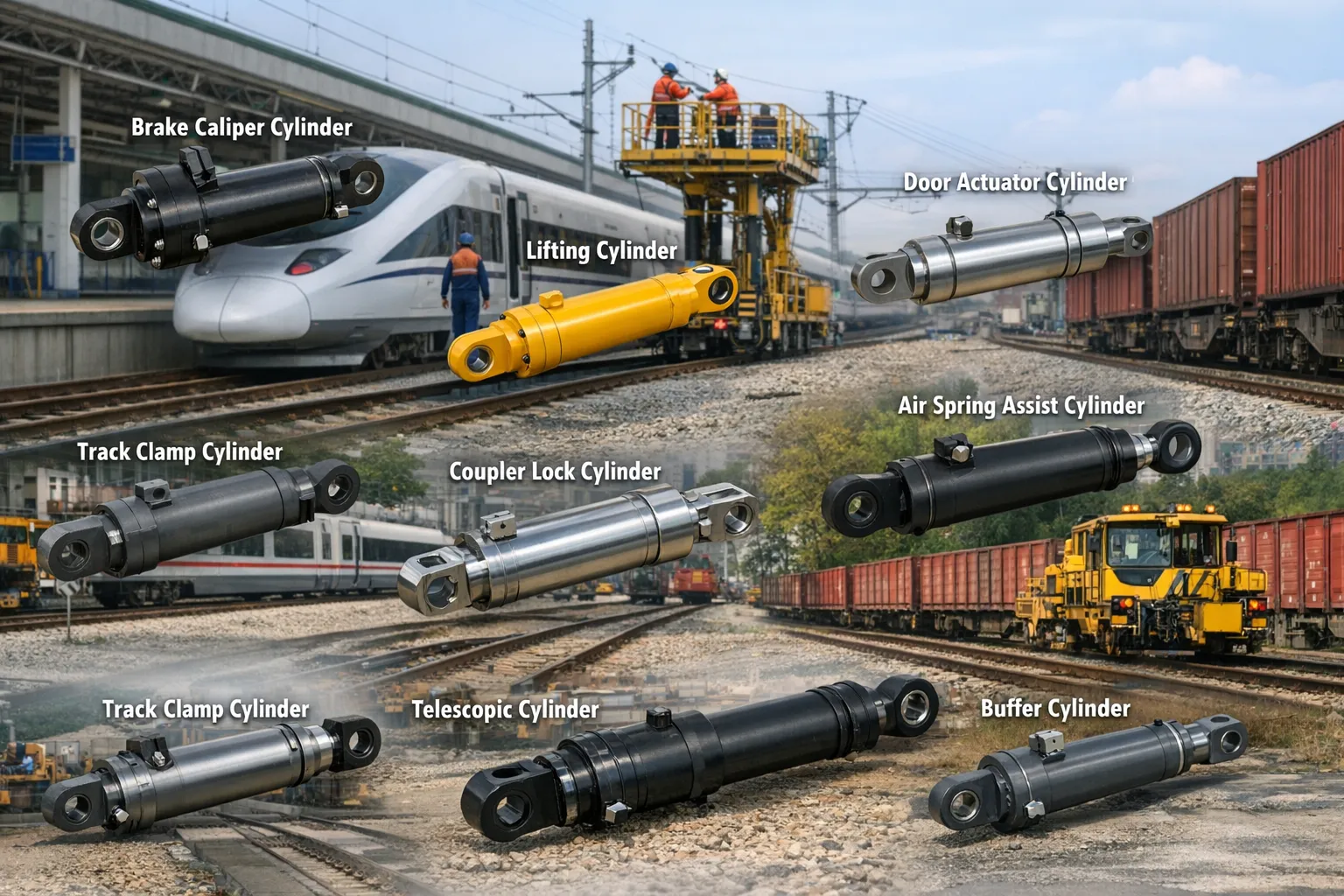
For mass transit procurement directors and fleet maintenance managers, securing replacement components for highly specialized track maintenance equipment often presents immense logistical bottlenecks. Continuing to source structural fluid power components exclusively from Original Equipment Manufacturers (OEMs) subjects the transit authority to agonizing international shipping delays, restrictive supply chain monopolies, and highly inflated corporate markups that rapidly drain annual overhaul budgets. Our specialized engineering division effectively shatters this monopoly by providing exact, meticulously reverse-engineered drop-in replacements.
Procurement Engineering Disclaimer: The custom Brush Disc Offset Hydraulic Cylinder variants manufactured by our facility are dimensionally and functionally engineered to serve as exact mechanical replacements for angle adjustment actuators originally installed on heavy railway sweeping equipment manufactured by recognized global integrators, including Plasser & Theurer, Loram Maintenance of Way, Harsco Rail, Matisa, and Speno. We cite these corporate brand names explicitly for the sole purpose of technical cross-referencing, stroke dimension matching, and logistical procurement convenience for depot engineers. We operate as a wholly independent manufacturer and assert no official trademark affiliation, authorized dealership status, or sponsorship from these respective OEM entities.
By transitioning to our localized, highly efficient manufacturing facility, your engineering teams are guaranteed absolute dimensional matching of retracted center-to-center lengths, trunnion bore diameters, stroke capacities, and fluid port thread pitches. Upgrading your track sweeper fleet requires absolutely zero structural retrofitting, welding, or cutting to the vehicle chassis or brush arm. Depot technicians simply unbolt the leaking OEM unit and flawlessly install our upgraded cylinder. This rapid integration immediately resolves chronic rod eccentric wear issues while drastically lowering the overall lifecycle expenditure for the entire transit network.
7 Definitive Technical Engineering Advantages
Elevating a component from a standard industrial actuator to a specialized railway angle adjustment mechanism requires an uncompromising approach to fluid power tribology and material science. Below are the definitive structural advantages forged into every unit we supply to the mass transit sector:
1. Wide Guide Ring Integration
The absolute countermeasure to eccentric loads. Standard cylinders use narrow guide bands that easily crush under twisting forces. We machine oversized, ultra-wide guide rings composed of phenolic resin infused with PTFE. These massive bearing surfaces easily absorb the chaotic lateral kickback from the spinning brush pan, perfectly centering the rod and completely eradicating unilateral metal-on-metal friction.
2. High-Yield 27SiMn Alloy Rigidity
When a massive side-load hits a standard 1045 carbon steel cylinder, the barrel can actually warp and ovalize, causing immediate seal failure. We machine our barrels from high-strength 27SiMn alloy steel. The superior yield strength absolutely resists radial expansion and bending distortion, ensuring the internal geometry remains perfectly cylindrical regardless of the brush impact.
3. Monolithic Welded Small Piston Architecture
Space constraints near the railway track bed mandate a highly compact design. However, standard compact tie-rod cylinders rattle violently loose under locomotive chassis vibration. By employing automated robotic welding to permanently fuse the base caps directly to the 27SiMn barrel, we create a compact, monolithic structure that is entirely immune to vibrational loosening.
4. Micro-Cracked Hard Chrome Plating
The reciprocating piston rod is relentlessly exposed to flying crushed granite and abrasive track dust. We apply a highly specialized layer of micro-cracked hard chrome plating. This rock-hard exterior deflects sharp debris impacts to prevent scoring, while the microscopic surface fissures retain lubricating fluid for the wiper seal, drastically reducing dynamic friction.
5. Advanced Ultra-Low Friction Sealing
Continuous angle adjustments generate high-frequency micro-movements, which cause standard rubber seals to overheat and tear. We utilize a proprietary blend of PTFE composite step seals that possess a near-zero friction coefficient. This self-lubricating matrix allows for exceptionally smooth, instantaneous angle adjustments without the jerky stick-slip phenomenon.
6. Optimized Dynamic Fatigue Life
During the digital engineering phase, we actively deploy Finite Element Analysis (FEA) to simulate the severe eccentric loads generated by track sweeping. We mathematically reinforce stress concentration zones around the mounting pins, ensuring a dynamic structural fatigue life that consistently outpaces the OEM baseline.
7. Accessible Depot Repair Autonomy
We vehemently oppose the concept of forced obsolescence via sealed components. Our hydraulic parts feature heavily secured, yet accessible threaded front glands. Because every unit is trackable via a unique serial number, your local depot mechanics can order exact-match seal kits and perform routine fixing hydraulic cylinders operations directly on their workbenches, drastically cutting lifecycle costs.
Manufacturing Excellence & Total Quality Traceability
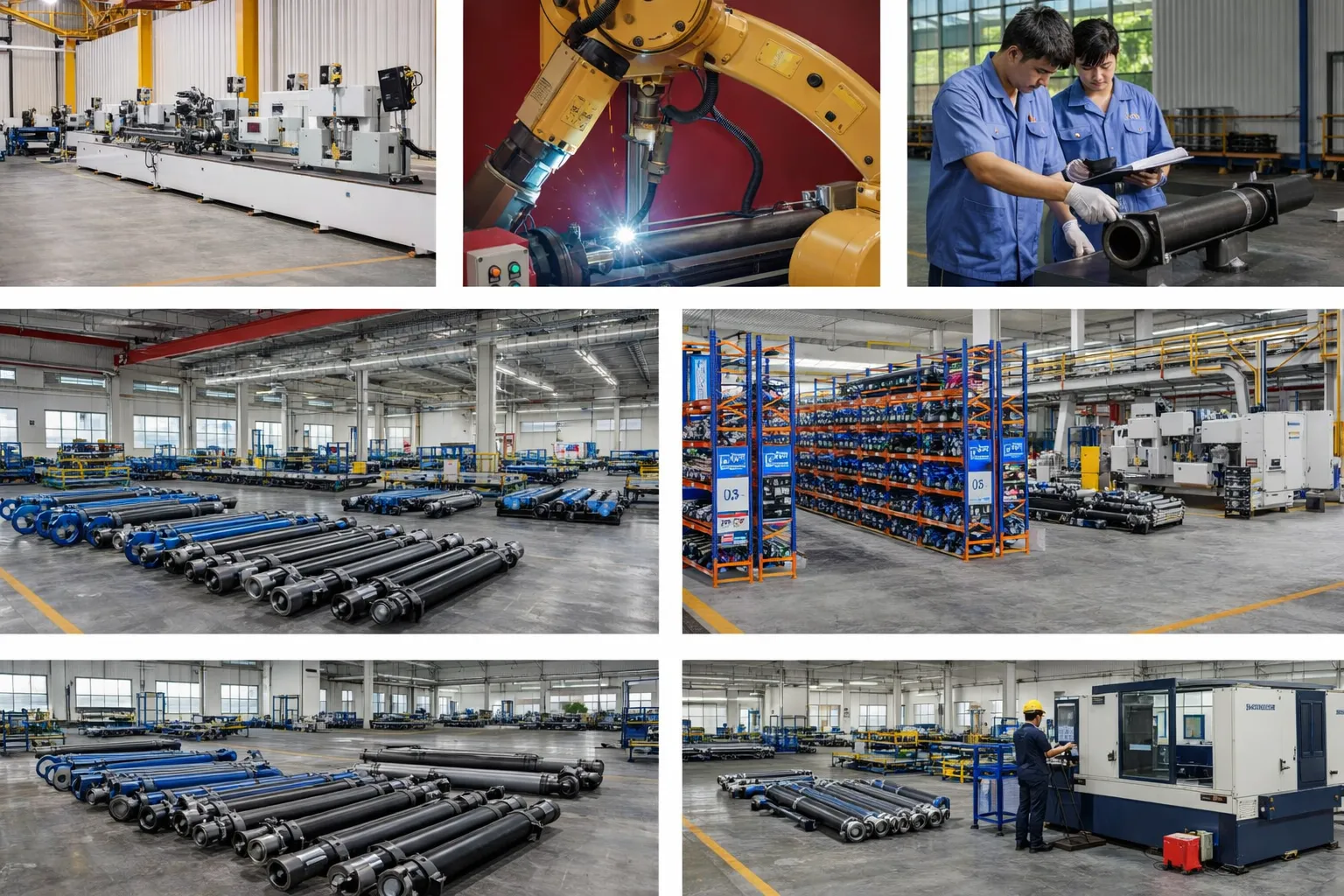
Producing a component intended to endure violent physical impact on railway tracks requires an absolute obsession with quality control. As a fully vertically integrated manufacturer, we execute complete jurisdiction over the entire production ecosystem. Our protocol commences with strict metallurgical verification; all incoming raw 27SiMn steel billets are subjected to ultrasonic flaw detection and optical emission spectrometry to confirm the precise alloy chemistry and verify internal homogeneity before any machining begins.
The intricate internal boring and honing of the cylinder barrel are executed on advanced multi-axis CNC turning centers, achieving dimensional H8 tolerances measured in strict micrometers. To create the high-rigidity monolithic structure, certified technicians employ automated robotic orbital welding to ensure deep, uniform weld penetration without slag inclusions. Following fabrication, all hydraulic cylinder components are assembled in a climate-controlled, positive-pressure cleanroom to prevent microscopic environmental contamination from compromising the delicate PTFE seals or wide guide rings.
We do not rely on randomized batch testing. 100% of our sweeping vehicle actuators undergo comprehensive Factory Acceptance Testing (FAT). Every unit is subjected to a hydrostatic high-pressure hold test at 150% of its maximum operational rating to verify zero volumetric leakage. We also conduct dynamic friction testing under simulated eccentric side-loads to ensure the guide rings perform flawlessly. Finally, every unit is laser-engraved with a permanent serial number, providing transit clients with absolute backward traceability linking the physical actuator to its specific raw material heat certificates and final FAT performance data.
Cross-Industry Functional Applications
While the sophisticated wide guide ring architecture and rigid 27SiMn structure are natively optimized to conquer the severe eccentric twisting generated by railway track sweepers, these fundamental engineering principles make our specialized cylinders extraordinarily valuable across multiple punishing heavy industrial sectors.
- Track Maintenance Vehicles: The primary application; actively managing the complex spatial geometry and angle adjustment of heavy rotating brush pans and ballast regulators.
- Construction Machinery: The absolute immunity to side-loading is perfect for the construction machinery industry, where the unit functions as a highly durable bucket tilt mechanism or an articulating lift cylinder subjected to uneven earthmoving forces.
- Underground Resource Extraction: Supplying the mining industry with heavy-duty angle adjustment components for subterranean drill rigs and continuous miners operating in highly abrasive, debris-filled environments.
- Automated Material Handling: Delivering precise, high-speed lateral actuation for heavy logistics sortation tables and automated conveyor offloaders where sudden off-center loads are a constant operational reality.
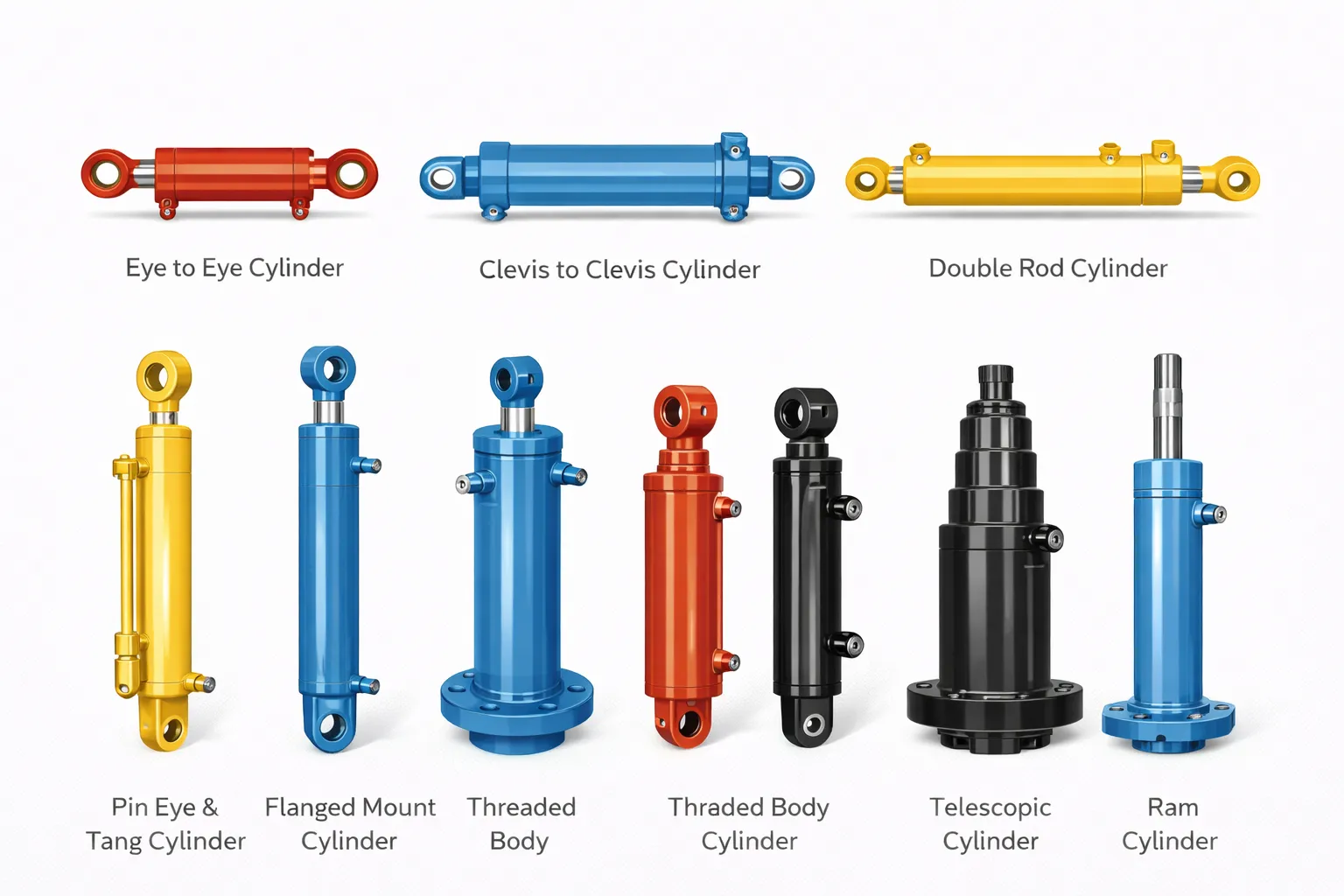
Comparative Analysis: Generic Actuators vs. Engineered Offset Cylinders
For procurement officers evaluating long-term fleet maintenance expenditures, understanding the profound mechanical differences between an off-the-shelf industrial component and a purpose-built railway mechanism is critical. The comparative matrix below outlines exactly why upgrading to our specific architecture maximizes operational sweeping uptime.
| Operational Metric | Generic Industrial Cylinder | Our Brush Disc Offset Cylinder |
|---|---|---|
| Eccentric Load Handling | Narrow guide bands crush under lateral sweeping force, causing immediate, destructive metal-on-metal rod scoring. | Oversized, heavy-duty wide guide rings perfectly distribute twisting forces, keeping the rod concentric at all times. |
| Material Rigidity | Standard 1045 carbon steel barrels will warp and ovalize under the intense bending moments of brush kickback. | High-strength 27SiMn alloy steel guarantees absolute geometric rigidity against massive side-loading. |
| Structural Assembly | Tie-rod designs stretch and violently rattle loose under continuous locomotive chassis harmonics. | Monolithic robotic-welded construction ensures permanent structural integrity without loosening. |
| Action Configuration | Sometimes utilizes a weak mechanical spring for return, which physically cannot retract a mud-logged sweeping arm. | Fully powered double acting hydraulic cylinder guaranteeing forceful angular adjustments in both directions. |
| Total Cost of Ownership | High long-term costs due to continuous rod wear, blown seals, and highly disruptive track downtime. | Exceptional ROI; eliminating eccentric wear drastically maximizes vehicle uptime for years. |
Global Engineering Success: Real Case Studies in East Asia
Rigorous tribological theory is only truly validated when tested under chaotic real-world track conditions. Our specialized fluid power systems actively maintain the aesthetic and functional clearance of the busiest railway corridors in the world. Below are documented deployments where major transit contractors partnered with our engineering bureau to solve critical sweeping actuator failures.
Case Study 1: Conquering Autumn Eccentric Loads in Seoul
Date & Location: Autumn 2025 | Seoul Metropolitan Subway (Surface Lines), South Korea.
Client Profile: Regional Track Maintenance Contractor.
The Operational Challenge: During the heavy autumn leaf fall, surface tracks become heavily compacted with wet, dense organic debris. The contractor’s track sweeping vehicles were suffering horrific downtime. The immense resistance of the wet leaves was violently twisting the brush pans sideways. This eccentric load forced the OEM cylinder rods to rapidly grind against their glands, blowing out the seals and dumping hydraulic fluid directly onto the tracks every few days.
The Solution Delivered: The lead fleet mechanic contacted our engineering team via our technical portal. We immediately analyzed the failure vectors and supplied a heavily reinforced batch of Brush Disc Offset Cylinder units explicitly featuring our ultra-wide PTFE guide ring architecture and rigid 27SiMn steel barrels.
The Tangible Result: Installed across 18 active sweepers, the new cylinders operated flawlessly through the entire harsh autumn and winter seasons with absolutely zero recorded seal blowouts. The wide guide rings entirely absorbed the lateral twisting, securing a superb ROI and restoring the contractor’s track-clearing schedule.
“The difference is night and day. The lateral twisting used to destroy our seals instantly. The new wide guide ring design completely solved the rod wear. Outstanding mechanical engineering.” — Mr. Lee, Heavy Fleet Manager, Seoul.
Case Study 2: Shattering Supply Chain Bottlenecks in Japan
Date & Location: Winter 2025 | Osaka Rail Network, Japan.
Client Profile: Municipal Railway Logistics Operator.
The Operational Challenge: Preparing for heavy seasonal snow clearing, the depot discovered multiple brush adjustment cylinders were critically leaking. However, their European OEM supplier quoted an agonizing 24-week lead time and heavily inflated pricing for replacement parts, severely threatening their winter operational readiness.
The Solution & Result: By providing exact schematics to our facility, we manufactured entirely compatible, exact drop-in replacement units within a mere 5 weeks. By bypassing the legacy supply chain bottleneck, the operator fully restored their fleet ahead of the first snowfall, all while significantly reducing their overarching hydraulic cylinder price expenditure.
Case Study 3: Restoring Angle Precision and Depot Autonomy in Taiwan
Date & Location: Spring 2026 | Taichung, Taiwan.
Client Profile: High-Speed Rail Infrastructure Maintenance Firm.
The Operational Challenge: Operators complained that the sweeping brushes were “drifting” out of angle during transit, failing to properly scour the edge of the station platforms. This was traced to internal fluid bypass caused by worn seals in their non-serviceable OEM actuators.
The Solution & Result: We implemented our highly robust double acting hydraulic cylinder design featuring advanced PTFE step seals to guarantee absolute angular locking. Crucially, our accessible threaded gland design allowed the client’s mechanics to begin handling routine maintenance and hydraulic cylinder repair internally at their own depot, vastly improving their long-term fleet autonomy.

Expert B2B Engineering FAQ
Procuring heavy-duty fluid power designed explicitly to survive eccentric loads demands strict technical validation. Below is a comprehensive assembly of the most frequent technical inquiries our engineering bureau receives from track maintenance supervisors and fleet procurement directors across the Asia-Pacific region.
1. Exactly how does a “Wide Guide Ring” stop rod eccentric wear?
2. Why is 27SiMn alloy steel necessary instead of standard carbon steel?
3. Why does angle adjustment require a double acting hydraulic cylinder?
4. Will we be able to purchase rebuild seal kits for local depot maintenance?
5. Can your engineering team match the dimensions of our existing European OEM units?
6. What is the standard manufacturing lead time for delivery to East Asian ports?
7. How does the micro-cracked chrome plating handle track debris?
8. Do these cylinders feature built-in cushioning to prevent hard stops?
Optimize Your Fleet’s Track Sweeping Reliability Today
Do not allow persistent rod eccentric wear, sudden fluid blowouts, and fragile OEM linkages to cripple your track maintenance machinery during critical debris clearing operations. Partner with a specialized fluid power engineering team that comprehensively understands the violent mechanical realities of railway infrastructure upkeep. Whether you require a single, heavy-duty prototype to resolve an immediate articulation crisis or are initiating a comprehensive fleet-wide modernization of your offset systems, our engineers are prepared to deliver a definitive, zero-leakage Brush Disc Offset Cylinder solution specifically calibrated for your equipment.
Editor: Cxm