Clamping Cylinder for Track Maintenance Vehicles
Engineered with 42CrMo alloy steel and advanced anti-eccentric wear technology to deliver unyielding sleeper clamping force in the most abrasive, dust-heavy railway environments.
Product Overview: The Core Muscle of Railway Infrastructure Modernization
Maintaining the exact geometric alignment of modern railway networks requires heavy, specialized machinery capable of performing precise physical labor under punishing conditions. High-speed rail lines and heavy freight corridors across East Asia, particularly in South Korea, experience constant track bed shifting due to immense daily tonnage. To correct these deviations, massive track maintenance vehicles—including continuous action tamping machines and sleeper replacement trains—are deployed. The fundamental action of these machines relies on a heavy mechanical jaw known as the sleeper clamp, designed to grab, lift, and position heavy concrete or wooden track sleepers. The exclusive power source generating the immense holding force required for this operation is the clamping cylinder.
The operational environment surrounding a track maintenance vehicle is exceptionally hostile to fluid power systems. These machines operate entirely outdoors, continually exposed to extreme temperature variations and precipitation. More critically, the process of lifting track and vibrating crushed granite ballast generates thick clouds of highly abrasive silica dust. When the heavy steel clamping arms engage a concrete sleeper that is unevenly seated or buried in ballast, it transmits violent lateral twisting forces directly into the actuator. In standard industrial fluid power units, this intense side-loading causes rod eccentric wear. The steel rod is forced off-center, aggressively grinding against the internal gland bearing, scoring the rod surface, shredding the primary pressure seals, and leading to a catastrophic loss of hydraulic holding pressure.
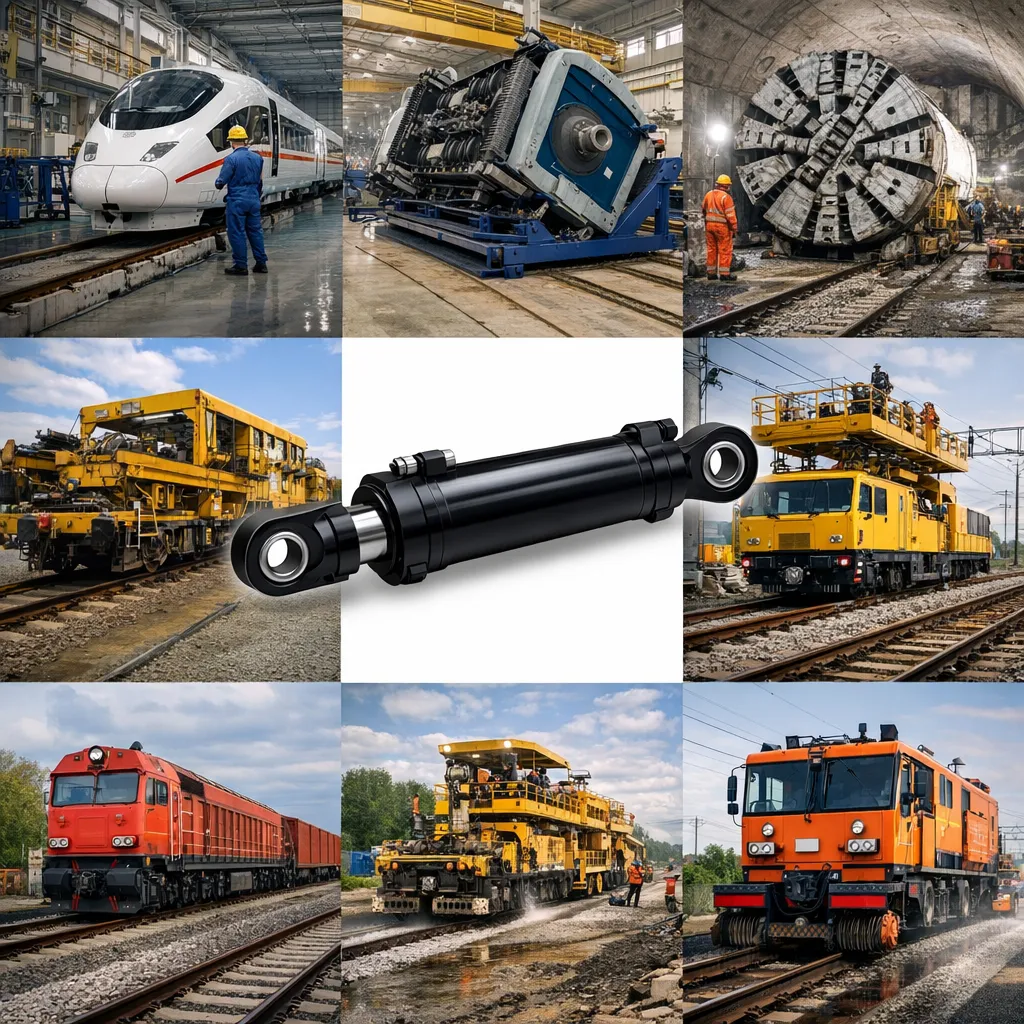
Operating as a specialized hydraulic cylinder manufacturer with deep expertise in severe-duty applications, we recognized that resolving these exact railway failure modes required a ground-up metallurgical and structural redesign. Our advanced clamping hydraulic cylinder is specifically calibrated to neutralize lateral deflection and block abrasive contamination. By forging the main pressure vessel from 42CrMo high-tensile alloy steel and implementing massively extended composite guide bands, we ensure the hydraulic cylinder piston remains perfectly concentric regardless of the twisting forces applied. For fleet managers focused on maximizing machine uptime, investing in our premium hydraulic parts provides absolute operational reliability, optimizing your long-term hydraulic cylinder price to performance ratio by virtually eliminating mid-project equipment breakdowns.
Comprehensive Technical Specifications
Accurate engineering data is crucial for seamless integration into multi-million dollar track renewal machinery. The table below details the specific metallurgical choices, structural classifications, and customizable parameters of our sleeper clamp actuation systems. Every double acting hydraulic cylinder leaving our production floor is built to survive the relentless mechanical shock of railway maintenance.
| Engineering Metric | Specification Detail & Customization Options |
|---|---|
| Target Industrial Sector | Railway Transit / Heavy Infrastructure Construction |
| Equipment Classification | Track Maintenance Vehicle (Tampers, Tie Cranes) |
| Subsystem Location | Sleeper Clamp / Tie Handling Workhead |
| Specific Component Name | Clamping Cylinder |
| Actuation Method | Double Acting Hydraulic Cylinder |
| Internal Structure Type | Heavy-Duty Piston Cylinder |
| Manufacturing Structure | Fully Robotic Welded Construction (Anti-Vibration) |
| Primary Material System | 42CrMo High-Tensile Alloy Steel |
| Rod Surface Treatment | Micro-Cracked Hard Chrome Plating / Ceramic Coating Available |
| Environmental Class | Severe Outdoor Weather + Intense Abrasive Dust Ingress |
| Specific Work Action | High-Force Clamping of Concrete or Hardwood Sleepers |
| Typical Prevented Failure | Rod Eccentric Wear (Side-Loading) / Silica Seal Shredding |
| Recommended Configuration | Ceramic Coated Rod (Optional) + Dual-Lip Heavy Wiper Seals |
| Mounting Orientations | Heavy-Duty Spherical Bearing Clevis or Trunnion Mounts |
The implementation of 42CrMo alloy steel for the main pressure vessel and rod is a strict necessity for this severe application. Standard carbon steels, such as 1045, will elastically ovalize and deform under the massive lateral leverage exerted when a clamping arm forcefully grips a heavily embedded concrete sleeper. 42CrMo is a premium chromium-molybdenum steel renowned for its extraordinary yield strength and resistance to structural fatigue. This advanced metallurgy ensures the cylinder body maintains its perfect internal cylindrical geometry, allowing the internal sealing components to maintain a uniform contact patch, completely ignoring the external physical abuse.
Operational Fluid Dynamics: The Mechanics of the Sleeper Clamp
The operation of a sleeper clamp requires an instantaneous transition from rapid motion to an unyielding, static holding grip. The workhead of a track maintenance machine must penetrate the compacted crushed stone, and the heavy steel clamping arms must rapidly squeeze inward to grip the concrete tie securely while the machine physically lifts the track and tamps the stones beneath it. This rapid motion and immense holding capability are entirely governed by the internal fluid dynamics of our specialized double acting hydraulic cylinder, which provides powered control over both the extension and retraction phases.
To initiate clamping, the machine’s primary hydraulic manifold directs high-pressure fluid into the cap-end port of the cylinder. This pressurized fluid acts against the full surface area of the piston, driving the heavy 42CrMo rod outward. Through a mechanical toggle linkage, this linear extension forces the clamping arms closed against the sleeper. Because the gripping force must be absolute to prevent the sleeper from dropping during lifting, pilot-operated check valves are typically integrated to trap the pressurized fluid inside the barrel. Our zero-leakage internal seal designs ensure that this holding pressure remains locked, rendering the clamping arms immovable despite the massive vibrations generated by the machine.
The release mechanism must be equally forceful. The dense packing of the ballast often causes the clamping arms to bind severely in the crushed stone. A basic single acting hydraulic cylinder relying on a mechanical return spring is far too weak for this environment. Instead, pressurized fluid is pumped into the rod-end port, utilizing the annular area of the piston to forcefully retract the rod and rip the clamping arms open through the compacted rocks. During this violent retraction stroke, abrasive granite dust coats the extended rod. Our heavily engineered dual-lip wiper seals aggressively scrape this grit away, ensuring the microscopic silica dust never breaches the main hydraulic system and protecting the internal integrity of the unit.
Seamless OEM Brand Replacement for Maintenance Fleets
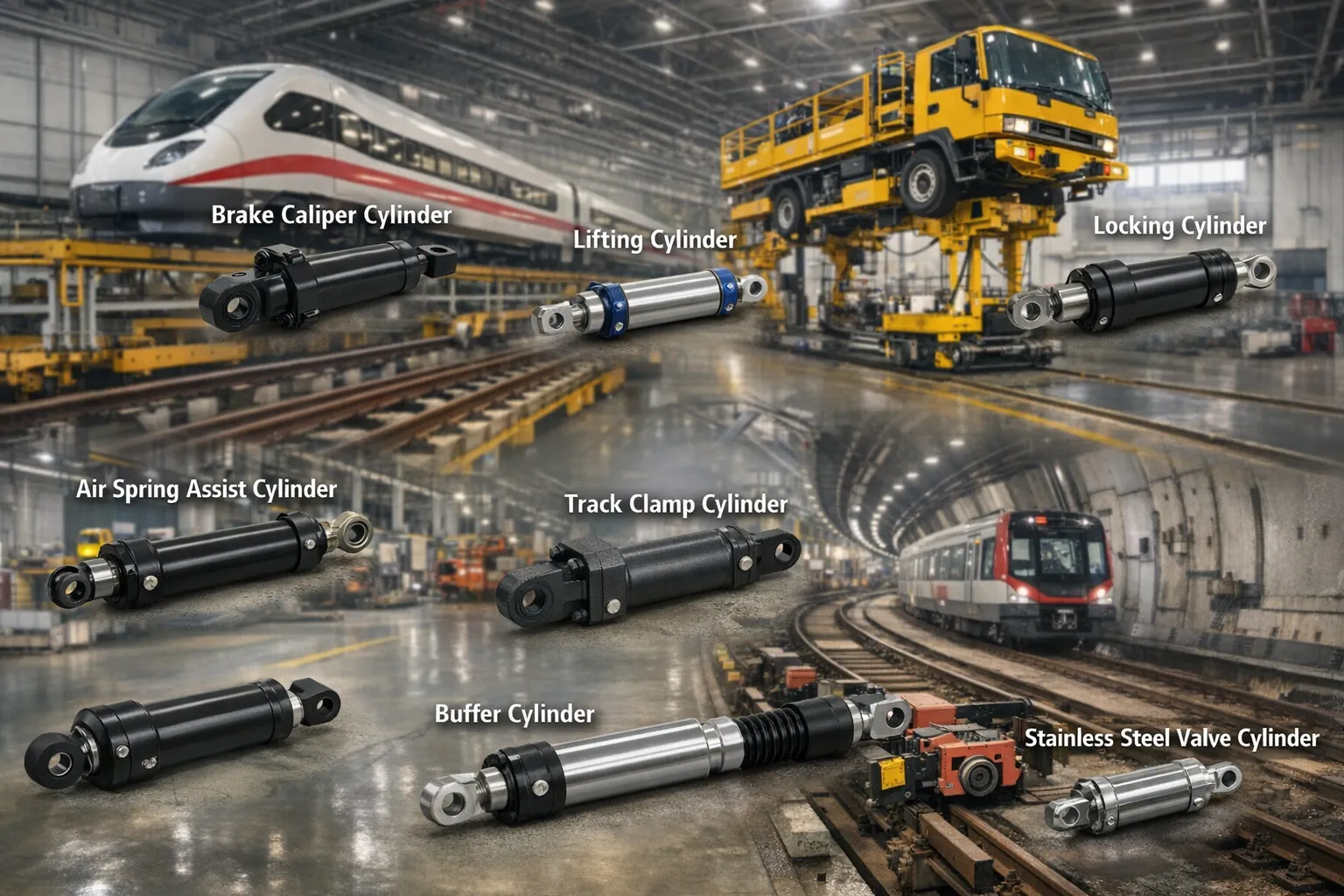
For procurement managers tasked with maintaining regional railway infrastructure, sourcing replacement parts for specialized track equipment directly from original equipment manufacturers often involves unacceptable lead times and exorbitant markups. We streamline your maintenance supply chain. Our engineering facility is equipped to manufacture custom fluid power components that serve as perfect dimensional, drop-in replacements for standard equipment outfitted on the world’s leading track maintenance machinery.
(Please note: The mention of the following brands is solely to demonstrate mechanical compatibility and assist engineers in component selection. We do not claim any trademark ownership or direct affiliation with Plasser & Theurer, Harsco Rail, Matisa, Loram Maintenance of Way, Bosch Rexroth, Parker Hannifin, or Enerpac.)
By reverse-engineering the exact pin-to-pin lengths, spherical bearing diameters, closed-center strokes, and fluid port threads of your legacy equipment, we guarantee that our heavy-duty hydraulic cylinder components integrate directly into your existing clamping workheads without requiring any modifications to the machine’s structural frame. This capability allows railway contractors to rapidly upgrade their fleets with our superior 42CrMo metallurgy and ceramic rod technology, drastically reducing annual maintenance expenditures and minimizing the need for emergency hydraulic cylinder repair.
Core Technical Advantages of Our Heavy-Duty Actuators
Upgrading from standard commercial cylinders to our specialized railway-grade clamping cylinder delivers immediate, measurable operational benefits. The following core technical advantages illustrate exactly how our design philosophy defeats the harsh realities of outdoor railway maintenance.
- 1. Complete Eradication of Rod Eccentric Wear
To combat the massive lateral forces generated when gripping heavy, misaligned concrete sleepers, we utilize exceptionally wide, high-load composite guide bands around the piston and inside the gland. These extended bearing surfaces distribute off-axis loads over a massive area, preventing the steel rod from making physical contact with the internal bore, completely neutralizing the threat of eccentric wear and scoring. - 2. Optional Advanced Ceramic Rod Coating Technology
Granite dust from railway ballast acts as liquid sandpaper against a moving rod. While our hard chrome is highly durable, we recommend our advanced ceramic coating for extreme environments. Featuring a Vickers hardness exceeding 1000, the ceramic offers a surface hardness that silica grit simply cannot penetrate, eliminating rod scratching and maximizing the life of the primary seals. - 3. 42CrMo High-Tensile Structural Rigidity
The severe vibrating forces transmitted from the tamping tines to the clamping mechanism can shake standard carbon steel cylinders apart. By forging our cylinder barrels and mounting trunnions from premium 42CrMo alloy steel, we ensure exceptional yield strength and shock resistance. The cylinder body refuses to flex or ovalize, maintaining absolute internal pressure integrity under maximum load. - 4. Aggressive Dust-Exclusion Wiper Matrix
Keeping abrasive dirt out is just as critical as keeping hydraulic fluid in. We employ a specialized double-lip, heavy-duty polyurethane wiper seal at the gland. As the rod retracts from the dusty ballast, this rigid outer lip literally shears dried mud and granite dust off the rod surface, ensuring a perfectly clean surface passes into the main high-pressure sealing chamber. - 5. High-Penetration Robotic Welded Construction
Track maintenance equipment is subjected to relentless, high-amplitude vibrations. Cylinders assembled with external tie-rods are highly prone to vibrating loose over time, causing catastrophic leakage. Our cylinders utilize a fully automated robotic welded construction. The heavy end caps are permanently fused to the 42CrMo barrel, creating an ultra-rigid pressure vessel immune to mechanical loosening. - 6. Extreme Environmental Thermal Stability
Railway maintenance occurs in all weather conditions, from scorching summers to freezing winter nights. Our highly engineered internal seals are compounded from advanced elastomers that remain completely pliable at -30°C and maintain structural integrity up to +100°C. This ensures the actuator grips the sleepers with identical, uncompromising force regardless of the regional climate.
Autonomous Manufacturing and Absolute Quality Assurance
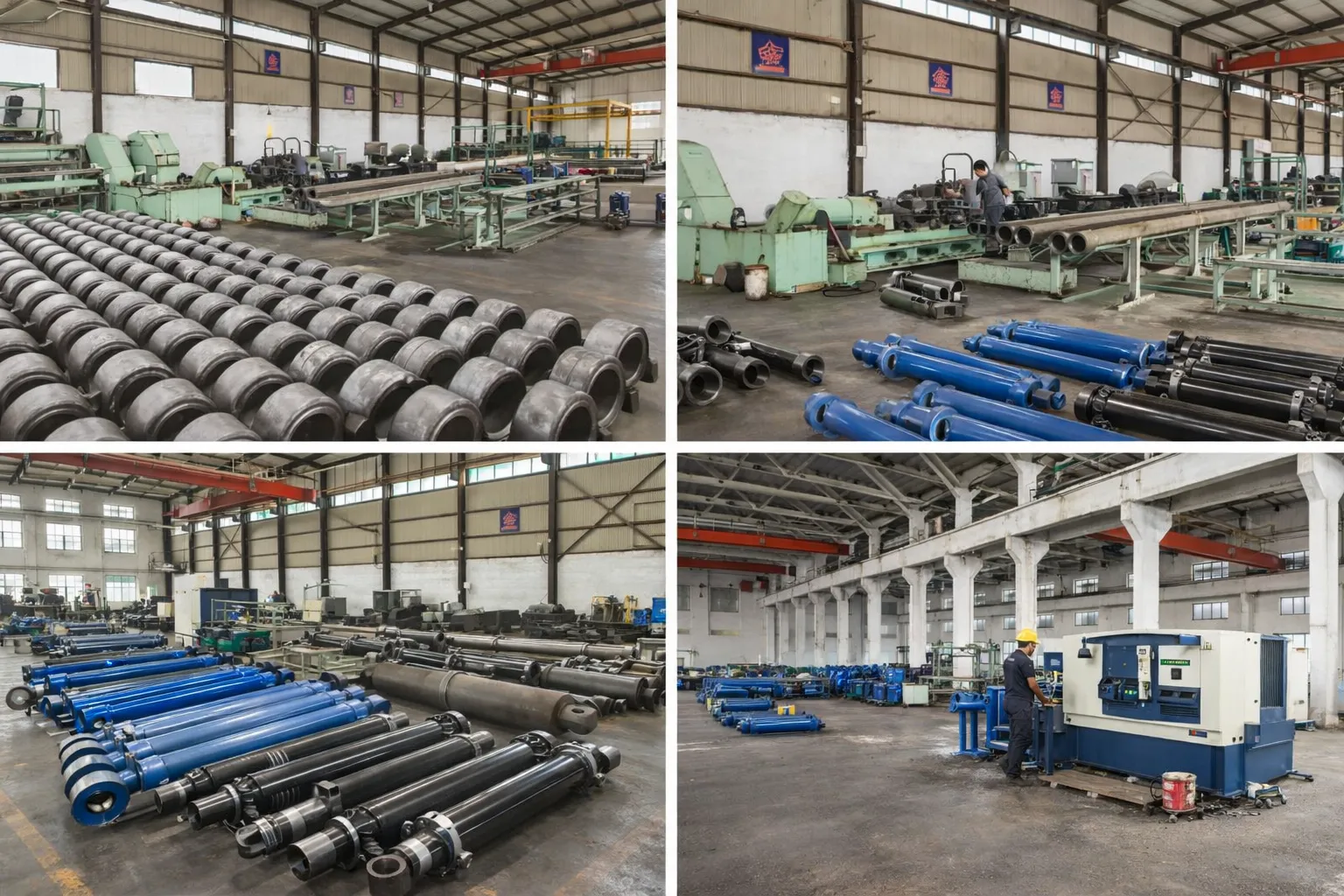
Producing heavy-duty safety components for railway infrastructure requires a manufacturing environment governed by strict oversight. As an autonomous, vertically integrated hydraulic cylinder manufacturer, we control the entirety of the mechanical production process, from the initial ultrasonic non-destructive testing (NDT) of the raw 42CrMo steel billets to the final robotic welding and multi-axis CNC machining. This complete vertical integration guarantees that every specification is met without compromise.
The internal bore of every cylinder undergoes a rigorous deep-hole skiving and roller burnishing process. This advanced machining technique creates a surface finish with an exceptionally low micro-roughness (Ra < 0.2µm). This ultra-smooth, work-hardened bore drastically reduces dynamic friction against the piston seals, ensuring the clamping force is applied rapidly and smoothly without any internal stick-slip shuddering that could cause the sleeper to drop.
Quality validation is deeply ingrained in our factory protocols. We explicitly reject random batch sampling. 100% of our completed hydraulic rams are subjected to an exhaustive end-of-line hydrostatic proof testing procedure. We artificially pressurize the assembled units to 150% of their maximum rated operating pressure, meticulously checking for microscopic pressure decay over extended holding periods to ensure absolutely zero leakage. Every single approved unit is laser-engraved with an immutable serial number, providing your maintenance procurement team with absolute, ISO-certified traceability.
Cross-Industry Applications for Severe-Duty Clamping
While this specific 42CrMo architecture with ceramic rod options is masterfully engineered to conquer the eccentric wear and heavy dust of railway track maintenance, the underlying mechanical principles of unyielding grip and severe-duty survival translate perfectly across multiple heavy industrial sectors. Our clamping actuator technology is frequently integrated into:
- Heavy Earthmoving & Construction: The immense structural rigidity of our designs is utilized heavily in the Construction Machinery Industry, functioning perfectly as robust grip actuators for demolition shears and primary lift cylinder applications for massive quarry excavators.
- Underground Resource Extraction: The necessity to operate flawlessly in abrasive, dust-choked environments makes our ceramic-coated actuators the definitive choice for the Mining Industry, powering heavy rock crushers and tunnel boring clamping mechanisms.
- Foundries & Steel Mills: Operating in high-heat environments with heavy airborne metallic dust, our robust wiper seal technology and high-temperature elastomers offer supreme reliability for automated crucible gates within the Metallurgical and Iron Industry.
Comparative Analysis: Standard Commercial vs. Severe-Duty Railway Cylinders
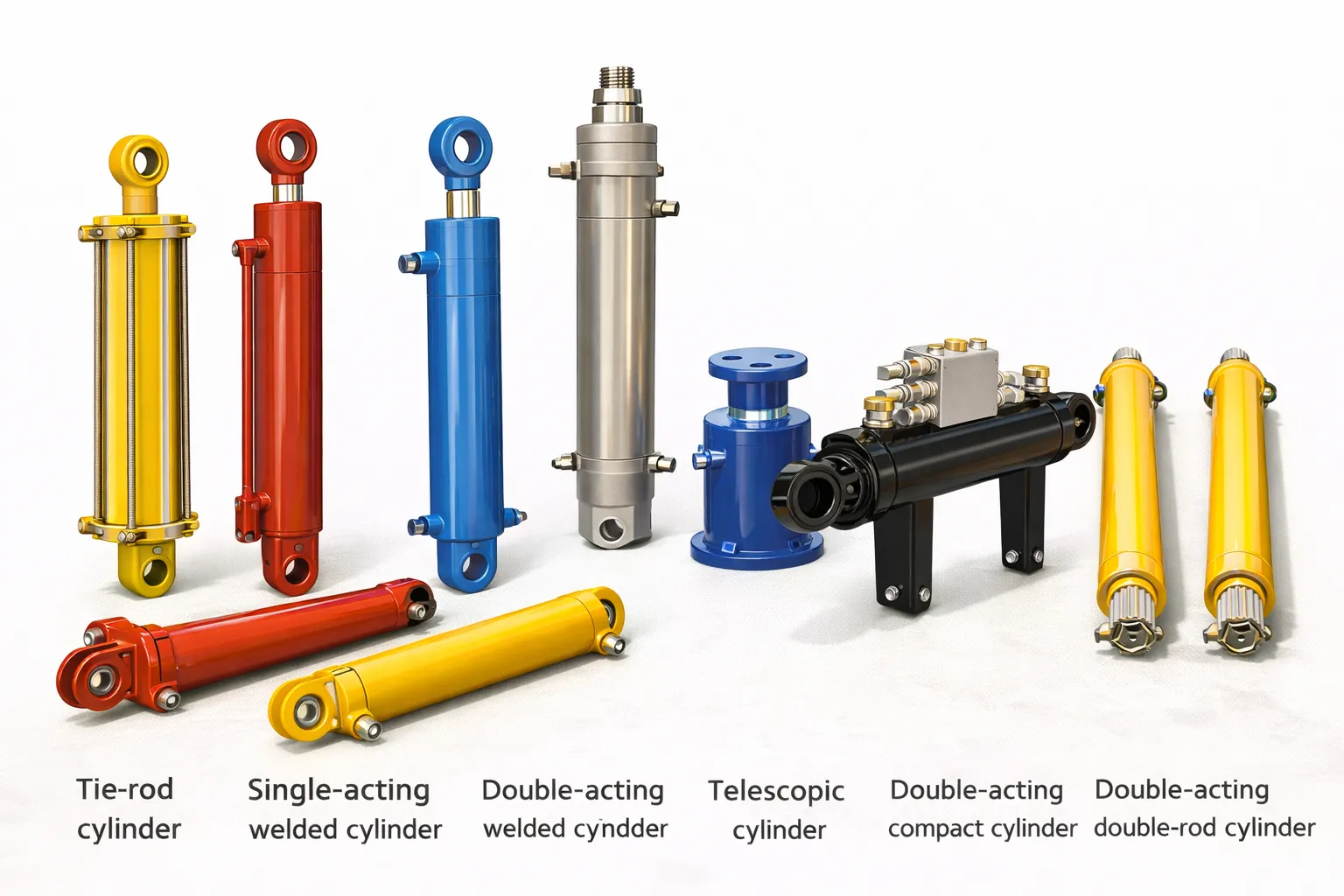
Procuring hydraulic components based solely on the lowest initial cost is an engineering oversight that inevitably leads to catastrophic equipment downtime. The comparative analysis table below distinctly outlines why upgrading your fleet to our highly engineered track maintenance cylinders yields a vastly superior return on investment.
| Feature / Metric | Generic Industrial Cylinder | Our Severe-Duty Clamping Cylinder |
|---|---|---|
| Core Metallurgy | Standard 1045 Carbon Steel. Prone to elastic flexing under high lateral loads. | Premium 42CrMo Alloy Steel. Exceptional rigidity and yield strength. |
| Eccentric Wear Resistance | Narrow standard guide rings. Rapidly wears during off-axis clamping. | Extra-wide composite bearing bands. Completely neutralizes rod rubbing. |
| Dust & Grit Defense | Single lip wiper. Quickly shredded by abrasive granite ballast dust. | Aggressive double-lip polyurethane scraper. Physically defeats severe silica grit. |
| Rod Surface Defense | Thin commercial chrome. Easily scratched by flying track debris. | Heavy hard chrome or optional Ceramic Coating for absolute scratch immunity. |
| Vibration Tolerance | Tie-rod construction. Fastening nuts vibrate loose over time, causing leaks. | Fully robotic welded vessel. Impossible to mechanically loosen. |
| Maintenance Frequency | High. Requires frequent seal replacement and machine downtime. | Exceptionally low. Drastically minimizes emergency fixing hydraulic cylinders events. |
Proven Field Reliability: Case Studies in Railway Fleet Upgrades
Theoretical engineering specifications are only fully validated through brutal, real-world deployment. Over the past decade, our technical division has systematically resolved complex actuation failures for major railway maintenance contractors across East Asia. Below are detailed operational success stories demonstrating our problem-solving capability.
Case Study 1: Eradicating Eccentric Wear on the KTX High-Speed Network
Location & Client: Seoul, South Korea — Primary National Railway Infrastructure Contractor.
The Engineering Challenge: The contractor’s massive fleet of ballast tamping machines on the national high-speed line was suffering from severe rod eccentric wear on their sleeper clamping cylinders. The heavy lateral forces of clamping uneven concrete ties were destroying the gland bearings, resulting in massive fluid leaks and forcing machines off the tracks for emergency repairs.
How We Connected: The lead maintenance procurement officer searched the web specifically for a specialized hydraulic cylinder manufacturer capable of custom anti-side-load designs and reached out through our engineering portal.
The Solution & Result: We rapidly prototyped and delivered a batch of custom clamping hydraulic cylinders featuring massively extended composite guide bands and ultra-rigid 42CrMo construction. The wide bearing surfaces successfully absorbed all lateral loads. After 24 months of relentless night-shift operation, inspections revealed absolutely zero eccentric scoring on the rods.
Case Study 2: Defeating Abrasive Silica Dust in Coastal Operations
Location & Client: Busan, South Korea — Coastal Regional Transit Maintenance Fleet.
The Engineering Challenge: Track replacement within long, coastal tunnels exposed the clamping arms to thick clouds of abrasive granite dust mixed with damp, salty air. Standard chrome rods were pitting and scratching rapidly, shredding the internal seals upon retraction and causing severe hydraulic fluid contamination.
How We Connected: A prominent structural engineering consultant within the Asian rail industry recommended our extensive portfolio of heavily reinforced fluid power components.
The Solution & Result: We upgraded their entire fleet with our clamping cylinders featuring the optional advanced aerospace-grade ceramic rod coating and our aggressive dual-lip scraper seals. The ceramic surface (HV > 1000) completely repelled the abrasive silica grit. The lifespan of the clamping mechanism was extended by over 300% compared to previous OEM parts.
Case Study 3: Slashing Overhead Costs via Drop-In Replacements
Location & Client: Taipei, Taiwan — High-Speed Rail Overhaul Consortium.
The Engineering Challenge: The consortium was struggling to source replacement sleeper clamps for a fleet of 15-year-old European tamping machines. The original OEM parts had lead times exceeding 6 months and were prohibitively expensive, stalling their fleet modernization program.
How We Connected: The procurement department engaged us via our online catalog to inquire if we could match the specific metric mounting dimensions of their legacy equipment.
The Solution & Result: Armed with their technical drawings, we autonomously manufactured exact structural replicas internally upgraded with our superior 42CrMo anti-wear architecture. The new cylinders bolted directly onto the workheads with zero chassis modifications, seamlessly restoring the machinery to peak performance well ahead of schedule.
Frequently Asked Questions
We understand that specifying critical fluid power safety components for heavy railway infrastructure involves rigorous technical due diligence. To support your procurement and mechanical engineering teams, we have compiled comprehensive answers to the most common inquiries regarding our severe-duty track maintenance cylinders.
Maximize the Uptime of Your Track Maintenance Fleet Today
Do not allow vulnerable, generic actuation mechanisms to jeopardize your critical railway infrastructure projects, inflate your annual maintenance budgets, or sideline your massive machinery. Our precision-engineered, 42CrMo fluid power solutions represent the absolute pinnacle of severe-duty clamping technology, guaranteeing flawless operation in the most punishing outdoor environments.
Editor: Cxm