
Lift Hydraulic Cylinder for Loaders
Engineered with premium 42CrMo alloy steel and advanced ceramic coatings to permanently eliminate rod bending during heavy payload lifting and extreme material handling.
Product Overview: The Core Muscle of Heavy Earthmoving Machinery
In the intensive sectors of civil infrastructure development, large-scale aggregate mining, and bulk port logistics, the front-end wheel loader is universally recognized as the primary machine for mass material transfer. The true breakout force, dumping height capability, and operational safety of this massive equipment are dictated entirely by the structural integrity of its fluid power system. Specifically, the entire payload burden is concentrated directly onto the lift cylinder. This critical linear actuator acts as the mechanical muscle, responsible for bearing the immense dynamic forces generated when elevating a heavy steel bucket filled with dense, compacted earth, jagged rock, or wet concrete.
Through decades of performing exhaustive forensic engineering analysis on equipment failures across highly active construction and mining job sites in South Korea, Japan, Taiwan, and the wider Asian industrial sector, a catastrophic operational vulnerability has become glaringly apparent. Standard commercial aftermarket hydraulic parts deployed in the loader boom system consistently succumb to premature failure. The fundamental root cause lies in the punishing physics of the operating environment, which is aggressively defined by severe impact and thick silica dust. When a loader operator aggressively drives the bucket into an unblasted pile of bedrock, the sudden deceleration and resistance transfer a massive kinetic shockwave straight through the boom arms and directly into the linear actuator body. If the load is asymmetrical—catching a boulder on the left lip of the bucket while the right side scoops loose sand—the resulting torsional stress is immense.
The most destructive and financially crippling failure mode we observe during these continuous heavy load lifting cycles is rod bending. The long stroke required for a high-dump clearance naturally creates a severe mechanical vulnerability. Standard 1045 carbon steel rods found in generic replacement components easily stretch, yield, and permanently deflect from their true linear axis under these lateral side forces. Once a rod bends, it instantly destroys the internal gland seals, heavily scores the barrel, and leads to immediate, explosive fluid loss. As a deeply experienced hydraulic cylinder manufacturer, we completely rejected these inadequate industry standards and engineered a heavy-duty architecture to solve this exact mechanical weakness permanently.
Our specialized lift hydraulic cylinder utilizes a proprietary, heavily reinforced structure. We construct the piston rod entirely from premium 42CrMo high-tensile alloy steel. This distinct metallurgical upgrade provides the massive yield strength necessary to absorb violent lateral shock loads without deflecting. Furthermore, we implement an engineered reinforced guidance system within the internal gland to maintain absolute rod alignment at maximum extension. For large fleet operators, integrating our engineered solutions translates to significantly optimized project timelines, superior machine uptime, and a drastic reduction in the repetitive labor costs associated with continuously fixing hydraulic cylinders in the abrasive mud of an active quarry.
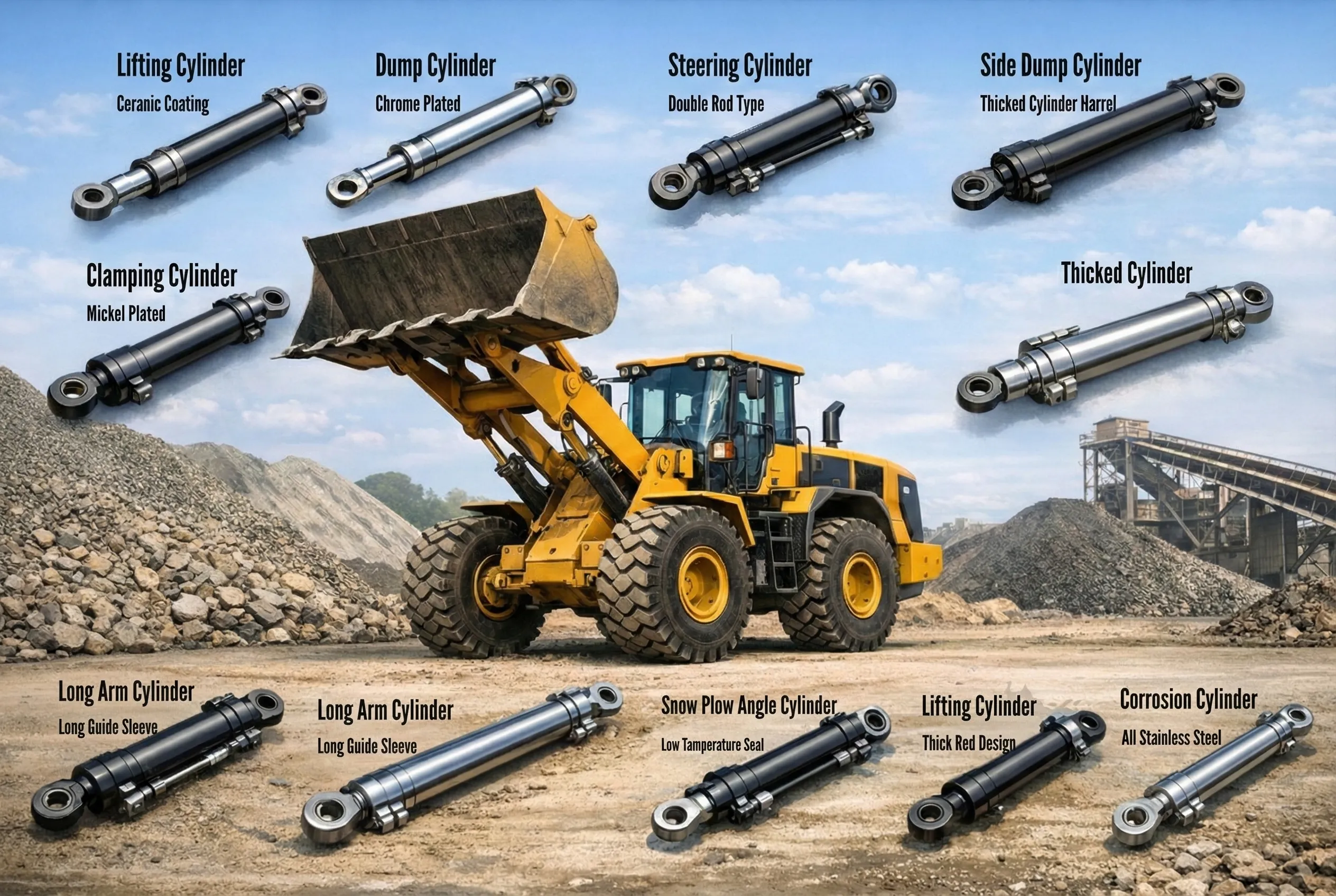
Comprehensive Technical Parameters
Absolute structural rigidity, rapid breakout force response, and long-term mechanical reliability require exact adherence to highly stringent engineering specifications. Below is the detailed technical framework of our lifting mechanism, specifically configured, dynamically tested, and field-proven to endure the brutal realities of civil engineering and heavy aggregate loading operations.
| Engineering Parameter Category | Specification Details & Operational Tolerances |
|---|---|
| Industry Sector | Construction Machinery / Aggregate Mining |
| Equipment Category | Loader (Wheel Loader / Track Loader) |
| Subsystem / Mechanical Action | Lift System / Main Boom Elevation |
| Hydraulic Component Name | Lift cylinder |
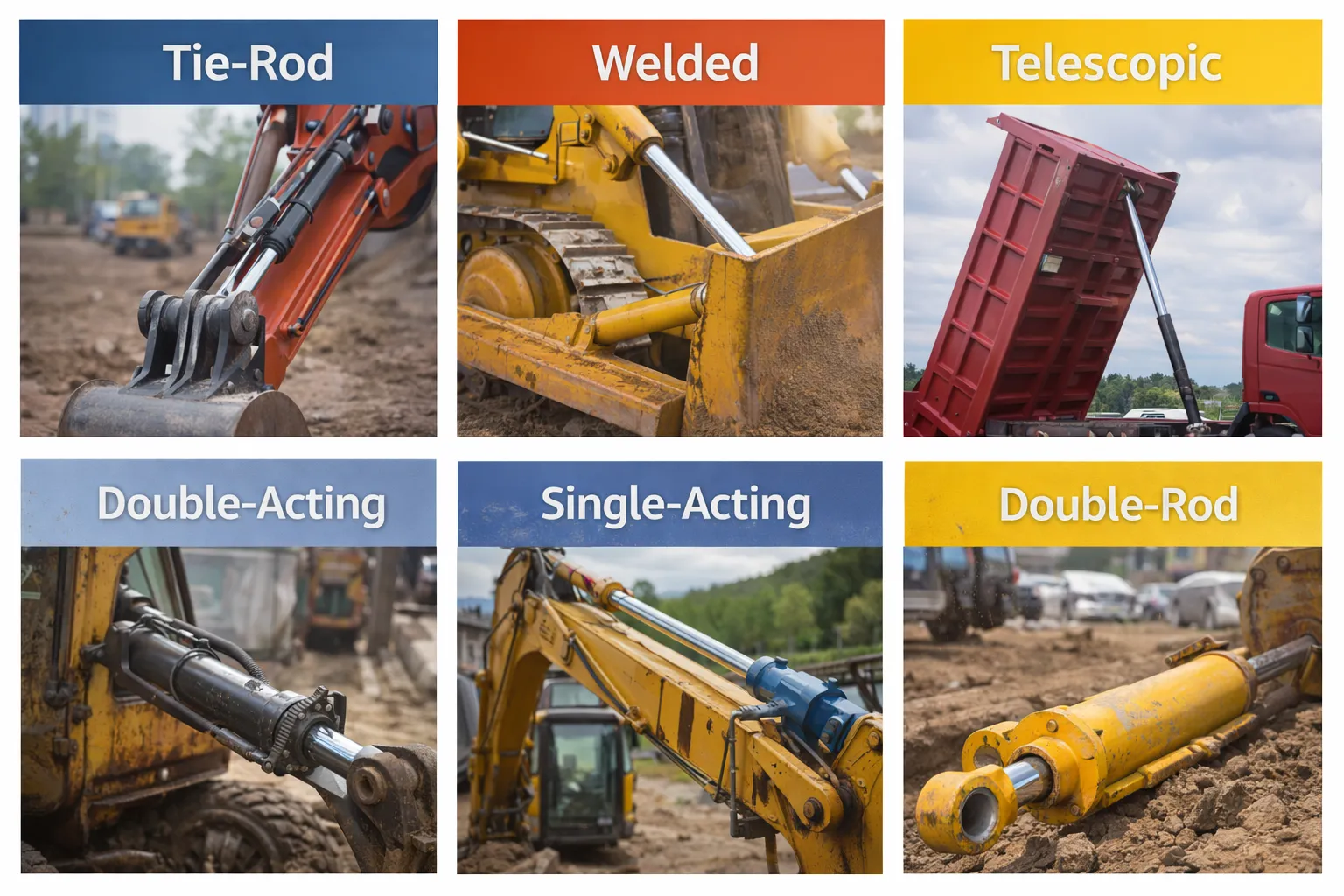
| Action Modality | Double acting hydraulic cylinder |
| Internal Structure Type | Hydraulic cylinder piston linear actuator |
| Manufacturing Structure | Heavy-duty welded assembly via robotic submerged arc |
| Core Material System | 42CrMo High-Tensile Alloy Forged Steel |
| Surface Treatment & Defense | Advanced ceramic coating via plasma thermal spray |
| Environment Rating Level | Severe impact + dust (High Silica & Abrasive Exposure) |
| Work Condition Feature | Continuous heavy lifting and dynamic breakout maneuvers |
| Targeted Failure Mode Defeated | Catastrophic rod bending and lateral deflection |
| Recommended Configuration | Reinforced guidance architecture with extended wear bands |
The Internal Working Principle of the Boom Elevation Mechanism
To fully comprehend why standard replacement parts fail so rapidly in loader applications, it is crucial to examine the extreme internal fluid dynamics occurring during operation. The loader’s main elevation system functions entirely as a highly pressurized double acting hydraulic cylinder. Unlike a single acting hoist cylinder that relies solely on gravity to lower an empty bed, a wheel loader requires immense, actively powered fluid force during both the extension stroke (lifting the payload) and the retraction stroke (powering down the bucket for grading, scraping, or penetrating frozen earth).
When the operator initiates a lifting command from the cabin joystick, the machine’s primary implement pump routes massive volumes of high-pressure fluid through the main directional control spool valves directly into the blind end (cap end) of the heavy-duty barrel. This pressurized fluid acts uniformly across the broad, flat surface area of the internal hydraulic cylinder piston. The resulting pressure-area multiplication generates a staggering linear thrust that pushes the 42CrMo rod outward, elevating the massive steel boom arms and the loaded bucket against gravity. The precision geometry of our internal piston seals ensures that this fluid pressure is converted directly into smooth, perfectly controllable lifting force, preventing any microscopic internal bypassing that would cause dangerous load drift.
Conversely, when the operator needs to lower the boom, the control valves instantly redirect the highly pressurized fluid into the rod end of the chamber, forcing the piston back while simultaneously exhausting the fluid from the blind end back into the reservoir. During highly aggressive operations, the loader operator may command the bucket to forcefully drop and scrape the earth, applying active down-pressure. The robust internal architecture of our hydraulic rams ensures that these rapid directional changes and sudden pressure spikes are handled smoothly. The integrated reinforced guidance system firmly supports the rod during these violent transitions, keeping the unit completely stable and preventing the internal metal-to-metal scoring that destroys standard equipment.
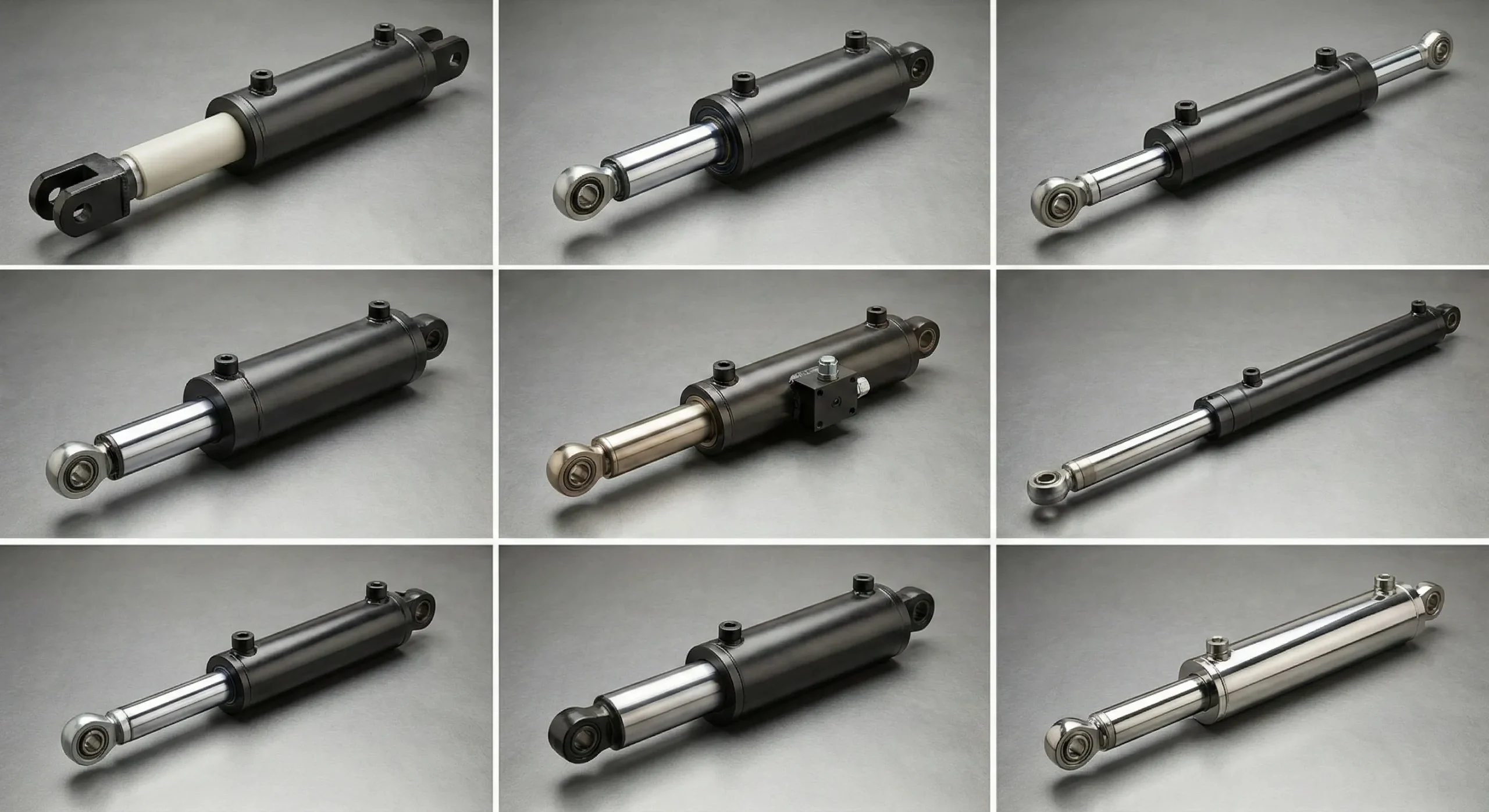
Seamless Fleet Brand Replacement and Structural Compatibility
Major infrastructure firms, large-scale mining consortiums, and heavy equipment rental companies rely heavily on rigid fleet standardization to keep preventative maintenance schedules strictly predictable and operational overhead costs fully manageable. Sourcing original equipment manufacturer (OEM) boom components directly from local brand dealerships often involves entirely unacceptable shipping lead times, complex international supply chain bottlenecks, and exorbitant pricing markups that quickly devour project maintenance budgets. We manufacture our heavy-duty engineered hydraulic cylinder components with absolute, unyielding dimensional precision to solve this exact logistical bottleneck permanently.
We construct our precision elevation assemblies with exact pin-to-pin retracted and extended lengths, identical heavy-duty spherical bearing mounting eyes, and perfectly matching high-pressure fluid port thread patterns. This ensures they serve as flawless, frictionless drop-in replacements for the global heavy machinery industry’s leading brands. Our specialized units perfectly replace standard factory components on heavy wheel loaders originally manufactured by Caterpillar (CAT), Komatsu, Volvo Construction Equipment, HD Hyundai, Doosan (Develon), Hitachi, XCMG, and SDLG. Your field mechanics can perform the critical component swap directly on the job site without ever needing to cut, weld, modify the machine’s structural frame, or alter the complex high-pressure plumbing lines.
(Important B2B Procurement Note: The specific mention of these corporate brand names and original equipment manufacturers is strictly for technical sizing, structural fitment, and machine compatibility reference for our commercial clients. We operate globally as a completely independent, premium aftermarket manufacturing facility and claim no direct legal affiliation, sponsorship, or trademark endorsement from these corporate entities.)
Five Core Technical Advantages of Our Proprietary Architecture
What truly differentiates a premium, highly engineered industrial actuator from a generic, mass-produced aftermarket commodity part? It is the uncompromising, meticulous culmination of advanced metallurgy, specialized surface physics, and microscopic precision assembly. We do not build products to simply fit inside a machine; we engineer them meticulously to survive the harshest, most punishing operational environments on earth. Here are the five definitive engineering advantages heavily embedded in our specialized loader design:
1. 42CrMo High-Tensile Alloy Core to Defeat Rod Bending
Standard replacement cylinders utilize basic 45# carbon steel for the piston rod. When a wheel loader executes a dynamic breakout maneuver with an asymmetrical load in the bucket, massive lateral forces are exerted on the extended rod, causing it to permanently yield and bend. We entirely eliminate this risk by machining our rods exclusively from 42CrMo alloy steel. This chromium-molybdenum steel possesses exceptionally high tensile strength, supreme toughness, and extraordinary resistance to lateral deflection, ensuring the rod remains perfectly straight even under abusive overloads.
2. Advanced Ceramic Coating for Extreme Impact & Dust Defense
In environments plagued by severe impact and dust, standard hard chrome plating frequently micro-cracks when struck by falling aggregates. Abrasive silica dust then embeds in these cracks, rapidly destroying the wiper seals. We utilize advanced plasma thermal spraying technology to apply a dense, ultra-hard ceramic coating to the 42CrMo rod. This ceramic matrix is exponentially harder than chrome, completely non-porous, highly resistant to chemical corrosion, and effortlessly deflects physical strikes from falling boulders, vastly extending the life of the entire sealing system.
3. Reinforced Guidance Architecture for Superior Load Distribution
To further combat the lateral forces inherent in heavy load lifting, we completely redesigned the internal geometry of the cylinder gland and piston. We implement a reinforced guidance system utilizing substantially wider, heavy-duty phenolic or bronze-impregnated PTFE wear bands. This drastically increases the internal bearing contact surface area, perfectly distributing lateral offset loads across a wider section of the barrel and rod. This prevents metal-to-metal scoring and keeps the rod perfectly centered during erratic machine movements.
4. Ultra-Low Friction Sealing Technology
Heavy continuous lifting cycles generate immense internal heat. Standard rubber seals harden and extrude under these temperatures. We engineer our pressure zones with advanced ultra-low friction composite seals (blends of Polyurethane and energized PTFE). These premium materials offer a near-zero stick-slip effect, gliding effortlessly against the micro-polished barrel and the ceramic coating. This virtually eliminates destructive internal friction heat, maintaining fluid viscosity and ensuring zero pressure bypass across the piston face.
5. Deep-Penetration Robotic Submerged Arc Welding
The base and mounting trunnions of a loader cylinder must bear the full weight of the payload. Manual human welding often leaves microscopic internal voids and slag inclusions that lead to fatigue fracturing under machine vibration. We employ multi-axis automated robotic submerged arc welding to fuse the heavy end caps and mounting eyes to the main steel barrel. This extremely high-heat process guarantees 100% consistent, deep-root penetration, creating a monolithic, unbreakable structure capable of absorbing massive tearing forces without failing at the seam.
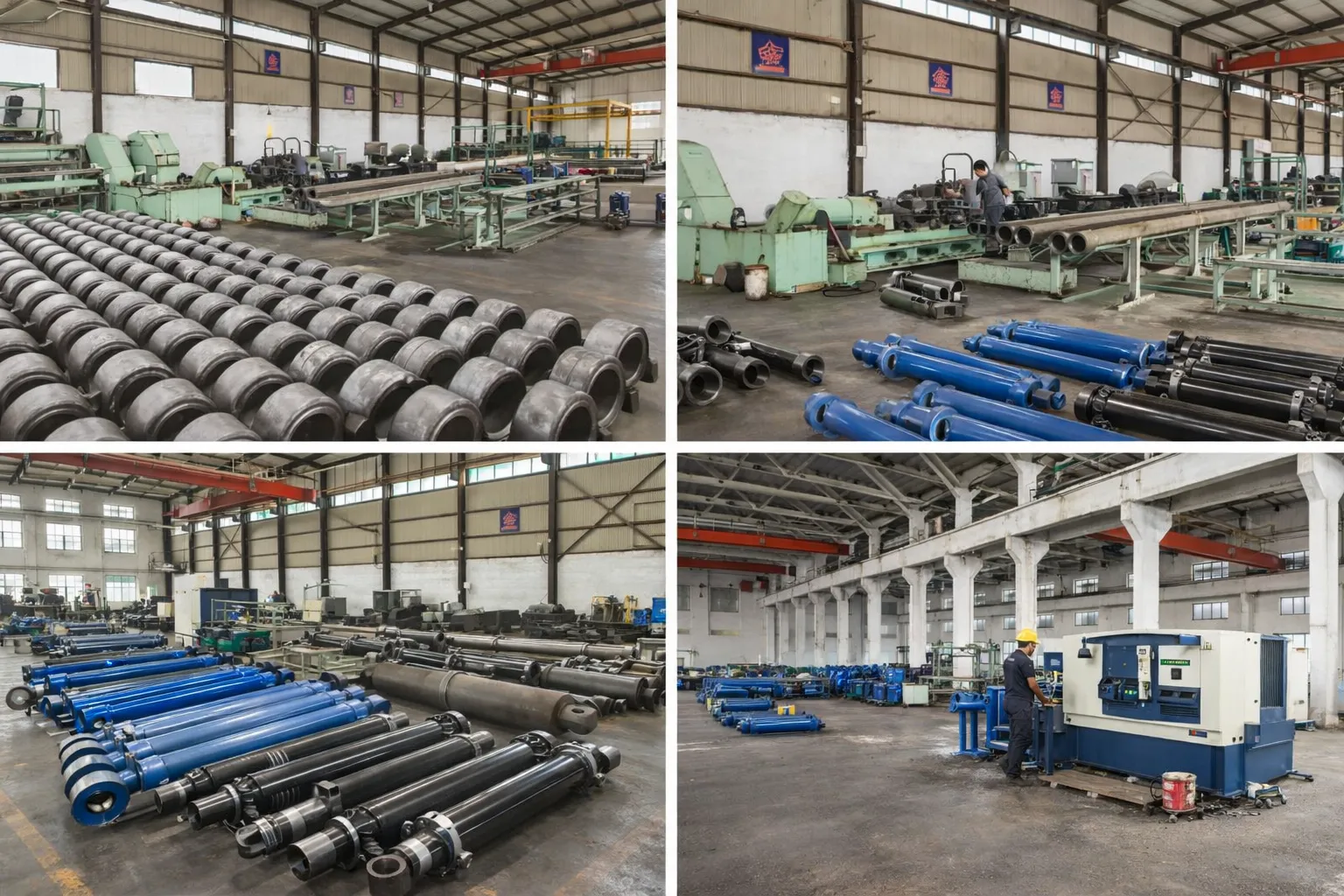
Rigorous Autonomous Manufacturing & 100% Quality Traceability
True operational reliability in high-pressure fluid power is entirely dependent on absolute, unyielding control over the production environment. We do not outsource our critical metallurgical or machining processes to third-party workshops. We manage the entire manufacturing cycle completely autonomously. Starting from the exact moment raw 42CrMo steel billets arrive at our massive facility, materials undergo immediate verification via advanced optical emission spectrometer analysis to ensure the alloy chemistry perfectly matches our strict requirements before entering the CNC machining centers.
Unlike bulk component manufacturers who rely heavily on random batch sampling (testing only a small fraction of their output to save time), our facility strictly enforces a 100% individual testing mandate. Every single assembled hydraulic cylinder is systematically mounted on highly calibrated digital test benches. The units are rapidly cycled to bleed all trapped air and then statically pressurized to 1.5 times their maximum rated working pressure for an extended holding period. High-precision digital flow meters monitor the closed circuit for any microscopic internal seal bypass, piston drift, or external fluid weeping.
Furthermore, to absolutely guarantee the integrity of our massive structural welds against severe equipment vibration, all load-bearing joints undergo ultrasonic non-destructive testing (NDT) to thoroughly map the interior of the weldment and verify zero internal porosity or micro-cracking. Once an assembly passes all mechanical audits, it is treated with a heavy-duty industrial epoxy-polyurethane paint system and stamped with a unique serialized identification code. This provides complete manufacturing traceability, ensuring our B2B partners receive a flawless product ready for immediate deployment.
Broad Industry Applications Beyond Heavy Earthmoving
While this specific engineering profile is highly optimized for wheel loader and track loader lifting operations, the core structural philosophy of our thick-walled architecture and advanced sealing translates seamlessly across multiple demanding industrial sectors. We encourage corporate procurement officers to explore our broader manufacturing capabilities. Our custom engineered solutions power essential operations across the construction machinery industry and beyond:
- Heavy Excavation & Trenching: Massively reinforced boom, arm, and bucket cylinders for large tracked excavators working continuously in hard rock quarries.
- Metallurgy & Heavy Forging: Specialized high-temperature sealing configurations utilizing fluoroelastomers (Viton) for operating heavy electric arc furnace doors and scrap metal baling presses in steel mills.
- Plastics & Rubber Injection Molding: High-speed, high-precision clamping cylinders and ejection rams that require absolute dimensional stability and zero fluid leakage.
- Port Logistics & Material Handling: Robust steering cylinders and heavy-duty reach stacker components requiring specialized anti-corrosion marine-grade epoxy coatings to combat harsh ocean air.
- New Energy & Environmental Protection: Compression actuators for municipal solid waste compactors and pitch control mechanisms for massive wind turbines that demand absolute operational reliability with minimal maintenance.
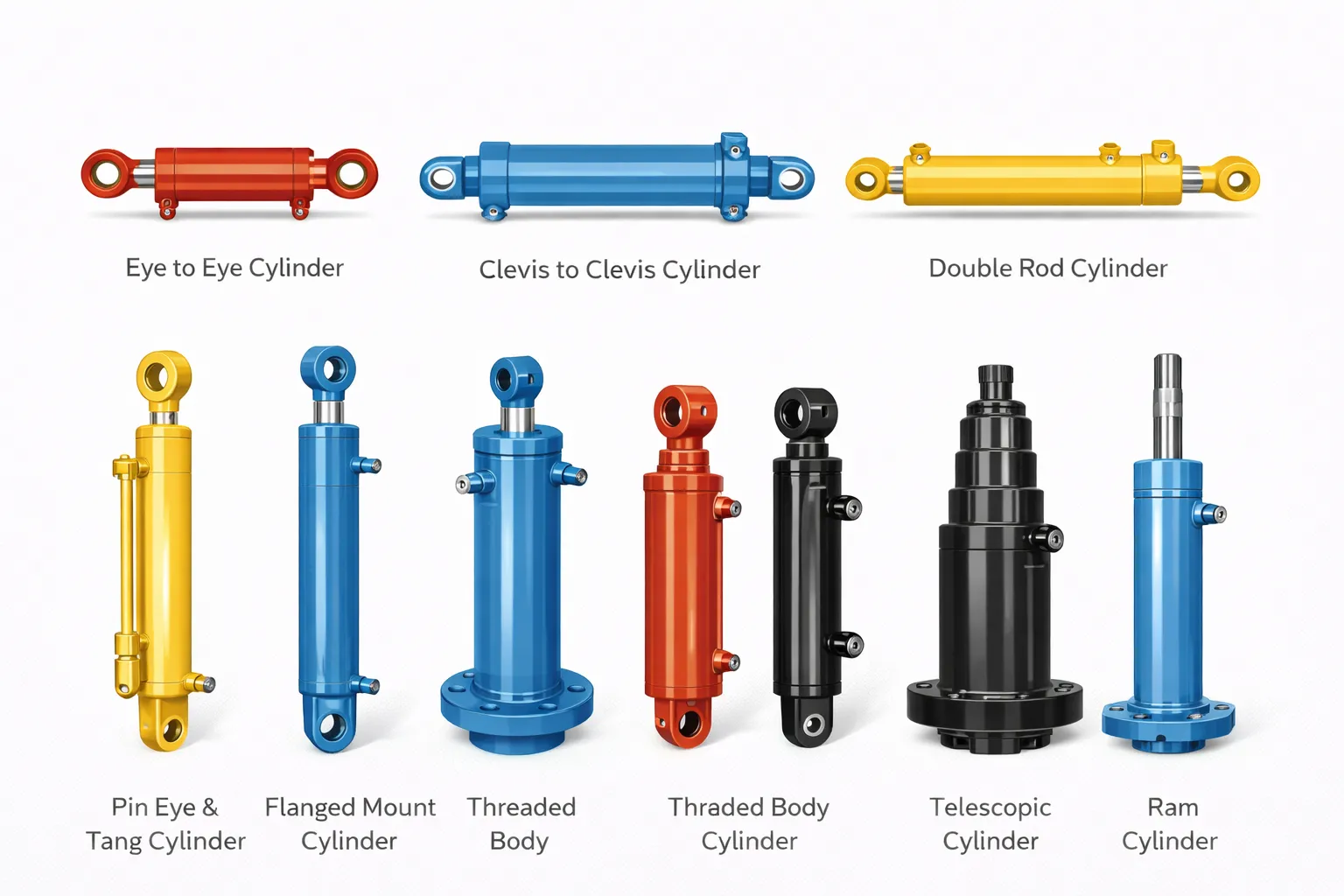
Comparative Analysis: Standard Market Offerings vs. Our High-Performance Solution
Evaluating the true Total Cost of Ownership (TCO) requires looking far beyond the initial procurement invoice. Cheap, generic replacement parts inevitably lead to catastrophic mid-project downtime, blown construction deadlines, and massive secondary labor costs for rapid re-installation. The following technical comparison illustrates exactly why investing in engineered resilience saves substantial capital over the machine’s lifecycle.
| Feature / Attribute | Ordinary Aftermarket Cylinders | Our High-Performance Cylinders |
|---|---|---|
| Rod Metallurgy | Utilizes basic 1045 carbon steel. Highly susceptible to permanent rod bending when encountering heavy, asymmetrical bucket loads. | Machined entirely from 42CrMo alloy steel. Extraordinary tensile strength prevents lateral deflection and yielding completely. |
| Surface Defense | Standard flash chrome plating. Micro-cracks easily under direct rock impact, allowing abrasive dust to penetrate and shred seals. | Advanced plasma-sprayed ceramic coating. Ultra-hard surface absorbs extreme physical impacts and seals out abrasive silica dust. |
| Internal Guiding Geometry | Narrow, standard wear rings. Concentrates lateral offset forces onto a small bearing area, leading to rapid metal-to-metal scoring. | Reinforced guidance architecture with massively extended wear bands. Distributes lateral loads evenly, keeping the rod centered. |
| Quality Control | Manual stick welding with random batch sampling. Frequent out-of-box field failures, dangerous load drifting, and microscopic leaks. | Robotic submerged arc welding. Strict 100% individual pressure holding tests and ultrasonic weld inspection. |
| Financial Value Proposition | Lower upfront cost, but massive secondary capital drain due to machine downtime and constant hydraulic cylinder repair cycles. | Highly competitive factory-direct hydraulic cylinder price with an extended operational lifespan, radically reducing TCO. |
Proven Global Success: Five Real-World Engineering Case Studies
Engineering theory is meaningless without severe field validation. Our specialized fluid power solutions are actively deployed across the most demanding job sites globally, with a strong presence in the rigorous East Asian market. The following five documented cases illustrate exactly how our deep manufacturing expertise directly resolves costly operational failures for our B2B clients.
Case 1: Eradicating Rod Deflection in Hard Rock Quarrying
Location & Client: Seoul, South Korea — Han-River Aggregates Consortium (October 2024)
The Application Crisis: Operating a fleet of heavy wheel loaders to transport blasted granite. The extreme, uneven loads inside the bucket during breakout maneuvers were causing massive lateral stress, resulting in severe rod bending on their generic aftermarket replacement cylinders, putting the machines out of commission weekly.
The Engagement: The regional fleet director found our engineering portal via a targeted web search seeking a specialized manufacturer capable of solving metallurgical yielding issues in heavy equipment.
The Delivered Solution: We manufactured and shipped heavily reinforced 42CrMo alloy steel lift cylinder units featuring our proprietary reinforced guidance internal architecture. The drop-in replacements required zero machine structural modifications to install.
“The sheer tensile rigidity of these units is absolutely remarkable. The operators push the loaders to their absolute limits now. We installed these units across the primary loading fleet, and we haven’t suffered a single bent rod or blown seal in over 4,500 hours of brutal, continuous operation.” — Park Ji-hoon, Lead Maintenance Engineer
Case 2: Conquering Abrasive Destruction in Coastal Port Logistics
Location & Client: Busan, South Korea — Pacific Port Bulk Logistics (March 2025)
The Application Crisis: Utilizing large loaders to move massive piles of abrasive bulk materials right on the ocean docks. The combination of falling abrasive debris and highly corrosive salty sea air was pitting and destroying standard chrome rods in weeks, leading to rapid seal shredding and hydraulic oil leaks into the harbor.
The Engagement: Contacted our technical sales team via our B2B catalog seeking highly specialized anti-corrosion, anti-dust solutions to quickly mitigate the environmental safety hazard.
The Delivered Solution: We implemented our advanced plasma-sprayed ceramic coating over the 42CrMo rods. This impervious layer completely sealed out the corrosive salt air and effortlessly deflected the falling abrasive aggregates without scratching.
“Before sourcing from this manufacturer, the salt air and abrasive dust combination was destroying our hydraulic rods instantly. The new ceramic configuration simply does not scratch or rust. Our overall cylinder lifespan has easily tripled, saving us immense labor costs.” — Kim Min-su, Site Director
Case 3: Capital Optimization for Heavy Equipment Rental Fleets
Location & Client: Osaka, Japan — Kansai Earthmoving Equipment Rental (January 2024)
The Application Crisis: Managing a massive mixed fleet of CAT and Komatsu loaders resulted in a highly chaotic spare parts inventory. Unskilled rental operators frequently abused the equipment, causing massive dynamic shocks that destroyed generic cylinders, ballooning the budget for continuously fixing hydraulic cylinders.
The Engagement: Met our senior technical representatives at a regional industrial trade expo in Tokyo, actively seeking standardized, highly durable, and cost-effective aftermarket replacements.
The Delivered Solution: We provided dimensionally exact drop-in units with the 42CrMo core to survive harsh operator abuse, effectively standardizing their spare parts inventory across multiple machine brands with highly durable, uniform units.
“By standardizing our critical lift replacements with this direct factory supplier, we entirely bypassed massive OEM dealer markups. We reduced our long-term repair overhead by over 40% while massively upgrading the structural durability of the machines we rent out.” — Kenji Takahashi, Operations Supervisor
Case 4: Stabilizing Structural Integrity in Tropical Mining
Location & Client: Hanoi, Vietnam — Viet-Minerals Extraction Co. (August 2024)
The Application Crisis: Continuous 14-hour shifts tearing through dense, heavy laterite soil. The extreme, repetitive breakout forces were literally tearing the mounting trunnions off their cheap replacement cylinders due to poor, porous manual welds, causing catastrophic boom drops.
The Engagement: Submitted highly detailed technical schematics via our website requesting an emergency structural engineering analysis to prevent further machine downtime.
The Delivered Solution: We rapidly manufactured and shipped heavy-duty assemblies fused together utilizing our advanced multi-axis robotic submerged arc welding process, guaranteeing massive penetration and zero internal weld porosity.
“The weld integrity is absolute. We put these machines through hell every single day. The mounting points have not shown a single hairline fracture, and the operators feel completely safe lifting maximum payloads again.” — Nguyen Van T., Procurement Head
Case 5: Reliable Upgrades for Massive Fleet Overhauls
Location & Client: Taipei, Taiwan — Apex Mining Logistics (November 2025)
The Application Crisis: The company needed to comprehensively overhaul 30 aging Volvo wheel loaders before the start of a major government infrastructure supply contract. They required premium reliability but demanded a highly competitive cost structure to justify the massive capital expenditure.
The Engagement: Contacted our global sales department via direct email to establish a direct bulk aftermarket supply chain, completely bypassing expensive regional distributors.
The Delivered Solution: We provided a heavily discounted, containerized bulk shipment of highly specialized, 42CrMo assemblies. The flawless dimensional fitment allowed their mechanics to complete the massive fleet overhaul rapidly and exactly on schedule.
“Unbeatable engineering value. The robust build quality easily mirrors top-tier OEMs, but the factory-direct pricing allowed us to overhaul our entire aging fleet well under budget without ever sacrificing operational safety.” — Lin Wei-chen, Fleet Owner
Frequently Asked Questions
Sourcing mission-critical industrial components for heavy fleets requires absolute transparency and technical clarity. Below are detailed, expert answers to the most frequent inquiries we receive from global procurement managers and heavy equipment engineering directors.
1. Exactly how does the 42CrMo alloy prevent rod bending compared to standard materials?
2. What makes the ceramic coating superior to traditional hard chrome plating?
3. How does the “Reinforced Guidance” architecture physically protect the internal seals?
4. What makes your pricing so highly competitive compared to OEM parts?
5. What is the typical lead time and shipping process for a bulk order to South Korea or Japan?
6. Do you supply individual replacement components for ongoing field maintenance?
7. Can you manufacture custom cylinders to precisely match older or heavily modified machinery?
8. How do your cylinders perform in extreme winter freezing conditions?
9. What kind of technical support do you offer after purchase?
10. How do we initiate a bulk fleet upgrade order or request an engineering consultation?
Ready to Maximize Your Machinery’s Payload Uptime?
Do not allow inferior, quickly yielding aftermarket components to dictate your project timelines and aggressively bleed your maintenance budgets. Stop wasting your operational capital on premature structural failures, severe rod bending, and endless seal blowouts. Partner with an expert manufacturing facility dedicated entirely to solving the most severe earthmoving challenges.
Contact Our Engineering Team Today
Editor: Cxm


























