System Overview & Core Industrial Value
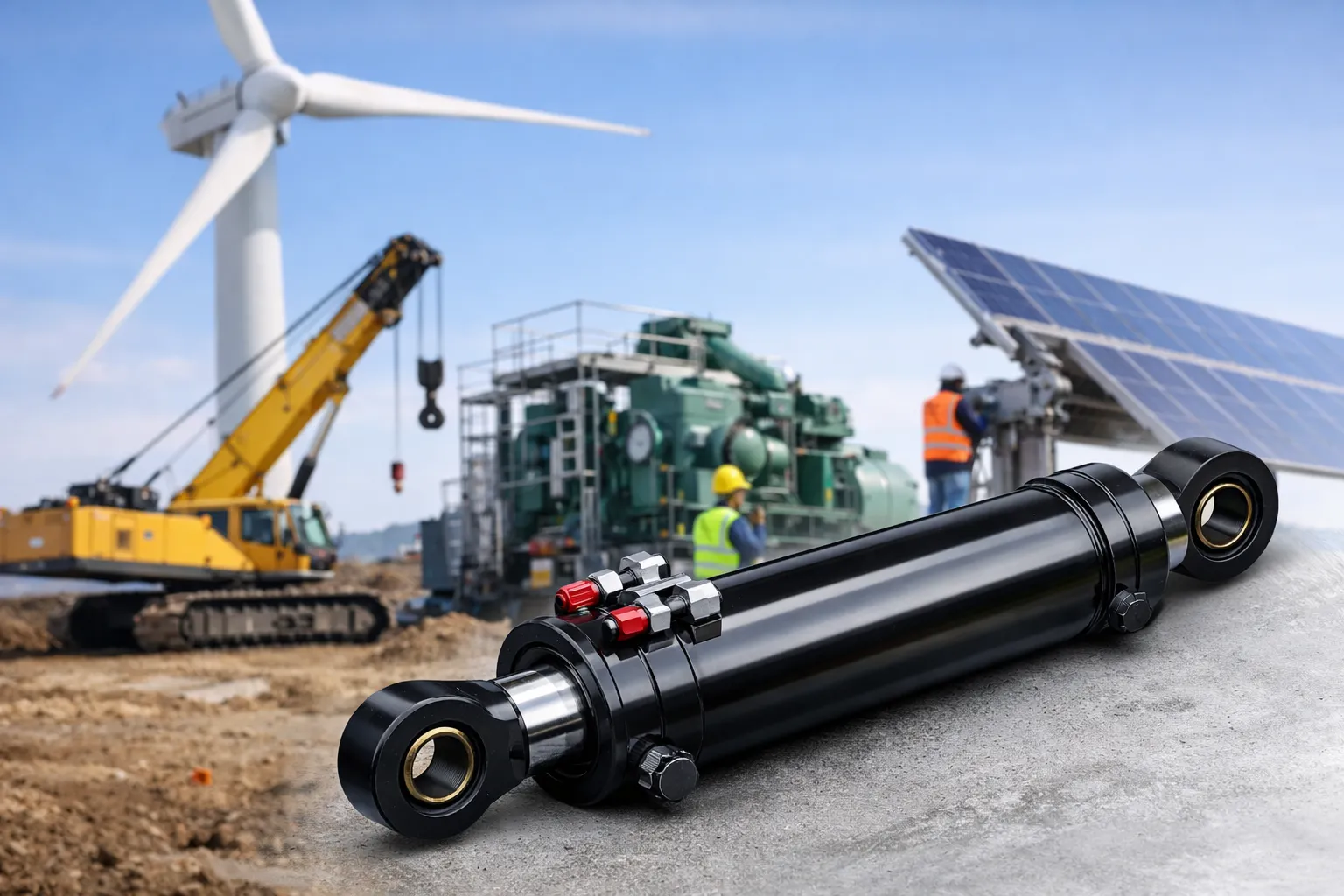
The rapid and unprecedented expansion of global renewable energy infrastructure has created an urgent demand for highly specialized maintenance equipment. Photovoltaic power stations span thousands of acres, often situated in geographically challenging environments ranging from arid deserts to rugged mountain slopes. To ensure these solar arrays maintain peak energy conversion efficiency, they require continuous cleaning, inspection, and structural repair. At the very heart of the machinery performing these tasks is the Maintenance Vehicle Lift Cylinder. This critical fluid power component dictates the vertical mobility, structural safety, and operational efficiency of the entire maintenance fleet.
Operating an elevated work platform in an open solar field exposes the machinery to extreme environmental and mechanical stresses. The vehicles must traverse unpaved, uneven terrain, introducing severe low-frequency, high-amplitude vibrations into the chassis. Furthermore, the constant exposure to abrasive silica dust, morning dew, and extreme temperature fluctuations creates a hostile environment for standard industrial actuators. As a highly experienced hydraulic cylinder manufacturer, our engineering team recognized that conventional off-the-shelf lifting mechanisms were failing prematurely under these specific conditions, primarily succumbing to rapid seal wear and subsequent fluid bypass.
To aggressively resolve these exact pain points, we engineered a specialized Maintenance Vehicle Lift Hydraulic Cylinder tailored exclusively for the new energy sector. The unique positioning of our product lies in the seamless fusion of heavy-duty mechanical rigidity with highly intelligent motion control. By upgrading the base material and integrating advanced servo valving, we have transformed a traditional fluid power actuator into a smart, closed-loop positioning system. This guarantees that when technicians are elevated to service fragile photovoltaic panels, the platform remains rock-solid, completely eliminating the dangerous swaying and sudden jerks associated with inferior hydraulic parts. We deliver absolute reliability that directly improves your site’s total uptime and profitability.
Comprehensive Technical Specifications
Engineering a reliable lifting mechanism requires strict adherence to precise metallurgical and fluid dynamics parameters. To ensure exact compatibility with heavy-duty maintenance vehicles, our engineering division provides a highly scalable specification matrix. The data outlined below represents the optimal baseline parameters for our standardized new energy lift systems, all of which can be heavily customized to match the exact payload capacity and chassis geometry of your specific fleet.
| Parameter Category | Specification Details & Customizable Range |
|---|---|
| Target Industry | New Energy / Renewable Infrastructure |
| Equipment Category | Photovoltaic Power Station Maintenance Vehicle |
| Subsystem Function | Lifting System (Platform Elevation & Positioning) |
| Hydraulic Cylinder Name | Maintenance Vehicle Lift Cylinder |
| Actuation Mode | Double acting hydraulic cylinder |
| Structural Design | Heavy-duty Piston Type |
| Manufacturing Method | Precision Welded Construction (Ultrasonic Tested) |
| Primary Material System | Q345D Low-Alloy High-Strength Structural Steel |
| Surface Treatment | Hard Chrome Plated (Thickness: 30-50 microns, Hardness: >HV850) |
| Environmental Rating | Outdoor + Vibration (Extreme mechanical shock resistance) |
| Operating Condition | Maintenance Lifting (Continuous high-load cycling) |
| Typical Failure Mode Mitigated | Engineered against rapid Seal Wear |
| Recommended Configuration | Servo Valve + Position Sensor integration |
Operational Fluid Dynamics & Kinematic Control
To truly appreciate the reliability of this equipment, one must understand the fluid dynamics and kinematic principles governing it. The mechanical lifting energy of the maintenance vehicle is generated through a highly sophisticated, closed-loop fluid power circuit. Designed fundamentally as a double acting hydraulic cylinder, hydraulic oil is actively metered under high pressure into two distinct ports to aggressively control both the upward extension and downward retraction phases of the lifting boom or scissor mechanism.
When the vehicle operator initiates a lift command to position the maintenance platform over the solar arrays, the main hydraulic pump directs pressurized fluid through the manifold directly into the cap end (blind end) of the welded cylinder barrel. This immense internal pressure acts directly upon the full surface area of the hydraulic cylinder piston. According to foundational fluid mechanics, this generates the substantial linear thrust required to overcome the gravitational load of the heavy steel platform, the high-pressure washing fluid tanks, and the maintenance personnel. Unlike a basic single acting hydraulic cylinder that relies on gravity to descend, our system pumps fluid into the rod end during retraction, providing a powered, mechanically locked descent that ensures operators never experience a sudden free-fall.
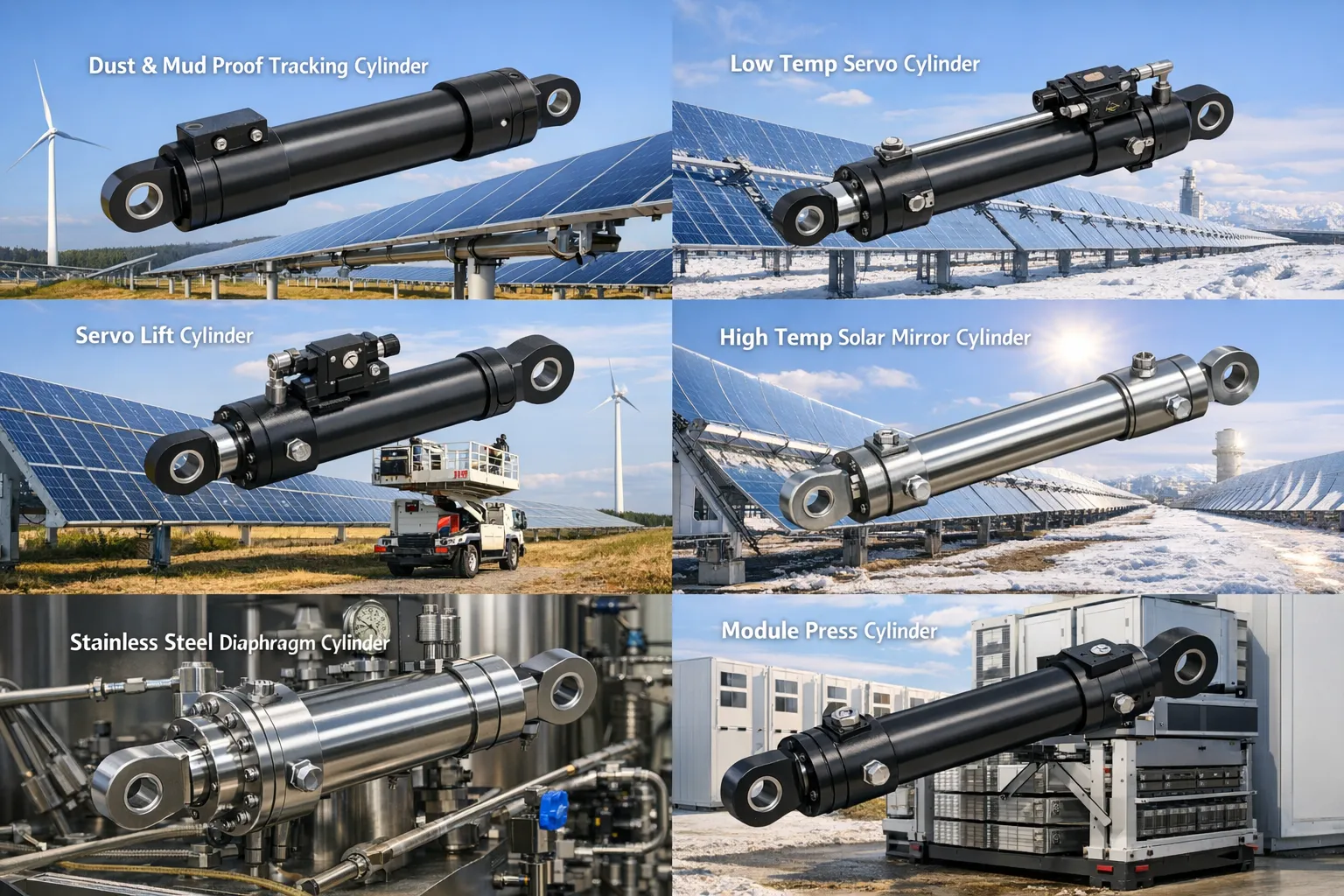
What elevates our system entirely beyond standard hydraulic rams is the intelligence embedded within the fluid flow. As the heavy-duty rod extends, an internal magnetostrictive sensor continuously measures the exact linear displacement in real-time. This highly accurate position data is transmitted instantly to the vehicle’s electronic control unit (ECU). The ECU processes this feedback and sends variable signals to the integrated proportional servo valve. If the vehicle is parked on an uneven incline—a standard scenario in rugged solar farms—the servo valve dynamically micro-adjusts the hydraulic flow rate in milliseconds. This closed-loop synergy ensures a butter-smooth, anti-jitter lifting motion, enabling automated deceleration near the end of the stroke and completely preventing jarring impacts that could irreparably damage fragile photovoltaic glass arrays.
Seamless Fleet Integration & Brand Cross-Compatibility
Procurement engineers and fleet maintenance directors consistently face the severe challenge of sourcing reliable hydraulic parts for aging vehicle fleets. Original Equipment Manufacturer (OEM) components frequently carry exorbitant price tags and suffer from prohibitive international lead times, causing unacceptable machinery downtime. Our lift cylinder models are meticulously reverse-engineered to serve as superior, drop-in replacements for standard factory-installed components.
Technical Selection Reference: Our customized hydraulic cylinder components possess the exact geometric mounting profiles (trunnion dimensions, clevis pin diameters, and retracted lengths) to seamlessly replace lifting actuators originally manufactured by global brands such as Genie, JLG, Haulotte, Skyjack, Zoomlion, and Sany. Please note that mentioning these brands is strictly for the purpose of assisting engineering teams in technical selection, sizing, and compatibility referencing. It does not imply any corporate affiliation, sponsorship, or trademark infringement. By providing exact dimensional equivalents, we ensure that when replacing or fixing hydraulic cylinders becomes a recurring bottleneck, upgrading to our specialized new-energy variant is a plug-and-play operation that requires zero costly modifications to the vehicle’s structural chassis.
Core Engineering Innovations & Advantages
Drawing upon over two decades of specialized fluid power engineering, we have isolated the primary failure modes of outdoor maintenance equipment. We have thoroughly re-engineered the internal anatomy of our cylinders to actively counter these harsh environmental realities, providing an unmatched return on your initial hydraulic cylinder price investment. Here are our core technical advantages:
1. Eradication of Seal Wear
The leading cause of catastrophic failure in solar field equipment is particulate ingress leading to severe seal wear. We implement a proprietary, multi-stage sealing matrix featuring self-lubricating PTFE guide rings and dual-lip polyurethane dust wipers. This creates an impenetrable barrier against abrasive micro-silica dust, drastically reducing dynamic friction and extending the mean time between failures.
2. Q345D High-Rigidity Architecture
Unlike traditional designs which are prone to stretching under severe off-road vibration, our cylinders employ a fully automated, precision-welded construction. The main barrel and mounting trunnions are forged from Q345D low-alloy structural steel. The “D” classification guarantees exceptional impact toughness even at extremely low temperatures, eliminating the risk of brittle fractures during freezing winter operations.
3. Electro-Hydraulic Closed-Loop Intelligence
To handle the delicate task of lowering heavy cleaning brushes onto fragile photovoltaic glass arrays, manual valving is insufficient. We integrate robust magnetostrictive position sensors directly within the rod, communicating with manifold-mounted proportional servo valves. This delivers sub-millimeter positioning accuracy and highly programmable automated acceleration profiles.
4. Superior Environmental Immunity
The exposed section of the hydraulic cylinder piston rod is highly vulnerable. We utilize a multi-stage, micro-cracked hard chrome plating process, achieving a surface hardness over HV850. This creates a highly lubricious surface that actively resists pitting from coastal salt spray, morning dew, and atmospheric oxidation common in outdoor solar fields.
5. Vibration Isolation Dampening
Navigating between solar arrays over deep ruts generates destructive lateral forces. We equip the mounting eyes of our cylinders with heavy-duty spherical plain bearings utilizing maintenance-free, self-lubricating composite liners. This allows the cylinder to safely articulate, absorbing torsional twisting from the vehicle chassis and preventing side-loading on the internal rod guides.
6. Thermal Stability Optimization
Continuous lifting under the blazing summer sun generates immense internal fluid heat. Our cylinders feature thoroughly optimized internal porting geometry to reduce fluid turbulence and minimize pressure drops. This superior heat dissipation preserves the hydraulic oil’s viscosity, protecting internal elastomeric components from thermal expansion and seizing.
In-House Manufacturing & Uncompromising Quality Control
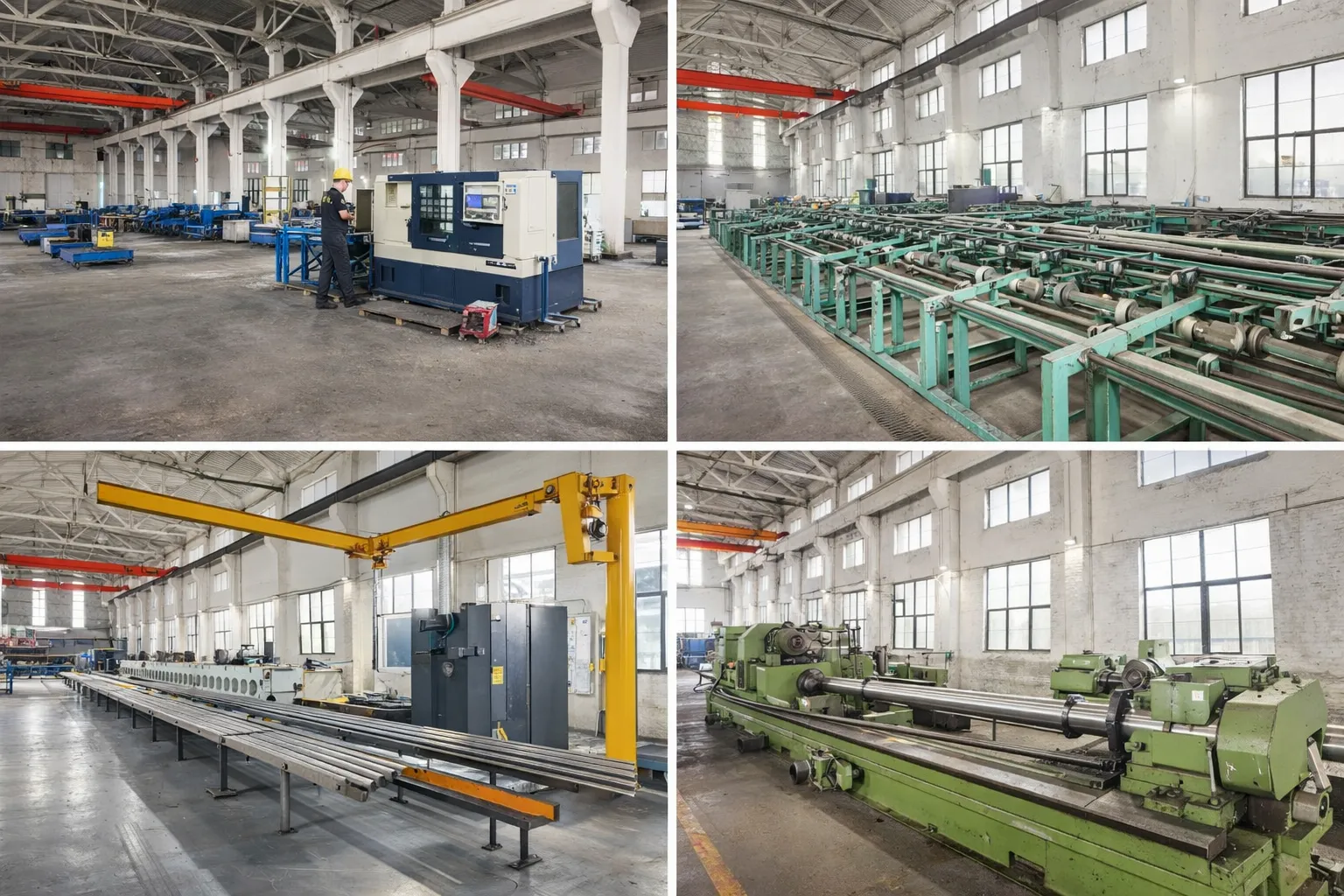
As a premier, vertically integrated hydraulic cylinder manufacturer with twenty years of established expertise, we maintain absolute and autonomous control over the entire production ecosystem. We strictly refuse to outsource critical path machining operations. From the initial multi-axis CNC turning and skiving of the raw Q345D steel billets to the final micro-honing of the cylinder bore, every step occurs within our climate-controlled, state-of-the-art facility. This vertical integration allows us to enforce the tightest geometric tolerances, ensuring perfect concentricity and parallelism that are absolutely vital for the extreme longevity of the seals and internal bearings.
Our heavy-duty welding protocols utilize automated robotic submerged arc systems, certified by rigorous international structural welding standards. Following the welding of the heavy trunnion mounts, every single cylinder barrel undergoes comprehensive ultrasonic non-destructive testing to verify deep penetration and the complete absence of micro-fissures or porosity in the structural joints.
Most importantly, 100% of our finished hydraulic parts are subjected to rigorous end-of-line dynamic testing. The cylinders are mounted on automated hydrostatic test rigs and pressurized to 1.5 times their maximum rated operating pressure. We meticulously record linear displacement accuracy, monitor for microscopic internal bypass leakage, and verify the electronic signal handshakes between the servo valve and the sensor. Every cylinder leaves the factory permanently laser-etched with a serialized QR code, providing our enterprise clients with total lifecycle traceability of material certificates and assembly technicians.
Expanding Horizons: Cross-Industry Heavy Applications
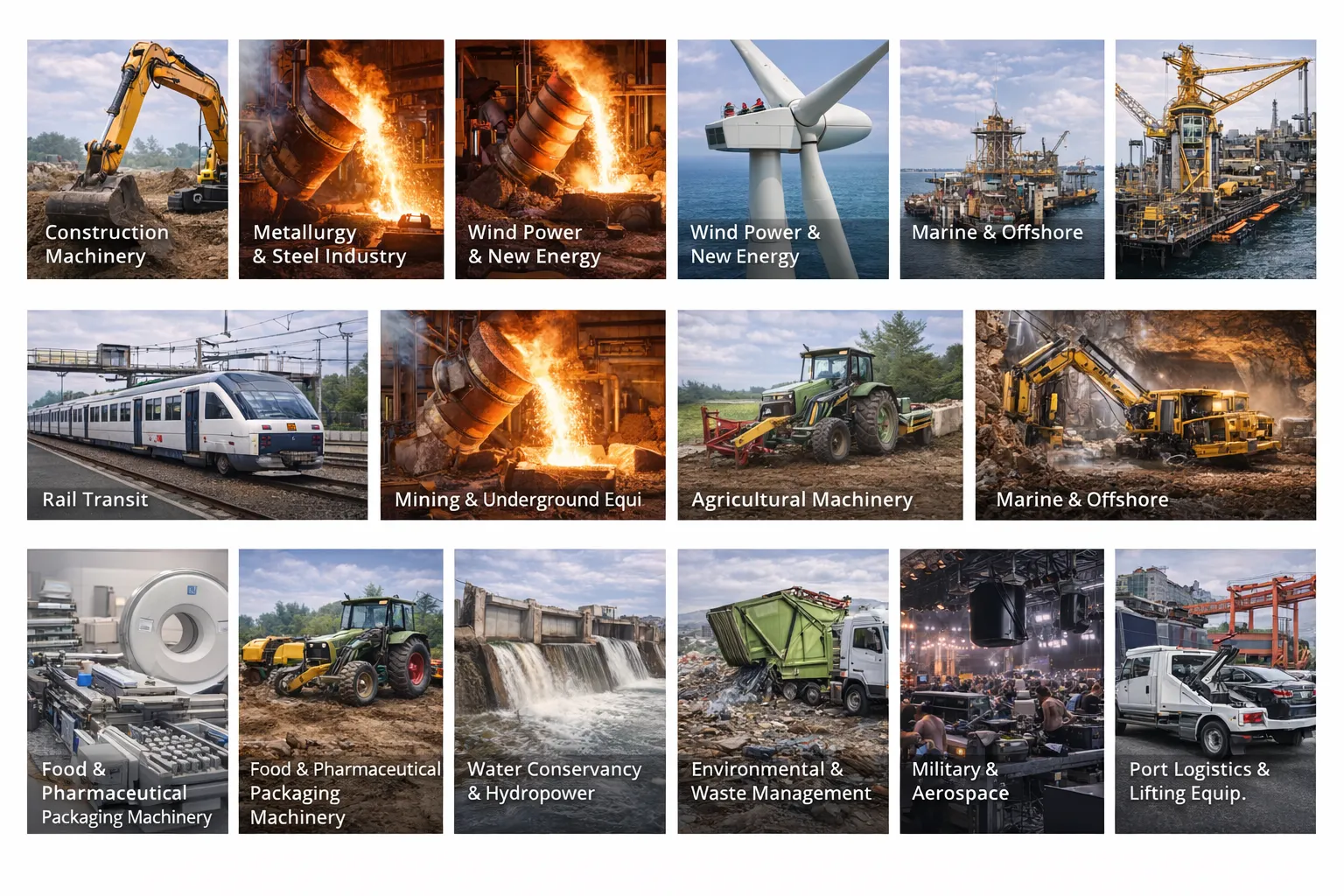
While specifically optimized to exceed the demands of a Photovoltaic Power Station Maintenance Vehicle, the fundamental robustness, vibration resistance, and pinpoint precision of this servo-hydraulic architecture make it highly sought after across a multitude of heavy-duty sectors. The ability to endure hostile environments while delivering automated accuracy translates seamlessly to other demanding industrial fields:
- Construction & Infrastructure Machinery: Heavy excavator booms, wheel loader lift arms, and mobile crane outriggers require identical resistance to extreme side-loading and mechanical shock absorption. Explore our comprehensive Construction Machinery Industry solutions for earthmoving adaptations.
- Metallurgical & Heavy Manufacturing: The exceptional thermal stability and robust Q345D alloy construction make these cylinders ideal for continuous casting lines, furnace door tilting mechanisms, and heavy forging presses. Discover our Metallurgical and Iron Industry specialized applications.
- Mining & Extraction: Operating in environments utterly dominated by highly abrasive rock dust and constant subterranean vibration, our ultra-low friction seal technology proves invaluable for tunnel drill rigs and massive haul truck dump bodies. See our heavy-duty Mining Industry capabilities.
- Material Handling Automation: High-cycle Automated Guided Vehicles (AGVs) and heavy-duty port forklifts utilize our sensor-integrated cylinders for precise, automated pallet and container positioning, ensuring continuous warehouse logistics flow.
Comparative Analysis: Standard Market Cylinders vs. Our High-Performance Solution
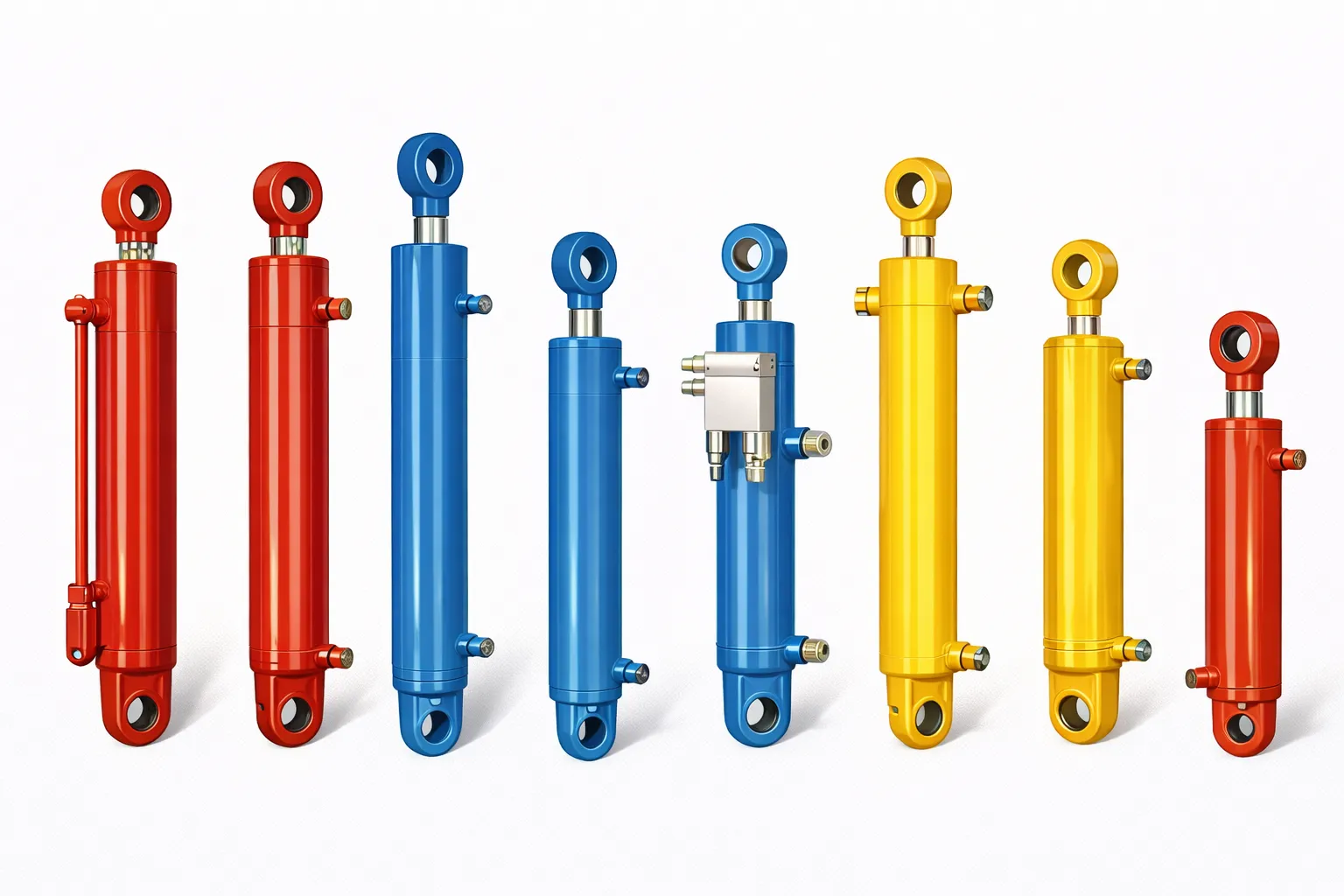
When evaluating the total cost of ownership (TCO) for fleet management, the initial purchase price is only a minor fraction of the overall equation. Unplanned equipment downtime, hydraulic fluid leaks, and emergency replacement labor rapidly inflate operational budgets. The comparative analysis below highlights the stark engineering differences between standard market components and our specialized Maintenance Vehicle Lift Hydraulic Cylinder.
| Engineering Feature | Standard Commercial Hydraulic Cylinder | Our Specialized Lift Cylinder |
|---|---|---|
| Material Selection | Standard Carbon Steel (#45). Highly prone to cold brittleness and micro-fractures in winter. | Q345D Low-Alloy Welded Structure. Retains massive impact resistance down to -20°C. |
| Sealing Configuration | Basic NBR single-lip seals. Extremely high risk of rapid seal wear from outdoor dust. | Ultra-low friction PTFE composite rings + Dual-lip Polyurethane wipers block all dust. |
| Positioning Control | Manual open-loop directional valves. Jerky motion, relies purely on operator estimation. | Integrated Servo Valve + Sensor. Delivers automated sub-millimeter precision control. |
| Mounting Interfaces | Rigid metal bushings. Transfers destructive vehicle vibration directly to the internal rod. | Spherical plain bearings with composite self-lubricating liners for superior vibration isolation. |
| Testing Protocol | Random batch sampling, basic static pressure checks only. | 100% UT structural test + 1.5x dynamic hydrostatic load test per individual unit. |
Proven Success in the Field: International Case Studies
Our advanced fluid power technologies are currently driving operational efficiency in some of the most demanding and technologically advanced renewable energy markets globally. By providing uncompromising reliability, we help our partners minimize downtime and maximize energy output. Here are real-world applications demonstrating our operational impact.
Case 1: Eradicating Seal Failure in Jeollanam-do, South Korea
- Client Profile: Top-tier Renewable Energy Operations & Maintenance (O&M) Corporation.
- Equipment: Fleet of 25 tracked photovoltaic panel cleaning vehicles.
- Initial Contact: The client’s procurement director discovered us via an organic web search while looking for a highly durable hydraulic cylinder repair solution to resolve persistent structural failures.
The Challenge: Operating in a coastal, mountainous terrain exposed the vehicles to high winds, abrasive salt-laden dust, and sub-zero winter temperatures. The original European OEM cylinders experienced severe seal wear and cold embrittlement within just 6 months of use, leaking expensive hydraulic oil directly onto the soil and rendering the lifting arms completely paralyzed.
The Solution & Result: We custom-engineered and manufactured batches of our Q345D welded lift cylinders featuring heavily thickened hard chrome plating and aerospace-grade, cold-resistant polyurethane dual-lip dust wipers. After fleet-wide installation in mid-2024, the vehicles have operated continuously through harsh winters with zero bypass leaks. The lifespan was increased by over 400%, saving the client an estimated $120,000 annually in repetitive replacement costs.
“The vibration resistance and cold weather performance are incredible. Since switching to these specific actuators, our maintenance teams no longer waste critical daylight hours dealing with blown seals. The precise accuracy also allows our operators to clean panels much faster safely.” — Mr. Park Ji-hoon, Lead Fleet Engineer (Reviewed: February 2026)
Case 2: Enabling Autonomous Robotics in Kyushu, Japan
- Client Profile: High-Tech Automated Special Purpose Vehicle Manufacturer.
- Equipment: Next-generation driverless solar inspection trucks with heavy elevated robotic diagnostic arms.
- Initial Contact: Technical inquiry submitted through our B2B portal regarding intelligent, servo-integrated hydraulic parts.
The Challenge: The client was developing a fully autonomous vehicle that required the hydraulic cylinder piston to maintain exact spatial positioning within a strict 2mm tolerance. It had to bear a cantilevered load, completely controlled by an onboard computer processing visual data, with no human driver to manually correct sudden jerks or stick-slip hesitation.
The Solution & Result: We supplied our flagship integrated Servo Valve + Linear Displacement Sensor cylinder assemblies. Our technical engineering team collaborated directly with their software developers to calibrate the complex fluid flow logic. The autonomous vehicles successfully passed rigorous beta testing and are now actively deployed in utility-scale solar installations, operating flawlessly without a single panel collision.
“Finding a heavy machinery manufacturer who truly understands the nuances of electro-hydraulic closed-loop integration is exceedingly rare. The responsiveness of the valve-sensor combination is flawless. I highly recommend their specialized engineering support.” — Director Tanaka Kenji, R&D Department (Reviewed: November 2025)
Case 3: Defeating Intense Tropical Heat in Ninh Thuan, Vietnam
- Client Profile: Massive regional solar energy generation facility.
- Equipment: Fleet of aerial man-lifts for inverter and structural maintenance.
- Initial Contact: Reached out seeking solutions for fixing hydraulic cylinders while avoiding expensive European OEM replacements that carried 16-week lead times.
The Challenge: The facility operates in an environment characterized by extreme tropical heat and high humidity. The high ambient temperatures caused standard hydraulic fluid to thin out, and poor internal porting in their OEM cylinders led to severe overheating and catastrophic failure of the internal elastomeric seals. The vehicles were losing lifting power mid-shift.
The Solution & Result: By reverse-engineering their samples, we supplied thermally optimized cylinders utilizing high-temperature resistant fluorocarbon (FKM) seals and enlarged internal fluid galleries to reduce friction heat. Our aggressive 4-week production turnaround drastically reduced their inventory downtime. The upgrade effectively restored full lifting power even during the peak heat of the afternoon shift.
“The precision finish quality and the thermal resilience equal or actually surpass the original European components we used to buy. We achieved a highly competitive hydraulic cylinder price without sacrificing an ounce of performance.” — Nguyen Van Binh, Lead Operations Manager (Reviewed: January 2026)
Frequently Asked Questions (FAQ) for B2B Procurement
We understand that specifying highly specialized, load-bearing fluid power components requires thorough technical vetting. To assist the engineering and purchasing teams of our international partners, we have compiled comprehensive answers to the most critical inquiries we regularly receive.
Optimize Your Renewable Energy Maintenance Fleet Today
Do not let subpar fluid power components and premature failures dictate your operational efficiency and maintenance budgets. Whether your organization requires a bulk batch of off-the-shelf direct replacements or a fully customized, closed-loop servo system for an autonomous vehicle, our engineering team is ready to analyze your schematics and deliver uncompromising, heavy-duty reliability. Let us partner with you to permanently eliminate seal failures and elevate your equipment’s precision.
We guarantee a comprehensive technical response with initial CAD viability analysis within 24 hours.
Editor: Cxm