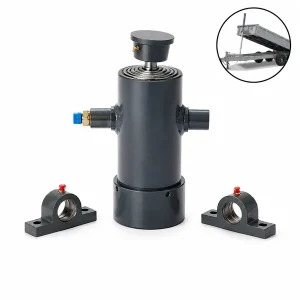
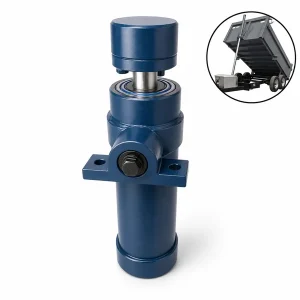
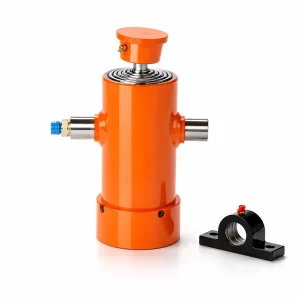
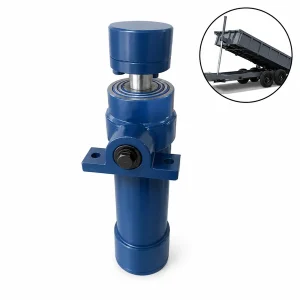
Factory Customized 2 Stage Hydraulic Cylinder — Small Dump Truck Multistage
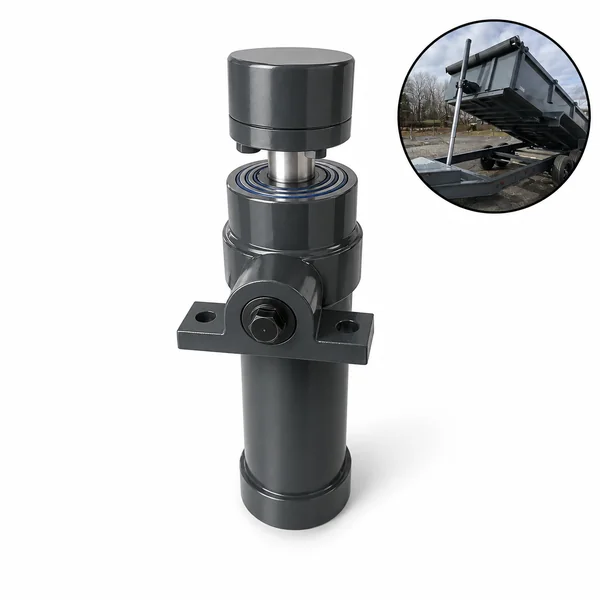
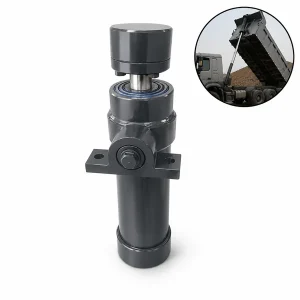
Customized 2 stage small dump truck telescopic hydraulic cylinder — with a guide to the hydraulic valves that protect the cylinder and control the dump body. Three valve types work together with the telescopic cylinder: the pressure relief valve (prevents over-pressurisation that can burst the cylinder), the load-holding valve (prevents the dump body from drifting down under its own weight), and the flow control valve (regulates tipping and lowering speed). This page explains each valve’s function, how it interacts with the cylinder, and what happens when it fails.

VALVE & PRESSURE RELIEF GUIDE
2-STAGE · SMALL TRUCK

Customized 2 Stage
Small Dump Truck
Valves That Protect the Cylinder & Control the Body

A telescopic hydraulic cylinder does not operate alone — it works within a hydraulic circuit that includes a pump, a directional valve, and critically, safety and control valves that protect the cylinder from damage and prevent dangerous uncontrolled movement of the dump body.

3 Valves
Protection System
2 Stage
Small Truck
2–6″
Bore
4–100″
Stroke
Pressure Relief
Load Holding
Flow Control
Small Hydraulic Cylinder Multistage Hydraulic Cylinder 1

Small dump trucks are particularly sensitive to valve selection because their hydraulic systems operate at lower flow rates (smaller pumps) and their dump bodies are lighter — meaning the load-holding and speed control requirements differ from larger vehicles. Understanding these three valve types helps you specify the complete hydraulic system that works correctly with the Korea Ever-Power telescopic cylinder — not just the cylinder in isolation.

Customized 2 Stage Small Dump Truck — Parameters

Bore / Rod / Stroke / Pin 2–6″ / 1.125–4″ / 4–100″ / 0.5–2″
Port Options G / SAE / NPT / M
Valve Compatibility Compatible with all standard relief, load-hold, and flow control valves
Body / Certification Steel / ISO 9001 / 100% pressure tested
Lead Time / Warranty 25–35 days / 1 year

2 stage cylinder with valve system

Three Valve Types — Function, Failure, and Correct Sizing

1. Pressure Relief Valve — Protecting the Cylinder from Over-Pressure

The pressure relief valve (PRV) limits the maximum system pressure to protect the pump, hoses, fittings, and cylinder from exceeding their rated pressure. It opens when the system pressure reaches the set point, diverting excess flow back to the reservoir. Without a PRV, a stalled cylinder (e.g. dump body hits a mechanical stop at full tip) would see pressure rise until the weakest component fails — typically a hose fitting blows, a seal extrudes, or in extreme cases the barrel yields.

Correct setting:

Set the PRV 10–15% above the maximum expected working pressure of the cylinder — high enough that it doesn't open during normal operation, low enough that it opens before any component is damaged. For a cylinder rated at 200 bar, set the PRV at 220–230 bar. Never set the PRV higher than the cylinder's rated pressure.

What fails when the PRV is wrong:

PRV set too high → cylinder exceeds rated pressure → seal extrusion, hose failure, or barrel deformation. PRV set too low → opens during normal tipping → reduced tipping force, cylinder cannot fully tip a loaded body. PRV stuck open → no pressure build-up → cylinder does not extend at all.

2. Load-Holding Valve — Preventing Body Drift

The load-holding valve (also called a pilot-operated check valve or counterbalance valve) prevents the dump body from lowering under its own weight when the directional valve is in neutral. Without a load-holding valve, a single-acting telescopic cylinder would slowly retract under the weight of the dump body — causing the body to drift downward while workers are standing near or under it. This is a critical safety function.

How it works:

The valve blocks flow from the cylinder port when the directional valve is in neutral — preventing gravity-driven retraction. When the operator activates the "lower" function, pilot pressure from the directional valve opens the load-holding valve, allowing controlled retraction at the speed set by the flow control valve.

What fails when missing or faulty:

Missing → dump body drifts down under gravity (safety hazard). Leaking → slow creep downward over minutes/hours (body drops overnight). Stuck closed → body will not lower when commanded. Regular inspection of the load-holding valve is a safety maintenance item — not optional.

3. Flow Control Valve — Regulating Tipping and Lowering Speed

The flow control valve regulates the volumetric flow rate to and from the cylinder — controlling the speed of extension (tipping) and retraction (lowering). Too fast and the dump body slams up or down dangerously; too slow and the tipping cycle wastes time. For small dump trucks, the lowering speed is particularly important — a light aluminium body with gravity-assisted retraction can lower very quickly without flow control, creating a safety risk.

Extension speed:

Controlled by pump flow rate and cylinder bore area. Extension speed (mm/s) = pump flow (cm³/s) ÷ piston area (cm²). For a 3-inch bore 2-stage cylinder with a 15 L/min pump: ~55 mm/s extension speed. Adjust pump RPM or add a flow control valve to fine-tune.

Lowering speed:

Must be controlled independently of extension speed — a restrictor or flow control valve on the return line prevents uncontrolled gravity-driven lowering. For small dump trucks with light bodies, this lowering speed control is a safety requirement, not an optional refinement.

Common Valve Misconfigurations on Small Dump Trucks

No load-holding valve on single-acting systems

The most dangerous misconfiguration. Some budget small dump truck conversions omit the load-holding valve to save cost — relying only on the directional valve spool to prevent body drift. Directional valve spools leak internally over time — the body slowly drifts down. This is a workplace safety issue. Always install a dedicated load-holding valve on single-acting telescopic cylinders.

PRV set to pump maximum instead of cylinder rating

Some installers set the PRV to the pump's maximum pressure rating rather than the cylinder's rated working pressure. If the pump is rated at 250 bar but the cylinder is rated at 200 bar, a 250-bar PRV setting exposes the cylinder to 25% over-pressure on every stall condition. Always set the PRV based on the cylinder's working pressure — not the pump's capability.

No lowering speed control on light bodies

Small dump trucks with aluminium bodies or empty steel bodies retract very quickly under gravity — the body drops with minimal resistance. Without a flow control restrictor on the return line, the lowering speed is uncontrolled and potentially dangerous. Install a needle valve or flow control on the return line to limit the lowering speed to a safe, controlled rate. This is especially important on 12V DC systems where the control valve may not include built-in flow regulation.

OEM & ODM — Cylinder + Valve System Integration
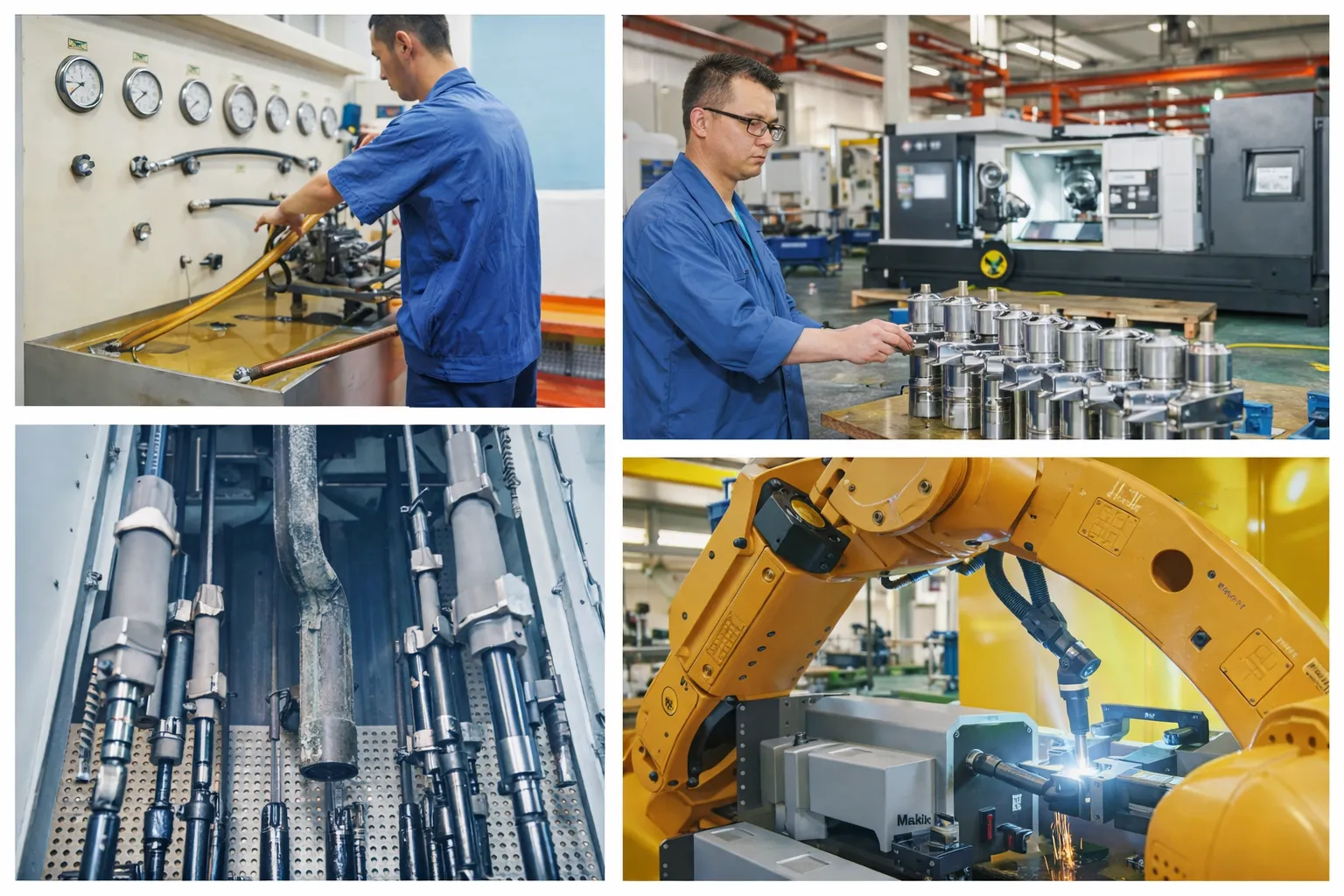
What You Provide

Bore, rod, stroke, 2-stage, mounting, ports, working pressure — plus system information: pump type (PTO or DC electric), pump flow rate (L/min), system maximum pressure, and whether you need the cylinder only or the cylinder with an integrated valve block (directional + relief + load-hold + flow control in a single manifold). Integrated valve blocks simplify installation for small dump truck body builders.

What the Factory Delivers

Drawing with valve integration points confirmed. Cylinder with port positions matched to your valve block layout. Samples available. Production 25–35 days. 100% pressure test. 1-year warranty. Contact the hydraulic cylinder factory for system integration advice and quotation.

hydraulic-cylinder-workshop-7

Valve & Pressure Relief — FAQ

Does the cylinder come with valves included?

Standard orders include the cylinder only — valves are separate components selected and installed by the body builder or hydraulic system integrator. However, Korea Ever-Power can supply the cylinder with an integrated valve block (directional + relief + load-hold + flow control) as a complete hoist kit for OEM body builders who prefer a pre-configured system. Specify "hoist kit with valve block" in your inquiry if you want the integrated option.

My dump body drifts down slowly when parked — is the cylinder leaking?

Usually no — the cylinder is not the first suspect. Body drift is most commonly caused by a leaking load-holding valve (pilot-operated check valve) or internal leakage past the directional valve spool. Check the load-holding valve first — replace the O-rings or the entire valve if it is leaking past. If the load-holding valve is good, check the directional valve for internal spool leakage. Only if both valves are confirmed good should the cylinder's internal seals be suspected. The same diagnostic approach applies to all telescopic cylinders, forklift cylinders, and aerial platform cylinders.

How do I calculate the correct PRV setting for my cylinder?

PRV setting = cylinder rated working pressure × 1.10 to 1.15 (10–15% above working pressure). Example: cylinder rated at 180 bar → PRV set at 198–207 bar. Never exceed the cylinder's maximum rated pressure on the PRV setting. If your pump can produce 250 bar but your cylinder is rated at 180 bar, the PRV must be set below 207 bar — the pump capability is irrelevant to the PRV setting. The cylinder rating is the ceiling.

Field Reports

D
Dave R. — Small Tipper Body Builder
Verified Purchase · UK · May 2025
★★★★★

We build 3.5-tonne tippers with aluminium bodies and 12V DC power units. Previously omitted the load-holding valve to save £40 per truck — until one body drifted down overnight and damaged the tailgate mechanism. Now every truck gets a pilot-operated check valve. The Ever-Power 2-stage cylinder with the valve block option made installation much simpler — the directional valve, PRV, load-hold valve, and flow control are all in one manifold that bolts directly to the cylinder port. One hose to the pump, one hose to the reservoir — clean, safe, and fast to install.

V
Victor S. — Fleet Maintenance Technician
Verified Purchase · March 2025
★★★★☆

Called in to diagnose a "leaking cylinder" on a small dump truck — the body was drifting down over 2 hours. Four stars for this page's FAQ section which helped me diagnose: the cylinder seals were fine — the load-holding valve had a worn O-ring allowing slow bypass. Replaced the O-ring ($3 part) and the drift stopped completely. Without the diagnostic guidance on this page, I would have pulled and resealed the cylinder unnecessarily — a 4-hour job instead of a 30-minute valve O-ring replacement. The lesson: check the valves before blaming the cylinder.

Other Hydraulic Cylinder Categories
Forklift

Forklift Cylinder Catalogue →

Load-hold valves essential for mast safety.

AWV

AWV Cylinder Safety Systems →

Counterbalance valves for platform safety.

All

Hydraulic Cylinder System Solutions →

Cylinders + valve integration — factory direct.