Taphole Control Cylinder For Converter
Engineered for extreme metallurgical environments. Defeat severe molten slag corrosion and secure absolute operational reliability in your furnace mouth system with our advanced actuation technology.
Product Overview: The Beating Heart of Metallurgical Stability
In the relentless and demanding realm of primary steelmaking, achieving continuous operational stability is paramount. The basic oxygen furnace, commonly known as the converter, is the epicenter of this process, requiring robust mechanical systems capable of performing flawlessly under profoundly hostile conditions. Within this intense environment, the furnace mouth system dictates the precise timing and safety of the molten metal pour. At the very core of this critical mechanism is the Taphole Control Cylinder. Its primary function is to govern the opening and closing of the taphole, ensuring the precise separation of refined steel from the floating slag. If this specialized actuator drifts, leaks, or fails, the consequences range from contaminated steel batches to catastrophic safety hazards on the production floor.
Standard commercial fluid power components inevitably and rapidly degrade when exposed to the converter environment. The primary adversary in this application is not merely the mechanical load, but the continuous exposure to extreme thermal radiation combined with highly aggressive molten slag. When molten slag contacts conventional hard chrome rods, it adheres tightly. As the rod retracts, this hardened slag is dragged through the seal glands, causing immediate micro-cracking and catastrophic seal extrusion. This specific failure mode results in severe corrosion perforation, leading to unexpected pressure drops and hazardous fluid leaks. As a highly specialized hydraulic cylinder engineering facility, our unique product positioning revolves around systematically eliminating these exact vulnerabilities.
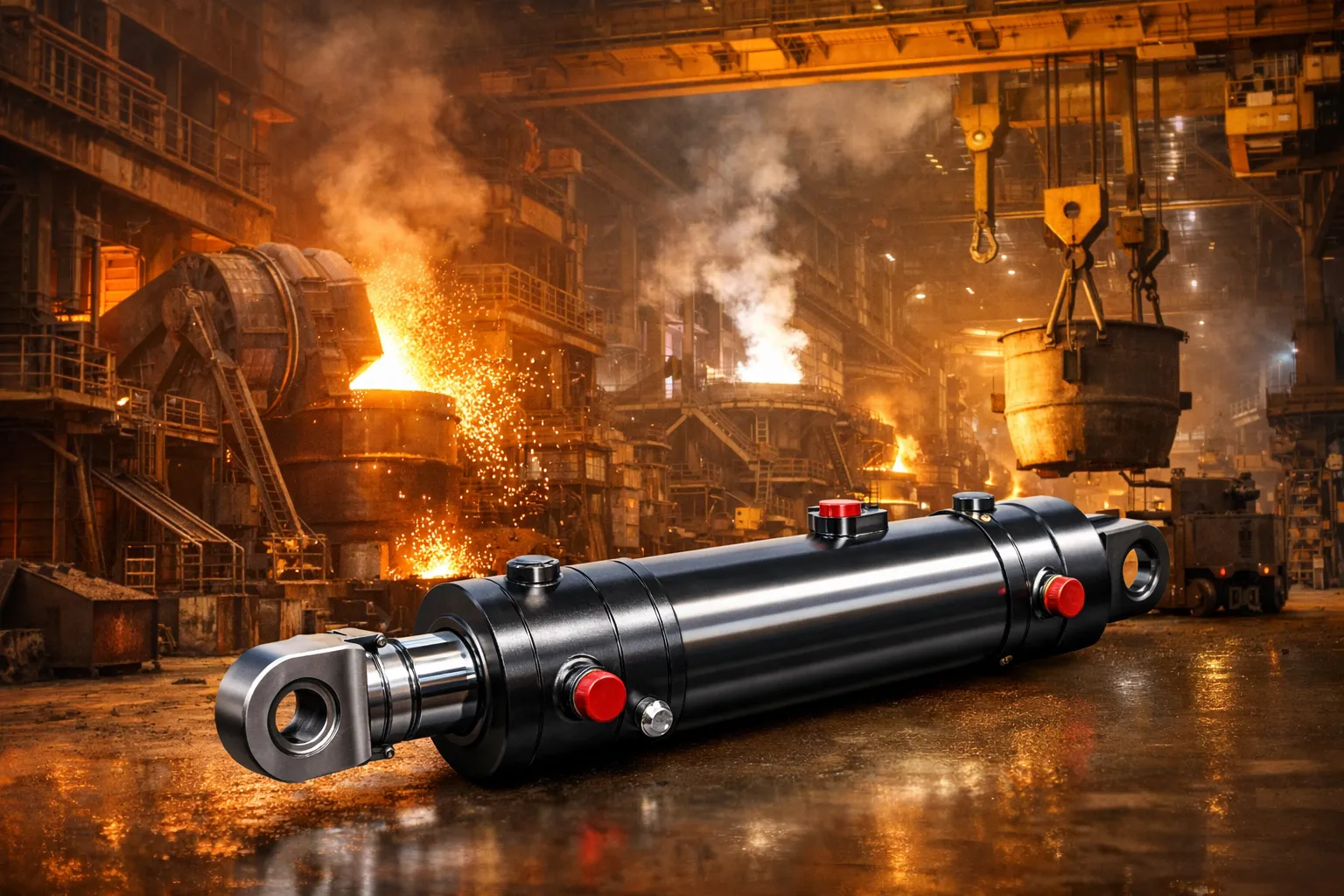
We have meticulously engineered our Taphole Control Hydraulic Cylinder to survive where others fail. By utilizing a heavy-duty welded structure crafted from high-strength Q345D alloy steel, combined with a proprietary high-temperature resistant nickel-plated surface treatment, we provide an impenetrable shield against slag adhesion. Plant managers and procurement directors across South Korea, Japan, and the broader East Asian industrial corridor rely on our premium hydraulic parts to drastically reduce the frequency of maintenance interventions. By investing in a purpose-built double acting hydraulic cylinder that inherently resists the brutal conditions of the furnace, facilities significantly lower their long-term hydraulic cylinder price metrics by minimizing replacement cycles and securing uninterrupted, profitable production.
Comprehensive Technical Parameters and Customization Range
Precision engineering requires exacting specifications. Every metallurgical facility operates with distinct mechanical linkages, spatial constraints, and hydraulic pressure requirements. We offer a highly customizable platform to ensure flawless integration with your existing converter setup. The table below details the primary specifications and the expansive customizable boundaries of our specialized Taphole Control Cylinder solutions.
| Technical Attribute | Standard Specification & Customizable Engineering Range |
|---|---|
| Industry Segment | Metallurgy |
| Equipment Category | Converter (Basic Oxygen Furnace) |
| Subsystem & Action | Furnace Mouth System / Precise opening and closing of the taphole |
| Hydraulic Cylinder Name | Taphole Control Cylinder (Also known as Taphole Control Hydraulic Cylinder) |
| Action Method | Double acting hydraulic cylinder (Providing powered extension and retraction) |
| Structure Type | Piston Cylinder (Ensuring robust linear force distribution) |
| Manufacturing Structure | Heavy-Duty Welded Construction (Eliminates tie-rod fatigue) |
| Material System | Q345D Low-Alloy High-Strength Steel (Exceptional impact toughness) |
| Protective Surface Treatment | Proprietary High-Temperature Nickel Plating (Pore-free application) |
| Environmental Rating | High Temperature + Severe Molten Slag Corrosion |
| Typical Failure Mode Prevented | Corrosion perforation caused by acidic slag adherence on the rod |
| Recommended Configuration | High-temperature nickel layer combined with FKM/Viton sealing architecture |
| Mounting Options | Trunnion, Heavy Clevis, Flange (Tailored perfectly to furnace geometry) |
Precise Working Principle in High Heat Environments
To accurately predict the longevity and reliability of a mechanical system, one must deeply understand its fundamental fluid dynamics under extreme stress. The operational sequence of the Taphole Control Cylinder is a masterclass in controlled, unyielding force. Functioning strictly as a specialized double acting hydraulic cylinder, this unit utilizes high-pressure, non-flammable hydraulic fluid—typically water-glycol in modern steel mills—to generate immense linear force in two distinct directions. When the converter tilts to commence the tapping phase, absolute timing and smooth actuation are critical to separate the pure liquid steel from the floating slag blanket.
Upon receiving the command to open the taphole, high-pressure fluid is instantly routed into the cap end (blind end) port. This fluid exerts immense hydrostatic pressure uniformly against the massive surface area of the hydraulic cylinder piston. The resulting extension stroke physically drives the heavy refractory plug or slide gate mechanism forward. The intrinsic structural integrity of the Q345D steel barrel ensures that radial expansion or deflection remains virtually non-existent, even amidst the violent vibrations characteristic of the oxygen blowing phase. Conversely, when the molten flow must be arrested, the directional control valves shift in milliseconds. Pressurized fluid floods the rod end port, executing a high-velocity, positively controlled retraction stroke that forcefully seals the taphole.
During this entire cyclic process, the exterior of the hydraulic cylinder faces intense radiant heat and a barrage of splashing molten slag. It is here that our advanced metallurgy proves its worth. The external high-temperature nickel layer acts as continuous, impenetrable armor. It vigorously repels the molten slag that would otherwise fuse directly to standard hard chrome rods. This flawless orchestration of fluid dynamics and advanced material science is repeated thousands of times seamlessly, relying on perfectly calibrated hydraulic cylinder components working in absolute unison to prevent catastrophic downtime.
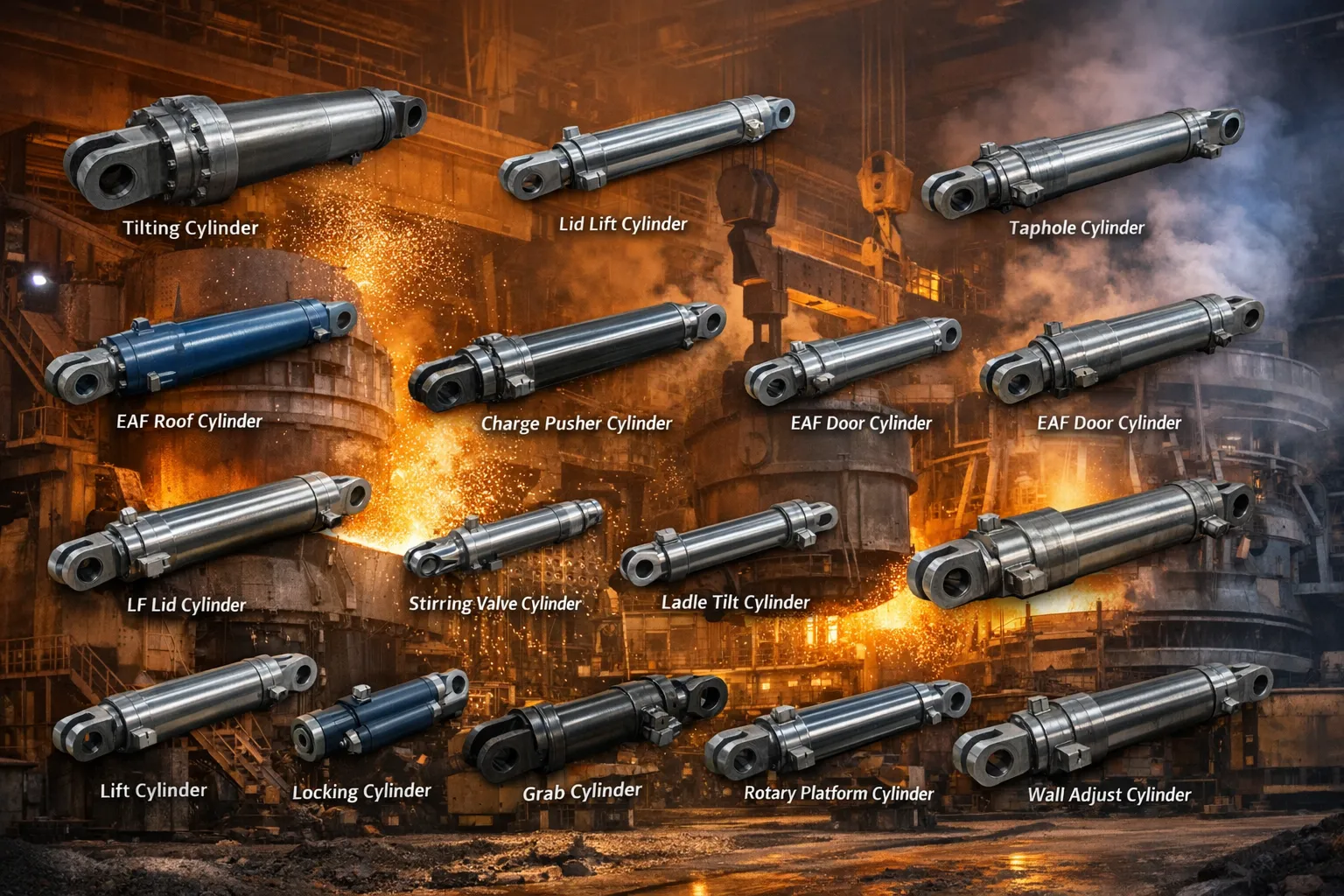
Seamless Direct Replacement for Global Brands
During critical maintenance turnarounds, engineering departments and procurement teams cannot afford the luxury of excessive downtime required to redesign complex furnace mechanical linkages. Recognizing this universal industrial pain point, our specialized design department has engineered our Taphole Control Hydraulic Cylinder series to conform strictly to global heavy-duty mounting standards, including ISO 6022 and ISO 6020 dimensional profiles. Because of this rigorous adherence, our highly specialized metallurgical cylinders serve as an immediate, direct-fit upgrade for failing standard OEM equipment.
We possess the engineering archives and capability to perfectly and seamlessly replace standard fluid power systems originally manufactured by renowned global brands such as Bosch Rexroth, Parker Hannifin, Eaton Vickers, SMC, and Moog.
(Please note: The explicit mention of these respected manufacturing brands is provided strictly to assist your plant engineers in identifying exact mounting dimensions, stroke profiles, and facilitating technical cross-reference. We operate as an independent, premium hydraulic cylinder manufacturer, and this reference does not imply any trademark infringement, direct commercial affiliation, or endorsement by these entities.)
When facility managers explore options for fixing hydraulic cylinders, they quickly realize that swapping out a fundamentally flawed original design for our upgraded nickel-plated Q345D structure yields a vastly superior return on investment. Upgrading your existing machinery to our hydraulic rams means bypassing the necessity of modifying your costly furnace framework, delivering an engineered component that fundamentally outlasts the original.
Five Core Technical Advancements for Metallurgy
What objectively elevates our specialized equipment above conventional commercial units? The answer lies in targeted, uncompromising metallurgical engineering. We do not build generic fluid power parts; we engineer specific solutions to the exact failure modes observed on the converter deck. Here are the five foundational engineering advantages of our product:
- 1.Advanced High-Temperature Nickel Plating: Standard industrial hard chrome plating is inherently brittle; it develops microscopic thermal fissures under severe heat cycling. When acidic molten slag contacts these fissures, it rapidly destroys the base metal, leading to corrosion perforation. Our proprietary electroless nickel plating deposits a uniform, ductile, completely non-porous barrier. This highly lubricious layer aggressively repels molten slag spatter, completely eliminating the threat of rod surface degradation.
- 2.High-Rigidity Q345D Welded Construction: The extreme lateral forces and heavy vibrations exerted by a tilting converter rapidly destroy traditional tie-rod cylinder designs, causing them to stretch and leak. We utilize heavy-wall Q345D low-alloy steel for the barrel, rod, and end caps. The fully penetrated welded construction provides exceptional yield strength and maintains perfect geometric stability during the heaviest mechanical shock loads.
- 3.Ultra-Low Friction Thermal Sealing Technology: At ambient temperatures exceeding 150 degrees Celsius near the furnace mouth, standard nitrile (NBR) elastomers harden, carbonize, and disintegrate. We deploy highly specialized fluoroelastomer (FKM/Viton) and polytetrafluoroethylene (PTFE) composite seal profiles on the hydraulic cylinder piston and rod gland. These components retain their elastomeric memory, preventing fluid bypass while minimizing stick-slip friction during critical slow-speed adjustments.
- 4.Optimized Fluid Thermal Dissipation: The internal porting geometries and flow paths are intentionally over-engineered to maximize rapid fluid exchange. This continuous internal flushing transfers radiant thermal energy away from the critical rod gland seals, actively preventing the fire-resistant hydraulic fluid from degrading, coking, or forming localized hotspots within the enclosed heavy steel barrel.
- 5.Extended Fatigue Life Optimization: The repetitive, forceful actuation of the furnace mouth induces severe mechanical fatigue over months of continuous operation. By applying rigorous finite element analysis (FEA) during the design phase, we eliminate stress concentrations in the trunnion and clevis weld zones. Post-weld heat treatment ensures a mechanical fatigue life that regularly outlasts standard market alternatives by massive margins.
Autonomous Manufacturing Process & Stringent Quality Control
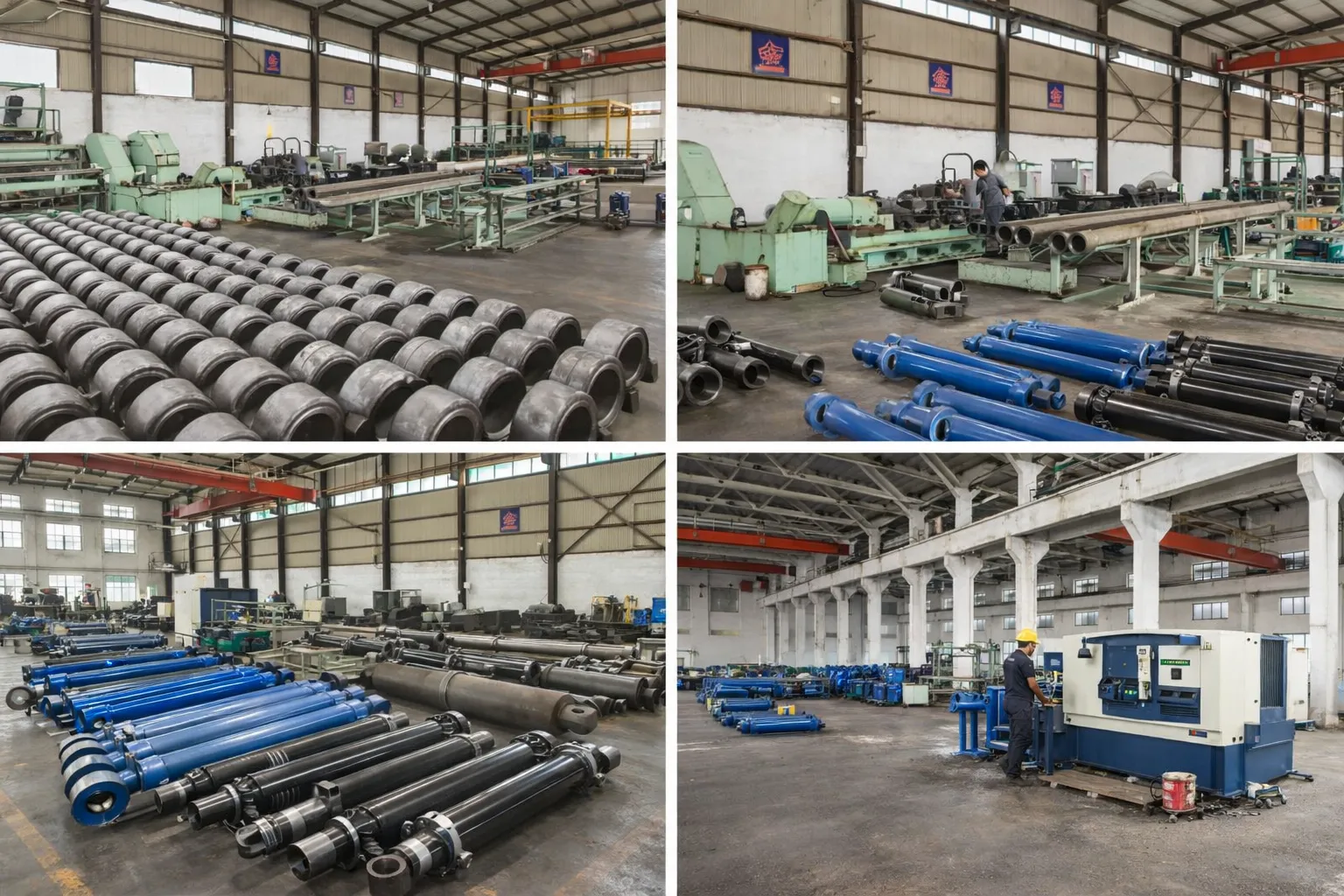
Absolute reliability in the primary steel industry requires uncompromising control over the entire production environment. We do not rely on outsourced machining or third-party assembly. As a fully vertically integrated hydraulic cylinder manufacturer, every single phase of production—from raw material forging to the final pressure test—is executed and meticulously monitored under strict ISO 9001 quality management protocols within our own expansive facilities.
The uncompromising manufacturing cycle begins with multi-point ultrasonic flaw detection of the raw Q345D steel billets to ensure absolute structural integrity and zero internal voids. Following precision CNC turning, the heavy cylinder barrels undergo a specialized multi-stage deep-hole honing process to achieve a mirror-like internal surface finish (Ra 0.2 to 0.4 micrometers). This hyper-precise tolerance is absolutely critical for maximizing the lifecycle of the high-temperature PTFE piston seals. All structural welds on the mounts and end caps are executed via automated Submerged Arc Welding (SAW), ensuring deep penetration and flawless, uniform seams. These pressure-retaining welds are subsequently verified through non-destructive radiographic (X-ray) inspection to guarantee total safety.
Before any unit is approved for global dispatch, 100% of our products are subjected to rigorous computerized hydrostatic factory testing. We pressurize every Taphole Control Cylinder to 150% of its rated maximum operating pressure, utilizing sensitive digital sensors to monitor for microscopic pressure drops that would indicate internal bypass. Every dispatched unit is permanently stamped with a unique serial number, providing our B2B clients with complete material traceability and lifetime technical documentation. It is this systematic, zero-defect philosophy that drastically reduces the need for constant hydraulic cylinder repair in the field.
Expansive Cross-Industry Applications
While this specific heavy-duty architecture is heavily optimized to conquer the extreme challenges of metallurgical converter tapholes, the underlying high-strength engineering principles translate perfectly to other extreme-duty environments. Any industrial sector facing massive lateral loads, highly abrasive airborne contamination, and continuous high-impact forces can significantly benefit from our fluid power advancements.
Beyond the steel mill, the sheer structural rigidity of our Q345D welded designs makes them an exceptional upgrade for heavy earthmoving equipment. They serve as nearly indestructible lift cylinders for massive excavators, piling rigs, and tunnel boring machines where side-loading forces are a constant operational threat. Discover our incredibly robust solutions engineered specifically for the Construction Machinery Industry. Furthermore, the advanced dust resistance and superior thermal sealing technologies we deploy are highly valued in deep-shaft and surface extraction operations. Learn more about how we combat abrasive slurries and rock dust in the Mining Industry.
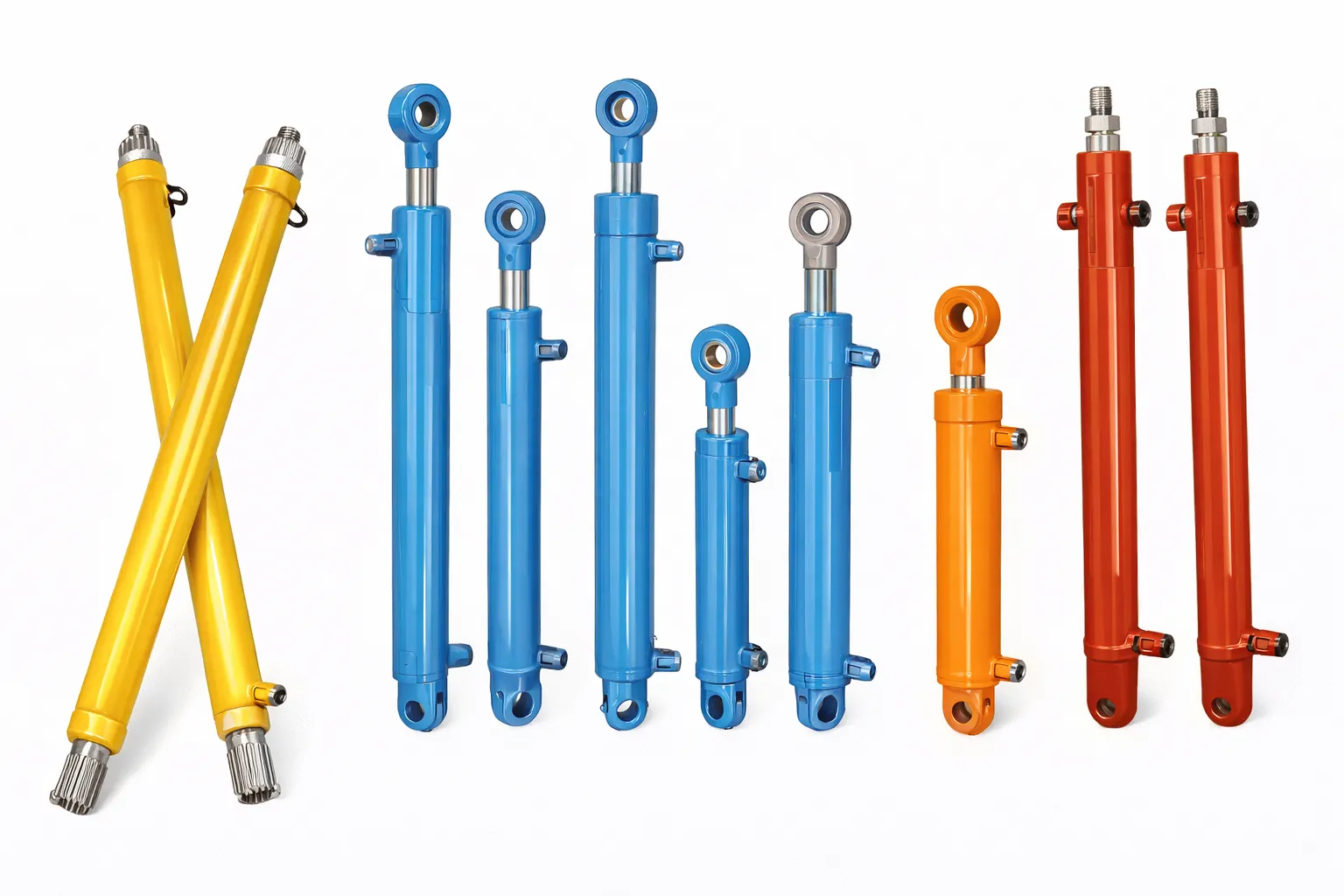
Additionally, our highly customized actuators perform flawlessly in massive plastic and rubber injection molding machinery demanding immense, unyielding clamping force, automated logistics material handling equipment, specialized new energy applications such as wind turbine blade pitch control, and harsh offshore marine environments requiring maximum salt-spray corrosion resistance via our specialized nickel plating.
Comparative Analysis: Ordinary Hydraulic Cylinders vs. High-Performance Solutions
Corporate procurement departments must constantly weigh initial capital expenditure against the debilitating long-term costs of unplanned furnace downtime. To definitively demonstrate our value proposition, the following responsive table illustrates the profound engineering differences between utilizing ordinary commercial components and our specialized metallurgical actuator.
| Critical Performance Metric | Ordinary Standard Hydraulic Cylinder | Our Taphole Control Cylinder |
|---|---|---|
| Rod Surface Treatment | Standard Hard Chrome (Inherent micro-cracks allow acid and slag penetration) | High-Temperature Nickel Plating (Amorphous, non-porous shield resists slag) |
| Barrel & Structural Material | Standard 45# Carbon Steel (Susceptible to stretching and fatigue cracking) | High-Strength Q345D Alloy (Exceptional yield strength and impact toughness) |
| Sealing Thermal Limit | Max 80°C to 100°C (Nitrile/Polyurethane melts and carbonizes) | Up to 220°C Continuous (Advanced FKM / PTFE thermal composites) |
| Assembly Architecture | Tie-Rod Assembly (Vibration causes nuts to loosen, leading to seal blowout) | Fully Welded Heavy-Duty Piston Assembly (Absolute structural rigidity) |
| Primary Failure Mode | Rapid corrosion perforation leading to catastrophic fluid loss near the furnace | Gradual, predictable seal wear only after millions of operational cycles |
| Expected Lifespan in BOF | 3 to 6 months before major repair or full replacement | 18 to 36 months (Significantly reducing Total Cost of Ownership) |
Field Proven: 5 Real-World Case Studies in the Asian Market
The true measure of heavy engineering excellence is proven solely on the production floor. Our custom technical solutions actively drive operations across major steelmaking hubs globally, with a dominant presence in East Asia. Here are five detailed deployments showcasing how our interventions transformed plant reliability in South Korea and surrounding nations.
Case Study 1: Resolving Chronic Furnace Failures in Pohang
Location & Client: Major Integrated Steelworks Facility, Pohang, South Korea.
Application Context: 300-ton basic oxygen converter taphole mechanism requiring high-frequency actuation.
Initial Connection: The plant’s engineering procurement team discovered our technical capabilities through a targeted web search for a specialized hydraulic cylinder manufacturer in February 2024.
The Challenge: Ambient temperatures routinely spiked above 200 degrees Celsius near the furnace mouth. Standard nitrile seals were melting, and the chrome rods suffered severe corrosion perforation from slag spatter, leading to a catastrophic fluid leak every three to four months.
The Solution & Result: We reverse-engineered their setup and provided a direct drop-in replacement utilizing our Q345D welded barrel and proprietary nickel plating. Installed in April 2024, the units have operated continuously for over 20 months without a single leakage event, saving the plant hundreds of thousands in avoided downtime.
“The thermal resilience of these actuators is outstanding. The nickel layer completely solved the slag adhesion issue, and we have rewritten our maintenance intervals entirely based on this new reliability.” — Head of Mechanical Maintenance, Pohang
Case Study 2: Superior Slag Resistance Overhaul in Osaka
Location & Client: Specialty Steel and Heavy Forging Plant, Osaka, Japan.
Application Context: Electric arc furnace slag door actuation and bottom pouring control.
Initial Connection: Referred by an international metallurgical consultant highly familiar with the extreme durability of our premium hydraulic parts.
The Challenge: Constant exposure to molten slag was physically destroying the piston rods of their existing double acting hydraulic cylinder units. The hard chrome was flaking, leading to severe rod scoring and heavy fluid contamination in their central hydraulic power unit.
The Solution & Result: We implemented our heavy-duty nickel plating process on customized replacement cylinders. During a 14-month scheduled inspection cycle in November 2025, the engineers reported that the rods showed absolutely zero pit corrosion, flaking, or surface degradation.
“The nickel coating performs exactly as promised. It effectively rejects the molten slag that previously destroyed our standard European OEM equipment in weeks.” — Senior Process Engineer
Case Study 3: Advanced Facility Modernization in Kaohsiung
Location & Client: Expanding Steel Milling Enterprise, Kaohsiung, Taiwan.
Application Context: Continuous casting machine withdrawal mechanism and ladle turret control.
Initial Connection: Reached out after viewing our highly detailed digital catalog of specialized metallurgical hydraulic rams on a major B2B sourcing platform.
The Challenge: High-frequency vibration and severe mechanical shock were causing microscopic stress fractures in the tie-rods and end caps of their standard, off-the-shelf commercial cylinders.
The Solution & Result: We supplied completely custom cylinders featuring deep-penetration automated SAW welding and integrated precision hydraulic cushioning. The kinematic dampening absorbed the massive shock loads, completely halting the weld fractures and extending the mechanical lifecycle by 300%.
“The operational smoothness achieved with their integrated cushioning technology has dramatically extended the life of our entire mechanical support structure.” — Facility Operations Director
Case Study 4: Emergency Shut-off Sequence Upgrade in Incheon
Location & Client: Major Alloy Smelting Plant, Incheon, South Korea.
Application Context: Emergency taphole closure safety system during power outages.
Initial Connection: Contacted our technical engineering department seeking an immediate hydraulic cylinder repair alternative for obsolete OEM gear in early 2025.
The Challenge: The customer urgently needed an ultra-reliable, fail-safe mechanism to prevent catastrophic slag carryover during unexpected power losses. The legacy system utilized worn valves that drifted under the heavy mechanical load of the closure gate.
The Solution & Result: Rather than attempting to patch a fundamentally flawed design, we rapidly manufactured new custom Q345D piston cylinders equipped with high-flow pilot-operated check valves integrated directly into the cylinder head. They passed stringent safety audits instantly and hydraulically locked the massive load with absolute zero drift.
“Their engineering team didn’t just sell us a replacement part; they provided a comprehensive safety solution that demonstrably improved our plant-wide risk profile.” — Safety Controls Manager
Case Study 5: High-Force Compact Optimization in Busan
Location & Client: Heavy Machinery Subcontractor and Integrator, Busan, South Korea.
Application Context: Modernization of a smaller-capacity converter tipping and taphole framework.
Initial Connection: Sourced our engineering expertise at a regional heavy industry components exposition focusing on custom hydraulics.
The Challenge: The modernization project had incredibly tight spatial constraints. They required a high-force actuator with an exceptionally compact physical footprint, as modifying the massive cast iron furnace trunnion ring to fit a larger cylinder was entirely cost-prohibitive.
The Solution & Result: We engineered a specialized high-pressure (31.5 MPa) compact cylinder variant using Q345D ultra-high-tensile materials. This specific unit delivered the exact required crushing force within a 20% smaller physical envelope, perfectly fitting the existing clevis mounts.
“We were facing massive, budget-breaking modification costs until we installed this compact, high-pressure design. It was the perfect engineering fit and saved us weeks of structural redesign.” — Chief Modernization Architect
B2B Engineering Frequently Asked Questions (FAQ)
Selecting the correct heavy-duty fluid power systems for extreme metallurgy requires detailed engineering clarity. Below, our technical team addresses the most common and critical inquiries from industrial procurement directors and plant maintenance teams.
Secure Your Metallurgical Operations Today
Do not allow substandard fluid power components to dictate your production schedule or jeopardize the critical safety of your converter deck. Stop continuously fixing hydraulic cylinders that were never designed for this heat. Partner with an expert manufacturer capable of engineering tailored, high-temperature actuation solutions specifically designed to eliminate corrosion perforation.
Editor: Cxm