Trencher Depth Cylinder for Walking Tractors
Eliminate piston rod bending and ensure flawless trenching precision with our heavily fortified compact fluid power solutions. Engineered specifically for light-load agricultural attachments operating in highly restrictive, challenging soil conditions.
Product Overview: The Core of Compact Trenching Accuracy
In the densely cultivated and geographically challenging agricultural landscapes of East Asia—particularly across South Korea, Japan, Taiwan, and Southeast Asia—massive industrial tractors are often entirely impractical. Terraced hillsides, flooded rice paddies, tightly spaced orchards, and small-plot commercial vegetable farms dictate the absolute necessity for highly maneuverable, compact farming equipment. In these restricted environments, the walk-behind tractor (frequently referred to as a two-wheel tractor or power tiller) serves as the primary mechanical workhorse. To maximize the utility of these agile machines, operators rely on a variety of specialized rear-mounted attachments. One of the most critical operations performed is trenching and furrowing—creating precise channels for irrigation piping, field drainage, or direct seedbed preparation. The exact depth and consistency of these trenches directly influence water flow efficiency and ultimate crop yield. The crucial mechanical component responsible for actively managing this exact blade elevation is the Trencher Depth Cylinder.
Although trenching with a walking tractor is technically classified within a “light load” environmental grade when compared to massive earthmoving excavators, the physical dynamics acting upon the implement are highly deceptive and intensely destructive. As the walking tractor propels forward, the trenching blade slices through the earth. If the blade strikes a hidden field stone, a dense pocket of hardpan clay, or a tough subterranean root system, the forward momentum of the tractor creates an instantaneous, severe lateral side-load against the implement framework. Standard commercial hydraulic parts utilized in these positions suffer from a highly specific and devastating failure mode: piston rod bending. When a standard, thin cylinder rod is extended to hold a deep trenching angle, it acts as a vulnerable, unsupported column. The sudden lateral shockwave forces the rod to buckle under the compressive side-load. Once the rod bends even a fraction of a millimeter, the internal seals are instantly compromised, pressurized fluid leaks rapidly, and the implement becomes entirely paralyzed, leaving the farmer stranded in the mud and facing expensive, immediate fixing hydraulic cylinders.
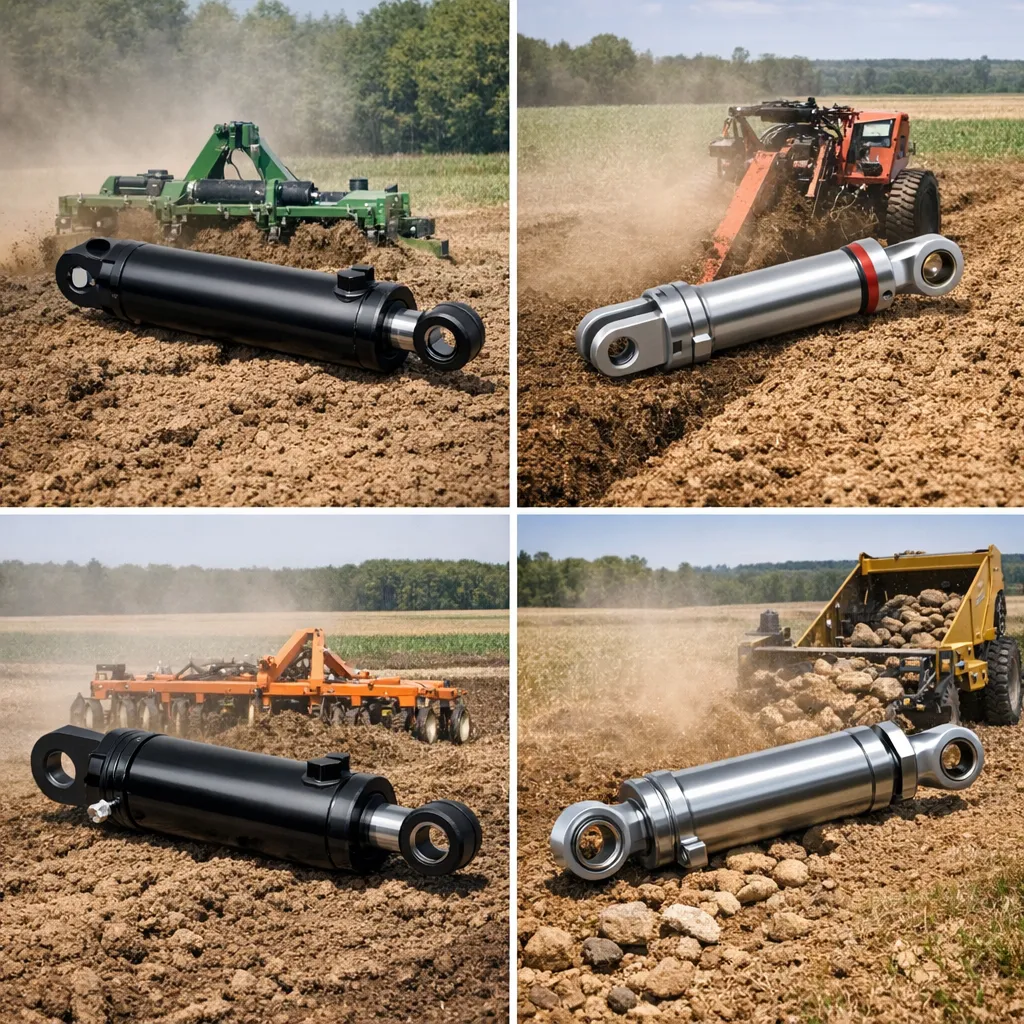
Operating globally as a premier, highly specialized hydraulic cylinder manufacturer, our engineering division has systematically targeted and eliminated this exact mechanical vulnerability. We completely reject rod bending as a normal operational hazard for compact machinery. We have meticulously redesigned the Trencher Depth Hydraulic Cylinder to permanently conquer this failure mode. By engineering a compact, short-stroke configuration combined with a mathematically increased rod diameter, we exponentially increase the buckling strength of the actuator. Fabricated from premium carbon steel and featuring a fully welded construction, this compact actuator effortlessly absorbs sudden lateral impacts without deflecting. When agricultural fleet managers and aftermarket distributors evaluate long-term reliability, our highly competitive hydraulic cylinder price combined with zero structural downtime delivers absolute confidence and superior market value for the modern small-scale farmer.
Comprehensive Technical Parameters
Ensuring flawless mechanical integration onto compact walking tractors requires absolute transparency in dimensional and metallurgical specifications. The data matrix below delineates the standard, highly fortified configuration of our trenching depth control actuator. Because we operate as a primary, fully vertically integrated manufacturer, we possess the comprehensive CNC machining capacity to easily adapt closed pin-to-pin lengths, operational stroke dimensions, and exact mounting clevis geometries to perfectly align with any specific OEM tiller frame without requiring dangerous field modifications.
| Engineering Attribute & Metric | Precise Specification Details |
|---|---|
| Target Industrial Sector | Agriculture / Small-Scale Farming Mechanization |
| Primary Equipment Category | Walking Tractor Attachments (Power Tillers, Walk-Behind Tractors) |
| Subsystem Application Focus | Trencher / Furrower Depth Control Mechanism |
| Official Product Designation | Trencher Depth Cylinder |
| Kinematic Action Mechanism | Double acting hydraulic cylinder |
| Internal Structural Format | Small Cylinder (Compact Profile Design) |
| Manufacturing Assembly Method | Fully Welded Rigid Construction |
| Core Base Material System | Premium High-Strength Carbon Steel |
| Rod Surface Metallurgy | Hard Chrome Plating (Advanced Anti-Corrosion & Wear Resistance) |
| Environmental Threat Rating | Light Load Classification / High Soil Moisture & Mud Exposure |
| Primary Working Condition Objective | Precise trenching depth regulation and rapid transport lifting |
| Typical Industry Failure Mode Prevented | Piston Rod Bending / Buckling due to lateral stone impacts |
| Recommended Engineering Upgrade | Optimized Short Stroke Limit + Appropriately Increased Rod Diameter |
Operational Dynamics: Engineering Fluid Precision in the Dirt
To fully understand why our structural upgrades are essential, one must look closely at the fluid mechanics and mechanical linkages of the walking tractor. The trencher attachment sits at the rear of the machine. The operator steers the tiller manually while actuating a compact hydraulic directional control valve typically located near the handlebars. To initiate trenching, fluid from the tractor’s compact auxiliary hydraulic pump is routed directly into the base port (cap end) of the actuator.
Because the system relies entirely on a double acting hydraulic cylinder format, the incoming pressurized fluid pushes forcefully against the flat back of the internal hydraulic cylinder piston. This volumetric pressure forces the heavily chromed rod to extend, which mechanically levers the trencher attachment frame downward, actively driving the cutting blade deep into the earth. Attempting to use a single acting hydraulic cylinder in this setup fails completely. A single-acting unit relies purely on gravity or a weak return spring to lower the implement; a lightweight walking tractor attachment does not have enough dead weight to slice through compacted, dry clay. Active, pressurized pushing and pulling forces are an absolute operational requirement to maintain a consistent trench depth. When the correct depth is reached, the valve is closed, trapping the fluid and turning the cylinder into a rigid steel strut that holds the blade firmly at that specific elevation.
The supreme mechanical test of the unit occurs when the blade is locked in the downward position and the tractor is actively driving forward. If the tip of the trencher hits a buried stone, the implement violently jolts sideways. Because we utilize an exceptionally short operational stroke combined with a much thicker rod diameter than the standard industry offering, our design acts like a stiff, unyielding steel pillar. It easily absorbs the lateral bending moment without buckling. This preserves the perfect concentricity of the internal seals, guaranteeing the farmer can continue working without the fear of a sudden fluid blowout and effectively ending the constant need for hydraulic cylinder repair.
Seamless Aftermarket Compatibility & OEM Integration
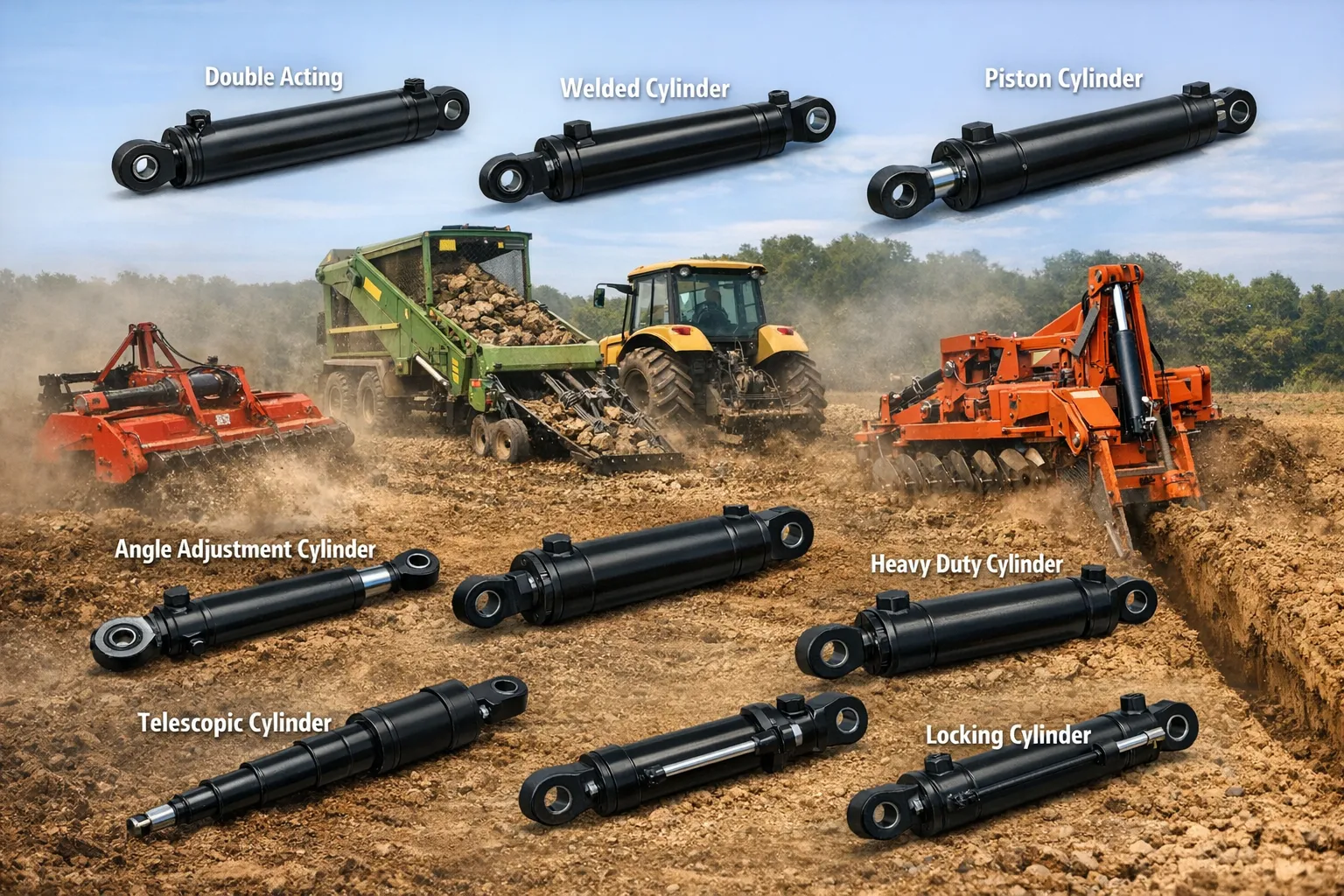
When a small-scale farmer experiences an equipment breakdown during a critical, weather-dependent planting season, finding an immediate, perfectly fitting replacement is paramount. They do not have the time, heavy equipment, or welding skills required to modify their tractor frame to accept a mismatched generic part. We have meticulously evaluated the dimensional layouts of the most popular walking tractors used across the Asian agricultural sector. By perfectly matching retracted lengths, stroke limits, and clevis pin hole dimensions, our compact hydraulic rams serve as perfect, direct drop-in upgrades that require zero chassis modification.
Our customized, anti-bending fluid power solutions integrate flawlessly with trenching and furrowing attachments designed for industry-leading power tiller brands. We regularly supply heavy-duty replacements that are dimensionally compatible with walk-behind machinery manufactured by Daedong (KIOTI), Tongyang (TYM), Kukje Machinery, LS Mtron, Kubota, Yanmar, Iseki, Honda, and Mitsubishi. (Please Note: The explicit mention of these original equipment manufacturer brands is provided strictly to demonstrate accurate dimensional compatibility and assist local mechanics in straightforward parts selection; it does not imply official OEM endorsement, sponsorship, or trademark infringement.)
Core Engineering Advantages: Small Profile, Massive Strength
Generic, low-cost compact actuators are built for smooth, indoor automation, not the unpredictable dirt and vibration of a farm. We have packed serious, heavy-industry engineering defenses into the compact architecture of our Trencher Depth Hydraulic Cylinder to guarantee true, multi-season reliability.
1. Appropriately Increased Rod Diameter (Anti-Buckling)
The primary failure mode in walk-behind trenchers is rod bending from lateral rock strikes. We engineer this unit with an intentionally oversized rod diameter relative to its bore and stroke length. Utilizing Euler’s column buckling principles, this creates an incredibly rigid structural pillar that safely absorbs sideways kinetic energy without yielding, totally eliminating the risk of a bent rod paralyzing your equipment in the field.
2. Optimized Short Stroke Confinement
A longer cylinder rod is inherently more susceptible to bending under side-load leverage. Our engineers work closely with attachment designers to optimize the kinematics of the linkage, allowing us to utilize a specifically shortened stroke that achieves the necessary depth range while keeping the extended rod safely housed inside the barrel, drastically improving structural safety.
3. Fully Welded Monolithic Construction
Walking tractors, powered by single or twin-cylinder diesel engines, vibrate relentlessly. Traditional tie-rod cylinders use long bolts to hold the end caps; these quickly vibrate loose, leading to catastrophic fluid leaks. We utilize automated welding processes to fuse the carbon steel end caps directly to the barrel, creating a solid, leak-proof structure immune to high-frequency engine vibration.
4. Ultra-Low Friction Polyurethane Seals
Setting the exact trench depth requires smooth, stutter-free movement. Standard rubber seals grip the rod too tightly, causing the blade to jump unevenly (stick-slip) when adjusted. We integrate premium low-friction polyurethane seals that allow the rod to move smoothly in micro-increments, giving the operator perfect, effortless control over the implement depth.
5. Thick Hard Chrome Plating Defense
Walk-behind tractors frequently operate in wet, muddy paddies or highly irrigated orchards. To defend against severe surface rusting and pitting from wet soil and acidic fertilizers, the thick piston rod receives an extensive hard chrome plating treatment. This acts as impenetrable armor against moisture, ensuring the rod remains perfectly smooth and extends the lifespan of the internal wiper seals.
6. Premium Carbon Steel Efficiency
For light-load agricultural applications on compact machinery, minimizing excess weight while maintaining structural integrity is crucial. We utilize high-grade carbon steel for the barrel and mounts rather than expensive heavy alloys. This provides excellent tensile strength to resist internal pressure spikes while keeping the hydraulic cylinder price highly accessible for small-scale farmers.
Autonomous Manufacturing and Rigorous Quality Control
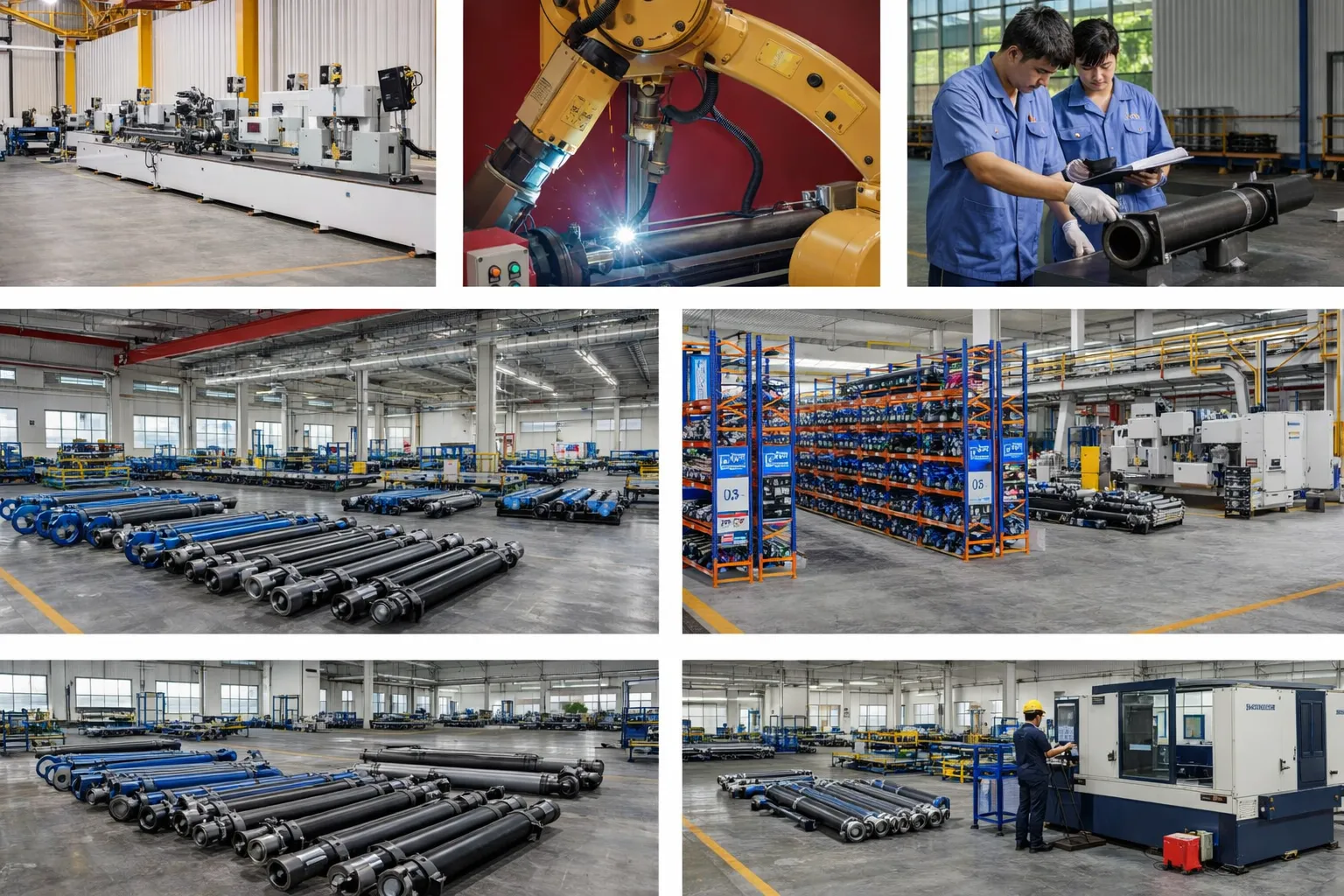
Producing reliable hydraulic parts requires total control over the manufacturing environment. We do not source cheap, pre-assembled compact cylinders; we are a fully integrated primary manufacturer. From the initial cutting of the high-strength carbon steel tubing to the precision CNC threading of the gland heads, every single step happens within our ISO-certified facilities. This ensures perfect internal concentricity, meaning the piston will never bind or scrape the inner barrel wall, guaranteeing smooth operation.
Our quality control protocols are absolute and famously strict. We refuse to rely on random statistical batch testing. Before any unit leaves our factory, it undergoes a mandatory 100% hydrostatic pressure test. We lock each Trencher Depth Hydraulic Cylinder into a dynamic rig, pressurize it well beyond its normal operating limit, and verify that there is absolutely zero internal fluid bypass and no external weeping at the welds.
Only after passing this rigorous test is the unit laser-etched with a serial number, ensuring permanent manufacturing traceability. This guarantees you receive a component truly ready for the dirt, significantly reducing the likelihood of premature failure and the need to constantly be fixing hydraulic cylinders.
Versatile Light-Load Industrial Applications
While the oversized anti-bending rod and compact welded housing were engineered specifically for the tight spaces and erratic shocks of walk-behind agricultural tractors, these exact same design traits make this unit highly effective in other compact industrial environments where space is limited but lateral rigidity is essential.
Equipment engineers consistently integrate our compact fluid power solutions into the construction machinery industry, particularly for operating the auxiliary attachments on mini skid-steers, motorized wheelbarrows, and walk-behind concrete saws used in urban operations. The reliable, smooth action of these small units also makes them highly valuable in the wind power and new energy sector, often used for positioning automated solar panel cleaning robots. Whether you need reliable actuation in a dusty mining industry conveyor gate or a rugged lift cylinder for automated factory logistics, our reinforced compact designs deliver.
Comparative Analysis: Standard Commodity vs. High-Performance Engineered
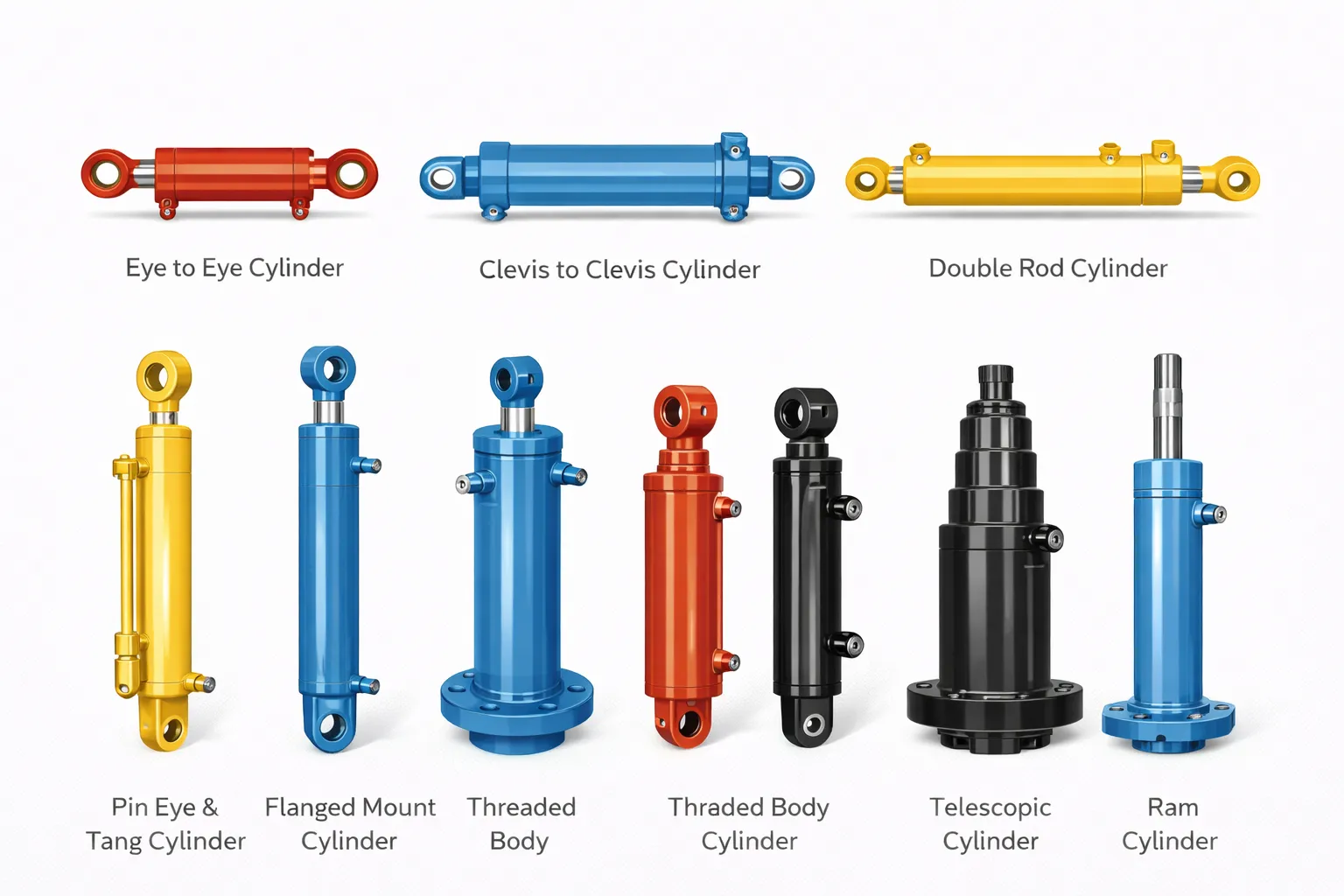
Purchasing a cheap, thin cylinder for a trencher is a false economy. A single bent rod ruins the unit entirely. This side-by-side comparison illustrates why investing in our purpose-built solution provides vastly superior long-term value for your fleet.
| Design Feature | Standard Ordinary Cylinder | Our Engineered Cylinder |
|---|---|---|
| Rod Diameter & Rigidity | Thin profile. Highly susceptible to buckling and bending when the blade hits field stones. | Appropriately Enlarged. Massive column strength resists lateral shock entirely. |
| Stroke Geometry | Generic long stroke. Leaves too much rod exposed, drastically increasing bending leverage. | Optimized Short Stroke. Keeps the rod safely housed inside the strong barrel during work. |
| Housing Profile | Bulky tie-rod assemblies that take up space and easily rattle loose on vibrating tractors. | Fully welded, monolithic barrel design fits perfectly into tight spaces and never vibrates apart. |
| Movement Control | Basic rubber seals cause stick-slip, making exact depth adjustments jumpy and difficult. | Low-friction polyurethane seals allow for silky smooth, precise micro-adjustments. |
| Operational ROI | Often bends within the first season, requiring total replacement and halting work. | Reliable operation over multiple intensive seasons with zero structural failure. |
Proven Field Performance: Real B2B Case Studies
We actively partner with agricultural dealers, equipment modifiers, and large farming cooperatives across East Asia. Our structural upgrades provide immediate, tangible benefits in the field. Here is how our cylinders perform in real operations.
Case 1: Eradicating Rod Bending in South Korean Ginseng Farming
Client Profile: A specialized, high-yield ginseng farming cooperative located in Chungcheongnam-do, South Korea.
Application & Challenge: Utilizing walking tractors with heavy trencher attachments to prepare precise drainage ditches between narrow crop beds. The soil contains hidden granite fragments. The standard OEM cylinders were failing constantly; hitting a stone would instantly bend the thin rod, locking up the fluid system and paralyzing the tractor in the field.
Connection & Solution: The cooperative’s lead mechanic searched online for upgraded hydraulic cylinder components after local dealers only offered the same weak factory replacements. We delivered a batch of our Trencher Depth Cylinder units featuring the enlarged rod and short-stroke geometry.
The Result: After retrofitting their 25 tractors in March 2024, they completed the entire planting season without a single bent rod.
“The thicker rod completely solved our problem. The tractors hit rocks, the attachment jumps, but the cylinder stays perfectly straight. It has saved us days of downtime and thousands in replacement parts.” — Mr. Park, Cooperative Mechanic (July 2024)
Case 2: Precision Depth Control in Japanese Vegetable Plots
Client Profile: An independent, high-yield organic vegetable farm operating extensive greenhouses in Kyoto, Japan.
Application & Challenge: Using compact tillers to dig very specific, shallow seedbed trenches. The standard cylinders suffered from stick-slip friction, making it impossible to adjust the depth by just a few centimeters smoothly. The constant need for hydraulic cylinder repair to replace worn, leaky seals was a major hassle inside the clean greenhouse.
The Solution & Results: They upgraded to our cylinders equipped with low-friction polyurethane seals. The operators could finally make fluid, micro-adjustments to the trench depth on the go. The exact control improved their planting efficiency significantly, and the welded design stopped all leaks.
“The movement is incredibly smooth now. I can adjust the trench depth perfectly without the blade jerking around. Excellent build quality that keeps our greenhouse floors clean.” — K. Ito, Farm Owner (October 2023)
Case 3: Aftermarket Reliability for a Taiwanese Equipment Dealer
Client Profile: A regional distributor of walking tractor attachments and aftermarket parts in central Taiwan.
Application & Challenge: Local farmers were complaining about the fragile OEM cylinders on their trenchers bending too easily in hard dirt. The distributor needed a structurally stronger replacement to offer as a premium upgrade without pricing themselves out of the highly competitive local market.
The Solution & Results: We provided bulk shipments of our reinforced carbon steel cylinders. By buying direct from the manufacturer, the dealer secured a fantastic hydraulic cylinder price. They quickly dominated the local aftermarket by offering a cylinder that physically would not bend under normal use.
“Providing a cylinder with a visibly thicker rod made selling these effortless. Farmers instantly understand the value just by looking at it. We have completely eliminated warranty returns for bent rods.” — Chen W., Parts Manager (January 2025)
Frequently Asked Questions
We maintain open communication with our equipment partners. Below are detailed answers to common technical questions regarding our compact depth control solutions.
1. Why does the rod bend on my factory trencher cylinder?
2. How does an increased rod diameter actually solve this issue?
3. Can these custom units act as drop-in replacements for my walking tractor?
4. Why can’t I just use a single acting hydraulic cylinder for this attachment?
5. Why is a fully welded construction better than tie-rods for a walking tractor?
6. Is it more cost-effective to continue fixing hydraulic cylinders or to replace them?
7. Do you supply replacement parts like seal kits for future maintenance?
8. What are the lead times for ordering parts for my regional dealership?
Ready to Eliminate Bent Rods from Your Fleet?
Stop replacing fragile factory parts with the exact same weak components. Upgrade your walking tractor attachments with our structurally reinforced depth control cylinders. Whether you need a single prototype to test on your farm or a bulk container for your dealership, our manufacturing team is ready to deliver precise, durable fluid power.
Editor: Cxm