
Product Overview
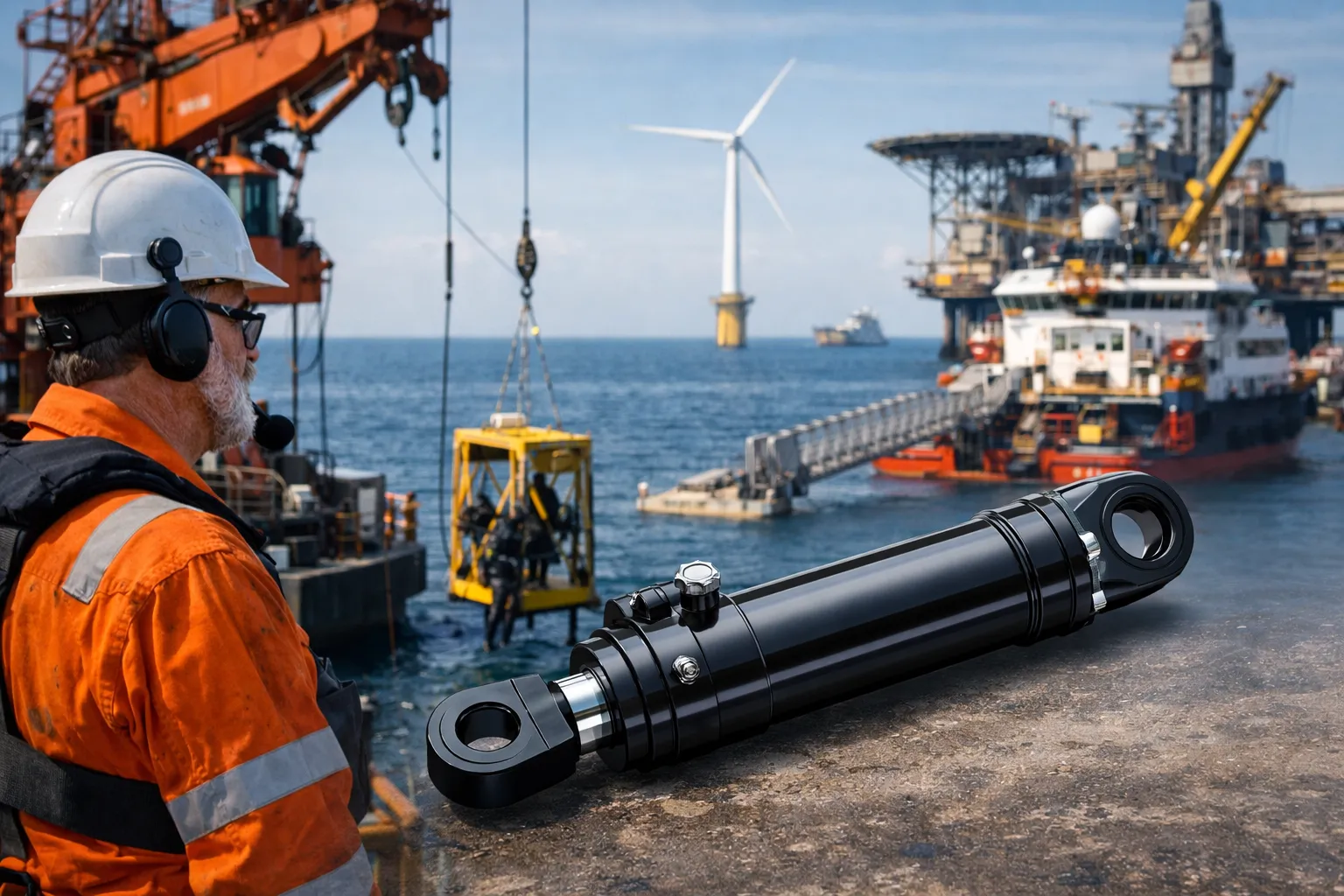
In offshore and port-based mooring operations, every component must earn its place through proven reliability. The winch brake cylinder sits at the heart of every mooring winch system, controlling cable tension and holding loads that can reach hundreds of tonnes. When that cylinder fails, the consequences range from expensive downtime to serious safety hazards on deck.
Our winch brake hydraulic cylinder is purpose-built for this exact environment. It is a double-acting piston cylinder with a welded construction, manufactured from Q345D low-alloy structural steel and finished with a nickel plating layer that resists saltwater corrosion at every exposed surface. Unlike general-purpose industrial cylinders adapted for marine use, this unit was designed from the ground up to handle the large-load impacts, vibration, and temperature swings typical of mooring equipment on vessels, offshore platforms, and port terminals across Korea and neighboring maritime regions.
As a dedicated hydraulic cylinder manufacturer, we control the entire production chain — from raw steel blanket inspection through final pressure testing. That means every hydraulic oil cylinder leaving our facility meets the same traceable standard, whether you order one prototype or five hundred units for a fleet retrofit.
Technical Specifications
Every project has different tonnage requirements, stroke lengths, and mounting constraints. Below are the customizable ranges we support for this winch brake hydraulic cylinder. If your specification falls outside these ranges, reach out — custom engineering is part of what we do.
Basic Specification Range
| Parameter | Customizable Range |
|---|---|
| Bore Diameter | 80 mm – 500 mm |
| Rod Diameter | 50 mm – 350 mm |
| Stroke Length | 50 mm – 3,000 mm |
| Working Pressure | 16 MPa – 35 MPa |
| Test Pressure | 1.5x rated working pressure |
| Action Type | Double-acting |
| Cylinder Structure | Piston type, welded construction |
| Piston Rod Speed | 0.01 m/s – 0.5 m/s |
Mounting Options
| Mounting Style | Application Note |
|---|---|
| Flange Mount (Front / Rear) | Most common for winch frame integration |
| Trunnion Mount | Allows angular movement under load |
| Clevis Mount | Pivot applications with moderate stroke |
| Foot / Side Lug Mount | Deck-level installation with limited overhead space |
| Custom Bracket | Designed to match OEM or retrofit dimensional requirements |
Materials and Surface Treatment
| Component | Material / Treatment |
|---|---|
| Cylinder Barrel | Q345D low-alloy steel, honed bore (Ra ≤ 0.4 μm) |
| Piston Rod | 42CrMo or CK45, hard chrome plated (0.03–0.05 mm) |
| Piston | Ductile iron or forged steel, precision ground |
| End Caps | Q345D, welded and stress-relieved |
| Seals | Multi-stage marine-grade seals (Parker, Hallite, or equivalent) |
| External Surface | Nickel plating for saltwater corrosion resistance |
| Optional Coatings | Ceramic rod coating, Epoxy paint system (offshore grade) |
Environmental Adaptability
| Condition | Rating / Range |
|---|---|
| Operating Temperature | -30 °C to +80 °C |
| Salt Spray Resistance | ≥ 1,000 hours (ASTM B117) |
| Environment Rating | Heavy-load impact, marine / offshore grade |
| Vibration Resistance | Compliant with DNV-GL / ABS structural vibration standards |
| IP Protection | IP66 standard, IP67 available on request |
How the Winch Brake Hydraulic Cylinder Works
A mooring winch needs to pay out cable under control, hold tension at a set point, and release quickly when commanded. The winch brake cylinder makes that happen through a straightforward but precisely engineered hydraulic sequence.
In its normal resting state, the brake is engaged — spring force or accumulator pressure pushes the piston rod outward to clamp the brake band or disc against the winch drum. This is a fail-safe design: if hydraulic pressure is lost for any reason, the brake holds automatically.
When the operator commands the winch to pay out or haul in cable, the hydraulic control system routes pressurized fluid to the retract side of the double-acting hydraulic cylinder. This overcomes the spring or accumulator force, pulling the piston rod inward and releasing the brake. The winch drum is then free to rotate under power.
During controlled braking — for example, maintaining constant tension on a mooring line while a vessel shifts position — proportional valve control meters the flow into and out of the cylinder, allowing partial brake engagement. This is where the quality of the hydraulic cylinder piston seals and bore finish matters most. Any internal leakage at this stage causes brake fade, which translates directly into uncontrolled cable drift.
The multi-stage seal arrangement in our cylinder is specifically configured to prevent internal leakage under sustained holding loads. Combined with the tight bore tolerances (honed to Ra 0.4 micrometers or better), this design keeps holding pressure stable over hours of continuous operation — a critical requirement in mooring applications where cables may remain tensioned for days at a time.
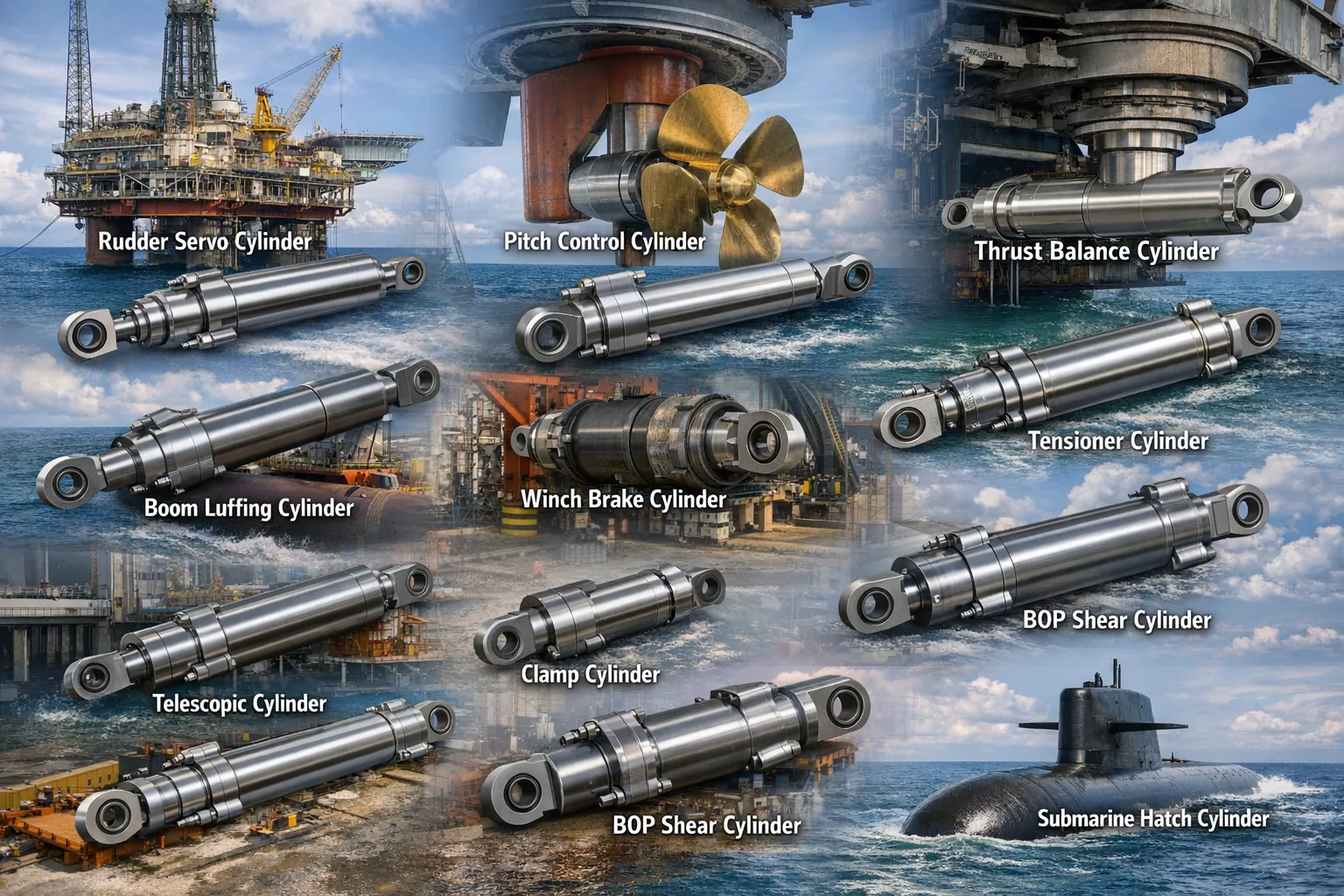
Compatible Brand Replacement
Note: The brand names listed below are mentioned solely to help you identify compatible replacement options for your existing mooring winch equipment. These are registered trademarks of their respective owners, and we are not affiliated with or endorsed by any of them.
Our winch brake hydraulic cylinder is engineered to serve as a drop-in or dimensionally adapted replacement for brake cylinders found in mooring winch systems manufactured by:
- Rolls-Royce Marine (now Kongsberg Maritime) — mooring and anchor handling winches
- MacGregor (Cargotec) — deck machinery and mooring systems
- Brattvaag / DMC — combined towing and mooring winches
- FUKUSHIMA / THK (Korea) — marine winch systems for coastal and offshore vessels
- Rapp Marine — hydraulic mooring winch systems
- Huisman — heavy-lift and offshore mooring equipment
- Bosch Rexroth / Parker Hannifin — OEM hydraulic cylinders used in third-party winch assemblies
We match critical dimensions including bore size, rod diameter, stroke, port configuration, and mounting geometry. If you have an existing hydraulic oil cylinder that needs replacement or remanufacture, send us the part drawing or nameplate details and we will confirm compatibility within 24 hours.
Core Technical Advantages
Multi-Stage Low-Friction Seal System
We use a proprietary multi-stage seal arrangement that combines a primary pressure seal, a buffer seal, and a wiper/scraper in each gland. This layout reduces dynamic friction by up to 30% compared to conventional single-seal designs, which means smoother brake modulation and less heat generation during partial braking cycles. Lower friction also means reduced hydraulic cylinder repair frequency over the service life.
High-Rigidity Barrel and Rod Manufacturing
The cylinder barrel is deep-hole bored from a single piece of Q345D steel and finished with a precision honing process to achieve a surface roughness of Ra 0.4 micrometers or finer. The piston rod is manufactured from 42CrMo alloy steel, induction hardened to HRC 55-60 on the surface layer, and then hard chrome plated. This gives you a rod that resists bending under side loads — a common issue in winch brake applications where the mounting frame flexes under heavy cable tension.
Nickel-Plated Corrosion Barrier
Every external surface of this cylinder receives an electroless nickel plating treatment. Unlike paint coatings that crack and peel in salt spray environments, nickel plating forms a continuous metallic barrier with inherent corrosion resistance. In salt spray testing (ASTM B117), our treated surfaces consistently exceed 1,000 hours before the first sign of base metal corrosion. This is a meaningful advantage for vessels and platforms operating in Korean coastal waters and the open Pacific.
Thermal Stability Across Operating Range
Mooring operations happen in everything from sub-zero North Pacific winters to tropical deck temperatures above 60 degrees Celsius. Our seal compounds and hydraulic fluid compatibility are validated across the full -30 to +80 degree Celsius operating range. The barrel and rod materials maintain their mechanical properties at these extremes, so you get consistent braking force regardless of season or deployment location.
Fatigue Life Optimized for Cyclic Loading
Mooring winch brake cylinders face a particular kind of stress: they hold static loads for extended periods, interrupted by rapid engagement-disengagement cycles. Our welded joints undergo post-weld heat treatment and ultrasonic inspection to eliminate residual stress concentrations. The piston rod thread roots are rolled, not cut, to improve fatigue resistance at the most vulnerable connection point. The result is a cylinder rated for a minimum of 500,000 full-load cycles before scheduled maintenance.
Leak-Free Holding Under Sustained Load
The primary failure mode in brake cylinders is internal leakage — fluid bypassing the piston seals under sustained holding pressure. Our multi-seal configuration, combined with the tight bore-to-piston clearance we maintain during manufacturing, keeps internal leakage below 0.5 cm³/min at maximum rated pressure. This translates to stable brake holding force with no perceptible drift, even during extended mooring periods lasting several days.
Modular Port and Sensor Integration
Each cylinder can be configured with SAE, BSPP, or metric port threads to match your existing hydraulic plumbing. Optional integrated pressure transducer bosses and linear position sensor mounts allow direct connection to the winch control system for real-time brake status monitoring — a feature increasingly required by classification societies for mooring equipment on newer vessels.
Designed for Field Serviceability
When maintenance is needed, it should be straightforward. Our gland design allows seal replacement without removing the entire cylinder from the winch frame. The piston rod end fittings use standard thread and retention methods, and we supply detailed service manuals with every order. For operators managing hydraulic parts inventory across a fleet, we also offer standardized seal kits and spare rod assemblies that ship within 48 hours from our warehouse.
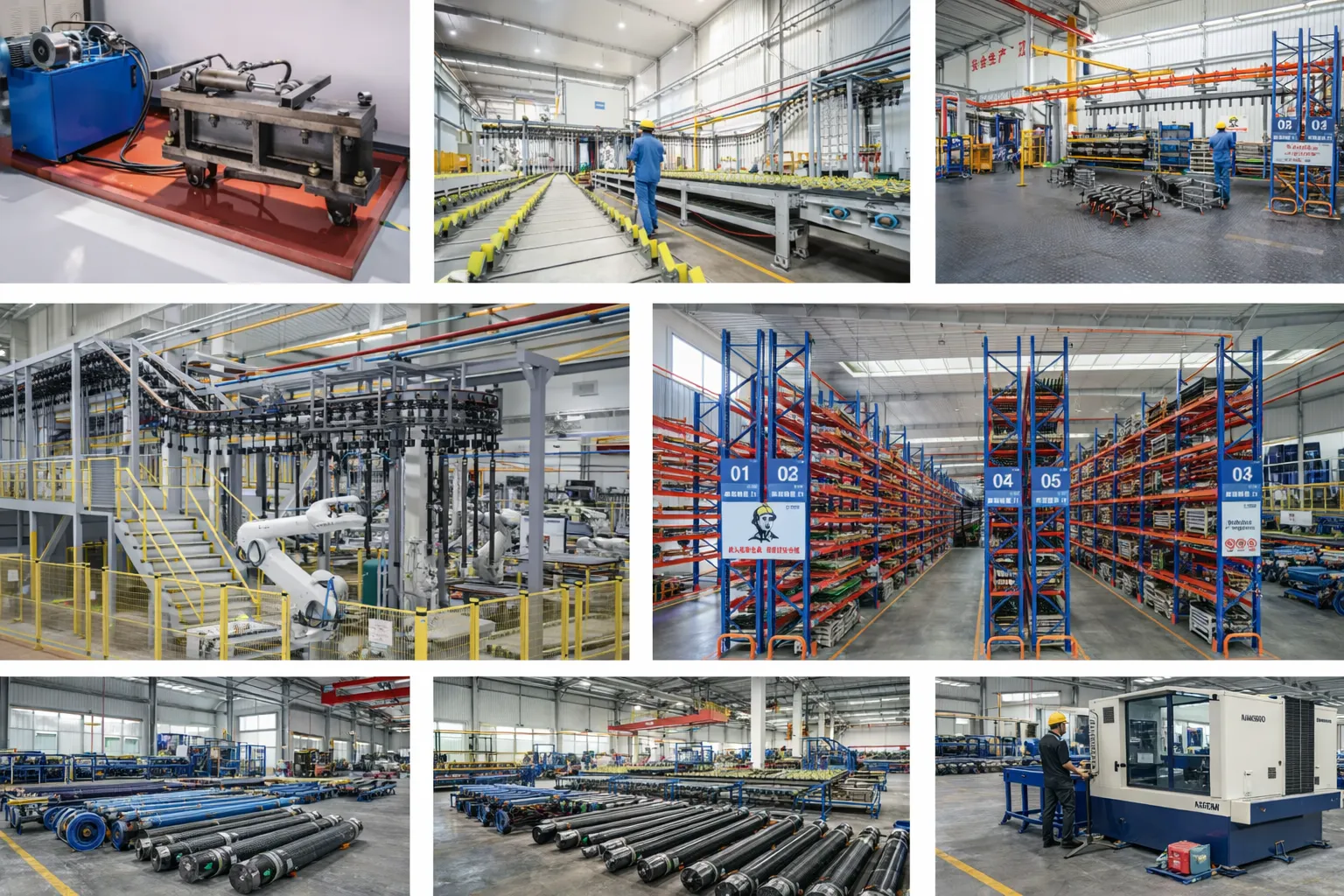
Manufacturing Process and Quality Control
Full In-House Manufacturing
From raw material receiving through final assembly, every step happens under our roof. We operate dedicated CNC deep-hole boring machines, internal honing lines, automated welding stations, and hard chrome plating facilities. This vertical integration eliminates the quality variability that comes with subcontracting critical processes. When you receive a hydraulic cylinder from us, it carries a single manufacturing pedigree — no unknown third-party machining, no outsourced plating.
100% Factory Testing
Every finished cylinder goes through a standardized test sequence before packing:
- Hydrostatic pressure test at 1.5x rated working pressure for a minimum hold time of 10 minutes
- Stroke function test at rated pressure to confirm smooth operation across the full travel
- Internal leakage measurement under static load conditions
- External leakage inspection at all ports, rod seal, and weld joints
- Dimensional verification against the approved production drawing
Test results are documented in an individual test certificate that ships with the cylinder and is archived digitally for a minimum of 10 years.
Certifications and Traceability
Our manufacturing facility holds ISO 9001:2015 quality management certification and can supply cylinders with material certificates to EN 10204 Type 3.1. For marine and offshore projects requiring classification society approval, we routinely work with DNV, ABS, BV, Lloyd’s Register, and KR (Korean Register) to obtain project-specific type approval or survey certificates. Every material batch, heat treatment record, plating thickness measurement, and test result is linked to the cylinder serial number through our ERP-based traceability system.
Incoming Material Inspection
Steel bar stock is verified for chemical composition (spectrometer analysis), mechanical properties (tensile and impact testing), and ultrasonic soundness before entering the machining queue. Seal materials are batch-tested for hardness and compression set. We reject roughly 3-5% of incoming material annually — a rejection rate that reflects genuine scrutiny, not a rubber-stamp process.
Weld Quality Assurance
All structural welds on the cylinder barrel, end caps, and mounting brackets are performed by certified welders following qualified WPS (Welding Procedure Specifications). Critical welds undergo 100% ultrasonic testing and magnetic particle inspection. Weld joints are post-weld heat treated to relieve residual stress, which directly improves fatigue life in high-cycle brake applications.
Typical Industry Applications
While this page focuses on the mooring winch brake application, the same engineering platform serves a range of demanding industrial sectors. Here is where our customers put these cylinders to work:
Marine and Offshore
Mooring winch brake control, anchor handling winch systems, towing winch tension management, offshore crane luffing and slewing, FPSO turret mooring systems, and subsea equipment deployment frames. The combination of corrosion resistance, high holding force, and classification society compliance makes this cylinder a natural fit for any deck-mounted hydraulic actuator.
Metallurgy and Heavy Manufacturing
Steel mill roll gap adjustment, continuous caster segment clamping, ladle tilting mechanisms, and heavy press brake actuation. The high-rigidity barrel and fatigue-optimized weld joints withstand the thermal cycling and impact loads common in metallurgical and iron production environments.
Mining and Tunneling
Conveyor tensioning, shield support cylinders in longwall mining, crusher adjustment actuators, and hoisting equipment braking. The robust construction and multi-stage seal system deliver reliable service in dust-heavy, high-vibration mining industry environments.
Construction Machinery
Boom, stick, and bucket cylinders for excavators; outrigger and stabilizer cylinders for cranes; blade lift cylinders for bulldozers and graders. The welded piston cylinder platform adapts easily to the stroke lengths and bore sizes used across construction equipment fleets.
Material Handling and Logistics Automation
Heavy-duty lift table actuators, container handling spreader bar cylinders, automated guided vehicle (AGV) positioning systems, and port crane hydraulic rams. Where precision positioning meets high load capacity, our cylinder delivers consistent stroke accuracy over millions of cycles.
Renewable Energy and Environmental Equipment
Wind turbine pitch control cylinders, solar tracker drive actuators, and waste compactor press cylinders. The corrosion-resistant surface treatment and wide temperature tolerance make these cylinders suitable for outdoor, unmanned installations that run year-round with minimal maintenance.
Specialty and Custom Applications
Stage and theater lift systems, dam gate actuators, lock gate drives, defense vehicle suspension, and research test rigs. If the application demands a cylinder that goes beyond catalog specifications, our engineering team will work with you to define the right bore, stroke, material, seal package, and mounting configuration.
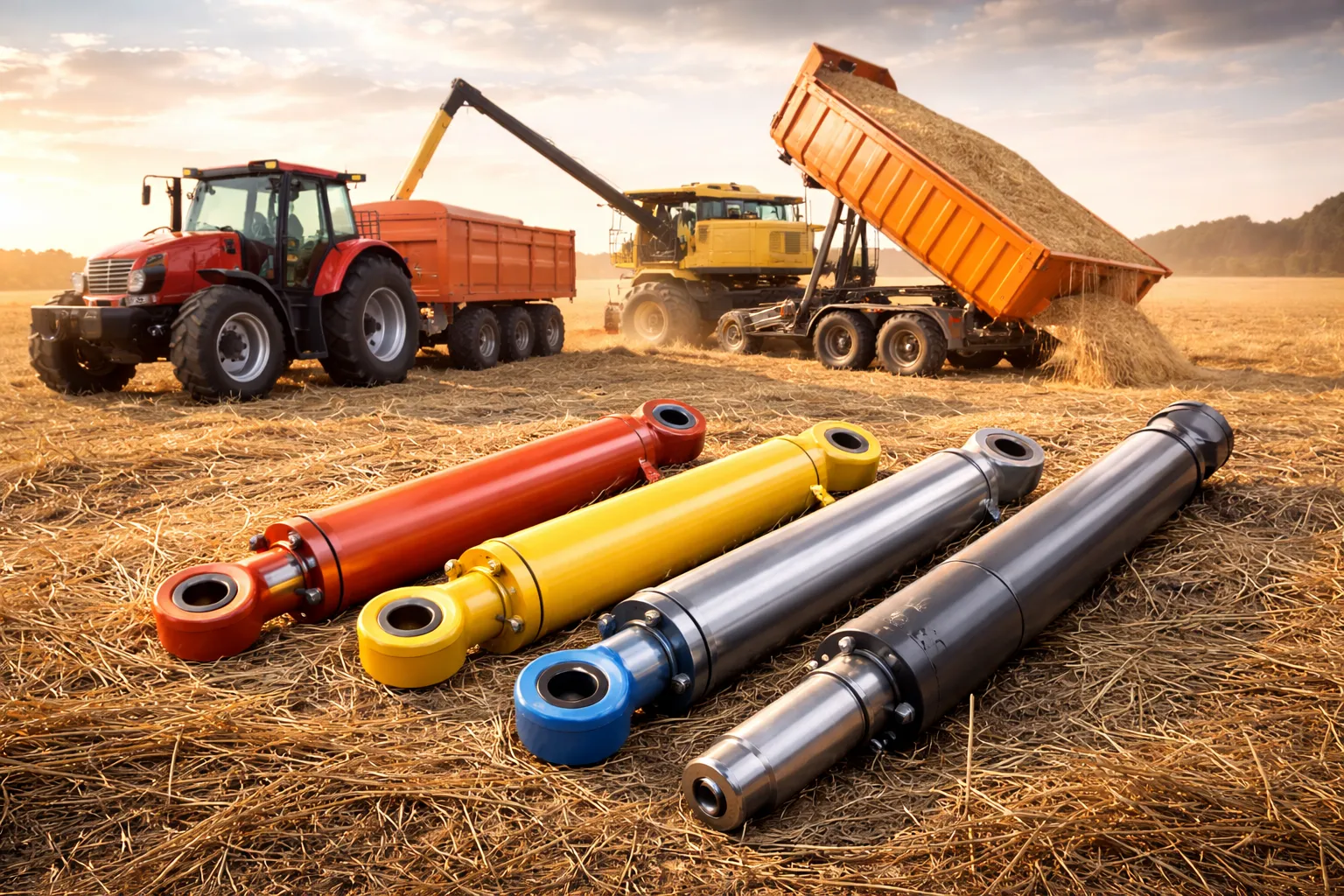
Performance Comparison: Standard vs. Our Marine-Grade Cylinder
How does our winch brake hydraulic cylinder compare against a typical general-purpose industrial cylinder adapted for mooring service? The differences are practical, not theoretical — they show up in service life, maintenance costs, and operational reliability.
| Feature | Standard Industrial Cylinder | Our Marine-Grade Brake Cylinder |
|---|---|---|
| Barrel Material | ST52 or equivalent carbon steel | Q345D low-alloy steel with impact toughness guarantee |
| Surface Protection | Paint coating | Electroless nickel plating (1,000+ hr salt spray rated) |
| Seal Arrangement | Single piston seal + single rod seal | Multi-stage seal system per gland position |
| Internal Leakage (at rated pressure) | 3-8 cm³/min typical | < 0.5 cm³/min guaranteed |
| Bore Finish (Ra) | 0.8 – 1.6 μm | ≤ 0.4 μm precision honed |
| Rod Surface Treatment | Hard chrome plating (standard thickness) | Hard chrome plating + optional ceramic overlay |
| Weld Inspection | Visual inspection only | 100% UT + MPI on structural welds |
| Fatigue Life (full-load cycles) | ~100,000 – 200,000 | 500,000+ with PWHT and rolled threads |
| Classification Approval | Not available / aftermarket adaptation | DNV, ABS, BV, LR, KR — project-specific or type approval |
| On-Site Seal Replacement | Full cylinder removal required | Gland-out service without removing cylinder from frame |
Real-World Case Studies
Case 1 — Busan, South Korea: Container Terminal Mooring Winch Retrofit
Client: A major container terminal operator at Busan New Port
Application: Replacement of worn brake cylinders on 12 shore-based mooring winches
How they found us: The terminal’s maintenance manager discovered our product catalog through a Google search for “hydraulic cylinder price mooring winch” in March 2024. After reviewing our specification sheets, he submitted a technical inquiry through our website contact form.
Outcome: We delivered 12 custom-dimensioned winch brake cylinders within 8 weeks. Each unit was supplied with KR (Korean Register) material certificates and individual test reports. After 14 months of continuous service, the terminal reported zero brake-related downtime incidents — compared to an average of 3 unplanned stoppages per year under the previous supplier’s cylinders.
Client feedback: “We replaced all 12 units during a scheduled maintenance window in May 2024. The dimensional fit was exact — no adapter plates or plumbing changes needed. The brake holding performance is noticeably more consistent, especially during typhoon season when line tensions spike.”
Case 2 — Ulsan, South Korea: Shipyard New-Build Integration
Client: A tier-1 Korean shipyard building LNG carriers
Application: OEM supply of winch brake cylinders for bow and stern mooring winch packages on a series of 6 vessels
How they found us: Their purchasing department received a referral from a deck machinery subcontractor we had previously supplied. Initial contact was made via phone in September 2023.
Outcome: We supplied 48 cylinders (8 per vessel) across 3 delivery batches aligned with the yard’s construction schedule. All units passed DNV project-specific survey without remarks. The shipyard reduced their per-cylinder procurement cost by approximately 22% compared to the European OEM brand they had been using.
Client feedback: “Cost savings were important, but what convinced us to switch was the responsiveness. When we changed the mounting bracket dimension on the third batch due to a design revision, the factory turned around updated drawings in 2 days and delivered on the original schedule.”
Case 3 — Yokohama, Japan: Offshore Support Vessel Fleet Upgrade
Client: A Japanese offshore service company operating anchor handling tug supply (AHTS) vessels
Application: Replacement of aging brake cylinders on combined mooring/towing winches across a fleet of 4 AHTS vessels
How they found us: The fleet technical superintendent attended the APM (Asia Pacific Maritime) exhibition in Singapore in March 2024, where he visited our booth and discussed the project requirements directly with our marine division engineers.
Outcome: We provided 16 double-acting hydraulic cylinders with ABS type approval, delivered in two batches to coincide with the vessels’ dry-dock schedules. The new cylinders reduced measured internal leakage by over 85% compared to the units they replaced, which had been in service for 11 years.
Client feedback: “The old cylinders were leaking so much that we had to compensate with higher system pressure, which was stressing the pumps. After the swap, system pressure dropped back to design levels and the brake response feels much tighter. Good engineering, honest pricing.”
Case 4 — Incheon, South Korea: Port Authority Emergency Replacement
Client: Incheon Port Authority, maintenance division
Application: Urgent replacement of a failed winch brake cylinder on a quayside mooring winch
How they found us: The maintenance supervisor called our Korean sales office directly after finding our number on a previous quotation document that a colleague had filed. The call came on a Friday afternoon in November 2024.
Outcome: We confirmed dimensional compatibility from the existing cylinder nameplate data within 4 hours. A matching unit was dispatched from our finished goods inventory the following Monday and arrived at the port Wednesday morning. The winch was back in full service by Thursday afternoon — total downtime was 6 calendar days instead of the 6-8 weeks quoted by the original OEM for a replacement part.
Client feedback: “When a mooring winch goes down at a busy port, every day costs money. The fact that they had a compatible unit practically on the shelf, and could get it to us in 3 business days, solved a real problem for us. We have since ordered 4 additional units as spares.”
Case 5 — Geoje Island, South Korea: Heavy-Lift Crane Vessel Application
Client: A specialized offshore construction company operating a semi-submersible crane vessel
Application: Supply of brake cylinders for the vessel’s mooring positioning winch system, operating in deepwater environments
How they found us: The company’s chief engineer found our website while searching for a hydraulic cylinder manufacturer capable of producing DNV-certified marine cylinders with nickel plating. He submitted a detailed technical specification through our online inquiry form in January 2025.
Outcome: We manufactured 8 large-bore (320 mm bore, 200 mm rod, 1,800 mm stroke) brake cylinders with DNV type approval and ceramic rod coating for the extreme duty cycle. Delivery took 14 weeks, including 2 weeks for classification society witness testing at our facility. The cylinders passed all site acceptance tests on first attempt during installation at Geoje shipyard.
Client feedback: “For a deepwater crane vessel, we cannot afford brake cylinder failure — the consequences are too severe. The engineering documentation, test reports, and traceability records were at the level we would expect from a top-tier European supplier, but at a more competitive price point and a faster lead time.”
Frequently Asked Questions
What is the typical lead time for a custom winch brake hydraulic cylinder?
For a standard customization (bore size, stroke length, and port configuration changes within our established range), lead time is typically 6 to 10 weeks from order confirmation. If the project requires classification society witness testing (DNV, ABS, KR, etc.), add 1-2 weeks for scheduling the surveyor visit. Rush orders from our finished goods inventory can ship within 3-5 business days for selected sizes.
Can you supply cylinders with Korean Register (KR) certification?
Yes. We regularly produce cylinders with KR approval for vessels registered in South Korea. We can arrange KR surveyor attendance at our facility for material inspection, witness testing, and final certification. We also support DNV, ABS, BV, Lloyd’s Register, CCS, and NK certification depending on the project flag state requirements.
How do I know if your cylinder will fit my existing winch system?
Send us the existing cylinder’s part number, nameplate data, or a dimensional drawing. Our engineering team will confirm bore, rod, stroke, mounting, and port compatibility — usually within 24 hours. If your original cylinder is an OEM unit from one of the major winch manufacturers (Kongsberg, MacGregor, Rapp, etc.), we likely already have a compatible reference design in our database, which speeds up the process considerably.
What seal brands do you use, and can I specify a particular seal supplier?
Our default seal package uses Parker Hannifin or Hallite marine-rated seals. If your fleet has standardized on a different seal brand (Trelleborg, SKF, Merkel, etc.) for logistics or maintenance reasons, we can accommodate that as long as the seal profile fits the gland design. We also maintain seal kits in stock for all standard cylinder sizes we produce, so reordering spares is straightforward.
Is the nickel plating necessary, or can I choose a less expensive surface treatment?
For marine and offshore installations, we strongly recommend keeping the nickel plating — the salt spray environment will degrade paint coatings within 1-2 years, leading to corrosion-related issues and premature maintenance. For inland or sheltered port applications where saltwater exposure is minimal, we can offer a high-build epoxy paint system as a cost-effective alternative. The engineering team will advise based on your specific installation environment.
Do you offer hydraulic cylinder repair and remanufacturing services?
Yes. We provide full hydraulic cylinder repair and remanufacturing for both our own products and third-party cylinders. Services include re-honing barrels, re-chroming or replacing piston rods, replacing seals and bearings, re-welding or rebuilding mounts, and complete pressure re-testing. For fleet operators, we can set up a scheduled overhaul program with turnaround times as short as 2 weeks per unit.
What is the minimum order quantity?
There is no hard minimum. We produce single prototype units for development projects and batch quantities of 100+ for fleet programs. Pricing is naturally more competitive at higher volumes, but we do not turn away small orders. Many of our long-term customers started with a single replacement cylinder to evaluate quality before committing to larger purchases.
Can you ship directly to a vessel at anchor or in dry dock?
Yes. We regularly arrange delivery to shipyards and port facilities across South Korea, Japan, Southeast Asia, and beyond. For urgent spares, we can coordinate with freight forwarders who specialize in marine logistics to deliver directly to a vessel’s agent at the designated port. Just provide the vessel name, port, and estimated arrival window, and we will handle the logistics coordination.
How does your pricing compare to European or Japanese OEM cylinder manufacturers?
Our customers consistently report 20-35% cost savings compared to equivalent cylinders from established European brands, with comparable or better lead times. The savings come from our vertically integrated manufacturing model — we do not subcontract critical machining, plating, or testing processes — and from our location advantage for deliveries within East Asia. We encourage you to send us a drawing or specification for a formal quotation; we are confident the numbers will be competitive.
What warranty do you provide?
All of our hydraulic cylinders carry a standard 24-month warranty from the date of delivery, covering defects in materials and workmanship. For projects with extended commissioning timelines (common in new-build shipyard orders), we can negotiate warranty start dates aligned with vessel delivery. If a warranty claim arises, our service team responds within 48 hours with a resolution plan — whether that means dispatching a replacement seal kit, shipping a new unit, or sending a technician to site.
Get Started on Your Next Project
Ready to discuss your winch brake cylinder requirements?
Whether you need a single replacement unit, a batch for a new-build project, or a custom-engineered solution for a unique mooring system — our engineering team is ready to help. Send us your specifications and we will respond with a detailed technical proposal and competitive quotation.
Editor: Cxm


























