End Cover Locking Cylinder for Pressure Vessels
Engineered exclusively from premium 316L stainless steel to combat extreme high-salinity corrosion. Delivering automated, fail-safe clamping force for high-pressure seawater desalination infrastructure.
Product Overview: Securing Seawater Desalination Operations
The global reliance on reverse osmosis (RO) seawater desalination has expanded exponentially, driving the need for extremely robust fluid power automation within these massive coastal facilities. The core of the RO process involves forcing highly saline seawater through semi-permeable membranes. To overcome natural osmotic pressure and achieve effective filtration, the internal pressure within the membrane housings routinely operates between 800 and 1,200 psi (55 to 83 bar). Containing this intense hydrostatic energy requires heavy-duty steel or composite pressure vessels sealed with massive end caps. Securing these end caps rapidly and safely during continuous operation and routine membrane maintenance is the exact mechanical responsibility of the end cover locking cylinder.
Relying on manual bolting for these massive vessels is practically impossible in a modern, high-capacity plant; it introduces severe safety risks and unacceptably long maintenance turnaround times. Automated fluid power provides the necessary clamping force instantaneously. However, the ambient environment within a desalination plant is aggressively hostile. The constant exposure to airborne salt vapor, high humidity, and direct chemical washdowns creates a hyper-corrosive atmosphere. A standard painted or chrome-plated hydraulic cylinder will begin oxidizing within weeks. Once chloride-induced pitting compromises the rod surface, the abrasive rust flakes tear the internal wiper seals apart during retraction. This sequence results in immediate high-pressure fluid leaks, a total loss of locking force, and potential catastrophic blowouts of the pressure vessel cover.
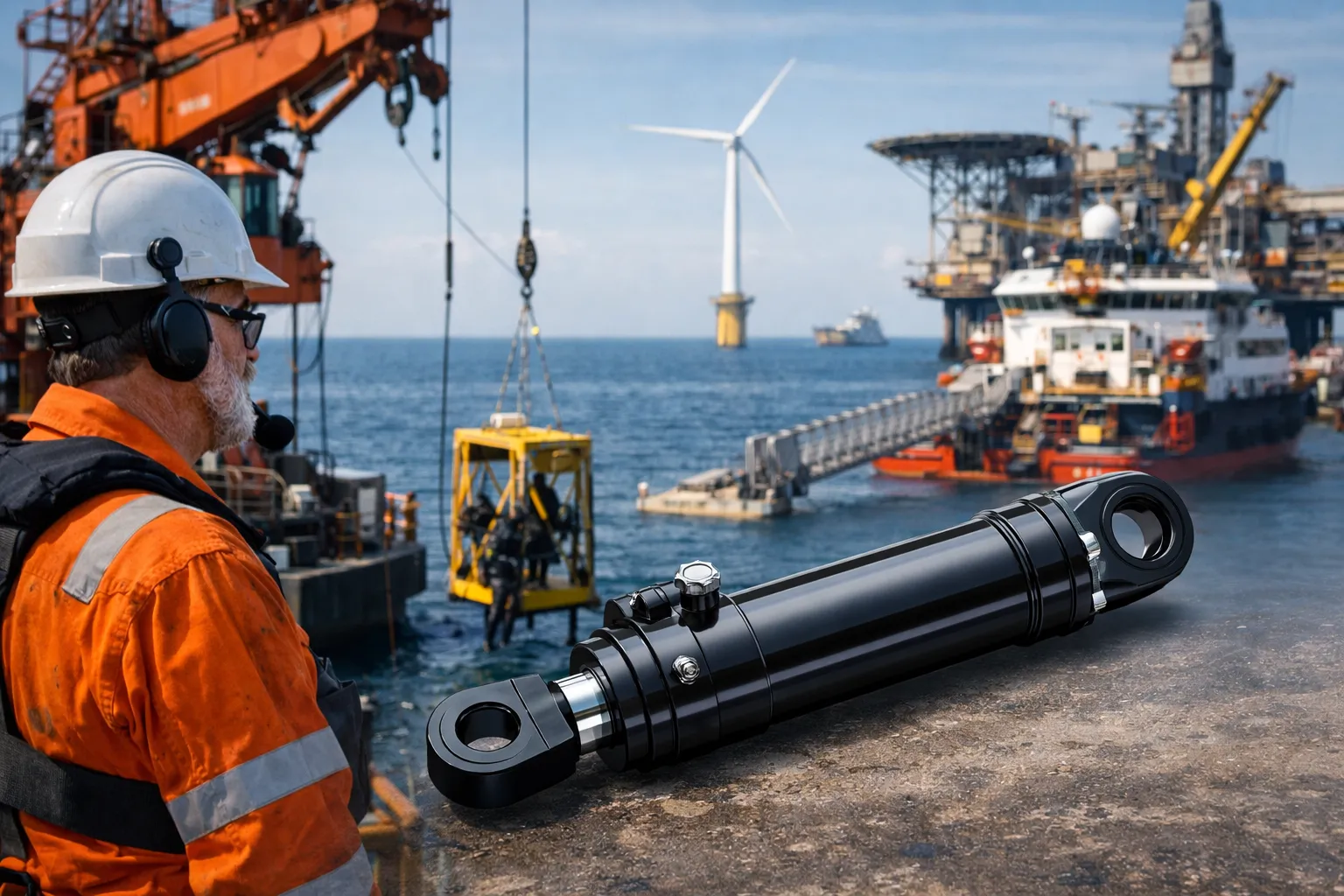
Addressing this exact failure mode is the foundation of our engineering positioning. As an established hydraulic cylinder manufacturer, we refuse to supply inadequate carbon steel actuators for marine applications. We engineer our specialized end cover locking hydraulic cylinder units strictly from premium 316L stainless steel. The addition of molybdenum in the 316L alloy matrix provides absolute immunity to chloride pitting and crevice corrosion. For facility managers operating across the Asia-Pacific region, including South Korea and Japan, deploying our specialized 316L hydraulic rams guarantees that your pressure vessel locking mechanisms will never seize due to rust, drastically cutting your operational expenditure and eliminating corrosion-induced facility downtime.
Technical Parameters & Customization Envelope
Pressure vessel geometries and manifold spacing differ widely among desalination plant integrators. An off-the-shelf approach to fluid power integration is insufficient. The engineering table below details the strict material and functional baseline for our marine-grade locking units, alongside the extensive customization options we offer to ensure our actuators drop seamlessly into your specific plant architecture.
| Engineering Attribute | Standard Marine Baseline | Available Customization Options |
|---|---|---|
| Industry Domain | Marine & Offshore Engineering | Adaptable for onshore wastewater and chemical processing |
| Equipment Target | Seawater Desalination Plant | Heavy brine concentrators, Industrial filtration skids |
| Subsystem Application | Pressure Vessel Sealing | Autoclave locking, Heat exchanger head securement |
| Component Designation | End cover locking cylinder | Multi-point synchronized locking array configurations |
| Fluid Action Principle | Double acting | Integrated pilot-operated check valves for pressure loss safety |
| Physical Architecture | Piston cylinder | Compact, short-stroke block designs for tight manifold limits |
| Manufacturing Structure | Welded monolithic construction | Threaded gland caps allowing rapid in-field seal extraction |
| Core Material System | 316L Stainless Steel | Super Duplex (SAF 2507) alloys for extreme temperature brines |
| Surface Treatment | Precision Polished | Electropolishing for ultimate particulate shedding in clean rooms |
| Environmental Tolerance | High salinity / Coastal atmosphere | UV-resistant outer scraper rings for open-air installations |
| Operational Condition | Pressure vessel locking | High-torque wedge insertion and segmented ring compression |
| Defeated Failure Mode | Corrosion and Seal Tear | Absolute immunity to chloride-induced stress corrosion cracking |
Operational Dynamics: Mastering High-Pressure Containment
The functional mechanics of an end cover locking cylinder are designed entirely around managing opposing forces. When the high-pressure pumps activate, the internal pressure pushes outward against the end cap, attempting to eject it from the vessel housing. To secure the cap, a heavy stainless steel locking ring or multiple locking wedges must be driven into a precision-machined retaining groove located on the inner diameter of the vessel shell. Executing this mechanical lock requires a powerful double acting hydraulic cylinder.
When the automated sequencing begins, the facility’s central power unit routes highly pressurized hydraulic fluid into the base port of our cylinder. This fluid acts forcefully against the full surface area of the internal hydraulic cylinder piston. The resulting mechanical thrust extends the polished 316L rod outward, driving the locking wedges firmly into the retaining groove. Continuous hydraulic holding pressure ensures the wedges cannot vibrate loose, safely counteracting the immense osmotic pressure pushing against the end cap.
Over continuous operation, salt crystallization and chemical scaling inevitably build up around these locking segments. If a single acting hydraulic cylinder were used, the internal mechanical spring would be far too weak to pull the locked segments free through the hardened salt crust. Because our units are fully double-acting, the operator simply reverses the hydraulic flow. High-pressure fluid enters the rod-end chamber, generating immense pulling force. The hydraulic cylinder piston retracts forcefully, shattering the salt buildup and cleanly extracting the locking wedges. This reliable, bi-directional powered control guarantees that maintenance teams can open the vessels swiftly, dramatically reducing the labor hours required to swap out fouled RO membranes.
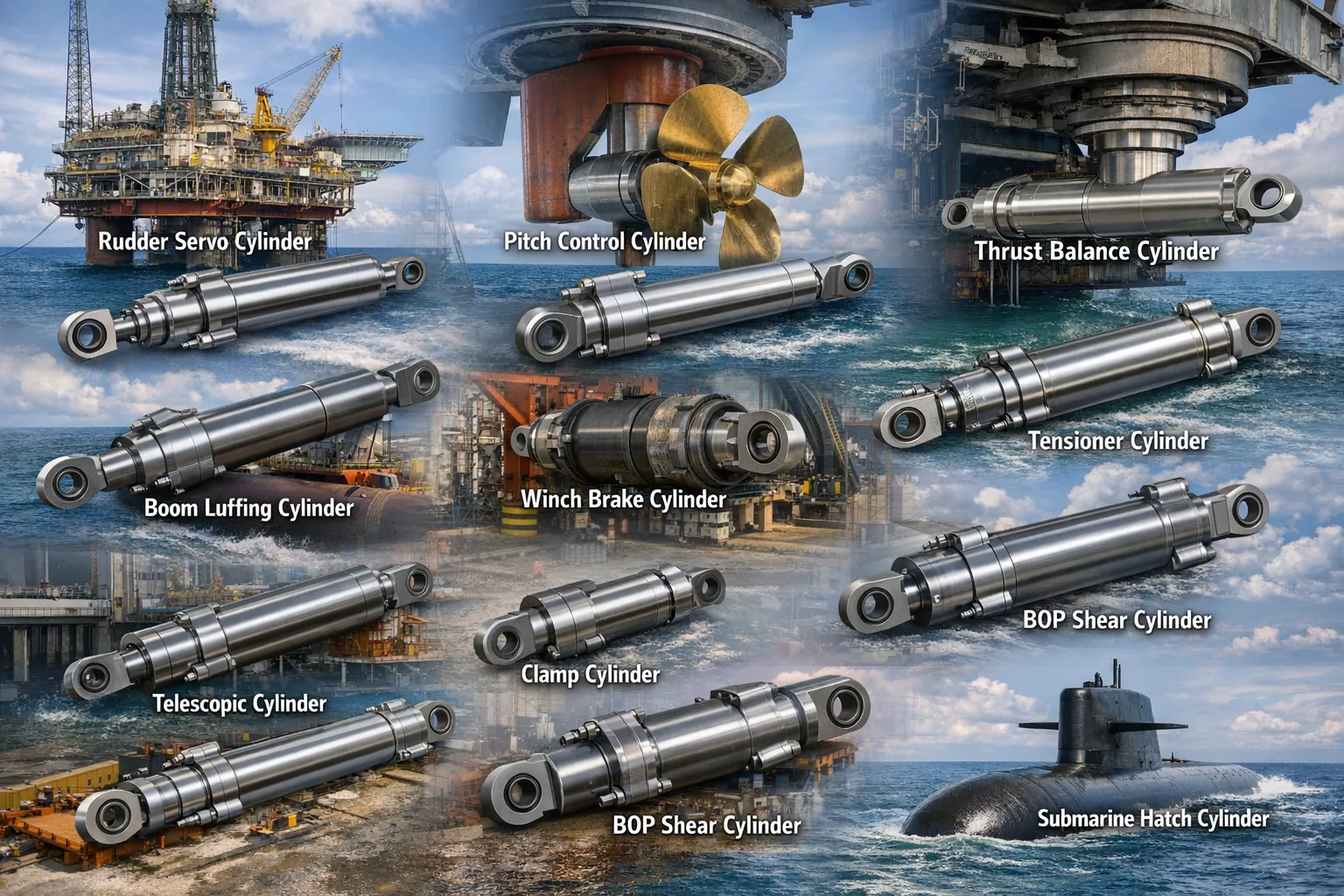
Strategic Brand Integration & Supply Chain Optimization
Procuring exact replacement parts for municipal water infrastructure often subjects plant managers to severe supply chain bottlenecks. Relying on original equipment manufacturers (OEMs) for specialized actuators frequently results in extended lead times stretching into months, accompanied by excessively inflated pricing. To resolve this procurement friction in the Asian market, we have engineered our 316L stainless steel cylinders to serve as exact, drop-in dimensional replacements for the industry’s most common pressure vessel locking mechanisms.
Whether your RO racks currently utilize fluid power components originally supplied by Energy Recovery Inc., Parker Hannifin, Bosch Rexroth, Eaton Vickers, or Festo, our engineering team precisely replicates the exact stroke length, bore diameter, flange mounting footprint, and port thread configurations. (Please note: References to these specific corporate brands are provided strictly for technical compatibility sizing and engineering fitment cross-referencing for our B2B clients. We operate as an independent hydraulic cylinder manufacturer and claim no trademark affiliation, sponsorship, or endorsement by these entities.)
Attempting to preserve capital by fixing hydraulic cylinders that are already heavily pitted by salt spray is a well-documented false economy. Machining a rusted carbon steel rod and replacing the seals does not solve the environmental vulnerability; the unit will inevitably fail again rapidly. By upgrading to our solid 316L assemblies, you completely eliminate the root cause of the breakdown. Sourcing these premium hydraulic cylinder components directly from our manufacturing facility ensures you secure a highly competitive hydraulic cylinder price, optimizing your maintenance budget while permanently upgrading your plant’s environmental resilience.
Core Technical Advantages: Engineered for the Salt Atmosphere
Combating extreme chloride exposure while delivering high-torque mechanical force requires specific metallurgical and structural choices. The following technical advantages define why our equipment outlasts standard industrial cylinders in desalination applications:
1. Solid 316L Stainless Steel Architecture
Standard actuators utilize carbon steel coated in hard chrome. In a coastal plant, airborne salt penetrates microscopic cracks in the chrome, rapidly pitting the steel beneath. We construct the entire barrel, rod, and gland from solid 316L stainless steel. The addition of molybdenum makes it inherently immune to chloride-induced pitting, guaranteeing decades of rust-free operation.
2. Precision Mirror-Polished Surface
When salty moisture dries on a metal rod, it leaves behind abrasive salt crystals. If the rod surface is rough, these crystals adhere tightly and tear the rubber seals upon retraction. We utilize advanced multi-stage polishing techniques to bring the 316L rod to a near-mirror finish. This slick topography prevents salt anchoring, protecting the sealing matrix from abrasive wear.
3. High-Rigidity Monolithic Construction
Driving a wedge into a bound pressure vessel cover requires immense force, creating severe lateral stress. Standard tie-rod cylinders flex, stretch, and eventually leak under these loads. Our fully welded construction creates a rigid, monolithic block of stainless steel that absorbs massive kinetic shock without warping, maintaining perfect internal concentricity.
4. Advanced Anti-Corrosion Sealing Matrix
Standard polyurethane seals degrade when exposed to hot brine and chemical Clean-In-Place (CIP) agents used in RO maintenance. We utilize advanced PTFE-blended composite seals and Viton O-rings. These materials are chemically inert, drastically lowering the friction coefficient to prevent “stick-slip” juddering during actuation.
5. Fatigue Life Optimization
Desalination plants frequently ramp production based on municipal demand, subjecting the locking cylinders to continuous pressure cycles. Through rigorous Finite Element Analysis (FEA), we eliminate stress concentrators in the 316L welds and mounting trunnions, guaranteeing a fatigue life that outlasts the RO membranes.
6. Integrated Load Holding Safety
The safety of personnel walking near pressurized vessels is paramount. We can seamlessly integrate pilot-operated check valves directly into the cylinder body. If a main hydraulic hose bursts, these valves instantly lock the fluid inside the cylinder, ensuring the end cover locking ring cannot back out under high pressure.
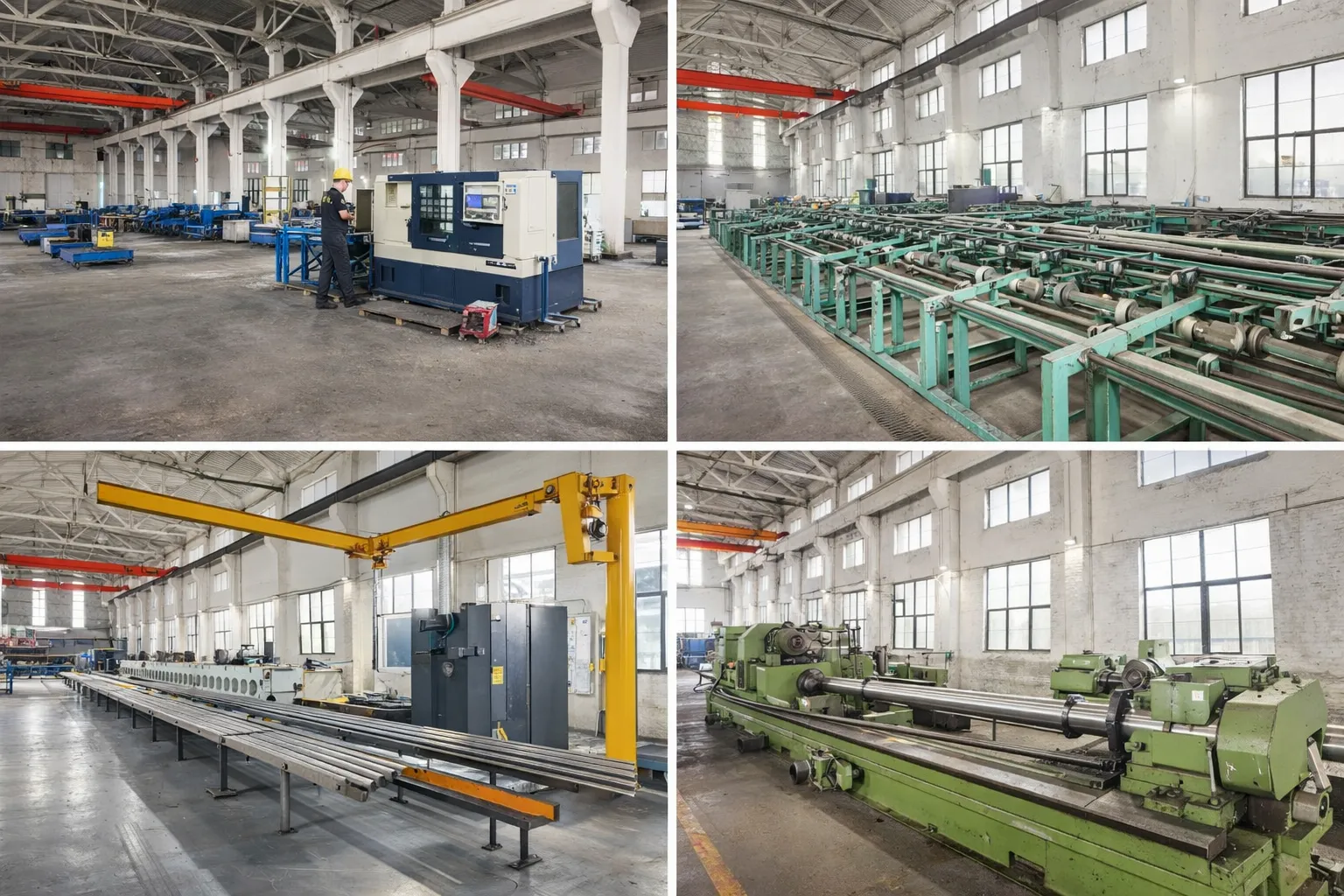
Uncompromising Manufacturing & Quality Traceability
Fabricating stainless steel fluid power components requires a significantly higher level of metallurgical precision than working with standard carbon steel. Stainless alloys can warp during intense welding heat and are susceptible to atmospheric contamination if machined improperly. We maintain a complete, vertically integrated manufacturing facility specifically optimized for high-grade alloys. Every billet of 316L stainless steel is metallurgically verified upon arrival. By executing all CNC turning, precision milling, and structural welding entirely in-house, we eliminate the quality control blind spots associated with outsourcing hydraulic parts to unverified third-party suppliers.
Our welding protocols utilize automated Tungsten Inert Gas (TIG) processes under strictly controlled argon shielding to prevent any carbide precipitation, ensuring the stainless steel retains its absolute corrosion resistance. Every critical load-bearing weld undergoes rigorous Non-Destructive Testing (NDT), including dye penetrant and ultrasonic inspections, ensuring deep, flawless penetration without microscopic internal voids.
Most critically, before any end cover locking cylinder is cleared for shipping, it is subjected to a mandatory factory pressure test (FAT). We hydrostatically pressurize every unit to 1.5 times its maximum rated working capacity. The load is held to verify absolute zero pressure decay across the internal piston seals and complete structural integrity of the welded barrel. Furthermore, we provide 100% material traceability. Each cylinder is laser-etched with a unique serial number tied to its EN 10204 3.1 material certificates, guaranteeing compliance with stringent marine and industrial classification standards like DNV and ABS.
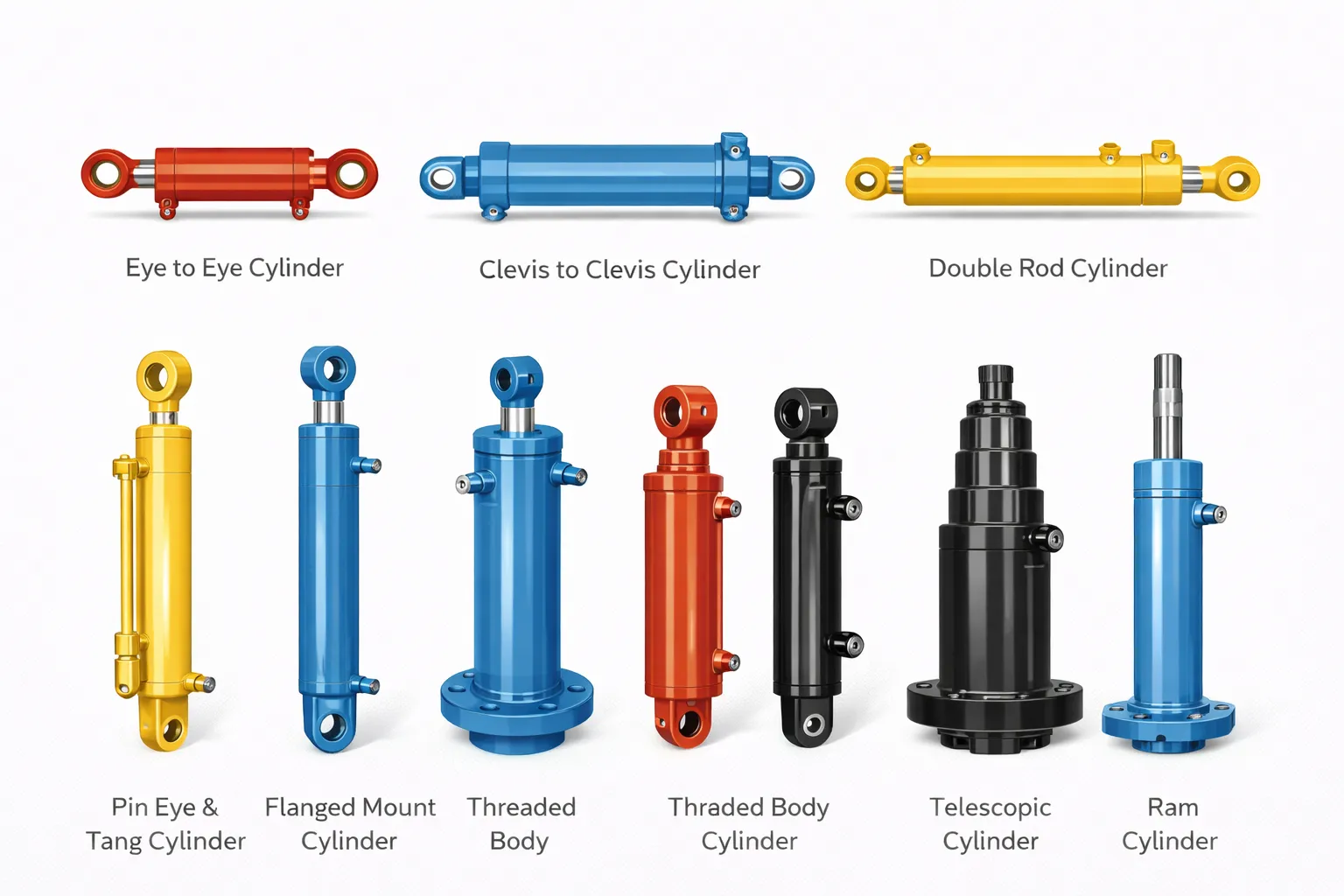
Expanding Synergies: Broader Heavy Industry Applications
The engineering breakthroughs required to survive highly concentrated, corrosive saltwater while delivering massive locking force translate perfectly into solving severe mechanical failures in other aggressive heavy industries. When a standard lift cylinder or generic actuator rusts and blows its seals, engineering managers consistently specify our 316L polished designs.
- Seawater Desalination: The primary application; driving the massive locking rings on high-pressure Reverse Osmosis (RO) vessels and isobaric energy recovery devices.
- Metallurgical and Iron Industry: Used to securely lock massive cooling jackets and continuous casting molds where airborne acidic gases destroy standard chrome plating in weeks.
- Mining Industry: Operating heavy discharge gates on subterranean ore slurry pipelines, requiring equipment that can survive highly acidic underground mine water without a seal blowout.
- Construction Machinery Industry: Providing reliable locking force for heavy amphibious excavators and coastal dredging equipment constantly exposed to salt mud and abrasive grit.
- Chemical & Petrochemical: Operating heavy reactor access hatches in environments saturated with corrosive chemical vapors where a spark or leak could be catastrophic.
- Food & Beverage Processing: High-pressure pasteurization autoclaves require 316L stainless steel actuators to comply with strict sanitary washdown protocols without rusting.
Comparative Analysis: Standard Carbon Steel vs. 316L Stainless Steel
Facility procurement teams often attempt to control initial capital expenditures by purchasing standard carbon steel cylinders for coastal plants. However, a lifecycle cost analysis quickly reveals that the operational downtime and constant repair costs caused by these inferior units vastly eclipse the initial savings. The table below illustrates the stark mechanical differences.
| Evaluation Metric | Standard Carbon Steel Cylinder | Our 316L End Cover Locking Cylinder |
|---|---|---|
| Pitting Resistance | Extremely Poor. Hard chrome micro-cracks allow salt water to corrode the steel rapidly. | Exceptional. Solid 316L alloy inherently blocks chloride attack throughout the metal. |
| Maintenance Lifecycle | Requires constant repainting and frequent seal replacement due to rust scoring. | Virtually maintenance-free exterior; seals last vastly longer on the polished 316L rod. |
| Operational Dexterity | Corrosion causes the rod to bind and shudder, making unlocking the vessel dangerous. | Polished finish and PTFE seals ensure flawlessly smooth, high-torque actuation. |
| Overall Economic Impact | Low upfront cost, but causes expensive freshwater production delays and continuous repair bills. | Highly competitive initial price yielding massive long-term operational expense savings. |
Proven Reliability: Real-World Industrial Case Studies
Theoretical specifications must translate directly into reliable performance on the plant floor. Our fluid power equipment is trusted by major municipal water authorities and heavy industrial plants across the highly demanding Asian coastal sector. Below are five documented B2B examples demonstrating our engineering resolution.
Case 1: Massive SWRO Plant Refit in South Korea
Location & Date: Municipal Desalination Facility, Busan, South Korea (October 2024)
The Challenge: A massive coastal reverse osmosis plant was experiencing systemic failures on its pressure vessel locking mechanisms. The original carbon steel hydraulic rams were heavily pitted by the constant sea mist. The resulting rust was shredding the seals, causing hydraulic fluid to leak dangerously close to the clean water lines, and preventing maintenance crews from opening the vessels to change fouled membranes.
Strategic Solution: The facility’s chief engineer discovered our specialized capabilities online and requested an urgent metallurgical upgrade. We engineered exact dimensional replacements utilizing our polished 316L end cover locking cylinder design, incorporating integrated safety check valves.
The Result: We delivered 64 fully tested units directly to the Busan facility within 5 weeks. Post-installation, the plant recorded zero fluid leakage and a 40% reduction in membrane change-out time, as the operators could now unlock the massive covers smoothly and effortlessly.
“Replacing the failing OEM equipment with these 316L units was the most effective procurement decision we made this year. The build quality is exceptional, entirely eliminating our previous seal wear and rusting nightmares.” – Plant Operations Director, Busan.
Case 2: Industrial Brine Concentration Security
Location & Date: Chemical Processing Plant, Fukuoka, Japan (February 2025)
The Challenge: An industrial facility treating highly concentrated, hot brine waste needed actuators to lock massive titanium autoclaves. The extreme heat and hyper-salinity were destroying standard stainless steel alloys (like 304) within weeks due to stress corrosion cracking.
Strategic Solution: We manufactured highly specialized locking cylinders using an upgraded Super Duplex alloy (SAF 2507) and high-temperature Viton seals to withstand the aggressive chemical attack.
The Result: The specialized alloy completely resisted the hot brine. The plant achieved environmental compliance by keeping their zero-liquid-discharge (ZLD) system running continuously without dangerous high-pressure leaks.
Case 3: Offshore Platform Water Security
Location & Date: Offshore Drilling Platform, South China Sea (July 2025)
The Challenge: An isolated offshore rig relies entirely on a dedicated RO plant for fresh water. The locking cylinders on their pressure vessels were seizing due to dried salt crystal buildup on the rods, preventing technicians from safely extracting the membranes for scheduled chemical cleaning.
Strategic Solution: Recognizing that fixing hydraulic cylinders in this state was impossible, the maintenance team sourced our polished 316L replacements. We utilized specialized UV-resistant external wipers to combat the open-air coastal environment.
The Result: The new double acting hydraulic cylinders broke the seized locking rings free immediately. The rig now enjoys uninterrupted freshwater production, and the units look brand new even after months of constant sea spray exposure.
Case 4: Chemical Processing Facility Modernization
Location & Date: Kaohsiung, Taiwan (January 2026)
The Challenge: A chemical plant utilizing high-pressure filtration tanks was struggling with actuators failing due to airborne acidic vapor mixing with coastal humidity. The mechanical clamping forces were dropping unexpectedly.
Strategic Solution: We supplied completely sealed units utilizing Viton chemical-resistant internal seals encased entirely in our heavy-wall 316L stainless housings.
The Result: The equipment survived the acidic atmosphere perfectly. The plant standardized our cylinders across all their hazardous fluid lines, praising the structural rigidity.
Case 5: Coastal Power Plant Desalination Skid
Location & Date: Incheon, South Korea (March 2026)
The Challenge: A coastal power plant used a small RO skid for boiler feed water. The locking mechanism was hidden in a tight manifold and heavily rusted, causing massive fluid leaks that shorted nearby electrical equipment.
Strategic Solution: We engineered an ultra-compact block-style 316L cylinder to fit the confined space while providing the necessary tonnage to lock the vessel.
The Result: The leak was entirely eliminated, preventing further electrical damage and securing the power plant’s critical water supply line.
Professional FAQ for Plant Engineering & Procurement
Specifying critical pressure containment equipment for coastal facilities requires absolute technical clarity. Below, we address the most frequent inquiries from plant managers, fluid systems engineers, and B2B procurement officers regarding our 316L technology.
Why exactly is 316L stainless steel necessary, rather than standard 304 stainless or chrome-plated steel?
Why does a pressure vessel require a double acting hydraulic cylinder for locking?
Is fixing hydraulic cylinders a viable strategy for a desalination plant?
Can you custom manufacture specific hydraulic parts to fit our older RO vessel manifolds?
How does your hydraulic cylinder price compare to purchasing OEM replacements?
Do you supply replacement hydraulic cylinder components like subsea seal kits?
What is the expected delivery timeframe to industrial facilities in South Korea or Japan?
Are these actuators capable of handling extreme temperature CIP chemicals?
What safety features are included in case of a sudden system pressure drop?
Secure Your Pressure Vessels Against Extreme Environments
Do not allow inferior, rusting actuators to compromise the safety of your maintenance crews or cause crippling delays in your freshwater production. Upgrading to our heavily engineered, polished 316L stainless steel assemblies guarantees flawless vessel locking, massive corrosion immunity, and decades of reliable service.
Editor: Cxm