Operational Context and Subsystem Significance
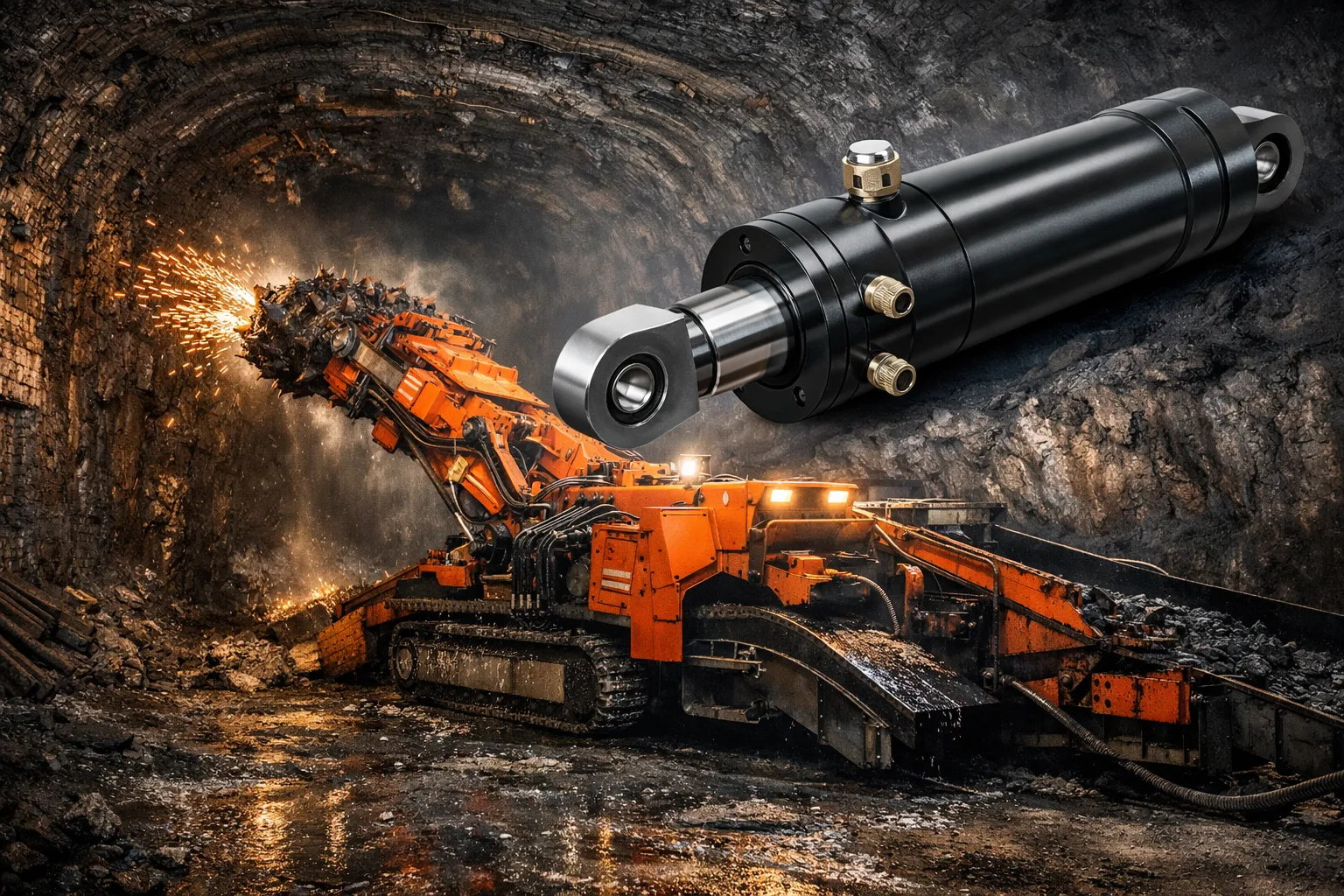
Within the severe duty cycle of underground resource extraction, the material handling sequence is critical to maintaining productivity. As the cutting head of a roadheader or tunneling machine fractures solid rock and coal seams, the displaced material is gathered and directed into the central conveyor. However, raw geological material is wildly inconsistent. Massive, uncrushable boulders and oversized coal lumps can easily jam the conveyor system or tear the transport belts. To prevent this catastrophic damage, modern tunneling machines integrate a heavy-duty coal crusher subsystem directly over the intake. This sizing unit utilizes a heavy steel gate to regulate the feed. The Coal Crusher Door Cylinder is the exact fluid power component responsible for actuating this massive gate. It provides the linear force required to hold the door against the onslaught of aggregate, forcing the material through the breaker drum, and possesses the rapid response capability to swing the door wide open when an uncrushable object needs to be purged from the flow.
The operational environment surrounding this specific mechanism is extraordinarily hostile. The Coal Crusher Door Hydraulic Cylinder operates directly in the splash zone of the crushing process, subjecting it to a high abrasive grain atmosphere. Dense clouds of silica dust, sharp coal fines, and aggressive metallic particles constantly coat the exterior of the component. Furthermore, regulating material flow is not a static process. The operator must open and close this door constantly to prevent conveyor overloading. This creates a “frequent open/close” working condition that generates intense fluid friction and thermal accumulation within the cylinder. When standard commercial actuators are installed in this position, the abrasive dust bypasses basic rod wipers, scoring the chrome surface and tearing the internal pressure seals. This wear-induced failure results in complete loss of hydraulic pressure, paralyzing the material extraction process.
Recognizing the severe limitations of standard aftermarket units, we engineered our Coal Crusher Door Cylinder from the ground up to neutralize these specific tribological threats. By utilizing Q345D low-alloy structural steel, our design absorbs the violent impacts of crushing rock without weld fatigue. More importantly, we integrate a proprietary wear-resistant sealing matrix that physically repels microscopic abrasives. As a specialized hydraulic cylinder manufacturer, we supply these heavily fortified units to mining operations across South Korea, Japan, and the surrounding Asian territories, ensuring their critical tunneling equipment remains active and highly profitable.
Detailed Technical Parameters
Accuracy in engineering specification guarantees reliability underground. The table below delineates the precise technical parameters and structural choices that define our Coal Crusher Door Hydraulic Cylinder. We maintain the manufacturing flexibility to customize bore diameters, stroke lengths, and pin dimensions to suit the specific tonnage of your continuous miner or roadheader. When analyzing the long-term hydraulic cylinder price, investing in wear-resistant seals and high-toughness metallurgy yields the lowest total cost of ownership.
| Engineering Variable | Technical Specification | Functional Purpose |
|---|---|---|
| Industry Sector | Mining Equipment | Constructed for subterranean resource extraction. |
| Equipment Category | Tunneling Machine | Withstands high-amplitude chassis vibration. |
| Subsystem Integration | Coal Crusher Unit | Directly interfaces with the material sizing chamber. |
| Component Designation | Coal Crusher Door Cylinder | Primary actuator for flow-control gating. |
| Action Mode | Double acting hydraulic cylinder | Hydraulic power drives both the extend and retract strokes. |
| Internal Structure | Piston Cylinder | Divides internal volume for bidirectional fluid displacement. |
| Manufacturing Structure | Welded Assembly | Eliminates threaded tie-rods that loosen under mechanical shock. |
| Material Base System | Q345D Structural Steel | Low-alloy composition provides superior low-temperature toughness. |
| Surface Treatment | Hard Chrome Plated | Ultra-hard outer barrier defends against rock scoring. |
| Environment Grade | High Abrasive Grain | Operates directly in the path of crushed silica and coal particulate. |
| Working Condition | Frequent Open / Close | Demands rapid fluid transition and strict thermal management. |
| Typical Failure Mode | Accelerated Wear | Prevents external grit from dragging across internal seals. |
| Design Recommendation | Wear-Resistant Seal | Custom polymer matrix actively ejects abrasive contaminants. |
Fluid Dynamics and Bidirectional Actuation
To comprehend the durability of this component, one must examine the internal fluid dynamics during operation. The Coal Crusher Door Cylinder is fully configured as a double acting hydraulic cylinder. Unlike tensioning systems or a simple single acting hydraulic cylinder that may rely on gravity or external mechanical springs to retract, this gate actuator requires immense, precise hydraulic control in both spatial directions to manage the flow of heavy, jagged rock.
When the equipment operator triggers the crusher door to close, high-pressure hydraulic oil from the machine’s primary pump is routed through the directional control valves directly into the cap end (base end) of the cylinder barrel. The fluid exerts tremendous pressure against the full face of the internal hydraulic cylinder piston. This translates into a powerful linear extension of the chrome rod, forcing the heavy steel gate shut against the cascade of falling aggregate. When a blockage must be cleared, fluid is diverted to the rod end of the cylinder while the cap end vents to the reservoir. The hydraulic pressure acts on the annular area of the piston, violently pulling the rod backward to swing the gate open. This cycle is repeated incessantly.
The core vulnerability in this system is the high abrasive environment during the retract stroke. Every time the rod extends out of the Coal Crusher Door Hydraulic Cylinder, it enters a cloud of abrasive coal dust. Microscopic particles adhere to the residual oil film on the hard chrome surface. If the cylinder is equipped with standard wiper seals, this abrasive paste is dragged straight past the gland and into the main hydraulic chamber. Within weeks, the internal seals are shredded, and the barrel wall is deeply scored. Our advanced wear-resistant sealing matrix features a metal-encased, double-lip scraper that physically shears this abrasive coating off the rod as it retracts, ensuring that only pristine, uncontaminated steel passes into the pressure chamber. This fundamental design choice severely reduces the necessity for constant fixing hydraulic cylinders in the field.

Seamless OEM Fleet Upgrades
When a critical subsystem fails mid-excavation, waiting months for an expensive OEM replacement part is an untenable proposition. Recognizing the urgency of fleet maintenance, we have engineered our hydraulic parts to serve as exact dimensional upgrades for the majority of the global tunneling machine fleet. Bypassing standard dealers not only improves delivery speed but also significantly optimizes your hydraulic cylinder price overhead.
Our specialized Coal Crusher Door Cylinder is manufactured to precisely replicate the mounting parameters of equipment produced by industry giants such as Sandvik, Epiroc, Mitsui Miike, Komatsu, SANY, and XCMG. By cross-referencing your machine model, we ensure that the pin-to-pin closed lengths, clevis bore diameters, trunnion widths, and hydraulic port threads align perfectly with your existing chassis. This guarantees that your maintenance crew can execute a rapid hydraulic cylinder repair or swap without resorting to time-consuming structural modifications or custom welding.
Disclaimer: The corporate brand names and trademarks listed above are the exclusive property of their respective owners. They are referenced here solely to assist B2B maintenance professionals in identifying mechanical sizing and verifying drop-in compatibility. We are a premier, independent engineering firm specializing in aftermarket fluid power optimization and claim no official affiliation with these original equipment manufacturers.
Five Uncompromising Engineering Advantages
Surviving the violent, abrasive conditions of a continuous miner requires deliberate metallurgical and tribological choices. Here is why our Coal Crusher Door Hydraulic Cylinder delivers exponentially longer operational lifespans compared to standard aftermarket hydraulic rams:
1. High-Performance Wear-Resistant Sealing Matrix
Standard NBR rubber seals melt and tear in this application. We utilize an advanced tandem seal arrangement composed of wear-resistant polyurethane and friction-reducing PTFE compounds. The external defense layer features a heavy-duty, metal-encased double-lip scraper that forcefully ejects caked coal dust and silica particles. The internal pressure seals are shielded entirely, allowing them to maintain absolute volumetric efficiency over millions of high-frequency actuation cycles.
2. Q345D Low-Alloy Structural Steel Architecture
When uncrushable boulders strike the breaker door, the immense kinetic energy transfers directly into the cylinder. Generic 45# carbon steel housings can suffer from micro-fracturing under such stress. We construct the main barrel and mounting structures of the Coal Crusher Door Cylinder out of forged Q345D low-alloy steel. This material exhibits extraordinary yield strength and exceptional low-temperature impact toughness, ensuring the cylinder remains structurally sound even in freezing subterranean zones.
3. Automated Submerged Arc Welded Integrity
Tunneling machines produce relentless, low-frequency vibrations that easily unspool the threaded tie-rods and end caps found on generic commercial cylinders. Our manufacturing protocol relies on automated submerged arc welding to permanently fuse the Q345D end caps and trunnions directly to the barrel. This deep-penetration welding process creates a monolithic pressure vessel that will never vibrate loose, eliminating one of the most common causes of massive fluid blowouts in the field.
4. Micro-Cracked Hard Chrome Plating (HV800+)
The extending rod requires extreme surface defense. We subject the high-tensile rod to a specialized hard chrome plating process, followed by multi-stage micro-polishing. The resulting surface achieves a hardness exceeding HV800, providing an impenetrable armor against the scoring action of sharp rock fragments. The micro-cracked topology also retains trace amounts of hydraulic oil, constantly lubricating the wear-resistant seals during rapid open/close strokes to minimize friction heat.
5. Optimized Internal Cushioning Dynamics
Actuating the heavy steel crusher door frequently and rapidly runs the risk of slamming the piston into the cylinder end caps, causing severe mechanical fatigue. Our double acting hydraulic cylinder features precision-engineered damping mechanisms. As the piston approaches full extension or retraction, the escaping fluid is throttled through a restrictive orifice, progressively absorbing the kinetic energy and decelerating the door smoothly to prevent destructive metal-to-metal impacts.
Autonomous Production and 100% Diagnostic Testing
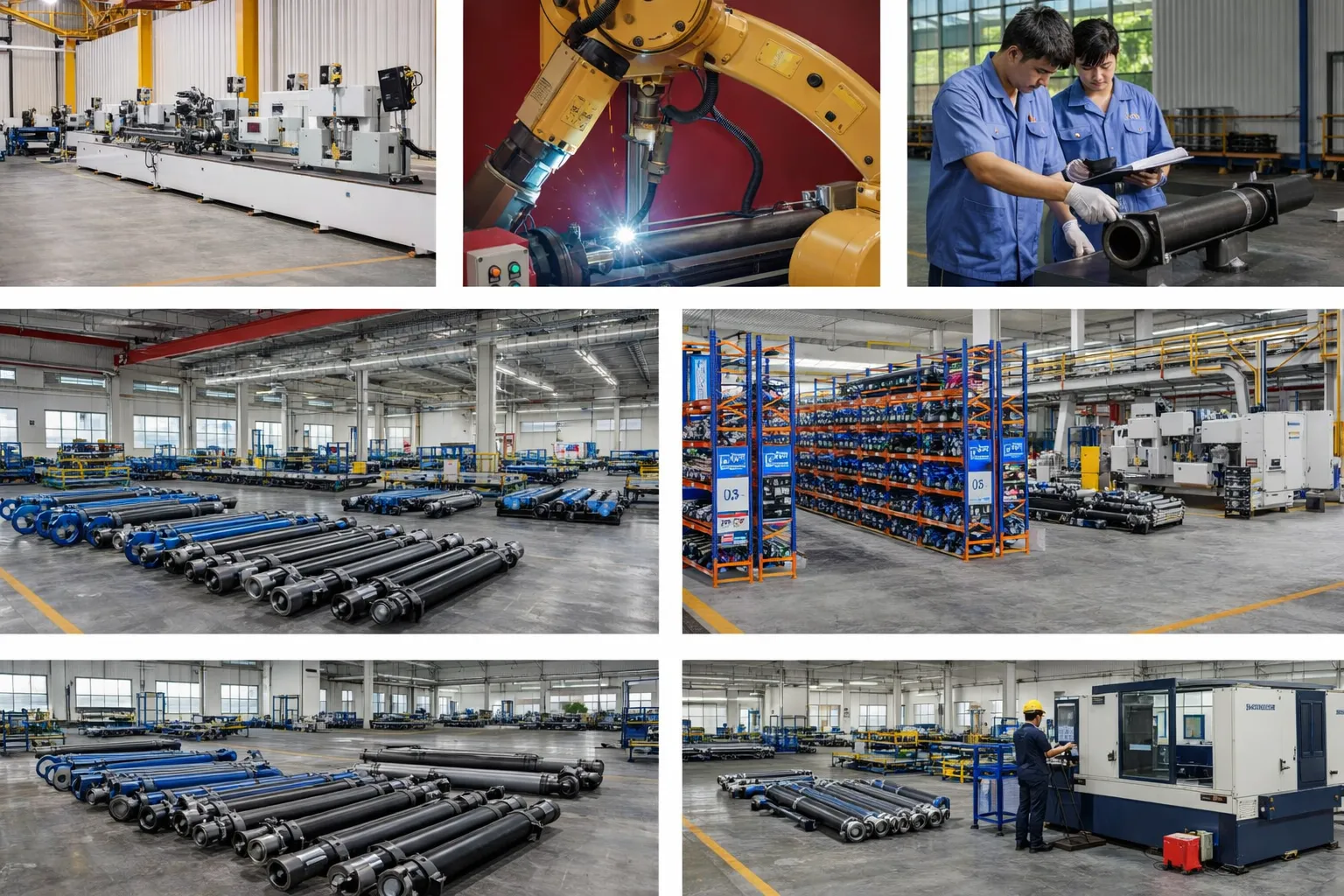
Delivering critical hydraulic cylinder components requires absolute control over the entire metallurgical and assembly pipeline. We operate as a fully autonomous hydraulic cylinder manufacturer, eschewing the risks associated with third-party outsourcing. Every batch of Q345D steel is verified via spectrometer analysis and ultrasonic flaw detection prior to machining. Our heavy-duty, multi-axis CNC centers hone the cylinder barrels to exact micron-level diametral clearances, ensuring the internal seals seat perfectly against the hydraulic cylinder piston.
Quality assurance is guaranteed through our uncompromising final testing protocol. 100% of our Coal Crusher Door Hydraulic Cylinder units are subjected to severe static pressure holds at 1.5 times their maximum rated operational limit. The units are also dynamically cycled on test benches to verify the functionality of the internal cushioning and wear-resistant sealing matrix. Sensitive digital transducers confirm there is absolute zero fluid bypass. Upon passing, each cylinder is laser-etched with a unique traceability code, ensuring our clients receive a proven, world-class industrial asset.
Expansive Cross-Industry Applications
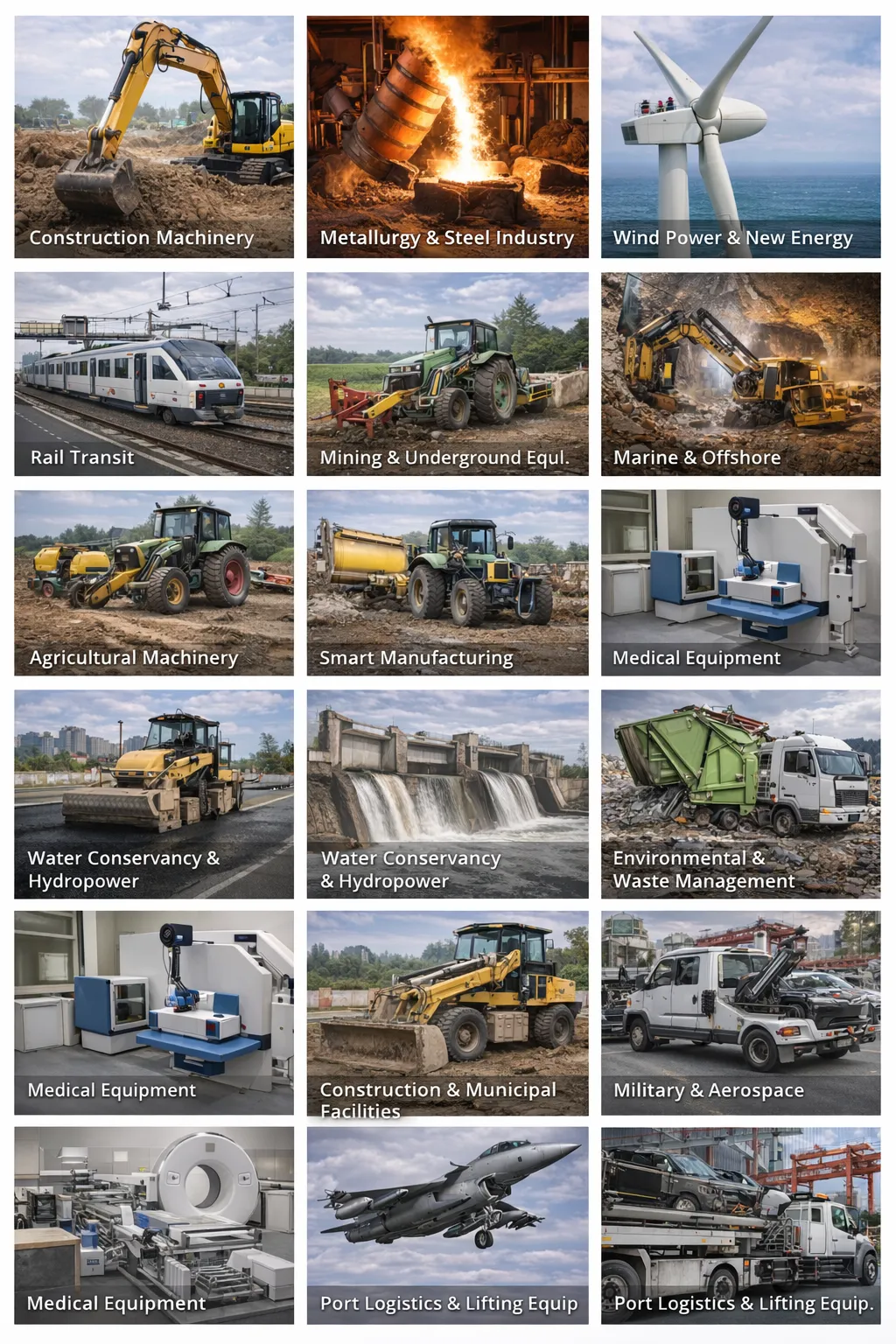
While the intense particulate exclusion and high-frequency actuation profile of the Coal Crusher Door Cylinder was forged for tunneling applications, these identical attributes resolve complex fluid power challenges across a multitude of heavy industries. We proudly engineer bespoke hydraulic cylinder systems for:
- Mining Equipment: Massive track tensioners, longwall roof supports, and primary jaw crusher gates operating under constant abrasive assault.
- Construction Machinery Industry: High-impact bucket actuators, heavy steering rams, and specialized boom lift cylinder assemblies for large crawler excavators.
- Metallurgy & Heavy Manufacturing: High-temperature tolerant units actuating furnace doors and scrap balers amidst hot metallic dust.
- Material Handling & Port Logistics: Frequent-cycling actuators controlling the massive clamshell buckets on bulk material unloaders.
- Forestry & Agricultural Processing: Heavy-duty cylinders for stump grinders and wood chippers requiring extreme vibration resistance.
- Specialized Custom Scenarios: Submarine dredging vehicles equipped with ultra-corrosion resistant configurations.
Comparative Analysis: Standard Market Cylinders vs. Our Engineered Solution
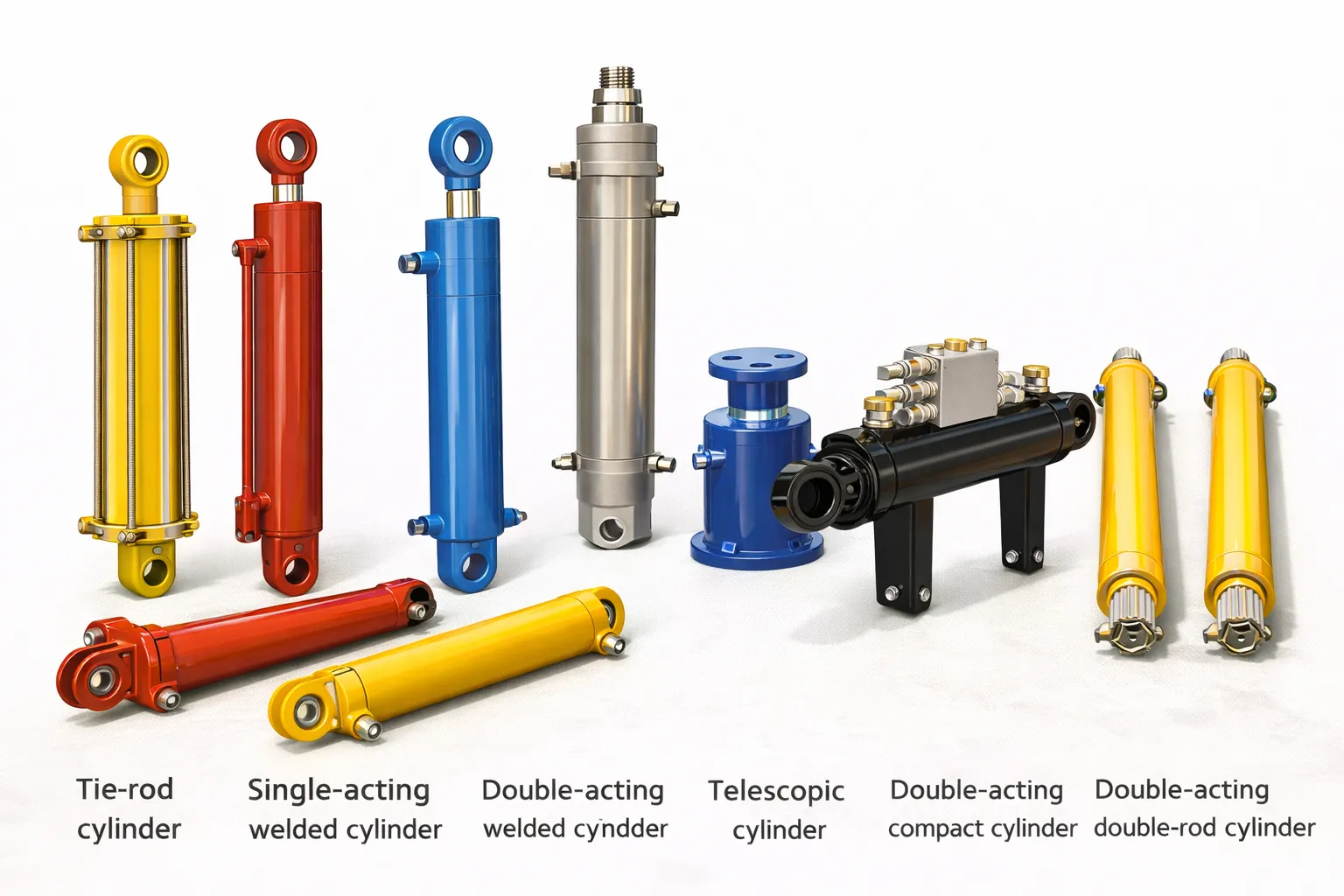
To accurately calculate your true maintenance expenditure, you must evaluate the underlying structural differences between generic replacement hydraulic parts and purpose-built mining equipment. The table below outlines these critical disparities.
| Engineering Aspect | Ordinary Commercial Cylinder | Our Coal Crusher Door Cylinder |
|---|---|---|
| Metallurgical Base | Standard 45# Carbon Steel (Prone to fracture under heavy impacts) | Forged Q345D Low-Alloy Steel (Superior shock absorption capability) |
| Dust Exclusion Defenses | Basic rubber wiper (Allows silica and coal fines to bypass) | Metal-encased, heavy-duty double-lip scraper system |
| Sealing Composition | Standard NBR Elastomers (Melts or tears under high-frequency friction) | Wear-Resistant PTFE & Polyurethane Tandem Matrix |
| Structural Welding | Threaded tie-rods (Vibrate loose on tunneling machines) | Monolithic Automated Submerged Arc Welding |
| Operational Cycle Life | Requires constant maintenance and fluid leak repair. | Maximizes MTBF; built to endure multi-year excavation campaigns. |
Verified Field Deployments in the Asian Market
Our specialized actuation technologies have been thoroughly proven in the most hostile environments. The following case studies illustrate how upgrading to the Coal Crusher Door Cylinder resolved critical bottlenecks for massive engineering operations across East Asia.
Case 1: Deep Vein Anthracite Extraction – Gangwon Province, South Korea
Client Profile: State-Supported Mining Enterprise
Application Scenario: Roadheader Sizing Gate Control
The Technical Challenge: The extremely high concentration of abrasive anthracite dust was bypassing the standard wiper seals on their cylinders. The rods were becoming deeply scored within weeks, resulting in massive hydraulic fluid blowouts and conveyor jams.
Initial Contact: Discovered our technical specifications via a Google search for wear-resistant B2B suppliers in Q1 2024.
Deployment Result: We rapidly fabricated customized units featuring our severe-duty metal scrapers. The Coal Crusher Door Hydraulic Cylinder physically expelled the dust, achieving 16 months of continuous operation without a single seal failure.
“The amount of operational time we lost to fixing hydraulic cylinders was unacceptable. Your engineering completely halted the wear issues. Fantastic build quality.” — Chief Maintenance Officer Kang
Case 2: Shinkansen Tunnel Expansion – Hokkaido, Japan
Client Profile: National Civil Engineering Consortium
Application Scenario: Heavy Excavator Crusher Attachments
The Technical Challenge: Operating in freezing ambient temperatures, the standard carbon steel cylinders on their roadheaders were cracking at the base welds when large granite boulders violently impacted the breaker door.
Initial Contact: Outreach through an industrial equipment sourcing portal.
Deployment Result: Our engineering team specified the Q345D alloy for its exceptional cold-weather impact toughness. The new monolithic welded cylinders easily absorbed the kinetic shockloads without any structural deformation.
“The Q345D metallurgy makes an incredible difference. They have survived an entire winter of granite crushing where the OEM parts failed miserably.” — K. Takahashi, Fleet Director, Feb 2025
Case 3: Urban Subway Infrastructure – Busan, South Korea
Client Profile: Tier-One Earthworks & Tunneling Corporation
Application Scenario: Continuous Miner Material Feed Gates
The Technical Challenge: The frequent open/close cycling of the gates (over 60 actuations per hour) was generating intense internal fluid heat. Standard aftermarket seals were vulcanizing, causing the heavy double acting hydraulic cylinder to lose holding pressure.
Initial Contact: Direct inquiry via our homepage contact portal.
Deployment Result: The thermally optimized PTFE guide bands within our cylinders maintained their shape perfectly despite the high-friction heat. The direct-factory hydraulic cylinder price also saved them 35% over dealer replacements.
“Incredible thermal stability. We retrofitted our entire subway fleet with these actuators. The performance-to-price ratio is the best in the market.” — Director Lee, Oct 2025
Case 4: Limestone Aggregate Production – Taichung, Taiwan
Client Profile: Massive Cement & Aggregate Supplier
Application Scenario: Mobile Crawler Crushers
The Technical Challenge: The massive, low-frequency vibration of crushing limestone was causing the threaded caps on their cylinders to vibrate loose, creating dangerous pressure drops and sudden gate closures.
Contacted Via: Recommended by an international heavy machinery consultant.
Deployment Result: Installed our fully welded Coal Crusher Door Cylinder. The monolithic structure completely negated the unthreading issue, securing a safe, vibration-resistant workflow.
“The welded construction is flawless. We haven’t had a single pressure leak since installing them in August 2025. Very solid industrial engineering.” — Lin Wei, Site Foreman
Case 5: Subsurface Coal Enterprise – Quang Ninh, Vietnam
Client Profile: State-owned Coal Extraction Firm
Application Scenario: Continuous Miner Fleet Overhaul
The Technical Challenge: The aging fleet was suffering from massive internal wear due to high abrasive contamination, leading to frequent door jams. They required a bulk upgrade of all their hydraulic cylinder components.
Contacted Via: Google Search for factory-direct heavy-duty fluid power suppliers.
Deployment Result: We rapidly manufactured, tested, and delivered 24 identical Coal Crusher Door Cylinder units. The 100% factory pressure testing meant every single unit was ready to install immediately, instantly upgrading the reliability of the entire fleet.
“Fast international delivery and perfect OEM fitment without any modifications needed. The wear-resistant seals have practically eliminated our daily maintenance breakdowns.” — Nguyen V., Procurement Head, Jan 2026
Expert B2B FAQ: Technical & Sourcing Inquiries
Our engineering team routinely advises procurement managers on resolving chronic machinery failures. Below are comprehensive answers to the most common technical questions regarding breaker door actuation.
1. Why is a double acting hydraulic cylinder mandatory for this specific tunneling subsystem?
2. How does the Q345D metallurgy prevent mechanical failure compared to standard carbon steel?
3. If the rod is hard chrome plated, why are specialized wear-resistant seals still necessary?
4. Is it more cost-effective to perform a hydraulic cylinder repair on a scored cylinder?
5. How do you guarantee your actuators will fit our specific brand of tunneling machine?
6. How does your direct factory hydraulic cylinder price compare to purchasing from an OEM dealer?
7. Do you also manufacture other equipment actuators, such as a lift cylinder or tensioning rams?
8. What happens if the internal seals fail during extraction operations?
9. Do you provide replacement support for future hydraulic cylinder repair?
10. What is the typical lead time for exporting these units to ports in South Korea, Japan, or Taiwan?
Eradicate Abrasive Wear and Maximize Extraction Uptime
Do not allow the harsh reality of abrasive coal dust to dictate your maintenance schedule and halt your tunneling operations. Upgrade your critical equipment with our meticulously engineered Coal Crusher Door Cylinder. Leveraging high-toughness Q345D metallurgy and an exclusive wear-resistant sealing matrix, our actuators guarantee relentless, high-frequency performance in the absolute worst subterranean conditions. Connect directly with our engineering specialists today to secure your fleet’s productivity.
Editor: Cxm