Heavy Duty Pusher Cylinder for Coke Oven
Engineered with 42CrMo alloy steel and advanced nickel plating to endure extreme radiant heat and massive load extraction in severe metallurgical coking operations.
Product Overview and Industrial Value
When assessing the operational continuity of a modern integrated metallurgical facility, plant engineers invariably focus on the extraction phase of the coking process. The coke oven is an extremely harsh, unforgiving environment where raw metallurgical coal is carbonized at temperatures regularly exceeding 1000 degrees Celsius. Once this volatile coking cycle concludes, the incandescent solid carbon mass must be forcefully ejected from the narrow refractory brick chamber. This monumental physical task is executed by the pusher machine, a massive piece of mobile heavy equipment. The primary mechanical driving force behind this entire extraction mechanism is the pusher cylinder.
Over two decades of analyzing heavy machinery failures across global steel mills confirms that standard fluid power actuators simply cannot survive in this localized atmosphere. The intense radiant heat quickly degrades standard polymer elastomers, while highly abrasive airborne coke dust violently scores the polished rod. Furthermore, the immense mechanical friction generated by pushing tens of tons of solid carbon induces severe structural stress. Our unique positioning as a highly specialized hydraulic cylinder manufacturer is built entirely upon solving these exact operational bottlenecks. We do not adapt light-duty commercial components and hope they survive; we engineer heavy-duty infrastructural assets designed specifically for the extreme realities of the steel industry.
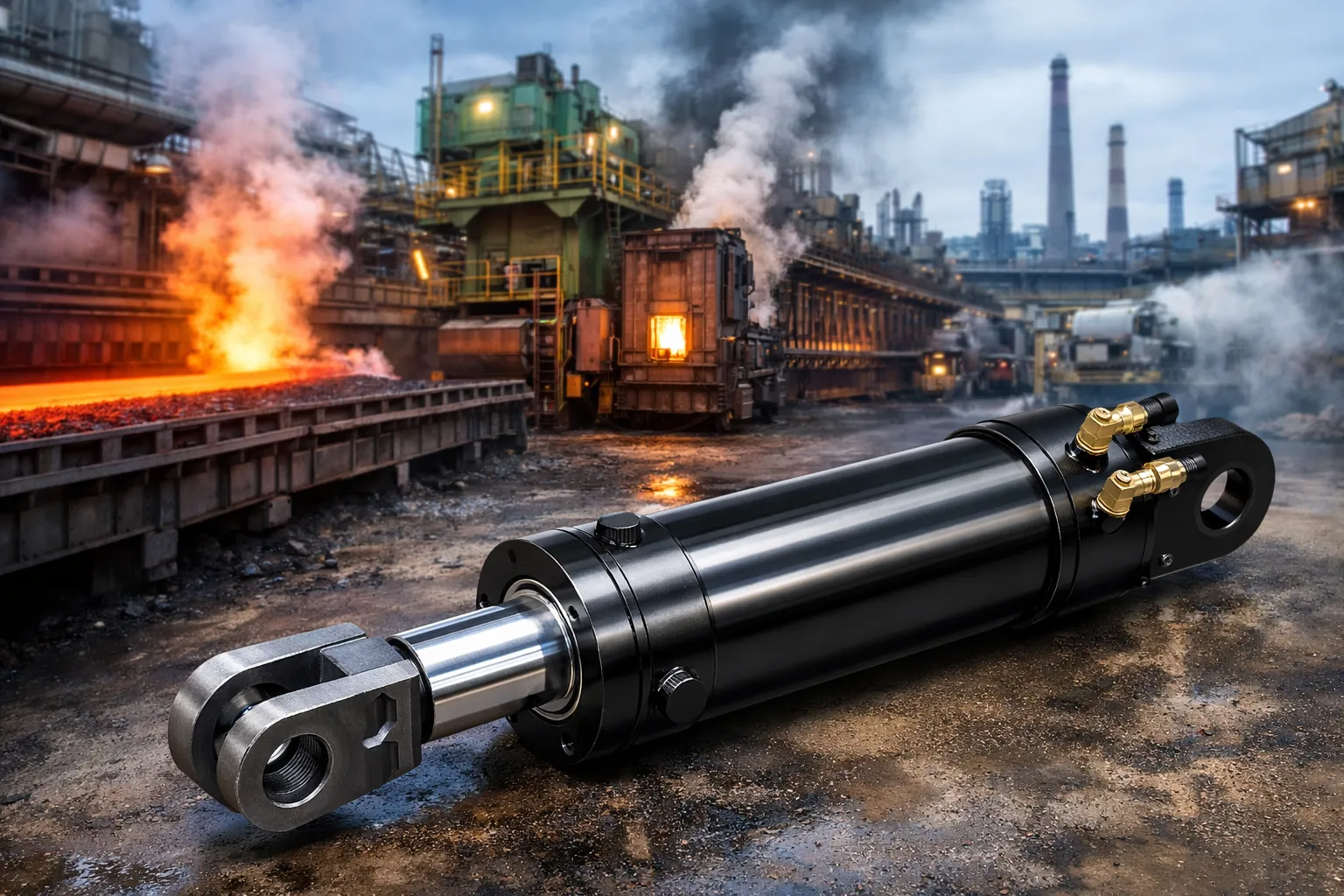
By integrating high-yield 42CrMo alloy steel, specialized nickel plating surface treatments, and high-temperature sealing architectures, our hydraulic oil cylinder designs drastically reduce unscheduled maintenance and catastrophic breakdowns. Standard actuators fail because they are not dimensionally designed to manage the severe eccentric side loads and thermal degradation inherent to a coke battery. In a continuous 24/7 production environment, preventing a single day of downtime easily justifies the investment in premium high-performance hydraulic parts. Upgrading your pusher machines with our specialized fluid power components secures your production schedule against unpredictable mechanical failures, significantly lowering your long-term total cost of ownership.
Technical Parameters and Customization Capabilities
Every coke oven battery possesses unique spatial constraints and horizontal pushing force requirements. To ensure seamless mechanical integration into your specific machinery, our engineering team offers highly precise dimensional customization based on a proven, heavy-duty framework. The following table outlines the foundational engineering specifications, structural material choices, and the recommended configuration points for our specialized metallurgical actuators.
| Engineering Specification | Parameter Detail and Technical Standard |
|---|---|
| Industry | Metallurgy and Heavy Steel Manufacturing |
| Equipment Category | Coke Oven |
| Subsystem / Action | Pusher Machine / Coke Extraction |
| Cylinder Designation | Pusher Cylinder |
| Action Mode | Double acting hydraulic cylinder for powered extension and retraction |
| Structure Type | Piston Cylinder architecture with heavy load tolerance |
| Manufacturing Structure | Fully Welded Assembly (Eliminating tie-rod stretch limits) |
| Core Material System | 42CrMo Alloy Steel for extreme tensile and yield strength |
| Surface Treatment | Electroless Nickel Plating for superior chemical gas defense |
| Environment Grade | High-temperature coke, intense radiant heat, sulfurous gases |
| Working Condition | Heavy load pushing with extreme off-axis mechanical stress |
| Typical Failure Mode Handled | Cylinder barrel wear, Seal thermal degradation, Rod scoring |
| Recommended Configuration | High-temperature resistant cylinder barrel with wide composite guide bands |
Operational Mechanics and Working Principle
Understanding the internal fluid dynamics and physical mechanics during the oven pushing sequence is critical for proper machinery integration. Because gravity or mechanical return springs cannot possibly retract a multi-ton pushing ram, our system operates strictly and exclusively as a high-pressure double acting hydraulic cylinder. This specific configuration utilizes pressurized hydraulic fluid to actively drive both the forceful outward extension stroke and the rapid inward retraction stroke, rendering any basic single acting hydraulic cylinder entirely inadequate for this heavy-duty application. High-flow control valves dictate the exact speed and force profile, ensuring the steel ram does not damage the delicate refractory silica brick walls of the oven.
When the plant’s programmable logic controller initiates the ejection cycle, the central power unit floods the blind end (cap end) of the heavy-walled barrel with highly pressurized fluid. This fluid acts directly against the massive surface area of the internal hydraulic cylinder piston, generating immense linear thrust. The ram forces the incandescent coke out of the oven. During this critical extension phase, the heavy load pushing condition induces massive mechanical resistance. Our specialized high-temperature resistant cylinder barrel maintains its precise geometric integrity, completely preventing the dimensional ballooning effect that plagues standard thin-walled commercial tubes under extreme pressure spikes.
Upon completion of the ejection, the directional control valves reverse the fluid flow, sending high-pressure oil into the rod end to retract the mechanism rapidly before the severe ambient heat can permanently warp the structural steel ram. During this retraction phase, our specialized high-temperature metallic scraper seals violently shear away the abrasive, hardened coke dust from the rod, keeping the internal hydraulic fluid impeccably clean. By preventing external abrasive contaminants from breaching the fluid boundary, we effectively eliminate the primary root cause of internal scoring and premature seal failure, ensuring consistent volumetric efficiency across thousands of operational cycles.
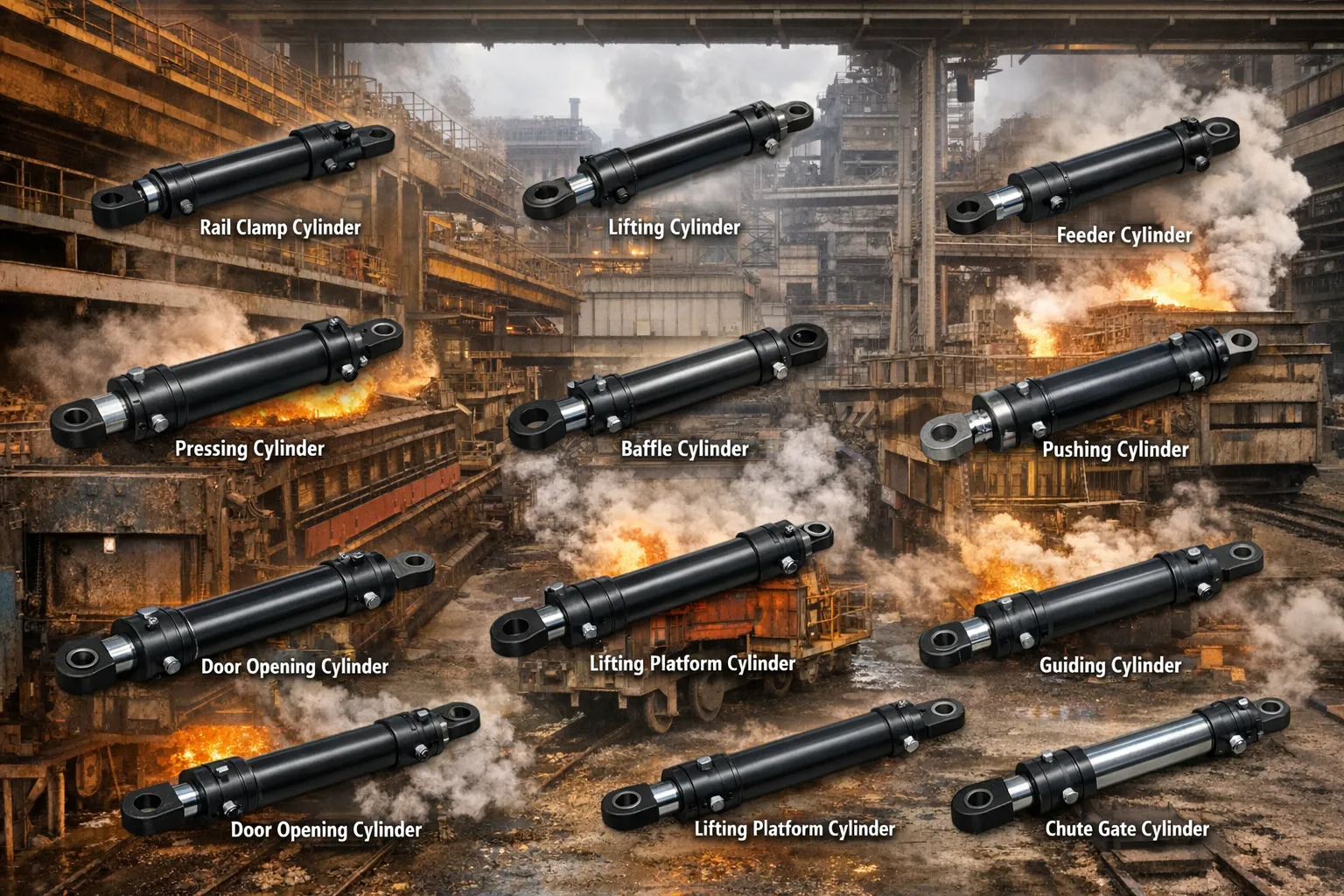
Seamless Machinery Integration and Global Brand Replacement
During a critical metallurgical plant turnaround, maintenance teams cannot afford the delays associated with modifying heavy equipment steel frames to accommodate slightly different new parts. Our engineering division specializes in providing exact 1:1 drop-in replacements for legacy fluid power systems. We meticulously reverse-engineer and replicate the mounting trunnions, pin hole diameters, retracted stroke lengths, and fluid port thread specifications of your existing machinery. This precise engineering process ensures that the installation is completely seamless, drastically reducing your scheduled maintenance downtime window.
Our custom high-strength metallurgical actuators frequently serve as direct upgrades for units originally supplied by global commercial brands such as Bosch Rexroth, Parker Hannifin, Eaton Vickers, SMC, Moog, and Yuken. Please be advised that referencing these specific brand names is strictly for technical sizing convenience, dimensional cross-referencing, and mechanical compatibility evaluation for plant engineers. We operate proudly as an independent, bespoke manufacturing entity and claim no trademark affiliation with these corporations. By partnering directly with our manufacturing hub, procurement managers secure a highly attractive hydraulic cylinder price while simultaneously upgrading the mechanical resilience, anti-corrosion defense, and thermal capacity of their critical hydraulic rams.
Five Core Technical Advantages
Overcoming the dual destructive threats of intense radiant heat and heavy abrasive wear requires a fundamental departure from standard manufacturing techniques. We have engineered five distinct structural advantages into every unit to ensure absolute metallurgical reliability.
1. Premium 42CrMo Alloy Steel Architecture
Standard medium-carbon steels simply lack the yield strength required for heavy load pushing over long horizontal extraction strokes. We forge our primary rods and pressure vessels from 42CrMo (Chromium-Molybdenum) alloy steel, providing exceptional tensile strength and extreme fatigue resistance. This robust metallurgy strictly prevents the extended rod from buckling or deflecting under massive off-axis loads when the ram encounters unexpected internal friction inside the oven chamber.
2. Advanced Electroless Nickel Plating Defense
The local atmosphere surrounding a coke battery is heavily saturated with corrosive sulfur dioxide, hydrogen sulfide, and caustic moisture. Standard hard chrome plating rapidly develops micro-cracks under severe thermal cycling, allowing aggressive rust to attack the base steel. We apply a dense, uniform layer of advanced nickel plating. This creates an absolute, non-porous chemical barrier that offers vastly superior corrosion resistance, ensuring the rod finish remains flawless and extends the life of the dynamic seals exponentially.
3. High-Temperature Resistant Sealing Matrix
Standard NBR or polyurethane rubber seals will quickly bake, harden, and melt when operating in close proximity to an open coke oven door. We utilize aerospace-grade fluoroelastomers (FKM/Viton) combined with advanced PTFE (Teflon) composite step seals for all critical internal fluid boundaries. This highly specialized, ultra-low friction matrix guarantees the seals remain elastic and hold high system pressure reliably, even when continuously exposed to intense, extreme radiant heat.
4. High-Rigidity Fully Welded Construction
The kinetic shockwaves generated during the initial extraction phase are violently destructive. Traditional tie-rod cylinder designs fail rapidly because the external long bolts stretch under impact, causing the end caps to separate and leak high-pressure fluid. Our specialized hydraulic cylinder components feature a monolithic, 100% fully welded construction. We join the heavy steel end caps directly to the barrel via deep-penetration automated submerged arc welding to absorb maximum kinetic shock without any structural fatigue or joint weeping.
5. Eradicating Internal Cylinder Barrel Wear
As the heavy ram extends horizontally over long distances, it naturally attempts to sag, causing the internal steel piston to scrape aggressively against the inner honed bore. We precisely machine oversized grooves into the piston profile and install extra-wide, heavy-duty high-temperature composite guide bands. These sacrificial, load-bearing rings maintain perfect rod concentricity, completely eliminating metal-to-metal galling and resolving the severe cylinder barrel wear issue entirely.
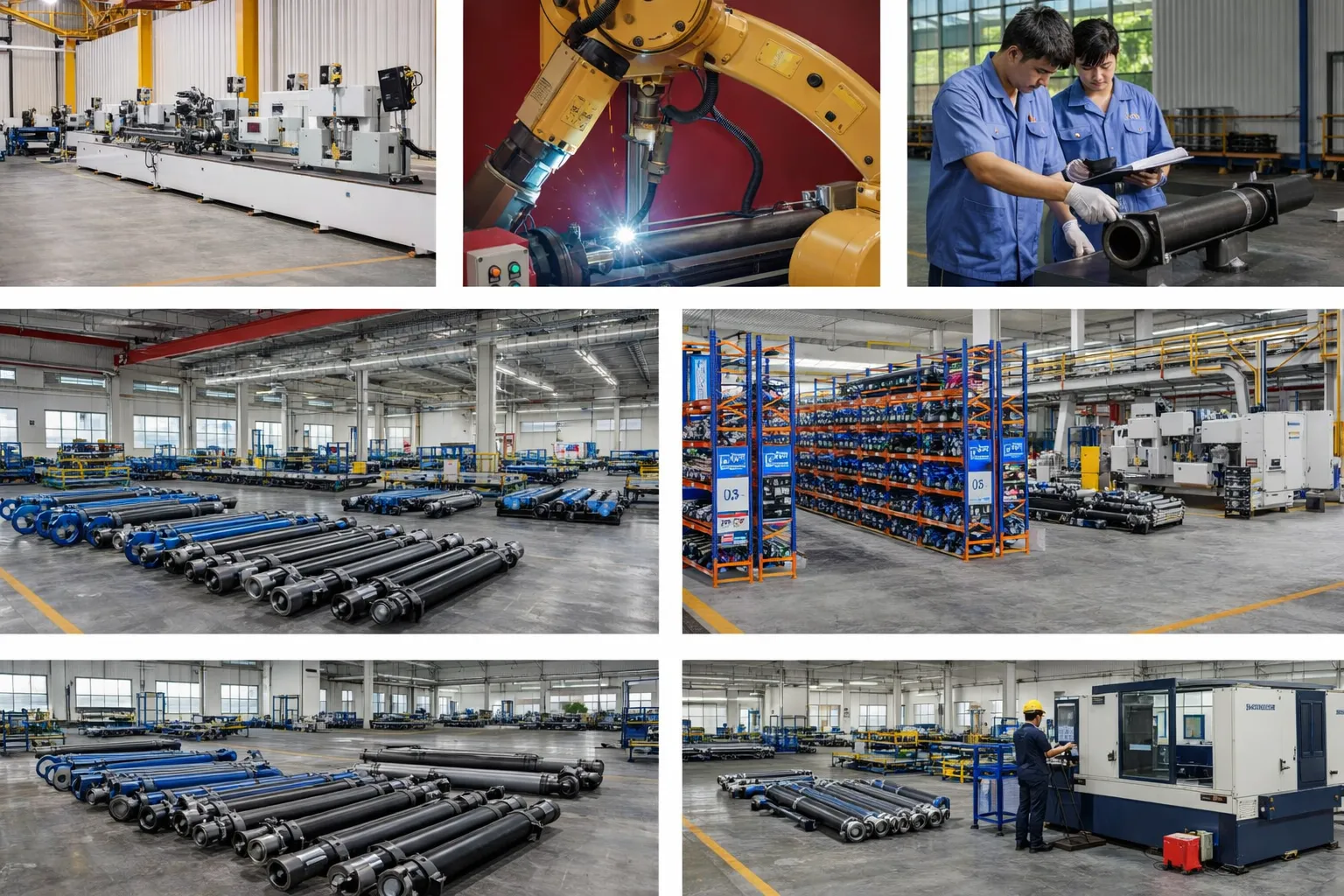
Manufacturing Excellence and Absolute Quality Control
Producing reliable heavy-duty fluid power equipment requires uncompromising, vertical control over the entire manufacturing lifecycle. We begin by deep-hole boring and precisely skiving the internal tubes to achieve a mirror-like surface finish (Ra < 0.2µm), drastically minimizing abrasive friction against the primary seals. Our multi-axis CNC turning and milling centers machine all critical components to exact micrometer tolerances. The structural integrity of the high-pressure welds is continuously verified using ultrasonic non-destructive testing (NDT), ensuring zero internal porosity or sub-surface weld flaws.
Before any assembled heavy-duty unit is authorized for global crating and shipping, it undergoes a mandatory 100% factory hydrostatic test. We aggressively spike the internal fluid pressure to 1.5 times the maximum rated operational limit on digital diagnostic test benches, holding the pressure to strictly verify zero internal fluid bypass across the piston and zero external weeping at the glands under extreme load. This rigorous testing protocol guarantees that the actuator is ready for immediate heavy-duty deployment upon arrival at your steel facility.
Furthermore, we prioritize total lifecycle traceability. Every unit is permanently laser-engraved with an immutable unique traceability serial number linked to our digital build database. Decades later, when your proactive plant maintenance team schedules routine downtime for fixing hydraulic cylinders, simply quoting this specific number allows us to immediately identify the original engineering build sheet. We can rapidly dispatch the exact replacement FKM seals and composite guide rings, transforming complex hydraulic cylinder repair into a highly streamlined, error-free procedure.
Broad Industrial Applications
While perfectly optimized for the extreme thermal and mechanical conditions of a coke oven, this rugged, heavy-wall structural architecture translates seamlessly to other demanding sectors where standard commercial fluid power equipment repeatedly fails.
- Metallurgy and Heavy Iron: Safely actuating massive electric arc furnace roofs, continuous casting line straighteners, and heavy ladle tilting turrets near molten metal. Explore Metallurgical Solutions.
- Mining Industry: Thriving in highly abrasive rock dust environments, making them ideal for driving heavy primary jaw crushers and bulk material apron feeders. Explore Mining Solutions.
- Construction Machinery: Frequently specified as a primary main boom actuator or a massive lift cylinder on high-tonnage mining excavators and underground tunneling shields. Explore Construction Solutions.
- Plastics and Rubber Machinery: Delivering the immense, sustained clamping forces required for large industrial injection molding units without suffering thermal pressure decay over long holding cycles.
- Material Handling and Logistics: Powering heavy automated dock levelers, massive ship unloaders, and continuous shipyard bulk transfer systems where 24/7 reliability is mandatory.
- New Energy and Special Scenarios: Employed in offshore wind turbine pitch control systems and high-compression industrial waste compactors requiring our supreme chemical nickel plating resistance.
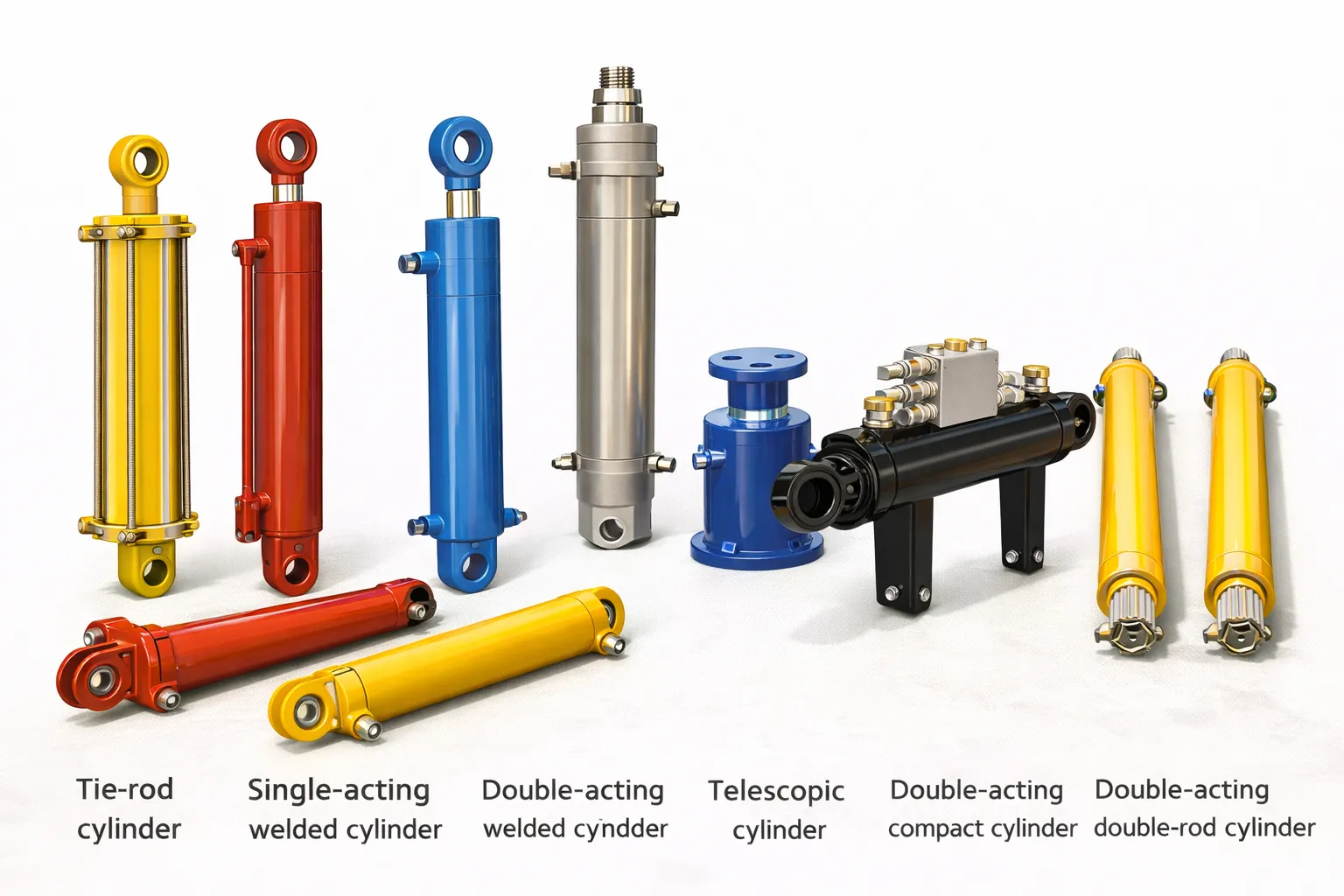
Comparative Analysis: Standard vs. High-Performance Actuators
Making heavy industrial procurement decisions based solely on the lowest initial purchase cost often leads to disastrous financial consequences when a critical component fails during peak production. The analytical table below outlines the immense technical disparities between sourcing a standard commercial unit versus investing in our purpose-built metallurgical design.
| Engineering Feature | Standard Commercial Cylinder | Our High-Performance Pusher Cylinder |
|---|---|---|
| Core Material Strength | Basic Carbon Steel (Prone to bending under heavy loads) | 42CrMo Alloy Steel (Extreme yield strength and physical rigidity) |
| Thermal Seal Integrity | Nitrile NBR rubber seals (Bakes and shatters near the hot oven) | FKM / PTFE Step Seals easily handle continuous extreme radiant heat |
| Surface Protection | Thin Chrome plating (Micro-cracks rapidly in sulfurous heat) | Thick Nickel Plating (Supreme chemical and corrosion defensive shield) |
| Structural Assembly | Tie-rod bolting (Bolts violently stretch and leak upon kinetic pushing shock) | Fully Robotic Welded Architecture (Impervious to massive impact forces) |
| Barrel Wear Prevention | Thin nylon guidance strips (Results in rapid internal metallic scoring) | Extra-wide heavy composite guide bands (Absorbs massive radial side-loads) |
Real Case Studies in South Korea and Surrounding Regions
Our custom heavy-duty solutions are successfully deployed across major industrial steel hubs, systematically solving extreme mechanical and thermal failures where standard equipment succumbs. Here are five detailed examples of our engineering successes in the field:
Case 1: Eradicating Thermal Seal Failure in Pohang, South Korea
Client Profile: A massive integrated iron and steel manufacturing complex operating 4 heavy coking batteries.
Application: The primary ram extraction mechanism on their main pusher machine.
The Challenge: In April 2024, their Lead Reliability Engineer contacted us after actively searching for specialized high-temperature hydraulic parts online. Their European OEM cylinders were failing disastrously every 4 months. The intense radiant heat from the open oven was melting the standard polyurethane rod seals, causing highly pressurized, flammable hydraulic oil to spray directly toward the incandescent high-temperature coke.
The Solution & Result: We rapidly engineered a custom pusher cylinder utilizing an advanced FKM aerospace elastomer package combined with a specialized high-temperature resistant cylinder barrel. Installed in May 2024, the unit has operated for over 22 months continuously with absolutely zero thermal seal degradation or fluid loss.
“The thermal stability of these units is phenomenal. They precisely solved our most critical maintenance bottleneck, saving us vast amounts of operational capital. Highly recommended engineering.” — Mr. Kang D.Y., Lead Reliability Engineer
Case 2: Curing Severe Barrel Wear in Gwangyang, South Korea
Client Profile: A major chemical and metallurgical processing facility supplying the automotive sector.
Application: Heavy ram actuators for high-density material leveling and extraction.
The Challenge: Reached out to our technical sales team in August 2024. Due to the extreme stroke length required, their incredibly long pusher rams were sagging slightly. This cantilevered effect transferred massive eccentric side loads directly to the internal piston, causing severe metal-on-metal cylinder barrel wear that ruined the pump’s volumetric efficiency.
The Solution & Result: We engineered a heavily reinforced unit utilizing massive 42CrMo steel to resist rod deflection, and integrated extra-wide, heavy-duty composite guide bands onto the piston geometry. These bearing bands comfortably absorbed the eccentric side loads. The new cylinders now operate with perfectly smooth strokes without damaging the inner honed barrel.
“The internal heavy-duty guide rings completely stopped the metal-on-metal scraping issue. The fluid power efficiency remains at peak levels even after a year of hard pushing. Excellent structural work.” — Park J.Y., Lead Hydraulic Engineer
Case 3: Rapid Emergency Retrofit in Incheon, South Korea
Client Profile: A heavy industrial retrofitting contractor specializing in complete steel plant upgrades.
Application: Upgrading the main hydraulic systems of an aging pusher machine during a shutdown.
The Challenge: Emailed our engineering hotline urgently in October 2025. Their primary European supplier faced massive unexpected production delays, directly jeopardizing a strictly scheduled 3-week plant shutdown window. They needed four massive custom cylinders built to exact drop-in dimensions immediately.
The Solution & Result: Leveraging our massive raw material steel inventory and in-house 24/7 CNC capabilities, we reverse-engineered, machined, welded, pressure-tested, and air-freighted all four units within exactly 22 days. The contractor installed them without modifying a single mounting pin or hose fitting.
“Their ability to deliver massive, custom-machined metallurgical components accurately under extreme time pressure saved our contract. The dimensional accuracy was flawless. We will definitely use them again.” — Kim D.H., Project Director
Case 4: Solving Heavy Load Fatigue in Kitakyushu, Japan
Client Profile: A specialized heavy industrial steel mill focusing on high-grade automotive alloys.
Application: High-tonnage quenching car positioning and alignment mechanisms.
The Challenge: In late 2024, the engineering firm was struggling with severe field complaints. The standard commercial tie-rod cylinders they originally utilized were physically stretching under the massive kinetic shock of positioning the extremely heavy quenching cars, causing constant fluid leaks and pressure drops at the end caps.
The Solution & Result: We rapidly transitioned them to a fully robotic-welded, heavy-wall carbon steel structural design. The monolithic welded architecture easily absorbed the massive kinetic shockwaves without allowing any structural flex or bolt stretching. Fluid leakage issues were permanently resolved.
“Moving from bolted tie-rods to their fully welded design was an absolute game-changer. The massive structural integrity completely absorbed the shock loads. They are now our exclusive supplier for heavy actuation.” — H. Tanaka, Plant Operations Manager
Case 5: Beating Chemical Corrosion in Kaohsiung, Taiwan
Client Profile: A heavy metallurgical facility situated directly on the humid, salt-heavy coastline.
Application: Heavy leveling rods operating directly inside the raw coal charging system.
The Challenge: Contacted us via our website in August 2024. The brutal combination of intense radiant heat, highly corrosive sulfur dioxide from the coking process, and high oceanic humidity was causing the standard hard chrome rods to blister, peel, and violently shred the main wiper seals in under two months.
The Solution & Result: We deployed our advanced electroless nickel plating over high-strength induction-hardened 42CrMo rods. After comprehensive field trials spanning 18 months in the same location, the nickel-plated rods exhibit a pristine mirror finish with absolutely zero signs of micro-cracking, chemical pitting, or rust formation.
“We had accepted severe rod corrosion as a harsh financial reality of our coastal plant until we installed their nickel-plated units. The chemical resistance is absolutely flawless and has saved us thousands in seal replacements.” — Lin Wei-Chen, Senior Maintenance Supervisor
Frequently Asked Questions (FAQ)
To assist procurement managers, reliability engineers, and plant maintenance directors in making highly informed technical upgrades, we have detailed our responses to the most critical operational and commercial inquiries regarding our heavy-duty fluid power systems.
1. What exact dimensions do you need to provide a custom quotation?
2. How does your equipment survive the extreme radiant heat of the oven?
3. Can you manufacture an exact dimensional replacement for an obsolete Japanese or European part?
4. What are your typical production lead times for clients in South Korea?
5. Do you offer after-sales support and seal kits for future maintenance?
6. How does your pricing structure compare to commercial OEM parts?
Secure Your Metallurgical Production Continuity
Do not let the relentless extreme heat and massive kinetic forces of the coke oven dictate your unscheduled maintenance downtime. Upgrade your pusher machines to a custom-engineered actuation system explicitly designed for the brutal realities of the metallurgical industry.
Partner directly with an elite fluid power specialist today. Provide our technical division with your specific operational parameters or existing OEM part numbers, and we will rapidly deliver a comprehensive engineering assessment alongside a highly competitive commercial quotation.
Editor: Cxm