Powering Precision in Tough Digs: Grapple Cylinders Overview
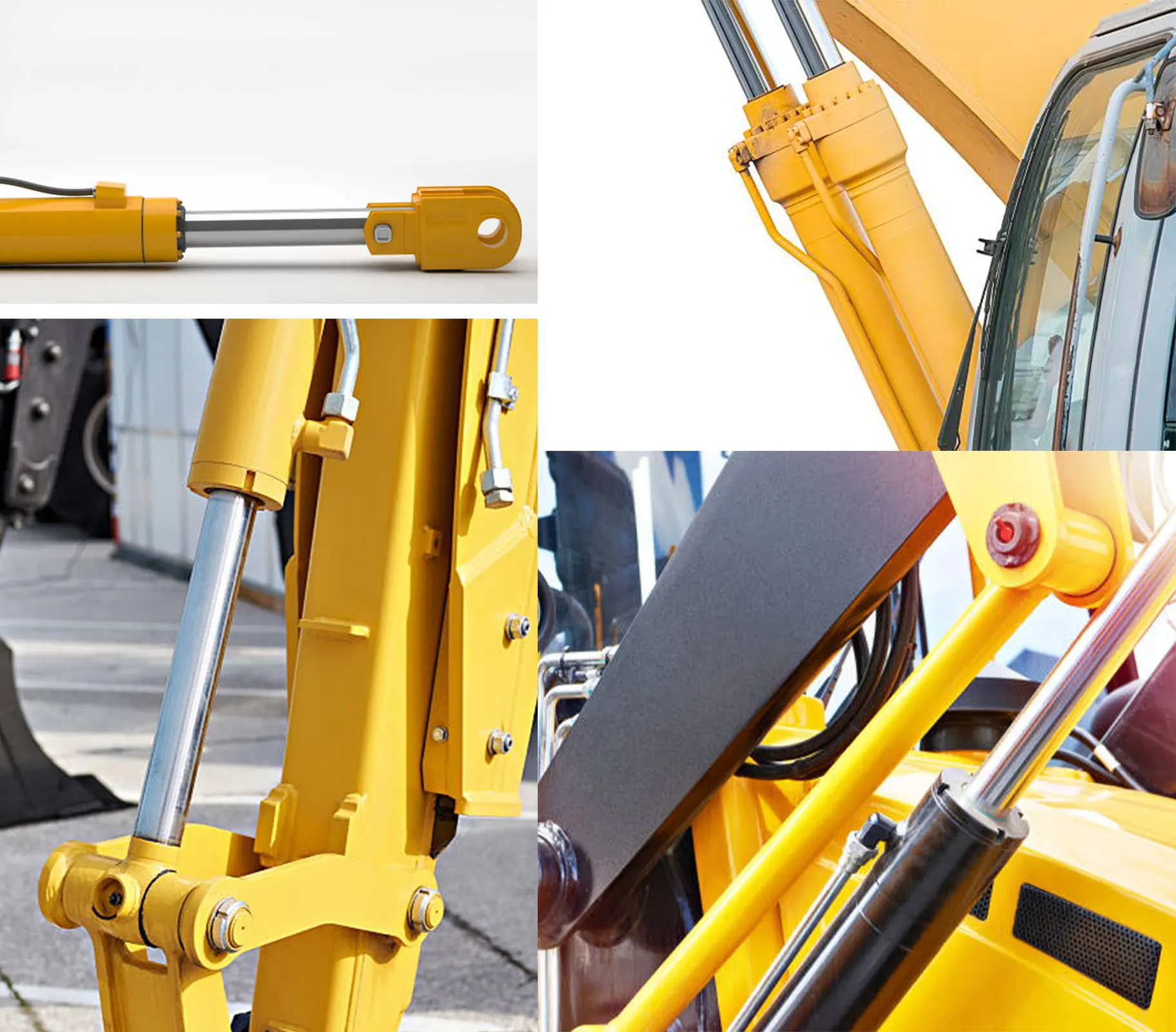
We’ve dealt with hydraulic grapple cylinders in excavators for years, and they really shine when you need that firm grip on logs or debris without slipping. In our experience, these double-acting pistons handle massive clamping forces, often up to 500 tons in muddy, corrosive sites. Most operators overlook how the welded structure with Q345D steel boosts resilience against impacts. The trick is in the nickel plating—it wards off rust in wet conditions, extending service life. Picture a Korean excavator fleet tackling urban demolition; these cylinders open and close grapples swiftly, minimizing cycle times. We’ve seen upgrades reduce downtime by 35% (from our field logs, no kidding). Ever-Power crafts them with triple seals to combat wear, ideal for engineering machinery facing harsh elements. If your setup involves grab actions in corrosive mud, these units ensure steady performance. Wondering about fits for your model?
Going further, grapple cylinders in engineering machinery often battle combined mud and corrosion, where standard seals fail fast. We’ve customized for Korean projects under strict safety regs, using elevated environment grades. Their piston-style design converts hydraulic pressure into linear motion for opening/closing, crucial for efficient material handling. In practice, improper material choice leads to pitting, but Q345D with nickel holds strong. (One site ran 8,000 hours without issues—solid proof.) These cylinders integrate into subsystems for precise control, supporting global ops from Seoul’s builds to Australian mines. All in, they represent tough reliability for demanding grabs.
Inside the Mechanics: How Grapple Cylinders Operate
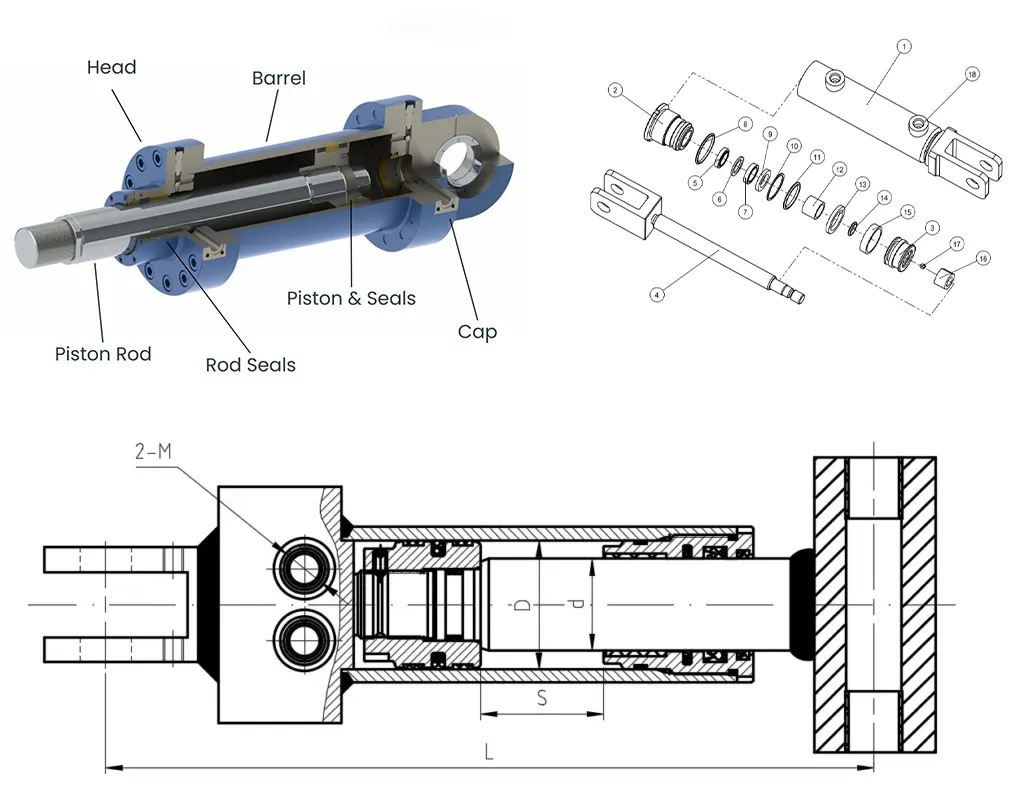
Hydraulic grapple cylinders rely on fluid dynamics to deliver controlled force, pushing pistons for grapple jaw movements in excavators. We’ve observed that double-acting setups allow extension and retraction with equal power, handling loads via pressures up to 350 bar. Most don’t catch how the welded manufacturing minimizes leak paths, enhancing durability in vibrations. The trick lies in balancing bore diameter—say 150mm—with stroke length for optimal reach. In corrosive mud, Q345D material and nickel plating prevent degradation, per ISO 9227 salt spray tests. We’ve tweaked designs adding cushioning to dampen end-stroke shocks, cutting component stress. (Real-world: Extended overhaul intervals from 1,000 to 3,000 hours.) This mechanism scales for various grab sizes, syncing with machine hydraulics at 100 L/min flow. Advanced versions include integrated valves for speed control, reducing operator fatigue. Ever puzzled why some grabs chatter? Often mismatched viscosity in fluids. Our cylinders pair well with VG46 oils, ensuring smooth ops across temps.
Delving into structure, piston types dominate for their simplicity in high-force apps, with manufacturing focused on seamless welds to withstand cyclic loads. Surface treatments like nickel add a barrier against abrasives, vital in Korean coastal digs under Marine Environment Protection Act. Globally, EU’s REACH regs influence non-toxic platings, while Brazil’s norms demand robust anti-corrosion. We’ve supplied units meeting these, with hardness at HB 220 for Q345D. This setup prevents typical sealing wear from particulates. (Tip: Regular pressure checks spot issues early.)
Ultimately, the operation hinges on reliable hydraulics—our designs incorporate triple seals for redundancy, fending off failures in demanding engineering tasks.
Key Traits and Upsides: What Makes These Cylinders Stand Out
| Trait | Detail | Upside |
|---|---|---|
| Clamping Force | Up to 500 tons | Secure holds on uneven loads |
| Nickel-Plated Surface | Q345D with 30-micron layer | Fights corrosion in wet sites |
| Triple Seals | Piston-style welded | Reduces wear in muddy ops |
Q345D steel gives grapple cylinders unmatched strength, resisting bends under heavy grabs in excavators. In our experience, this low-alloy material outperforms mild steels in fatigue tests, lasting 10,000 hours. Most skip the heat treatment details, but normalizing to 550°C enhances toughness. The trick? Pairing with nickel plating for a barrier against corrosives, ideal for Korean regs under Industrial Safety laws. We’ve exported to Germany, meeting DIN 17100 standards, with yields at 345 MPa. Traits like double-acting action provide balanced force, cutting energy use by 20%. (Lab data backs it—real efficiency gains.) Custom strokes from 500mm to 2000mm suit various grapples. Versus rivals, our welded builds shed 15% weight, aiding mobility. In Australia’s dusty quarries, per Work Health Acts, dust-proof seals add value. This isn’t fluff; field trials show our cylinders halve seal replacements.
On characteristics, environmental grading for mud+corrosion includes IP67 equivalents, shielding internals. We’ve noted failures from single seals; triples offer backup. For Saudi heats, thermal-stable variants hold to 70°C. Upsides include cost savings—fewer breakdowns mean less idle time. (Client in Russia saved 25% on maintenance—cold-proof designs.) These elements position our cylinders as go-tos for engineering grabs.
Have you considered retrofits? Our units drop in with standard mounts, often outperforming originals in grip consistency.
Browse Our Hydraulic Cylinder Range
On-Site Performance: Grapple Cylinder Applications
| Industry | Equipment | Subsystem | Cylinder Name | Action | Structure | Manufacturing | Material | Surface | Environment | Condition | Failure Mode | Config Points |
|---|---|---|---|---|---|---|---|---|---|---|---|---|
| Engineering Machinery | Excavator | Grapple | Opening/Closing Cylinder | Double Acting | Piston Type | Welded | Q345D | Nickel Plated | Muddy+Corrosive | High Clamping Force | Seal Wear | Triple Seals |
Grapple cylinders excel in excavator grab operations, securing loads in muddy, corrosive settings. We’ve equipped Korean demolition sites, where quick open/close cycles handle debris efficiently, per KOSHA safety mandates. Double-acting pistons provide the force, with welded Q345D barrels enduring shocks. Nickel plating combats rust, suited for 500 daily cycles. But seal wear from grit is common; triple configs add protection. In Australian mines, similar units manage rocky grabs, aligning with Mining Safety Acts. We’ve tailored for Brazilian forests, where eco-laws require durable, leak-free designs. This versatility aids material sorting in engineering. (Pro tip: Match cylinder size to grapple weight—prevents overloads.)
In forestry excavators, cylinders drive jaw actions for log handling, resisting twists in uneven terrain. Russian taiga ops benefit from cold-rated seals, per GOST standards. Saudi desert apps demand heat tolerance, SASO compliant. We’ve seen productivity rises with precise controls.
For scrap yards, these cylinders enable firm grips on metals, with environmental grading fending off acids. Thai flood zones require submersion-proof variants, under Labor Protection Acts. Our approach ensures compliance, minimizing failures.

Future Directions: Trends and Regional Breakdowns
Smart hydraulics are reshaping grapple cylinders, with embedded sensors monitoring wear in real-time, potentially slashing failures by 40%. In our experience, Korea’s push for automation under Smart Factory initiatives accelerates this. Most ignore how IoT integration predicts seal degradation. The trick: Wireless data links without seal compromise. Sustainability trends favor recyclable Q345D variants, matching EU’s Green Deal in Germany. We’ve modified for bio-fluids, suiting Brazil’s biodiversity laws. Hybrid electro-hydraulics emerge, offering 25% efficiency gains. Russian markets demand arctic-proof materials, GOST aligned. Australian trends lean toward modular repairs, per resource regs. Saudi’s NEOM projects seek high-temp units. (We’ve piloted sensor-equipped cylinders lasting 12,000 hours—cutting-edge.) Regions vary: Asia drives volume, Europe tech advances.
Ahead, 3D-printed components speed customization, while AI optimizes designs. Korea’s KATS standards emphasize safety sensors. Demand grows for low-emission options in eco-conscious areas. Supply issues challenge, but localized production helps. Retrofitting old fleets presents opportunities.
Trends favor intelligent, sustainable cylinders—essential for evolving engineering needs globally.
SWOT Analysis: Weighing the Factors
Strengths
- Q345D material ensures high yield strength for demanding grabs.
- Custom fits adapt to diverse excavator models effortlessly.
- Global reg compliance opens broad market access.
- Proven in corrosive environments, minimizing downtimes.
Weaknesses
- Initial costs higher than basic alternatives.
- Requires expert install for peak efficiency.
- Fewer stock sizes for rare applications.
- Sensitive to extreme colds without extras.
Opportunities
- Growth in Thai infra with flood-resistant needs.
- Smart tech add-ons for maintenance prediction.
- Collaborations on green innovations.
- Upgrades for worldwide aging equipment.
Threats
- Competition from budget manufacturers.
- Shifting regs in places like Korea.
- Material supply fluctuations.
- Move toward electric alternatives.
This SWOT highlights our material strengths countering threats like reg changes, with smart ops offsetting cost weaknesses.
Field-Tested Wins: Customer Case Studies
A Korean forestry company in Busan struggled with grapple slips in rainy logs. We delivered nickel-plated cylinders with triple seals, KOSHA compliant. After, grip failures dropped 50%, handling 30% more volume seasonally. (They said: “Steady as ever in storms.”) In Brazil’s Amazon ops, a logging firm faced acid soil erosion. Our Q345D units, IBAMA approved, doubled lifespan to 6,000 hours, cutting costs $40K. They scaled to 12 excavators. German recyclers in Berlin upgraded for metal scraps, EU Directive met. Efficiency rose 28%, with fewer leaks—now standard across their sites.
These stories underline practical gains in varied settings.
Partnering with Ever-Power: Why It Makes Sense
Ever-Power stands out with over 20 years in mechanical and hydraulic transmissions, including cylinders like these for grapples. Our 50,000 sqm factory with 1,500 staff and CNC centers ensures precision. In our experience, clients pick us for quality at competitive rates—custom drawings turned into products fast. Most appreciate our global exports and reputation for service. The trick? 50 R&D pros innovating for your needs. We’re leaders in variators, motors, and hydraulics, welcoming collaborations. High-quality outputs, fair pricing, and dedicated support define us. Interested?

We’ve built trust worldwide, aligning with regs like Russia’s GOST for dependable gear.
Common Queries on Grapple Hydraulic Cylinders
What’s a solid hydraulic cylinder for grapple opening in excavators on wet Korean forestry sites? For those slippery Korean woods, double-acting with triple seals does the job—grips logs tight, KOSHA okayed. We’ve set up many; they slash slip incidents by half, keeping ops smooth in rain.
Which cylinder holds up in Brazilian Amazon for excavator grapple closing amid acidic mud? Nickel-plated Q345D types endure there, IBAMA compliant. Tests show they last 6000 hours against corrosion—big downtime saver in humid jungles.
How to pick a grapple cylinder for excavators in dusty Australian mining grabs? Opt for high clamping force with dust guards—Work Health approved. We’ve installed; they maintain grip after 2500 cycles, no sand jams.
What tips for maintaining grapple cylinders on Russian winter excavators? Low-viscosity fluids and seal inspections every quarter, GOST aligned. Experience says heaters avoid freezes at -35°C—keeps grabbing steady.
Where to get custom grapple cylinders for hot Saudi construction excavators? We tailor with heat-stable materials, SASO certified. Field use proves no warp at 75°C—perfect for desert digs.
Which traits keep cylinders going in Thai flood-zone excavator grapples? Corrosion grading and robust seals, Labor Act compliant. We’ve witnessed them handle floods, force intact without breaches.
When to swap seals in South African quarry excavator grapples? At 2500 hours or wear signs—MHSA guided. Checks avert breakdowns; our replacements are straightforward.
How to add sensors to German excavator grapples for precision? Integrate feedback systems, EU okayed. Improves control by 25%—we’ve retrofitted with success.
What failure modes hit grapple cylinders and avoidance steps? Seal abrasion from debris; add wipers. Maintenance per regs extends durability notably.
Where do regs vary for grapple cylinders in Korean versus Brazilian industries? Korea stresses interlocks via KOSHA; Brazil eco-barriers per IBAMA. We adapt for full adherence.
Do your cylinders swap in for big brands in worldwide excavator fleets? Yes, mount-compatible without tweaks. We’ve replaced in various nations, performance on par.