
Hydraulic Press Leveling Cylinder
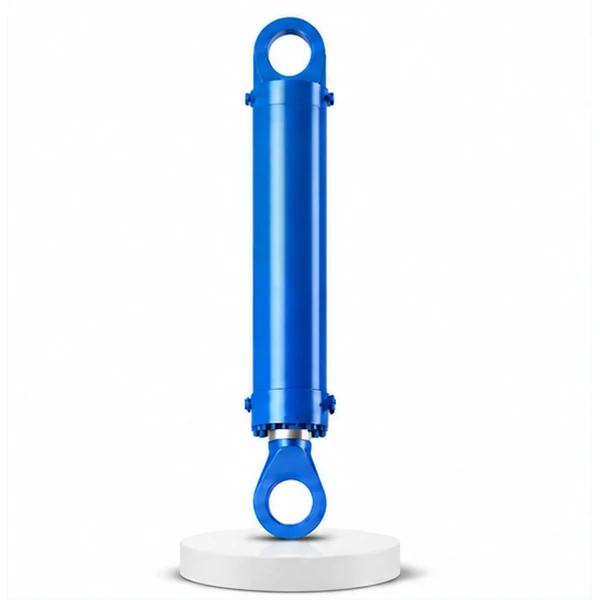
Precision Before Power
The master cylinder delivers 80 MN of force. But that force is wasted if the blank enters the die 2 mm off-level. The leveling cylinder positions every workpiece parallel to the die face — so when the master cylinder fires, the material flows evenly, the wall thickness is consistent, and the die lasts twice as long.
What "Off-Level" Costs You
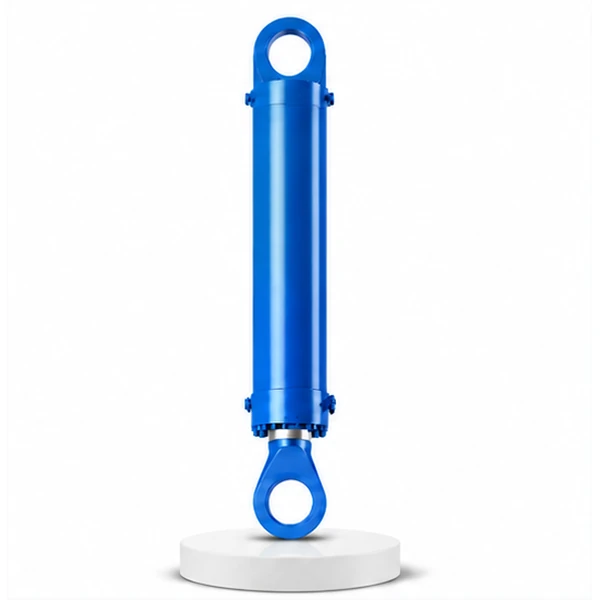
When a blank enters the die even slightly tilted — one edge 1–3 mm higher than the other — the material flows asymmetrically during forming. The thin side reaches the die wall first, fills completely, and starts to flash; the thick side is still flowing and hasn't filled its cavity. The result is a forging with uneven wall thickness, excess flash on one side, and a die that wears unevenly because one surface sees more contact pressure than its mirror counterpart.
The leveling cylinder eliminates this by lifting every blank to a controlled, parallel position before the master cylinder begins the press stroke. It is the first actuator in the press cycle — and the quality of its work determines the quality of everything that follows. Korea Ever-Power manufactures leveling cylinders as part of the complete industrial engineering hydraulic cylinder set for press builders worldwide.
Technical Specifications
| Parameter | Value |
|---|---|
| Product | Hydraulic Press Leveling Cylinder |
| Function | Parallel lifting of blanks or workpieces |
| Bore Diameter | 90 mm – 380 mm |
| Rod Diameter | 50 mm – 280 mm |
| Stroke | ≤ 2,500 mm |
| Maximum Thrust | 2,835 KN (bore 380 mm / pressure 25 MPa) |
| Working Pressure | Up to 25 MPa |
| Certification | ISO 9001 · 100% hydrostatic tested |
The Press Cycle — Where the Leveling Cylinder Fits
Every hydraulic press stroke is a choreographed sequence of cylinder movements. The leveling cylinder acts first — before any pressing force is applied — and acts again between strokes to reposition for the next blank.
The operator places the blank on the lower die or bolster. The leveling cylinder extends upward, raising the blank to the correct height — parallel to the upper die face, centred in the die cavity. Multiple leveling cylinders (typically 2–4) coordinate to ensure the blank surface is level within ±0.5 mm.
With the blank level, the master and side cylinders fire — driving the ram and upper die downward. As the ram descends, the leveling cylinder retracts under the pressing force (controlled retraction, not free-falling) to allow the blank to deform between the dies.
Master cylinder holds pressure at the bottom of the stroke. The leveling cylinder remains retracted and depressurised during this phase — it is not load-bearing during the dwell.
The return cylinders retract the ram upward, clearing the die cavity.
The leveling cylinder extends again — this time pushing the finished forging upward out of the lower die cavity for removal by the operator or manipulator. The cycle resets: operator loads the next blank, leveling cylinder positions it, and the sequence repeats.
How Parallel Lifting Works

"Leveling" means maintaining the lifting surface parallel to the die face throughout the stroke. This is harder than it sounds — a single cylinder lifting from one point tilts the blank. The solution is multiple leveling cylinders arranged symmetrically under the lifting plate, all extending at the same speed to the same height.
Korea Ever-Power manufactures leveling cylinders as matched sets — 2 or 4 cylinders with bore diameters held to mutual tolerance, ensuring equal extension speed at the same hydraulic flow. When combined with a flow divider in the hydraulic circuit, the parallelism of the lifting surface can be maintained within ±0.5 mm across the full stroke — even when the blank weight is not centred on the lifting plate.
The leveling cylinder's working pressure is 25 MPa — lower than the 31.5 MPa of the master and side cylinders. This lower pressure is intentional: the leveling cylinder lifts the blank weight (kilonewtons, not meganewtons), and the lower pressure provides finer proportional control for precise height positioning. Higher pressure would make the system less sensitive and harder to control at low speeds — the opposite of what a positioning actuator needs.
Engineering Insight — One Cylinder, Two Jobs
The leveling cylinder does double duty on most forging presses: it levels the blank before the press stroke AND ejects the finished part after the press stroke. These are two different operations with different requirements — and the cylinder must handle both.
Slow, controlled extension. The cylinder lifts the blank gently to the target height and holds it there while the operator verifies the position. Speed: 10–50 mm/s. Force: just enough to lift the blank weight plus a margin for acceleration. Precision is the priority — not speed.
Fast, forceful extension. The cylinder must break the finished forging free from the die cavity — overcoming the friction between the hot metal and the die surface, which can be substantial on deep-cavity dies. Speed: 50–150 mm/s. Force: significantly more than leveling, as the forging-to-die friction can approach the blank weight. Speed is the priority — every second the hot part stays in the die risks thermal damage to the die surface.
The hydraulic circuit for the leveling cylinder includes two speed settings — slow/precise for leveling, fast/forceful for ejection — switched automatically by the press control system. Korea Ever-Power sizes the cylinder to meet the higher ejection force requirement, which automatically satisfies the lower leveling force requirement. Contact the hydraulic cylinder engineering team for dual-function leveling cylinder design.
Choosing the Right Leveling Cylinder
The leveling cylinder specification is driven by four factors that must be balanced against each other — and all four come from the press application, not from the cylinder in isolation.
Blank weight and ejection friction determine the minimum bore diameter. The cylinder must lift the heaviest blank AND break it free from the die after forming. Ejection friction depends on the die geometry (deep cavities = more friction), die lubrication, and the forging temperature.
Blank height variation determines the stroke. The cylinder must accommodate the difference between the thinnest and thickest blanks in the production range, plus enough additional stroke for ejection clearance above the die parting line.
Positioning accuracy determines the control valve specification in the hydraulic circuit. For precision forgings (aerospace, automotive), the leveling cylinder must position within ±0.5 mm — requiring proportional or servo-hydraulic control valves rather than simple on/off directional valves.
Available space under the bolster determines the retracted length. The leveling cylinder must fit within the press foundation — the distance between the bolster plate and the foundation floor. This space constraint often limits the bore diameter (larger bore = longer retracted length).
Manufacturing
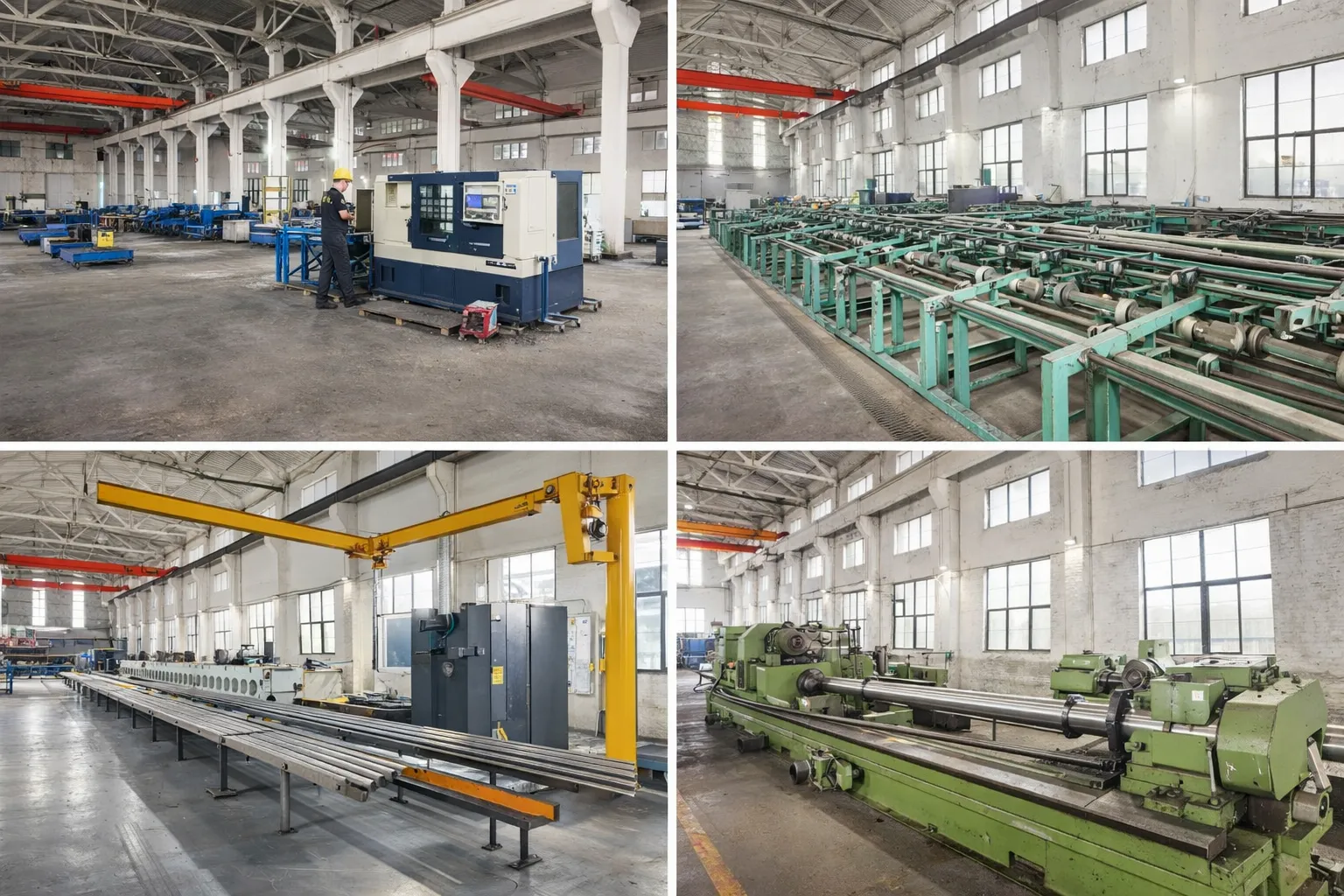
Leveling cylinders operate at lower pressure than the master and side cylinders (25 MPa vs 31.5 MPa), but the machining precision is equally demanding. The bore finish (Ra 0.2–0.4 µm) and rod chrome plating must support smooth, low-friction extension at the slow speeds used during the leveling phase — any stick-slip (jerky movement) at low speed transfers directly to the blank position. Korea Ever-Power hones the bore and grinds the rod to the same specification used for the press-force cylinders, ensuring consistent motion quality at all speeds. Every leveling cylinder is hydrostatic tested at 1.5× working pressure.
OEM & ODM
FAQ
Related Categories
Informasi Tambahan
| Editor |
|---|
Produk Terkait
-
Injection Molding Machine Reciprocating Cylinder (Mold Shifting Cylinder)
-
Electric Furnace Mast Cylinder
-
Electric Furnace Cover Lifting Cylinder
-
Injection Molding Machine Ejection Cylinder
-
Injection Molding Machine Shooting Cylinder
-
Cement Equipment Feeding Cylinder
-
Hydraulic Press Tilt Cylinder
-
Hydraulic Press Side Cylinder


























