Kiln Car Pusher Cylinder for Pusher Kiln
Overcome extreme thermal fatigue and continuous heavy load indexing in refractory material production lines. Engineered with specialized high-temperature alloy steel and an advanced ceramic rod coating for unwavering, deformation-free performance.
Equipment Overview and Industrial Strategic Value
In the advanced metallurgical materials sector, the continuous production of high-grade refractory bricks and industrial ceramics dictates the success of all subsequent smelting and ironmaking operations. At the mechanical center of this production process is the pusher kiln. These massive thermal tunnels operate at extreme ambient temperatures, frequently exceeding 1500 degrees Celsius, to properly sinter and harden the refractory materials. The raw products are stacked heavily onto steel kiln cars, which must be indexed forward through precision high-temperature firing zones with absolute positional accuracy. Delivering the immense, relentless mechanical force required to push this continuous train of heavy steel cars is the exclusive duty of the heavy-duty Kiln Car Pusher Cylinder. This actuator operates directly at the entrance of the kiln, subjecting the equipment to severe radiant heat escaping the tunnel and punishing continuous mechanical cycling.
Attempting to deploy a standard commercial hydraulic cylinder in a refractory pusher kiln inevitably leads to rapid and catastrophic mechanical failure. A generic actuator entirely lacks the specialized material science required to withstand the intense thermal radiation. The continuous thermal bombardment triggers severe thermal fatigue within the structural metals. Standard carbon steel barrels warp unevenly under localized heat, while conventional flash chrome plating rapidly micro-fractures, becomes brittle, and peels under the extreme thermal stress. Furthermore, the high ambient temperatures quickly vulcanize standard internal elastomers, stripping away their sealing memory. Once these basic seals harden and shatter, highly pressurized fluid immediately escapes, causing a sudden loss of thrust. This completely halts the refractory production line, severely disrupts the carefully calibrated thermal curing profile inside the kiln, and forces the maintenance team into immediate, disruptive hydraulic cylinder repair.
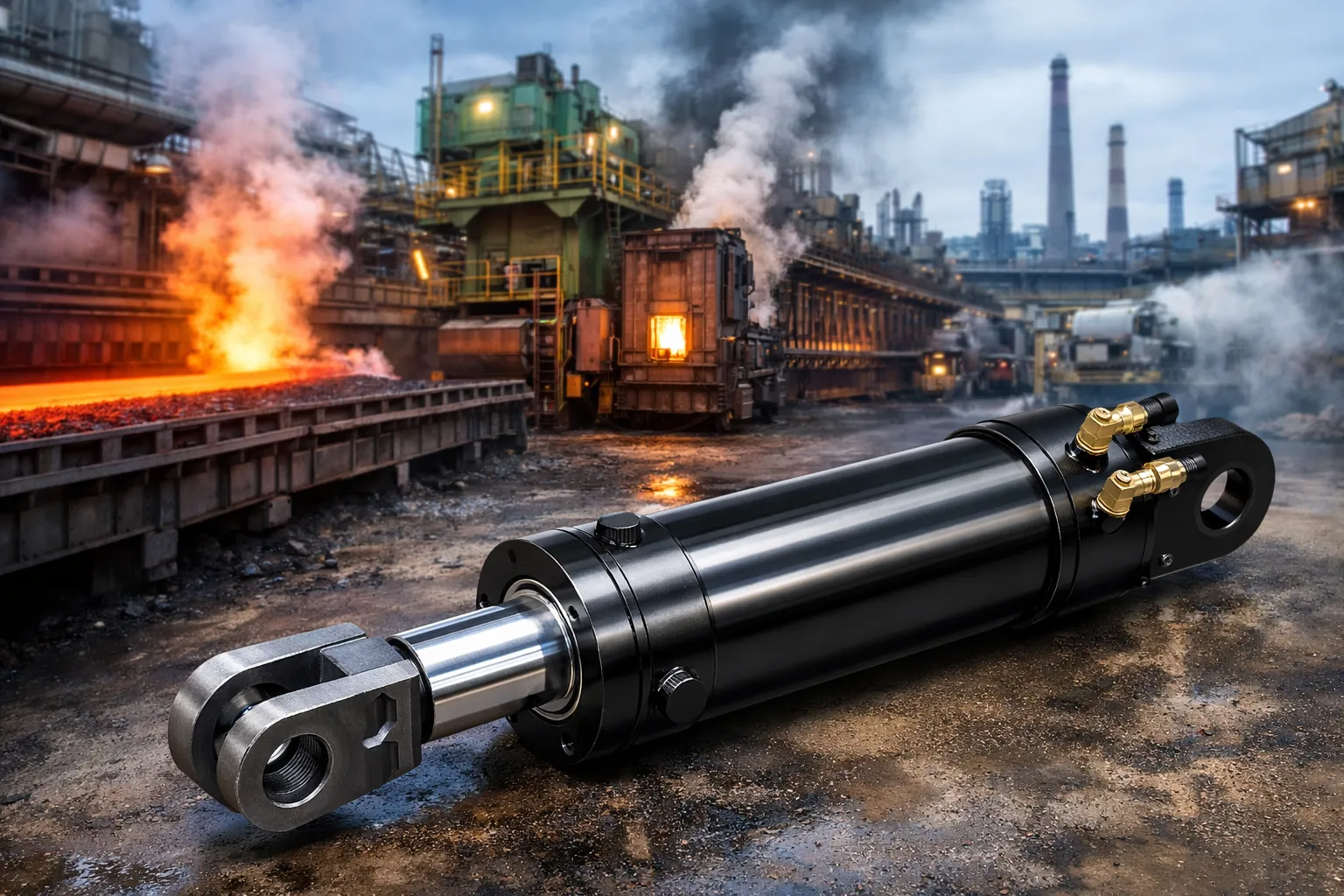
Understanding the absolute necessity for extreme thermal resilience, our engineering division completely rebuilt the fluid power architecture. As a premier global hydraulic cylinder manufacturer, we designed our heavy-duty Kiln Car Pusher Hydraulic Cylinder specifically to defeat thermal fatigue and maintain perfect structural integrity. By utilizing a specialized high-temperature alloy steel for the main body and applying an advanced thermal ceramic coating to the extended rod, we created an actuator that actively repels high-temperature degradation. When plant directors evaluate long-term capital expenditures and total operational costs, the initial hydraulic cylinder price is a negligible factor compared to the massive financial losses incurred during an unscheduled kiln shutdown. Integrating our specialized thermal-resistant technology allows metallurgical plants to dramatically extend their equipment lifecycle, stabilize their product yield, and eliminate the hazardous necessity of constantly fixing hydraulic cylinders near active, blistering furnace doors.
Comprehensive Technical Engineering Parameters
Precision engineering for high-temperature industrial zones requires absolute transparency in material specifications and structural load capabilities. The detailed data matrix below outlines the specific operational tolerances, thermal defense protocols, and customization ranges available for our specialized units deployed across the Metallurgical and Iron Industry.
| Engineering Category | Specification Detail & Component Architecture |
|---|---|
| Target Industry & Equipment Classification | Metallurgy | Refractory Material Line | Pusher Kiln |
| Subsystem & Mechanical Action | Kiln Car Advancement | Continuous Pushing into Firing Zone |
| Hydraulic Component Designation | Kiln Car Pusher Cylinder / Kiln Car Pusher Hydraulic Cylinder |
| Kinematic Action Profile | Double acting hydraulic cylinder (Bidirectional fluid power control) |
| Internal Structure Type | Heavy-duty piston cylinder (Monolithic internal bore architecture) |
| Manufacturing Methodology | Deep-Penetration Welded Construction (Eliminates tie-rod thermal stretch) |
| Core Material Architecture | High-Temperature Alloy Steel (Prevents structural warping under extreme heat) |
| Rod Surface Treatment Defense | Advanced Thermal Ceramic Coating (Acts as a thermal barrier, rejecting radiant energy) |
| Environmental Hazard Tolerance | Extreme Hazard: High Temperature Inside Kiln + Heavy Continuous Mechanical Loading |
| Typical Failure Mode Defeated | Thermal Fatigue, seal carbonization, structural warping, rod oxidation |
| Recommended Engineering Configuration | High-temperature alloy material combined with Ceramic Rod and FKM sealing matrix |
| Mounting Interfaces & Customization | Heavy Trunnion Mount, Rear Clevis, Extended Front Flange matching OEM specifications |
Operational Fluid Dynamics and Mechanical Working Principle
To truly understand the profound mechanical superiority of this heavy industrial actuator, you must analyze its fluid dynamic execution under extreme load during the refractory firing cycle. A train of heavily loaded refractory cars within the tunnel relies exclusively on the pressure generated at the entrance. Because pulling the cars backward is impossible, and precise forward indexing is highly critical to the curing process, the system must operate strictly as a responsive double acting hydraulic cylinder. This bidirectional fluid control capability allows the central programmable logic controller to orchestrate extraordinarily smooth, massively powerful extension strokes to advance the kiln cars, followed by rapid, precisely controlled retraction strokes to allow the next loaded car to be positioned. A basic single acting hydraulic cylinder relying on gravity or spring return is completely inadequate for this task.
During the primary pushing sequence, the central hydraulic power unit injects high-pressure fluid into the blind end of the thick-walled alloy steel barrel. Because hydraulic oil is completely incompressible, the rapidly expanding fluid volume creates immense hydrostatic pressure uniformly across the full surface area of the internal hydraulic cylinder piston. This intense kinetic energy smoothly and forcefully drives the ceramic-coated rod outward, physically engaging the thick steel chassis of the kiln car. The Kiln Car Pusher Hydraulic Cylinder acts as an unyielding fluid ram, steadily pushing the entire multi-ton column of cars deeper into the high-temperature firing zones without any erratic shuddering that could topple the delicate, unbaked refractory materials.
The most critical engineering challenge occurs precisely during the retraction phase. As the Kiln Car Pusher Cylinder fully extends to insert a car into the kiln entrance, the exposed rod is subjected to a massive blast of direct radiant heat escaping from the open furnace doors. Standard chrome-plated steel rods rapidly conduct this extreme heat backward directly into the sealing gland, violently destroying the internal elastomers. However, our specialized rod features a high-density ceramic coating applied via High-Velocity Oxygen Fuel spraying. This heavy thermal barrier actively deflects infrared radiation, maintaining a structurally safe surface temperature on the rod. When pressurized fluid is redirected to the rod-end port to retract the hydraulic cylinder piston, the rod pulls back through the gland without transferring destructive heat to the internal hydraulic cylinder components. This physical thermal isolation prevents seal carbonization, entirely circumventing the thermal fatigue that destroys generic cylinders.
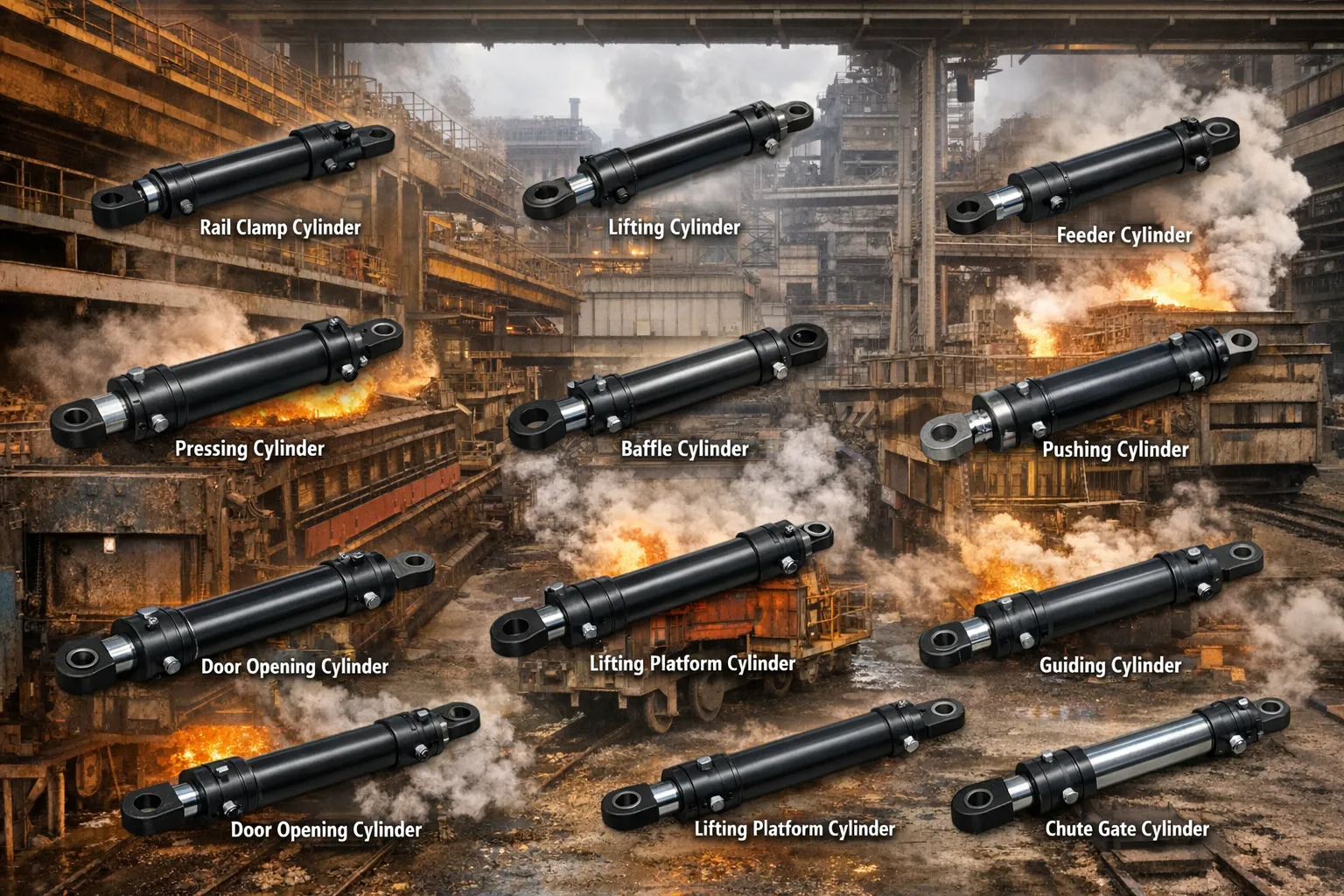
Seamless Dimensional Integration and Global Brand Replacement
Refractory plant maintenance directors operate under immense pressure to maintain the continuous flow of the pusher kiln. When thermal fatigue inevitably destroys a standard commercial actuator, the maintenance team simply cannot afford the agonizing, expensive downtime required to cut, modify, and re-weld heavy structural steel mounting brackets to accept non-standard fluid power components. We resolve this critical operational bottleneck by deliberately standardizing the external geometry of our heavy-duty thermal series to guarantee completely seamless drop-in compatibility.
Our specialized thermal pushing actuators are meticulously reverse-engineered to serve as direct, effortless upgrades for failing OEM machinery. By accurately matching every critical mounting dimension—including precise retracted pin-to-pin lengths, trunnion block widths, extended stroke depths, and specific fluid port thread orientations—you can flawlessly retrofit vulnerable units originally supplied by legacy international brands such as Bosch Rexroth, Parker Hannifin, Eaton Vickers, Enerpac, SMC, and Yuken. (Please note: These third-party corporate brand names are explicitly cited for technical dimensional cross-referencing and sizing convenience only. This reference does not imply any direct corporate affiliation or trademark infringement.) Upgrading your kiln entrance mechanics from standard commercial units to our specialized thermal-resistant hydraulic rams ensures an immediate, massive extension in equipment longevity without requiring structural modifications to your existing heavy machine chassis.
5 Core Technical Engineering Advantages
A robust industrial component designed for extreme high-temperature environments is defined entirely by its advanced material science. Our specialized Kiln Car Pusher Cylinder vastly outlasts the competition because we strictly enforce the following five foundational engineering pillars during the design and manufacturing phases:
1. Impenetrable Ceramic Rod Coating for Thermal Isolation
The absolute primary cause of failure at the kiln entrance is the direct transfer of radiant heat through the extended rod backward into the sealing gland. Standard hard chrome absorbs and conducts this heat rapidly. We utilize a highly advanced thermal spray process to deposit an ultra-hard, incredibly dense ceramic layer over the alloy steel rod. This composite ceramic surface acts as a superior thermal insulator, actively repelling infrared radiation and physically preventing destructive heat spikes from ever reaching the internal pressure seals.
2. High-Temperature Alloy Steel Welded Construction
Standard carbon steel cylinders utilizing external tie-rods suffer severe differential thermal expansion when exposed to localized kiln heat. The side facing the heat stretches disproportionately, warping the barrel and immediately blowing out the end-cap seals. We exclusively construct our Kiln Car Pusher Hydraulic Cylinder from specialized high-temperature alloy steel using deep-penetration robotic welding. This monolithic, tie-rod-free architecture ignores severe, uneven thermal loading, maintaining absolute dimensional rigidity under maximum operational pressure.
3. Ultra-Low Friction Dynamic Sealing Ecosystem
Pushing an entire train of incredibly heavy refractory cars requires perfectly smooth, continuous hydraulic force at very low speeds. Standard seals often bind under high holding pressure, causing a violent stick-slip shuddering that can shatter delicate unbaked cars inside the kiln. We integrate a proprietary arrangement of specialized low-friction step seals paired with thick bronze-infused PTFE guide bands. This highly refined fluid dynamic ecosystem ensures perfectly smooth kinetic transfer, allowing the hydraulic cylinder piston to advance flawlessly.
4. Advanced Thermodynamic Elastomer Resilience
Even with the ceramic rod insulation, the ambient radiant heat near a pusher kiln rapidly vulcanizes standard polyurethane or nitrile elastomers, turning them brittle and prone to catastrophic shattering. To combat this ambient thermal degradation, all internal seals exposed to fluid pressure inside our hydraulic parts are manufactured exclusively from advanced aerospace-grade fluorocarbon (FKM) engineering polymers. These materials safely maintain their flexible elastomeric memory up to 200°C, ensuring absolutely zero internal fluid bypass.
5. Internal Thermal Fatigue Optimization via Precision Cushioning
Continuous cycling under heavy load is a primary driver of mechanical fatigue and structural mount fracture. We engineer highly precise, progressive fluid cushioning zones at the extreme retraction end of the stroke. When the massive pushing mechanism pulls back to reset for the next car, the escaping hydraulic fluid is choked through a geometrically optimized restriction orifice, decelerating the moving mass smoothly. This absorbs the kinetic energy safely into the fluid, preventing violent impact and drastically extending the operational lifespan.
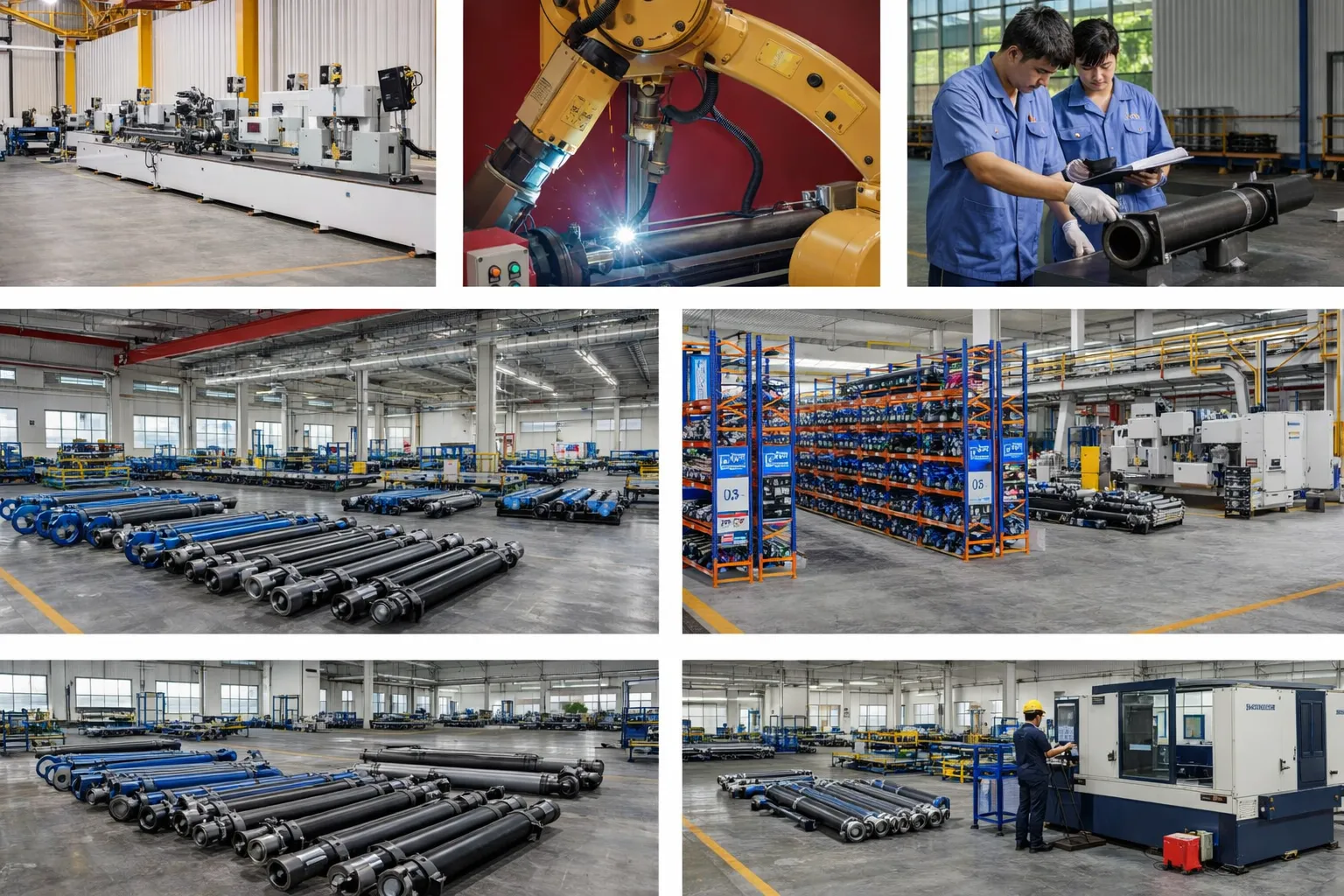
Autonomous Manufacturing and Unyielding Quality Assurance
Our established global reputation as a strictly uncompromising hydraulic cylinder manufacturer is built entirely upon the unmatched capabilities of our advanced factory floor. We maintain absolute, sovereign control over every single phase of production. We explicitly reject the high-risk industry practice of assembling outsourced, unverified components. From the initial heavy CNC machining of the raw high-temperature alloy steel billets to the highly specialized application of the ceramic coating, and finally to the automated robotic welding of the robust mounting clevis, every critical manufacturing operation is executed within our digitally monitored facility. To guarantee absolute seal longevity, our internal barrel bores are subjected to advanced deep-hole skiving and roller burnishing, consistently achieving a pristine, mirror-like internal surface finish.
Quality control is actively embedded directly into our engineering workflow. Prior to any machining taking place, all incoming raw alloy steel undergoes mandatory ultrasonic flaw detection (UT) and spectrographic chemical analysis to verify the absolute absence of hidden internal material voids. Following complete mechanical assembly, 100% of our products are clamped securely into a computerized, high-capacity hydrostatic test bench. The Kiln Car Pusher Cylinder is pressurized to an extreme 150% of its maximum designated operating load, while highly sensitive digital transducers continuously monitor for zero internal fluid leakage or pressure decay. Finally, each unit is permanently laser-etched with a unique alphanumeric serial number, granting our B2B clients absolute material traceability and simplifying the procurement of exact replacement hydraulic cylinder components.
Extensive Cross-Industry Heavy Engineering Applications
While meticulously calibrated to conquer the severe thermal radiation and relentless mechanical fatigue of refractory pusher kilns, the immensely robust baseline architecture of our fluid power systems makes them the premier choice across a vast array of punishing industrial environments. Explore our comprehensive portfolio to understand how we robustly support global heavy infrastructure:
- Mining & Mineral Processing: Delivering unstoppable mechanical force for primary jaw crushers and subterranean roof supports. Review our Mining Industry fluid power solutions.
- Civil Engineering & Construction Machinery: Providing absolute structural shock resistance acting as a heavy-duty boom arm or robust lift cylinder on high-tonnage crawler excavators and rotary piling rigs. Explore our Construction Machinery Industry capabilities.
- Plastics & Advanced Polymer Molding: Maintaining perfectly stable, massive clamping forces for large-scale injection molding machines to prevent costly die flashing.
- Material Handling & Maritime Logistics: Actuating massive port-side ship loaders and heavy transfer AGVs functioning continuously in highly corrosive, salt-laden coastal atmospheres.
- Specialized Bespoke Engineering Projects: Rapidly prototyping customized fluid power solutions engineered specifically for unique spatial constraints or extreme sub-zero environments where standard hydraulic parts fail immediately.
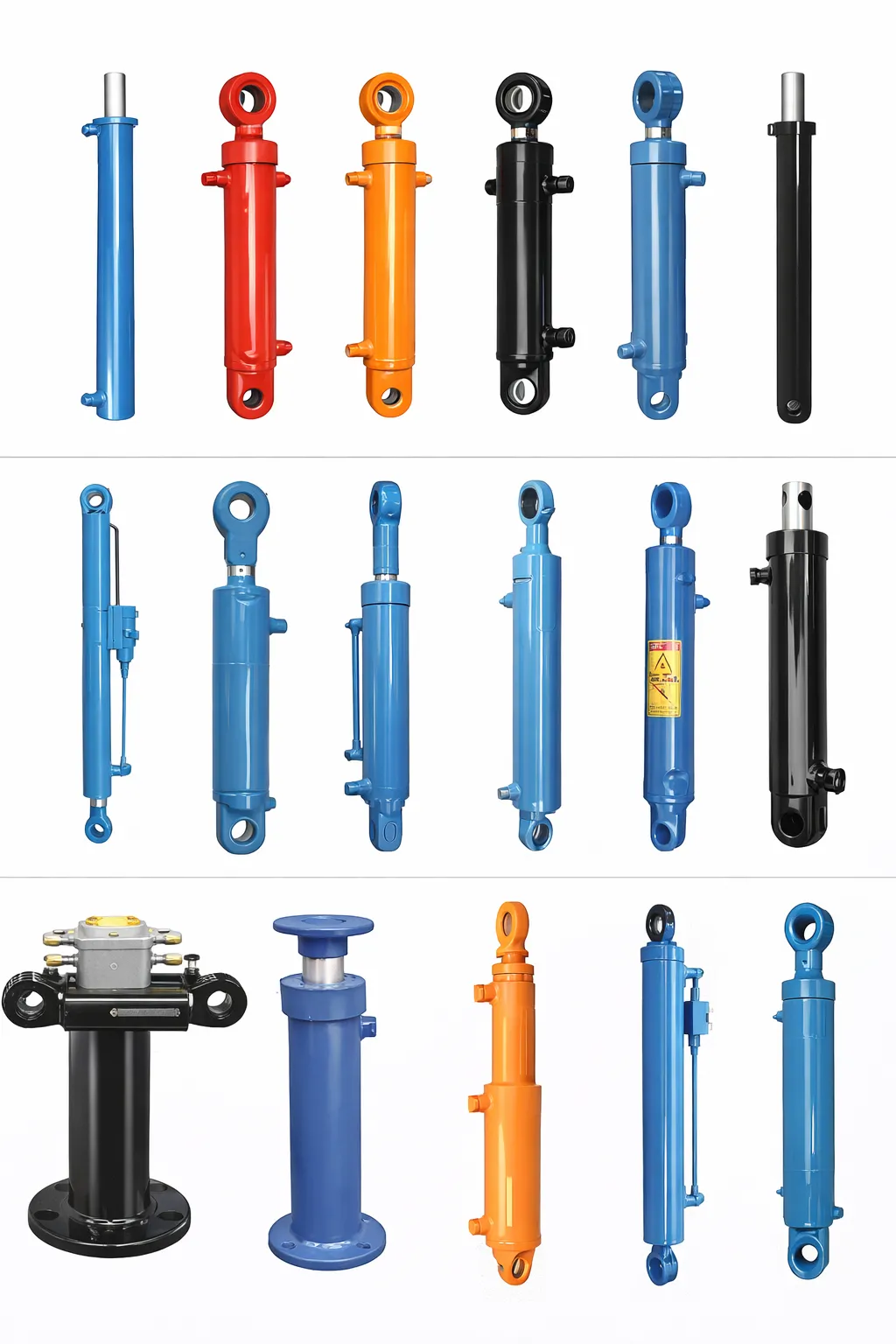
Data-Driven Comparative Analysis: Standard Commercial vs. High-Performance Thermal
Industrial procurement driven exclusively by the lowest initial price tag for high-temperature zones inevitably triggers disastrous total lifecycle costs due to persistent, predictable machinery failures. The technical data matrix below clearly delineates the massive engineering gap between generic off-the-shelf actuators and our purpose-built thermal pushing solutions.
| Engineering Evaluation Metric | Standard Commercial Cylinder | Our High-Performance Kiln Cylinder |
|---|---|---|
| Rod Surface Thermal Defense | Basic Flash Chrome (Absorbs and rapidly conducts extreme heat into seals) | Advanced Ceramic Coating (Acts as an impenetrable thermal insulator) |
| Structural Body Architecture | Tie-Rod Carbon Steel (High risk of thermal differential stretching & warping) | Heavy-Duty Welded Alloy Steel (Absolute thermal dimensional stability) |
| Internal Seal Material Chemistry | Standard NBR / PU Elastomers (Rapidly vulcanize and shatter in heat) | Advanced FKM Seals (Stable memory in continuous extreme heat) |
| Kinematic Friction Dynamics | High friction seals (Causes severe stick-slip shuddering under heavy loads) | Ultra-low friction step seals (Perfectly smooth, continuous pushing force) |
| Pusher Kiln MTBF Expectancy | Months before catastrophic thermal fatigue and major fluid leakages | Years of continuous, highly reliable, leak-free high-temperature operation |
Proven Global Operational Success: 5 Verified Engineering Case Studies
True engineering authority is demonstrated exclusively through verifiable, real-world deployments in extreme conditions. Our thermal-resistant fluid power systems are deeply embedded in the heaviest metallurgical sectors of South Korea, Japan, and Taiwan. Review these specific accounts of our technology eliminating critical production downtime.
Case 1: Eradicating Thermal Fatigue at a Pohang Refractory Plant
Location: Pohang, South Korea | Client Profile: Tier-1 Global Refractory Material Producer
Application: Primary kiln car indexing mechanism on a continuous pusher kiln.
The Challenge & Connection: The facility faced a continuous maintenance crisis. The extreme radiant heat escaping the kiln doors was violently carbonizing the seals on their commercial actuators every three months, causing severe fluid leaks and halting production. The lead mechanical engineer discovered our advanced ceramic rod technology via an organic Google search and engaged our technical sales department in August 2024.
Implementation & Results: We delivered customized Kiln Car Pusher Hydraulic Cylinder units featuring full high-temperature FKM seal matrices and ceramic-coated rods. The ceramic coating insulated the internal elastomers from the radiant heat spikes. Over 24 months, the plant recorded absolutely zero seal failures, greatly reducing their hydraulic cylinder repair costs.
“The thermal fatigue issue that threatened our schedule has been entirely resolved. Their engineering team understood the thermal physics perfectly. The ceramic coating technology slashed our maintenance downtime.” — Mr. Kang D.H., Lead Mechanical Reliability Engineer
Case 2: Defeating Stick-Slip Dynamics at a Kitakyushu Ceramics Facility
Location: Kitakyushu, Japan | Client Profile: Advanced High-Temperature Ceramics Manufacturer
Application: Precision pushing of kiln cars loaded with delicate ceramic components.
The Challenge & Connection: The client was struggling with severe hydraulic stick-slip during the slow pushing stroke. The erratic stuttering caused the heavily loaded cars to jerk violently, resulting in microscopic cracks in the unfired products before firing. A direct referral was established through an engineering network, leading to a consultation via our contact page.
Implementation & Results: By engineering the internal mechanism with our ultra-low friction step seals, the new double acting hydraulic cylinder permitted absolutely flawless forward motion. The stick-slip phenomenon was completely eradicated, instantly stabilizing the pushing phase and improving the final product yield rate.
“The dynamic fluidity and completely vibration-free pushing force of the hydraulic cylinder piston are genuinely remarkable. Upgrading to these actuators eliminated the mechanical jerking that was destroying our fragile product yields.” — T. Watanabe, Senior Production Engineer
Case 3: Resolving Structural Warping at a Kaohsiung Steel Mill
Location: Kaohsiung, Taiwan | Client Profile: Massive Integrated Steel Mill
Application: Heavy-duty actuators for pushing high-tonnage ladle refractory curing cars.
The Challenge & Connection: Standard tie-rod cylinders were suffering from severe thermal differential expansion. One side of the cylinder faced the extreme heat, causing the steel tie-rods to stretch unevenly, resulting in massive structural warping and immediate fluid blowouts. A direct connection was established during a heavy machinery expo.
Implementation & Results: We replaced the obsolete tie-rod architecture with our heavy-duty, monolithic welded alloy steel cylinders. The robust welded body ignored the uneven thermal loads entirely. The facility experienced a 100 percent reduction in thermal structural warping incidents.
“The structural rigidity of their deep-penetration welded alloy body under severe, uneven thermal loading is absolutely unmatched. We haven’t experienced a single warped barrel or stretched bolt since retrofitting our lines.” — Chen W.T., Structural Maintenance Manager
Case 4: Efficient CAPEX Upgrades via Exact OEM Replacement in Incheon
Location: Incheon, South Korea | Client Profile: Prominent Industrial Ceramics Manufacturer
Application: Complete retrofit of failing European OEM pushing cylinders on the main tunnel kiln.
The Challenge & Connection: The facility faced massive procurement costs and unacceptable 16-week supply chain delays from their original legacy European supplier. The procurement division sought a direct-to-market manufacturer capable of matching dimensions and sent our team their legacy blueprints.
Implementation & Results: We rapidly delivered exact 1:1 dimensional drop-in replacements within 4 weeks. The maintenance team successfully retrofitted the aging pusher system without modifying a single bolt on the chassis. This slashed their initial procurement CAPEX by over 35% while upgrading their thermal defenses, saving significant hydraulic cylinder price costs.
“A completely flawless drop-in replacement. The mechanical installation was incredibly fast, and the operational lifespan ratio is staggering. They are now our exclusive standard for extreme-heat actuators.” — Lee H.J., Plant Procurement Director
Case 5: Eliminating Seal Vulcanization at a Dangjin Furnace Facility
Location: Dangjin, South Korea | Client Profile: Heavy Automotive Steel and Refractory Manufacturer
Application: Heavy transit positioning actuators adjacent to secondary annealing lines.
The Challenge & Connection: The maintenance crew was trapped in a relentless cycle of constantly fixing hydraulic cylinders. The intense ambient heat was rapidly vulcanizing the standard internal seals, leading to massive fluid bypass and a highly dangerous lack of pushing power.
Implementation & Results: We completely retrofitted the required units with our advanced FKM high-temperature aerospace seal matrix. The heavily armored cylinders performed perfectly, completely eliminating all internal fluid bypass and drastically reducing emergency repair labor hours.
“Finding consistently reliable hydraulic parts for this specific high-heat zone was historically extremely difficult. Their customized thermal-resistant FKM seals performed precisely as promised, allowing us to hit our zero-downtime targets.” — Park M.S., Chief Plant Maintenance Engineer
Frequently Asked Questions (FAQ) for Technical B2B Procurement
Sourcing critical fluid power infrastructure for severe high-temperature zones requires absolute technical certainty. Below are detailed, expert responses to the most rigorous inquiries we receive from international plant maintenance directors and reliability engineers.
1. How exactly does the ceramic coating physically prevent thermal seal destruction?
Standard hard chrome rods act as highly efficient heat conductors, rapidly transferring ambient radiant heat from the open kiln doors directly backward into the internal sealing gland, which bakes and shatters the elastomers. Our advanced ceramic coating is structurally incredibly dense and acts as a massive thermal insulator. It actively deflects infrared radiation and drastically reduces thermal conductivity. When the rod retracts, it pulls back completely cool, ensuring the vital internal seals are never exposed to destructive thermal spikes.
2. Why do you explicitly reject tie-rod cylinder construction for pusher kiln applications?
Tie-rod cylinders are fundamentally flawed in high-heat zones. When exposed to intense, one-sided radiant heat from the kiln entrance, the long steel tie-rods experience severe differential thermal expansion—the hot side stretches more than the cooler side. This violently warps the entire assembly, lifting the end caps off the barrel and causing massive fluid blowouts. Our heavy-duty monolithic welded alloy steel design fuses the end caps completely to the barrel, creating an immutable pressure vessel that completely ignores thermal fluctuations.
3. Can you guarantee dimensional exactness when replacing legacy European OEM brands?
Yes, absolutely. A significant volume of our daily engineering operations involves upgrading aging machinery across the Asia-Pacific. By providing our technical team with your original OEM model numbers, dimensional sketches, or existing structural drawings, we actively custom-manufacture the external geometry. We perfectly align every critical mounting parameter—including massive pin-to-pin retracted lengths, long stroke depths, and exact fluid port orientations—ensuring a rapid, flawless bolt-on installation without modifying your heavy machine frame.
4. How does your equipment actively reduce the frequency of fixing hydraulic cylinders?
The continuous, highly dangerous necessity for frequently fixing hydraulic cylinders near the hot kiln entrance almost exclusively stems from thermal seal destruction and rod deformation. By implementing the ceramic thermal coating and the heavy monolithic welded alloy steel body, we actively eliminate these specific failure modes directly at the engineering level. This completely insulates the internal mechanics, multiplying the equipment’s operational mean time between failures (MTBF) and slashing emergency maintenance labor.
5. Do you reliably supply replacement parts for future scheduled overhauls?
Yes. Maximizing your equipment’s total lifecycle is our core priority. Because every Kiln Car Pusher Hydraulic Cylinder we manufacture is permanently laser-serialized, we hold exact digital schematics on our secure servers indefinitely. When a scheduled plant turnaround is approaching, we rapidly supply identically matched, high-performance FKM seal kits, high-temp bronze guide rings, and all other necessary hydraulic cylinder components to ensure seamless, rapid internal maintenance by your team.
6. What is the standard manufacturing lead time for heavy industrial orders shipped to South Korea or Japan?
By utilizing a fully autonomous, vertically integrated manufacturing model, our lead times are exceptionally streamlined compared to legacy Western suppliers. For high-performance, custom-dimensioned metallurgical configurations, raw fabrication and rigorous hydrostatic testing require just 3 to 4 weeks. Standard ocean freight logistics to major regional ports (such as Incheon, Busan, or Yokohama) typically add only 7 to 10 days. We also support aggressive expedited air freight protocols for critical line-down emergencies.
7. Are comprehensive factory testing documents provided with international container shipments?
Yes, uncompromising QA transparency is our standard. Every single actuator dispatched internationally includes a comprehensive Quality Assurance dossier. This highly detailed technical packet contains the raw steel mill certificates validating the high-temperature alloy composition, the ultrasonic flaw detection reports for structural weld integrity, and the digital hydrostatic pressure test graphs proving the unit successfully held 150 percent of its rated operational pressure with absolutely zero internal fluid bypass.
8. How does your pricing structure dynamically compare to major Western OEMs?
Because we exert absolute control over a 100 percent vertically integrated production process—from raw billet CNC machining to HVOF ceramic spraying and final testing—we completely eliminate reliance on multi-tiered trading companies and third-party corporate markups. Consequently, our pricing structure is aggressively optimized. We routinely save our international B2B clients between 30 percent to 40 percent on initial CAPEX compared to sourcing from legacy European brands, while actively delivering a vastly superior mechanical lifespan in extreme thermal environments.
Ready to Bulletproof Your Refractory Kiln Operations?
Do not allow thermally compromised fluid power components to dictate your refractory production schedule, destroy delicate products, or artificially inflate your hazard maintenance budgets. Connect directly with our thermal engineering specialists to analyze your specific dimensional blueprints, secure a highly competitive technical proposal, and understand precisely why heavy industry leaders across East Asia exclusively rely on our robust thermal defense technology.
Rapid global engineering support, precise drop-in OEM replacements, and highly streamlined logistics are available immediately for South Korea, Japan, Taiwan, and the broader Asia-Pacific heavy manufacturing sector.
Editor: Cxm