Boarding Step Cylinder for High-Speed Trains
Meticulously engineered from premium 316L stainless steel to absolutely eradicate pitting corrosion in severe outdoor environments. Guaranteeing flawless, synchronized step extension and paramount passenger safety across global transit networks.
Product Overview: Securing the Vital Passenger Transit Interface
In the highly pressurized operational environment of modern commercial railway transit, station dwell times are strictly calculated down to the second. When a high-speed locomotive arrives at the platform, the physical spatial gap between the passenger carriage and the concrete station edge presents an immediate and severe safety liability. To mitigate this risk and ensure compliant, rapid passenger disembarkation, transit networks employ automated mechanical bridging systems. The absolute mechanical heart responsible for deploying and retracting these vital platforms is the boarding step cylinder. Operating a transit network across East Asia—particularly in the technologically advanced but environmentally challenging regions of South Korea, Japan, and Taiwan—means exposing undercarriage equipment to a brutally unforgiving micro-climate.
Throughout my extensive tenure engineering fluid power systems for heavy industries, I have consistently observed that a standard industrial hydraulic cylinder cannot survive the exterior transit environment. As the train travels at velocities exceeding 300 kilometers per hour, the undercarriage is continuously bombarded by heavy monsoon rains, freezing winter sleet, abrasive brake dust, and most destructively, the highly concentrated chloride de-icing salts used on rail tracks during winter months. When conventional carbon steel actuators are subjected to this atmospheric cocktail, they rapidly succumb to localized galvanic corrosion, scientifically known as pitting corrosion. Microscopic saltwater droplets chemically eat into the steel rod, creating sharp, jagged craters. Every time the step retracts, these sharp pits act like a coarse file, instantly shredding the internal polyurethane pressure seals. This inevitable degradation causes severe fluid leakage, mechanical jamming of the step extension, and cascading delays across the entire transit schedule.
To permanently eradicate this systemic vulnerability, our facility has engineered a highly specialized boarding step hydraulic cylinder constructed entirely from premium 316L stainless steel. By moving away from failure-prone chromed carbon steel to a solid, molybdenum-alloyed stainless architecture, we completely neutralize the threat of environmental pitting. As an authoritative hydraulic cylinder manufacturer, we have paired this advanced metallurgy with a heavy-duty welded piston design and a high-grade surface polish. Our fluid power solutions provide transit authorities with absolute mechanical predictability, drastically reducing the long-term overhead associated with emergency trackside maintenance and ensuring millions of safe passenger boardings without compromising structural integrity.
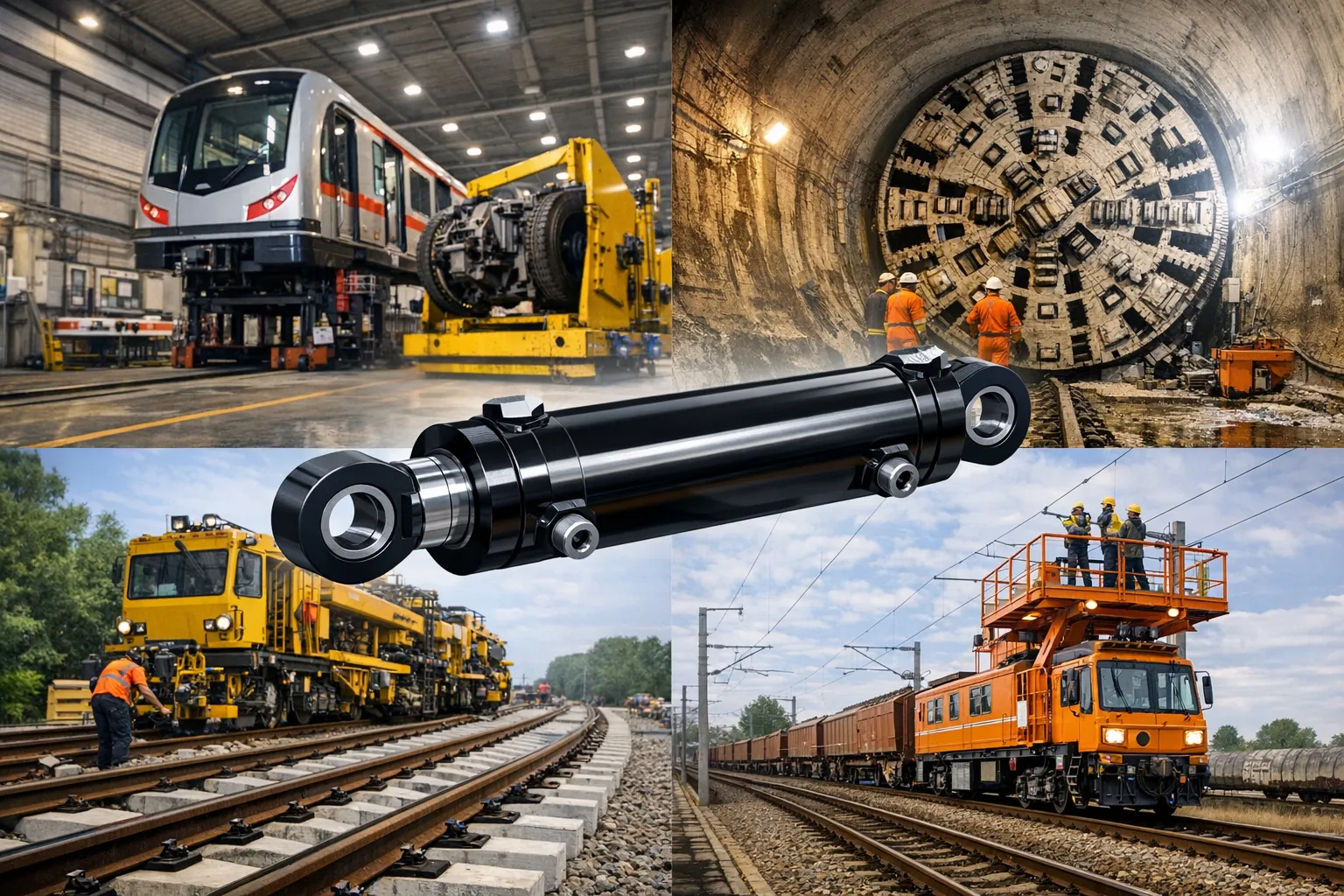
Comprehensive Technical Parameters
Integrating a specialized actuator into a high-speed train’s onboard fluid power network requires absolute dimensional precision and transparent engineering data. The following table outlines the baseline structural specifications, material choices, and customizable operational ranges for our dedicated transit step extension systems. These parameters ensure perfect compliance with rigorous railway safety standards.
| Engineering Parameter | Specification Details & Material Configuration |
|---|---|
| Target Industry Sector | Railway Transit/ Commuter Metro Networks |
| Equipment Category | High-Speed Train Undercarriage Mechanics |
| Subsystem / Mechanical Action | Boarding Step System / Step Extension & Retraction |
| Component Designation | Boarding Step Cylinder |
| Hydraulic Action Mode | Double acting hydraulic cylinder – Powered deployment and stowage |
| Primary Structural Type | Piston Cylinder with high-load linear bearing bands |
| Manufacturing Architecture | Fully Welded Construction to eliminate high-speed vibration loosening |
| Core Material System | Stainless Steel Base Metallurgy |
| Recommended Configuration | 316L Material Matrix for maximum chloride resistance |
| Rod Surface Treatment | High-Precision Polished Finish (Ra ≤ 0.2µm) |
| Environmental Operating Grade | Extreme: Outdoor + Corrosive / High Salinity Exposure |
| Primary Failure Mode Prevented | Pitting Corrosion leading to abrasive seal destruction |
| Mounting Configurations | Rear Clevis, Front Flange, Center Trunnion (Fully Customizable to OEM specifications) |
Hydromechanical Working Principle in Transit Systems
The functional sequence of a boarding step hydraulic cylinder must be instantaneous, perfectly synchronized across all carriage doors, and mechanically unyielding once deployed. Understanding the operational fluid dynamics is essential for any rolling stock engineer. When the high-speed train completely halts and the central control system authorizes the doors to open, the onboard manifold directs pressurized synthetic hydraulic fluid into the blind-end port (the cap end) of the cylinder housing. This pressurized fluid exerts an immense, calculated hydrostatic force against the entire rear surface area of the internal hydraulic cylinder piston. As the pressure overcomes the mechanical resistance and static friction of the step assembly, the highly polished 316L stainless steel rod extends forward. This linear physical stroke smoothly pushes the heavy metal boarding plate horizontally across the platform gap.
Crucially, to ensure absolute passenger safety, the extended step cannot collapse backward under the shifting weight of hundreds of boarding commuters. Our system frequently integrates pilot-operated check valves directly onto the fluid ports. Once the step reaches full extension, these valves hydraulically lock the fluid inside the piston chamber. Because hydraulic fluid is virtually incompressible, the trapped oil turns the extended stainless steel rod into a rigid, structural pillar capable of supporting immense downward and lateral payload forces, performing significantly better than basic lift cylinder designs.
Prior to train departure, the sequence must reverse flawlessly. The system pumps pressurized fluid into the rod-end port, creating pressure that simultaneously forces the pilot valve open and drives the piston backward. The fluid in the base chamber is evacuated back to the reservoir, and the stainless rod forcefully pulls the step back into its stowed housing. This application strictly demands a double acting hydraulic cylinder. A basic single acting hydraulic cylinder that relies on an internal mechanical spring for retraction is dangerously inadequate for this task. Springs suffer from fatigue and lack the sheer mechanical pulling force required to retract a heavy step if it becomes jammed with packed winter ice, frozen mud, or track debris. The powered hydraulic retraction guarantees the step clears the platform edge, allowing the train to depart the station precisely on schedule.
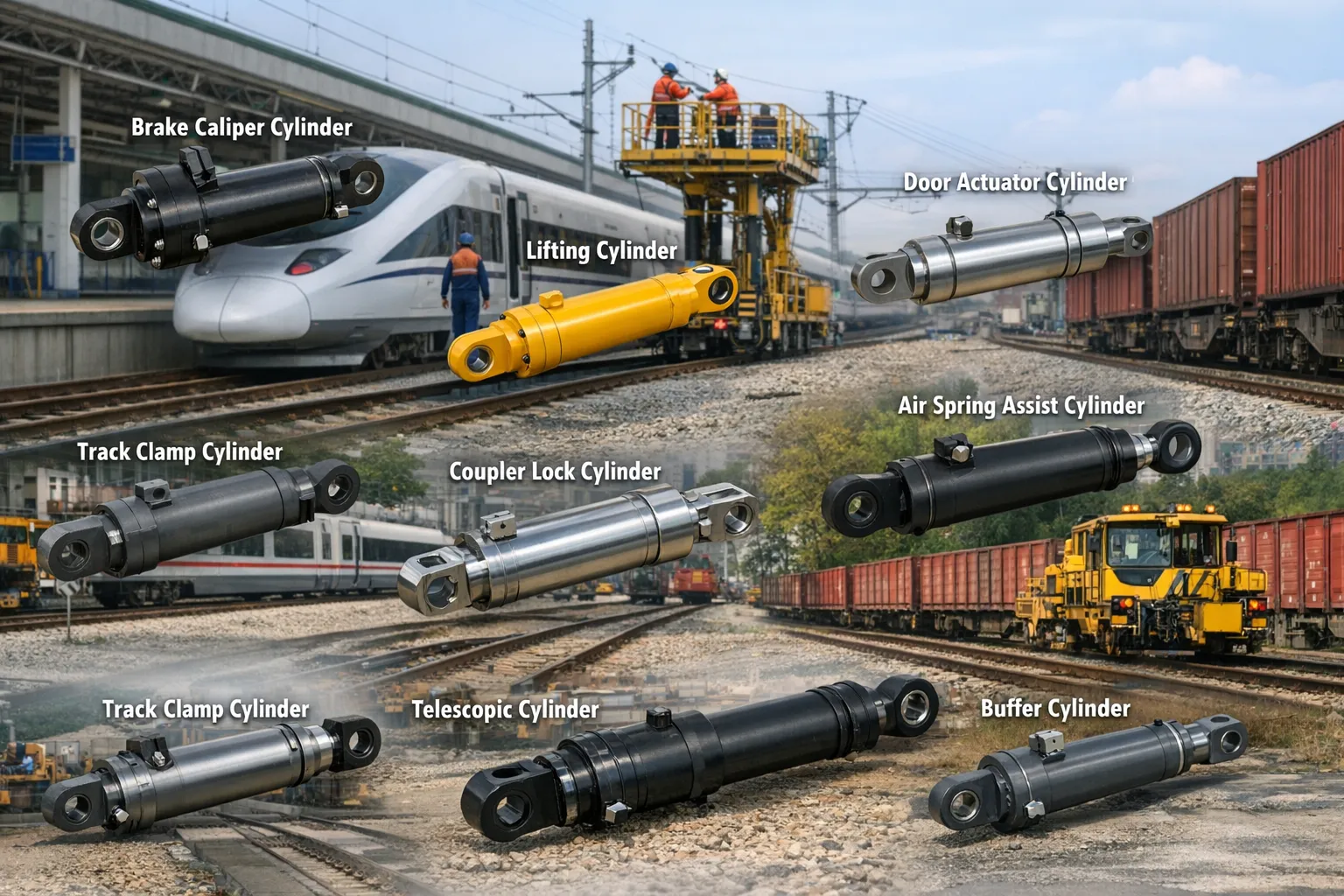
Seamless OEM Equipment Replacement & Fleet Integration
Procurement directors managing massive rolling stock fleets frequently face severe budgetary constraints and supply chain bottlenecks when dealing with proprietary original equipment. Sourcing a replacement boarding step cylinder directly from the train’s original European, American, or Japanese manufacturer often results in unacceptable lead times spanning several months and an exponentially inflated hydraulic cylinder price. Furthermore, replacing a failing carbon-steel OEM unit with the exact same carbon-steel OEM part guarantees that the pitting corrosion failure cycle will simply repeat itself in a few short years.
Our manufacturing facility provides a highly efficient, technically superior alternative. We specialize in engineering bespoke hydraulic parts that serve as immediate, drop-in dimensional replacements for original equipment. By analyzing your existing structural schematics or physical samples, our engineering team precisely matches the stroke length, closed pin-to-pin dimensions, flange bolting patterns, and fluid port thread pitches. We routinely reverse-engineer and manufacture upgraded 316L replacements for undercarriage systems originally outfitted by global fluid power conglomerates such as SMC, Festo, Parker Hannifin, Bosch Rexroth, and Norgren. Your depot technicians receive a heavily upgraded, corrosion-proof actuator that bolts directly into the existing carriage brackets without requiring a single torch cut or structural modification to the train’s chassis.
Legal Disclaimer: The corporate brand names, trademarks, and model nomenclatures mentioned above are the exclusive intellectual property of their respective owners. We reference these names strictly for the practical purpose of technical cross-referencing and dimensional compatibility analysis to assist fleet maintenance directors. We operate as a completely independent manufacturer of precision hydraulic cylinder components and hold no formal affiliation or endorsement from these trademarked entities. Our objective is to supply enhanced metallurgical alternatives that directly solve the environmental flaws present in mass-produced factory units.
Core Technological Advantages of Our 316L Architecture
Deploying actuators beneath a 300 km/h train carriage requires a complete departure from standard industrial catalog specifications. The extreme vibration, intense temperature fluctuations, and aggressive chemical exposure demand a purpose-built structural architecture. Here are the precise technical advantages integrated into our boarding step hydraulic cylinder:
-
1. Absolute Immunity to Chloride Pitting (316L Matrix)
Standard chrome-plated 1045 steel has zero natural defense once its thin plating is chipped by track debris. Even standard 304 stainless steel is highly vulnerable to chloride attack. We utilize pure 316L stainless steel extensively. The deliberate inclusion of 2-3% molybdenum in the 316L alloy matrix gives it profound resistance to localized chloride pitting. Whether the train is navigating a coastal route exposed to oceanic salt or traveling through snowy regions saturated with track de-icing chemicals, the cylinder rod remains structurally flawless, permanently protecting the internal seals.
-
2. High-Precision Mechanical Mirror Polishing
Corrosion frequently initiates where microscopic water droplets pool in the invisible grooves left by standard lathe machining. We subject our 316L rods to a highly intensive multi-stage centerless grinding and polishing procedure, achieving an ultra-smooth surface topography (Ra ≤ 0.2µm). This glass-like exterior drastically reduces the coefficient of friction against the sealing lips and actively repels water and abrasive rail dust, extending the operational lifecycle exponentially while reducing the need for constant hydraulic cylinder repair.
-
3. Fully Welded Structural Rigidity
The constant, high-frequency kinetic vibration of a transit train acts like a jackhammer on mechanical fasteners. Traditional tie-rod cylinders will inevitably vibrate loose, leading to catastrophic structural separation and fluid loss. Our cylinders employ fully automated, deep-penetration Tungsten Inert Gas (TIG) welding. The end caps and mounting trunnions are permanently fused to the main barrel, creating an immensely rigid, one-piece pressure vessel completely immune to vibrational loosening.
-
4. Aggressive Debris Shedding Wiper Technology
During rapid transit, the extended rod is heavily bombarded with metallic brake dust, crushed gravel, and freezing mud. We integrate an extreme-duty, brass-reinforced polyurethane dual-lip scraper seal into the front gland. Upon every retraction stroke, this stiff outer lip violently shears off hardened ice and caked mud, ensuring absolutely zero abrasive particulate matter enters the pristine hydraulic fluid chamber.
-
5. Extreme Thermal Resiliency Sealing Matrix
East Asian transit networks experience severe seasonal temperature shifts. Standard Nitrile (NBR) rubber seals undergo a glass transition in freezing winters, becoming stiff, shrinking, and leaking fluid. We utilize advanced aerospace-grade PTFE step seals mixed with low-temperature fluorocarbon (FKM) energizers. This ensures the fluid remains perfectly sealed inside the hydraulic parts regardless of whether the train is operating in a -40°C blizzard or +50°C summer tarmac heat.
-
6. Integrated Electronic Position Sensing Capabilities
Modern transit automation requires continuous physical feedback. Our 316L housings are non-magnetic, allowing us to seamlessly integrate high-pressure inductive proximity switches or linear variable differential transformers (LVDT) directly into the cylinder heads. This feeds exact, real-time step-position data back to the locomotive’s central PLC, guaranteeing the passenger doors never open until the step is mechanically verified as fully deployed and safely locked.
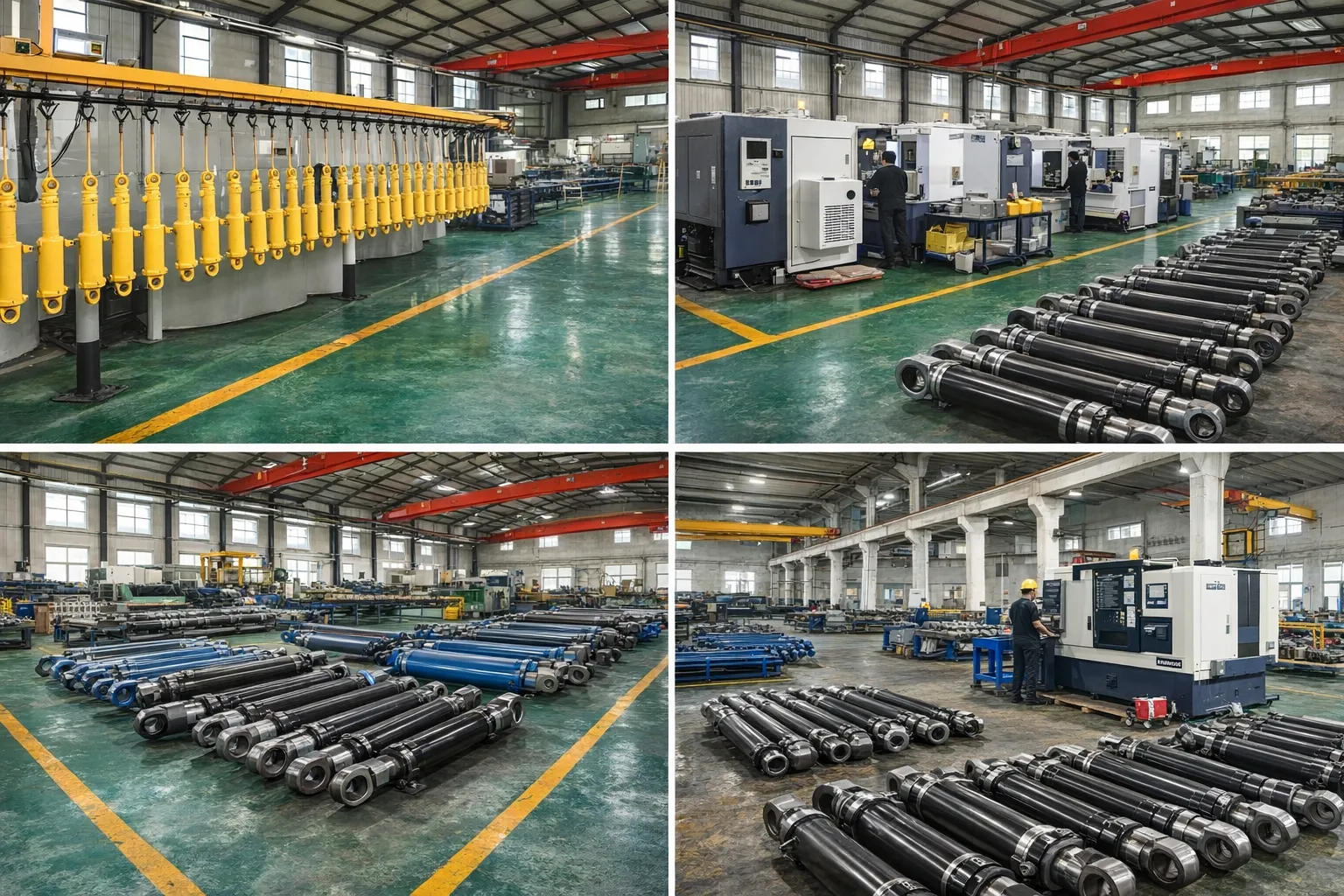
In-House Manufacturing Mastery & Rigorous Quality Assurance
Procuring critical life-safety hardware for public mass transit means there is zero margin for fragmented, outsourced manufacturing errors. We maintain 100% sovereign control over our production facility. Every batch of raw 316L stainless steel billet that arrives at our factory is immediately quarantined and tested using an advanced optical emission spectrometer. This precise metallurgical verification confirms the exact chromium, nickel, and molybdenum elemental composition before a single piece of metal is machined, ensuring our hydraulic rams start with the perfect foundation.
Working with premium stainless steel requires specialized machining parameters. The internal bores of our cylinders are subjected to high-precision CNC skiving and roller burnishing. This advanced process cold-works the internal metal, increasing surface hardness while achieving an internal mirror-like finish (Ra ≤ 0.2µm). This flawless internal environment vastly reduces friction against the hydraulic cylinder piston seals, extending their operational life by hundreds of thousands of cycles. Furthermore, every structural TIG weld is rigorously verified using Ultrasonic Non-Destructive Testing (NDT) to ensure absolute joint penetration with zero microscopic sub-surface voids.
Before any boarding step cylinder is approved for global export, it undergoes a mandatory, severe hydrostatic pressure test inside our dedicated laboratory. We do not rely on statistical batch sampling; 100% of our units are statically pressurized to 1.5 times their designated maximum operating pressure to confirm zero internal fluid bypass and zero external weeping. Finally, a unique alphanumeric serial number is permanently laser-etched onto the barrel. This guarantees total lifecycle traceability. Decades into the future, your transit maintenance crews can contact us, and we can instantly retrieve the exact CAD blueprints, seal profiles, and steel heat batch records, making future fixing hydraulic cylinders routines highly efficient and precise.
Expanding Beyond Rail: Versatile Industrial Applications
The extreme metallurgical engineering required to survive beneath a high-speed train yields a highly versatile, practically indestructible actuator. The potent combination of 316L material, welded architecture, and double-acting reliability makes this cylinder platform highly sought after across other severe-duty industrial sectors where moisture and corrosive chemicals are the primary enemies:
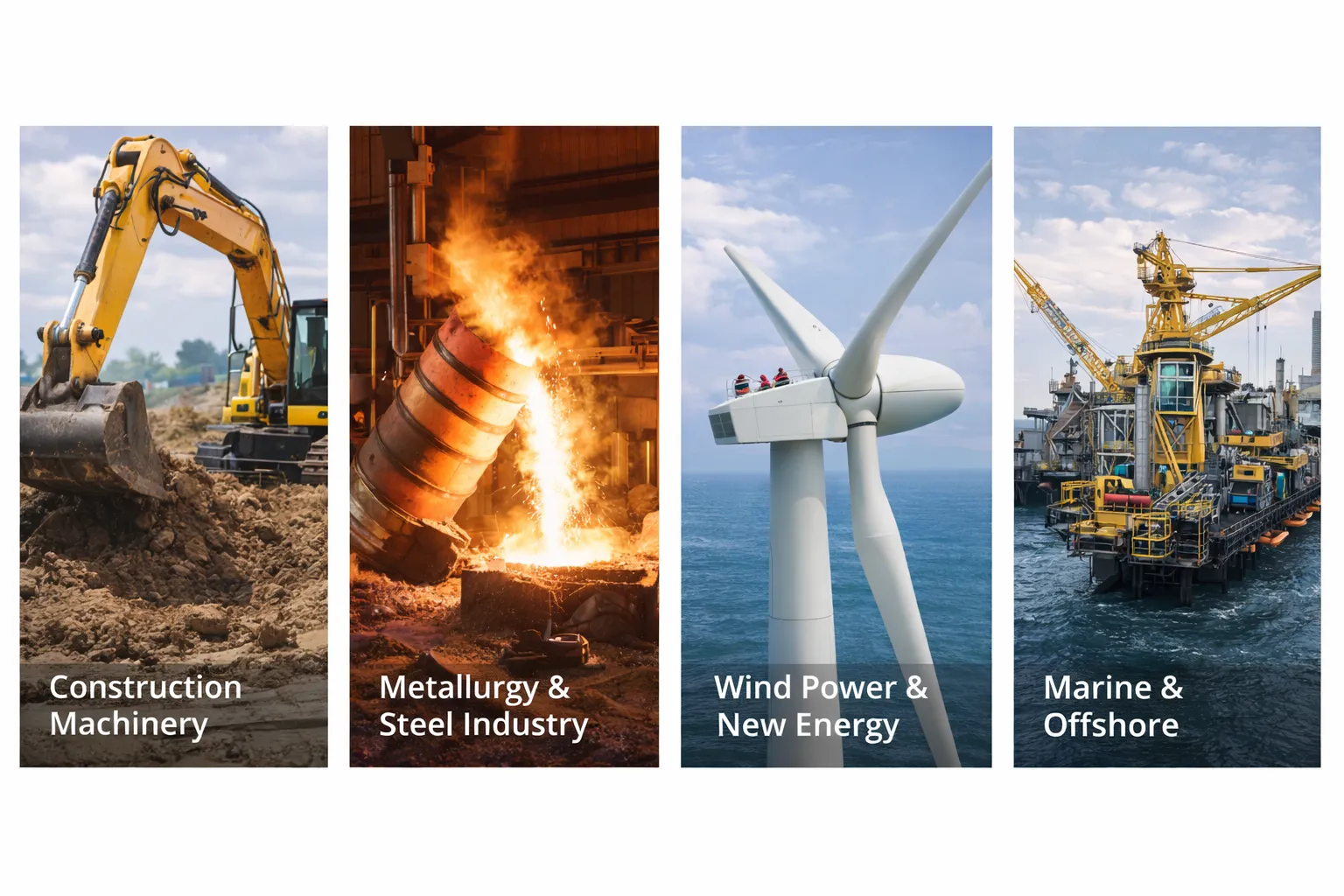
- Marine and Offshore Operations: Constant exposure to highly corrosive saltwater spray destroys standard carbon steel equipment within weeks. Our 316L cylinders are heavily specified for actuating heavy cargo bay doors on commercial Ro-Ro ferries, steering gear mechanisms on coastal tugboats, and subsea ROV equipment operating in the harshest oceanic zones.
- Construction Machinery Industry: Specialized amphibious excavators or tunneling machinery operating in highly acidic mining runoff require the polished stainless surfaces and aggressive wiper seals to prevent rod degradation during deep-mud operations.
- Metallurgical and Iron Industry: Providing reliable fluid power actuation for heavy furnace doors and continuous casting rollers in environments plagued by extreme radiant heat, constant cooling water spray, and highly abrasive flying metallic slag.
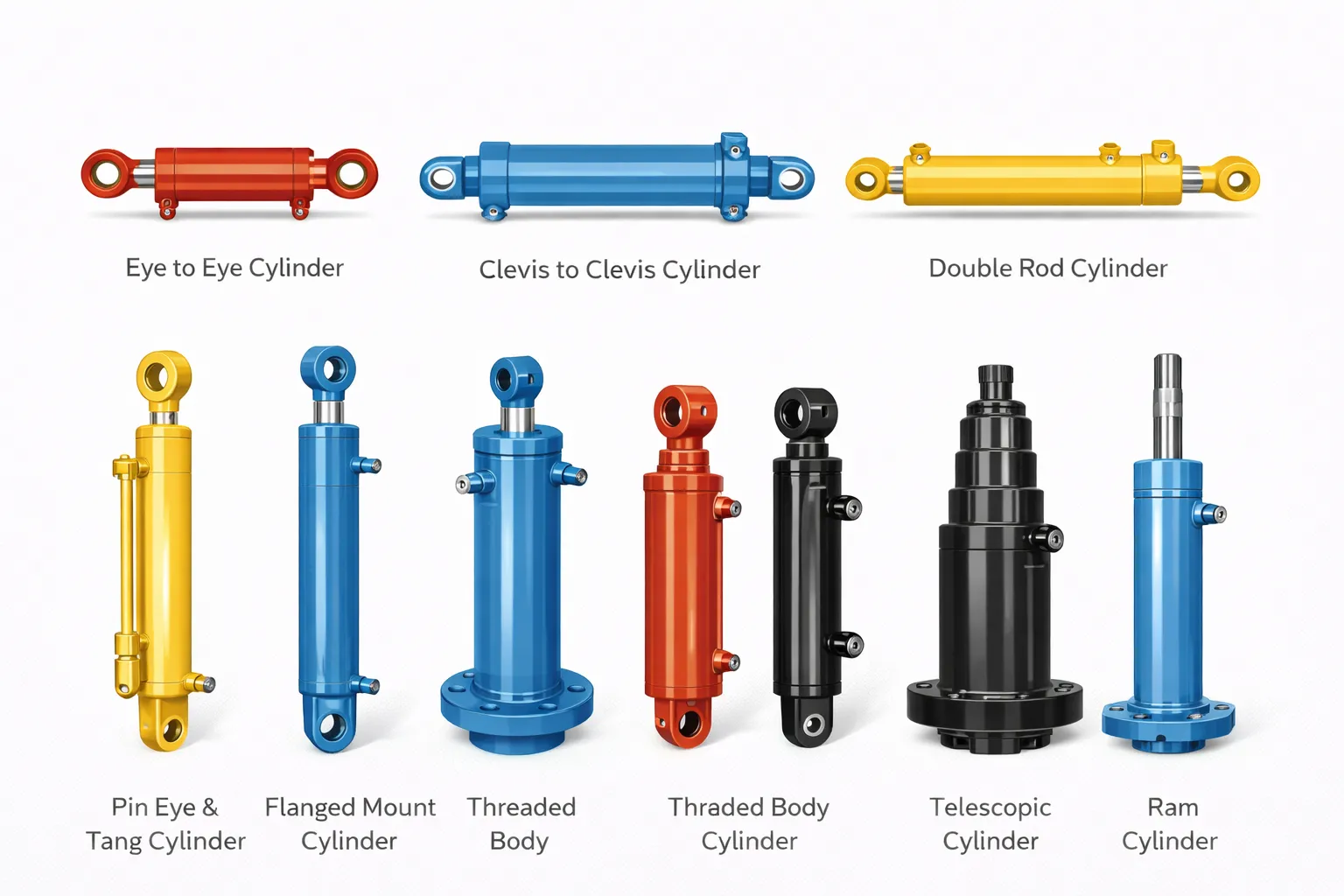
Comparative Analysis: Standard Carbon Steel vs. 316L Specialized Cylinder
Procurement teams frequently attempt to minimize initial capital expenditure by purchasing standard industrial catalog cylinders. In the commercial rail sector, this always results in massive long-term financial losses due to frequent breakdowns, fluid leaks, and labor-intensive replacements. The comparative engineering table below outlines the stark reality of this false economy.
| Failure Metric | Generic Carbon Steel Actuator | Our 316L Boarding Step Cylinder |
|---|---|---|
| Base Metallurgy | 1045 or Q345 Carbon Steel + Basic Chrome | Solid 316L Stainless Steel Matrix |
| Pitting Corrosion Resistance | Extremely Low. Plating micro-cracks under caustic track washing. | Absolute Immunity. Molybdenum naturally prevents localized cratering. |
| Dynamic Seal Lifespan | Short. Pitted rust spots on the rod quickly shred internal NBR seals. | Extended. Ultra-polished surface prevents any abrasive friction. |
| High-Speed Vibration Tolerance | Poor. Threaded Tie-rods loosen under continuous 300km/h transit vibration. | Maximum. 100% Fully Welded structure prevents all mechanical loosening. |
| Long-Term Economic Value | Requires constant monitoring and frequent hydraulic cylinder repair. | “Install and operate” reliability; drastically lowers depot maintenance budgets. |
Real-World Case Studies: Securing Transit Fleets Across Asia
The definitive proof of our metallurgical fluid power methodology is demonstrated continuously in active field deployment. Below are detailed accounts of how our technical interventions successfully resolved critical exterior actuator failures for major railway operators.
Case Study 1: Major High-Speed Rail Operator (KTX Coastal Routes)
Location: Busan to Seoul Corridor, South Korea | Application: Passenger Door Gap Step Actuation
The Engineering Crisis: A leading transit fleet operating along the southern coastal routes was experiencing a massive spike in platform jamming during the harsh winter months of 2023. Track maintenance crews utilize heavy amounts of calcium chloride de-icing salts. This highly concentrated salt spray was atomized by the speed of the train, constantly coating the standard carbon-steel platform actuators. Within just 8 months, severe pitting corrosion destroyed the rod surfaces. Every time the step retracted, these sharp pits shredded the internal gland seals, leading to hydraulic fluid leaking onto the station platforms—a severe environmental and slipping hazard.
Consultation & Solution: The lead rolling stock procurement director discovered our specialized manufacturing capabilities via a technical B2B search for a corrosion-resistant boarding step cylinder. After analyzing their legacy carriage schematics, we engineered a complete fleet replacement batch. We utilized 316L stainless steel for both the barrel and the rod, integrating heavy brass-reinforced ice scraper seals, while perfectly matching the exact mounting pins of their failing European-brand units for a seamless drop-in install.
Operational Outcome: The new hydraulic rams were progressively installed during scheduled C-checks in late 2023. After two full years of continuous operation, including punishing winter seasons and nightly chemical wash-downs, maintenance inspections revealed zero surface pitting and zero fluid leakage. The fleet drastically reduced its annual budget allocated for fixing hydraulic cylinders.
“Switching to your 316L boarding step hydraulic cylinder was the exact engineering intervention we desperately needed. The pitting issues that plagued our undercarriage systems have entirely vanished. The dimensional accuracy made fleet retrofitting straightforward, incredibly fast, and very cost-effective.” — Mr. Lee, Senior Fleet Maintenance Director.
Case Study 2: Commuter Rail Line Expansion
Location: Seoul Metro Suburbs, South Korea | Application: Automated Mobility Bridging Ramps
The Engineering Crisis: During severe winter storms, ice accumulation on the train’s undercarriage was causing their standard single-acting spring-return step cylinders to jam open. The internal return springs lacked the necessary mechanical force to pull the bridging ramps back into the chassis against the accumulated frozen track spray. Trains could not depart stations safely, causing severe cascading delays across the morning commuter network.
The Solution: We engaged with their mechanical contractors during the design phase of a fleet overhaul. We replaced the weak spring-return systems with our customized double acting hydraulic cylinder design, entirely manufactured from polished 316L material, and equipped them with highly aggressive polyurethane ice-scraper seals to defend against external intrusion.
Operational Outcome: The forced, powered hydraulic retraction completely shattered any ice buildup on the tracks and rods. Station dwell times returned to exact schedules, completely eliminating weather-related jamming of the boarding systems and increasing passenger flow efficiency.
Case Study 3: Urban Metro Fleet Upgrade
Location: Taipei, Taiwan | Application: High-Frequency Station Step Deployment
The Engineering Crisis: Unlike cross-country trains, urban metro systems stop every few minutes. This meant the boarding step actuator was cycling thousands of times per week. The tremendous friction was causing the standard internal NBR seals to overheat, harden, and fail prematurely due to thermal degradation.
The Solution: They contacted our sales engineering team directly via our website portal. We modified the internal architecture, installing ultra-low friction PTFE blended seals over the hydraulic cylinder piston and redesigning the internal fluid porting to act as a heat sink, rapidly dissipating fluid heat generated by the relentless high-frequency cycling.
Operational Outcome: The thermal degradation was completely mitigated. The actuators easily absorbed the punishing daily schedule without weeping fluid, proving our capacity to engineer robust hydraulic parts tailored specifically for grueling, high-cycle mass transit operations.
Expert Technical FAQ for Engineering Procurement
Specifying mission-critical life-safety mechanical components requires extensive technical due diligence. We have compiled highly detailed answers to the most frequent technical inquiries raised by mechanical engineers and B2B procurement managers regarding our platform bridging technologies.
1. Why specifically engineer with 316L stainless steel rather than the cheaper, standard 304 stainless?
While 304 stainless steel resists basic water oxidation, it remains highly vulnerable to pitting and crevice corrosion when exposed to chloride environments (like coastal sea-salt spray or industrial depot track de-icing salts). Chlorides attack the protective chromium oxide layer on 304 steel. 316L stainless steel contains a deliberate addition of Molybdenum (typically 2-3%). This critical element vastly increases the alloy’s chemical resistance to localized chloride pitting, ensuring the exterior of the boarding step cylinder remains perfectly smooth and never shreds the internal dynamic seals.
2. How does a double-acting mechanism improve passenger safety over older single-acting designs?
A single acting hydraulic cylinder uses hydraulic pressure to push the step out, but relies on a coiled mechanical internal spring to pull it back in. In harsh winters, frozen ice blocks or packed track mud can easily overpower this weak spring, leaving the passenger step dangerously extended while the train attempts to accelerate. A double acting hydraulic cylinder actively pumps high-pressure fluid into the rod end to retract the rod. This generates massive mechanical pulling force, easily crushing through ice or debris and guaranteeing the step is safely locked into the chassis before departure.
3. Can you match the specific stroke length and mounting pins of our existing European train chassis?
Absolutely. A significant portion of our manufacturing operations involves fabricating bespoke drop-in replacements for aging transit fleets. If your engineering department provides us with the original OEM part numbers, dimensional schematics, or an exact physical sample (pin-to-pin distance, trunnion diameter, stroke length, and port threading), our engineers will manufacture new hydraulic cylinder components that fit flawlessly into your current jack housings without requiring any structural steel modifications to your carriages.
4. How does the cylinder prevent the step from collapsing backward when passengers stand on it?
A double-acting system is intrinsically rigid once hydraulic fluid is trapped inside. To ensure absolute safety, we integrate pilot-operated (PO) check valves directly onto the cylinder’s fluid ports. Once the step extends to its limit, these valves instantly slam shut, mechanically locking the pressurized fluid inside the barrel. Because oil is incompressible, even if hundreds of passengers step onto the platform simultaneously, the locked fluid ensures the step remains a rigid, immovable structural pillar.
5. What defines the final procurement hydraulic cylinder price for a massive fleet upgrade?
Because we manufacture autonomously and ship factory-direct, we completely bypass third-party distributor and catalog markups. The total cost is determined strictly by the physical dimensions of the cylinder (bore and stroke dictate the 316L material weight), any highly customized valving or sensor requirements, and the total batch volume. We are highly competitive and consistently provide significant budget savings for major transit authorities undertaking large fleet overhauls.
6. Is it possible for our depot technicians to perform regular hydraulic cylinder repair on these welded units?
Yes. Even though the main pressure tube and rear caps are heavily welded for maximum structural, anti-vibration rigidity, the front sealing gland (head) is precisely threaded or bolted and locked into place. Using standard heavy-duty spanner wrenches, your depot maintenance technicians can easily unscrew the front head to replace wiper seals or internal components, drastically speeding up the turnaround time for fixing hydraulic cylinders on the depot floor without needing to buy a whole new housing.
7. What are the standard production and shipping lead times to East Asian transit hubs?
For customized 316L stainless steel batches, standard autonomous production requires 25 to 35 working days depending on factory capacity and material availability. Ocean freight logistics from our facility to major transit ports (such as Busan, Incheon, Yokohama, or Taipei) are highly streamlined, typically adding only a few days. We can frequently expedite production for urgent AOG (Aircraft on Ground) style transit maintenance emergencies.
Ready to Eradicate Pitting Corrosion in Your Transit Fleet?
Continuing to rely on standard carbon steel actuators in severe outdoor transit environments is a costly and dangerous compromise. Passenger safety at the station platform should never be risked by inadequate, mass-market fluid power components. Upgrade your rolling stock infrastructure by partnering directly with a specialized hydraulic cylinder manufacturer capable of engineering absolute reliability into every millimeter of steel.
Editor: Cxm