Clamping Hydraulic Cylinder for Wind Farm Transport Vehicles
Precision engineered with premium 316/2205 duplex stainless steel and high-phosphorus nickel plating to securely grip colossal turbine blades across highly corrosive coastal and severe humid transit routes.
Product Overview: The Backbone of Heavy Renewable Logistics
The rapid global expansion of renewable energy relies fundamentally on the safe, efficient deployment of massive wind turbines. Today, onshore and offshore turbine blades routinely exceed 90 to 120 meters in length, presenting an immense logistical hurdle. Transporting these monumental, highly aerodynamic, and fragile composite structures from deep-water manufacturing ports to remote inland mountain ridges represents one of the most critical challenges in modern transport engineering. A specialized wind farm transport vehicle is heavily utilized for this task. At the absolute core of the blade transport fixture—the mechanism that physically holds the multi-million dollar payload—is the Clamping Cylinder. This precise mechanical actuator provides the immense, unyielding grip necessary to secure the blade against severe crosswinds, steep road gradients, and unpredictable dynamic transit vibrations without fracturing the fiberglass shell.
Standard industrial fluid power actuators are fundamentally inadequate for this highly specific heavy-haul application. The primary operating environment for these transport rigs involves heavy, prolonged exposure to coastal highways and maritime staging areas, bringing the equipment into direct, constant contact with aggressive humid and salt spray conditions. When standard painted carbon steel equipment faces this harsh atmosphere, the inevitable result is rapid, deep corrosion pitting along the exposed rod and external barrel. This pitting acts like microscopic razor blades against the internal dynamic polyurethane seals, causing irreversible damage that leads to fluid bypass and a catastrophic loss of clamping pressure. If the holding force bleeds out during transit, the massive turbine blade could shift, sustain severe structural micro-cracking, or detach entirely, endangering public safety and causing immense financial loss.
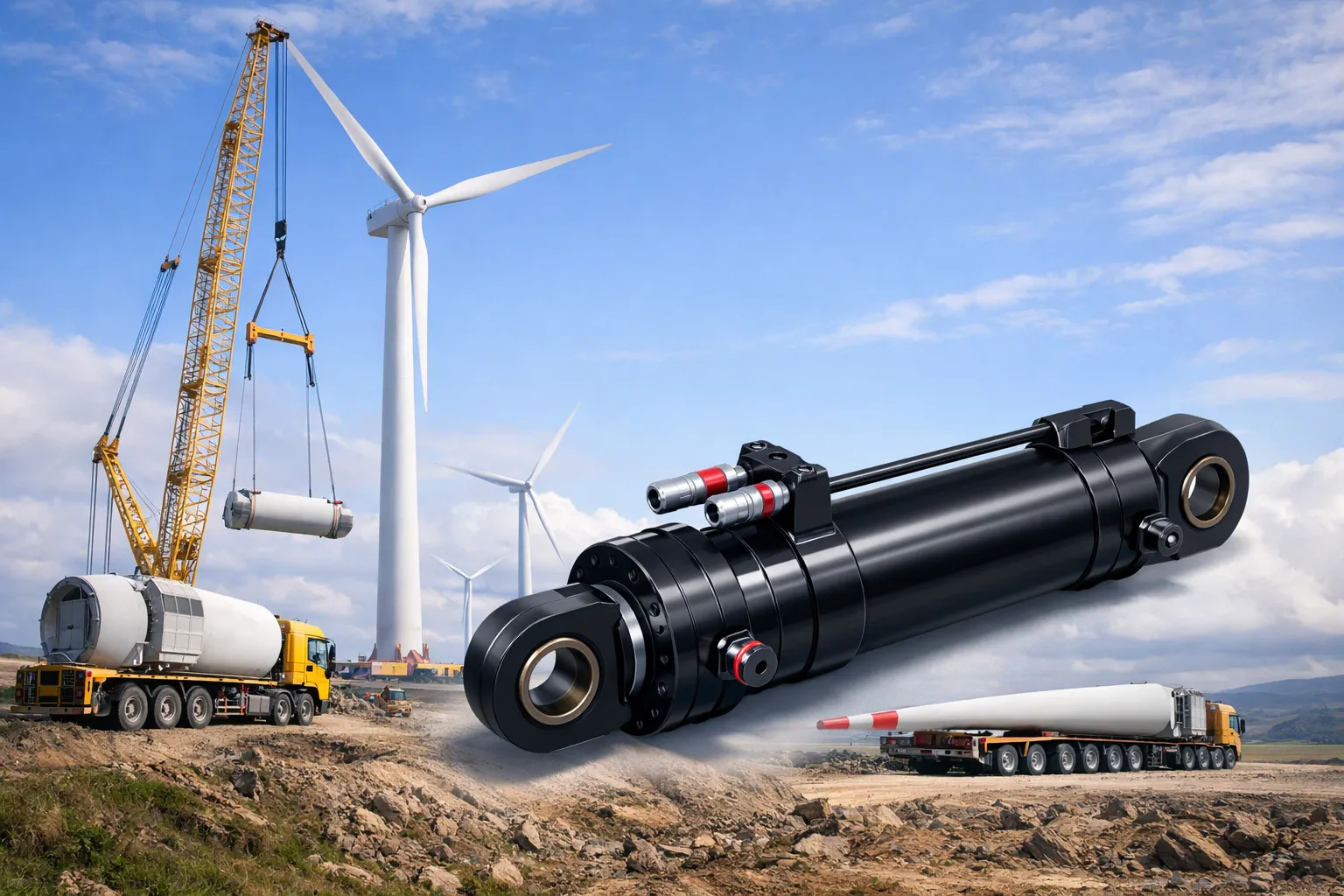
As a dedicated, highly specialized hydraulic cylinder manufacturer, we have engineered a custom Clamping Hydraulic Cylinder specifically to eradicate this industry-wide failure mode. We have entirely replaced vulnerable carbon steels with premium 316 austenitic and 2205 duplex stainless steel metallurgy, further augmented by an impenetrable, high-phosphorus nickel-plated surface treatment. By integrating our purpose-built, highly resilient fluid power solutions, logistics operators eliminate the risk of load dropping, drastically reduce the frequency of fixing hydraulic cylinders mid-route under terrible weather conditions, and achieve a vastly superior return on their overall hydraulic cylinder price investment over the prolonged operating lifespan of the entire transport fleet.
Engineered Technical Parameters & Customization Capabilities
Every specification of our transport securing solutions is meticulously calculated to combat specific environmental degradation and extreme mechanical threats encountered on the road. Below is the comprehensive technical parameter table for our specialized clamping units. As a fully vertically integrated manufacturing facility, we customize bore sizes, rod diameters, stroke lengths, and exact mounting configurations to match your specific blade transport fixture blueprints flawlessly.
| Engineering Attribute | Specification Details & Customization Range |
|---|---|
| Target Industry Sector | Wind Power Generation / Heavy Inland Logistics |
| Equipment Category | Wind farm transport vehicle / Blade Lifter Trailer |
| Subsystem / Core Action | Blade transport fixture / Clamping blades securely |
| Component Designation | Clamping Cylinder |
| Action Mechanism Mode | Double acting hydraulic cylinder |
| Structure Type & Fabrication | Piston type / Heavy-duty automated welded structure |
| Core Material System | Stainless steel (316L Austenitic or 2205 Duplex options) |
| Surface Treatment Protocol | High-phosphorus Nickel plated (Micro-crack free, extreme hardness) |
| Environment Survival Rating | Extreme Humid + Salt spray / Wide thermal variance (-35°C to +85°C) |
| Typical Failure Mode Addressed | Corrosion pitting leading to internal seal bypass and payload drop |
| Recommended Configuration | 316/2205 housing with integrated pilot-operated check valves |
| Operating Pressure Range | 16 MPa to 31.5 MPa (Optimized for sustained zero-leak load holding) |
Fluid Dynamics: The Working Principle of Blade Securing
To comprehensively understand the unwavering reliability of our Clamping Hydraulic Cylinder, one must examine its internal fluid dynamics during a high-stakes transport cycle. The unit functions exclusively as a high-pressure double acting hydraulic cylinder. This critical engineering choice dictates that highly pressurized hydraulic fluid is actively utilized to govern both the extension (clamping) and retraction (releasing) movements, ensuring absolute operator control over the heavy steel jaws without relying on erratic mechanical springs or gravity, which often fail when clogged with road mud.
During the delicate loading phase at the port, the transport vehicle’s onboard hydraulic power unit pumps high-viscosity fluid into the cap end (base) of the cylinder barrel. The resulting hydrostatic pressure exerts immense force evenly across the surface area of the internal hydraulic cylinder piston. This force propels the heavy stainless steel rod outward, engaging the articulated steel arms of the blade transport fixture and compressing the protective gripping pads against the fiberglass composite of the turbine blade root. Wind blades are incredibly strong axially but highly susceptible to lateral crushing forces. Therefore, our precision cylinders integrate perfectly with the trailer’s proportional pressure relief valves, allowing the operator to dial in the exact mathematical clamping tonnage required. The ultra-smooth internal friction of our PTFE seals ensures the pressure applies linearly, without sudden jerks that could fracture the composite matrix.
The most critical phase occurs once the blade is fully clamped. The fluid system must maintain this exact holding force for days as the truck travels. To prevent any relaxation of the grip due to severe road vibration or microscopic internal leakage, our units integrate direct-mounted pilot-operated check valves (PO Check). Once the target clamping pressure is reached, these valves instantaneously lock the incompressible hydraulic oil inside the chamber. Even if a main hydraulic line on the truck chassis is severely snagged and severed by a tree branch on a narrow road, the actuator remains mechanically locked, safely holding the multimillion-dollar blade securely until the destination is reached and pilot pressure is actively applied to release it.
Seamless Interchangeability with Legacy Global Brands
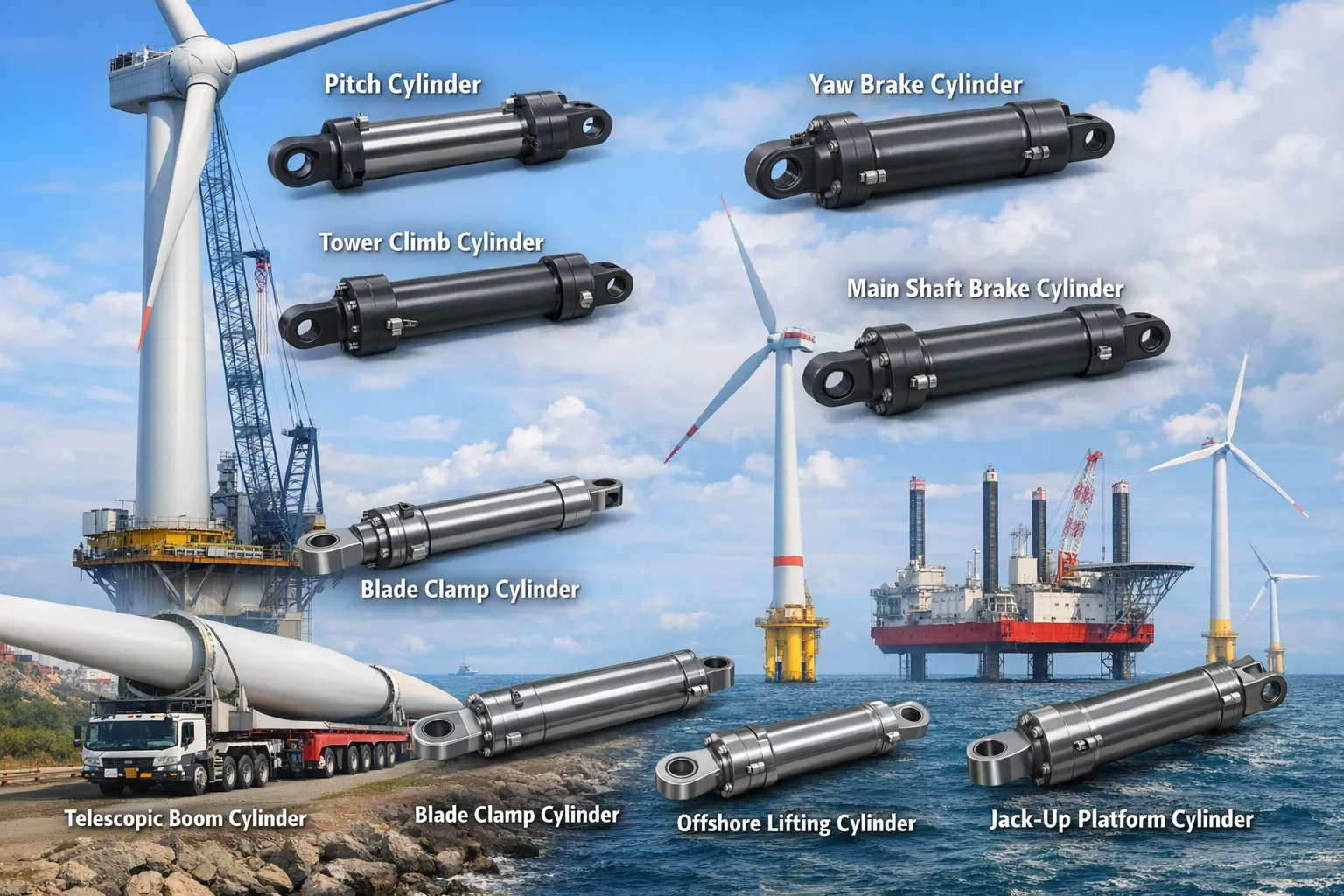
Heavy logistics companies frequently struggle with the incredibly long procurement lead times and highly inflated costs associated with replacing original equipment manufacturer (OEM) components. When a critical multi-axle transport vehicle is grounded waiting for parts from Europe, the financial impact is catastrophic. We have specifically engineered our advanced hydraulic rams and clamping actuators to serve as exact, dimensionally identical drop-in replacements for machinery originally fitted with components from legacy global brands.
(Note: The following brand names are mentioned strictly to assist maintenance engineers in technical cross-referencing, dimensional selection, and fleet compatibility verification. This mention does not imply any official OEM affiliation, endorsement, or trademark infringement of the respective entities.)
Whether your existing transport fixture utilizes aging actuators originally manufactured by Bosch Rexroth, Parker Hannifin, Enerpac, Eaton, or HYDAC, our engineering division can replicate the exact stroke length, pin diameters, clevis mounting styles, and port threads perfectly. By sourcing directly from our advanced facility, you entirely bypass regional distributors, securing a highly advantageous direct hydraulic cylinder price. More importantly, you significantly upgrade the physical unit from vulnerable painted steel to our highly corrosion-resistant 316/2205 stainless steel configuration. This proactive upgrade ensures your replacement hydraulic parts will drastically outlast the factory originals, rendering the task of fixing hydraulic cylinders on the roadside a thing of the past.
Eight Core Technical Advancements of Our Heavy-Duty Design
Designing a Clamping Cylinder capable of surviving years of intense coastal salt exposure, heavy mechanical shock, and continuous pressure holding requires superior metallurgical knowledge and precision machining. Here are eight defining engineering advancements that set our high-performance units apart from basic commercial-grade alternatives:
1. Elite Material Selection: 316/2205 Duplex Stainless Steel
The primary enemy of coastal transport logistics is the relentless humid and salt spray atmosphere. Standard carbon steel barrel walls and rods suffer from rapid, severe corrosion pitting. These microscopic pits aggressively tear at the dynamic polyurethane seals during actuation. We completely eliminate this failure mode by constructing the entire outer architecture and piston rod from 316 austenitic or ultra-tough 2205 Duplex stainless steel, providing total chemical immunity to airborne salinity and moisture.
2. Advanced Chemical Nickel Plated Surface Barrier
While solid stainless steel provides deep structural defense, the dynamic sliding surfaces require exceptional hardness to resist road grit. We apply a heavy-duty chemical nickel-plated surface treatment to the piston rods. Unlike standard flash chrome, high-phosphorus chemical nickel deposits uniformly without micro-cracking, creating a completely non-porous, highly lubricious barrier that vastly improves wear resistance against abrasive sand.
3. Ultra-Low Friction & Zero-Leak Sealing Technology
Maintaining exact clamping force requires flawless internal fluid containment. We utilize a proprietary matrix of polyurethane and PTFE (Teflon) composite step-seals. This ultra-low friction arrangement ensures the hydraulic cylinder piston actuates smoothly without violent stick-slip vibration, while the secondary energized lip seals provide absolute zero-bypass containment, guaranteeing the clamping pressure remains mathematically constant during weeks of transit.
4. High-Rigidity Automated Welded Structure
Transporting 100-meter blades over unpaved access roads subjects the transport fixture to violent, multi-axis mechanical shocks. Threaded tie-rod style cylinders easily stretch or loosen under these dynamic loads. Our Clamping Hydraulic Cylinder features a heavy-duty continuous welded construction. The end caps, ports, and mounting trunnions are deep-fusion welded to the barrel using automated robotic systems, creating a monolithic structure.
5. Integrated Pilot-Operated Safety Locks
Relying on distant valves mounted on the truck chassis is a massive safety hazard. We machine custom steel manifolds welded directly onto the cylinder ports to house pilot-operated check valves. If a hydraulic line is snagged during transit, the PO check valve instantly snaps shut, hydraulically locking the double acting hydraulic cylinder and preventing the heavy jaws from releasing the turbine blade.
6. Thermal Stability & Extreme Climate Adaptation
A transport route may begin in a freezing mountain pass and end in a hot, humid coastal zone within 48 hours. Fluctuating temperatures cause standard seals to harden or expand, dangerously altering clamping pressure. Our internal high-memory elastomeric compounds compensate for thermal variations perfectly, preventing bypass leakage across a temperature spectrum of -35°C to +85°C.
7. Finite Element Analysis (FEA) Fatigue Optimization
Through rigorous application of FEA software during the design phase, we meticulously identify and engineer out dangerous stress concentrations at the welding joints and heavy trunnion mounts. By intelligently increasing the radial thickness at these critical force junctions, we exponentially increase the cyclic fatigue life of the entire hydraulic cylinder assembly.
8. Heavy-Duty Contamination Wipers
Highway and off-road transport kicks up immense volumes of mud, abrasive grit, and ice directly onto the exposed rod. We install specialized double-lipped polyurethane wiper seals integrated heavily into the cylinder head. These aggressive wipers forcefully scrape the retracting rod clean, preventing microscopic abrasives from entering the clean fluid system and destroying the internal bands.
Manufacturing Process & Exhaustive Quality Control
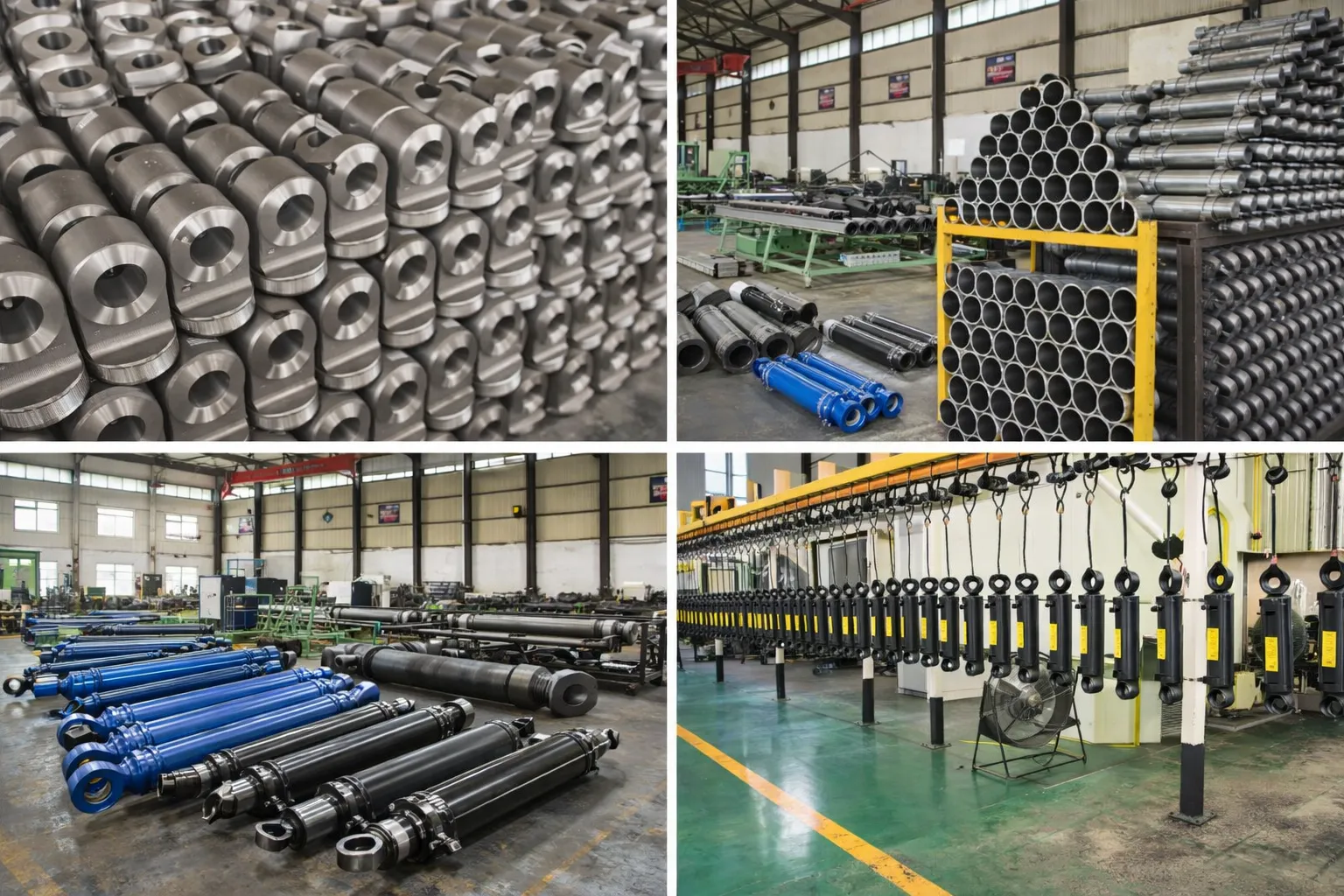
The uncompromising reliability of our clamping units begins with stringent, highly visible control over every single phase of manufacturing. We operate a highly advanced, fully integrated production facility. Producing a highly specialized stainless steel unit requires vastly different tooling and expertise compared to mass-market carbon steel fabrication. Raw billets of 316 and 2205 stainless steel undergo strict metallurgical spectrometry upon arrival to verify the exact chromium, nickel, and molybdenum composition. The cylinder barrels are then machined using multi-axis CNC deep-hole boring and skive-burnishing machines, achieving an internal mirror finish (Ra 0.2 to 0.4) that drastically extends the operational life of the internal dynamic seals.
Quality control is not merely a final observation; it is securely embedded into our fabrication DNA. Joining advanced stainless steel alloys requires specialized inert gas shielding (TIG/MIG) to prevent high-temperature oxidation and detrimental carbide precipitation. Every load-bearing structural weld is subjected to non-destructive testing, primarily Ultrasonic Testing (UT), to ensure deep fusion penetration and zero internal porosity. Once assembled, 100% of our hydraulic rams undergo rigorous dynamic factory testing. The units are mounted on automated test rigs and cycled repeatedly at 150% of their maximum rated operating pressure. We specifically conduct prolonged pressure-holding tests over several hours to verify that the ultra-low friction seals and integrated locking valves yield absolutely zero pressure decay.
To strictly support heavy industry procurement standards, every single unit is laser-engraved with a permanent, scannable serial number. This guarantees total product traceability. Decades from now, our engineering team can instantly pull the exact material certificates, pressure test graphs, and specific seal configurations associated with your particular hydraulic cylinder, ensuring rapid and precise after-sales support worldwide.
Engineered Solutions Expanding Across Heavy Industries
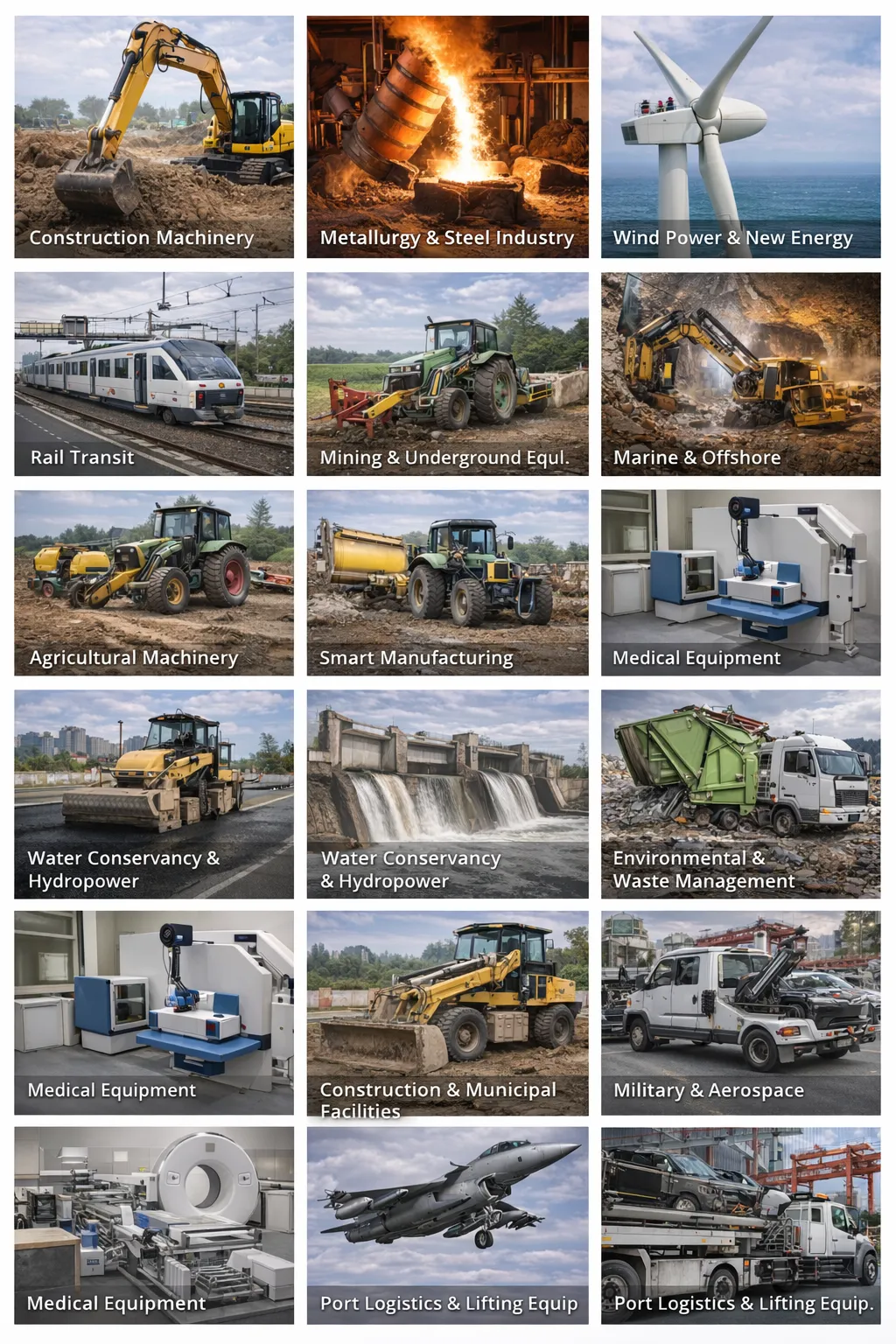
While the stainless steel anti-corrosion architecture of this specific double acting hydraulic cylinder was perfected to secure wind farm transport vehicles, its core mechanical capability—providing unyielding, failsafe holding force in extremely hostile environments—makes our technology highly sought after across numerous other demanding heavy industrial sectors:
- Construction Machinery Industry: Actuating heavy hydraulic thumbs on 50-ton excavators, concrete pump truck outrigger locking systems, and heavy-duty demolition sheer attachments where abrasive dirt, silica dust, and moisture are omnipresent.
- Metallurgical and Iron Industry: Powering heavy forging manipulators, furnace doors, and clamping giant steel billets in continuous casting lines where intense radiant heat and acidic water spray quickly destroy ordinary carbon steel actuators.
- Mining Industry: Operating massive primary rock crusher jaws, deep underground longwall roof supports, and securing bulk material overland conveyor tensioners in abrasive, damp, and highly acidic underground environments.
- Heavy Plastics & Rubber Machinery: Delivering the immense, perfectly parallel and repeatable mold-closing forces required for large-scale precision injection molding equipment, ensuring flawless product yield.
- Material Handling & Port Logistics: Securing heavy maritime containers on automated port straddle carriers, reach stackers, and ship-to-shore cranes operating continuously in corrosive coastal salt fog.
Comparative Analysis: Standard Commercial vs. Anti-Corrosion High-Performance
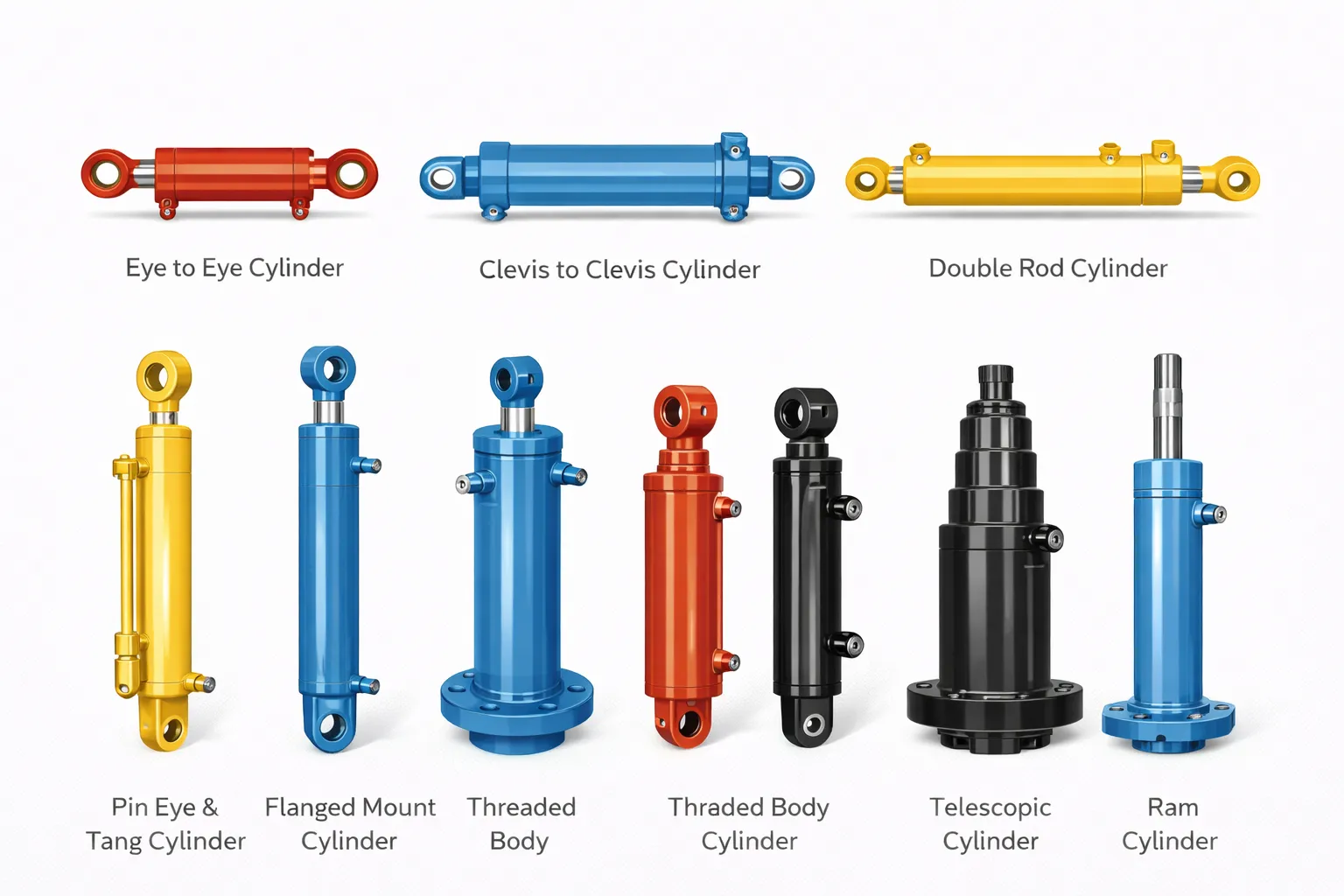
For logistics fleet directors and procurement managers actively evaluating the total cost of ownership, the initial capital outlay must be strictly weighed against the catastrophic financial risk of operational downtime and cargo loss. The table below clearly contrasts standard commercial actuators with our highly engineered transport clamping solutions.
| Evaluation Metric | Ordinary Commercial Cylinder | Our Specialized Clamping Cylinder |
|---|---|---|
| Base Material Architecture | Carbon Steel (e.g., 45# or Q345). Highly vulnerable to atmospheric moisture. | 316L or 2205 Duplex Stainless Steel. Absolute structural immunity to rust throughout. |
| Coastal Environment Resistance | Rapid corrosion pitting in salt spray. Tears dynamic seals within months. | Impervious to severe humid + salt spray. Decades of clear, unpitted operation. |
| Rod Surface Treatment | Thin flash hard chrome. Micro-cracks allow deep moisture penetration. | Heavy Chemical Nickel plated. Non-porous, highly lubricious, high-wear barrier. |
| Load Holding Security | Relies on distant manifold valves on the truck chassis. High risk of drop if a hose bursts. | Integrated pilot-operated locks mounted directly on the steel cylinder port. Zero drop. |
| Maintenance Frequency | Frequent resealing needed due to pitted rods tearing standard rubber seals. | Install and operate. Drastically lowers the overall lifecycle cost of the equipment. |
Proven Global Success: 5 Real-World Deployments
Our specialized fluid power solutions secure critical infrastructure logistics across East Asia and globally. Below are five meticulously documented real-world implementations detailing exactly how we solved catastrophic failures for major logistics contractors operating in grueling environments.
Case 1: Offshore Turbine Transport – Mokpo Port, South Korea (November 2024)
Client Profile: Tier-1 Heavy Marine Logistics Corp.
Application Focus: Securing massive 105-meter turbine blades on specialized self-propelled modular transporters (SPMTs) awaiting offshore jack-up vessels.
The Challenge: High-salinity ocean fog rolling off the coast of Mokpo was causing severe corrosion pitting on their European-made carbon steel cylinders within just 6 months. The pitted rods quickly tore the main wiper seals, leading to highly dangerous holding pressure loss during transit across the docks.
Contact Method: The lead maintenance engineer initiated a direct Google search for a specialized hydraulic cylinder manufacturer capable of custom stainless steel fabrication.
The Resolution: We supplied a complete fleet upgrade utilizing our 2205 Duplex stainless steel Clamping Hydraulic Cylinder design with heavy nickel plating. Pitting was completely eradicated.
“The metallurgical upgrade was exactly what we needed. The highly corrosive port environment hasn’t left a single mark on the nickel-plated rods after a full year of heavy use. Exceptional engineering that permanently solved our main safety hazard.” — Choi Min-jun, Fleet Maintenance Director.
Case 2: Winter Mountain Wind Farm – Hokkaido, Japan (February 2025)
Client Profile: Specialized Renewable Energy Haulage Co.
Application Focus: Actuating blade transport fixtures on incredibly steep, snow-cleared mountain access roads.
The Challenge: Freezing temperatures (-25°C) caused their standard commercial seals to harden and shrink, causing slow fluid bypass. Furthermore, heavy mechanical road shocks from the icy, unpaved terrain were testing the structural weld strength of their standard cylinders.
Contact Method: Met our technical representatives at a major industrial machinery exhibition in Tokyo.
The Resolution: We integrated aerospace-grade low-temperature composite seals into our heavy-duty welded structure. The holding force remained 100% mathematically stable down to -30°C.
“Your team understood the complex fluid dynamics of extreme cold perfectly. The robust steel cylinders absorb the mechanical shock of the rough mountain roads flawlessly. The holding pressure gauge hasn’t dropped a single bar during a rigorous 3-day transit.” — Kenji Takahashi, Operations Manager.
Case 3: Monsoon Logistics Repowering – Da Nang, Vietnam (July 2024)
Client Profile: National Heavy Construction & Logistics Fleet.
Application Focus: Securing heavy turbine components on long-haul flatbeds during the torrential wet season.
The Challenge: Constant, driving rain and thick highway mud were destroying the basic wipers and entering the fluid chambers of their old OEM units. The massive cost of constantly replacing them was bleeding their maintenance budget dry.
Contact Method: Referred by a global B2B procurement portal highlighting our highly competitive factory-direct cost structures.
The Resolution: We engineered a solution utilizing tough 316 stainless steel and heavy-duty double-lip mud wipers. The client significantly reduced their overall hydraulic cylinder price by cutting out the European middlemen.
“Upgrading to solid stainless steel while still saving money was a huge victory for our procurement division. The mud simply cannot penetrate your wiper seals. Highly reliable hydraulic parts for extreme weather conditions.” — Nguyen Van Binh, Chief Procurement Officer.
Case 4: High-Altitude Wind Farm Assembly – Taichung, Taiwan (September 2025)
Client Profile: Premier Wind Energy EPC Contractor.
Application Focus: Transporting incredibly delicate next-generation fiberglass turbine blades up steep coastal ridges using articulated trailers.
The Challenge: The existing basic single acting hydraulic cylinder setup was causing abrupt, jerky release movements that severely risked cracking the composite blades during unloading. They desperately needed precision, dual-force control.
Contact Method: An organic technical search for high-precision double acting hydraulic cylinders suitable for heavy transport applications.
The Resolution: Our custom double-acting units provided ultra-smooth, millimeter-accurate clamping and releasing capabilities, fully eliminating the risk of crushing the cargo.
“The operational smoothness is night and day. The active hydraulic retraction gives our operators absolute confidence when releasing the blades in extremely tight staging areas. Fantastic technical support throughout the entire design phase.” — Lin Wei-ting, Lead Site Engineer.
Case 5: Sub-Tropical Island Transport – Jeju Island, South Korea (May 2026)
Client Profile: Island-based Wind Installation Consortium.
Application Focus: Moving incredibly long blades across the island’s highly humid, rough volcanic terrain under near-constant sea mist.
The Challenge: Constant water ingress combined with sharp volcanic grit was aggressively destroying the rod wipers of their rigs, deeply scoring the internal cylinder barrels, and leading to total holding pressure failures.
Contact Method: Reached out immediately after viewing our rugged manufacturing capabilities at a heavy machinery exhibition in Seoul.
The Resolution: We supplied heavy-walled 316 stainless units equipped with specialized, aggressive heavy-duty double-lip wiper seals to scrape away volcanic mud and moisture effectively.
“The meticulous attention to detail on the sealing matrix is brilliant. Despite non-stop sea mist and volcanic mud, the hydraulic fluid inside remains completely pristine. Your engineering team truly understands the harsh reality of field logistics.” — Park Min-su, Logistics Coordinator.
Technical FAQ for Procurement & Engineering Teams
Procuring highly specialized, life-critical components requires thorough vetting. Below are detailed, highly transparent answers to the most common questions raised by our B2B logistics clients and fleet engineers globally.
Eliminate Transit Failure and Secure Your Fleet Today
When transporting multimillion-dollar wind energy assets across treacherous environments, trusting standard, rust-prone carbon steel components is a mathematical risk you simply cannot afford. Secure your entire logistics fleet with our elite, corrosion-immune Clamping Cylinder technology. Whether you require a single dimensionally identical prototype for testing or a massive bulk fleet upgrade of customized hydraulic parts, our engineering division is ready to provide precise load calculations and direct factory pricing.
Stop bleeding your maintenance budget on constant seal repairs. Invest in absolute structural reliability.
Contact Our Fluid Power Experts Now
Editor: Cxm