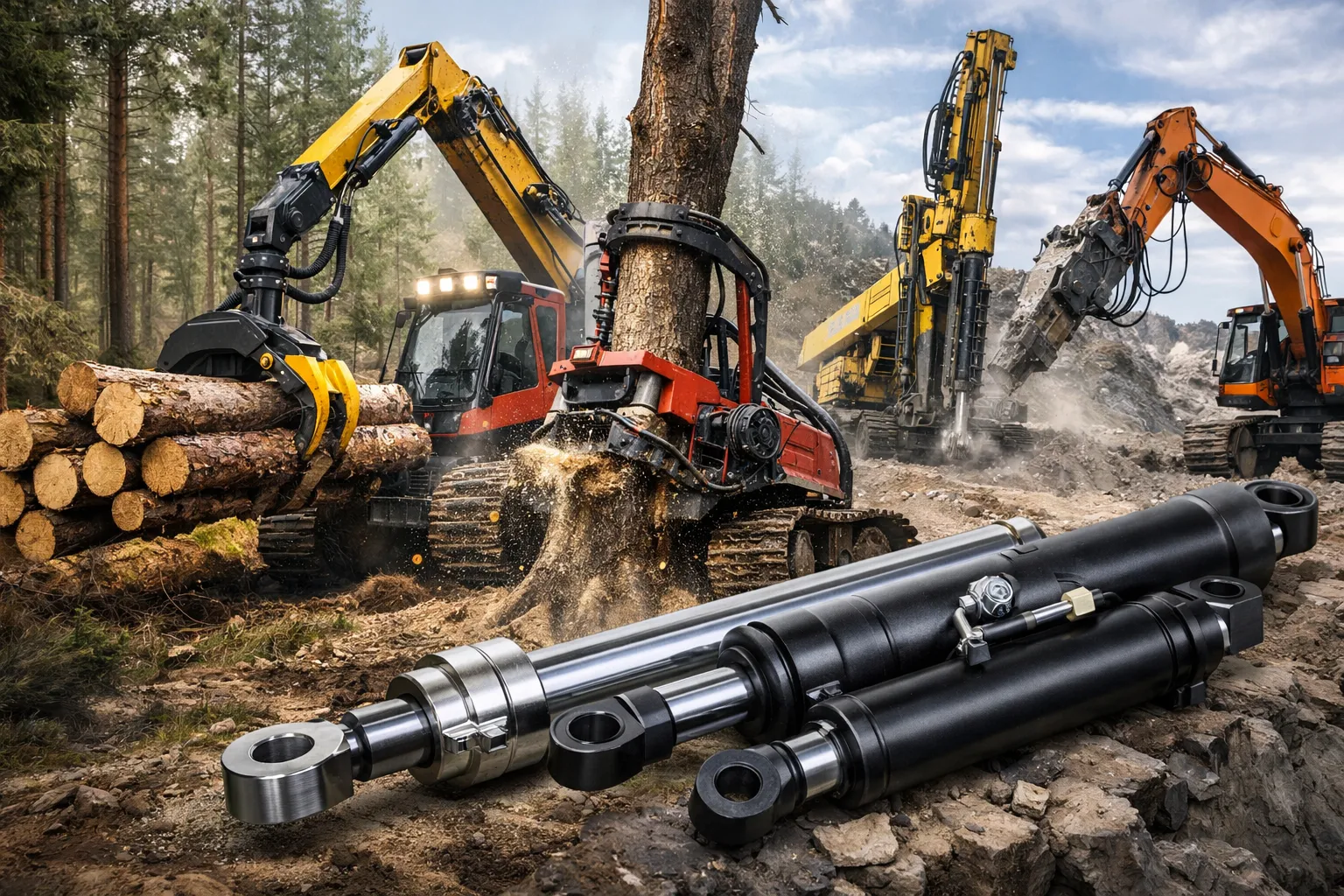
Product Overview & Industrial Value
In the heavy-duty sector of aggregate processing, quarrying, and mining operations, maintaining an uninterrupted flow of raw material is the absolute cornerstone of profitability. At the center of this material management system is the crushing station. As raw boulders, blasted granite, and limestone are transported from the pit, they are deposited into massive holding silos. Regulating the precise feed of these tons of jagged rock into the primary jaw crusher or cone crusher is the dedicated function of the silo gate. Operating this heavy steel barrier against immense static and dynamic friction requires a fluid power actuator of uncompromising strength and resilience. This is precisely where our specialized gate cylinder demonstrates its profound industrial value.
Unlike standard commercial actuators that operate in clean, climate-controlled environments, the gate hydraulic cylinder in a crushing plant must survive a relentless atmospheric assault. The operational environment is permanently saturated with abrasive particles—fine silica dust and sharp rock chips that instantly settle on any exposed mechanical surface. Furthermore, the sheer dead weight of the aggregate creates a severe heavy load scenario. When a massive boulder wedges against the gate during a closing cycle, the hydraulic pressure inside the actuator spikes violently. In ordinary cylinders, this intense pressure forces the soft elastomer seals into the microscopic clearance between the piston and the barrel, causing catastrophic seal extrusion. Once the seal is torn, the gate loses its holding power, fluid bypasses internally, and the entire crushing line must be halted for emergency repairs.
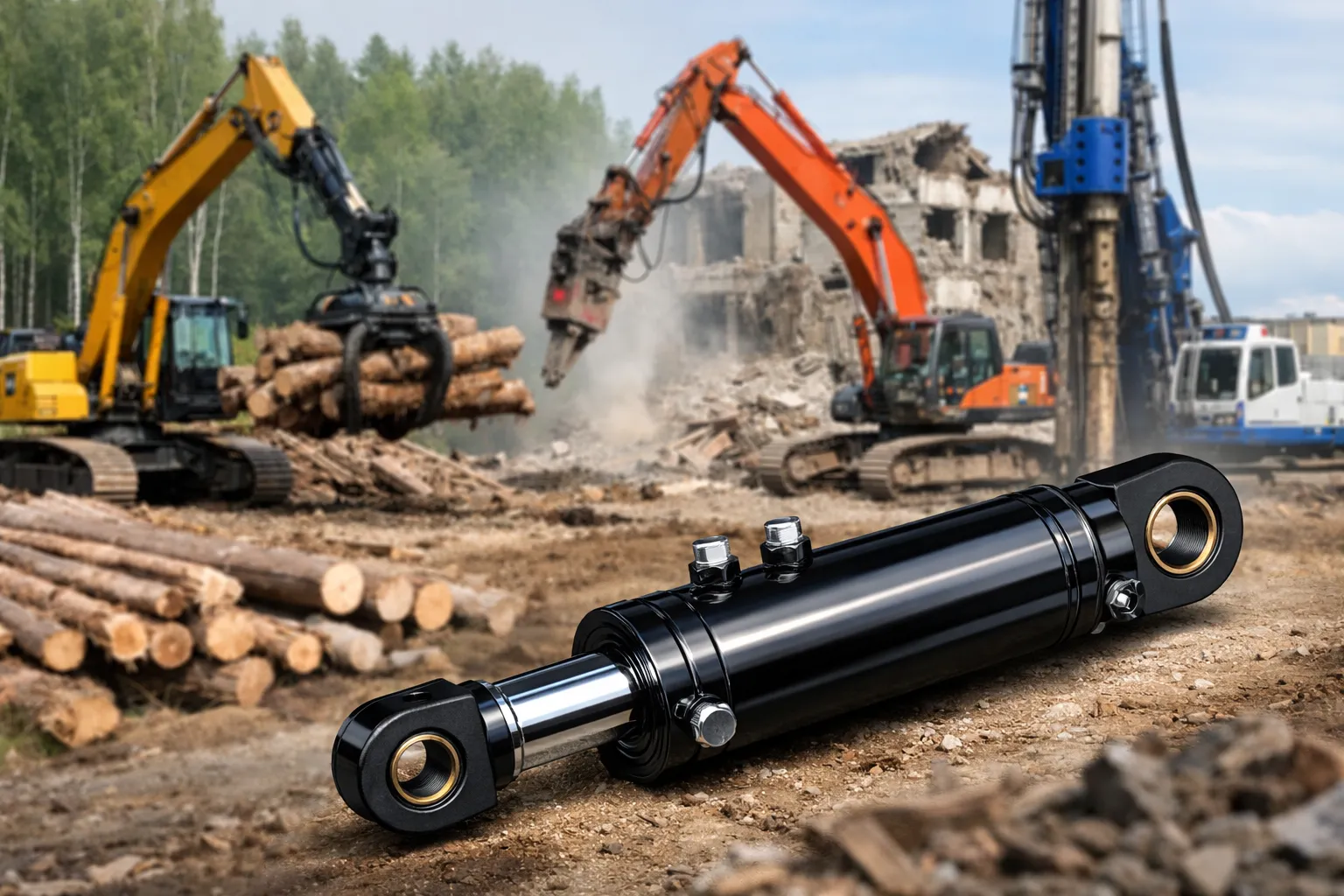
As a veteran hydraulic cylinder manufacturer with deep engineering roots serving the South Korean, Japanese, and broader East Asian industrial markets, we have dedicated our resources to solving these exact field failures. We understand that procurement managers often face a difficult balancing act between upfront costs and long-term machinery reliability. However, constantly chasing the lowest initial hydraulic cylinder price frequently leads to disastrous secondary costs when inferior components fail mid-shift. Every hour your crushing station is idle, your facility loses significant revenue. Our heavy-duty fluid power solutions are meticulously designed to be the ultimate safeguard against this downtime, transforming your most vulnerable machine subsystem into your most reliable asset.
Comprehensive Technical Parameters
Precision engineering requires absolute transparency in technical specifications. The following comprehensive matrix details the rigorous baseline parameters, material selections, and specific application configurations of our silo gate actuators. These metrics are strictly monitored during our entire production cycle to guarantee maximum force generation and dimensional stability under severe dynamic loads.
| Parameter Category | Standard Specification & Customization Range |
|---|---|
| Target Industry | Engineering Machinery / Mining & Aggregates |
| Equipment Category | Crushing Plant (Jaw, Cone, and Impact Crushers) |
| Subsystem & Action | Silo Gate Actuation / Material Feed Control |
| Cylinder Designation | Gate Cylinder / Gate Hydraulic Cylinder |
| Action Mode | Double Acting Hydraulic Cylinder |
| Structure Type | Heavy-Duty Piston Type Actuator |
| Manufacturing Structure | Fully Welded Construction (Robotic Submerged Arc) |
| Material System | Q345D High-Strength Low-Alloy Structural Steel |
| Surface Treatment | Deep Hard Chrome Plated (Micro-cracked, 30-50 microns) |
| Environment Level | Severe Abrasive Particles (Silica dust, rock chips) |
| Working Condition Features | Extreme Heavy Load, Shock Impacts, High-Frequency Vibration |
| Typical Failure Mode Prevented | Seal Extrusion, Internal Bypass, Severe Rod Scoring |
| Recommended Configuration | Integrated PTFE Support Ring / Dual-Lip Polyurethane Wiper Package |
Fluid Dynamics & Mechanical Working Principle
To truly appreciate the enduring durability of this equipment, one must thoroughly understand the internal fluid mechanics dictating its operation. The actuation of a crushing station silo requires an extraordinary amount of bidirectional mechanical force. Because pushing or shearing a jammed rock requires incredible pulling and pushing power, a single acting hydraulic cylinder—which relies merely on gravity or a weak internal spring to return to its original position—is completely useless in this specific application. Therefore, our design is engineered exclusively as a high-force double acting hydraulic cylinder, utilizing pressurized hydraulic oil to govern both the extension and retraction strokes with absolute precision.
When the aggregate plant operator commands the gate to open, the hydraulic power unit drives high-pressure fluid directly into the cap end of the cylinder barrel. This fluid acts forcefully upon the full surface area of the internal hydraulic cylinder piston. The resulting mechanical force is tremendous, easily pushing the heavy steel gate open and allowing the raw aggregate to cascade into the crusher. The precision CNC machining of the piston ensures that there is absolute sealing integrity during this high-pressure exertion, wasting no kinetic energy.
Conversely, closing the gate is often the significantly more demanding phase. As fluid is directed into the rod end, the cylinder pulls the heavy gate shut. Frequently, large boulders become lodged in the gate pathway. When the gate strikes this immovable obstruction, the cylinder experiences an instantaneous and massive pressure spike. In standard units, this pressure forces the soft elastomer seals into the microscopic clearance gap between the piston and the barrel—causing rapid seal extrusion. Our meticulously engineered hydraulic cylinder components counteract this vulnerability by utilizing a solid PTFE support ring that bridges this gap, entirely preventing the softer seals from extruding and ensuring the unit can crush or hold the obstruction without self-destructing.
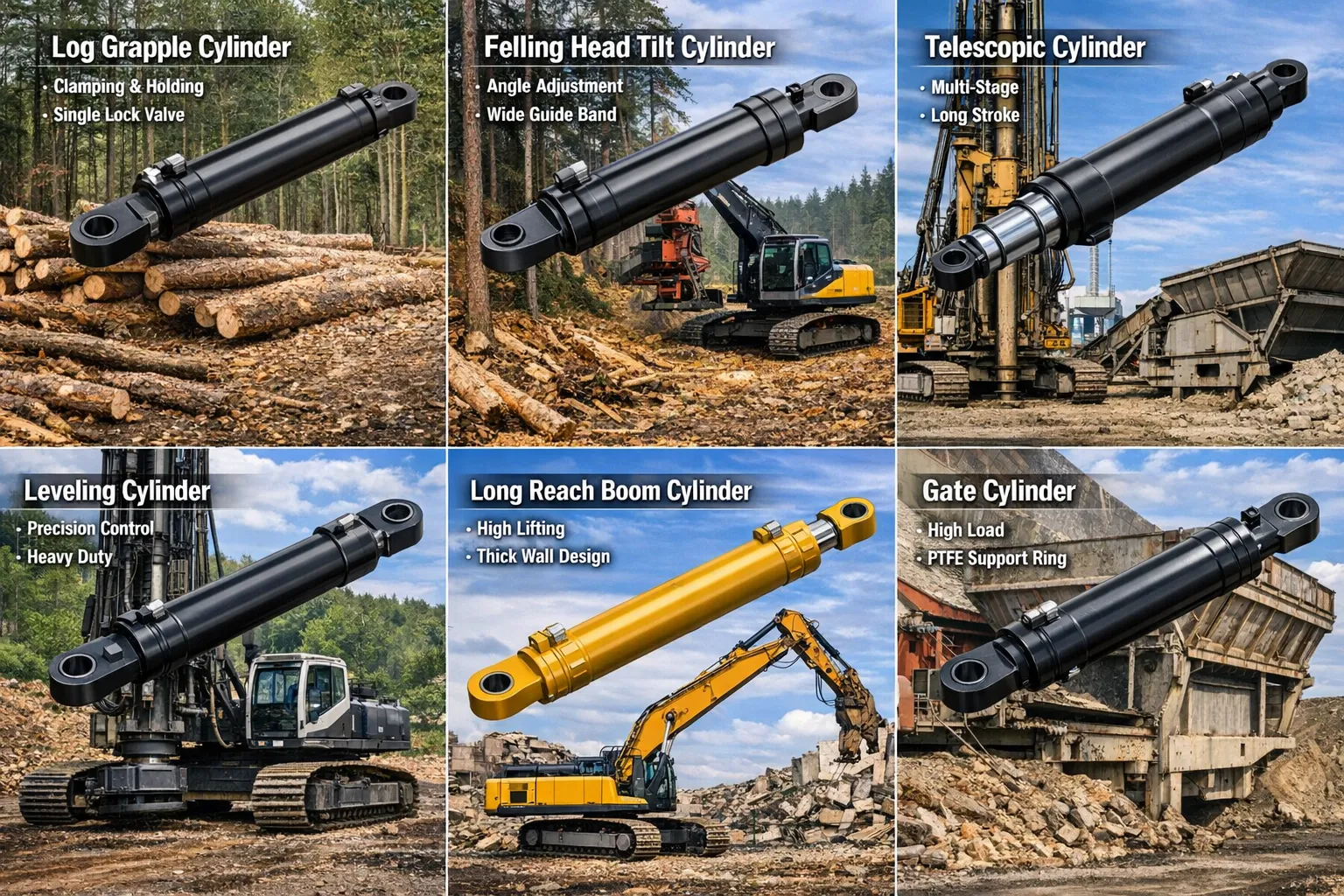
Seamless Replacement for Global Machinery Brands
Fleet maintenance managers face a constant battle against prolonged equipment downtime. Sourcing replacement parts directly from original equipment manufacturers (OEMs) often involves exorbitant costs, complex international shipping, and unacceptable delivery delays. To solve this critical industry bottleneck, our engineering department has developed a comprehensive database of global machinery specifications. We manufacture our hydraulic rams to exact dimensional tolerances, allowing them to serve as flawless, drop-in replacements without requiring any structural chassis or hose modifications to your valuable equipment.
Our specialized gate control cylinders are dimensionally compatible with a wide array of internationally recognized crushing stations. We regularly supply aftermarket replacement solutions for heavy machinery platforms originally manufactured by prominent brands such as Metso Outotec, Sandvik, Terex Finlay, Kleemann, McCloskey International, and Astec. (Please firmly note: The mention of these specific corporate brand names is strictly intended to facilitate accurate physical sizing, cross-referencing, and convenient component selection for maintenance teams. It does not imply any trademark infringement, endorsement, or direct commercial affiliation with the respective original equipment manufacturers.)
By choosing to proactively upgrade your worn-out OEM components with our heavy-duty solutions, you are not just executing a simple repair; you are actively enhancing the structural capability of your crushing plant. When your maintenance team is exhausted by the endless cycle of fixing hydraulic cylinders that were never truly built for such extreme abuse, our products provide a permanent, engineered answer.
Core Technical Advantages Engineered for Extremes
What truly separates a premium industrial actuator from a standard fabricated tube? It is a relentless focus on solving actual field problems through advanced metallurgy and sophisticated fluid dynamics. Here are the core technical advantages engineered deeply into every unit we produce:
Anti-Extrusion PTFE Support Ring Technology
As discussed, seal extrusion is the absolute Achilles’ heel of gate actuation. Standard polyurethane seals deform drastically under extreme pressure spikes, extruding into the metal clearances and shredding instantly. We integrate a highly rigid Polytetrafluoroethylene (PTFE) support ring adjacent to the primary seal. This specialized ring acts as an unyielding physical barrier, preventing seal extrusion entirely and maintaining perfect holding pressure even when the gate bites into solid, unyielding granite.
High-Rigidity Q345D Welded Construction
A crushing station shakes and vibrates continuously. Cylinders loosely assembled with external tie-rods or threaded end-caps will inevitably vibrate loose over time, leading to catastrophic structural failure and massive oil leaks. Our units utilize Q345D high-strength low-alloy structural steel, expertly assembled using deep-penetration robotic submerged arc welding. This creates a monolithic pressure vessel capable of withstanding relentless high-frequency vibrations without material fatigue or weld cracking.
Deep Hard Chrome Plating for Abrasive Environments
Airborne abrasive particles constantly settle on the extended steel rod during operation. When the rod retracts, these sharp particles act exactly like sandpaper against the wiper seal. To effectively combat this, our rods undergo a specialized deep hard chrome plating process, achieving a precise thickness of 30-50 microns. This highly durable, micro-cracked surface heavily resists scratching from rock chips and extends the life of the external seals exponentially.
Heavy-Duty Aggressive Wiper Systems
Preventing contamination ingress is absolutely paramount. We do not rely on standard, flimsy polyurethane wipers. Our units feature aggressive, dual-lip metallic or heavy-duty composite scraper rings. These components physically chisel away caked-on mud and abrasive dust during the rapid retraction stroke, ensuring that absolutely no external abrasives are drawn into the internal hydraulic fluid chamber to destroy the main pressure seals.
Optimized Thermal Stability and Flow Dynamics
Rapid, continuous opening and closing of gates generates significant internal fluid friction and heat. Excessive heat degrades oil viscosity and hardens internal rubber seals prematurely. Our engineering team utilizes advanced fluid dynamic modeling to enlarge and smooth the internal porting paths. This drastically reduces oil turbulence and pressure drops, keeping the actuator running exceptionally cool and maintaining thermal stability even during peak summer production cycles.
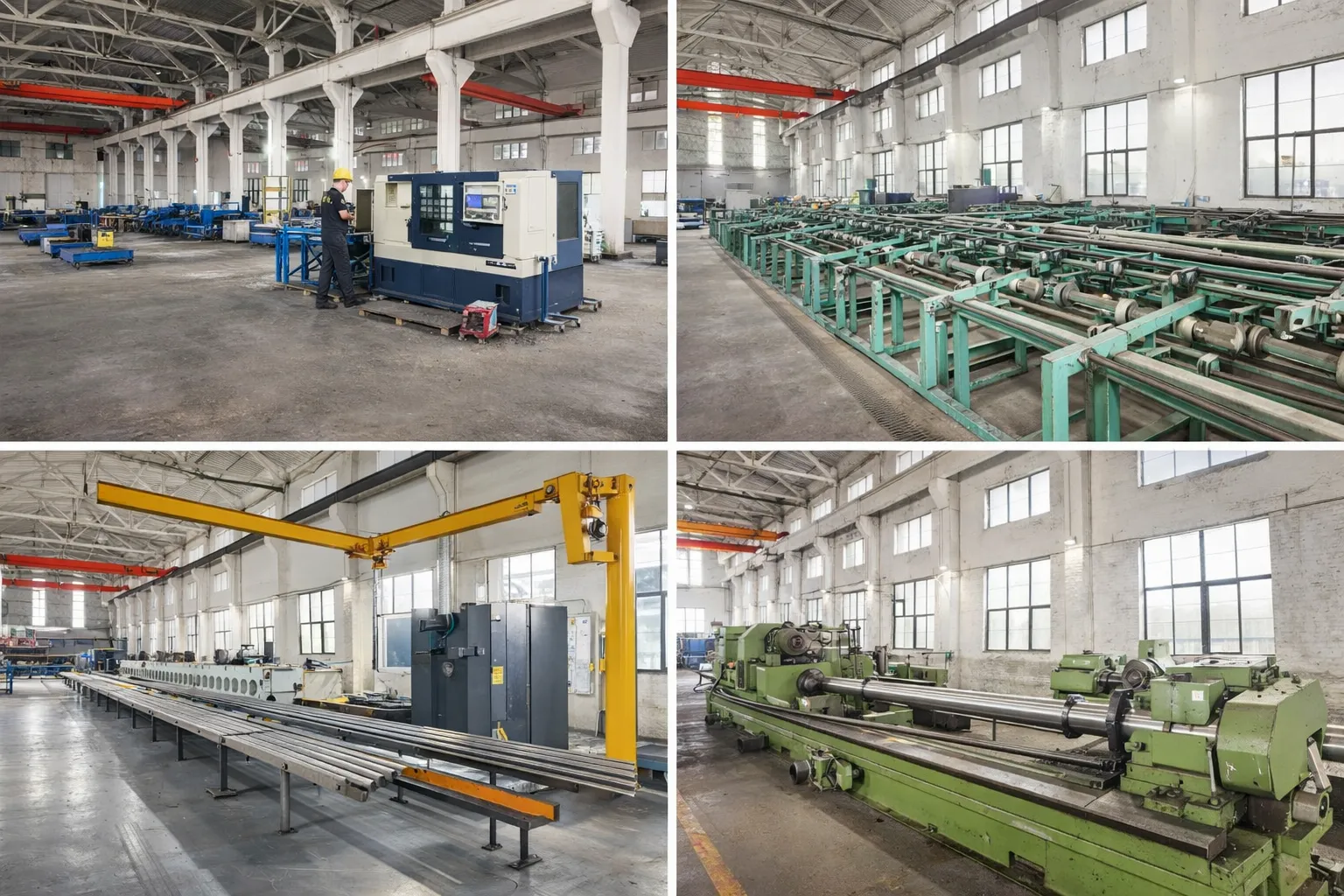
Manufacturing Process & 100% Quality Assurance
True reliability in high-pressure fluid power can only be achieved through absolute control over the production environment. As a fully autonomous hydraulic cylinder manufacturer, we oversee every single step of the complex manufacturing journey. The process initiates with rigorous metallurgical inspection of the incoming Q345D steel billets, utilizing advanced ultrasonic testing to detect any microscopic internal flaws or inclusions before machining even begins.
The structural integrity of our cylinders relies heavily on flawless welded construction. We utilize automated robotic submerged arc welding stations to ensure deep, consistent, and porosity-free weld penetration on all critical trunnion mounts, clevises, and end caps. Following the intensive welding phase, the internal barrels undergo precision CNC honing to achieve a mirror-like finish, which is paramount for maximizing the lifespan of the internal piston seals and PTFE support rings.
Quality control is our final, strictly non-negotiable step. We do not engage in statistical batch testing; 100% of our completed units are subjected to severe end-of-line factory hydrostatic testing. We pump hydraulic fluid into the assemblies at 150% of their maximum rated working pressure, actively simulating extreme shock loads. We verify absolute seal integrity, smooth mechanical transition, and zero internal fluid bypass. Finally, each unit is laser-engraved with a unique serial number, providing our corporate clients with complete lifecycle traceability and ensuring that any future need for replacement hydraulic parts is swift and remarkably precise.
Diverse Industry Applications
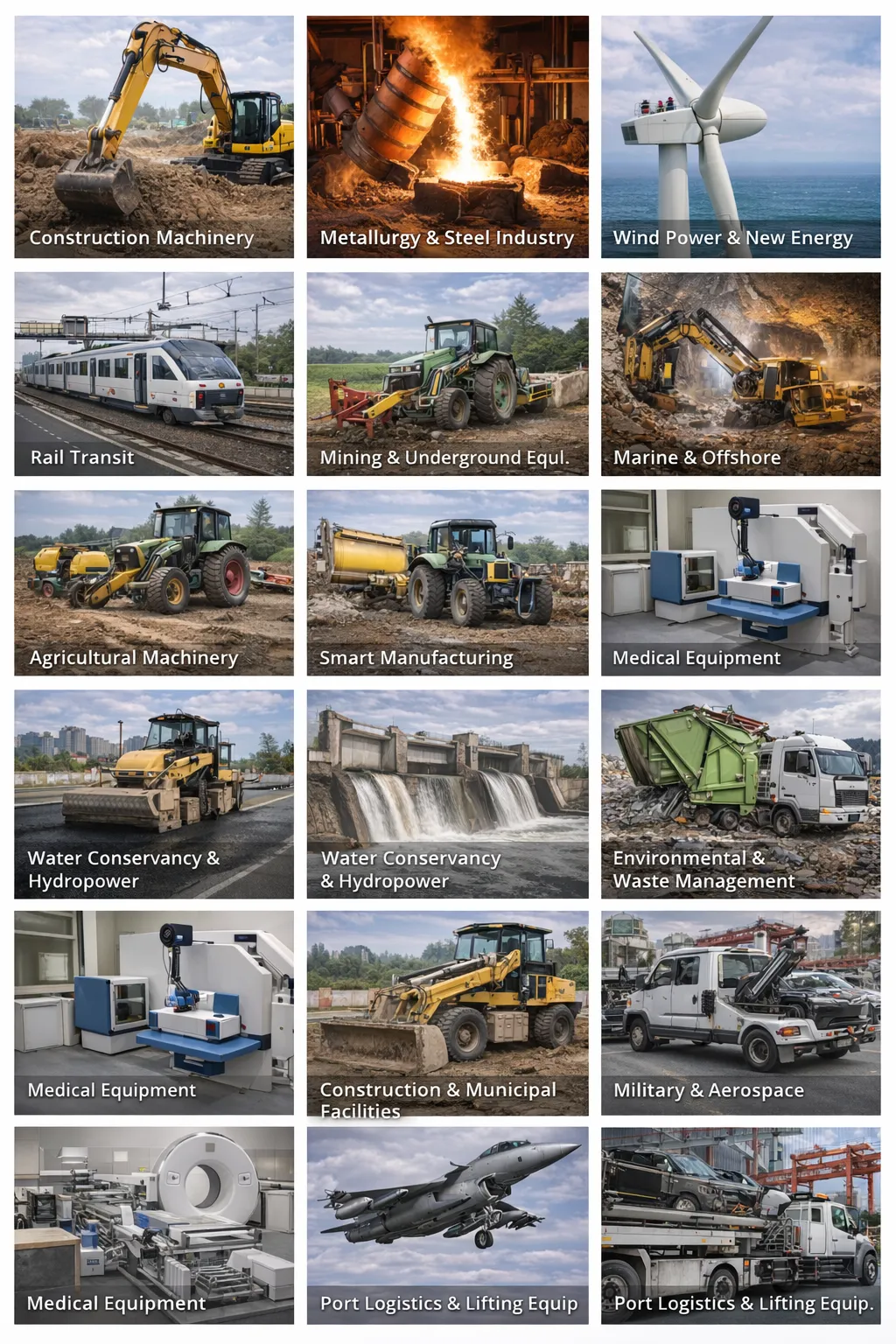
While our deep expertise lies heavily in outfitting crushing stations with unparalleled gate actuation capabilities, the inherent robustness of our architecture makes it highly adaptable to other sectors. We supply critical fluid power to multiple severe-duty environments. Explore our extensive application insights within our construction machinery industry portal.
- Engineering Construction Machinery: Aggregate hoppers, asphalt batching plant gates, and concrete mixing discharge doors facing high continuous abrasion.
- Metallurgy & Heavy Manufacturing: Operating massive electric arc furnace blast doors and scrap metal charging chutes where radiant heat and heavy impacts are a daily reality.
- Plastics & Rubber Machinery: Large-tonnage injection molding machine clamping systems requiring rapid, high-pressure, repeatable cycling.
- Material Handling & Logistics Automation: Bulk material silo discharge gates, ship loading telescoping chutes, and heavy-duty conveyor diverter arms dealing with raw ores.
- New Energy & Environmental Equipment: Biomass feed systems, solid waste incinerator doors, and municipal recycling center compactors facing highly unpredictable loads.
- Specialized Custom Scenarios: Flood control dam sluice gates, heavy lift cylinder mechanisms for infrastructure, and mining ventilation shaft controls requiring absolute reliability.
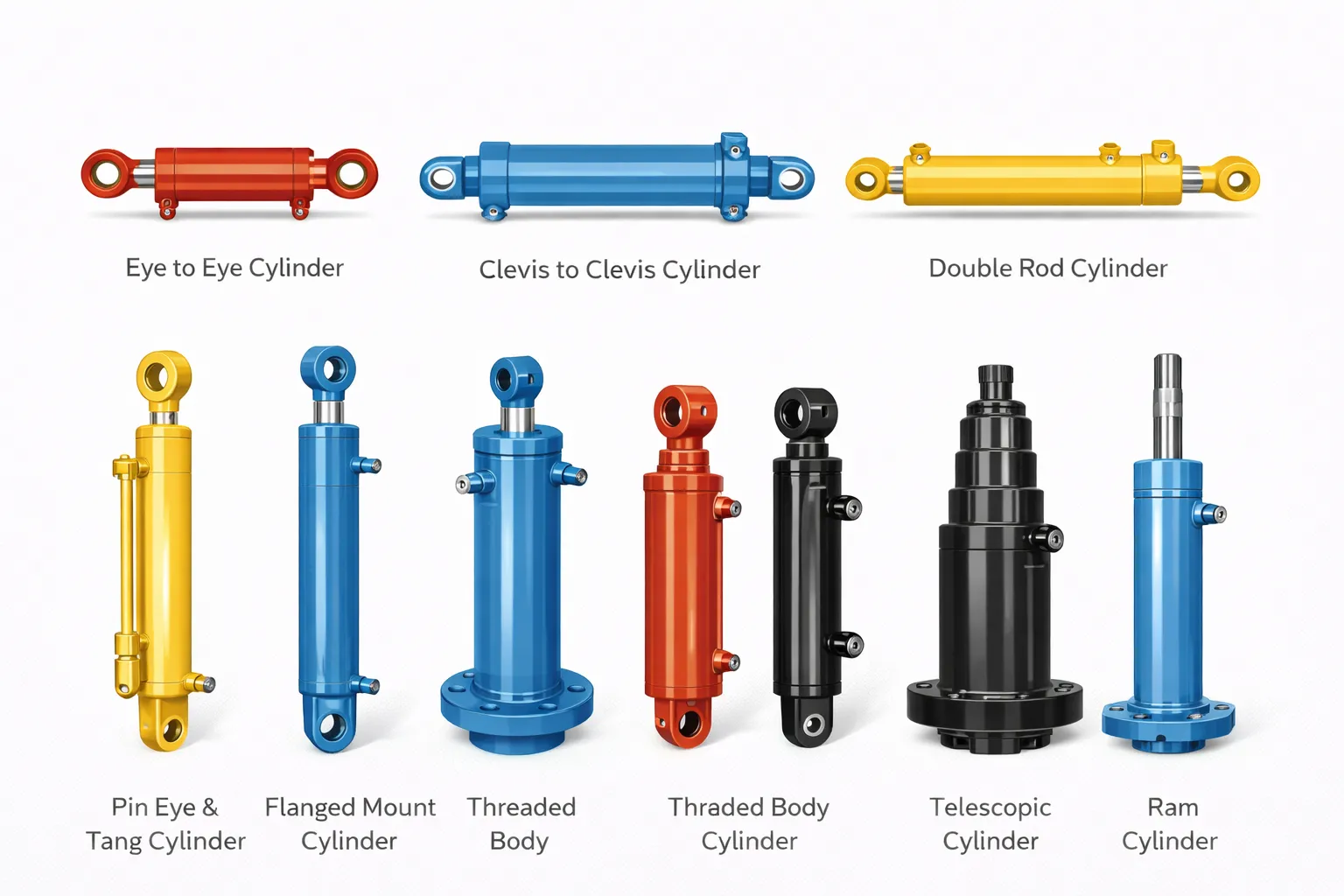
Comparative Analysis: Standard vs. Our High-Performance Gate Cylinders
Understanding the deep engineering distinctions is crucial for long-term fleet procurement strategies. The table below illustrates perfectly why investing in premium hydraulic solutions exponentially reduces your total cost of ownership compared to standard off-the-shelf alternatives.
| Feature Metric | Standard Ordinary Cylinder | Our High-Performance Gate Cylinder |
|---|---|---|
| Seal Extrusion Resistance | Standard NBR seals; highly prone to catastrophic extrusion under shock load. | Advanced seals integrated with rigid PTFE Support Rings to absorb pressure spikes. |
| Contamination Defense | Basic polyurethane dust wipers. Fails quickly in abrasive rock dust. | Heavy-duty double-lip aggressive scraper rings block all abrasives. |
| Structural Material | Standard tie-rod design; vibrates loose causing massive fluid blowouts. | Fully welded Q345D high-strength low-alloy steel. Unyielding rigidity. |
| Rod Surface Treatment | Thin flash chrome (10-15μm). Scratches easily, leading to rod scoring. | Deep hard chrome plating (30-50μm). Maximum resistance to scoring and corrosion. |
| Maintenance Frequency | Requires constant monitoring and frequent in-field resealing. | Extended lifecycle, drastically minimizing the need for emergency repairs. |
Proven Global Success: Real B2B Case Studies
Our reputation is solidified purely by measurable field performance. We have successfully solved complex fluid power challenges for top-tier aggregate producers across East Asia and the surrounding regions. Here are five documented examples where our engineering intervened to save projects from debilitating equipment failure.
Major Aggregate Quarry in Gyeonggi-do, South Korea
Application Context: Primary Jaw Crusher Feed Silo Gate.
The Challenge: Processing extremely hard granite boulders created immense static pressure on the feed gate. Whenever the gate attempted to close on a jammed boulder, the hydraulic pressure spiked dramatically, leading to repeated seal extrusion on their OEM cylinders every few weeks. This caused constant hydraulic leaks and halted the entire crushing line.
The Connection: The plant’s lead maintenance director contacted us in March 2024 after aggressively searching for a hydraulic cylinder manufacturer capable of designing custom extrusion-resistant fluid power systems.
The Result: We engineered a drop-in gate cylinder replacement outfitted with our proprietary PTFE support rings. The plant has now operated for over 18 months without a single seal blowout or loss of holding pressure.
“The constant need for hydraulic cylinder repair was destroying our monthly production targets. Since installing these upgraded units, the seals hold perfectly even when the gate crushes through solid granite. It is exceptional heavy-duty engineering.” — Mr. Park Joon-ho, Plant Director.
Concrete Recycling Plant in Osaka, Japan
Application Context: Mobile Impact Crusher Material Discharge Gate.
The Challenge: Abrasive concrete dust was bypassing standard rod wipers, acting as a grinding paste that destroyed the internal seals within weeks, leading to severe rod scoring.
The Connection: Referred to our engineering team in August 2024 by a mutual logistics partner specializing in heavy machinery parts.
The Result: We supplied a double acting hydraulic cylinder equipped with a specialized double-lip heavy-duty scraper and 50-micron deep chrome plating. Rod scoring has been completely eliminated.
“The airborne concrete dust here is relentless. Your specialized wipers and hard chrome rod took the abuse effortlessly. We’ve tripled our maintenance intervals.” — Hiroshi Tanaka, Operations Manager.
Mobile Crushing Contractor in Taichung, Taiwan
Application Context: Tracked Cone Crusher Hopper Gate Control.
The Challenge: The high-frequency vibration from the tracked machinery was causing standard tie-rod cylinders to rattle loose, creating dangerous fluid leaks near electrical equipment.
The Connection: Reached out to us in January 2025 seeking a robust alternative after evaluating our welded manufacturing capabilities online.
The Result: We replaced the fractured parts with fully welded Q345D high-strength units. The monolithic construction absorbed the ambient vibration easily, securing the hydraulic integrity of the feed system.
“Moving to a fully welded body was the smartest decision we made. The vibrations used to shake the tie-rods apart. These new units are built like tanks.” — Lin Wei-Chun, Chief Engineer.
Mining Operation in Manila, Philippines
Application Context: Underground Ore Transfer Silo.
The Challenge: High ambient heat combined with rapid continuous operation was degrading the internal rubber seals prematurely, causing the hydraulic system to lose holding pressure.
The Connection: The procurement department submitted an RFQ via our website in May 2024, seeking urgent reliable hydraulic rams with a good hydraulic cylinder price.
The Result: We integrated high-temperature resistant seal kits and optimized the fluid porting to reduce internal heat generation. The cylinders now hold pressure perfectly in the tropical heat.
“The heat used to destroy our seals rapidly. Your thermally optimized design has kept our underground rigs running smoothly with zero pressure loss.” — Carlos M., Maintenance Lead.
Port Bulk Material Terminal in Busan, South Korea
Application Context: Ship-loading Conveyor Hopper Gate.
The Challenge: A lethal combination of highly abrasive limestone dust and corrosive sea mist was causing the factory chrome rods to rust and flake, rapidly destroying the wiper seals.
The Connection: A direct inquiry submitted in November 2024 through our B2B sales portal regarding anti-corrosion treatments for hydraulic cylinder components.
The Result: We provided custom actuators with marine-grade paint and ultra-thick hard chrome rods. After a year in operation, there is zero evidence of pitting or rust.
“The corrosive environment here is brutal on steel. The surface treatment on these rods is exceptional. It saved us from a never-ending cycle of repairs.” — Director Choi, Terminal Operations.
B2B Engineering FAQ
We believe in absolute technical transparency. Below are the most frequent technical and commercial inquiries we receive from procurement directors and fleet engineers regarding our fluid power systems.
How exactly does the PTFE ring prevent seal extrusion?
What is the typical lead time for a custom gate hydraulic cylinder?
How do you ensure compatibility with our existing plant machinery?
Is it better to replace the unit or keep fixing hydraulic cylinders on site?
How do I initiate an order and check the hydraulic cylinder price?
Do you supply aftermarket hydraulic parts for ongoing maintenance?
What routine maintenance is required for these specialized cylinders?
Secure Your Equipment’s Reliability Today
Do not allow fragile standard components to dictate your crushing station’s productivity. Partner with a premier fluid power engineering firm to secure heavy-duty, long-lasting hydraulic solutions specifically tailored to master extreme loads and abrasive environments.
Editor: Cxm