Outrigger Balancing Cylinder For Concrete Machinery
Engineered for absolute horizontal stabilization. Integrated load-holding technology designed to prevent oil leakage and eliminate chassis tilt in the most demanding outdoor environments.
Product Overview & Industrial Value
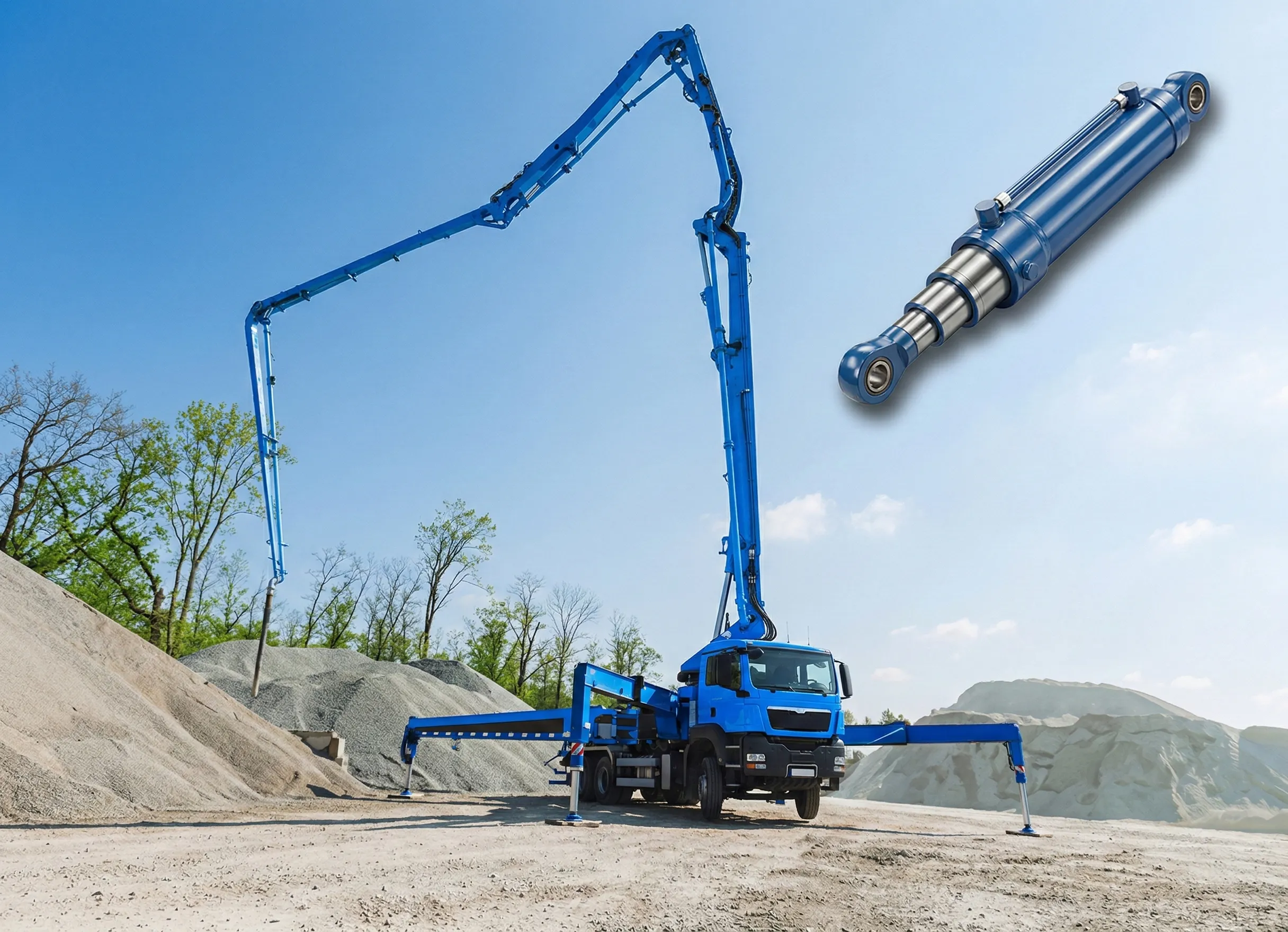
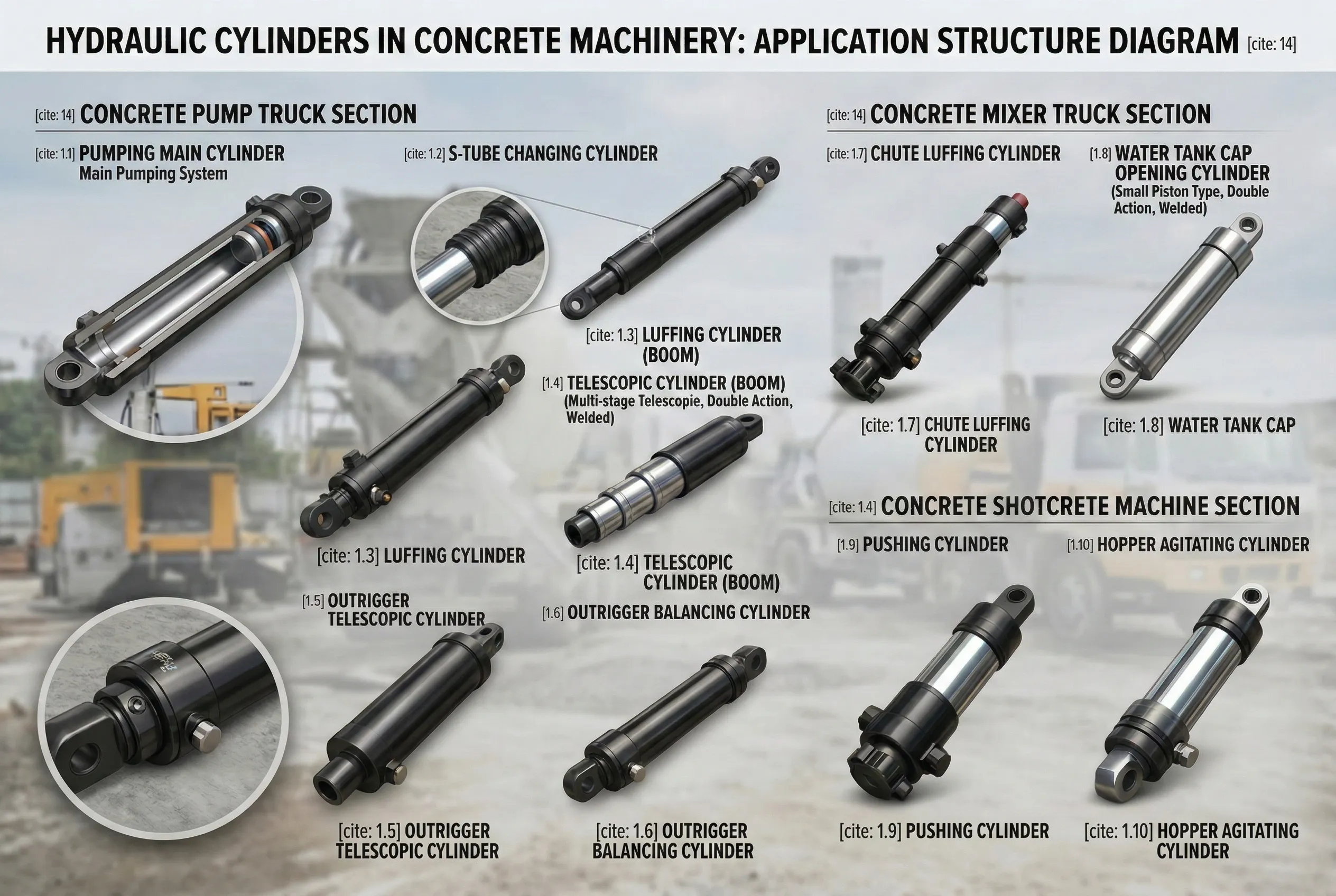
In the high-stakes theater of heavy construction, gravitational physics offers no second chances. When a concrete pump truck deploys a massive multi-section placing boom spanning dozens of meters, the center of gravity undergoes extreme, dynamic shifts. The singular component standing between safe operation and catastrophic equipment rollover is the outrigger system, and more specifically, the precision of the outrigger balancing cylinder. As a premier hydraulic cylinder manufacturer, we recognize that this is not merely a moving mechanical part; it is the fundamental safety anchor of your entire mobile machinery investment.
The core function of an outrigger balancing hydraulic cylinder is to articulate the outrigger legs, adapt to fiercely uneven terrain, and lock the vehicle into a perfectly horizontal posture before any pumping commences. Ordinary aftermarket cylinders often suffer from micro-leaks or thermal expansion issues, leading to microscopic settling or “creep.” Over a five-hour continuous pour, a mere millimeter of creep at the cylinder level translates to dangerous sway at the boom tip. Our unique market positioning focuses exclusively on zero-creep, extreme-endurance fluid power solutions. By integrating ultra-premium sealing architectures with built-in check locks, we deliver hydraulic parts that guarantee absolute rigidity. When fleet managers evaluate the total cost of ownership, investing in our specialized leveling solutions significantly outperforms sourcing based solely on a lower initial hydraulic cylinder price.
Comprehensive Technical Parameters
To empower procurement engineers and fleet maintenance directors with accurate data, we provide a detailed breakdown of our concrete machinery leveling solutions. While these parameters represent our highly optimized standard configurations, we routinely accommodate bespoke dimensional requests. Explore our broader catalog in the hydraulic cylinder section for diverse equipment needs.
| Industry | Equipment Category | Sub-system / Action | Cylinder Nomenclature | Action Mode | Structure Type |
|---|---|---|---|---|---|
| Construction Machinery | Concrete Pump Truck | Outrigger System | Outrigger balancing cylinder | Double acting hydraulic cylinder | Piston type |
| Manufacturing Structure | Material System | Surface Treatment | Environmental Rating | Working Condition Feature | Typical Failure & Recommended Configuration |
| Welded type (Heavy-duty) | Q345D High-Strength Low-Alloy | Chrome plated (Micro-cracked) | Outdoor environment / All-weather | Maintaining horizontal level under dynamic load | Failure: Oil leakage / Sinking Solution: Built-in check lock (PO Valve) |
Fluid Dynamics & Operational Working Principle
Understanding the internal physics of an outrigger balancing hydraulic cylinder reveals why precision is paramount. Unlike a standard lift cylinder that performs continuous, cyclical strokes, a balancing cylinder acts primarily as a dynamic positioning tool that transforms into a rigid structural column. Operating as a robust double acting hydraulic cylinder, it utilizes pressurized fluid entering the cap end to extend the rod downward, raising the vehicle chassis. Conversely, fluid routed to the rod end retracts the assembly.
The magic, however, happens the moment the operator removes their hand from the control joystick. To ensure the critical requirement of maintaining horizontal level, the cylinder is equipped with a sophisticated built-in check lock (also known as a pilot-operated check valve). Once the desired extension is reached, this integrated manifold slams shut, trapping the hydraulic fluid inside the barrel. Because hydraulic oil is virtually incompressible, the hydraulic cylinder piston becomes immovably locked in place.
This internal locking mechanism is crucial because it isolates the load from the rest of the truck’s hydraulic network. Even if a main hydraulic hose were to rupture or the main pump were to fail during a pour, the built-in check lock prevents the trapped fluid from escaping. This ensures no catastrophic pressure drop occurs, preventing the outrigger from collapsing. It is this exact principle that combats the most notorious failure mode in the industry: internal oil leakage that leads to slow, imperceptible outrigger sinking.
Seamless OEM Integration & Brand Replacement Guide
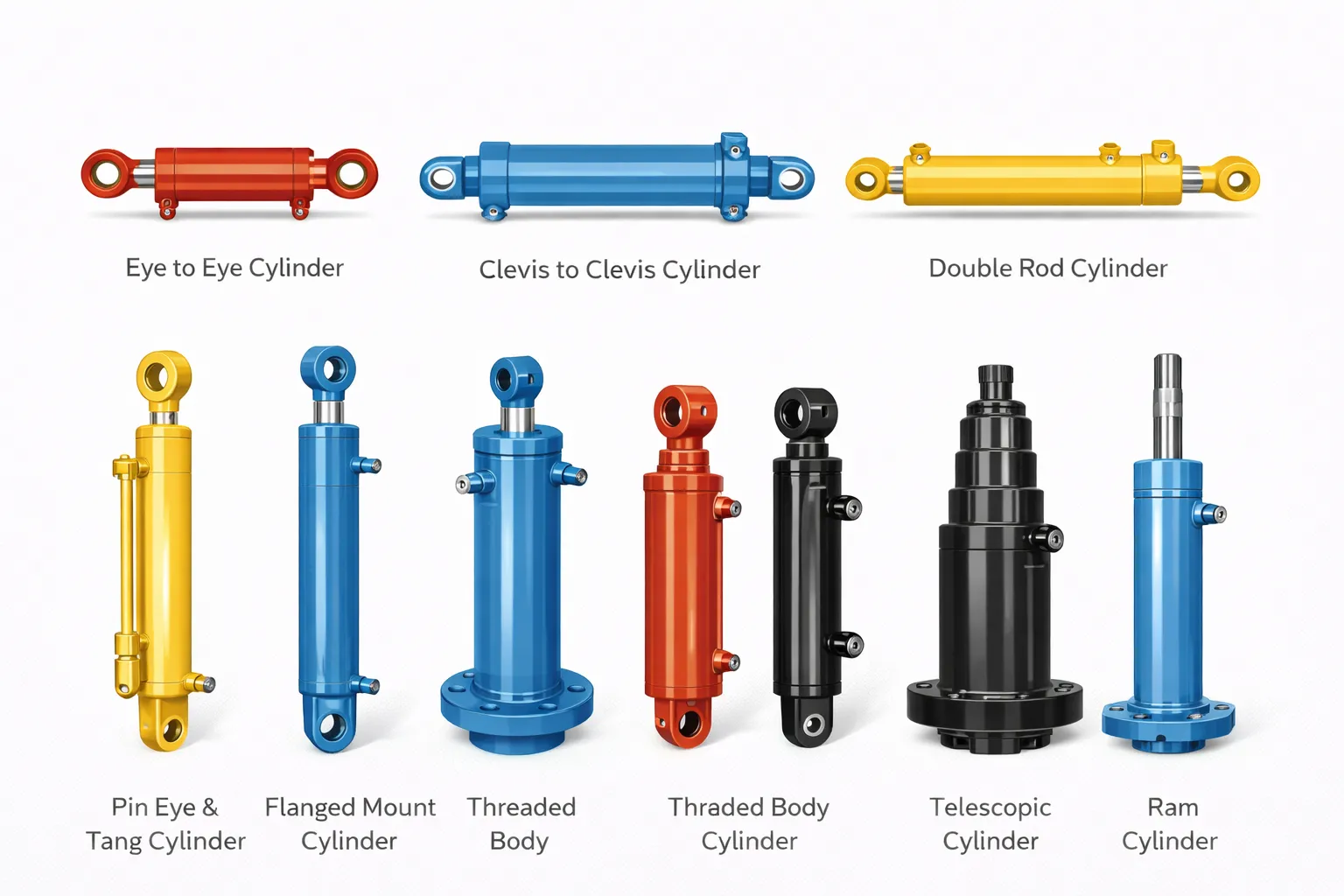
Fleet harmonization is a major challenge in regions like South Korea, where contractors often operate mixed fleets of domestic and imported equipment. Sourcing reliable hydraulic rams that perfectly match factory specifications without enduring exorbitant dealership markups is a constant battle. Our engineering team has extensively mapped the dimensional footprints, pin-to-pin lengths, and port threading to serve as direct drop-in replacements for industry-leading brands. (Note: The brand names mentioned below are strictly for dimensional compatibility reference and technical sizing to assist maintenance professionals; we claim no affiliation with, nor endorsement by, these trademark holders.)
- Everdigm & KCP: Direct dimensional crossover for X-style and swing-out outrigger leveling systems highly prevalent in the South Korean construction sector.
- Junjin: Engineered to match the specific heavy-duty load requirements and exact fluid displacement needs of high-reach concrete pump models.
- Putzmeister & Schwing: Fully compatible trunnion and clevis mounting for European-designed chassis configurations, meeting or exceeding their original safety factor ratios.
- Sany & Zoomlion: Perfectly suited to replace factory-installed cylinders on high-volume, aggressively cycled Asian heavy machinery, specifically upgrading their sealing longevity.
5 Unrivaled Core Technical Advantages
What elevates our outrigger balancing cylinder from a generic replacement part to an industrial-grade necessity? It is our absolute refusal to cut corners in metallurgy, fluid dynamics, and tribology. Drawing from decades of specialized engineering, here are the five core technological pillars that define our superiority:
- Zero-Creep Built-in Check Lock Technology: The primary failure mode for balancing systems is internal oil leakage, which causes the outrigger to sink under load. We machine our pilot-operated check valves directly into the heavy-duty cylinder head (built-in single-way lock). By eliminating external piping and using ultra-precision hardened steel poppets, we achieve zero-leakage load holding, guaranteeing the chassis maintains a perfect horizontal level even after 24 hours of static loading.
- High-Rigidity Q345D Welded Type Construction: Standard cylinders often use basic #45 steel. We construct our barrel and mounting brackets entirely from Q345D. This is a specialized low-alloy, high-strength structural steel renowned for its excellent impact resistance and low-temperature toughness. When the pump truck vibrates violently during operation, the Q345D welded type structure absorbs and dissipates the shock without suffering from micro-fractures at the weld seams.
- Ultra-Low Friction Polyurethane Sealing Matrix: Harsh outdoor environments introduce severe temperature swings that degrade standard NBR rubber. We utilize a multi-stage, ultra-low friction polyurethane and PTFE sealing architecture around the hydraulic cylinder piston and rod gland. This matrix dynamically adjusts to pressure spikes, drastically reducing internal stick-slip friction while providing an impenetrable barrier against internal fluid bypass.
- Advanced Micro-Cracked Chrome Plated Defense: The piston rod is relentlessly exposed to splashing concrete, abrasive mud, and corrosive elements. We employ a specialized micro-cracked hard chrome plated surface treatment. This creates a deeply hardened, microscopic fissure network that retains a thin film of lubricating oil while simultaneously presenting an armor-like shield against rock strikes, preventing the rod scoring that leads to external oil weeping.
- Thermal Stability & Fatigue Life Optimization: Continuous pumping operations generate significant hydraulic heat, which thins the oil and stresses the system. Our internal bore surfaces undergo deep-hole CNC skiving and roller burnishing to achieve a mirror-like finish (Ra < 0.2µm). This hyper-smooth surface dramatically reduces seal friction heat, stabilizing operating temperatures and exponentially extending the fatigue life of the entire assembly, thereby minimizing the future need for fixing hydraulic cylinders.
Masterful Manufacturing & Unyielding Quality Control
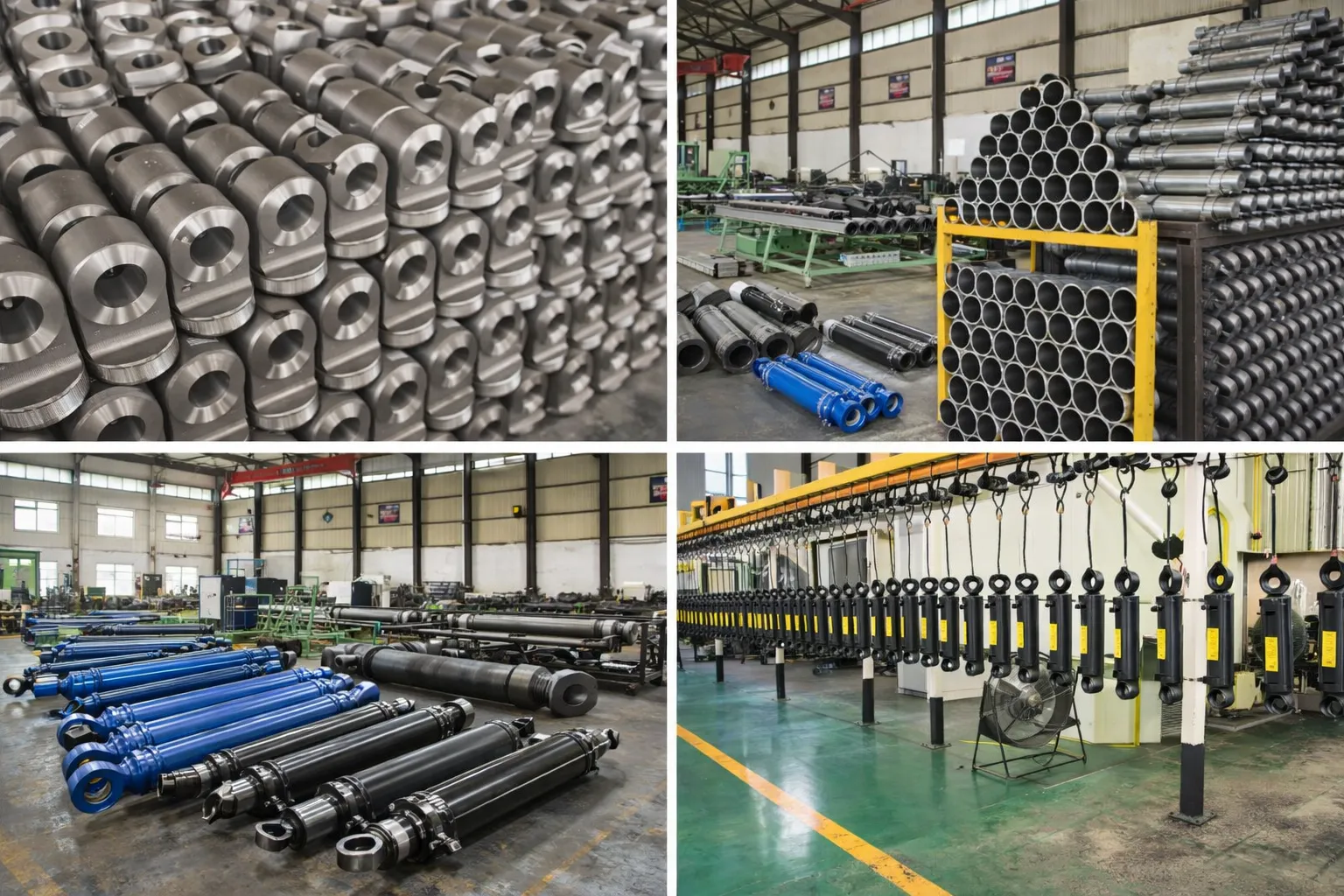
The integrity of an outrigger balancing hydraulic cylinder cannot be verified by its external paint job; it is proven through rigorous, traceable manufacturing practices. We do not rely on outsourced sub-assemblies. Our manufacturing facility operates as a closed-loop ecosystem of precision engineering, governed by strict ISO 9001:2015 quality management systems.
Every batch of Q345D raw steel billet that enters our facility is subjected to ultrasonic non-destructive testing (NDT). This ensures there are no microscopic internal voids or slag inclusions that could propagate into catastrophic cracks under extreme load. Our robotic welding cells execute the structural joining of the end caps and trunnions, delivering deep, uniform weld penetration that human operators cannot consistently replicate.
Most critically, 100% of our cylinders undergo grueling test bench procedures before dispatch. We artificially induce hydraulic pressures up to 150% of the maximum rated working load, holding the pressure to verify the absolute zero-leakage performance of the built-in check lock. Each approved unit is permanently laser-etched with a unique serial number, linking it to an immutable digital database containing material certificates, operator IDs, and test results, ensuring complete traceability for global procurement managers.
Expansive Heavy Industry Applications
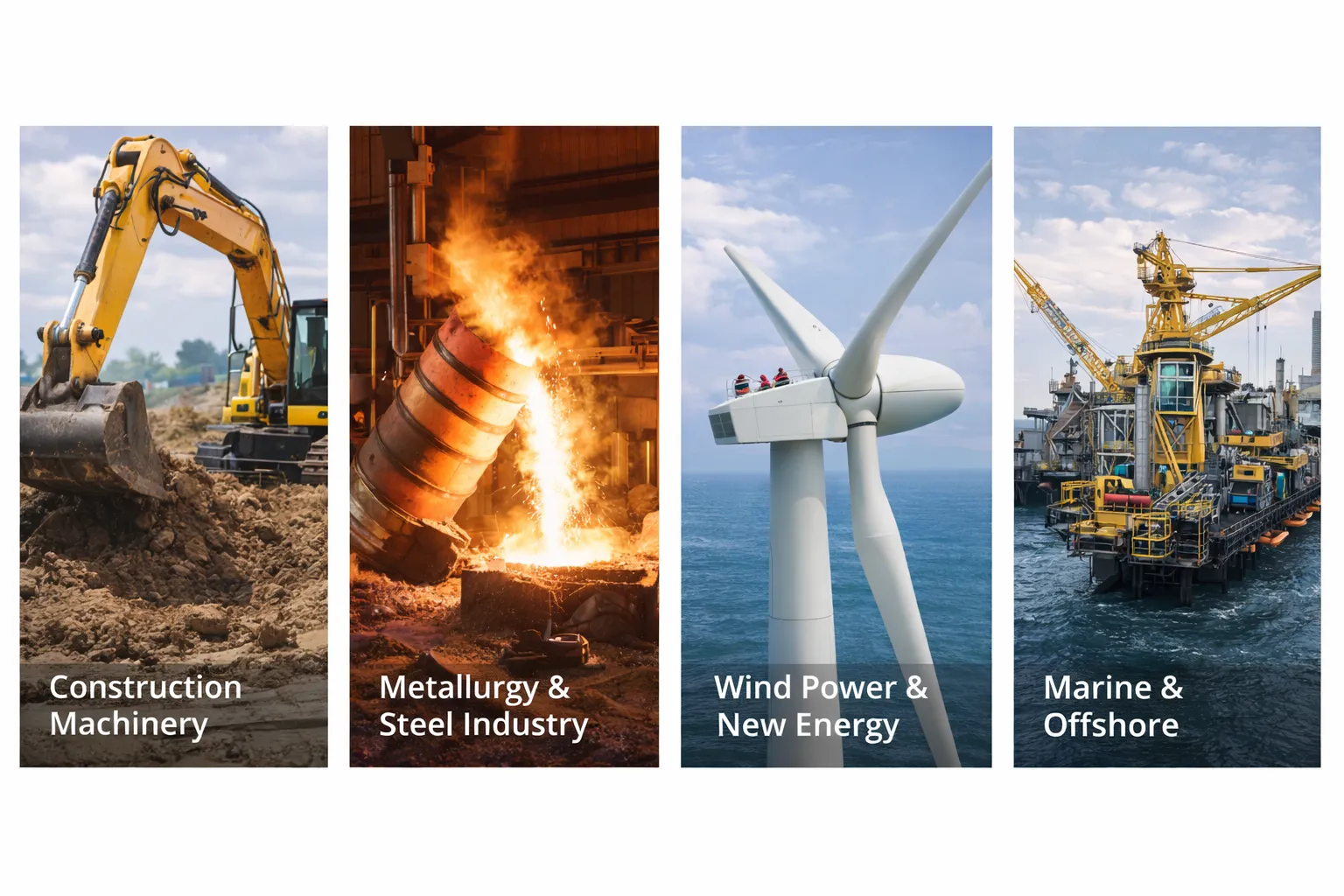
While engineered to conquer the brutal realities of concrete pumping, the robust leveling DNA of our cylinders makes them highly sought after across diverse industrial sectors requiring steadfast stabilization. Discover more about our engineering reach in our construction machinery industry insights hub.
- Mobile Cranes & Aerial Lifts: Providing wide-stance, anti-tip stabilization for high-tonnage mobile cranes and fire rescue ladder trucks where absolute horizontal leveling is a matter of life and death.
- Metallurgy & Heavy Manufacturing: Leveling massive forging presses and ladles in steel mills, equipped with specialized high-temperature seals to resist ambient furnace heat.
- Logistics Automation & SPMTs: Actuating the self-leveling suspension systems on Self-Propelled Modular Transporters used to move heavy bridge sections or ship hulls.
- Renewable Energy & Eco-Friendly Equipment: Stabilizing massive mobile shredders and forestry equipment working on deeply rutted, muddy terrain.
- Specialty Drilling Rigs: Anchoring rotary foundation drilling machinery against the immense rotational torque generated during rock boring.
Comparative Analysis: Standard vs. High-Performance Leveling
To clearly illustrate the long-term ROI and risk mitigation of choosing premium components, consider this technical comparison between standard aftermarket options and our heavy-duty solutions.
| Feature / Metric | Standard Market Cylinder | Our High-Performance Balancing Cylinder |
|---|---|---|
| Base Material | Standard #45 Carbon Steel | High-Yield Q345D Alloy Steel |
| Locking Mechanism | External piped PO valves (Vulnerable to snags/leaks) | Integrated built-in check lock manifold |
| Sealing Technology | Single-stage standard NBR rubber | Multi-stage Polyurethane/PTFE Matrix |
| Rod Defense | Basic commercial chrome plating | Micro-cracked hard chrome plating |
| Primary Benefit | Lower initial procurement cost | Elimination of downtime and leveling drift |
Real-World Field Triumphs in Asia
Theoretical engineering must endure the crucible of reality. Our robust market presence across South Korea and neighboring developing nations serves as a testament to our quality. Here are five instances where fleet operators eliminated severe operational hazards by upgrading their leveling systems.
1. Eradicating Outrigger Settling in Freezing Conditions
Location: Seoul, South Korea
Client: Daehan Heavy Equipment Leasing
Application: Fleet of 43m Everdigm Concrete Pump Trucks
Contact Route: Searched Google for “prevent concrete pump outrigger sinking” and found our technical guide on built-in check valves.
Outcome: During harsh winter pours, their standard cylinders suffered seal shrinkage, causing slow oil leakage and dangerous chassis tilt. We retrofitted the fleet with our low-temperature polyurethane sealed outrigger balancing cylinder units. Zero settling incidents reported over two full winter seasons.
“The safety sensors used to scream at us constantly because the truck would slowly lose level. Since installing these cylinders with the integrated locks, the trucks stay planted like rocks.” — Mr. Park Min-jun, Fleet Maintenance Supervisor
2. Overcoming Extreme Ground Vibration
Location: Busan, South Korea
Client: Busan Coastal Construction Group
Application: Foundation Piling Support Equipment
Contact Route: Met our chief engineers at the KINTEX construction machinery exhibition.
Outcome: The intense vibration from adjacent pile driving was causing micro-cracks in the welds of their standard #45 steel cylinders. We supplied our heavy-duty Q345D welded type cylinders. The superior tensile strength absorbed the shockwaves flawlessly, eliminating structural fatigue.
“We were welding patches on our old cylinders weekly. Your Q345D steel construction is significantly more resilient to job site abuse.” — Lee Seo-yoon, Project Engineer
3. Defeating Abrasive Coastal Corrosion
Location: Kaohsiung, Taiwan
Client: Formosa Marine Contractors
Application: Seawall Concrete Pumping
Contact Route: Sourced us via a B2B platform while comparing heavy-duty hydraulic cylinder price points.
Outcome: Highly saline ocean spray was pitting their cylinder rods, causing the rough chrome to tear the wiper seals and induce oil leakage. Our micro-cracked hard chrome plating provided extreme corrosion resistance, extending rod life by 300%.
“The salt air destroys cheap metal instantly. Your rods still wipe clean and smooth even after months of working right next to the ocean.” — Chen Wei-ting, Lead Mechanic
4. Upgrading Logistics Transporter Leveling
Location: Osaka, Japan
Client: Kansai Heavy Logistics
Application: Self-Propelled Modular Transporters (SPMT)
Contact Route: Direct referral from an existing hydraulic pump client.
Outcome: Needed synchronized leveling across multiple axles to move delicate power plant modules. The precise fluid dynamics and ultra-low friction seals of our double acting hydraulic cylinder design allowed their automated leveling software to operate with millimeter perfection without jerky stick-slip movements.
“Precision is everything when moving a 400-ton reactor. Your cylinders articulate so smoothly it makes balancing the load practically effortless.” — Kenji Tanaka, Operations Director
5. Extending Maintenance Cycles in Tropical Heat
Location: Ho Chi Minh City, Vietnam
Client: VinaBuild Infrastructure Group
Application: 56m Sany and Zoomlion Boom Pumps
Contact Route: Reached out through our website’s technical contact form seeking solutions for frequent hydraulic failures.
Outcome: High ambient heat was baking their OEM seals, leading to rapid deterioration and constant need for fixing hydraulic cylinders in the field. We upgraded them to our high-temperature tolerant seal matrix. Mean time between maintenance extended from 8 months to over 24 months.
“Downtime in this heat is a nightmare for the crew. Your cylinders just keep working. We’ve significantly reduced our annual spend on spare parts.” — Nguyen Hai, Chief Engineer
Expert FAQ for B2B Procurement
Clarity and transparency drive confident procurement. Here are the most detailed answers to the technical questions frequently posed by global engineering directors and fleet managers.
1. How does the built-in check lock differ from standard external pilot valves?
External pilot valves require exposed hydraulic hoses or steel tubing running from the manifold block to the cylinder ports. In a chaotic construction site, a falling rock or swung tool can crush these lines, causing immediate loss of pressure and sudden outrigger collapse. Our built-in check lock machines the valve directly into the solid steel head of the cylinder. There are no exposed lines between the valve and the piston chamber, rendering external damage irrelevant to the load-holding capability.
2. Can we customize the hydraulic cylinder piston diameter for older machinery?
Absolutely. While we carry standard dimensional profiles for major brands like KCP and Junjin, we frequently engineer custom bore and rod sizes. If your older pump truck requires a specific hydraulic cylinder piston diameter to match the existing pump flow rate and maintain appropriate extension speeds, simply provide the OEM part number or a dimensional sketch, and our engineers will CNC machine the exact specifications required.
3. Why use Q345D steel instead of standard carbon steel?
Standard #45 carbon steel is adequate for indoor, static loads. However, the outrigger system of a concrete pump is subjected to immense dynamic shock loads and severe bending moments when the boom swings. Q345D is a structural alloy steel with significantly higher yield strength and excellent weldability. It prevents the mounting trunnions from tearing away from the barrel and resists the microscopic barrel ballooning that eventually causes seal blowouts.
4. What is the expected delivery timeframe for a bulk fleet replacement order to South Korea?
Because we manage the entire forging, machining, and assembly process in-house, we are highly agile. For standard compatible sizes, production takes approximately 15-20 days. Sea freight to major ports like Busan or Incheon typically adds 3-5 days. We routinely coordinate with B2B clients to schedule staggered deliveries so fleet upgrades can happen continuously without taking all trucks offline simultaneously.
5. How do your products impact the overall cost of fixing hydraulic cylinders?
The true cost of fixing hydraulic cylinders is not the seal kit; it is the labor, the crane required to dismantle the outrigger, and the massive revenue lost while the pump truck is grounded. By utilizing micro-cracked hard chrome rods and Q345D steel, our cylinders typically outlast standard aftermarket parts by a factor of two or three. You pay a slightly higher initial premium to virtually eliminate emergency downtime maintenance.
6. Can we purchase aftermarket seal kits directly from you?
Yes, comprehensive lifecycle support is a core part of our offering. We supply exact-match, multi-stage Polyurethane/PTFE seal kits designed specifically for our dimensional tolerances. We strongly advise against using generic third-party seals, as they will compromise the zero-leakage guarantee of the balancing system.
7. Are your balancing cylinders suitable for arctic or deep freezing environments?
Yes. If your operational theater experiences deep winter freezes (e.g., northern regions of East Asia), our engineering team will configure your order with specialized low-temperature elastomers. These custom seals maintain their volumetric flexibility and prevent the brittle fracturing that causes oil leakage in standard rubber compounds at sub-zero temperatures.
Secure Your Fleet’s Foundation Today
Never compromise on the structural integrity of your heavy machinery. Sinking outriggers and oil leaks cost you time, drain profitability, and expose your crew to immense danger. Partner with proven fluid power engineers. Share your machinery models, OEM part numbers, or specific operational challenges with us, and we will engineer a rock-solid, leak-proof solution.
We guarantee a comprehensive technical response to all B2B inquiries within 12 hours.
Editor: Cxm