Cutter Suction Dredger Piling Cylinder
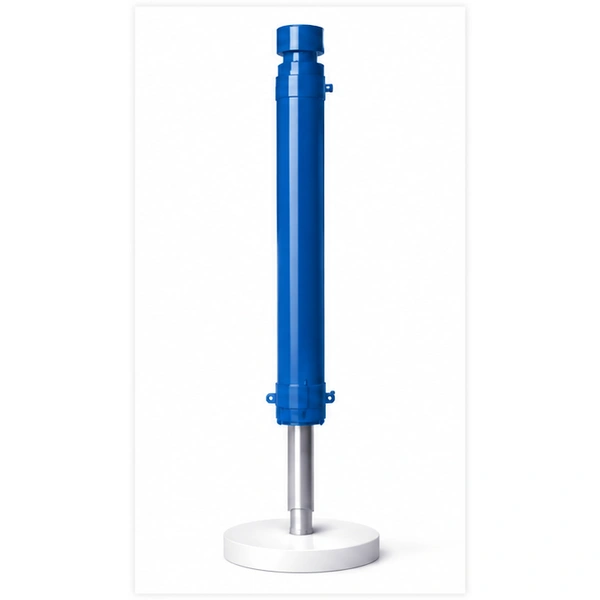
Cutter Suction Dredger Piling Cylinder
The anchor point. Before a CSD can dredge, its spud piles must be driven into the seabed — and after each walking step, they must be pulled back out. The piling cylinder does both: pushing piles down against seabed resistance, then pulling them up against soil suction that can exceed the pile's own weight by 3-5x.
Technical Specifications
| Parameter | Specification |
|---|---|
| Product Name | Cutter Suction Dredger Piling Cylinder |
| Features | Provide thrust to drive spud piles into the seabed and pull force to extract them |
| Bore Diameter | Up to 460 mm |
| Rod Diameter | Up to 400 mm |
| Stroke | Up to 4,000 mm |
| Thrust Force | Maximum 3,140 KN |
| Working Pressure | Up to 32 MPa |
| Temperature Range | -40 °C to +100 °C |
| Application | Cutter Suction Dredger |
Why Extracting a Spud Pile Is Harder Than Driving It In
Driving a spud pile into the seabed requires overcoming soil bearing resistance — the pile displaces soil downward. But extracting it requires overcoming soil suction — the saturated sediment grips the pile surface like a vacuum, creating friction and negative pore-water pressure that can multiply the extraction force to 3–5x the pile weight.
The piling cylinder must produce enough pull force to break this suction seal — typically 2,000–3,140 KN for large CSDs. The extraction force depends heavily on soil type: soft clay creates the highest suction (cohesive, saturated), while sand releases more easily (granular, drained). Korea Ever-Power sizes the piling cylinder for the worst-case soil conditions expected in the dredging project.
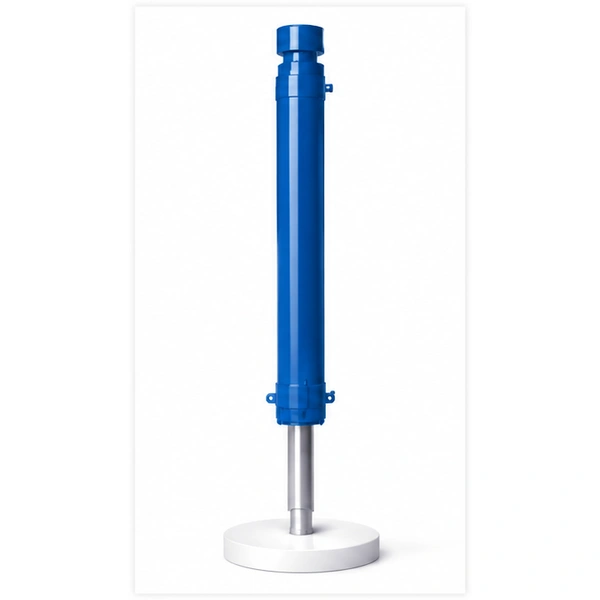
The rod-to-bore ratio (400 mm rod inside 460 mm bore) is the highest in the CSD cylinder family — maximising the annular retraction area and therefore the pull force for pile extraction. Browse the offshore hydraulic cylinder range for related CSD products.
How the Spud Piling System Works
The piling cylinder is part of a coordinated 3-cylinder system that anchors and positions the CSD. Each cylinder type has a distinct role in the walking sequence:
The piling cylinder extends, pushing the spud pile vertically downward through the hull guide and into the seabed. The required insertion depth depends on soil conditions — soft clay may require 3–5 metres of penetration for adequate holding force; dense sand may only need 1–2 metres.
With the spud anchored in the seabed, the traveling cylinder (#2) pushes the hull forward up to 9.4 metres per stroke. The CSD sweeps an arc around the fixed spud, cutting the seabed with the cutter head.
The piling cylinder retracts, pulling the spud pile out of the seabed. This extraction stroke is the peak-force operation — the cylinder must overcome soil suction (up to 3,140 KN in cohesive clay) to free the pile. The spud is then repositioned for the next walking step.
Soil Type and Extraction Force
The force required to extract a spud pile depends almost entirely on the seabed soil. Different projects encounter different soils — and the piling cylinder must be sized for the worst case:
Highest suction resistance. Cohesive, saturated clay grips the pile surface with negative pore-water pressure. Extraction force can reach 3–5x the pile insertion force. Requires full 3,140 KN pull capacity.
Granular soils drain quickly — pore pressure dissipates, and suction is minimal. Extraction force is typically 1.2–1.8x insertion force. A smaller bore cylinder may suffice in pure sand environments.
Spud piles do not penetrate rock — they sit on the surface and rely on self-weight. Extraction resistance is minimal (just the pile weight), but insertion requires precise vertical alignment. Pile damage risk is highest in rocky substrates.
Why Dredging Contractors Choose Korea Ever-Power
No distributor markup. The same engineering team that designs the cylinder also quotes it, manufactures it, and tests it — reducing cost by 20–40% compared to European OEM pricing for equivalent quality.
A failed piling cylinder stops the CSD. Korea Ever-Power offers 5–6 week rush manufacturing for emergency replacements — versus 12–16 weeks from most European suppliers. Every day of CSD downtime costs USD 30,000–80,000.
Ceramic spraying, laser cladding, FKM seals, FEA analysis, classification society documentation — all in-house. No subcontracting of critical processes. Browse the full offshore hydraulic cylinder range.
Custom Piling Cylinder OEM & ODM
Frequently Asked Questions
Common questions about the cutter suction dredger piling cylinder answered by Korea Ever-Power engineers:
What Our Customers Say
"We run 3 CSDs in the Gulf region. The piling cylinders from Korea Ever-Power handle our high-suction clay soils without any extraction stalling. The high rod ratio design was the deciding factor — our previous supplier's cylinders couldn't generate enough pull force in cohesive sediment."
Eng. H. Al-Mansoori — Marine Equipment Manager, UAE
"Ordered piling cylinders for a CSD conversion project. The 3,800 mm stroke matched our existing spud frame perfectly — no structural modifications needed. BV documentation was provided within the quoted timeline."
J. Eriksen — Naval Architect, Denmark
"Good cylinders at a fair price. We use them on a medium CSD (2,200 kW) dredging riverbed sand. After 12 months, one cylinder shows slight chrome wear on the rod where it passes through the guide at full extension — normal for the operating hours, and within service limits."
S. Pham — Dredge Master, Vietnam
"The integrated position sensor on the piling cylinder lets our automation system track spud depth in real time — we can now log penetration resistance curves and adjust the walking pattern automatically. This was not available from our previous cylinder supplier."
L. Johansson — Automation Engineer, Sweden
"Emergency replacement for a failed piling cylinder during a port expansion project. Korea Ever-Power delivered in 6 weeks. The replacement cylinder has now been in service for 11 months with zero issues."
R. Fernandez — Project Manager, Colombia
Related Hydraulic Cylinder Categories
Informazioni aggiuntive
| Editor |
|---|
Prodotti correlati
-
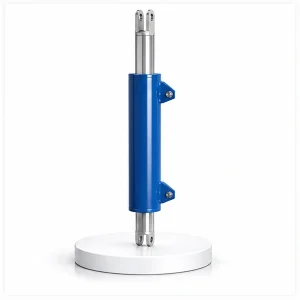
Reach Stacker Steering Cylinder
-
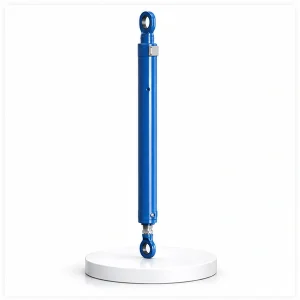
Stacker Reclaimer Chaser Pitch Cylinder
-
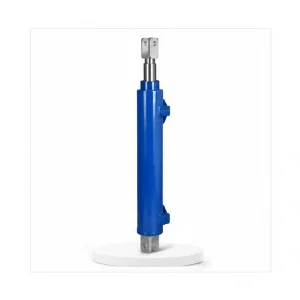
Empty Container Stacker Steering Cylinder
-
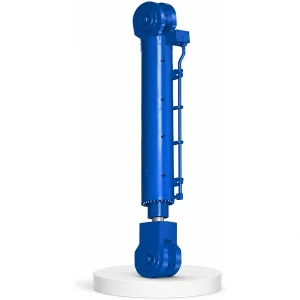
Split Barge Split Cylinder
-
Empty Container Stacker Tilt Cylinder
-
Trailing Suction Dredger Mud Door Cylinder
-
Jack-up Offshore Platform Bolt Cylinder
-
Jack-up Offshore Platform Lifting Cylinder