Forklift Distance Adjustment Hydraulic Cylinder — Fork Positioner Cylinder
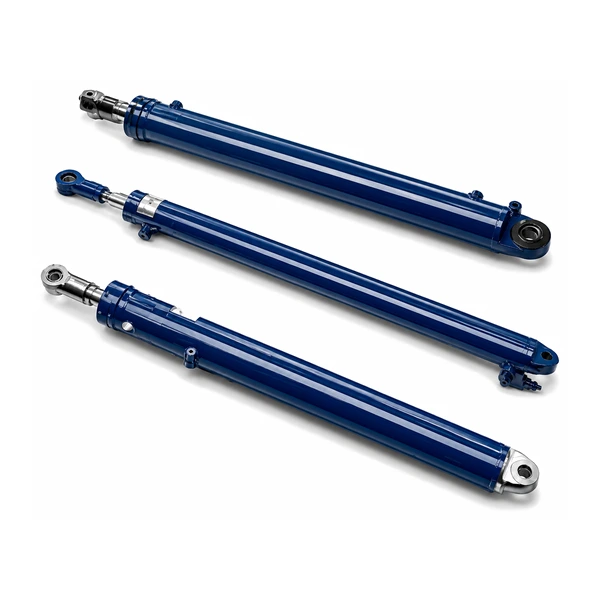
Forklift Distance Adjustment Hydraulic Cylinder — Hydraulic Fork Positioner Control
Every forklift handles pallets of different sizes. A standard Euro pallet is 800 mm wide; an ISO pallet is 1,000 mm; a custom industrial pallet can be 1,200 mm or wider. Without a fork positioner, the operator must manually reposition the forks each time the pallet width changes — a process that takes 2–5 minutes per adjustment, requires the operator to leave the cab, and involves handling heavy steel forks (each weighing 20–50 kg) by hand. In a mixed-pallet warehouse processing 200+ loads per shift, manual fork adjustment consumes 30–60 minutes of productive time every day.
The distance adjustment hydraulic cylinder eliminates this entirely. Mounted horizontally across the carriage inside the fork positioner frame, it pushes both forks apart or pulls them together through a synchronised linkage. The operator controls the fork spread from the cab using a hydraulic lever connected to the forklift's auxiliary hydraulic circuit. Adjustment takes seconds, happens at any fork height, and requires zero physical effort from the operator. Korea Ever-Power supplies 5 cylinder models spanning the full range of forklift hydraulic cylinder applications for fork positioner attachments from 1.5 to 5 tonnes.
7–22 kg
Attachment Cylinder
Complete Specifications — All 5 Fork Positioner Cylinder Models
Five models span a broad range of strokes and pressures, reflecting the diversity of fork positioner designs across the 1.5–5 tonne forklift market. Each model is designed for a specific family of fork positioner attachments — the bore, stroke, and mounting dimensions are not interchangeable between families.
| Drawing Number | Bore (D) | Rod (d) | Stroke (S) | Install Dist (L) | Pressure | Ports (M) | Weight |
|---|---|---|---|---|---|---|---|
| 3CS17G-30-00T4 | Φ50 | Φ25 | 295 | 503 | 16 MPa | 2-M16×1.5 | 7 kg |
| 5CS17-40-00Z | Φ50 | Φ25 | 619 | 889 | 15 MPa | M14×1.5 | 13 kg |
| 7B3-303000-00TA | Φ50 | Φ28 | 750 | 1040 | 18 MPa | M14×1.5; M16×1.5 | 14 kg |
| 7B3-304000-00 | Φ70 | Φ30 | 300 | 536 | 18 MPa | 2-M14×1.5 | 13.5 kg |
| 8M3-304000A-625 | Φ63 | Φ32 | 855 | 1174 | 20 MPa | 2-M16×1.5 | 22 kg |
All dimensions in mm. Installation distance (L) measured pin centre to pin centre at full retraction. Model 7B3-303000-00TA uses different port thread sizes on each end (M14×1.5 and M16×1.5) — verify port assignment during installation. Models sorted by bore size, then by stroke. All models double-acting.
How the Fork Positioner Mechanism Converts Cylinder Motion into Fork Spread
The distance adjustment cylinder does not push the forks directly. It drives a linkage system inside the fork positioner frame that converts the cylinder's linear extension into symmetrical outward (or inward) movement of both forks simultaneously. The most common linkage arrangement uses a rack-and-pinion mechanism or a scissor-link system that ensures both forks move equal distances from the carriage centre line — maintaining symmetric load positioning even when the cylinder extends unevenly due to friction differences between the two fork slides.
Rack-and-Pinion Type
The cylinder extends a rack gear that meshes with a central pinion. The pinion simultaneously drives two opposing rack segments — one connected to each fork — producing equal and opposite fork movement. This design guarantees mechanical synchronisation: it is physically impossible for one fork to move without the other. Used on most fork positioners below 3.5 tonnes where the lower forces permit the use of rack-gear tooth profiles.
Scissor-Link Type
The cylinder pushes a central pivot point on a pair of crossed links (like a scissor jack). As the pivot moves forward, the link ends push the fork mounting brackets apart. This design handles higher loads than rack-and-pinion because the link geometry provides a mechanical advantage that amplifies the cylinder force. Used on fork positioners for 3.5–5+ tonne forklifts where the heavier forks generate higher sliding friction forces on the carriage rails.
Because the linkage provides mechanical multiplication, the total fork spread change is typically 1.5× to 2.5× the cylinder stroke. A cylinder with a 295 mm stroke can produce 440–740 mm of fork spread adjustment. The exact multiplication ratio depends on the positioner's linkage geometry, not the cylinder itself. When selecting a replacement cylinder, match the stroke to the positioner model — do not calculate backward from the desired fork spread range.
Matching Stroke Length to Your Fork Positioner — Selection Guide
The wide stroke range across these five models (295 mm to 855 mm) exists because fork positioners vary enormously in their design and the fork spread range they serve. A 295 mm stroke cylinder on a compact positioner may provide the same total fork spread range as an 855 mm stroke cylinder on a wide-carriage positioner — the difference is in the linkage multiplication ratio, not in the cylinder's inherent capability.
| Stroke Class | Models | Typical Positioner Type | Typical Fork Spread Range |
|---|---|---|---|
| Short (295–300 mm) | 3CS17G, 7B3-304000 | Compact rack-and-pinion | 200–700 mm (narrow-pallet) |
| Medium (619–750 mm) | 5CS17, 7B3-303000 | Standard scissor-link | 300–1,200 mm (multi-pallet) |
| Long (855 mm) | 8M3-304000A | Wide-carriage direct-drive | 400–1,500 mm (industrial-pallet) |
The correct replacement cylinder is determined by the fork positioner model, not by the fork spread range you want. Two positioners may achieve identical fork spread ranges using cylinders with entirely different strokes. Always identify the positioner manufacturer and model number first, then cross-reference to the correct cylinder drawing number.
The Productivity Case — What Hydraulic Fork Adjustment Saves
The economic justification for a fork positioner (and therefore for the distance adjustment cylinder that powers it) is straightforward: time saved per adjustment × number of adjustments per shift × labour cost per minute.
| Parameter | Manual Fork Adjustment | Hydraulic Positioner |
|---|---|---|
| Time per adjustment | 2–5 minutes | 3–5 seconds |
| Operator leaves cab | Yes (every time) | No |
| Physical effort | High (lifting 20–50 kg forks) | None (lever pull) |
| Adjustable at height | No (forks must be on ground) | Yes (any fork height) |
| Ergonomic injury risk | Moderate to high | Negligible |
| Adjustment precision | ±25 mm (lock pin spacing) | Infinite (stepless) |
For a warehouse processing 15 pallet-width changes per 8-hour shift, at 3 minutes per manual adjustment, the fork positioner saves 45 minutes per shift. At two shifts per day and a loaded labour cost of $35/hour, that is $26,250 per year in recovered productive time — from a single hydraulic cylinder that typically costs a fraction of that amount to replace when it reaches the end of its service life.
Fork Positioner vs Side Shifter — Different Attachments, Different Cylinders
Buyers sometimes confuse fork positioner cylinders with side shifter cylinders because both are attachment cylinders mounted on the forklift carriage. However, they perform entirely different functions and are not interchangeable.
Fork Positioner Cylinder (This Product)
Adjusts the lateral distance between the two forks. Both forks move outward or inward symmetrically relative to the carriage centre. The load stays centred on the carriage. Used to accommodate different pallet widths. Requires the auxiliary hydraulic circuit (3rd or 4th valve section). The cylinder mounts horizontally across the carriage face inside the positioner frame.
Side Shifter Cylinder
Shifts the entire carriage and both forks laterally left or right together — without moving the forklift itself. The fork spacing does not change; the whole fork assembly moves sideways. Used to precisely position the forks over an off-centre load or to align forks with a racking slot without repositioning the entire forklift. Different mounting, different stroke, different cylinder specification entirely.
Where Fork Positioner Cylinders Deliver the Greatest Value
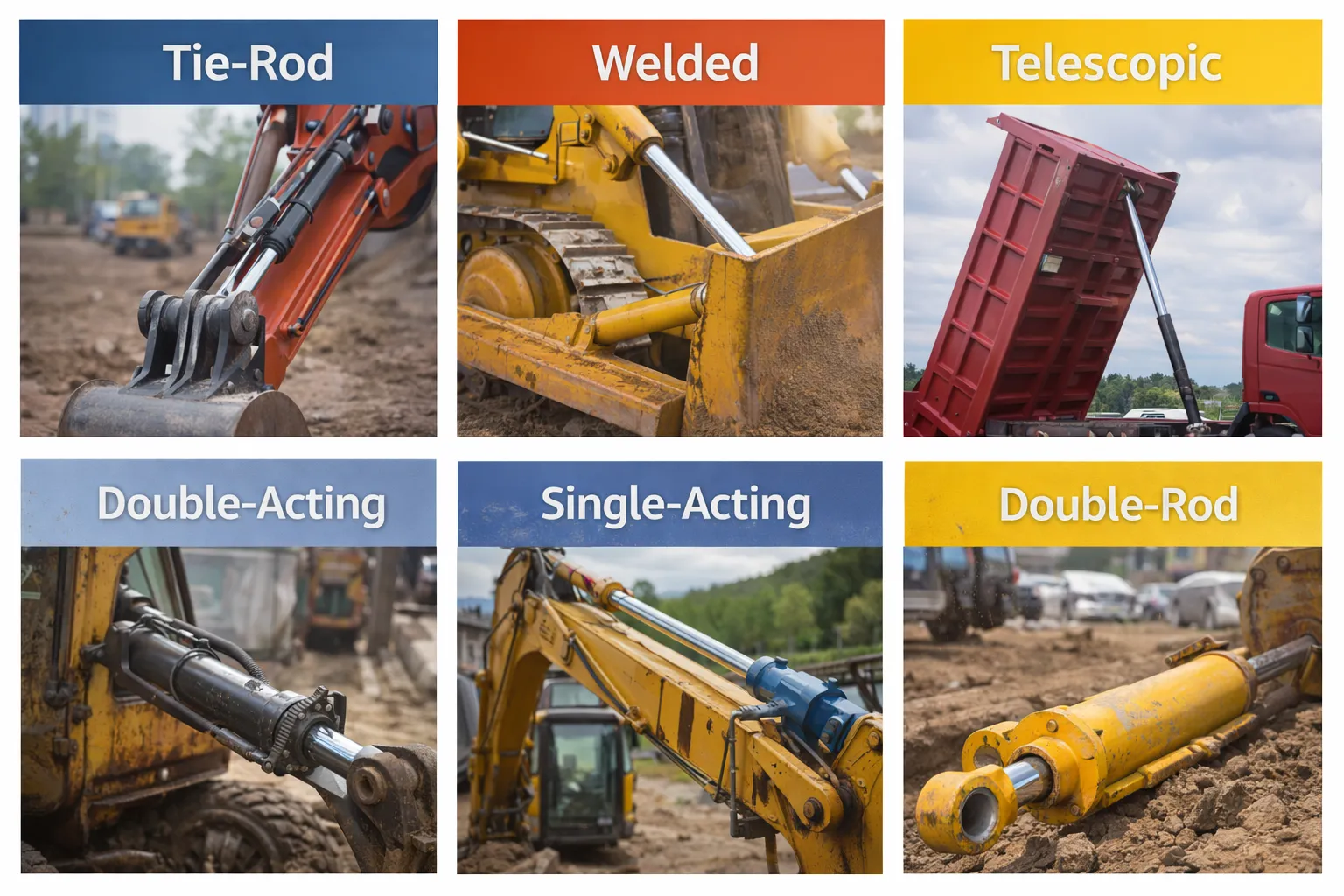
Mixed-Pallet Distribution Centres
Facilities that handle Euro pallets (800×1,200 mm), ISO pallets (1,000×1,200 mm), and custom sizes on the same shift. Each pallet width change requires a fork spread adjustment. Without a fork positioner, mixed-pallet operations are the most time-intensive manual adjustment scenario — and the environment where the hydraulic distance adjustment cylinder pays for itself fastest.
Beverage and FMCG Warehousing
Beverage pallets, retail display pallets, and FMCG case pallets come in widths from 600 mm to 1,200 mm — sometimes within the same truckload. Operators switching between these sizes every few minutes need the fork positioner to maintain throughput. The 8M3 model with its 855 mm stroke and 20 MPa rating handles the widest spread adjustment range and the heaviest loaded-pallet friction forces in this application class.
Steel, Lumber, and Long-Load Handling
Forklifts handling steel sheet bundles, lumber packages, and other wide or irregularly-shaped loads must position the forks at the load's support points to prevent overhang tipping. The ability to adjust fork spacing hydraulically — and to do it at any fork height — means the operator can position forks precisely under the load's centre of gravity without lowering the load to the ground, repositioning, and relisting.
Distance Adjustment Cylinder — Frequently Asked Questions
Other Forklift Hydraulic Cylinders
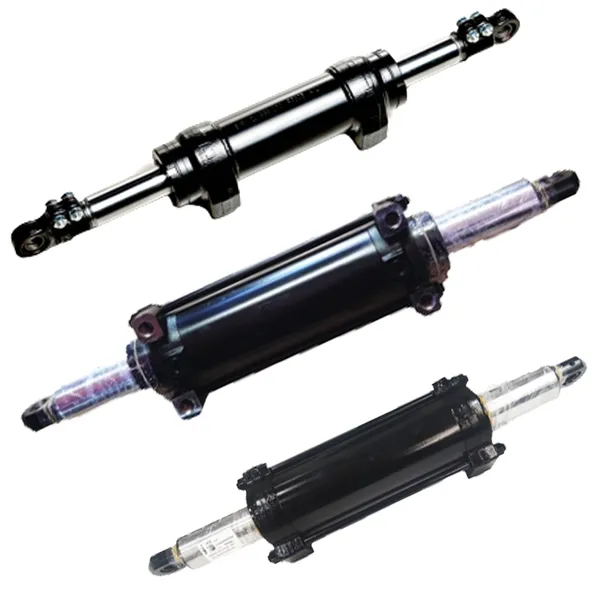
Informazioni aggiuntive
| Editor | Cxm |
|---|
Prodotti correlati
-
Industrial Vehicle Short Stroke Forklift Lift Cylinder
-
Custom Hydraulic Lift Cylinder — OEM Lift Cylinder with Integrated Check Valve and Sprocket for Forklifts
-
Hydraulic Tilt Cylinder for Loader — OEM Multi-Function Cylinder for Wheel Loaders
-
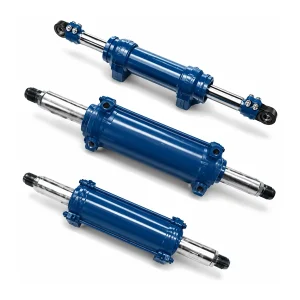
Tractor & Forklift Hydraulic Steering Cylinder — OEM Cross-Industry Power Steering Cylinder
-
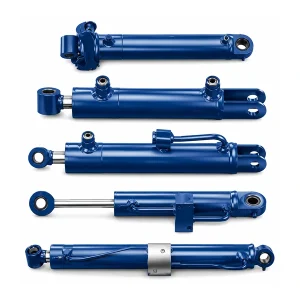
OEM Double Acting Forklift Hydraulic Cylinder
-
Forklift Short Lifting Hydraulic Cylinder — Free-Lift Cylinder with Integrated Check Valve and Sprocket System
-
Forklift Steering Hydraulic Cylinder — Double-Acting Dual-Rod Power Steering Cylinder for 2–10 Ton Forklifts
-
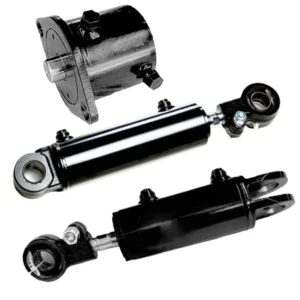
Forklift Tilt Hydraulic Cylinder