
Hydraulic Press Mobile Workbench Cylinder
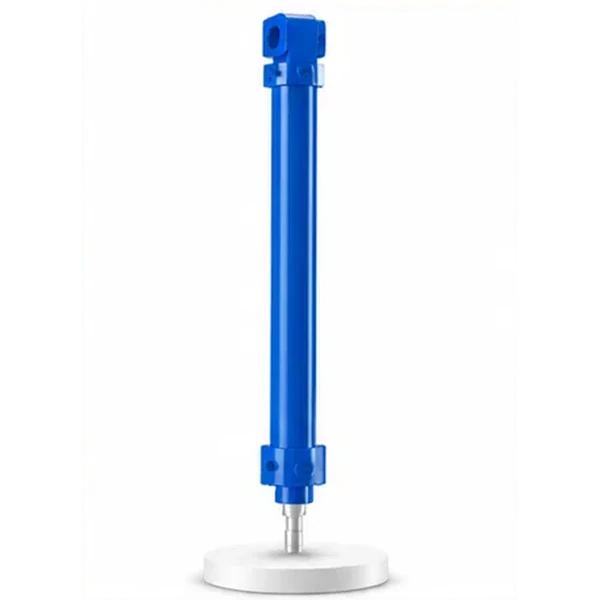
7.5 Metres of Travel.
The Workspace Comes to the Press.
The mobile workbench cylinder does not forge, stamp, or form anything. It moves the entire workbench — dies, tooling, workpiece, and all — from the open loading zone into the press work zone and back again. This single cylinder eliminates the most dangerous and time-consuming part of press operation: reaching into the press frame to load and unload heavy components.
The Problem — Loading Inside the Press Frame
On a large hydraulic press without a mobile workbench, the die set sits permanently inside the press frame. To change dies, the operator must guide a crane between the press columns — a blind lift with limited visibility and restricted clearance — to remove the old die (5–50 tonnes) and lower the new one into position. Workers stand inside or beside the press frame during this process, surrounded by massive steel structures with the ram suspended overhead.
This in-press die change is slow (30–90 minutes per changeover), risky (crane lifts between columns with restricted sightlines), and imprecise (alignment is done by eye or with basic guides). The mobile workbench cylinder solves all three problems by moving the work out of the press. Korea Ever-Power manufactures mobile workbench cylinders as part of the industrial engineering hydraulic cylinder programme.
Technical Specifications
| Parameter | Value |
|---|---|
| Product | Hydraulic Press Mobile Workbench Cylinder |
| Function | Drive the workbench in/out of the press zone |
| Bore Diameter | 125 mm – 320 mm |
| Rod Diameter | 90 mm – 220 mm |
| Stroke | ≤ 7,500 mm (longest in the press cylinder range) |
| Maximum Thrust | 2,533 KN (bore 320 mm / pressure 31.5 MPa) |
| Working Pressure | Up to 31.5 MPa |
| Certification | ISO 9001 · 100% hydrostatic tested |
Two-Zone Workflow — Loading Zone vs Pressing Zone
The mobile workbench divides the press operation into two distinct zones. All heavy lifting, die loading, and workpiece placement happens in the loading zone — a clear, open area alongside the press with full crane access, good lighting, and no overhead obstructions. The cylinder then drives the workbench into the pressing zone — between the press columns, under the ram — for the forming operation. After pressing, the cylinder retracts the workbench back to the loading zone for unloading.
the loading zone and the pressing zone are never active at the same time. The press cannot cycle until the workbench is confirmed locked in the pressing zone. The workbench cannot move until the press ram is confirmed at top dead centre. This spatial separation — enforced by the cylinder's interlock system — eliminates the scenario of workers inside the press frame during active pressing.
How the 7.5-Metre Cylinder Works
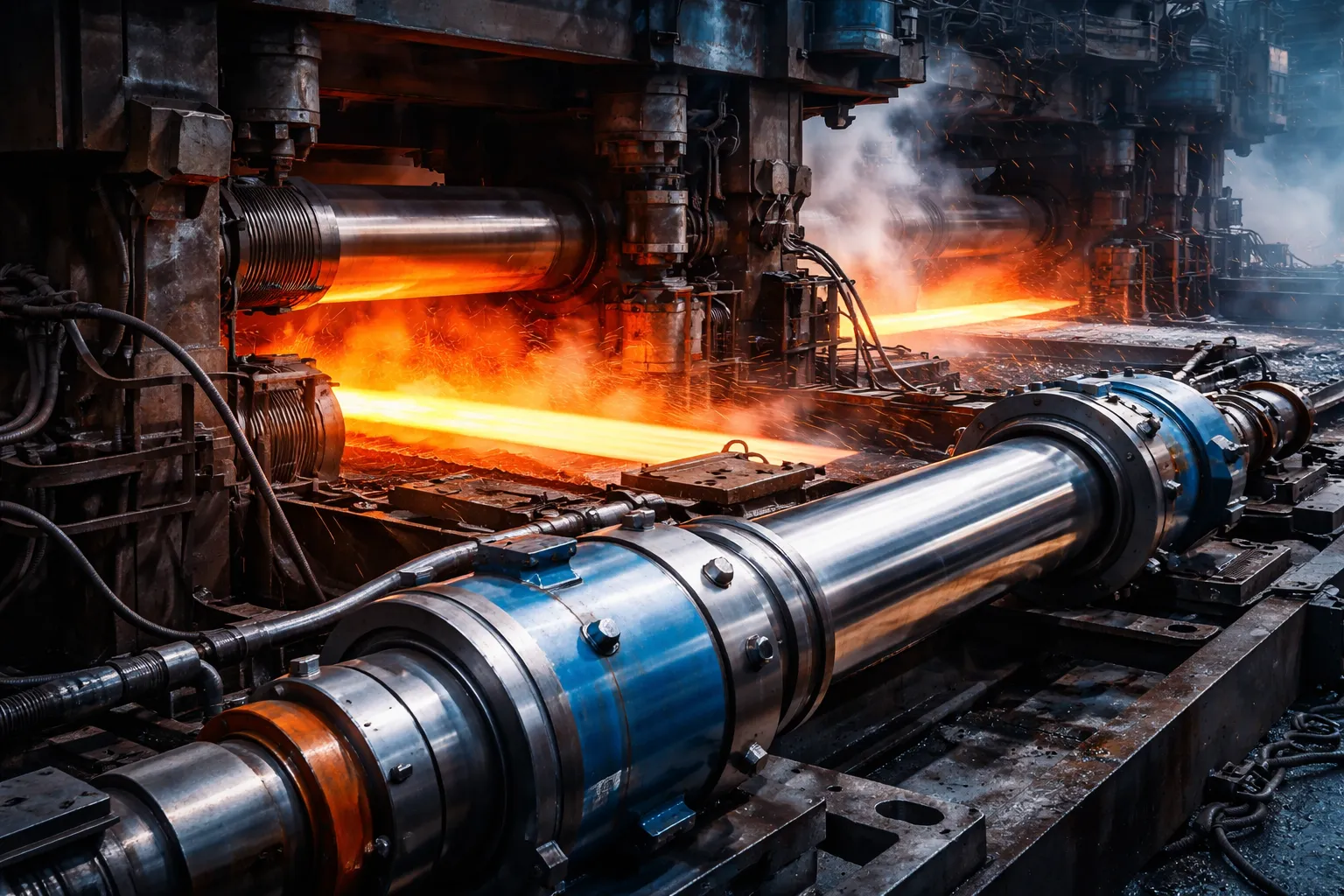
The workbench — a heavy steel platform riding on rails embedded in the press foundation floor — carries the lower die, bolster plate, and any sub-bolster tooling as a single unit. The mobile workbench cylinder, mounted horizontally below floor level or along the rail system, connects to the workbench frame via a clevis or trunnion joint.
When the cylinder extends, it pushes the loaded workbench from the loading zone into the pressing zone — a travel distance of up to 7,500 mm (the press width plus the loading zone clearance). The workbench locks into the pressing position using mechanical clamps or hydraulic locks. After the press cycle, the cylinder retracts, pulling the workbench back to the loading zone. The total in/out cycle time is typically 15–45 seconds depending on the travel distance and the workbench mass.
The 7,500 mm stroke is the longest of any cylinder in the Korea Ever-Power hydraulic press cylinder range. It exceeds even the lateral shift anvil cylinder (5,500 mm) because the workbench must travel completely clear of the press frame — the full frame width plus enough clearance for the crane to access the workbench without interference from the press columns.
Die Changeover — From 90 Minutes to 10
The mobile workbench transforms die changeover from the longest non-productive interval in the press schedule to a rapid, safe procedure that barely interrupts production.
Stop press → wait for ram to top → lock ram → enter press frame → disconnect die clamps → rig crane → lift old die out between columns (blind lift, 10–20 min) → lower new die in (another blind lift, 10–20 min) → align → clamp → exit frame → unlock ram → restart. Total: 60–90 minutes.
Stop press → ram to top → cylinder retracts workbench out → crane lifts old die off workbench in open loading zone (clear lift, 3–5 min) → crane lowers new die onto workbench (clear lift, 3–5 min) → cylinder pushes workbench in → lock → restart. Total: 8–12 minutes. All crane lifts are in the open, with full visibility.
On a press that changes dies 3 times per shift, the mobile workbench saves 150–240 minutes of downtime per shift — equivalent to 2.5–4 hours of additional pressing capacity. Over a year, that is thousands of additional production hours from the same press. The mobile workbench cylinder pays for itself in reduced downtime within months.
Manufacturing a 7.5-Metre Cylinder
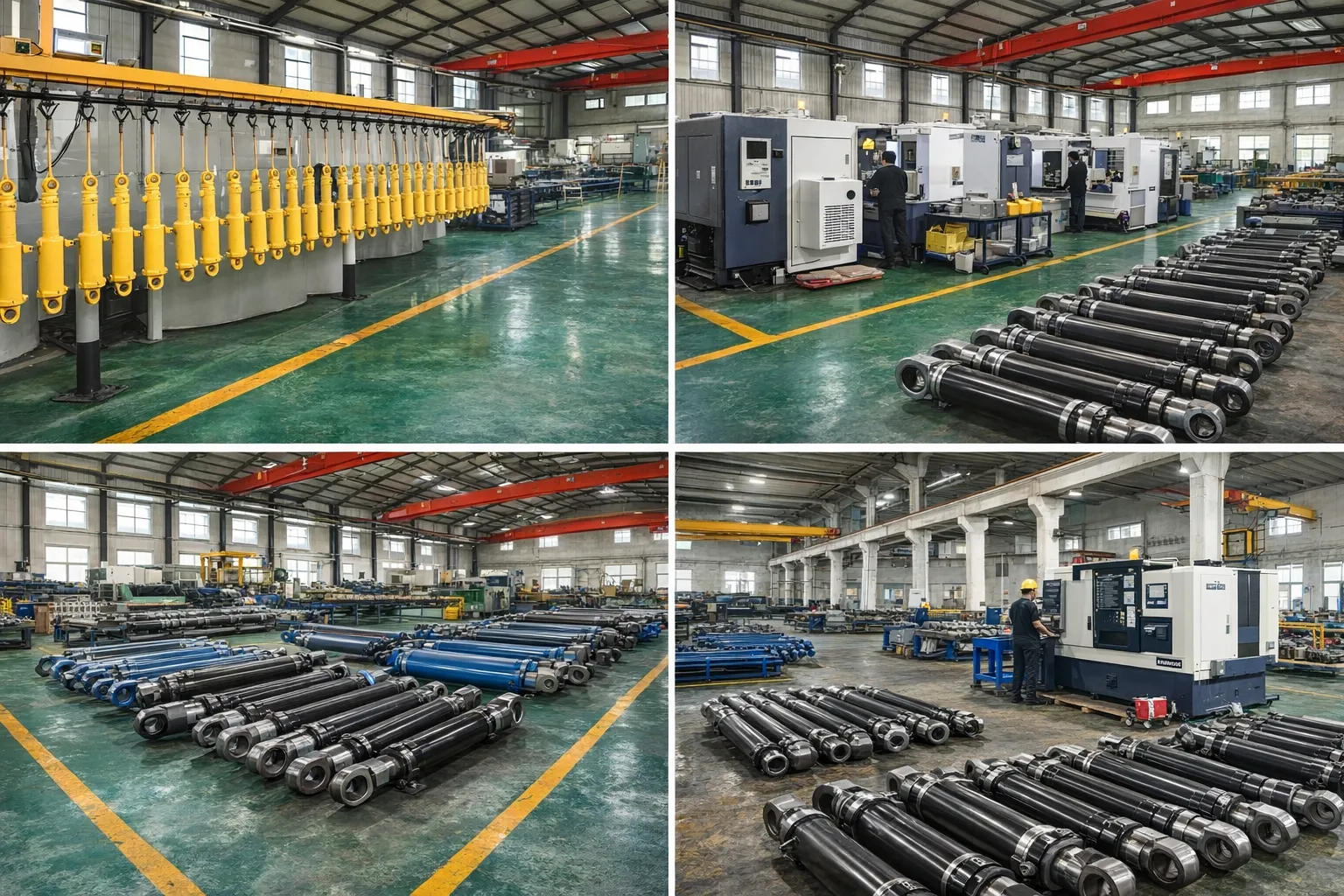
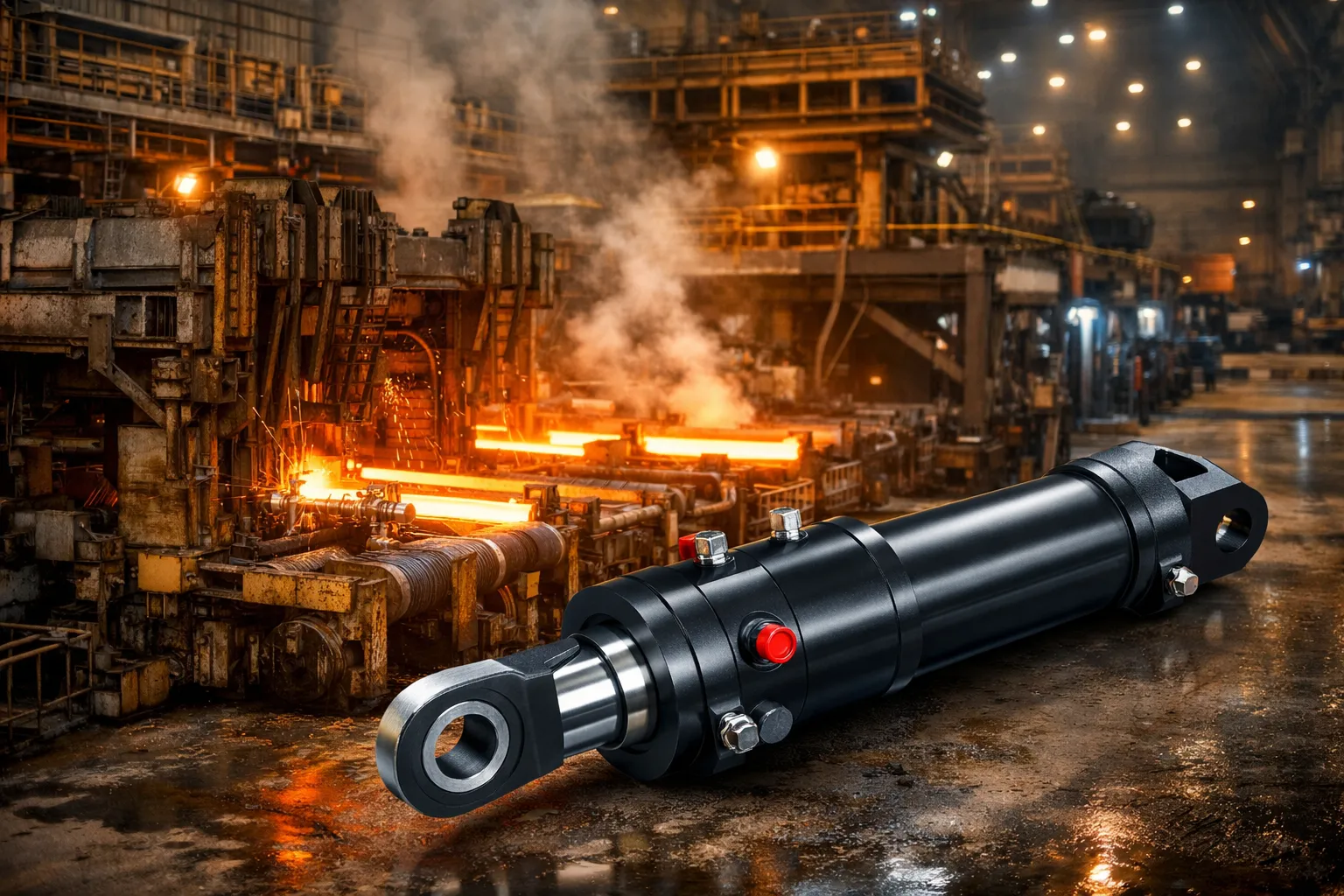
A 7,500 mm stroke requires a barrel approximately 8,000–8,500 mm long — over 8 metres of seamless steel tube that must be bored straight, honed smooth, and assembled with a matching rod of equal length and straightness. Very few cylinder manufacturers have the deep-hole boring and honing capacity to machine barrels this long. Korea Ever-Power's facility handles bore depths up to 8,500 mm — covering the full mobile workbench cylinder range.
At this length, bore straightness becomes the dominant manufacturing challenge. The bore centreline must not deviate more than 1 mm over the full 8-metre length — otherwise the piston binds at one end of the stroke. Korea Ever-Power uses BTA (boring and trepanning association) deep-hole boring tools with guide pads that follow the bore during cutting, maintaining straightness throughout the cut.
The rod — up to 220 mm diameter and 8+ metres long — requires the same straightness standard. Rod stock is verified for bow (≤0.3 mm/metre) before chrome plating and grinding. The completed cylinder is hydrostatic tested at 1.5× working pressure AND functionally tested for full-stroke traverse to verify no binding, no stick-slip, and consistent speed throughout the 7,500 mm travel.
OEM & ODM
FAQ
Related Categories
Informazioni aggiuntive
| Editor |
|---|
Prodotti correlati
-
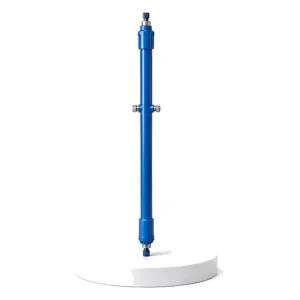
Injection Molding Machine Reciprocating Cylinder (Mold Shifting Cylinder)
-
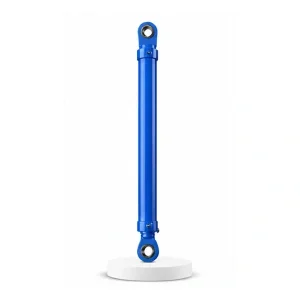
Electric Furnace Mast Cylinder
-
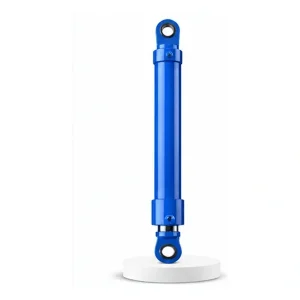
Electric Furnace Tipping Cylinder
-
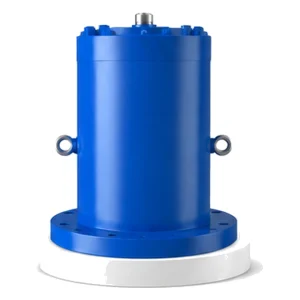
Cement Equipment Roller Press Cylinder
-
Injection Molding Machine Ejection Cylinder
-
Injection Molding Machine Shooting Cylinder
-
Hydraulic Press Leveling Cylinder
-
Hydraulic Press Tilt Cylinder


























