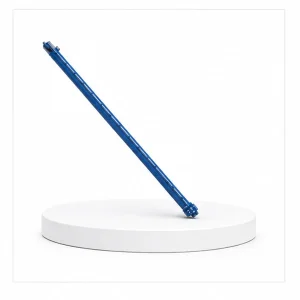
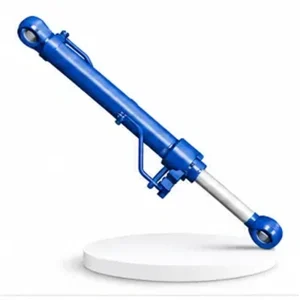
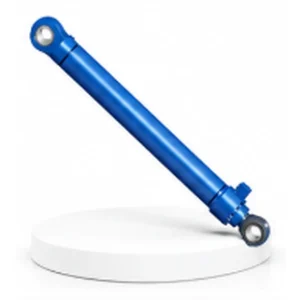
Mobile Crane Suspension Cylinder

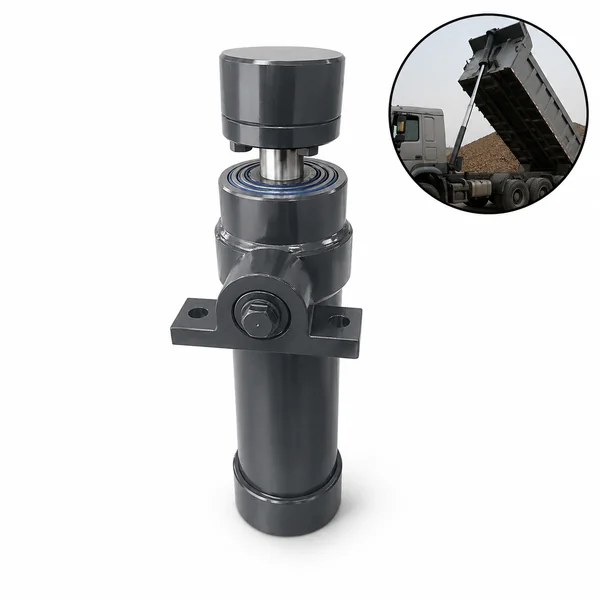
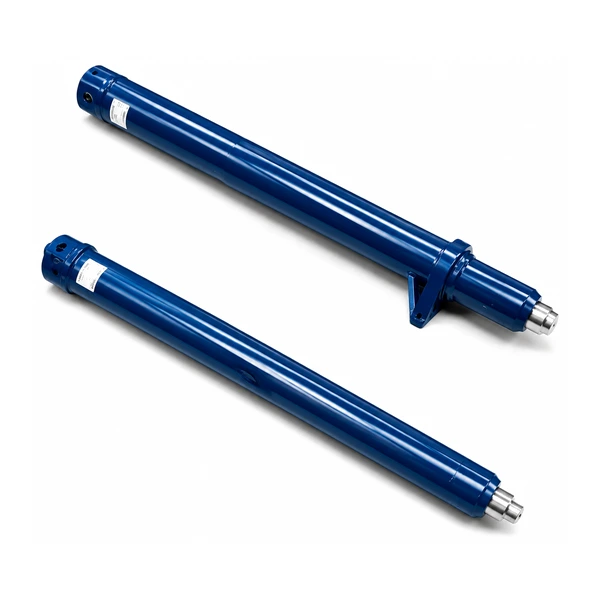
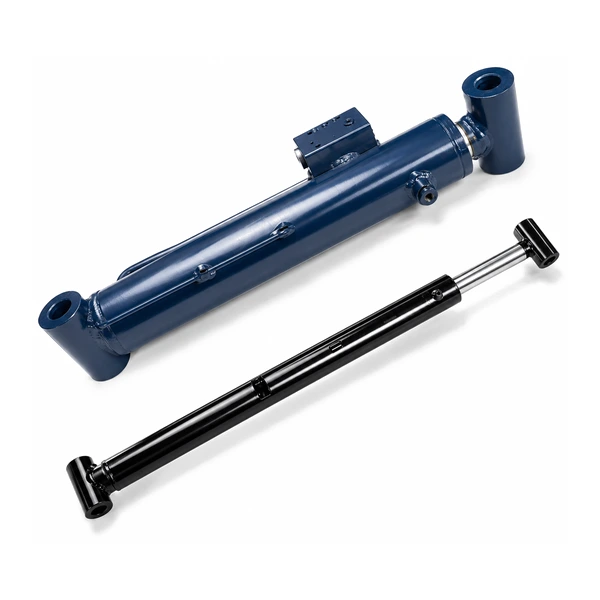
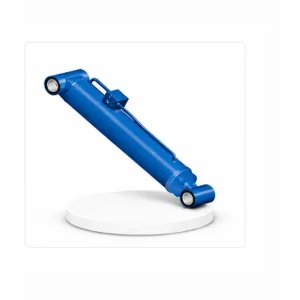
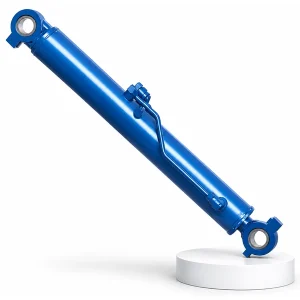
Mobile crane suspension cylinder — the only cylinder in the mobile crane family that is not a conventional actuator. It is a hydropneumatic spring-damper: a hydraulic cylinder working against a nitrogen gas accumulator to absorb road shocks during highway travel and level the chassis on uneven ground at the job site. Bore 85–180 mm, stroke ≤300 mm, 35 MPa. The shortest stroke and the smallest bore range in the crane cylinder family — but it operates continuously during every kilometre of road travel. Korea Ever-Power. ISO 9001. OEM & ODM.
COD: 09a67a92d00c Categoria:

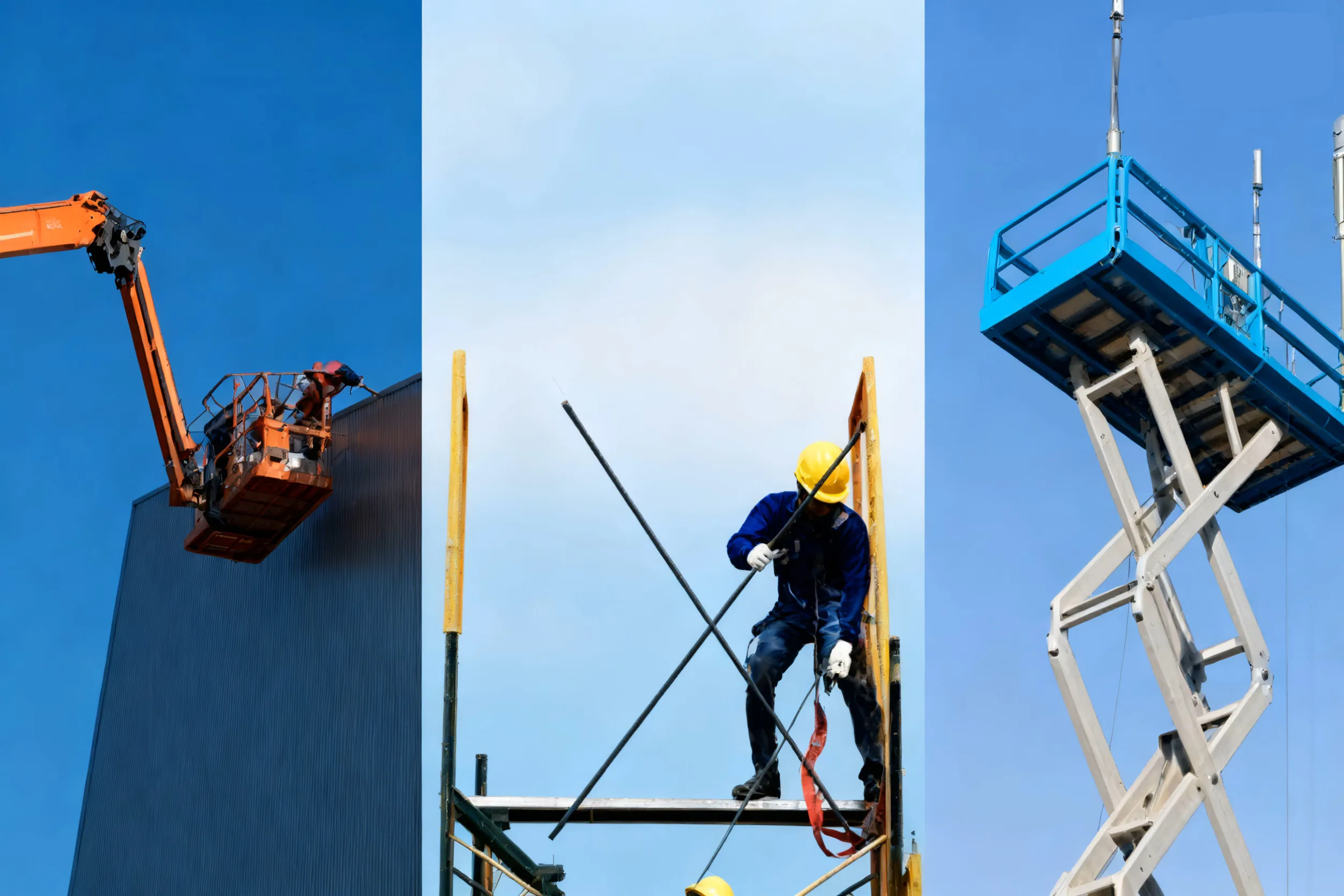
Mobile crane chassis with hydropneumatic suspension cylinders

Mobile Crane Cylinder

Mobile Crane Suspension Cylinder
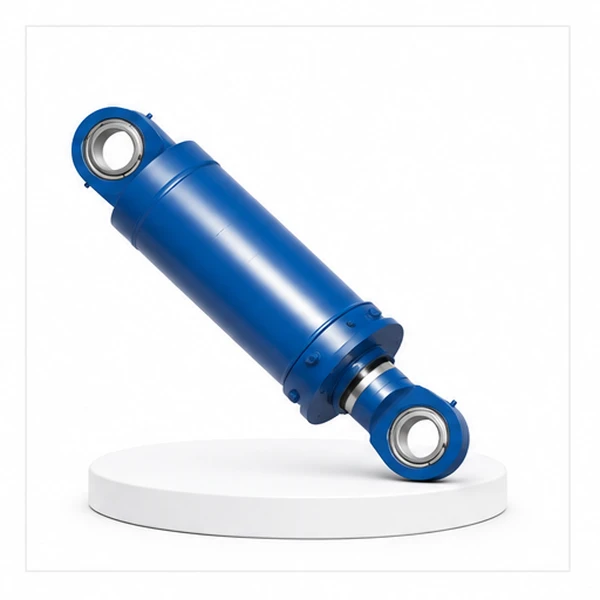
Not an actuator. Not a lifter. The suspension cylinder is a spring and a damper in one sealed unit — absorbing every pothole, bridge joint, and road imperfection during the crane's highway journey at 80 km/h, then levelling the 50-tonne chassis on a sloped construction site.

85–180mmBore Range
≤300mmStroke
35 MPaPressure
N₂ GasAccumulator

Not a Pusher, Not a Lifter — A Spring That Thinks
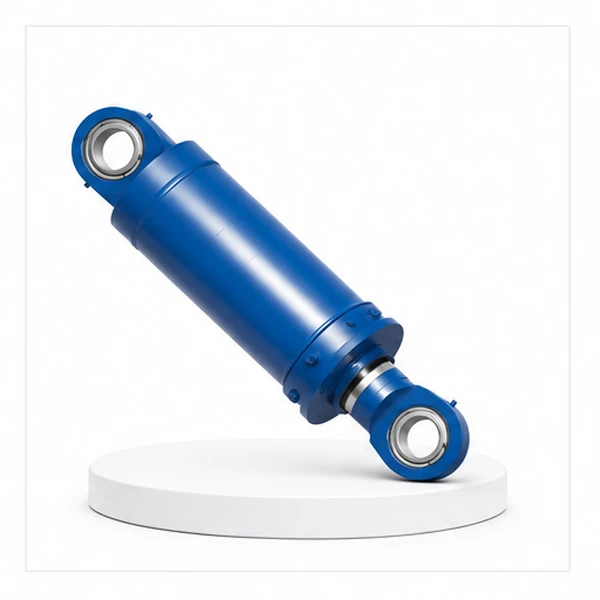
Mobile Crane Suspension Cylinder

Every other cylinder in the mobile machinery hydraulic cylinder family is an actuator — it receives a command, extends or retracts, and produces force in one direction. The suspension cylinder is fundamentally different. It is a passive energy absorber: when the axle hits a bump, the cylinder compresses, the oil flows through a restricted orifice into a nitrogen-gas accumulator, and the bump energy is converted into heat in the oil. When the bump passes, the nitrogen gas pushes the oil back, extending the cylinder and restoring the chassis height.

This makes the suspension cylinder a combined spring (the gas provides the restoring force) and damper (the orifice controls the compression and rebound speed). The spring rate, damping coefficient, and ride height are all determined by the cylinder's bore, rod diameter, orifice size, and the gas pre-charge pressure in the accumulator — parameters that Korea Ever-Power tunes for each crane model's axle load and target ride quality.

Technical Specifications

Parameter Specification
Product Mobile Crane Suspension Cylinder
Function Hydropneumatic damping system for crane chassis
Bore Diameter 85 mm – 180 mm
Rod Diameter 50 mm – 100 mm
Stroke ≤ 300 mm (shortest in family)
Working Pressure Maximum 35 MPa
Application Mobile Crane Chassis (all axles)
Certification ISO 9001 · 100% tested · gas pre-charge certified

Two Jobs, Two Speeds — Highway Comfort and Site Levelling

Job 1: Road travel — dynamic damping

During highway travel at 60–85 km/h, the suspension cylinder cycles continuously — compressing and rebounding 10–50 times per second as the axle follows the road surface. The nitrogen accumulator provides a progressive spring rate: soft at small amplitudes (for ride comfort) and stiff at large amplitudes (to prevent bottoming out). The damping orifice controls the cycle speed — preventing oscillation (bouncing) after each bump. A crane with 5–9 axles has 10–18 suspension cylinders cycling simultaneously.

Job 2: Site setup — active levelling

At the job site, the suspension system switches from passive damping to active levelling. The crane controller adjusts the oil volume in each suspension cylinder independently — raising or lowering each axle point to level the chassis on sloped or uneven ground before the outriggers deploy. This levelling function uses the same cylinder but in a controlled, slow-speed mode — pumping oil in or out rather than absorbing road shocks. Contact the Korea Ever-Power engineering team for suspension tuning data.

The Highest Cycle Count on the Crane — Millions per Year
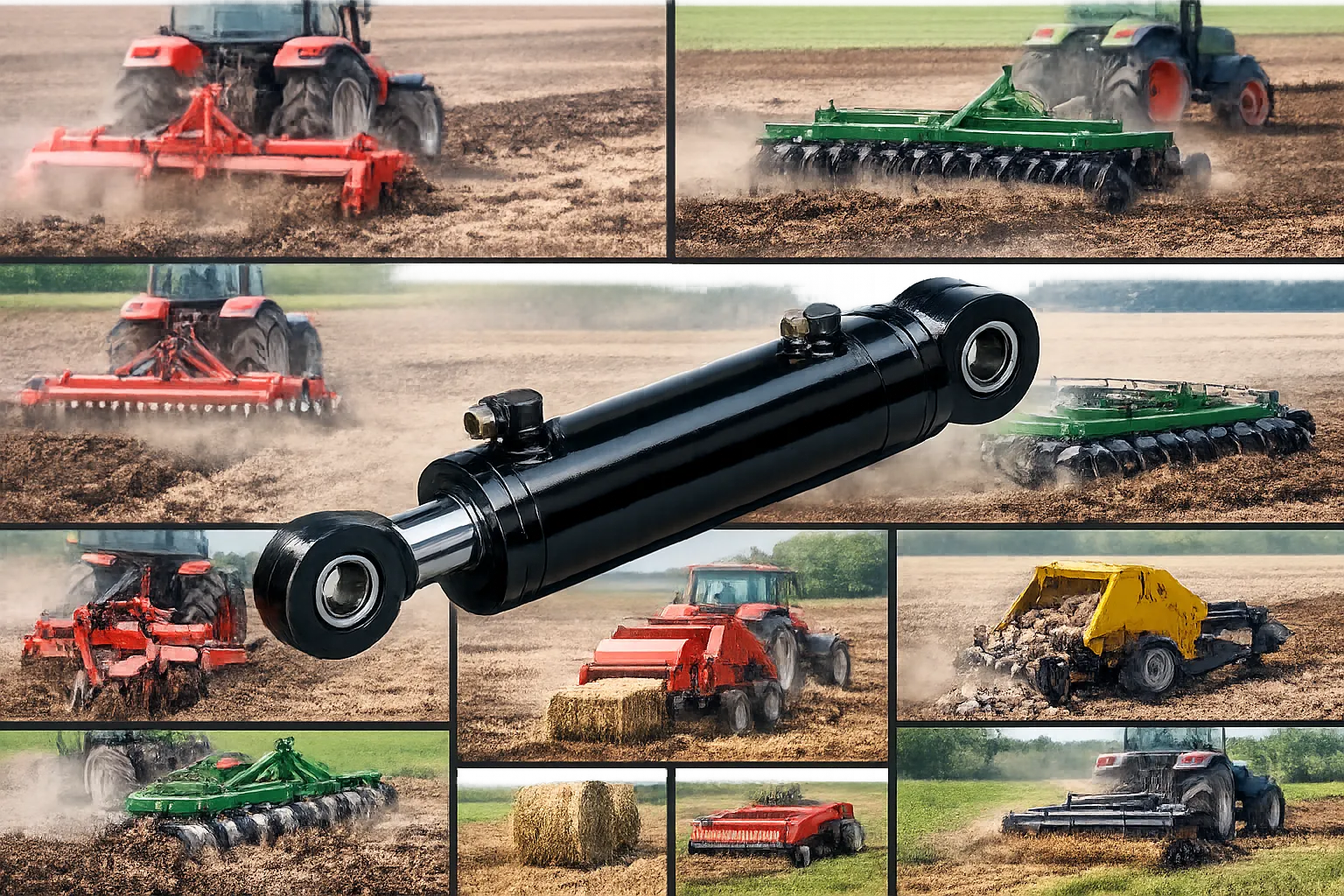
Suspension cylinder endurance — high cycle fatigue

The luffing cylinder (#17) cycles a few hundred times per day. The outrigger cylinder (#19) cycles a few times per day. The suspension cylinder cycles millions of times per year. At highway speed, each suspension cylinder completes 10–50 compression-rebound cycles per second — approximately 36,000–180,000 cycles per hour of driving. A crane that travels 500 hours per year accumulates 18–90 million suspension cycles per year.

This extreme cycle count drives every design decision: the seals must have ultra-low friction (to prevent heat build-up from continuous cycling), the bore finish must be fine enough to maintain the oil film at high cycling frequency, and the gas seal in the accumulator must maintain the nitrogen charge for 12–24 months without recharging.

Korea Ever-Power specifies PTFE-bronze guide rings and low-friction polyurethane seals for the suspension cylinder — the same ultra-low-friction seal technology used on the electric forklift cylinder, but adapted for the higher pressure and outdoor environment of the crane chassis.

Manufacturing Process

The suspension cylinder bore is honed to Ra 0.1–0.2 µm — finer than the standard 0.2–0.4 µm used on actuator cylinders — because the continuous high-frequency cycling demands the lowest possible seal friction and the most stable oil film. Chrome plating is 50–80 µm (road splash, salt, stone chips). The damping orifice is precision-drilled and flow-calibrated — orifice diameter tolerance is ±0.05 mm, because a 0.1 mm variation changes the damping coefficient by 15–25%.

The nitrogen accumulator is integrated into the cylinder assembly or mounted as a separate unit connected by a short hose. The gas pre-charge pressure is set at the factory and verified with a calibrated gauge — the pre-charge determines the ride height and the spring rate, and must match the crane manufacturer's specification to within ±2 bar. Every suspension cylinder is hydrostatic tested, damping-rate tested (compression and rebound speed at specified piston velocity), and gas-charge certified before shipment.

OEM & ODM
What You Provide

Axle load per suspension point, target ride frequency, target damping ratio, stroke, maximum road speed, gas pre-charge pressure, accumulator volume, temperature range, active levelling requirement (if applicable), and the chassis suspension geometry drawing showing cylinder mounting points and axle kinematics.

What the Factory Delivers

Engineering drawing with bore, rod, stroke, damping orifice detail, accumulator specification, gas pre-charge certificate, low-friction seal specification, and mounting dimensions. Hydrostatic + damping-rate + gas-charge test certificate. Seal kits. Browse the mobile machinery hydraulic cylinder family and the complete Korea Ever-Power catalogue.

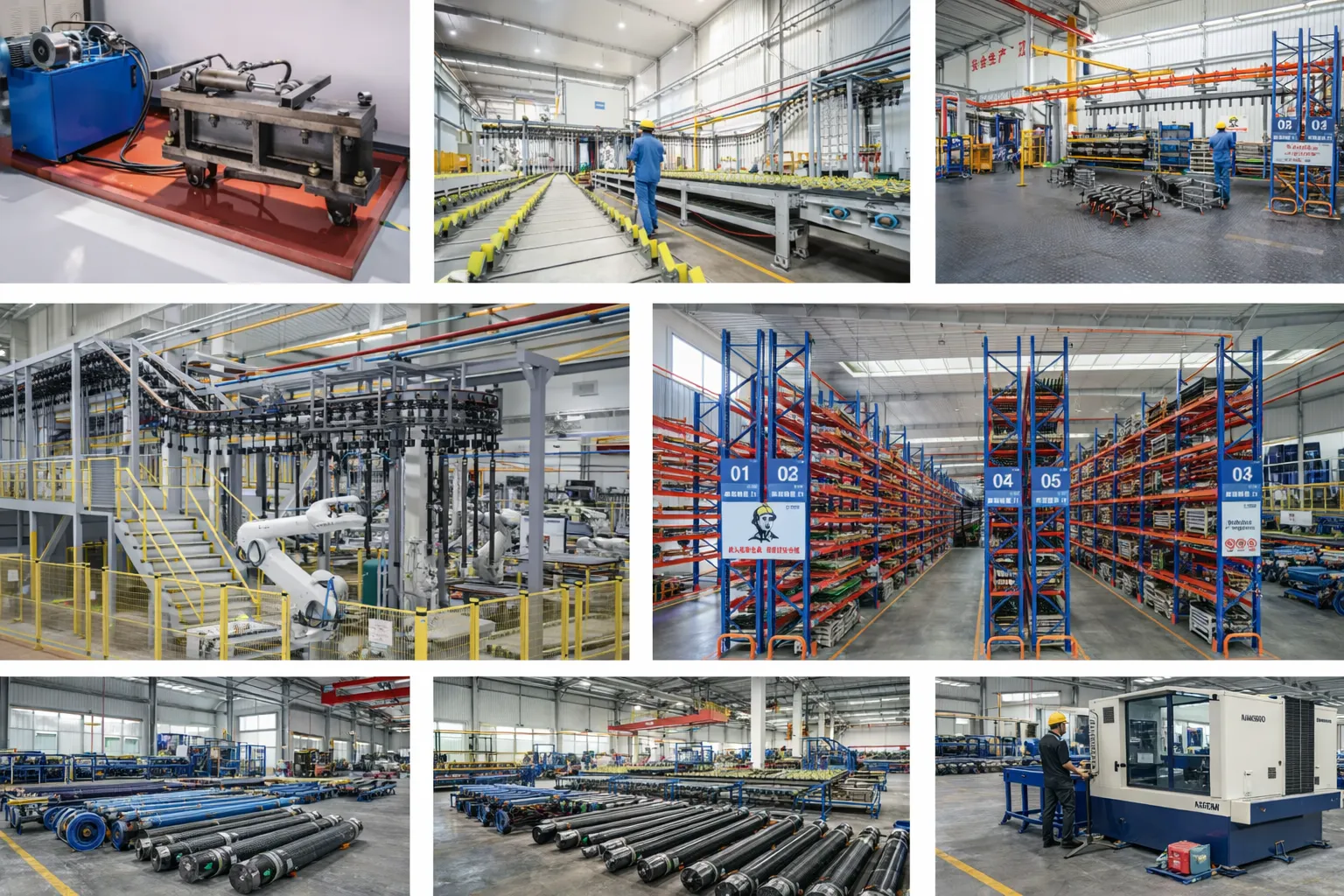
Korea Ever-Power suspension cylinder factory

FAQ

How does the suspension cylinder differ from a conventional shock absorber?

A conventional automotive shock absorber is a damper only — it controls the speed of suspension travel but does not carry the vehicle weight. The crane suspension cylinder is a spring AND a damper — the nitrogen accumulator carries the axle load (acting as a gas spring) and the orifice provides damping. This combined function eliminates the need for a separate steel spring, saving space and weight on the crane chassis.

How often does the nitrogen charge need refilling?

With a properly sealed accumulator, the nitrogen charge maintains specification for 12–24 months. Loss of gas charge causes the ride height to drop and the ride quality to deteriorate (the suspension becomes "dead" — no spring action). Crane maintenance schedules typically include gas charge verification every 6–12 months. Korea Ever-Power uses metal-to-metal accumulator seals rated for less than 1% gas loss per year.

Is the suspension cylinder active during crane lifting?

No — during lifting, the crane rests on its outrigger cylinders (#19), and the suspension is unloaded (the wheels are off the ground). The suspension cylinder is active only during road travel and site manoeuvring. On some cranes, the suspension locks out (bypassing the damping orifice) during low-speed site manoeuvres to prevent chassis roll during boom swinging. Browse telescopic cylinders and forklift cylinders for other suspension-related applications.

Related Categories

Informazioni aggiuntive

Editor